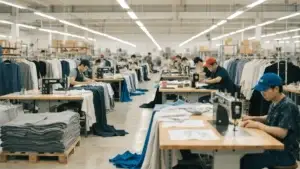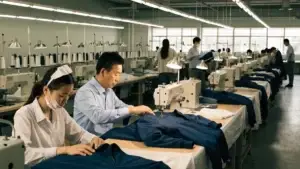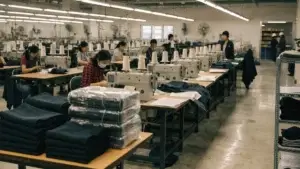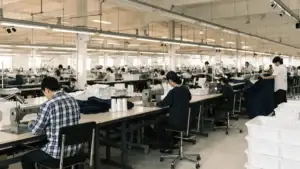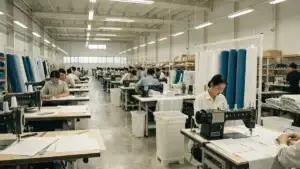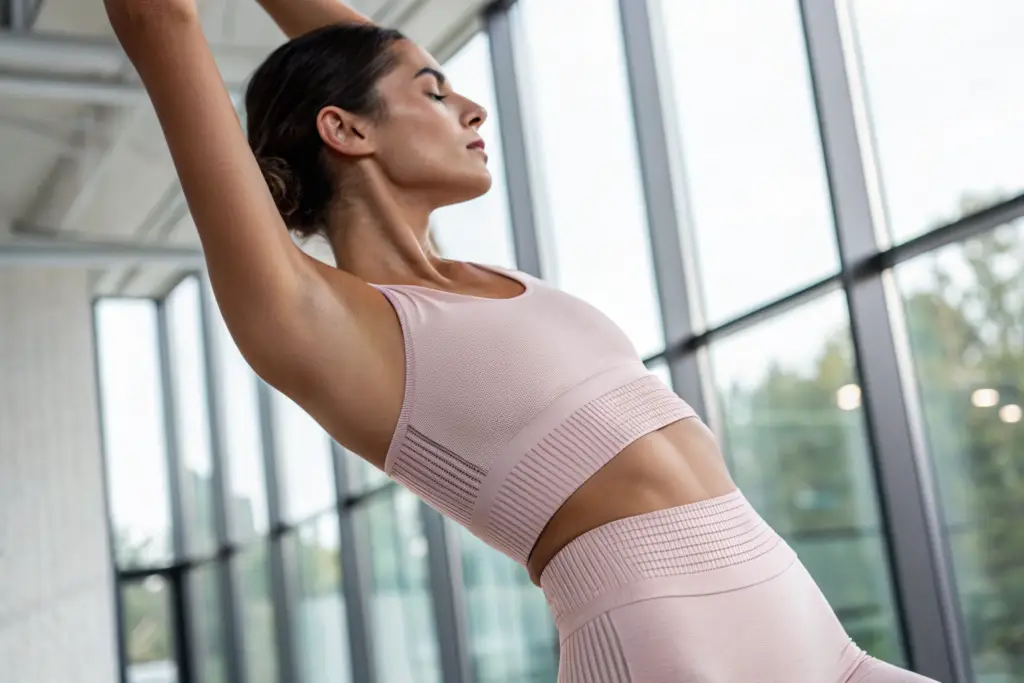
Five years ago, I walked into a trade show booth in Las Vegas and picked up a pair of women's leggings. I turned them inside out. I am a garment factory owner, so this is a habit. I look at the stitching. The crotch seam. The side seams. The hem. Except on this pair, there was nothing. No thread. No serging. No bulky joins. Just smooth, ribbed fabric that seemed to have grown into that shape from a mold. I remember thinking, "This is either a gimmick that will fade in six months, or it is the future of women's apparel." Today, I can tell you with absolute certainty: it is the future.
Seamless garments are the fastest growing trend in women's wear because they solve three problems that traditional cut-and-sew manufacturing cannot solve. First, they eliminate chafing and irritation, which is critical for activewear and intimate apparel. Second, they reduce fabric waste by up to 30% compared to cutting pattern pieces from rolls of fabric. Third, they create a second-skin fit and aesthetic that is impossible to achieve with stitched seams. The technology has moved beyond basic leggings into dresses, tops, and shapewear, driving double-digit annual growth across the category.
If you are a brand owner or wholesale buyer looking at the women's apparel market, you cannot afford to ignore seamless. Your customers are already wearing it. They are posting mirror selfies in it. They are packing it in their gym bags and their carry-on luggage. The question is no longer if you should add seamless to your line. The question is how you do it without making expensive mistakes in sourcing and production. Let me share what I have learned from running seamless programs on our factory floor in China.
Why Do Consumers Prefer Seamless Clothing Over Traditional Cut And Sew?
The shift toward seamless is not driven by fashion editors in New York or Paris. It is driven by the woman who puts on a pair of leggings at 6:00 AM for a workout, wears them to grab a coffee, and then keeps them on while working from home until 3:00 PM. She wants to forget she is wearing clothes. She wants the garment to move with her body, not fight against it. Traditional cut-and-sew garments, no matter how well they are made, have seams. And seams are friction points.
At Shanghai Fumao, we produce both traditional cut-and-sew and seamless garments. I can show you the return data. The return rate for traditional activewear due to "discomfort" or "chafing" is consistently around 4-5%. For our seamless lines, that number drops below 1.5%. That difference goes straight to your bottom line as a brand owner. Let's dig into the specific reasons why consumers are voting with their wallets.
Is Chafing Really The Number One Complaint In Activewear?
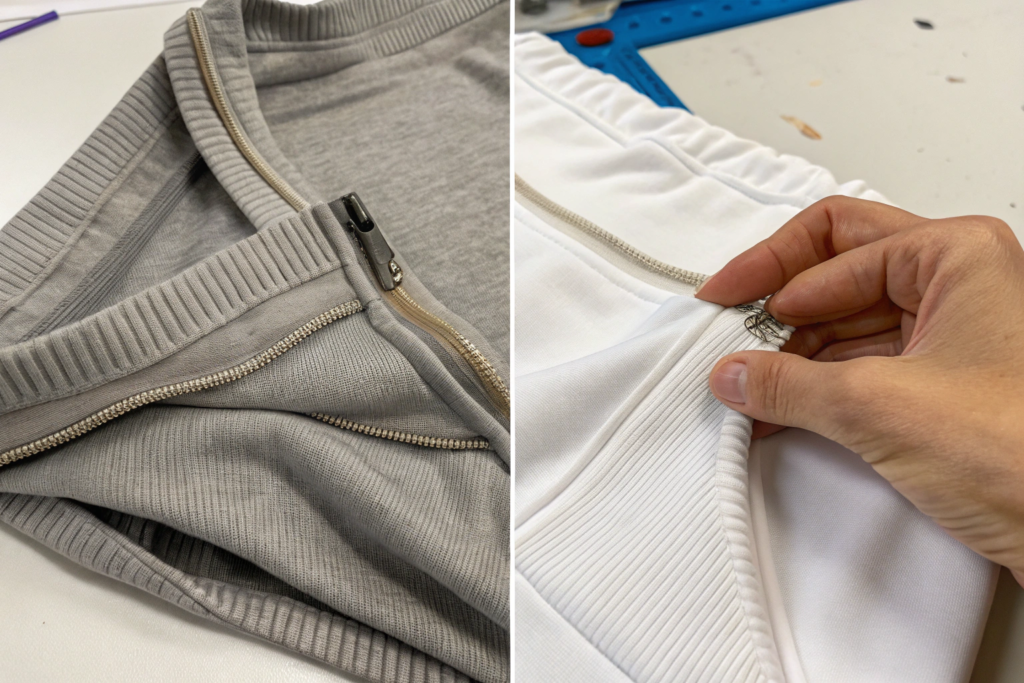
Yes. And it is not just about running a marathon. Chafing happens during a yoga class when the side seam rubs against the ribcage. It happens under the arms on a long walk. It happens at the inner thigh. For years, brands tried to solve this with flatlock stitching. Flatlock is better than an overlock seam, but it is still a raised ridge of thread against the skin.
Seamless knitting eliminates the problem entirely. The garment is knitted on a circular machine as a single tube. There is no side seam. The gusset area is shaped by changing the stitch density, not by sewing two pieces of fabric together. We produced a line of seamless bike shorts for a women's wellness brand in California last summer. Their customer reviews specifically mentioned the word "butter" over and over. "Feels like butter." "No digging in." "I forgot I had them on."
Here is the technical reason why this works. A circular seamless machine uses a cylinder and dial configuration with multiple feeders. It can knit an entire garment body in one continuous process. The waistband is knitted with a tucked-in elastic. The body is knitted with a jersey stitch. The leg opening is finished with a mock rib hem. All in one machine cycle. No cutting. No sewing. The result is a garment where the compression and stretch are distributed evenly across the entire surface area. There are no weak points at the seams where the fabric pulls differently than the thread.
How Does The "No Panty Line" Demand Drive Seamless Adoption?
This is a massive, often unspoken driver of the trend. Women do not want visible panty lines (VPL) under their leggings, their slip dresses, or their white linen trousers. Traditional underwear with elastic sewn into the leg openings creates a distinct ridge that shows through tight or lightweight outerwear.
Seamless underwear solves this by using laser-cut edges or bonded hems that lie completely flat. The edge is not folded over and stitched. It is either left raw (knitted to a finish) or sealed with a thin layer of adhesive film. The transition from skin to fabric is nearly invisible.
I spoke with a lingerie buyer for a large department store chain at a trade show in New York last year. She told me that the seamless panty category was the only segment of their intimates department showing positive growth. The traditional lace and cotton briefs were flat or declining. She said, "Once a customer tries a laser-cut seamless thong, she never goes back to the elastic digging into her hip." This is why brands are expanding their seamless offerings beyond just one or two basics. They are building entire collections around this technology. And for a manufacturer like us, this means investing in specialized Santoni knitting machines that can handle the fine gauges required for underwear and shapewear.
What Are The Sustainability Advantages Of Seamless Manufacturing?
Sustainability in apparel is a complicated conversation. There is a lot of greenwashing out there. But with seamless manufacturing, the environmental benefits are real, measurable, and easy to verify. This matters because major retailers like Nordstrom and REI are now asking brands to submit data on their supply chain waste and carbon footprint. If you want to get your product on their shelves, you need a better story than "we use recycled poly bags."
Seamless technology gives you a genuine sustainability advantage that you can communicate to the conscious consumer. And it starts before the first stitch is even made.
Can Seamless Production Truly Eliminate Fabric Cutting Waste?
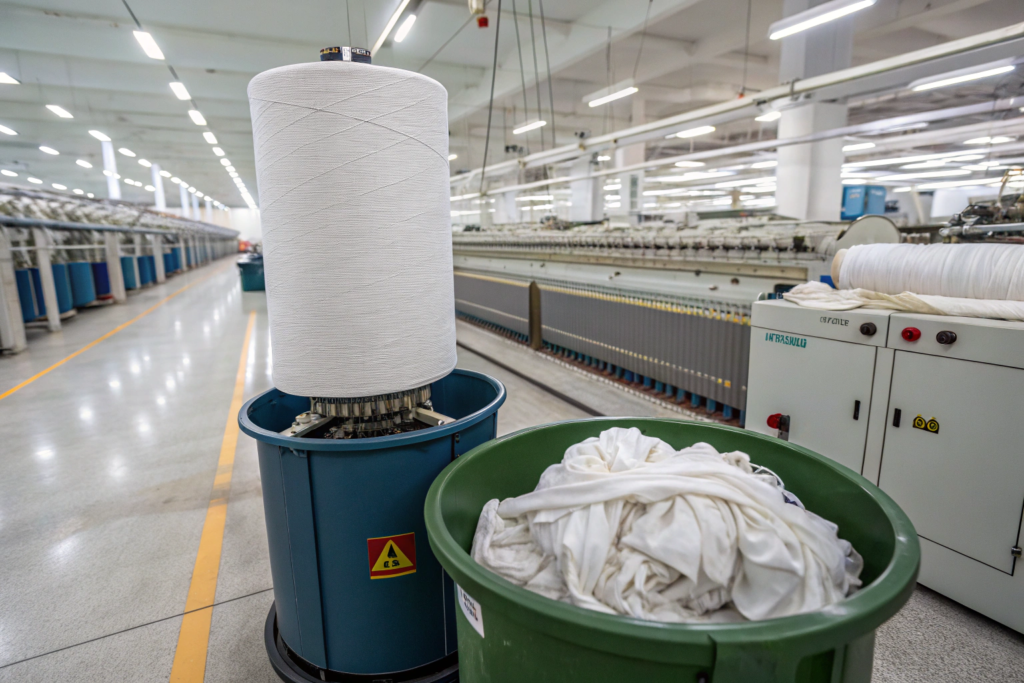
In traditional cut-and-sew manufacturing, you buy rolls of fabric. You lay them out on a long table. You place pattern pieces on the fabric like a jigsaw puzzle. Then you cut. No matter how efficient your pattern marker is, you will always have waste. The spaces between the sleeves and the neckline. The ends of the roll. The edges of the lay. On average, this waste is between 15% and 25% of the total fabric purchased. That fabric goes into a bin and eventually to a landfill or incinerator.
With seamless manufacturing, the waste is close to zero percent. The yarn is fed directly into the machine. The machine knits the exact shape required. The only waste is the small amount of yarn tail at the beginning and end of the cycle, and perhaps a thin layer of yarn that is trimmed from the leg openings if a laser cut is used. We are talking about grams per garment, not square yards.
Let me give you a concrete comparison from our own production floor at Shanghai Fumao:
| Production Method | Garment Type | Fabric Input | Finished Garment Weight | Material Waste |
|---|---|---|---|---|
| Cut and Sew | Women's Legging | 0.85 kg of fabric roll | 0.65 kg | 0.20 kg (23.5%) |
| Seamless Knit | Women's Legging | 0.67 kg of yarn | 0.65 kg | 0.02 kg (3.0%) |
Over a production run of 10,000 units, the seamless method saves nearly 1,800 kilograms (about 4,000 pounds) of textile waste from entering the waste stream. That is a tangible number. It is a number you can put in a sustainability report. It is a number that helps meet the Sustainable Apparel Coalition benchmarks. For brands that pay for fabric by the kilogram, it also means you are not paying for material that ends up in the trash.
Does Knit-To-Shape Technology Reduce Energy Consumption?
Yes, and the reason is simple: fewer steps in the process. A traditional cut-and-sew garment goes through this journey:
- Knit or weave fabric on one machine.
- Dye and finish fabric in large vats of water.
- Dry fabric in industrial ovens.
- Roll fabric and transport to cutting facility.
- Cut fabric using electric cutting machines.
- Transport cut pieces to sewing lines.
- Sew pieces together using dozens of electric sewing machines.
A seamless garment collapses many of these steps. The garment is knitted to shape on one machine. The machine uses a fraction of the electricity required to run a cutting room full of spreaders and straight knives. The sewing floor is largely eliminated. There are no long rows of industrial sewing machines running all day. The finishing process is simpler because there are fewer panels to press.
A study published by the Journal of Cleaner Production found that whole-garment knitting technologies can reduce energy consumption by up to 30% compared to traditional cut-and-sew methods when accounting for the entire supply chain. For brands looking to reduce their Scope 3 emissions, seamless is a strategic lever to pull. We are not saying it solves every environmental problem in fashion. But it is a significant step in the right direction.
Which Types Of Yarn And Fiber Perform Best In Seamless Construction?
The magic of a seamless garment does not just come from the machine. It comes from the yarn. You cannot feed a stiff, inelastic cotton yarn into a seamless machine and expect it to hug the body. The machine needs yarn that can stretch, recover, and hold its shape through thousands of wear cycles. Choosing the wrong yarn is the fastest way to produce a baggy, sad-looking garment that no one wants to buy.
At our factory, we work with a network of spinning mills to develop custom yarn blends specifically for our seamless machines. The most common question I get from new brand owners is, "Can you make this in 100% organic cotton?" The answer is usually no, and I will explain why.
Why Is Nylon The Backbone Of Most Premium Seamless Lines?
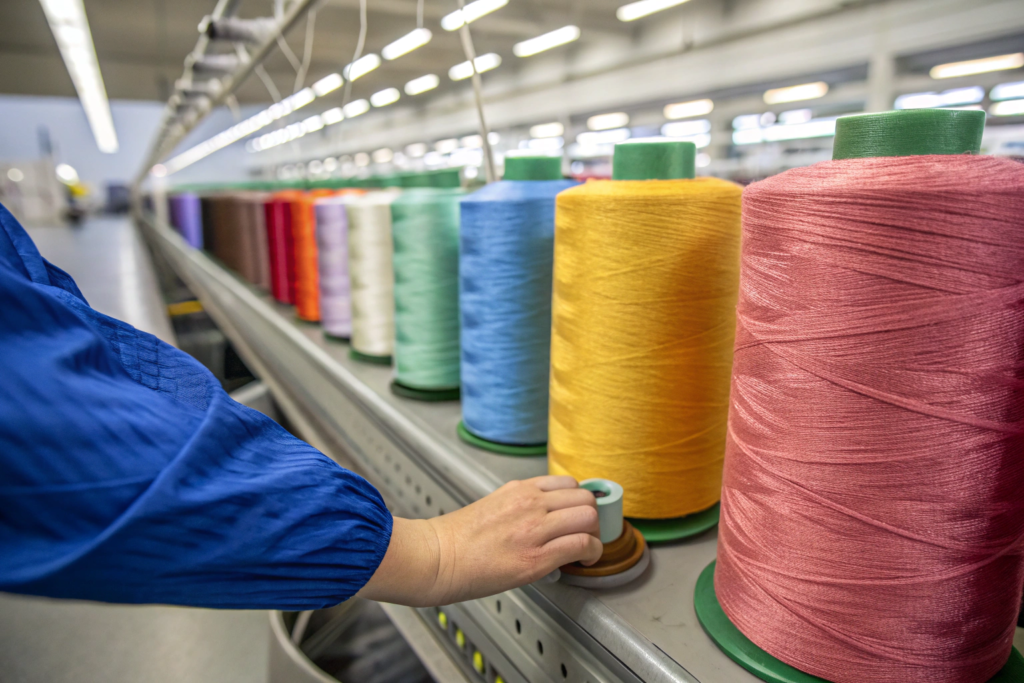
If you pick up a high-quality seamless legging from a brand like Alo Yoga or Lululemon, look at the fiber content tag. You will almost always see Nylon listed as the primary fiber, often at 70% to 80%. There is a reason for this. Nylon has a property called "power" or "memory." It wants to snap back to its original shape. This is measured by Elastic Recovery.
When a seamless machine knits a ribbed texture, those ribs are designed to stretch when the body moves and then contract back tightly. Polyester is good. Nylon is better. Nylon is softer, has a higher melting point for heat-setting, and takes dye more vibrantly. For the California wellness brand I mentioned earlier, we use a proprietary yarn from a mill in Taiwan that is 78% Recycled Nylon and 22% Spandex. The nylon provides the structure and softness. The spandex provides the extreme stretch.
Here is a simple guide to the fiber families used in seamless:
| Fiber Type | Role in Seamless Garment | Common Blend Ratio |
|---|---|---|
| Nylon (Polyamide) | Primary structure, soft hand, recovery | 65% - 80% |
| Polyester | Moisture wicking, durability, cost control | 60% - 75% (Often in sport-focused lines) |
| Spandex (Elastane) | Stretch and compression | 15% - 30% |
| Cotton / Modal | Natural hand feel, moisture absorption | 5% - 20% (Covered yarn only) |
Can You Use Natural Fibers Like Cotton In A Seamless Machine?
Yes, but with a major caveat. You cannot use 100% cotton staple fiber yarn. It will break. The knitting needles on a seamless machine move at extremely high speeds and under high tension. Cotton fibers are short and weak compared to continuous filament synthetic yarns. If you try to run 100% cotton, the yarn will snap repeatedly, causing holes and machine stoppages.
The solution is Covered Yarn. This is where a fine filament of spandex or nylon is wrapped with a layer of cotton fibers. The synthetic core provides the strength and stretch. The cotton wrapper provides the natural hand feel against the skin. We produce a popular seamless tank top using a Cotton/Nylon/Spandex covered yarn. The label reads something like "47% Cotton, 47% Nylon, 6% Spandex." The customer feels the soft cotton touch. But the garment performs like a synthetic because of the hidden nylon core.
This is an area of intense innovation. Mills are developing new bio-based nylons and recycled fibers that maintain the performance of traditional synthetics with a lower environmental footprint. For brands looking to differentiate themselves, working with a factory like Shanghai Fumao to source these innovative yarns can be a powerful competitive advantage. You can offer a product that feels amazing and has a compelling material story.
How Should Brands Approach Sourcing And Design For Seamless Collections?
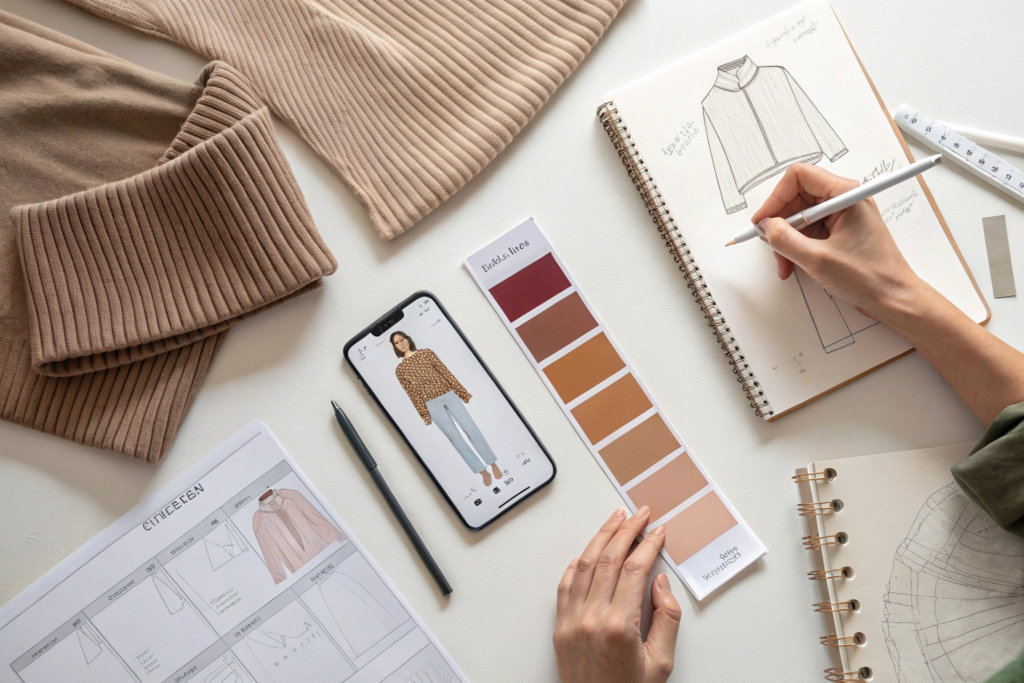
Designing for seamless is fundamentally different from designing for cut-and-sew. You cannot sketch a complicated color-block panel and assume the factory can just sew it together. There are no seams to hide the color changes. The design is created by the machine's programming and the yarn selection. This requires a shift in mindset for brand owners and designers. You have to think like a knitter, not a seamstress.
The brands that succeed with seamless are the ones who understand the limitations and lean into the strengths. They do not try to force a cut-and-sew design into a seamless mold. They create designs that celebrate the smooth, sculptural nature of the technology.
What Are The Design Limitations Of Circular Knitting Machines?
This is the first hard conversation I have with many new seamless clients. They come to me with a tech pack for a garment that has a raglan sleeve, a contrast color binding at the neck, and a zippered pocket. I have to explain that a seamless machine cannot do a raglan sleeve in the traditional sense. It cannot insert a zipper. It cannot do a contrast binding that is sewn on.
The machine creates a tubular form. You can create the illusion of a raglan by changing the stitch pattern in that area. You can create a pocket by knitting a double layer of fabric. You can create color blocking by using different colored yarns on different feeders, but the transitions will be horizontal stripes or subtle jacquard patterns, not sharp vertical color blocks.
Here are the key design parameters you need to know before you start sketching:
- Silhouette: Best for close-to-body fits. Seamless machines excel at leggings, bralettes, tank tops, bodysuits, and slim dresses. Loose, oversized fits are difficult to achieve without the garment looking like a shapeless sack.
- Color Placement: Horizontal stripes, marls, and all-over jacquard patterns work beautifully. Sharp vertical lines or large isolated graphic prints are not possible in the knitting process (you would need to sublimate or screen print after the garment is made, which adds a step).
- Construction Details: Expect bonded hems, laser-cut edges, and knitted-in straps. Do not expect topstitching, zippers, or traditional buttons.
How Do You Find A Reliable Seamless Garment Manufacturer?
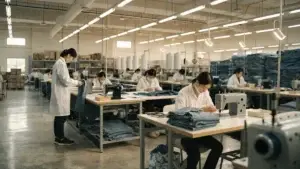
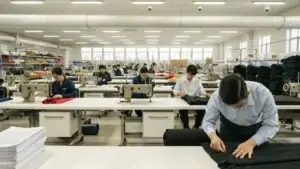
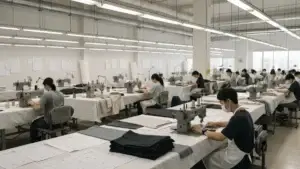
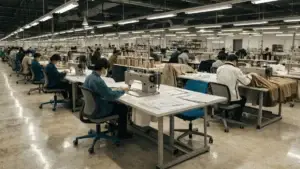
The barrier to entry for seamless manufacturing is high. The machines are expensive. A single high-gauge Santoni or Lonati seamless machine costs as much as a luxury car. Programming those machines requires specialized technicians who understand both software and textile physics. You cannot just walk into any cut-and-sew factory and ask for a seamless sample.
This is why many brands get burned. They find a factory that claims they can do seamless, but the factory actually outsources it to another subcontractor. Communication breaks down. Quality suffers. Lead times balloon.
At Shanghai Fumao, we made the decision to bring seamless production in-house. We have dedicated lines with experienced technicians. But for a brand looking for a partner, here is the checklist I recommend:
- Ask for a Video Tour: Ask to see the seamless machines running on their production floor. If they hesitate or say the machines are in "another building," be cautious.
- Request a Specific Seamless Sample: Ask for a physical sample of a legging or bralette they have made recently. Turn it inside out. Look at the consistency of the knit. Are there dropped stitches? Are the leg openings cleanly cut and bonded?
- Understand the MOQ (Minimum Order Quantity): Seamless has a higher MOQ per color than cut-and-sew. This is because setting up the yarn creel and programming the machine takes time. Expect an MOQ of 300 to 500 pieces per style per color for basic seamless. Some factories will quote lower, but the price per unit will be much higher to cover the setup labor.
- Clarify the Yarn Source: Where does the nylon come from? Is it certified recycled? Can the factory provide the GRS (Global Recycled Standard) transaction certificate? If sustainability is part of your brand promise, you need the paper trail to prove it.
Conclusion
Seamless garments have earned their place as the fastest growing trend in women's wear for a reason that goes far beyond marketing hype. The technology delivers a tangible benefit to the end consumer: unparalleled comfort through the elimination of chafing seams and the creation of a smooth, flattering silhouette. For the environment, knit-to-shape manufacturing drastically reduces the fabric waste that plagues the traditional cut-and-sew model. For brands, it offers a path to higher customer satisfaction, lower return rates, and a compelling sustainability narrative that resonates with today's conscious shopper.
The shift requires a new way of thinking about design. You must work within the language of yarns and knitting structures rather than pattern pieces and seams. You must partner with manufacturers who have the specialized equipment and technical expertise to execute these complex constructions. And you must understand the material science behind nylon, spandex, and covered yarns that make these garments perform.
But for those who make the leap, the reward is access to a product category that women genuinely love to wear and keep buying. At Shanghai Fumao, we are committed to helping our wholesale partners navigate this exciting space. We offer full-package seamless production, from yarn sourcing and machine programming to finishing and DDP shipping to North America and Europe.
If you are ready to explore adding seamless activewear, intimates, or ready-to-wear to your collection, I invite you to start a conversation with us. Our Business Director, Elaine, can answer your technical questions and provide guidance on MOQs and pricing for your specific designs. You can reach her directly at elaine@fumaoclothing.com. Let's build something smooth, comfortable, and successful together.