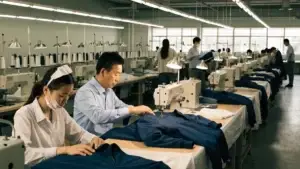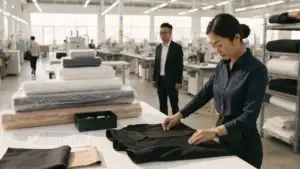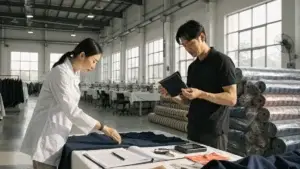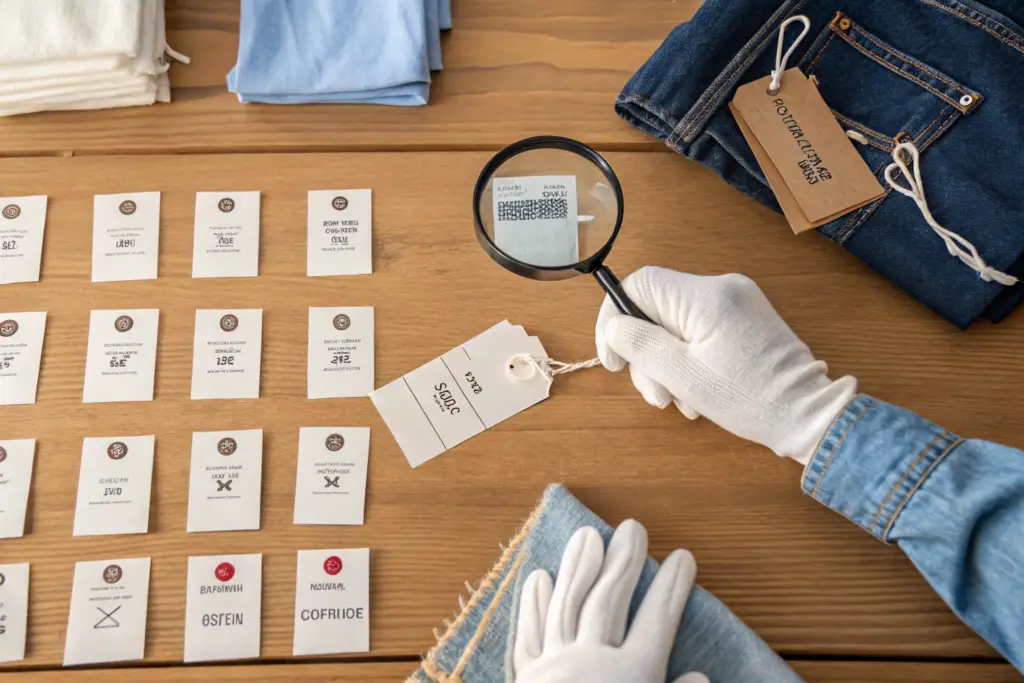
I cannot tell you how many times I have seen this happen. An American brand spends six months perfecting a jacket. The fit is flawless. The fabric is luxurious. The zippers are smooth. They ship it to their warehouse, ready to sell. Then they get an email from their fulfillment center. Or worse, a letter from customs. The care label is wrong. The fiber content is missing a percentage. The country of origin is printed too small or in the wrong location. The entire shipment gets held at the port. They rack up thousands in storage fees. Their launch date is blown. All because of a tiny piece of fabric that costs less than ten cents to make.
Ensuring your custom clothing tags meet international legal standards is not about being a lawyer. It is about following a precise, repeatable checklist for every single garment that leaves the factory. At Shanghai Fumao, we treat labeling compliance with the same seriousness as stitching quality. The rules are different in the USA, Europe, and Canada. But the core principle is the same everywhere: the consumer must know exactly what they are buying and how to take care of it. Getting this right protects your brand from fines, returns, and reputation damage.
If you get the labels wrong, the product is not legal to sell. It does not matter how beautiful the garment looks on the hanger. Customs officials do not care about your design awards. They care about the Textile Fiber Products Identification Act, the Care Labeling Rule, and whether the flammable fabric warning is present. As a factory owner who ships thousands of DDP orders to North America and Europe every year, I have learned exactly where the traps are hidden. Let me walk you through the process so you never have to deal with a shipment held hostage at the border.
What Are The Mandatory Label Requirements For The US Market?
The United States has some of the most detailed and strictly enforced labeling laws in the world. The Federal Trade Commission (FTC) does not mess around. They conduct random port inspections and online sweeps. If your garment is missing a required label element, they can issue a penalty of up to $51,744 per violation. For a small or medium-sized brand, one bad shipment could wipe out your profit for the entire year. That is not a risk you want to take.
I always tell my wholesale partners that the US label is a legal document first and a branding tool second. It must answer three questions for the government: Who made this? Where was it made? What is it made of? Let's break down the exact components that US Customs and Border Protection (CBP) officers look for when they open a carton from Shanghai Fumao.
Is Your Fiber Content Disclosure Accurate To The Percentage Point?
This is the number one mistake I see from new brand owners. They guess the fabric content based on what the sales rep told them. Or they round the numbers up or down to make it look cleaner. You cannot do that. US law requires you to list fibers in descending order of weight percentage. And you must be accurate within a 3% tolerance.
For example, if your fabric is actually 57% Cotton and 43% Polyester, you cannot label it as 60% Cotton and 40% Polyester just because it looks nicer on the tag. That is illegal. The FTC can and does test garments pulled from store shelves. Last year, a client of ours who runs a streetwear brand in Atlanta sent us a swatch of "100% Cotton Fleece." We always run a burn test and a chemical solubility test on incoming fabric as part of our quality control. We discovered the fleece actually contained about 8% polyester binder fiber to give it stability. That is a common practice in the textile industry. But it meant the fabric was 92% Cotton, 8% Polyester. We caught it. We printed the labels correctly. If we had printed "100% Cotton," that brand could have faced a class-action lawsuit for false advertising.
Here are the key FTC rules on fiber disclosure you must follow:
- Generic Fiber Names: Use names recognized by the FTC Textile Rules. Use "Spandex," not "Lycra" (unless Lycra is a registered certification mark and you have permission).
- The 5% Rule: If a fiber makes up less than 5% of the total weight, you can label it as "Other Fiber" unless that fiber has a functional significance (like spandex for stretch).
- Ornamentation Exclusion: If the decorative trim (like a metallic thread embroidery) is less than 15% of the surface area, you can state: "Exclusive of Decoration."
Where Should The Country Of Origin Marking Be Placed?
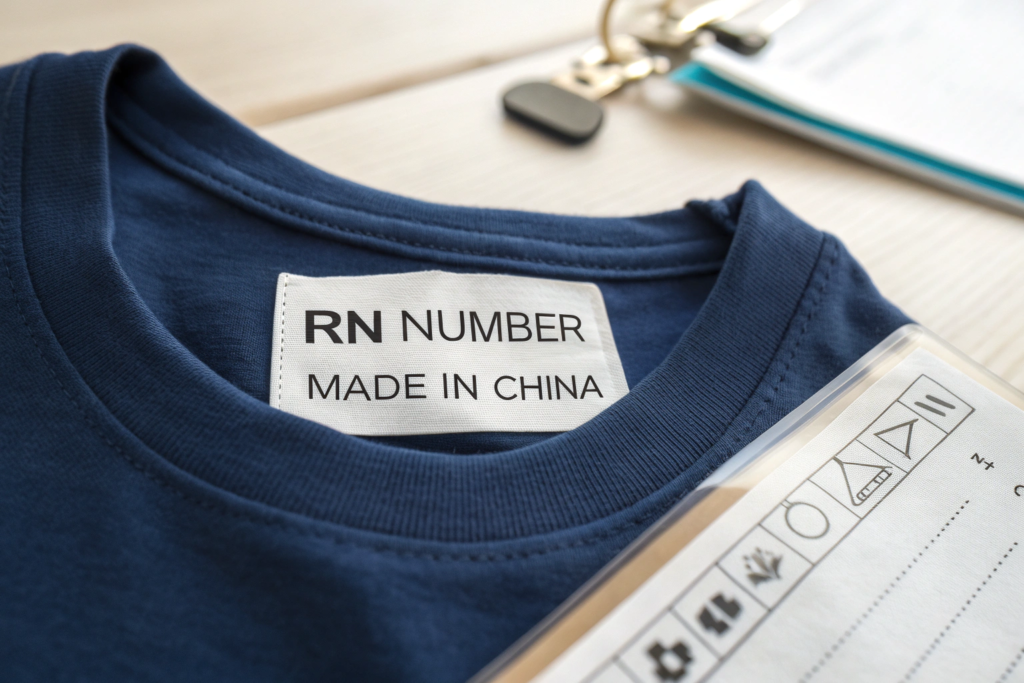
This seems simple: "Made in China." But the placement of those three words is governed by a very specific law called 19 CFR Part 134. The country of origin marking must be conspicuous. It must be in a place where the ultimate purchaser can find it easily and read it before they buy the item.
For a t-shirt, the neck label is the standard location. But what about a pair of trousers? A neck label does not exist. We have to print it on the inside waistband care label. And here is a detail many brands miss: the font size must be legible. The letters cannot be smaller than the smallest text on the main brand label. If your brand name is in 12-point font, "Made in China" cannot be hidden in 6-point font.
We also have to think about the packaging. If the garment is sealed in a poly bag so the customer cannot see the neck label before purchase, the country of origin must also appear on the poly bag sticker. We handle this automatically for our DDP shipping clients. We print a custom barcode sticker for each unit that includes the SKU, size, and "Made in China" text on the outside of the bag. This simple step has saved our partners from having their shipments flagged by US Customs and Border Protection during random exams at the Port of Los Angeles.
How Do EU And UK Care Labeling Standards Differ From The US?
If you only sell in the USA, you can stop reading here. But if you sell to Europe or the UK, or if you have an online store that ships globally, you need to know this section. European labeling laws are similar in intent to US laws but different in execution. And since Brexit, the UK has its own separate set of rules that are almost identical to the EU rules, but with a different address for the "Responsible Person."
I learned this the hard way in 2023. We shipped a beautiful batch of women's linen dresses to a boutique in London. The dresses had perfect US-compliant labels. They were held at Heathrow Airport for four days because the UK Border Force rejected the care symbols. The US uses the ASTM system of care symbols. The EU and UK mandate the GINETEX system. They look almost the same, but the technical specifications are different enough to cause a hold.
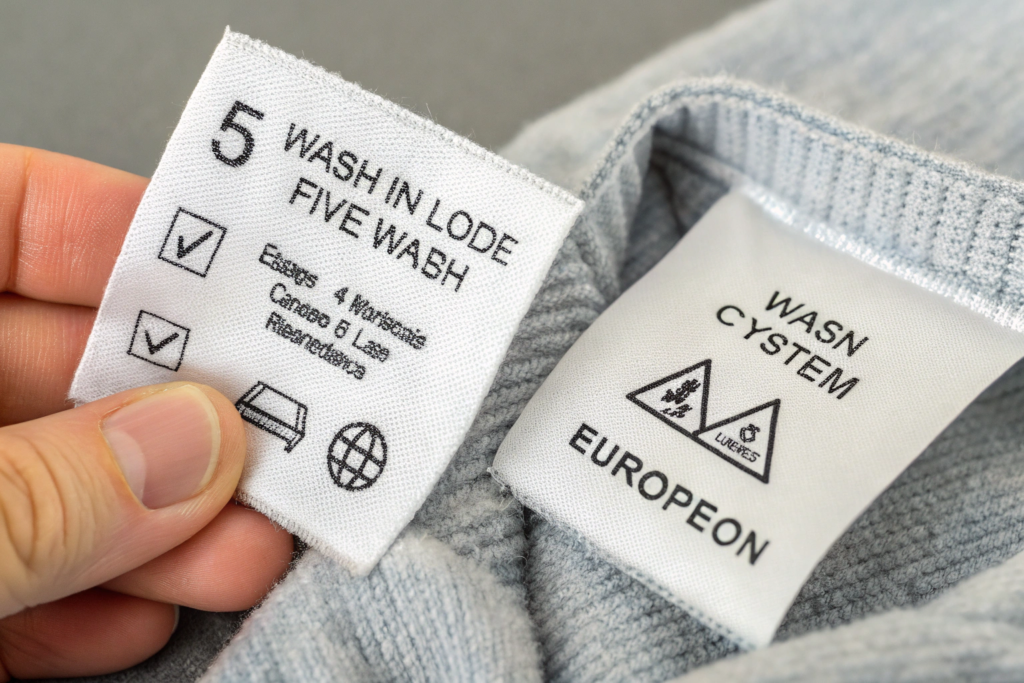
Why Are Five Symbols Not Enough For EU Compliance?
In the United States, the FTC allows a care label to use written instructions or ASTM Standard D5489 symbols. You can write "Machine Wash Cold, Tumble Dry Low" in English. That is perfectly legal. In the European Union, written instructions are not enough. You must use the registered GINETEX symbols. And there are specific rules about which symbols can be used together.
The EU system uses five basic symbols:
- Washtub: Washing process.
- Triangle: Bleaching.
- Iron: Ironing.
- Circle: Dry cleaning.
- Square: Drying (Tumble dry or natural dry).
But here is the critical difference: The EU requires a specific sequence and the absence of text. You cannot put the word "Do Not Bleach" under the triangle. The crossed-out triangle must stand alone. This is a major shift for US brands who are used to spelling everything out. We work with a label supplier who is certified by GINETEX to ensure the symbol resolution and sizing meet the strict ISO 3758 standard. A blurry or slightly distorted symbol is considered non-compliant.
What Is A UK Responsible Person And Do You Need One?
Since the UK left the EU, they created the UK Conformity Assessed (UKCA) marking system. For apparel, this mostly relates to General Product Safety Regulations. For a factory like Shanghai Fumao, we are the manufacturer. But the law requires that there is an Economic Operator established inside the United Kingdom who takes responsibility for the product compliance.
If you are an American brand selling into the UK, you must appoint a "UK Responsible Person" or act as one yourself if you have a legal entity there. This is not something we can provide as the factory. We provide the technical file and the Declaration of Conformity. But you must put the name and address of the UK entity on the label or the packaging.
Here is a quick comparison table I use to train my sales team so they can guide our clients correctly:
| Requirement | USA (FTC & CBP) | EU (Regulation 1007/2011) | UK (UKCA / GPSR) |
|---|---|---|---|
| Fiber Content | Descending order, +/- 3% tolerance | Descending order, translated into local language | Same as EU rules |
| Care Instructions | Written words OR ASTM symbols | GINETEX Symbols ONLY (No words) | GINETEX Symbols ONLY |
| Country of Origin | "Made in China" on label | "Made in China" (or non-preferential origin) | "Made in China" |
| Address on Label | RN Number or Full Company Address | Full EU Address of Responsible Party | Full UK Address of UK Responsible Person |
One of our long-term clients who sells on Amazon UK almost had their listing deactivated because they did not have the UK Responsible Person address printed on the hang tag. We caught it during the pre-production sample review. We updated the hang tag artwork and saved them from having to re-label 2,000 units in a UK warehouse at a cost of £1.50 per unit.
What Common Labeling Mistakes Cause Shipment Delays At Customs?
Most customs delays are not caused by smuggling or major fraud. They are caused by small, sloppy errors in the label room. The customs officer opens a box at random. They look at the label. Something does not match the commercial invoice or the packing list. They stamp "HOLD" on the shipment. Now you are paying storage fees while a broker argues with a government agent over a missing comma.
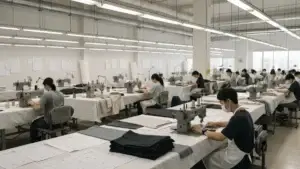
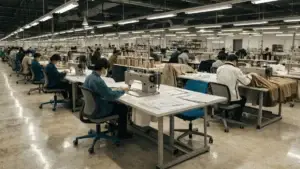
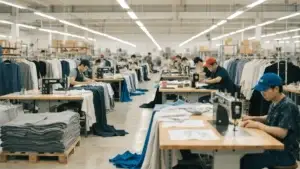
At our factory, we have a dedicated Label Compliance Officer whose only job is to review every single label batch before it goes to the sewing floor. It costs us an extra salary, but it saves our clients tens of thousands of dollars in aggregate every year. Let's look at the two most common errors that trigger these expensive holds.
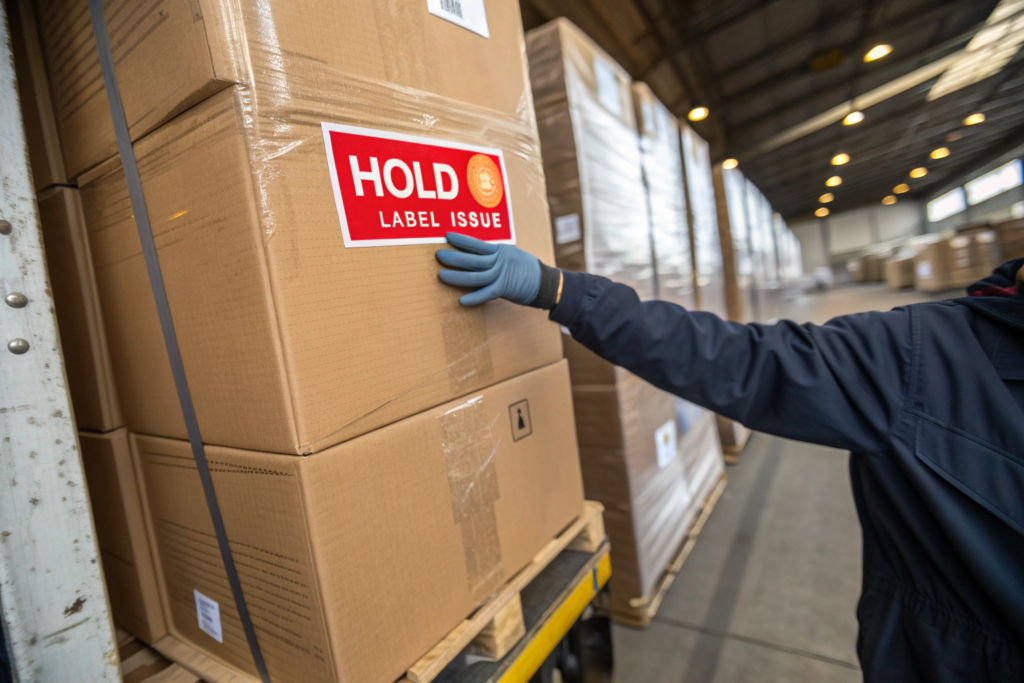
Does Your Label Match The Packing List And Invoice Exactly?
This is the "Triple Match" rule. The Fiber Content, the Country of Origin, and the Style Number on the physical garment label must exactly match the description on the Commercial Invoice and the Packing List. Word for word.
I will give you a real example from our production floor. We made a run of men's shirts for a distributor in Texas. The label on the shirt said: "60% Cotton / 40% Recycled Polyester." The commercial invoice created by their freight forwarder simply said: "60% Cotton / 40% Polyester." The word "Recycled" was missing. Because of that one missing word, the Automated Commercial Environment (ACE) system flagged the entry for a documentation discrepancy. The container sat in the Port of Houston for three days while the broker had to file a Post Entry Amendment (PEA).
This is why we insist on seeing the final draft of the commercial invoice before we pack the goods. We check the label against the invoice line by line. If you claim "Recycled Polyester," you better have the GRS (Global Recycled Standard) certificate to back it up. If you claim "Organic Cotton," you need the GOTS certificate. We keep a digital library of these mill certificates and match them to the specific Purchase Order.
Are Your Flammability Warnings Missing On Specific Fabrics?
This is a dangerous and often overlooked requirement. In the United States, the Flammable Fabrics Act (FFA) requires that certain garments made with specific fabrics carry a warning. This is most common with brushed rayon fabrics or terry cloth robes.
We produced a line of children's pajamas last year for a client. This is the highest-risk category for flammability. The fabric was a Polyester Fleece. By law, children's sleepwear must either be:
- Made from inherently flame-resistant fabric (like specific treated polyesters).
- Be "Snug-Fitting" and carry a specific yellow hang tag warning: "For child's safety, garment should fit snugly. This garment is not flame resistant."
We sent a sample to a CPSC-accepted third-party laboratory for testing. The test results showed the fabric did not meet the tight-fitting exemption requirements. We had to switch to a certified flame-resistant fabric supplier to legally ship that order. If we had ignored this and shipped the pajamas with a standard label, and if a child had been injured, the legal liability would have been catastrophic for both the brand and the factory.
How Can You Streamline Label Artwork Approval With Your Factory?
Getting labels right should not be a source of stress. It should be a simple, repeatable process that takes a few days, not a few weeks. But many brands get stuck in an endless loop of email attachments. The factory sends a PDF. The brand prints it, scribbles on it, scans it, and emails it back. The factory makes changes. They send a new PDF. Repeat ten times. It is a waste of time for everyone.
At Shanghai Fumao, we have moved to a digital-first approval system that cuts the artwork phase down to a maximum of two rounds. Here is how we help our wholesale partners get their custom labels locked in fast.

What File Format Do You Need For High-Quality Woven Labels?
This is the question that determines whether your logo looks crisp or like a blurry blob. You cannot send a JPEG screenshot from Instagram. We need a Vector File. Specifically, we need an .AI (Adobe Illustrator) or .EPS file.
Here is why this matters for legal labels. The small text for fiber content and RN numbers is often printed at a very small point size (sometimes 6pt or smaller). If you send a raster image like a JPEG, the text edges will be jagged and unreadable. The customs officer will look at it with a magnifying glass and say, "I cannot read this. It is non-compliant."
We guide our clients through this checklist before we start the label sampling process:
- Vector Logo: Do you have the original .AI file of your brand logo?
- Font Files: If you use a custom font for "Made in China," please provide the .TTF or .OTF file. If not, we will substitute a standard Sans Serif font like Arial or Helvetica for the legal text.
- Pantone Colors: Please specify solid coated Pantone numbers for the thread colors. "Red" is not specific enough. Our damask weaving looms use the Pantone Matching System for dyed polyester yarn.
Should You Use A Physical Strike-Off Before Bulk Production?
Yes. Always. I do not care how good the digital mockup looks on the computer screen. The way a label looks printed on paper is different from how it looks woven with thread or printed on satin acetate. The scale feels different. The color looks different under warehouse lighting.
We produce a Strike-Off Sample for every new label design. This is a physical 6-inch piece of the actual label material with the actual weave or print. We send this to the client via FedEx. It costs about $30 and takes three days to arrive in the US. It is the best $30 you will ever spend.
Last month, a client approved a digital PDF of a woven neck label. The design had a thin, delicate border line around the brand name. It looked beautiful on the screen. When we wove the physical strike-off, that thin line was so fine that the loom needle could not hold the detail. It looked like a broken, dotted line instead of a solid one. Because we sent the physical strike-off, the client saw the issue immediately. We thickened the line in the artwork file. It took 24 hours to correct. If we had gone straight to bulk production of 5,000 labels, they would have been useless and we would have had to delay the shipment by 10 days to re-make them.
Conclusion
Complying with international clothing label laws is a detail-oriented process, but it does not have to be a mystery. The key is understanding that the label is not just a brand statement. It is a legal passport for your goods to cross borders and sit on retail shelves. In the US market, you must be exact with fiber content percentages, conspicuous with the "Made in China" marking, and vigilant about the FTCTextile Rules and Flammable Fabrics Act. In the EU and UK, you must abandon written care instructions and adopt the strict GINETEX symbol system, along with including the local address of a Responsible Person.
The most common reasons for customs holds are entirely preventable: a mismatch between the label text and the commercial invoice, or a missing flammability warning on a children's item. By using vector artwork files, insisting on physical strike-off samples, and maintaining a rigorous internal compliance check at the factory level, you eliminate these risks before the garments are even packed into cartons. A ten-cent label should never be the reason a ten-dollar profit margin disappears into storage and penalty fees.
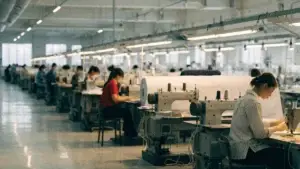
At Shanghai Fumao, we have built our labeling process to be a safety net for our wholesale partners. We understand the specific requirements of shipping DDP to North America and Europe, and we make sure every unit leaves our five production lines with tags that are ready for the retail floor and the customs inspector. If you want to take the guesswork and the stress out of your next production run, let's talk about how we can handle your labeling compliance from start to finish.
You can reach out to our Business Director, Elaine, directly. She can walk you through our label approval workflow and provide a quote for your custom woven tags and hang tags. Email her at elaine@fumaoclothing.com. Let's make sure your next shipment clears customs without a single delay.