The apparel supply chain is full of moving parts. For a U.S. brand, the journey from a factory in China to a warehouse in Los Angeles can feel like a gamble. I have seen this firsthand. One delay can ruin a season. One paperwork error can hold a container at customs for weeks. After fifteen years in this business, I have learned that efficient logistics is not about speed alone. It is about control, communication, and having a system that prevents problems before they start.
As the owner of Shanghai Fumao, a garment factory with five production lines, I have made logistics our strength. Our clients are established American brands. They do not just buy clothes from us. They buy peace of mind. They trust us to handle the journey from our sewing machines to their shelves. The most efficient way to handle international apparel logistics is to build a system based on transparency, a reliable DDP model, and a proactive communication structure that stops delays before they happen.
This article will break down our approach. I will share real stories from our work. You will see how we manage quality, communication, and delivery to make sure your products arrive on time, every time.
Why is DDP the most efficient shipping model for U.S. brands?
For years, many U.S. brands used the FOB model. Under FOB, the factory’s responsibility ends when the goods leave the Chinese port. The buyer then handles everything else. This includes booking the vessel, managing freight insurance, clearing customs in the U.S., and arranging final delivery.
I have seen this model cause a lot of stress. The brand owner becomes a part-time logistics manager. They have to coordinate with multiple parties. One mistake in the customs paperwork can lead to unexpected fees. A delay at the port becomes their problem, not the factory's.
For a brand owner like Ron, who is focused on rebranding and selling, this is a distraction. This is why I believe Delivered Duty Paid (DDP) is the most efficient model. Under DDP, we, as the manufacturer, take full responsibility. We manage every step until the goods arrive at your door. We pay the freight, the insurance, the customs duties, and the taxes.
How does DDP simplify the shipping process?
In the FOB model, you have to manage a chain of vendors: the factory, the freight forwarder, the customs broker, and the trucking company. With DDP, you have one vendor: us.
Think about the steps involved. After production, we handle the export customs clearance in China. We book the space on a ship or a plane. We manage the transit. We work directly with our U.S. customs broker to ensure the entry paperwork is perfect. We pay the duties on your behalf. Then, we arrange the final truck delivery to your warehouse.
For you, the process is simple. You place an order. You wait for it to arrive at your door. That is it. This single-point-of-contact model removes a huge administrative burden. It allows you to focus on what you do best: marketing and selling your brand.
What are the cost benefits of using DDP?
Many buyers worry that DDP is more expensive. They see a higher per-unit price and think they are overpaying. But I encourage you to look at the total cost.
Let me give you a real example. Last year, we worked with a new brand from New York. They initially asked for an FOB price. They thought it would be cheaper. They found a freight forwarder who quoted a low rate. However, when the goods arrived in the U.S., the forwarder added many extra fees. There were chassis fees, container inspection fees, and a customs exam fee. The brand owner spent hours on the phone, trying to understand the charges. Their final landed cost was actually 18% higher than our DDP quote would have been.
With DDP, we consolidate all costs. We have long-term contracts with shipping lines. We have a dedicated customs broker. We know the duty rates for every category of apparel. Because we move large volumes, we get better freight rates. We pass those savings to you. The DDP price we quote is the final price. There are no surprises. This financial predictability is a key benefit for any business owner.
How to guarantee quality control across international borders?
Quality is the foundation of any brand. If the quality is not right, the logistics do not matter. You cannot sell a product that falls apart. I understand that when you source from a factory in China, you are trusting a partner you may have never met in person. You cannot walk onto our factory floor every day. This is why I have built a quality control system that is rigorous, transparent, and gives you a way to verify our work.
For a brand owner who is sensitive to quality, the fear is that the factory will cut corners. They worry about using cheaper fabric or sloppy sewing. My answer to that is simple: we do not cut corners because our business depends on long-term partnerships, not one-time orders.
What are the critical stages for in-line inspections?
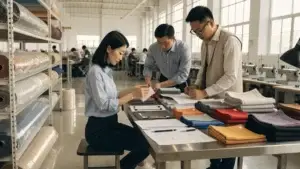
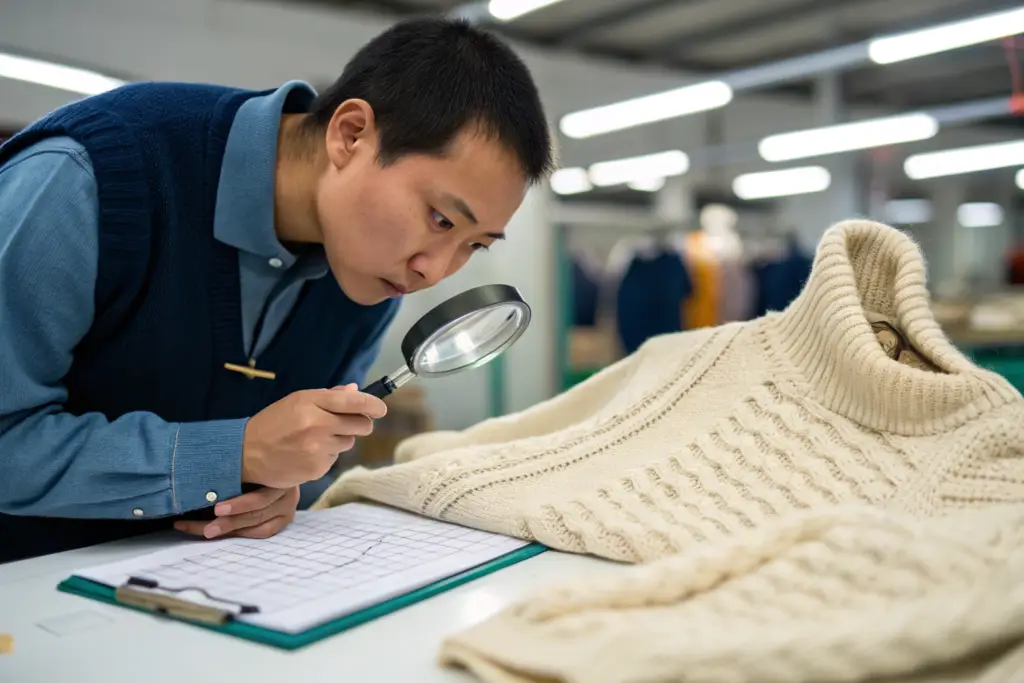
Many factories will only inspect the final product. This is a mistake. If you wait until the end, you might find a problem that is now in thousands of pieces. At Shanghai Fumao, we have a three-stage inspection process. This process catches issues early.
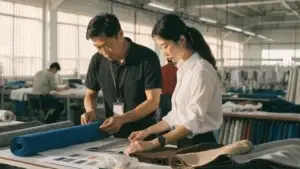
First, we inspect the raw materials. Fabric is the most important part. When the fabric arrives from our mill, our team checks it against the buyer's specifications. We check the color, the weight, and the construction. We test for shrinkage and colorfastness. Last year, for a client in Texas, we discovered a roll of fabric had a subtle color variation from the rest. We caught it before a single piece was cut. We returned the fabric to the supplier and got a new batch. This saved the client from having a full order of mismatched garments.
Second, we do in-line inspections during production. Our supervisors are on the floor all day. They check the first piece off each sewing line. They check measurements every hour. They check for loose threads, uneven seams, and correct labeling. This is a constant process.
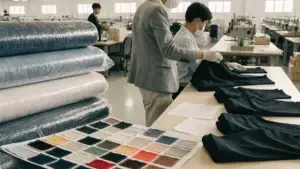
Third, we do a final inspection when the goods are 100% complete. This is the final check before packing. We use the AQL (Acceptable Quality Limit) standard. This is an internationally recognized sampling method. We randomly select a sample from the finished batch. We inspect each piece in the sample for defects. If the number of defects is below the limit, the order passes.
How do you verify supplier certifications are real?
This is a major pain point for buyers. I have heard stories of factories presenting fake certificates. It is a serious problem in the industry. A fake certificate can lead to your products being held at customs or even destroyed. It can also damage your brand's reputation if your customers discover the products are not ethically made or safe for children.
I believe in complete transparency. When we say we have a certain certification, we will prove it. For example, one of our key certifications is for our knitwear production. We are certified by WRAP, the worldwide standard for ethical manufacturing. This is not just a document we keep in a drawer. Our clients are welcome to request a video call to see the certificate, or we can provide the verification number so they can check its status online with WRAP.
For a client in Colorado last year, we went a step further. They were sourcing organic cotton t-shirts. They wanted to be sure the organic certificate was legitimate. We did not just send them a PDF. We arranged a live video walk-through with their team. We showed them the fabric storage area, with the organic cotton clearly segregated and labeled. We showed them the production line dedicated to their order. We then pulled up the certificate on our computer screen, showed them the issuing body, and gave them the direct contact to verify it themselves. This built a level of trust that no document alone could provide. We can do the same for any client.
How to avoid communication breakdowns with overseas suppliers?
Inefficient communication is one of the biggest frustrations for U.S. buyers. I hear this all the time. Emails go unanswered for days. Questions get misunderstood. A simple request for a sample turns into a week-long puzzle. This inefficiency is not just annoying. It costs time and money. It can lead to production delays and the wrong products being made.
I have built my team to solve this problem. We understand that you are not just buying a product. You are buying a relationship and a process. We want that process to be smooth. We want you to feel like our team is an extension of your own team. This requires a specific communication structure.

What communication tools work best for apparel production?
We use a mix of tools to make sure information is shared clearly and quickly. We do not rely on one single method.
For quick questions and daily updates, we use WhatsApp. It is fast. If our production manager needs to ask you a question about a button color, we can take a photo and send it to you in seconds. You can reply immediately. This avoids a long email chain. For a recent project with a brand in Chicago, we used a shared photo album on Google Photos. We uploaded daily pictures of their order. They could see the fabric on the cutting table, the sewing in progress, and the final packed cartons. This visual transparency gave them complete confidence. They did not have to wonder if their order was on schedule. They could see it.
For more formal things, like tech packs, specification sheets, and inspection reports, we use email. This creates a clear, searchable record. Our sales team is trained to respond to all emails within 12 business hours. This is a promise. Even if we do not have the final answer, we will respond to acknowledge the message and give an estimated time for the full reply.
How to set up a timeline that prevents delays?
A timeline is not just a date on a calendar. It is a roadmap. At the start of every project, we create a detailed production schedule. We share it with the client. This schedule breaks the whole process into steps. It shows when we will order materials, when production will start, when the in-line inspections will happen, and when the final shipment will leave.
We mark critical milestones. A milestone might be the approval of the fabric sample. Another might be the approval of the production sample. The project cannot move to the next step until the client approves the current step. This puts control in your hands. You are not surprised by a shipment being ready before you have approved the final product.
We also build in buffers. In my experience, a 10-15% buffer in the timeline is essential. This is not a secret. We tell our clients about it. It protects against unexpected events. For example, a dye house might have a machine breakdown. With a buffer, we can absorb that delay without missing the final shipment date. If everything goes perfectly, the goods arrive early. This is a much better position to be in.
One of our clients in Florida had a very tight deadline for a summer collection. We built a timeline with clear milestones and a one-week buffer. We used our WhatsApp group for daily status updates. When a shipping container shortage happened in Shanghai, we saw it coming. Because of our constant communication, we were able to pivot to a different shipping line immediately. The goods arrived at their warehouse exactly on the planned date, not a day late. They were able to launch their collection on time and captured the full summer sales window.
What are the key strategies for reliable logistics planning?
Logistics planning is the final piece of the puzzle. You can have perfect quality and great communication. But if the goods do not arrive on time, the entire project fails. I treat logistics as a core part of our manufacturing service, not an afterthought. It requires strategy and constant attention.
For a company owner like Ron, who is sourcing from multiple countries, reliability is key. He cannot afford to have his containers sitting at the port for weeks. He needs to know when his product will arrive so he can plan his marketing and sales. Our logistics strategy is built on strong partnerships and proactive planning.
How do you handle unpredictable shipping delays?
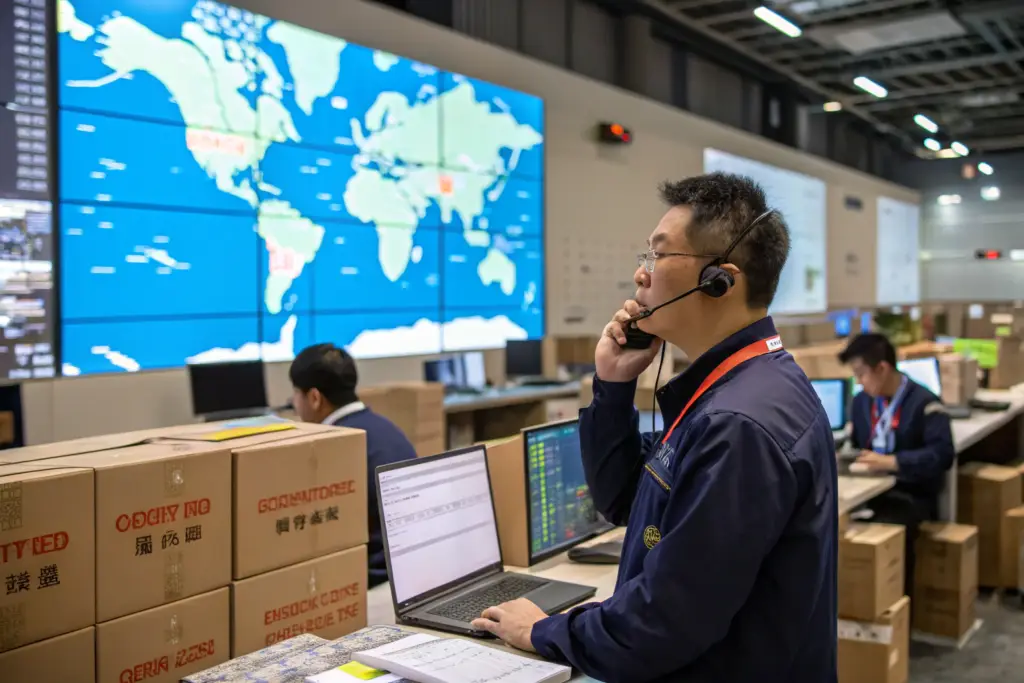
The last few years have taught the apparel industry that the supply chain can be unpredictable. Ports can close. Vessels can be re-routed. A strike can happen in one country and cause a ripple effect everywhere. You cannot control these events. But you can control how you respond to them.
Our strategy is to have multiple options. We are not tied to one shipping line or one route. Our logistics team constantly monitors the market. They track vessel schedules and port conditions. If one route starts to show congestion, they can book space on a different line or through a different port.
We also use a mix of ocean freight and air freight. Ocean freight is the standard for most apparel because it is cost-effective. But sometimes, speed is more important than cost. If a client misses a production deadline due to a delay in fabric, we might suggest using air freight for part of the order. This allows them to have stock for a launch while the rest comes by sea. We always present the options with clear cost and time comparisons. The client can then make the best business decision.
For a client in Seattle, we had a situation where their order was ready right as the Chinese New Year holiday began. Vessel space was extremely tight. Our team had pre-booked space for the week before the holiday. This proactive booking ensured their containers were loaded on the vessel and left before the holiday rush. If we had waited, their goods would have been stuck at the port for an extra three weeks. This pre-planning is standard practice for us.
What documentation is critical for U.S. customs clearance?
Customs clearance is where many shipments fail. A small error on a piece of paper can cause a container to be held for a customs exam. This can take weeks and cost thousands of dollars in storage fees. The key to a smooth clearance is accurate and complete documentation.
For every shipment to the U.S., we prepare a set of documents. This includes the commercial invoice, packing list, and bill of lading. These documents must match exactly. The information on the commercial invoice must be the same as what is on the packing list. The item descriptions must be accurate and clear. For apparel, we specify the fiber content, the garment type, and the Harmonized Tariff Schedule (HTS) code.
This is a critical area where we use our expertise. Our team is trained to classify products correctly. If you are sending a women's 100% cotton knit sweater, we use the correct HTS code. A wrong code can lead to the wrong duty being charged. It can also trigger an audit. We also handle the ISF (Importer Security Filing) requirements. This filing must be submitted at least 24 hours before the vessel loads at the origin port. If this is late, the carrier can issue a penalty. We handle this filing through our systems, so you do not have to worry about it.
We also provide a document called the "Third-Party Inspection Certificate" when requested. This shows that a recognized inspection company, like SGS or Intertek, has verified the quality and quantity of the goods. This document can help expedite the clearance process because it gives U.S. Customs more confidence in the shipment. We have a long-standing relationship with SGS for our larger clients who require this independent verification. It is one more tool we use to make sure your goods move through customs without any issues.
Conclusion
I have spent my career building Shanghai Fumao to be the partner I would want if I were in your shoes. I know what it is like to worry about a shipment. I understand the frustration of an email that goes unanswered. I have seen the damage that poor quality can do to a brand.
The most efficient way to handle international apparel logistics is not a single secret. It is a combination of choices. It is choosing the DDP model to take control of the entire journey. It is building a quality system that finds problems early, before they become big problems. It is committing to clear, proactive communication that uses the right tools and respects your time. And it is planning your logistics with flexibility, preparing for the unexpected so that a delay does not become a disaster.
When you work with us, you are not just placing an order. You are starting a partnership. We want to be your manufacturing extension in China. We want to take the complexity off your plate. Our goal is to give you back your time. You can then use that time to grow your brand, to connect with your customers, and to focus on the big picture.
If you are looking for a reliable partner who values quality, clear communication, and on-time delivery as much as you do, let us talk. I invite you to reach out to our Business Director, Elaine. You can contact her directly at elaine@fumaoclothing.com. She can walk you through our process, answer your specific questions, and show you how we can make your next collection a success. Let us handle the logistics, so you can handle the growth.