You have a new design. You need a sample. You want it to look like the final product. But the final fabric is not ready. It is being developed. It is on order. It is too expensive for sampling. What do you do? You wait. Weeks pass. The sample is delayed. Or you use a substitute fabric. The sample looks different. The fit is off. You are not sure if the design works. I have seen this dilemma many times. The choice of sampling fabric can make or break your development timeline.
Based on our experience developing thousands of samples, the best fabrics for initial garment sampling are those that mimic the final fabric's properties while being readily available and cost-effective. For example, last year we worked with a brand from New York developing a silk blouse. The final silk was on a 12-week lead time. They could not wait. We used a polyester charmeuse for the initial samples. The drape was similar. The hand feel was close. The client could validate the design and fit. By the time the final silk arrived, the pattern was perfected. The brand saved 8 weeks. That is the power of choosing the right sampling fabric.
So, what fabrics are best for initial garment sampling? Let me break it down by fabric category. I will explain the properties to look for. I will share the standard sampling fabrics we keep in stock. And I will give you guidelines for choosing substitutes when the final fabric is not available.
What Properties Should Sampling Fabrics Have?
Not every fabric works for sampling. I remember a client from Chicago. They used a heavy cotton twill to sample a lightweight dress. The sample was stiff. The drape was wrong. The client rejected the design. The design was fine. The sampling fabric was wrong.
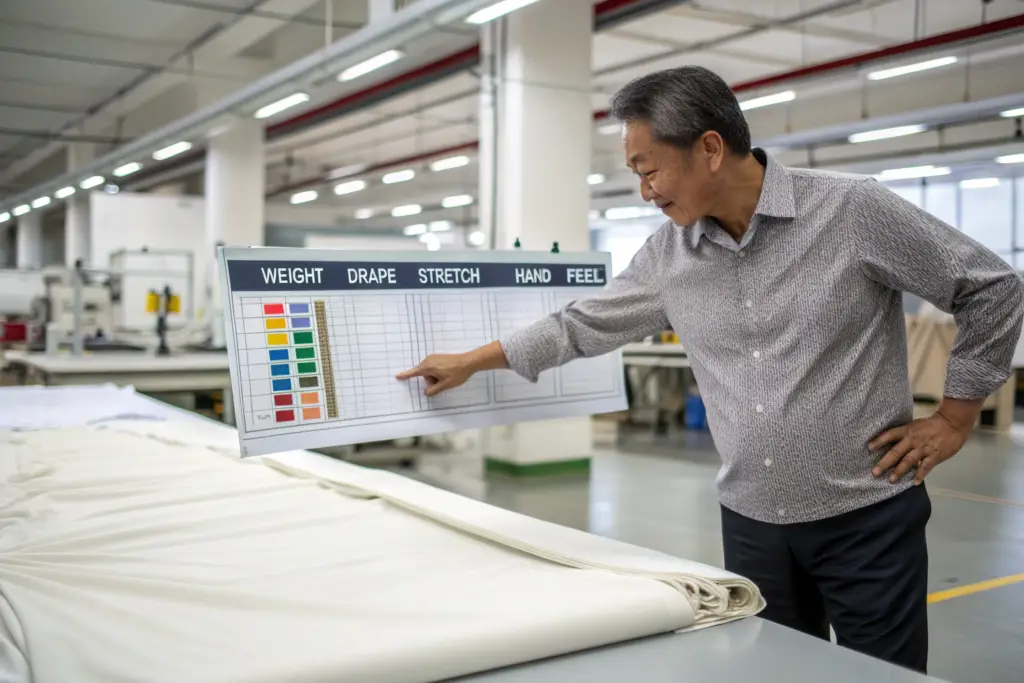
A good sampling fabric should mimic the final fabric's weight, drape, and stretch. It should be readily available. It should be cost-effective. For the Chicago client, we identified a lightweight rayon challis as a substitute for their final fabric. The drape was similar. The sample accurately represented the design. For woven tops, we use a standard polyester or rayon challis for sampling. It has good drape. It is available in many colors. For knit tops, we use a standard cotton jersey. It is available in different weights. For outerwear, we use a standard nylon or polyester taffeta. It mimics the hand feel of performance fabrics.
We also consider the final fabric's stretch. If the final fabric has spandex, the sampling fabric should also have spandex. Otherwise, the fit will be different.
How Do You Match Drape and Weight for Sampling?
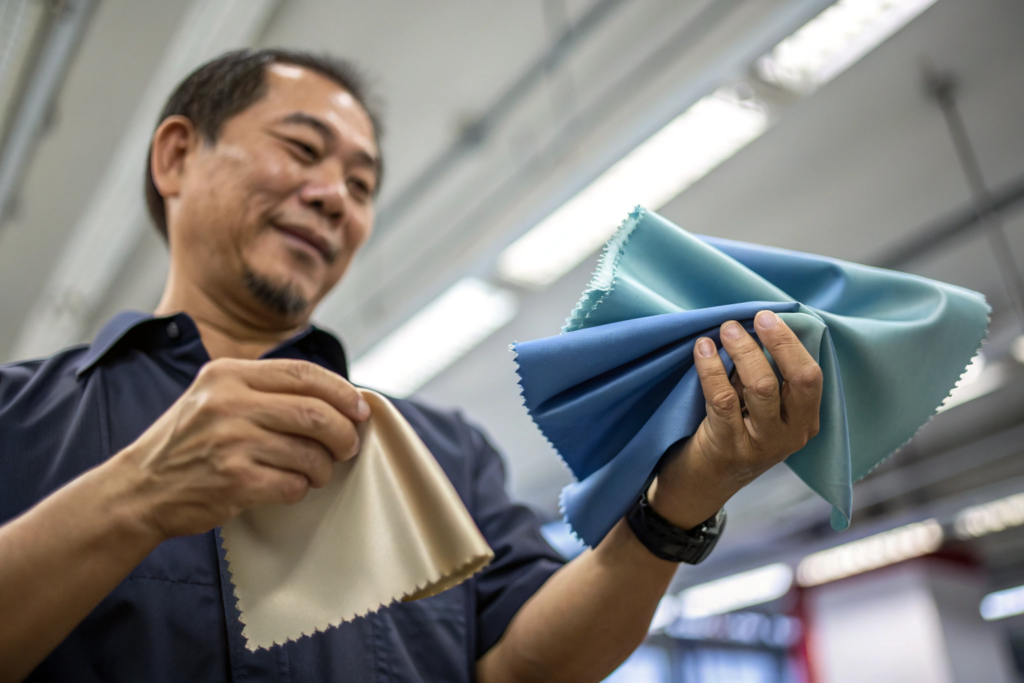
Drape is how the fabric falls. Weight is how heavy it is. To match drape, choose a fabric with a similar weave or knit structure. For a flowing dress, use a lightweight challis or charmeuse. For a structured jacket, use a medium-weight twill. To match weight, check the GSM. For a sportswear client, the final fabric was 200 GSM nylon-spandex. We used a 200 GSM polyester-spandex for sampling. The weight matched. The drape was similar. The fit was accurate.
Why Is Stretch Matching Critical for Fit Samples?
Stretch affects fit significantly. If the final fabric has 20% stretch and the sampling fabric has 0% stretch, the sample will fit tighter. The pattern will be wrong. For a denim client, the final denim had 2% stretch. We used a similar stretch denim for sampling. The fit was accurate. If we had used rigid denim, the sample would have been too tight.
What Sampling Fabrics Do We Keep in Stock?
A good sample room has a library of standard sampling fabrics. I remember a client from Seattle. They needed a sample quickly. We had the fabric in stock. The sample was made in 3 days. The client was amazed.
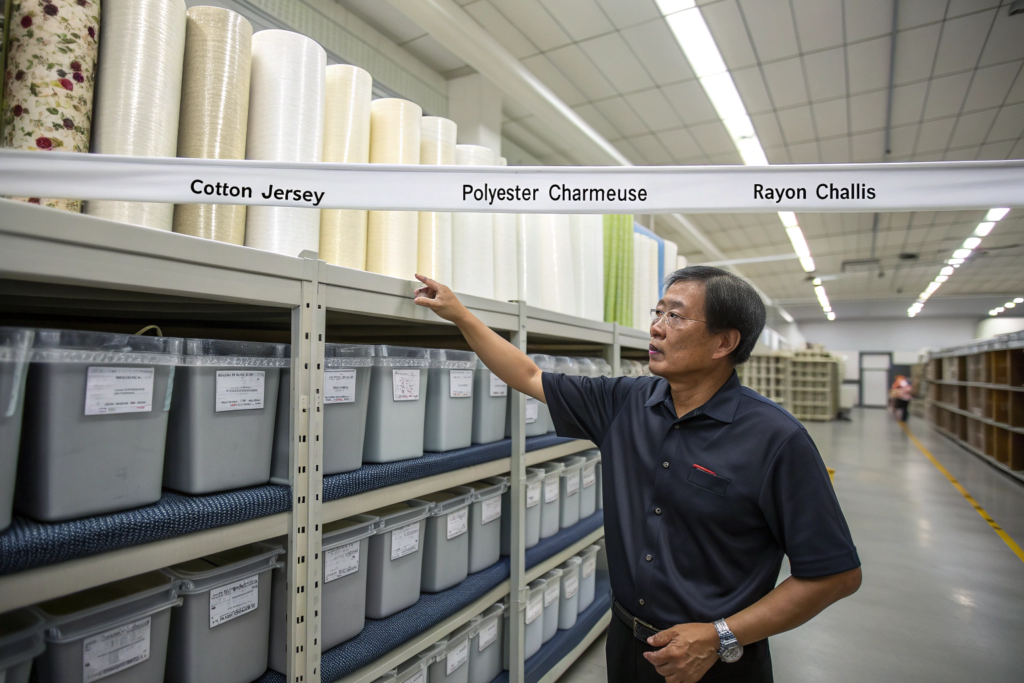
We maintain a stock of standard sampling fabrics for all major categories. For knits: cotton jersey (180 GSM, 200 GSM, 220 GSM), cotton-spandex jersey, French terry, and fleece. For wovens: polyester charmeuse, rayon challis, cotton poplin, cotton twill, and linen blend. For outerwear: nylon taffeta, polyester taffeta, and soft-shell fabric. For the Seattle client, we used our stock cotton jersey. The sample was ready quickly. For fast fashion, having stock fabrics is essential. Speed is critical. Waiting for fabric kills speed.
We also stock standard colors: white, black, navy, grey, and beige. These work for most initial samples. Color matching can wait for later rounds.
What Knit Fabrics Do You Stock for Sampling?
Our knit sampling stock includes:
- Cotton jersey: 180 GSM for lightweight tops, 200 GSM for standard tops, 220 GSM for heavier tops
- Cotton-spandex jersey: 200 GSM with 5% spandex for fitted styles
- Rib knit: for cuffs and neckbands
- French terry: 280 GSM for sweatshirts
- Fleece: 320 GSM for hoodies
For a t-shirt client, we used 200 GSM cotton jersey. The sample accurately represented the final product.
What Woven Fabrics Do You Stock for Sampling?
Our woven sampling stock includes:
- Polyester charmeuse: for silk-like blouses and dresses
- Rayon challis: for soft, flowing dresses and blouses
- Cotton poplin: for crisp shirts
- Cotton twill: for pants and jackets
- Linen blend: for spring and summer styles
For a blouse client, we used polyester charmeuse for the initial sample. The drape was similar to the final silk. The client validated the design.
Sometimes the final fabric is not available for sampling. It may be in development. It may be on a long lead time. It may be too expensive. I remember a client from Boston. They had a custom wool blend for a coat. The wool was 12 weeks out. They needed samples for a trade show in 4 weeks. We found a substitute.
When substituting, look for a fabric with similar weight, drape, and stretch. For the Boston client, the final fabric was a 400 GSM wool-cashmere blend. We substituted with a 400 GSM wool-polyester blend. The weight was the same. The drape was similar. The sample looked accurate. For outerwear, we often substitute with a similar weight wool or nylon. For denim, we substitute with a similar weight and stretch denim. For activewear, we substitute with a similar weight nylon-spandex. We always inform the client about the substitution. We explain why it works. We note any differences.
What Do You Do When the Final Fabric Has Unique Properties?
Some fabrics have unique properties that are hard to substitute. A fabric with a special finish. A fabric with a unique texture. In these cases, we may need to wait for the final fabric. But we can still do pattern development with a substitute. We can test the silhouette and construction. For a luxury client, the final fabric was a custom jacquard. We used a similar weight plain weave for initial samples. The silhouette was validated. When the jacquard arrived, we made a final sample with the correct fabric.
How Do You Document Fabric Substitutions for Future Rounds?
Documentation is important. We note the substitution in the sample record. We note the differences between the sampling fabric and the final fabric. For a sportswear client, we noted that the sampling fabric had 5% less stretch than the final fabric. The pattern maker adjusted for the final fabric. The fit was accurate.
How Do Sampling Fabrics Affect Fit and Construction Testing?
The sampling fabric affects more than just the look. It affects the fit and the construction. I remember a client from Denver. They sampled a stretch top in a non-stretch fabric. The fit was too tight. They adjusted the pattern. When the final stretch fabric arrived, the fit was too loose. The pattern had been over-corrected.
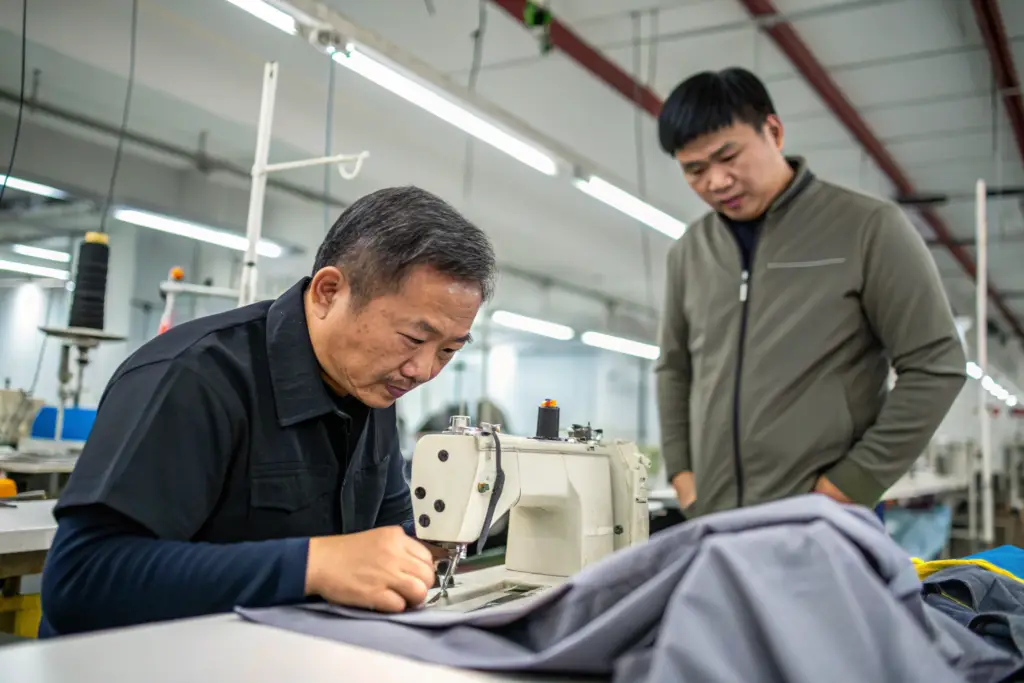
Sampling fabrics must allow accurate fit and construction testing. If the sampling fabric has different stretch, the fit will be different. If the sampling fabric has different weight, the seam construction may need to change. For the Denver client, we now match stretch properties. For knits, we use sampling fabrics with the same spandex content. For wovens, we match the weight and weave. For outerwear, we match the stiffness and drape.
We also test construction on the sampling fabric. If a seam type works on the sampling fabric, it may not work on the final fabric. We note these differences.
How Does Fabric Weight Affect Fit Testing?
Fabric weight affects how the garment hangs. A heavier fabric will pull down more. A lighter fabric will float. For a dress client, the final fabric was a lightweight silk. We sampled in a lightweight polyester charmeuse. The weight was similar. The fit test was accurate. If we had used a heavier fabric, the dress would have hung differently.
How Do You Test Construction on Sampling Fabrics?
We test seam types, stitch types, and finishing methods on the sampling fabric. If the sampling fabric is similar to the final fabric, the construction test is valid. If it is different, we note that the final fabric may require adjustments. For a denim client, we tested topstitching on a similar weight denim. The stitch tension was correct. When the final denim arrived, we used the same settings.
Conclusion
The right sampling fabric speeds up development. It allows you to validate design and fit without waiting for the final fabric. It reduces the number of sample rounds. It ensures that your pattern is correct before you commit to expensive final materials.
At Shanghai Fumao, we maintain a comprehensive stock of sampling fabrics. We have fabrics for knits, wovens, outerwear, and denim. We know how to substitute when the final fabric is unavailable. We match weight, drape, and stretch to ensure accurate testing. We help our clients move fast without compromising quality.
Let us help you with your next sample. Contact our Business Director, Elaine, directly at elaine@fumaoclothing.com. Tell us about your final fabric. We will recommend the best sampling fabric to get you started.