I have managed production schedules for hundreds of women's wear orders. The biggest mistake I see from new brand owners is accepting unrealistic timelines.
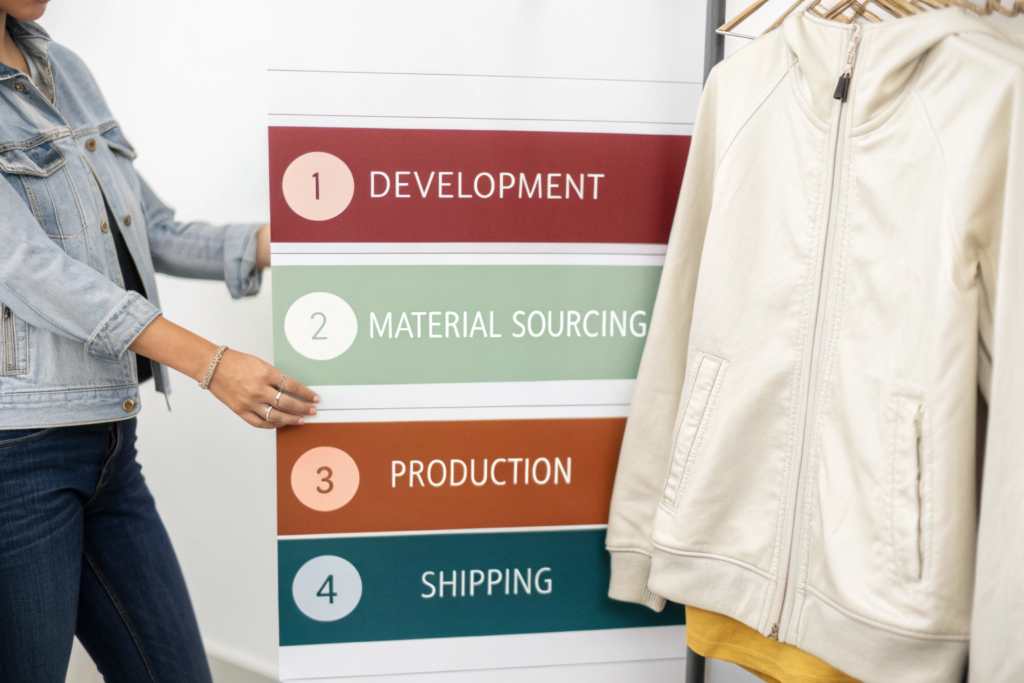
A realistic production timeline depends on four factors: design complexity, fabric availability, order quantity, and factory capacity. For bulk women's wear production, you should expect 60 to 120 days from order confirmation to shipment. Breaking this down into clear phases helps you plan your launch with confidence and avoid costly delays.
At Shanghai Fumao, we believe in honest timelines. I would rather tell a client the truth than promise a date I cannot keep. This guide will help you ask the right questions and build a schedule that works.
What are the key phases in a women's wear production timeline?
Understanding the phases helps you see why a timeline is built a certain way. Each phase has its own time requirements. You cannot rush some steps without risking quality.
How long does the development and sampling phase take?
This is where your design becomes a real garment. It is the most creative phase. It is also where many delays start if the process is unclear.
I worked with a brand from Los Angeles last year. She was launching a women's dress collection. She came to me with beautiful sketches. She wanted production in 45 days. I told her that was impossible for a new style. We broke down the development phase together.
Here is what that phase looked like for her:
| Step | Time Required | Key Activities |
|---|---|---|
| Tech Pack Review | 3-5 days | My team checks measurements, construction details, and trim specs |
| Pattern Making | 5-7 days | Creating digital patterns for the dress |
| Sample Cutting | 2-3 days | Cutting the first prototype |
| First Sample Sewing | 5-7 days | Sewing the first sample for review |
| Sample Review & Revisions | 7-10 days | Client reviews sample, we make adjustments |
| Final Sample Approval | 3-5 days | Client approves final sample before bulk |
For her dress, the development phase took 35 days. She approved the final sample. Then we moved to material sourcing. She understood the timeline. She adjusted her launch date. The collection was a success because she planned realistically.
If she had pushed for 45 days total, we would have rushed every step. The fit would have suffered. The quality would have been compromised. She would have launched a bad product. That is worse than launching late.
What factors affect the material sourcing timeline?
Fabric and trims are the backbone of your production. If they are not ready, nothing moves forward.
A client from New York wanted a women's blazer in a specific Italian wool blend. She had seen the fabric at a trade show. She loved it. I told her the sourcing timeline would be longer than usual. The fabric was not in stock. It needed to be imported from Italy.
Here is the sourcing timeline we built:
- Fabric Ordering: 10-15 days for domestic fabric, 25-35 days for imported fabric
- Fabric Production: 15-20 days if the mill needs to weave the fabric
- Fabric Shipping: 10-15 days for international shipping
- Fabric Inspection: 2-3 days at our facility
- Trim Sourcing: 7-10 days for zippers, buttons, labels, and thread
For her Italian wool, the total sourcing time was 45 days. We ordered the fabric immediately after sample approval. While the fabric was shipping, we sourced all the trims. We overlapped tasks to save time.
I always tell clients: order your fabric early. If you have a signature fabric you use across collections, keep it in stock. This is the biggest lever you have to shorten your timeline.
How do you calculate production time based on order quantity?
Quantity changes everything. A small order moves fast. A large order requires more planning. You need to know how your quantity affects the timeline.
What is the difference between small batch and bulk production timelines?
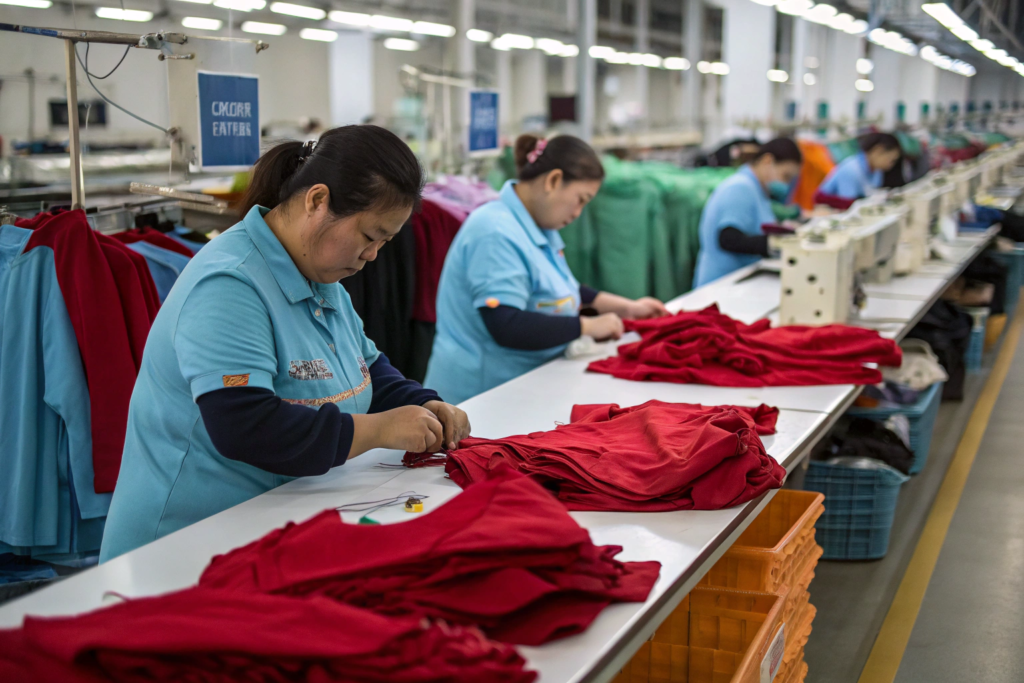
We have five production lines at our factory. Each line has a different capacity and speed. We match the line to your order size.
A client from Austin started with us two years ago. Her first order was 200 women's tops. We put her order on a small line. The production time was 12 days from cutting to packing.
Last year, she placed an order for 3,000 tops. That was a different situation. We used a larger line. We scheduled it carefully with other orders. The production time was 25 days.
Here is a general guide for bulk women's wear production:
| Order Quantity | Production Time (after materials ready) | Line Type |
|---|---|---|
| 50-300 pieces | 7-12 days | Small batch line, flexible scheduling |
| 300-800 pieces | 12-18 days | Medium line, dedicated workers |
| 800-2000 pieces | 18-25 days | Large line, multiple teams |
| 2000-5000 pieces | 25-35 days | Multiple lines, coordinated workflow |
The production time does not grow in a straight line. A 3,000-piece order does not take three times longer than a 1,000-piece order. We use more workers to keep the pace efficient.
How does style complexity impact production speed?
Not all women's wear is equal. A simple t-shirt moves fast. A structured dress with lining takes longer.
I remember a client from Chicago. She ordered two styles together. One was a simple knit top. One was a fully lined woven dress with a zipper and darts. Both orders were 500 pieces.
The knit top took 8 days to produce. The dress took 18 days. The dress required more skilled workers. It had more steps. The zipper and lining required extra time.
When you request a timeline, you need to be honest about your styles. A simple style can have a faster timeline. A complex style needs more time. Here are some complexity factors:
- Number of pattern pieces: A dress with 12 pieces takes longer than a top with 4 pieces
- Construction details: Pleats, darts, and gathers add time
- Lining: Fully lined garments take 30-40% longer
- Special techniques: Embroidery, beading, or appliqué add significant time
- Fabric type: Slippery or stretchy fabrics are slower to sew
What questions should you ask to verify a factory's timeline?
A timeline is only as good as the factory's ability to deliver it. You need to ask the right questions to know if a timeline is realistic.

How do you check if a factory has available production capacity?
A factory can promise you anything. The question is whether they have the space to deliver.
A client from Boston learned this the hard way. She found a factory online. They promised a 45-day timeline for her women's wear collection. She paid a deposit. Two weeks later, they told her they needed to push the timeline by 30 days. They had taken on too many orders. Her small collection was not a priority.
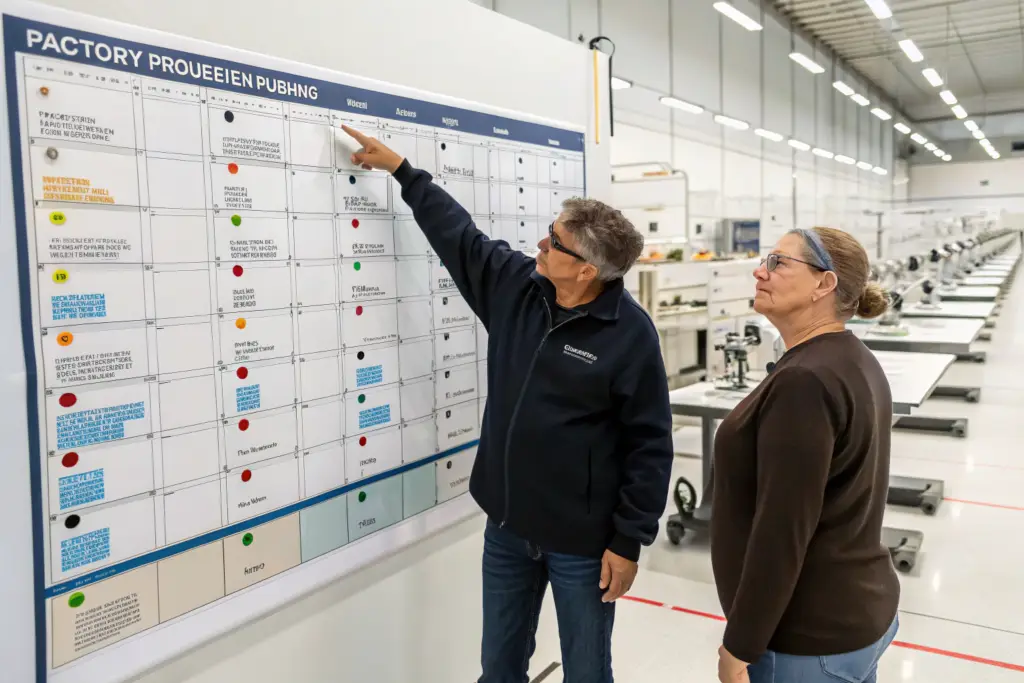
When she came to us, she asked a smart question. She asked to see our production schedule. I showed her. We have a board that shows every order we are working on. I pointed to her order slot. I showed her when her fabric would arrive. I showed her which line would run her order. She could see the capacity was there.
Here are questions you should ask any factory:
- "What is your current lead time for new orders?" A good factory will give you a clear number based on their current load.
- "Do you have dedicated lines for small batch orders?" If they only run large orders, your small order may get pushed.
- "Can you show me a recent production schedule?" This shows transparency and planning.
- "What happens if there is a delay in my fabric?" Good factories have backup plans.
At Shanghai Fumao, we are transparent about our capacity. We do not overbook. We protect our clients' production slots.
What buffer time should you build into your timeline?
Things go wrong in manufacturing. A good timeline includes room for unexpected issues.
I have a client in Miami. She is very organized. She plans her collections six months ahead. When we set a timeline, she always adds a 10-day buffer before her marketing launch. She learned this after her first collection.
Her first order was delayed by a week. The fabric mill had a machine breakdown. It was out of our control. But because she had no buffer, her marketing campaign launched before the goods arrived. She had to cancel ads. She lost momentum.
Now she builds buffer time into every order. She tells me her real deadline is 10 days before her actual deadline. We work to that internal date. If everything goes perfectly, she gets her goods early. If there is a small delay, she is still safe.
I recommend a 10-15% buffer on your total timeline. For a 100-day timeline, build in 10-15 days of buffer. This protects your launch.
How do you structure a timeline request that gets accurate answers?
The way you ask for a timeline affects the answer you get. A vague question gets a vague answer. A detailed question gets a detailed answer.
What information should you prepare before asking for a timeline?
I receive timeline requests every day. The ones that get the best answers are the ones with complete information.
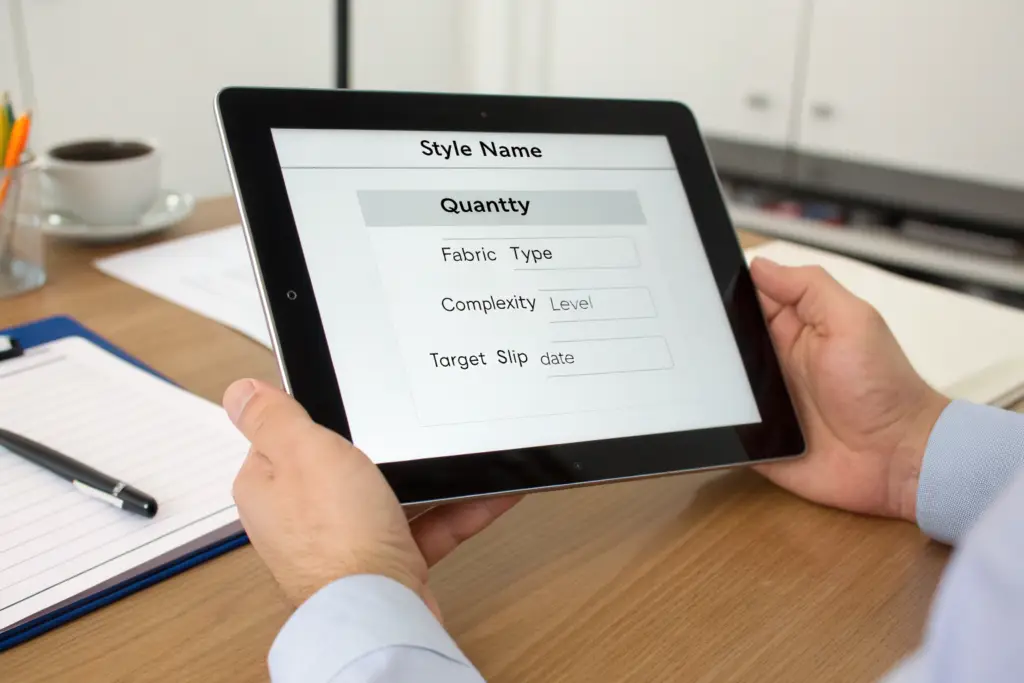
A client from Denver sent me a timeline request last month. It was the best I had seen. She sent a spreadsheet with five styles. For each style, she included:
- Tech pack or detailed spec sheet: With measurements, construction details, and trim list
- Fabric requirements: Fabric type, weight, and whether she wanted us to source it
- Quantity per style: Clear numbers for each color and size
- Target launch date: Her ideal ship date
- Complexity notes: Any special details like embroidery or custom labels
I looked at her request and gave her a detailed timeline within 24 hours. I broke down each style. I told her which styles could be produced together. I gave her a ship date for the full collection.
Here is a simple template you can use when requesting a timeline:
| Information Needed | Why It Matters |
|---|---|
| Style description and tech pack | Determines complexity and development time |
| Quantity per color and size | Affects production line allocation |
| Fabric sourcing preference | Impacts lead time significantly |
| Target ship date | Helps factory plan capacity |
| Special requirements | Adds time to the process |
How do you confirm and document the final timeline?
Once you agree on a timeline, you need to document it. This creates accountability for both sides.
When we set a timeline with a client, I send a formal production schedule. It includes:
- Sample approval deadline: The date by which the final sample must be approved
- Material order dates: When fabric and trims will be ordered
- Material arrival date: When materials will arrive at our factory
- Production start date: When cutting begins
- Production completion date: When sewing and finishing are done
- Quality control dates: When inspections happen
- Shipment date: When goods leave our factory
- Estimated delivery date: When goods arrive at your door
A client from Seattle used this schedule to plan her entire marketing campaign. She knew exactly when to schedule her photoshoot. She knew when to start her email marketing. She knew when to expect the goods. There was no guessing.
When you have a documented schedule, you also have clear points to check progress. You can ask: "Did the fabric arrive on time?" You can track each milestone. If something slips, you know early. You can adjust.
At Shanghai Fumao, we provide this detailed schedule for every order. We update it weekly. Our clients know exactly where their order stands.
Conclusion
A realistic timeline is the foundation of a successful women's wear collection. It protects your brand from missed launches. It gives you confidence to invest in marketing. It allows you to plan your cash flow. Most importantly, it ensures that the quality is right because no steps were rushed.
The key is to understand the phases. Development takes time. Material sourcing is often the longest phase. Production scales with quantity and complexity. Asking the right questions helps you verify that a timeline is real. Providing complete information helps the factory give you accurate answers.
I have seen too many brands fail because they accepted unrealistic timelines. They launched late. They launched with poor quality. They lost money and trust. It does not have to be this way.
When you work with us at Shanghai Fumao, we build your timeline together. We look at your styles, your quantities, and your goals. We give you an honest schedule. Then we work every day to hit it.
If you are planning a women's wear collection and want a realistic timeline, reach out to our Business Director, Elaine. She will walk you through the process. She will ask the right questions. She will give you a clear schedule. You can email her at elaine@fumaoclothing.com.
Let us help you bring your collection to market on time, with quality you can trust.