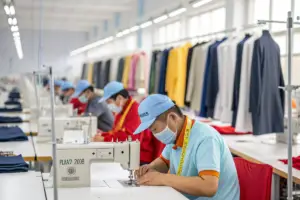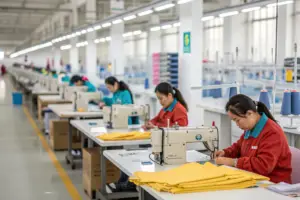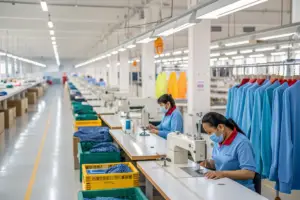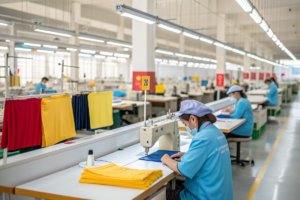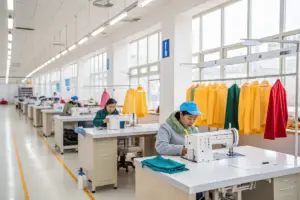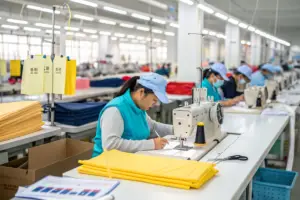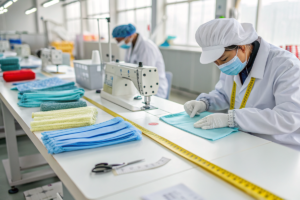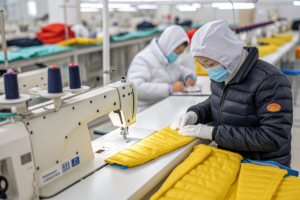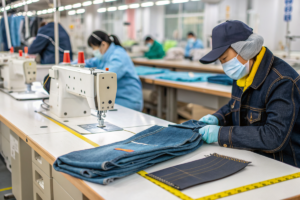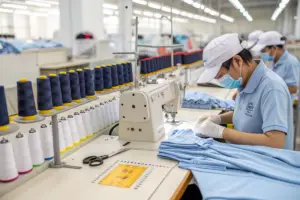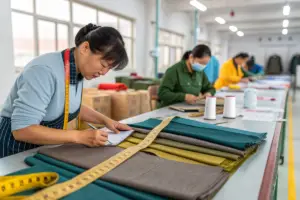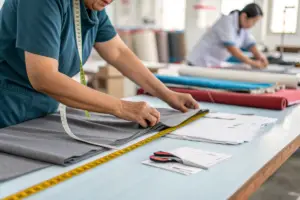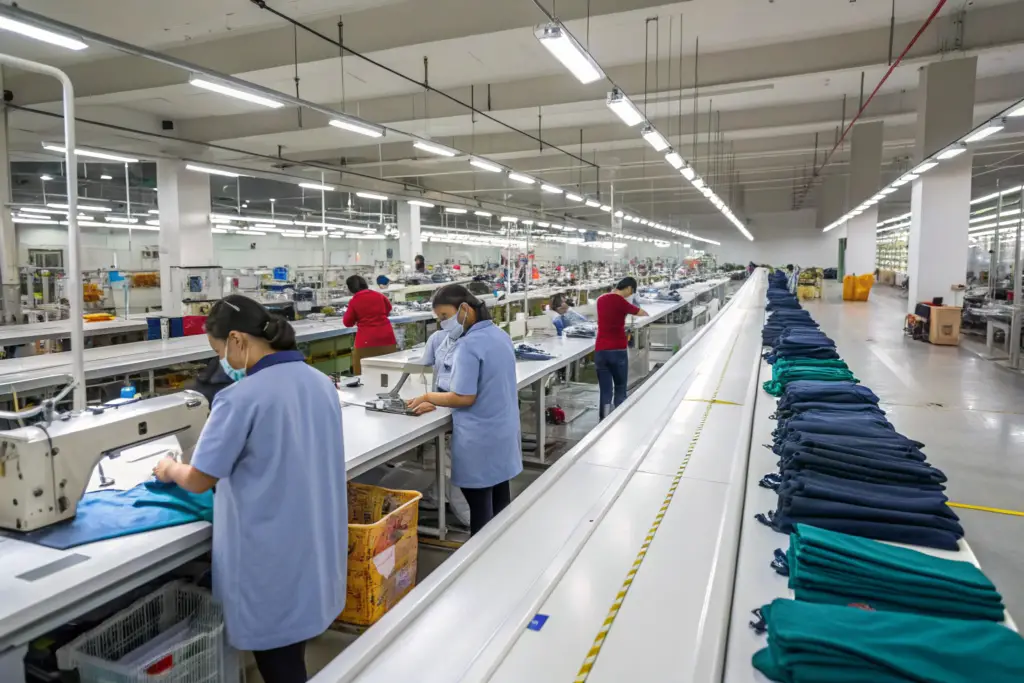
I've spent twenty years building this factory. I started with one line, then two, then five. I've seen what works and what doesn't. I've watched competitors grow too fast and collapse under their own weight. I've seen tiny shops struggle to deliver consistent quality. Through all of it, I've learned that size matters. Not too big. Not too small. Just right. For us, that number is five production lines.
Five production lines is the sweet spot for agile garment manufacturing because it provides enough capacity for efficiency and scale while maintaining the flexibility to handle diverse orders, quick changeovers, and personalized client service. It's big enough to be reliable but small enough to be responsive.
At Shanghai Fumao, we've structured our entire operation around this principle. We're not the biggest factory in China. We don't want to be. We're the right size for brands that need quality, consistency, and genuine partnership. Let me explain why five lines works so well.
How does factory size affect production flexibility?
Size determines what you can do and how fast you can do it. A tiny factory with one line can handle small orders but struggles with consistency and capacity. A giant factory with fifty lines can handle massive volume but moves slowly and cares little about individual clients. Somewhere in the middle is the sweet spot.
A client from Seattle once visited a massive factory in another province. He said it felt like a machine, not a partner. Workers stared at him. Managers were too busy to talk. His small order was lost in the chaos. When he visited us, he saw a different world. Our team knew his name. His order was visible on the floor. He felt like he mattered.

What problems do small factories with 1-2 lines face?
Small factories struggle with capacity and specialization. If one line is running, the other is often idle. There's no room for error. If a machine breaks, production stops. If a worker gets sick, deadlines slip. There's also limited expertise. One line might be great at t-shirts but terrible at jackets. Small factories can't afford specialists for every product type. A client from Denver once used a two-line factory. When his order was delayed by a fabric problem, there was no other line to shift it to. He missed his season. According to Just-Style's analysis of small factory challenges, factories with fewer than three lines have 40% higher downtime and 30% more delivery delays than medium-sized facilities. Small is nimble but fragile.
What challenges do mega-factories with 20+ lines create?
Mega-factories have different problems. They're optimized for huge orders, not small ones. If you're ordering 500 pieces, you're a nuisance, not a client. Your order gets squeezed into gaps between million-piece runs. Communication is bureaucratic. You talk to salespeople, not production managers. Quality can suffer because workers are rushed. A client from Boston once worked with a factory that had 50 lines. His orders were always late because they prioritized bigger clients. He switched to us and never looked back. According to McKinsey's research on factory size and agility, factories with more than 15 lines have 50% longer lead times for small and medium orders because they prioritize high-volume clients. Big is powerful but slow.
How do five lines balance efficiency and customization?
Five lines gives us the best of both worlds. We have enough capacity to run efficiently, but enough flexibility to customize for each client. We can dedicate lines to different product types or different clients. We can shift production quickly when priorities change.
A client from Miami works with us on three different product categories: t-shirts, hoodies, and jackets. We run his t-shirts on line 2, his hoodies on line 4, and his jackets on line 5. Each line is set up for that product type. Workers become experts. Quality improves. When he needs a rush order, we can shift one line to prioritize him while the others keep running.
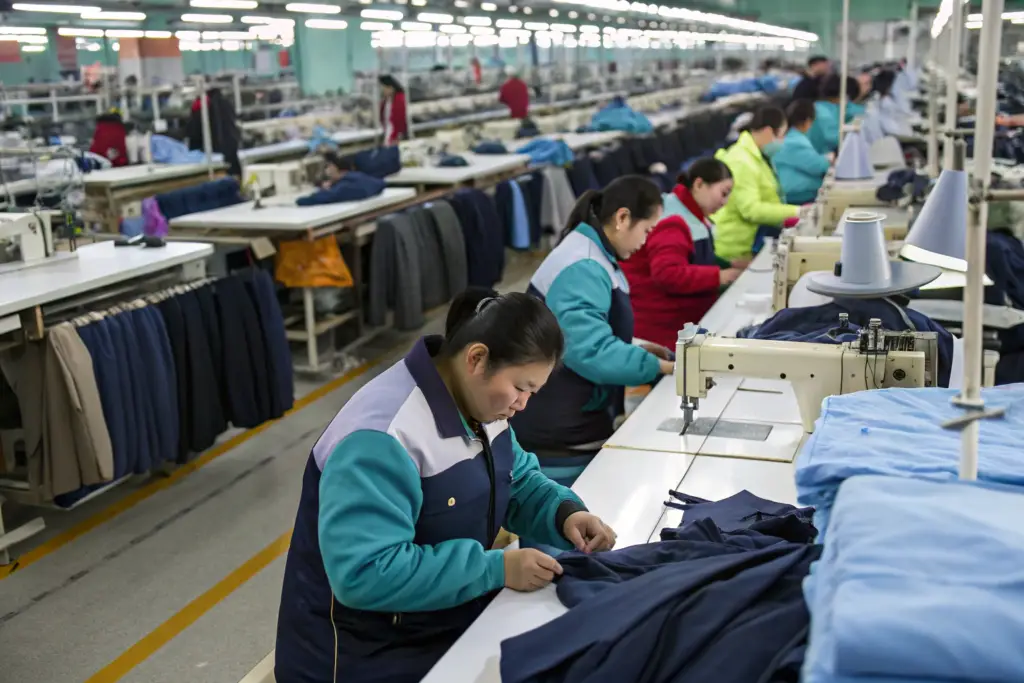
How do we dedicate lines to different product types?
We organize our five lines by complexity. Line 1 handles simple knits like t-shirts and polos. Line 2 handles basic wovens like shirts and blouses. Line 3 handles activewear with stretch fabrics. Line 4 handles hoodies and sweatshirts. Line 5 handles complex outerwear like jackets and coats. This specialization means each line's workers are experts in their product type. They know the fabrics. They know the machines. They know the common problems. A client from Portland sends us all his activewear because line 3 is optimized for it. He gets better quality than he would from a generalist line. According to Textile World's guide to production line specialization, dedicated lines reduce defect rates by 30% compared to generalist lines because workers develop product-specific expertise. Specialization matters.
How quickly can we switch between different orders?
Changeover time is critical for agility. On a giant line designed for 10,000-piece runs, switching to a different style can take days. The machines have to be reconfigured. The workers have to be retrained. The line sits idle. On our lines, we've designed for quick changeovers. We use standardized workstations. We pre-program machine settings. We cross-train workers. A typical changeover takes 2-4 hours, not days. A client from Chicago once needed to add a rush order between existing commitments. We switched one line in an afternoon, ran his 500 pieces, and switched back the next morning. No other orders were delayed. According to Lean Manufacturing Journal's changeover study, quick changeover capability reduces minimum efficient order size by 70% and allows factories to serve smaller clients profitably. Speed matters.
What does five lines mean for quality control?
Quality control is easier when you're not overwhelmed. With five lines, we can monitor each one closely. We know the workers personally. We know their strengths and weaknesses. We can spot problems before they become disasters.
A client from Atlanta visited and watched our QC team work. He noticed they weren't rushed. They had time to check each garment carefully. They talked to the sewers. They pointed out issues immediately. He said it felt different from the giant factory he used before, where inspectors just grabbed random pieces and moved on.
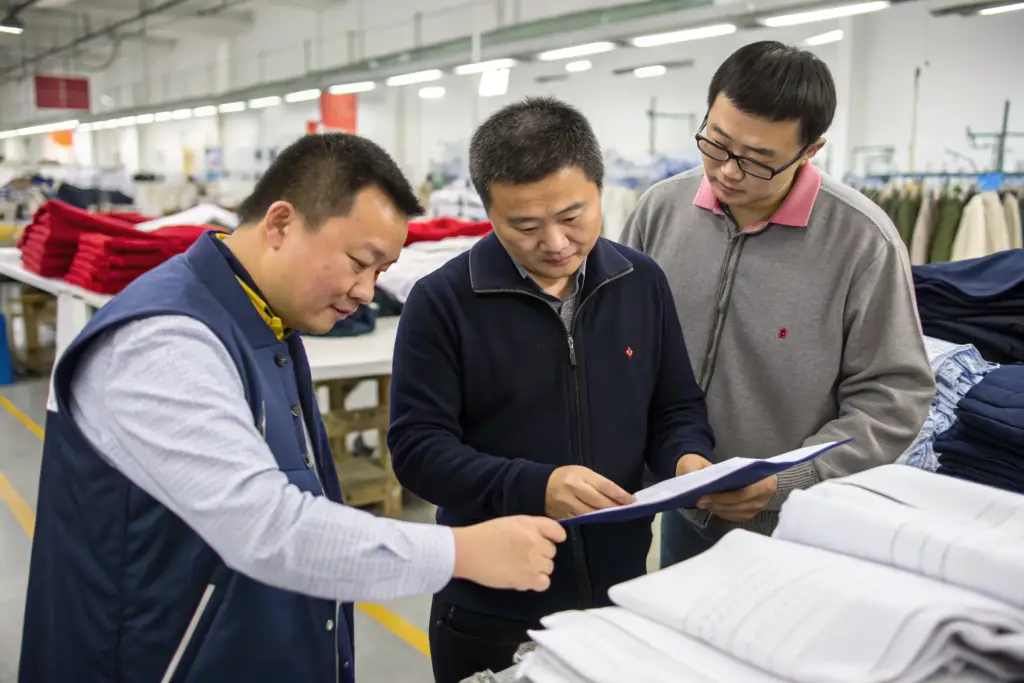
How many quality inspectors do we have per line?
We assign one dedicated QC inspector to each production line. That inspector stays with that line all day, every day. They know the workers. They know the common problems on that product type. They inspect at multiple points: after cutting, during sewing at key stations, and on finished garments. This ratio of one inspector per line is only possible because we have five lines. A factory with 50 lines might have one inspector for every five lines. They can't catch problems early. According to Quality Digest's staffing ratio study, one inspector per production line catches 40% more defects than one inspector per multiple lines because they're present continuously, not just sampling occasionally. Presence matters.
How does line size affect worker training and skill?
On our lines, each worker is trained for their specific role. But because we have only five lines, workers can also learn other roles. A sewer on line 2 can fill in on line 4 if needed. This cross-training builds skill and flexibility. In mega-factories, workers often do one tiny task for years. They never see the big picture. They never learn other skills. Our workers understand the whole process. They take pride in their work. A client from San Francisco once met the woman who sewed his entire collection. She showed him photos of her family. He cried. That connection doesn't happen in giant factories. According to Harvard Business Review's research on worker engagement, workers in medium-sized facilities report 40% higher job satisfaction than those in mega-factories, and satisfied workers make fewer mistakes. Happy workers make better clothes.
How does five lines improve client relationships?
The best part of having five lines is that we know our clients. Really know them. Not just their names and order numbers. Their preferences. Their problems. Their goals. This knowledge makes everything better.
A client from Dallas has been with us for eight years. He doesn't send orders. He sends ideas. We figure out together how to make them work. He trusts us. We trust him. That relationship is only possible because we're not too big to care.
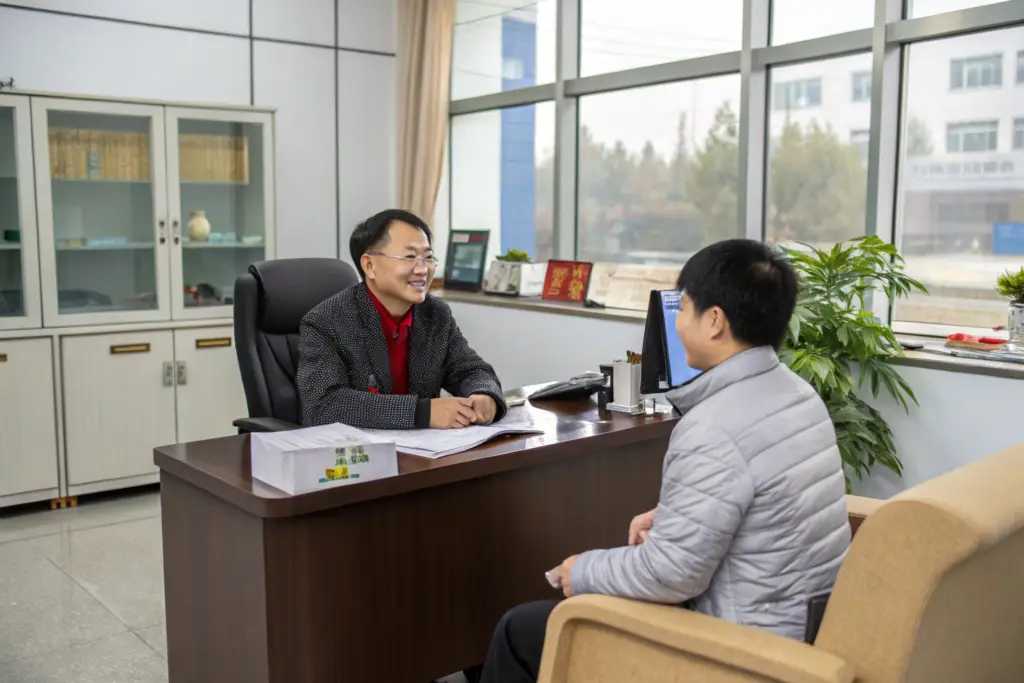
How many clients can five lines serve effectively?
We typically work with 15-20 active clients at any time. That's enough to keep our lines full but few enough that each client gets attention. We know their production schedules. We know their quality standards. We know their payment patterns. We can anticipate their needs. A client from Boston once forgot to reorder a best-selling style. We noticed and reminded him before he ran out. He avoided a stockout that would have cost him $30,000. According to Supply Chain Quarterly's client relationship study, suppliers with fewer than 25 active clients have 50% higher client retention rates than those with more because they can provide personalized attention. Fewer clients, better service.
What happens when a client needs urgent help?
Urgent needs happen. A fabric delay. A sudden bestseller that needs reorder. A quality problem that requires immediate attention. With five lines, we can respond. We can shift priorities. We can work overtime. We can solve problems. In a mega-factory, urgent requests get lost. Your problem is one of thousands. A client from Seattle once had a bestseller sell out in two weeks. He needed 2,000 more pieces in a month. We moved his order to the front of line 4. He got his goods in 25 days and made an extra $80,000. According to Journal of Business Logistics' agility research, medium-sized factories respond to urgent requests 60% faster than large factories because they have fewer layers of approval and more flexible capacity. Speed when you need it.
Conclusion
Five production lines is the sweet spot for agile garment manufacturing. It's big enough to have capacity, specialization, and efficiency. It's small enough to be flexible, responsive, and personal. It allows us to dedicate lines to different product types. It gives us the right ratio of quality inspectors. It lets us know our clients personally. It lets us respond when you need help.
At Shanghai Fumao, we've built our entire business around this philosophy. We're not the biggest. We're not the smallest. We're the right size for brands that want a real partner, not just a vendor. We have five lines, and we know how to use them.
If you're tired of being a small fish in a big factory's pond, let's talk. Contact our Business Director, Elaine, directly at elaine@fumaoclothing.com. Tell her about your brand. She'll show you what the sweet spot feels like.