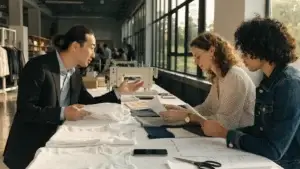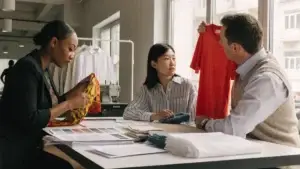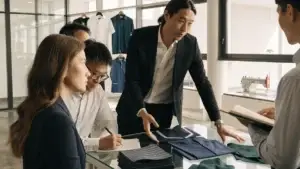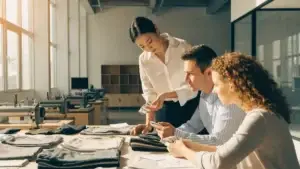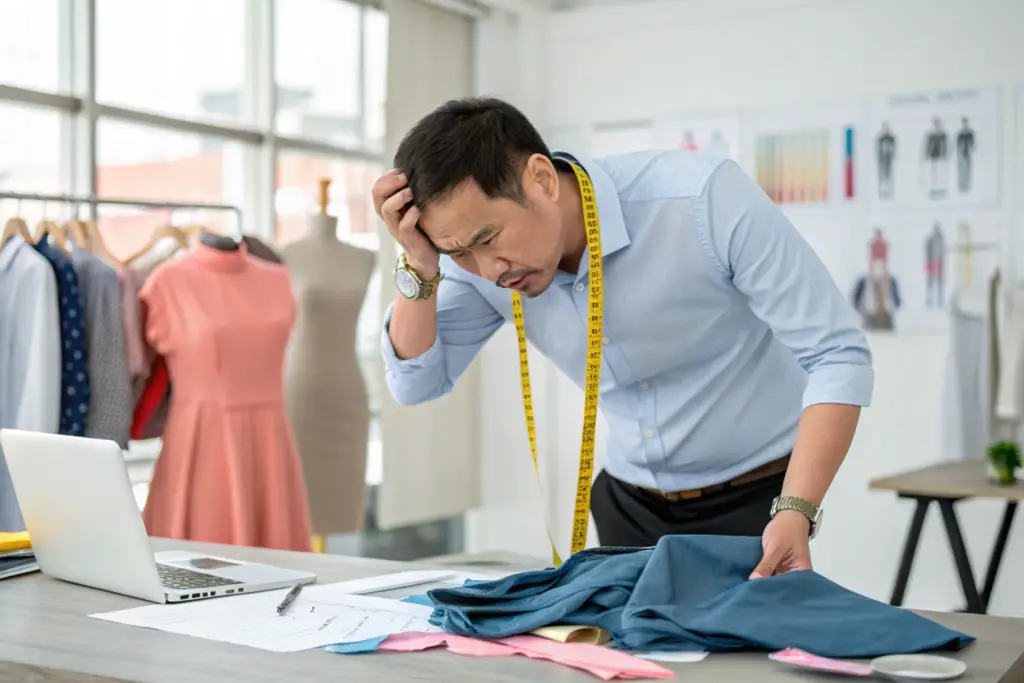
You’ve spent weeks perfecting your designs. You found what seemed like the perfect supplier in China or Vietnam. You paid for samples, waited for shipping, and finally held your garment in your hands. And it was wrong. The color was off. The fit was boxy, not slim. The fabric felt cheap. This is the moment panic sets in.
The single biggest mistake brands make when sampling garments is treating the sample as the final destination, rather than the starting point for a conversation. They see a physical prototype as a pass/fail test. If it looks roughly right, they rush to production. This mindset ignores that a sample is a communication tool designed to uncover and fix problems before you spend thousands of dollars on inventory. The real goal isn't a perfect first sample; it's a perfect production run.
We’ve all been there. But after 15 years running Shanghai Fumao, helping brands from New York to Los Angeles, I’ve learned that this mistake is avoidable. It’s about changing how you think about the sampling process. It’s not just about checking a box. It’s about building a bridge between your sketch and the factory floor. In this article, I’ll break down exactly where the process breaks down and how you can fix it to save time, money, and your sanity.
Why do samples from suppliers often look different from the design?
When a sample misses the mark, it’s easy to blame the factory. But in my experience, the root cause is almost always a gap in communication. We speak different languages, but more importantly, we often work from different blueprints. You might see a "slim fit" in your head, while our pattern maker interprets it as a "modern fit." The difference of an inch in a chest measurement can ruin an entire season's lookbook.
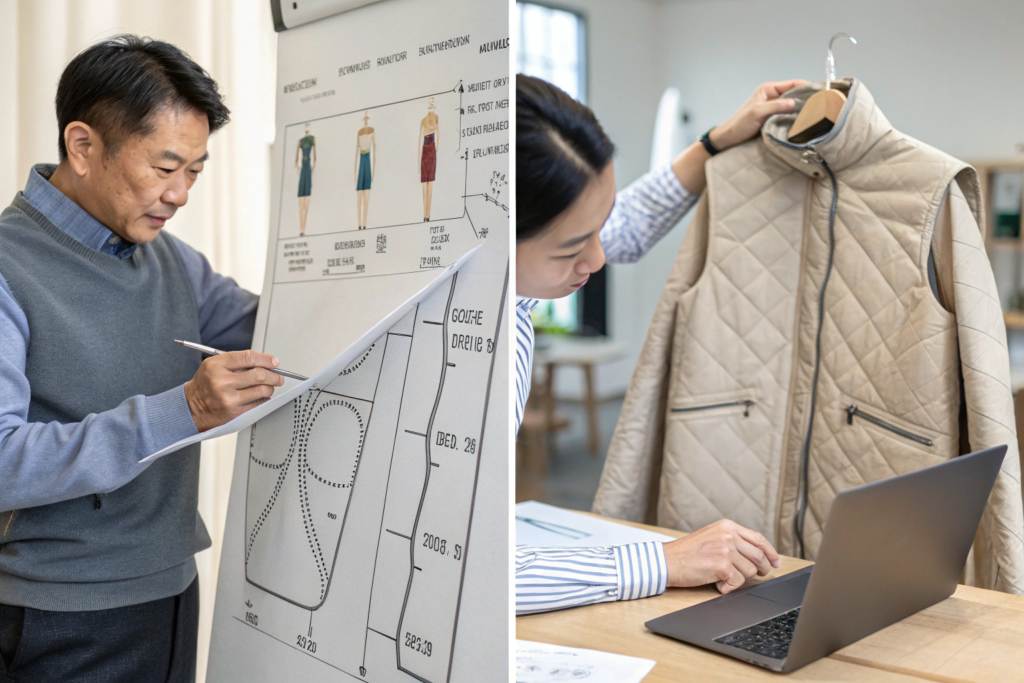
Is your tech pack missing these critical details?
The biggest culprit is an incomplete tech pack. A sketch is art. A tech pack is engineering. Last spring, a brand from Chicago sent us a beautiful design for a women's blouse. The sketch was perfect. But their tech pack didn't specify the stitch type for the placket or the finished hem width. We made the sample according to our standard construction methods, which were different from their expectations. The sample came back, and they were upset about the stitching. We had to re-make it, losing two weeks. This is why detailed technical specifications are non-negotiable. You must include everything: stitch type, seam allowance, thread tension, and even the number of needle holes per inch. Another common miss is graded specification measurements. Provide the measurements not just for the sample size, but for all sizes you plan to sell. This tells us how the garment should scale, preventing fit disasters in larger or smaller sizes.
How can you verify fabric and color accuracy remotely?
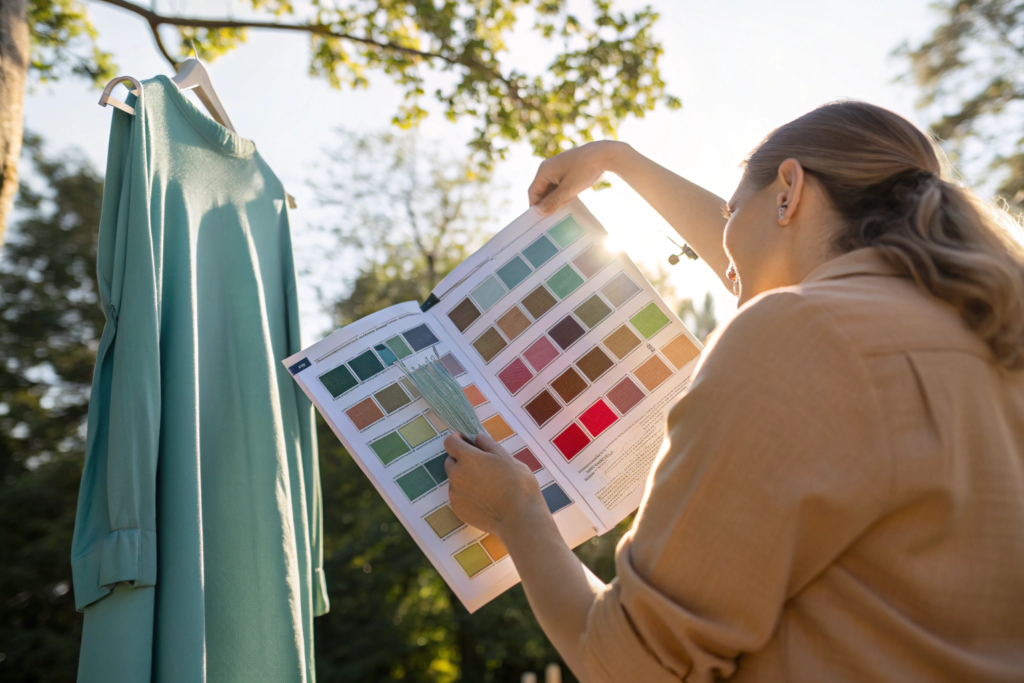
Colors and fabrics are another huge point of failure. You pick a color on a computer monitor, which uses RGB light. We dye fabric using physical pigments. They will never match perfectly unless you calibrate for this. Never approve a color based on a screen. You must request a physical dye strike-off. This is a small piece of fabric dyed to your specified color. It costs a little time and money, but it’s essential. For a sportswear client in Texas, we did three rounds of dye strike-offs for their signature royal blue. On a screen, the third round looked identical to the second. In person, under natural light, it was the exact shade they wanted. We also insist on sending physical fabric swatch books with the sample. This lets you feel the weight and drape, not just see a picture. If you can't touch it, you can't truly know it.
Are you asking the wrong questions about your samples?
When you get a sample, the natural instinct is to ask, "Is this good?" or "Does this fit?" Those questions are too simple. They lead to yes/no answers that hide complex issues. A sample might "fit" on a mannequin, but how does it move on a human body? The questions you ask your supplier should force a detailed investigation. You need to move from being a passive recipient to an active investigator. Your goal is to find problems now, while they are cheap to fix.
What specific fit tests should you request?
Instead of just asking for the fit, ask for specific data. When we send samples for a new denim line, we always include a fit sample report. We ask our clients to fill it out with specific measurements after trying it on a live model. Don't just say "the waist is tight." Measure the waist on the garment, measure the model's waist, and tell us the difference. For a client in Seattle last year, they reported that the bicep circumference on a men's woven shirt was too restrictive. Because they gave us the exact measurement difference, we knew we needed to add 1.5 cm. If they had just said "it's tight," we might have added 0.5 cm and sent a second sample that was still wrong. You should also request a wear test video call. Have your fit model put the garment on, and get on a video call with your pattern maker or technical designer at the factory. We do this regularly with our partners. We can see the wrinkles, the pulls, and the stress points in real-time. It's like we're in the same room.
Why is a "fit sample" different from a "sealing sample"?
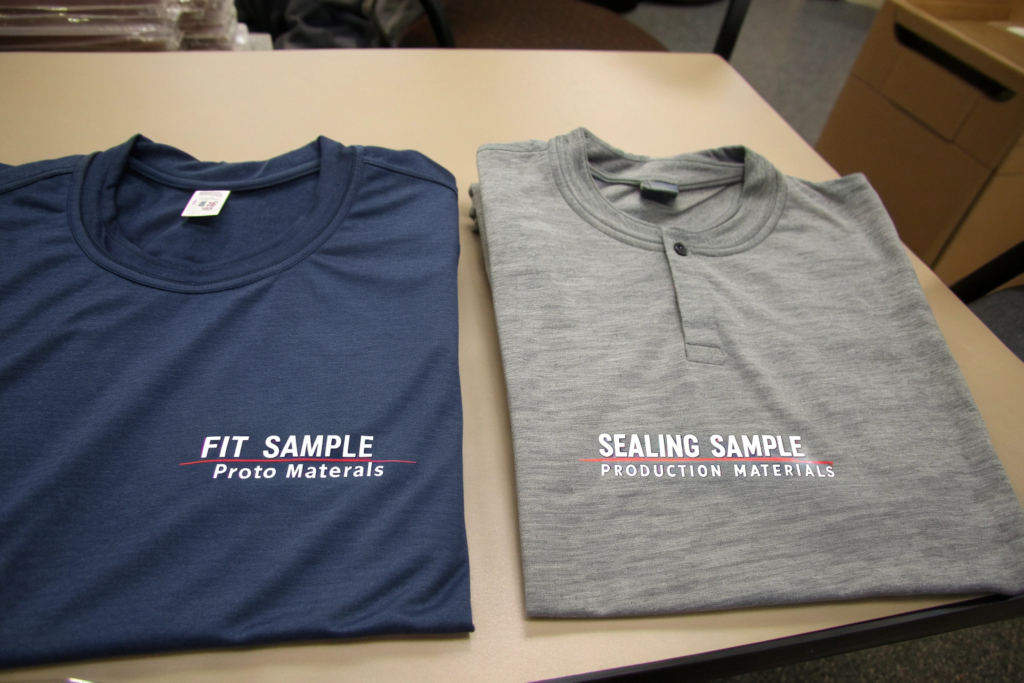
This is a critical distinction many brands miss. A "fit sample" (often called a first sample or proto sample) is for checking design and fit. It's usually made with prototype materials, which might not be the final fabric. A "sealing sample" (or top sample) is the final approval piece. It is made with the exact production fabric, threads, trims, and labels. It is made by the same factory workers who will sew your bulk order, using the same machines. Treating them as the same thing is a recipe for disaster. We had a brand that approved a fit sample in a beautiful, soft cotton. They loved the drape. For the sealing sample, we used the actual production fabric—which was the same quality, but a different batch had a slightly different finish. They hated it. Because we had a sealing sample stage, we caught it before 5,000 garments were cut. We were able to work with our mill to source a new batch of fabric that matched the hand-feel of the original sample. The sealing sample is your last line of defense.
How can you avoid paying for samples that go nowhere?
Sampling costs add up. Between sample fees, material costs, and DHL shipping, a round of samples can easily cost $500-$1000. When a sample fails and you have to do another round, it's not just a loss of money; it's a loss of 2-3 weeks of your production timeline. The key to avoiding this waste isn't to skip sampling, but to make each round count. You want to move forward, not restart. This requires a collaborative approach from day one.
What is the right way to give feedback on a sample?
The feedback you give is the most important part of the process. Vague feedback leads to vague corrections. Specific feedback leads to a resolved sample. Never say "make the neckline higher." Say "please raise the front neck drop by 1 cm." Never say "the sleeve feels long." Say "please shorten the sleeve length from the shoulder seam by 1.5 cm." Put all of this in a written document, ideally with photos or diagrams. A few months ago, a client in New York sent us back a sample with red lines drawn directly on the garment photos. They circled a pulling seam and wrote "increase ease in the upper back by 1 cm." That was perfect. Our pattern maker knew exactly what to adjust. We also recommend using a shared digital spec sheet, like in Google Sheets, where both sides can see the comments and corrections in real-time. This creates a single source of truth and prevents email chains from getting crossed.
Why should you involve the factory pattern maker early?
The biggest secret to saving sampling costs is collaboration. Don't treat the factory as just an order-taker. Involve our pattern makers and technicians early in the design process. They have made thousands of garments. They know what works and what doesn't. Before you finalize a design with a complex seam or a tricky pocket, send the sketch to your contact at Shanghai Fumao. Ask us, "Is this construction feasible for mass production? Will it add significant cost?" We can often suggest small tweaks that keep the design integrity but make it much easier and cheaper to produce. For a high-end women's wear brand from San Francisco, they wanted a very specific type of invisible zipper. Our pattern maker pointed out that the zipper they specified was fragile and had a high breakage rate. We suggested an alternative, more durable brand that was visually identical. The client approved the change, and we avoided hundreds of units being returned with broken zippers. This kind of problem-solving can only happen when you bring us into the conversation early.
Is your sampling timeline realistic for production?
Time is money in the fashion business. Missing a selling season because of production delays is a financial catastrophe. Most delays don't happen during bulk production. They happen during the sampling phase. Brands often compress the sampling timeline because they are anxious to get the product. This pressure leads to rushed decisions, skipped steps, and ultimately, bigger delays. Building a realistic timeline, with buffers, is the best way to ensure you hit your market window.
How much time should you actually budget for sampling?
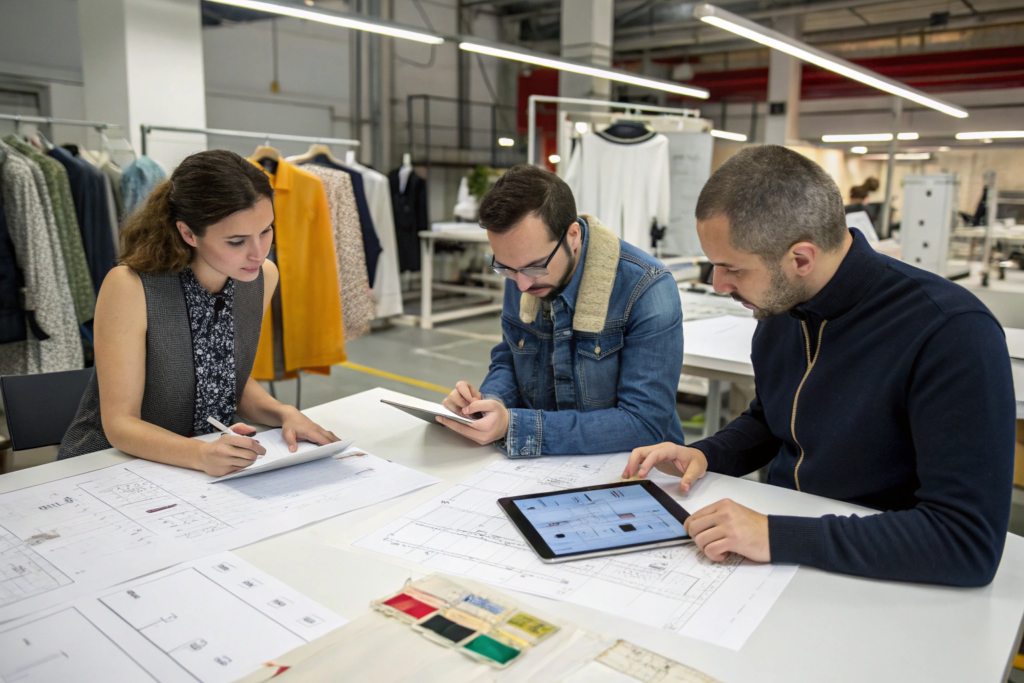
A common mistake is thinking sampling takes two weeks. From initial request to having a finished sample in your hands in the US, a realistic timeline is 4-6 weeks. Here's a rough breakdown:
- Pattern Making & Materials Sourcing: 5-7 days. The factory must create the pattern, grade it for your sample size, and source the specific fabrics and trims. If materials aren't in stock, this adds time.
- Sample Cutting & Sewing: 5-7 days. A skilled sample maker, who is different from a production line sewer, will hand-cut and sew your garment.
- Quality Check & Shipping: 5-7 days. We inspect the sample, then pack and ship it via express (DHL/FedEx). Shipping alone takes 3-5 days.
If you tell us you need a sample in 10 days, we can try to rush, but quality may suffer. We might use a different sewing method to save time, which won't be replicable in bulk. This creates a false positive sample that can't be reproduced. Standard sampling lead times are set for a reason. Respecting them ensures quality.
What happens when you skip the "pre-production sample" stage?
The pre-production sample (PP sample) is the final check before cutting bulk fabric. It's made after the sealing sample is approved, but it's made on the actual production line, with the production workers, just before your order starts. Some brands skip this to save time and money. This is a massive gamble. The PP sample is the only way to verify that the production line understands how to sew your garment correctly. Last year, a European brand we work with was in a rush. They approved the sealing sample and asked us to skip the PP sample and go straight to cutting. We strongly advised against it, but they insisted. Halfway through cutting, we noticed the fabric on one roll had a slight shading issue. Because we were in production, we could stop, quarantine that roll, and replace it. If we had skipped the PP sample, we wouldn't have had that final check-in point. The result could have been 500 garments with mismatched panels. Now, we always build in a mandatory PP sample stage for every new style we produce at Shanghai Fumao. It's our insurance policy.
Conclusion
The sampling process isn't a hurdle to jump over on the way to production. It's the foundation of a successful product. The biggest mistake you can make is rushing through it with a simple pass/fail mentality. By asking detailed questions, providing specific feedback, involving your factory as a partner, and respecting the timeline, you turn sampling from a cost center into a profit protector. You catch the expensive mistakes when they are just lines on a spec sheet, not finished garments in a warehouse.
At Shanghai Fumao, we've built our entire workflow around clear communication and rigorous quality checks. We don't just make samples; we solve problems with you. Whether it's perfecting the drape of a viscose dress or engineering a durable seam for a children's activewear line, our team is ready to help. If you're tired of samples that miss the mark and want a partner who treats your brand like our own, let's talk. Contact our Business Director, Elaine, directly at elaine@fumaoclothing.com. Let's build something great together, starting with a sample that actually gets it right.