
You have found the perfect manufacturer. The samples are approved. The price is agreed. The production timeline is set. Then comes the moment of truth. You need to send money overseas. A lot of money. Your stomach tightens. What if you send the deposit and they disappear? What if the goods are bad and you have already paid in full? What if the bank charges hidden fees that eat into your profit? These fears are real. I have seen too many buyers get burned because they did not understand international payment safety.
The safest payment methods for international clothing orders combine security for you with fairness for the factory. You need methods that protect your deposit, give you leverage during production, and verify delivery before final payment. Telegraphic Transfer (T/T) with a balanced split, Letters of Credit for large orders, and PayPal for small samples each have their place. At Shanghai Fumao, we use transparent payment terms that build trust. We want you to feel secure so we can focus on making great clothes together.
I have been in this business for over 15 years. I have seen every payment scam imaginable. I have also seen buyers lose money because they chose "safe" methods that offended good suppliers. There is a balance. You need to protect yourself without signaling distrust to an honest partner. In this article, I will share what I have learned. I will explain the pros and cons of each method. I will tell you what we use at our factory and why.
Why Is Telegraphic Transfer (T/T) the Industry Standard?
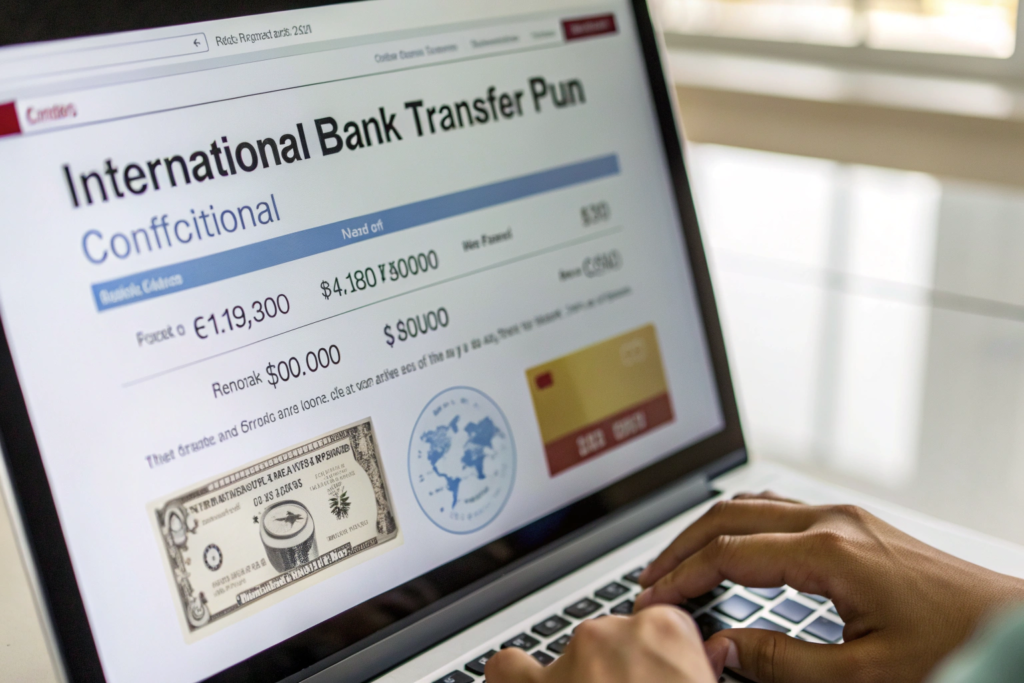
Telegraphic Transfer, or T/T, is the most common payment method in the apparel industry. It is simple. You instruct your bank to send money to the supplier's bank account. The money moves electronically. It usually takes 2 to 5 business days. But the safety of T/T depends entirely on the terms you negotiate.
What Is the Ideal T/T Split for Protecting Both Parties?
The standard split in our industry is 30% deposit and 70% balance before shipment. This balance protects both sides. The deposit covers our initial costs. We need to buy fabric, trims, and pay workers. If you do not pay a deposit, we cannot start. We would be financing your order ourselves. That is not how manufacturing works. The 70% balance is paid when the order is finished, before it leaves our factory. This protects you. You do not pay the full amount until you have proof the goods exist. We send you photos and videos of the finished products. We show you the packed cartons. Some buyers ask for 30% deposit and 70% after they receive the goods. Most good factories will refuse this. Why? Because once the goods leave our door, we lose control. If you refuse to pay, we have to spend thousands to ship the goods back. It is too risky for us. A fair split builds trust both ways. A client from Boston told me he once had a supplier ask for 50% deposit and 50% before shipment. He agreed. The supplier took the 50% deposit and disappeared. He lost $25,000. Now he only works with factories that use standard, fair terms like ours. This guide to T/T payments explains the process in detail.
How Do You Avoid Hidden Bank Fees on International Transfers?
Banks charge fees on both ends. Your bank charges a sending fee. The supplier's bank charges a receiving fee. Sometimes intermediary banks take a cut too. These fees can add up to $50 to $100 per transfer. Over many orders, that is real money. The safest way to handle this is to agree on who pays which fees. At Shanghai Fumao, we usually split them. The buyer pays their bank fees. We pay our bank fees. This is fair and transparent. You can also ask about using TransferWise (now Wise) or similar services. They often have lower fees and better exchange rates than traditional banks. A client from California started using Wise after I suggested it. He told me he saved over $500 in fees on his first year of orders. He used that money to buy more samples. Small savings add up over time.
When Does a Letter of Credit (L/C) Make Sense?
A Letter of Credit is a bank's promise to pay. Your bank issues it. Our bank receives it. It guarantees that if we ship the goods as agreed, we will get paid. It is very safe for both sides. But it is also more complex and expensive than T/T.
How Does an L/C Protect Both the Buyer and the Factory?
With an L/C, we do not get paid just because we ask. We get paid when we present specific documents to our bank. These documents prove we have done our job. They include the Bill of Lading, the Commercial Invoice, the Packing List, and often an inspection certificate. If these documents match the L/C terms exactly, the bank pays us. If they do not match, the bank does not pay. This protects you. You know we cannot get your money unless we actually ship the goods. It protects us. We know that if we ship correctly, we will get paid, even if you change your mind. L/Cs are common for very large orders, like $100,000 or more. They are also common for new relationships where trust is still building. A client from Texas used an L/C for his first order with us. It was a $150,000 order of rare-style jackets. He felt safer with the bank involved. After three successful orders, we switched to T/T. The fees were lower and the process was faster. This Letter of Credit guide from the US Department of Commerce is an excellent resource.
What Are the Downsides of Using a Letter of Credit?
L/Cs are not perfect. They are expensive. Banks charge fees for opening them, advising them, and amending them. These fees can be 1% to 2% of the order value. They are also strict. Every detail must match exactly. If the Bill of Lading says "cartons" but the L/C says "boxes," the bank can refuse to pay. This is called a "discrepancy." Fixing discrepancies takes time and costs money. The process is also slower. It takes days to open an L/C and more days to process documents. For smaller orders or repeat business, the extra cost and time are usually not worth it. I always advise clients to consider the total cost. For a $20,000 order, the L/C fees might be $400. A T/T transfer might cost $50. The choice is clear.
Can You Use PayPal, Credit Cards, or Alibaba Trade Assurance?
The digital world offers new payment options. They feel familiar and safe. But they have limits. You need to understand when they work and when they do not.
When Is PayPal a Good Option for Apparel Payments?
PayPal is great for small amounts. We use it for sample payments all the time. A sample might cost $50 to $150. Sending a T/T for that amount is not worth it. The bank fees would eat up a big chunk. PayPal is instant and easy. The buyer feels safe because they have dispute rights. For bulk production payments, PayPal is usually not an option. Their fees are high, around 3% to 5%. On a $50,000 order, that is $2,500 in fees. They also have transfer limits. Most factories will not accept PayPal for large orders because the fees destroy their profit margin. A client from Florida once asked to pay his $30,000 deposit via PayPal. We explained the fees. He understood and used T/T instead. He told me later he had not realized how much he would lose to fees. For samples, though, PayPal is perfect. It is fast and secure for those small transactions.
Is Alibaba Trade Assurance a Safe Way to Pay?
Alibaba Trade Assurance is an escrow service. You pay Alibaba. Alibaba holds the money. When the supplier ships the goods, Alibaba releases the payment. It is a good system for new suppliers on the platform. It gives you protection. If the goods do not arrive, you can dispute and get your money back. But it only works for orders placed and managed through Alibaba. Once you move to a direct relationship with a factory, Trade Assurance is no longer an option. Also, some factories build the cost of Trade Assurance into their price. It might cost slightly more than a direct T/T. We use Alibaba for initial contact with new clients. But once we build trust, we move to direct T/T. It is simpler and cheaper for everyone. This Alibaba Trade Assurance guide explains how the system works.
How Do We at Shanghai Fumao Structure Payments for Safety?
Every factory has its own payment preferences. At Shanghai Fumao, we have developed a system over 15 years. It is designed to be fair, transparent, and safe for both sides. We want you to feel confident sending us your hard-earned money.

What Payment Terms Does Shanghai Fumao Offer to New Clients?
For new clients, we usually ask for a 30% T/T deposit to start production. This covers our material costs. Then we ask for the 70% balance before shipment, after you have approved photos and videos of the finished goods. We send you pictures of every carton. We show you the loading process. You know exactly what is being shipped. This balance payment triggers the release of the shipping documents. Without it, the goods do not leave our factory. This protects you completely. You never pay the full amount until you have proof the order is ready. A client from Chicago told me this was the main reason he chose us. His previous supplier demanded 100% payment before starting production. He was always nervous. With us, he sleeps better at night.
Can You Pay in Installments for Larger Orders?
Yes, we can. For very large orders, we can structure milestone payments. For example, 30% deposit, 30% when cutting is complete, 30% when sewing is complete, and 10% before shipment. This spreads your risk and your cash flow. It also gives you visibility at each stage. You pay as we complete work, not all at once. We have used this for clients ordering full seasonal collections worth hundreds of thousands of dollars. It requires more administration, but for the right client, we are happy to do it. The key is transparency. We show you the work before you pay. You verify the progress. Then you release the next payment. This milestone payment structure builds trust with every step.
Conclusion
Paying for international orders does not have to be scary. The safest approach is a balanced one. Use T/T with a fair deposit and balance split for most orders. Consider L/Cs for very large or first-time orders. Use PayPal or Alibaba for small samples. Always agree on who pays bank fees upfront. Always get proof of progress before releasing final payment.
At Shanghai Fumao, we have built our reputation on fair and transparent payment terms. We do not ask for 100% upfront because that is not fair to you. We do not ship without payment because that is not safe for us. We find the middle ground that protects both of us. This balance is the foundation of long-term partnerships.
Do not let payment fears hold you back from growing your brand. With the right partner and the right terms, international trade is safe and profitable.
Contact our Business Director, Elaine, today. She will explain our payment process clearly and answer any questions you have.
Email: elaine@fumaoclothing.com