You have spent months developing your design. You have paid for samples. You have approved the tech pack. You place a large production order. Then the containers arrive at your warehouse. You open a box. The stitching is crooked. The color is wrong. The buttons are falling off. Your heart sinks. Your customers are waiting. Your season is ruined. You wonder how this could happen after all that work. You wonder if any factory can actually deliver consistent quality.
You ensure quality control in custom apparel manufacturing by implementing a multi-stage inspection system that starts before production and continues until the goods are shipped. This system includes pre-production checks on materials, in-line inspections during cutting and sewing, a final random inspection of finished goods, and sometimes pre-shipment inspections by third-party agencies. The goal is to catch and fix defects at every stage, not just at the end.
I have built my entire reputation on quality. A few years ago, a client from Boston had a nightmare experience with another factory. They shipped him 5,000 jackets with mismatched plaids and loose threads. He lost a major retail account. When he came to us, he was terrified it would happen again. We walked him through our quality control process. We showed him our checklists. We explained how we inspect at every step. His first order with us was perfect. He has been with us for five years now. Let me tell you exactly how we do it, so you can demand this from any manufacturer you work with.
What are the different stages of quality control in apparel manufacturing?
Quality control is not one single event. It is a series of checks throughout the entire production process. Each stage catches different types of problems. When you skip a stage, you allow defects to travel all the way to the finished product.
What is pre-production quality control and why does it matter?
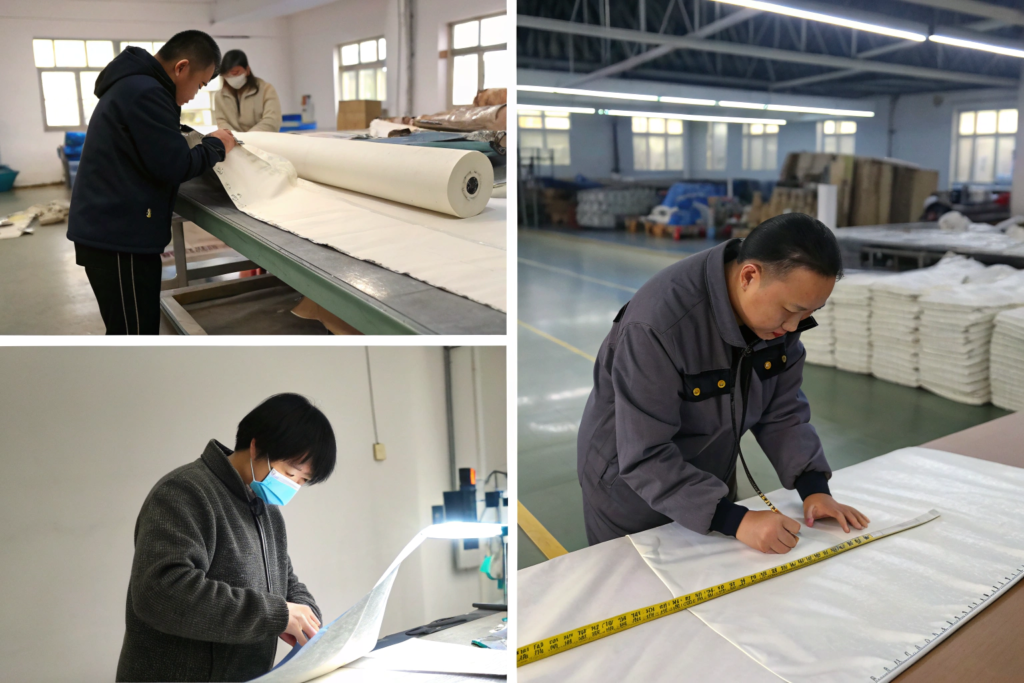
The first stage is pre-production quality control, often called the “pre-pro” check. This happens before any cutting begins. We inspect all incoming materials. We check the fabric against your approved sample. Is the color correct? Is the weight correct? Are there any flaws in the roll, like holes, slubs, or shading variations?
We also check the trims. We count the buttons. We test the zippers. We verify the labels. If there is a problem at this stage, we catch it before any fabric is cut. A few years ago, a client from Seattle sent us fabric for a large order of shirts. During our pre-pro check, we noticed the color was slightly different from the approved sample. The dye lot was off. We called the client. He checked his records and realized the mill had sent the wrong lot. We rejected the fabric and requested the correct one. If we had started cutting, he would have had 5,000 shirts in the wrong color. That is the power of pre-production inspection. You can learn about fabric grading standards from resources like the ASTM textile standards.
What happens during in-line quality control?
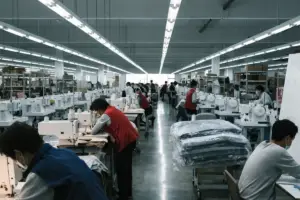
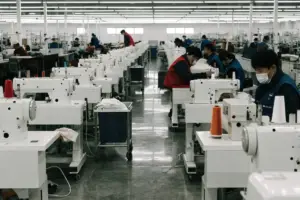
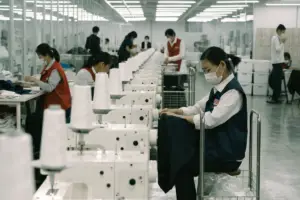
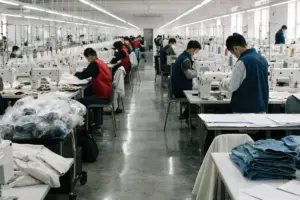
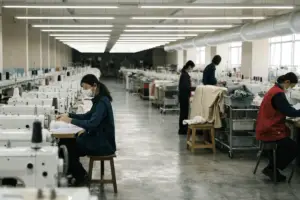
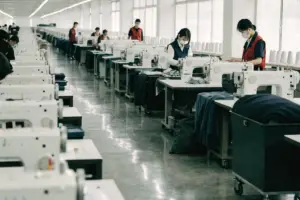
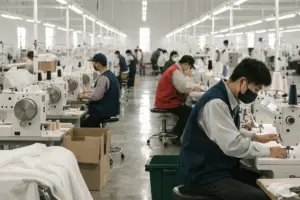
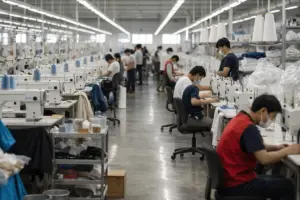
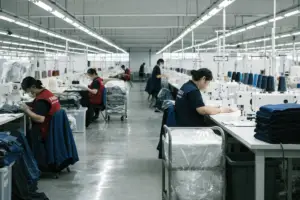
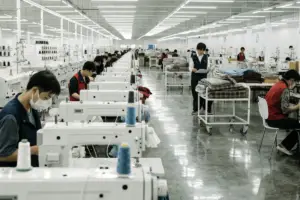
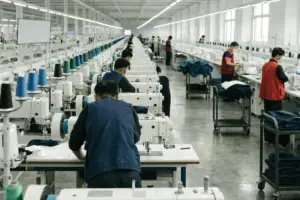
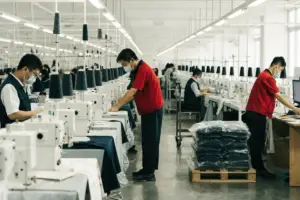
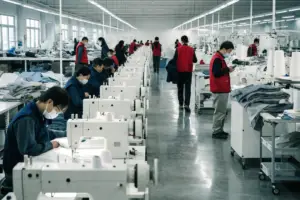
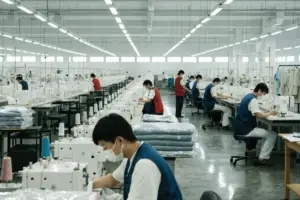
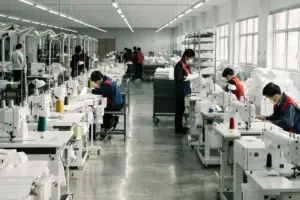
The second stage is in-line quality control. This happens while the garments are being cut and sewn. Our QC inspectors walk through the production floor regularly. They check the cutting. Are the pieces cut accurately? Is the grain line correct? They check the sewing at various stages. Are the seam allowances consistent? Is the stitching even? Are there any puckers or pulls?
This stage is critical because it catches problems early. If a sewing machine is malfunctioning, we catch it after a few garments, not after hundreds. We can fix the machine and rework the affected pieces. For a client from Los Angeles who ordered 10,000 pairs of activewear leggings, our in-line QC caught a tension issue on the coverstitch machines after the first 50 pieces. The stitches were slightly loose. We adjusted the machines and re-sewed those 50 pairs. If we had waited until the end, all 10,000 would have been wrong. This stage saves time, money, and frustration.
What is final random inspection before shipment?
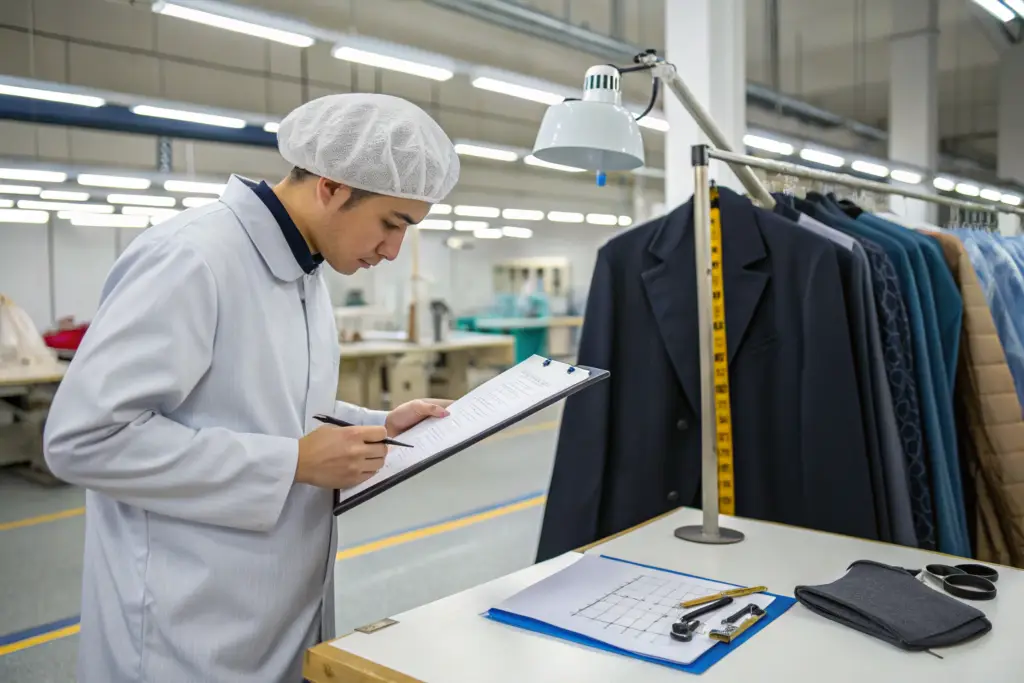
The third stage is final random inspection. This happens when the garments are finished, pressed, and packed. We use a standard sampling method, often based on the ANSI/ASQ Z1.4 standard. This means we randomly select a certain number of boxes and inspect every garment inside.
We check the garments against the approved sample. We measure key points. We examine the stitching. We check for color consistency. We verify the labels and packaging. We assign a score. If the defect rate is too high, we reject the entire batch and conduct a 100% inspection to sort the good from the bad. This is the last line of defense. A client from Chicago once had an order of denim jackets that failed final inspection because of inconsistent topstitching. We sorted every single jacket, re-sewed the defective ones, and passed the inspection on the second try. The client received perfect goods, though the shipment was delayed by a week. That is better than receiving defective goods and facing returns.
What quality control standards should you expect from a manufacturer?
Not all quality control is created equal. Some factories have loose standards. Some have very strict standards. You need to know what to expect and what to demand. Clear standards protect both you and the factory.

What are acceptable quality levels and tolerances?
Every factory works with something called an AQL, or Acceptable Quality Level. This is a statistical measurement of how many defects are allowed in a batch. In apparel, the most common AQL is 2.5 for major defects and 4.0 for minor defects. This means that in a random sample, you can accept up to 2.5% major defects and 4.0% minor defects.
But you can negotiate tighter standards. Some of our premium brand clients demand AQL 1.0 for major defects. This means almost no defects are allowed. We can do this, but it costs more because it requires more inspections and more care. You also need to define tolerances for measurements. How much can a sleeve length vary and still be acceptable? Usually, we work with a tolerance of plus or minus 1/4 inch for most measurements, and plus or minus 1/2 inch for body length. These numbers should be in your tech pack. A client from New York once insisted on a tolerance of plus or minus 1/8 inch for all measurements. This is extremely tight and very expensive to achieve. We discussed it, and he agreed to standard tolerances for most points and tight tolerances only for critical fit points. This balanced quality and cost. You can learn more about AQL standards from the American Society for Quality.
How do we define and classify defects?
A defect is anything that makes the garment not meet the standard. But not all defects are equal. We classify them as critical, major, or minor.
A critical defect is a safety issue, like a button that falls off easily and could be a choking hazard. These are unacceptable. A major defect is something that affects the wearability or appearance, like a broken zipper, a hole, or a mismatched plaid. A minor defect is something small, like a loose thread or a slightly crooked label, that does not affect the overall use of the garment.
Your QC checklist should define these clearly. For a client from Miami who made children’s wear, we had a very strict definition of critical defects because child safety is paramount. For a client who made basic t-shirts for promotional use, minor defects were more acceptable because the price point was low. At Shanghai Fumao, we work with you to define these standards before production starts. This prevents arguments later.
What role do third-party inspections play in quality control?
Many brands, especially larger ones, do not rely solely on the factory’s own QC. They hire independent companies to inspect on their behalf. This adds a layer of objectivity and trust.
Why hire a third-party inspection company?
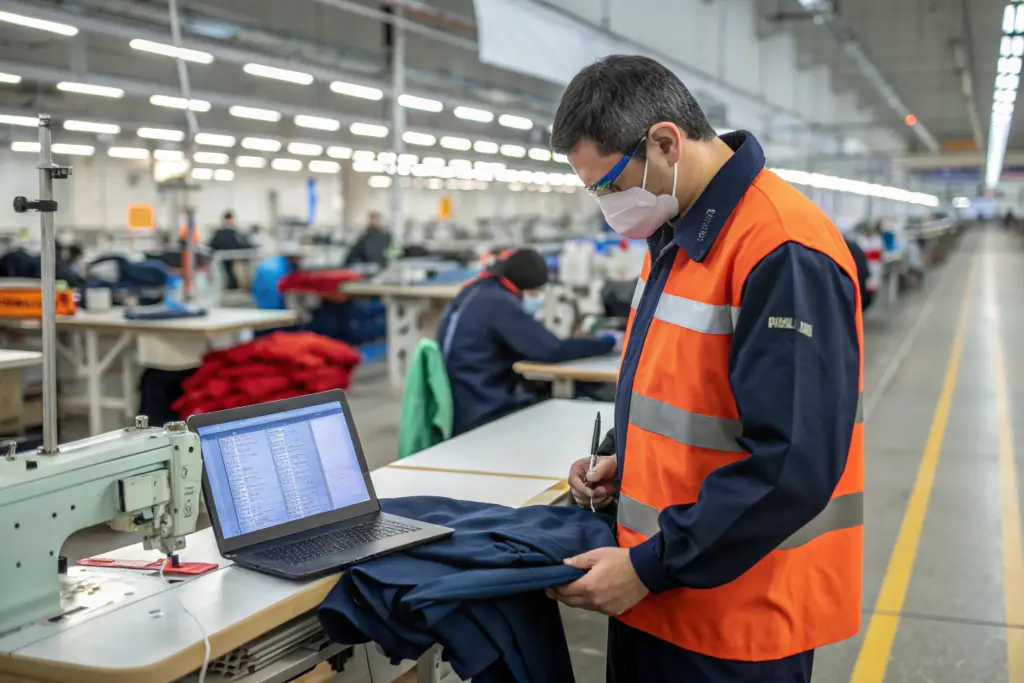
A third-party inspection company is independent. They have no stake in whether the order passes or fails. Their only job is to report the truth. This is valuable because it removes any bias. If a factory is under pressure to ship, they might be tempted to overlook problems. A third party will not.
Hiring a company like SGS, Intertek, or QIMA gives you peace of mind. They send their own inspectors to your factory. They use their own checklists. They send you a report with photos. You can then decide whether to accept the goods or ask for rework. A client from Chicago always uses a third-party inspector for every production order. One time, the inspector found that the pocket placement on a run of shirts was consistently 1/2 inch too low. Our own QC had missed it. The client rejected the batch and made us rework it. It was painful, but it was the right call. The shirts would have looked wrong on the shelf. The third-party inspector saved him from a bad product. You can find accredited inspection companies through organizations like International Inspection Agency.
How do we prepare for a third-party inspection?
If you decide to use a third-party inspector, we need to prepare. We need to have the finished goods ready and packed. We need to have the approved sample and tech pack available for comparison. We need to set aside a space for the inspector to work.
The inspector will select random cartons based on your AQL level. They will open them and inspect the garments inside. They will measure, examine, and document. The process usually takes a few hours for a typical order. We welcome these inspections. They build trust. At Shanghai Fumao, we have passed hundreds of third-party inspections. We know the drill. We see it as an opportunity to prove our quality. If you want to use a third-party inspector, just let us know in advance so we can schedule it properly.
How can you, as the buyer, contribute to quality control?
Quality control is not just the factory’s job. You play a critical role too. The decisions you make and the information you provide directly impact the final quality. A good partnership means both sides are committed to excellence.

Why is a clear and complete tech pack essential?
The foundation of quality is your tech pack. If your tech pack is vague or incomplete, we have to guess. Guessing leads to mistakes. A clear tech pack with detailed sketches, measurements, and construction notes gives us a precise target to aim for.
Take the time to review your tech pack before sending it. Check for errors. Make sure the measurements are consistent. Include notes on stitch types and seam finishes. The more detail, the better. A client from Boston once sent a tech pack that was missing the button size. We assumed a standard size. When the samples arrived, he was upset that the buttons were too small. It was an honest mistake, but it cost time and money to fix. Now, he triple-checks his tech packs before sending them. You can find tech pack templates and guides on sites like Techpacker.
How does clear communication during production help?
Once production starts, stay available. We may have questions. We may need approvals. If you take days to respond, production may continue with guesses. If you respond quickly, we can make decisions confidently.
Set up a communication schedule. Let us know when you are available. Designate a point of contact who can make decisions. For a client from Los Angeles, we had a daily 15-minute video call during the production of a complex order. We showed them samples from the line. They gave feedback instantly. The production run was smooth, and the quality was exceptional. That level of communication is ideal, but even a quick email response within 24 hours makes a huge difference. Use tools like WhatsApp or WeChat for fast communication.
Conclusion
Quality control in custom apparel manufacturing is a shared responsibility. It requires systems, standards, and communication. The factory must have a multi-stage inspection process that catches defects early. They must have clear definitions of acceptable quality. They must be willing to submit to third-party verification. And you, the buyer, must provide clear instructions and stay engaged. When both sides work together, the result is a product that meets your standards and delights your customers.
At Shanghai Fumao, we have built our entire business around quality. We have the systems, the checklists, and the trained staff to deliver consistent excellence. We have passed audits from some of the biggest brands in the world. We are ready to put that expertise to work for you.
If you are tired of quality problems and want a partner who takes it seriously, let us talk. Please contact our Business Director, Elaine, at elaine@fumaoclothing.com. She will explain our quality control process in detail and answer any questions you have about protecting your brand with consistent, high-quality production.