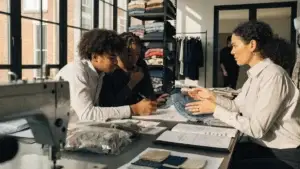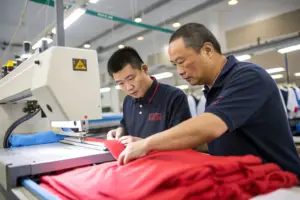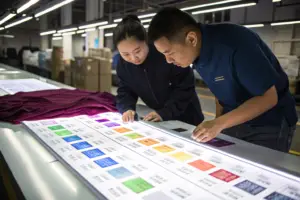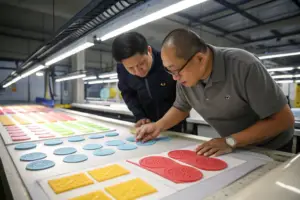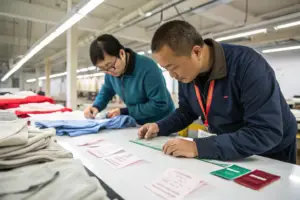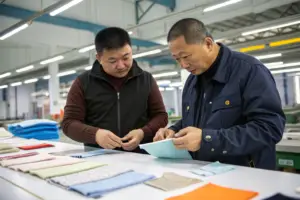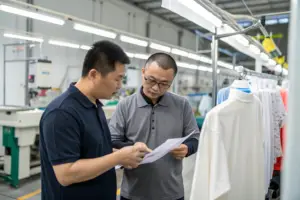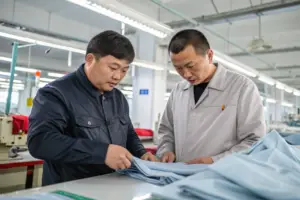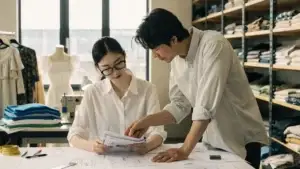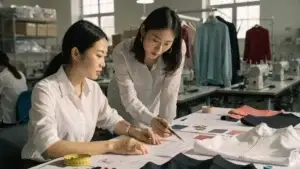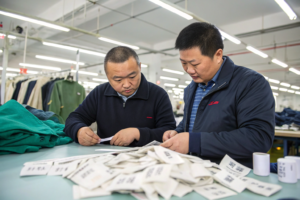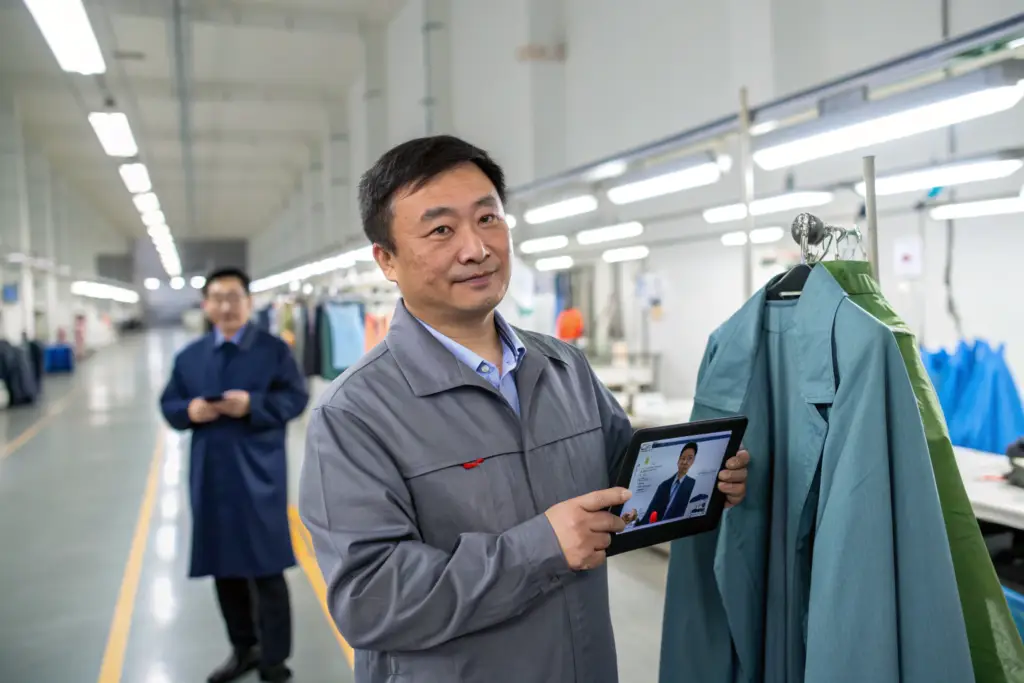
I have seen the worry in your eyes when we discuss production. You are 7,000 miles away. You cannot walk onto my factory floor every morning. You cannot run your hands over the fabric or check the stitching yourself. This distance creates anxiety. I understand it completely. For years, you have probably heard horror stories from other importers. Containers full of defective goods. Fabrics that were not what was ordered. Shipments that arrived and looked nothing like the approved sample. This fear of the unknown is the single biggest barrier to building a successful offshore partnership.
The truth is, managing quality control from afar is not about being physically present. It is about having the right systems, the right transparency, and the right partner. A professional Full-Package partner does not hide from your scrutiny. They build their entire process around giving you visibility and control, using a combination of rigorous internal checks, third-party inspections, and modern communication tools to ensure that what leaves our factory matches exactly what you approved.
I built Shanghai Fumao on the principle that trust must be earned through proof, not promises. A few years ago, a very successful distributor from Chicago came to visit us. He was skeptical. He had been burned by suppliers in the past who sent him samples that looked perfect but delivered production that looked like rejects. During his visit, he saw our multi-stage inspection process. He saw how we tag every piece of fabric and track every bundle of cut parts. He saw our final inspection station where we check every single garment against a physical "golden sample" before packing. He left feeling confident. Two years later, he told me that our quality is actually better than his previous local suppliers because our system never gets tired and never cuts corners.
What Is A Robust Remote Quality Control System?
A robust remote quality control system is not a single inspection at the end. That is too late. By then, the mistakes are already made, and the fabric is already cut. A real system is a series of checks integrated into every stage of production. It is a proactive approach designed to find and fix problems the moment they happen, not weeks later when the goods are ready to ship.
This system starts with clear specifications and ends with a final inspection that you can witness remotely. It relies on detailed documentation, trained inspectors, and real-time communication. The goal is simple: to guarantee that the product you receive is exactly the product you ordered, with no surprises and no hidden defects.
What are the key inspection stages during production?
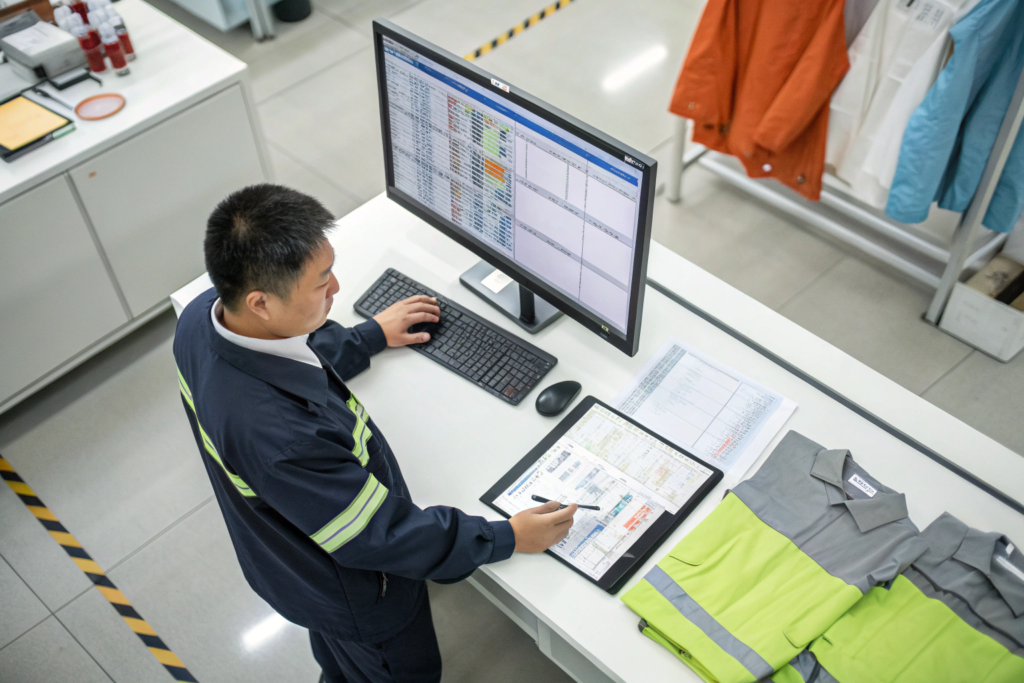
We break our quality control into four critical stages. The first is the Pre-Production Inspection. This happens before we cut a single piece of fabric. We check all incoming materials against your specifications. Is the fabric the right weight, color, and composition? Are the threads, zippers, buttons, and labels all correct? If the raw materials are wrong, the finished product will be wrong. We reject any non-conforming materials immediately.
The second stage is the In-Line Inspection. This happens while the garments are being sewn. Our floor supervisors randomly pull garments from each production line, usually at the start of a shift and after any machine change. They check the stitching, the seam strength, and the measurements against the spec sheet. If they find an issue, they stop the line immediately and correct the problem before hundreds of units are affected.
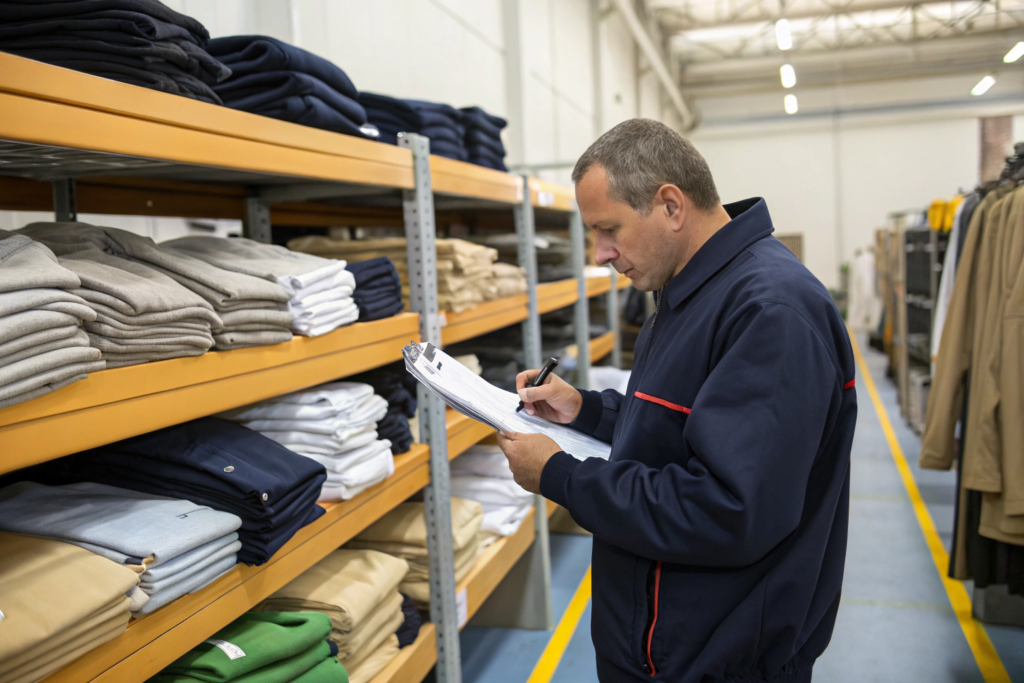
The third stage is the Final Random Inspection. When production is complete, our independent QC team, separate from the production team, randomly samples finished garments according to the AQL (Acceptable Quality Level) standard, usually AQL 1.5 or 2.5 for major defects. They check every detail against the approved sample.
The fourth stage is the Pre-Shipment Inspection, which can be done by a third-party agency you hire. We welcome this. Many of our clients send inspectors from companies like SGS, Bureau Veritas, or QIMA to our factory. These inspectors repeat the final random inspection and issue a report directly to you. Only after passing this stage do we pack the containers.
How do you use AQL standards to ensure objective quality?
AQL, or Acceptable Quality Level, is an international standard that removes guesswork from quality control. It is a statistical sampling method. Instead of checking every single garment, which is time-prohibitive for large orders, we inspect a statistically significant sample. The size of the sample depends on the total order quantity.
For example, for an order of 3,000 pieces, an AQL inspector might randomly pull 125 pieces from the finished batch. They then examine each piece against a checklist of defects. Defects are classified as Critical, Major, or Minor. Critical defects are safety issues. Major defects are things that would cause the customer to return the garment, like a broken zipper or a stain. Minor defects are small issues like a loose thread that the customer might not even notice.
The AQL level, like 1.5 or 2.5, sets the maximum number of defects allowed in the sample. If the number of defects exceeds this limit, the entire batch is rejected and must be sorted and re-inspected. This system provides an objective, verifiable measure of quality that both you and I can trust. It takes the emotion and opinion out of the decision.
How Can Technology Bridge The Distance Between Us?
Distance feels like a barrier only when your tools are old. In the past, you had to rely on faxes, emails with low-resolution photos, and your supplier's word. Today, technology can make you feel like you are standing right next to me on the factory floor. We use a range of tools to give you real-time visibility into your production.
This transparency is not just a nice extra. It is a core part of how we build trust. We want you to see the process. We want you to ask questions in real-time. We want you to feel confident that your investment is in good hands. The more you see, the more comfortable you become.
Can I conduct virtual factory tours and live inspections?
Absolutely. This has become a standard part of how we work with clients, especially since 2020. We can schedule a live video tour of our factory using your preferred platform, whether it is Zoom, WhatsApp, or WeChat. You can ask to see specific areas. You can ask to see your fabric rolls. You can ask to see your garments on the production line.
For inspections, we can set up a live video feed during the final random inspection. Our QC manager can walk you through the process, show you the defects they are finding, and discuss any issues in real-time. This is not a substitute for a third-party inspection, but it is an incredibly powerful tool for building confidence. One of my clients in Seattle does a 30-minute video check-in every two weeks during his production runs. He told me it saves him two international trips a year and gives him more control than he ever had when he was visiting factories in person.
We use a combination of systems to keep you informed. First, we share a detailed production schedule at the start of your order. This is a simple spreadsheet that shows every step: fabric arrival, cutting, sewing, finishing, and inspection, with planned start and end dates.
Second, we provide regular photo and video updates. We do not wait for you to ask. We send you pictures of the fabric being cut. We send you videos of the first pieces coming off the line. We document the process. This creates a visual record that you can review.
Third, we use cloud-based file sharing for all technical documents. Your tech packs, our spec sheets, lab dip approvals, and test reports are all stored and shared in organized folders. You can access them anytime. For a client in Denver who produces a complex line of outerwear, we set up a shared album where we post daily photos of the production progress. He told me it felt like he was walking the line with us every day. That peace of mind is invaluable.
What Role Does The "Golden Sample" Play In Remote QC?
The "Golden Sample" is the most important physical object in your entire production process. It is not just a sample. It is the master standard. It is the physical representation of everything we have agreed upon: the fit, the fabric, the stitching, the buttons, the labels. Once you approve the Golden Sample and sign it off, it becomes the absolute benchmark for the entire production run.
Every single person on my production floor, from the pattern maker to the final inspector, is trained to compare their work to the Golden Sample. If a garment does not match the Golden Sample, it is wrong. There is no room for interpretation. It is the ultimate tool for ensuring consistency across thousands of units, made by dozens of different operators, over several weeks.
How is the Golden Sample used during bulk production?
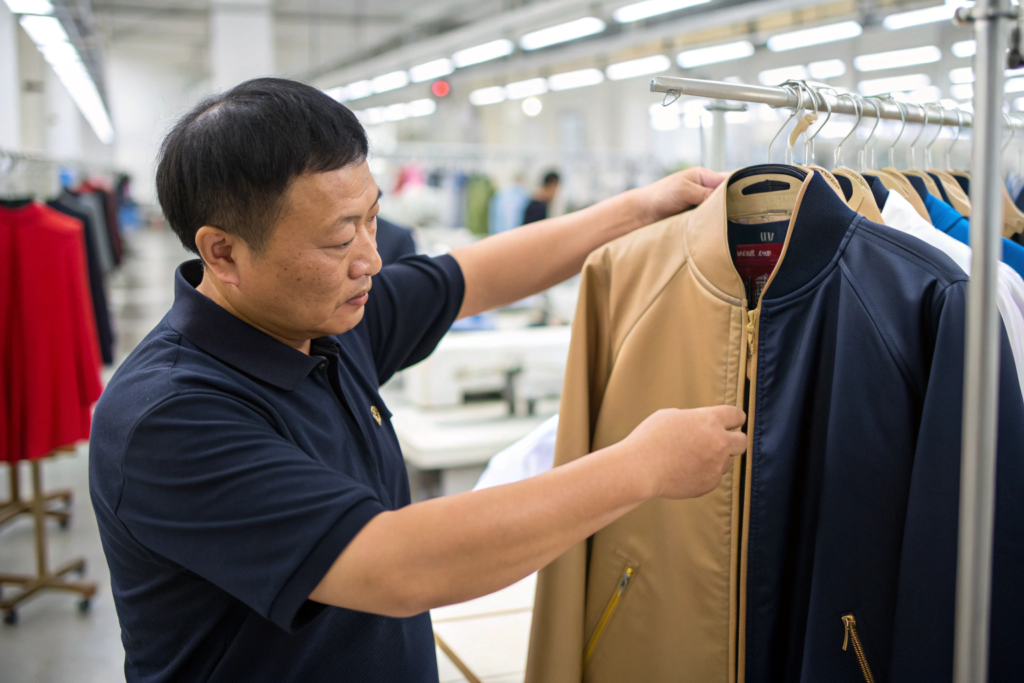
The Golden Sample stays in the quality control department. It is never used as a production pattern. Its sole purpose is comparison. At the start of production, the line supervisor shows the first few pieces to the QC manager, who holds them next to the Golden Sample. They check the silhouette, the stitch density, the placement of pockets, and the overall hand-feel.
Throughout production, inspectors use the Golden Sample as their reference. If a new operator joins the line, they are shown the Golden Sample so they understand the target. If there is any doubt about a measurement or a detail, the operator or supervisor brings the garment to the QC room to compare it directly to the Golden Sample. This creates a single source of truth on the factory floor.
What happens if bulk production deviates from the Golden Sample?
If an inspector finds a deviation, the response is immediate. The first step is to stop the production line. We do not let the problem continue. We then quarantine all affected pieces since the last good inspection point. The production manager and the QC manager investigate the cause. Was it a machine malfunction? Was it a misunderstanding of the instructions? Was it a faulty batch of components?
We then decide on a corrective action. Sometimes it is a simple machine adjustment. Sometimes it requires re-training an operator. The affected garments are then inspected one by one. Any that cannot be fixed are rejected and removed from the batch. Only when the problem is solved and the line is producing garments that match the Golden Sample again do we restart production. This discipline ensures that a small problem at 9 AM does not become a thousand defective garments by 5 PM.
How Do Third-Party Inspections Add An Extra Layer Of Security?
I have a simple philosophy: trust, but verify. Even though I have complete confidence in my own QC team, I fully support and encourage my clients to hire independent third-party inspection companies. This is not an insult to my team. It is a smart business practice. An extra set of eyes, especially eyes that work for you and report directly to you, provides ultimate peace of mind.
Third-party inspectors bring a fresh perspective. They are trained to find issues that an internal team, who sees the garments every day, might miss. They follow strict, standardized procedures. Their report is an objective, independent document that you can trust completely. It removes any doubt from the final shipment.
Which third-party inspection companies do you work with?
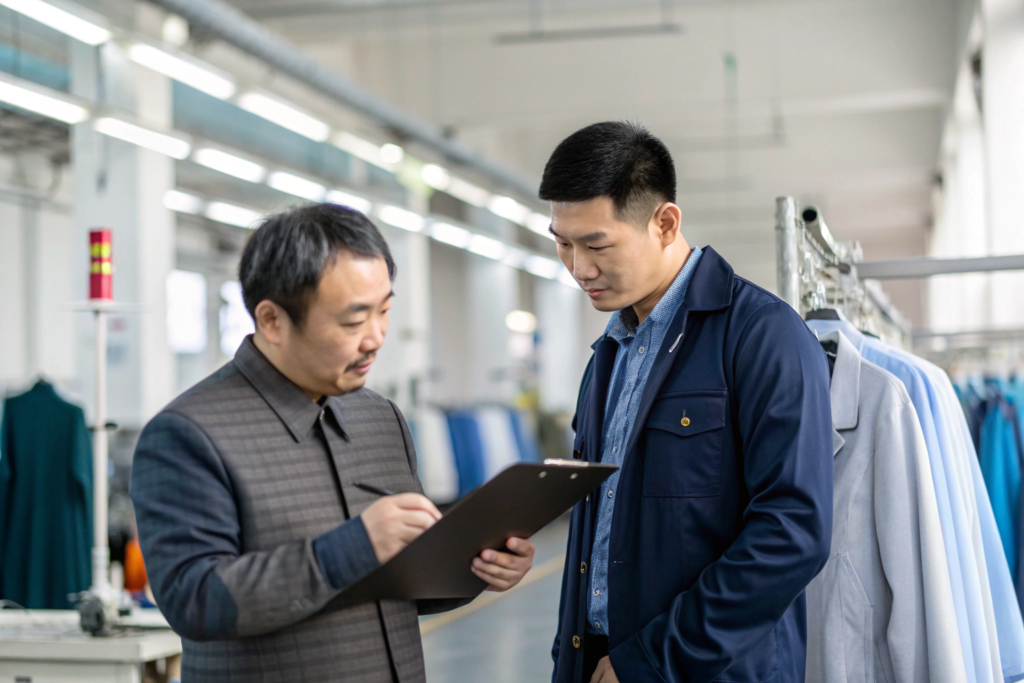
We work with all the major international inspection companies. Our clients most commonly request SGS, Bureau Veritas, and QIMA. These companies have offices in Shanghai and experienced inspectors who are familiar with our factory and our product categories. We have a very smooth process for scheduling inspections with them.
When you request a third-party inspection, we coordinate the timing. The inspector comes to our factory, usually when production is 100% complete and the goods are packed and ready. They select their own random sample from the cartons. They conduct their inspection according to the agreed AQL standard. They then issue a detailed report directly to you, usually within 24 to 48 hours. We accept their findings completely. If they reject the batch, we will sort and re-inspect it at our cost until it passes.
How do you handle a failed third-party inspection?
A failed inspection is serious, but it is not a disaster if handled correctly. It has happened to us a few times over the years, usually due to a very strict interpretation of a minor defect. When it happens, we act immediately. First, we stop all packing and shipping. Second, we review the inspector's report in detail with our QC team and the client.
We then conduct a 100% inspection of the entire batch. This means every single garment is taken out of its polybag and checked by our team. We sort out all the defective pieces identified by the inspector. We then ask the third-party company to come back for a re-inspection. We cover all costs for this re-inspection and for the extra labor. Once the re-inspection passes, we pack and ship the goods. I remember an order for a client in Boston where the inspector found a batch of buttons that were slightly less shiny than the approved sample. It was a subtle difference, but the client agreed it was a defect. We replaced every single button on 1,500 jackets. It cost us time and money, but the client's trust in us was actually strengthened because we fixed the problem without argument.
What Documentation Should You Request From Your FPP Partner?
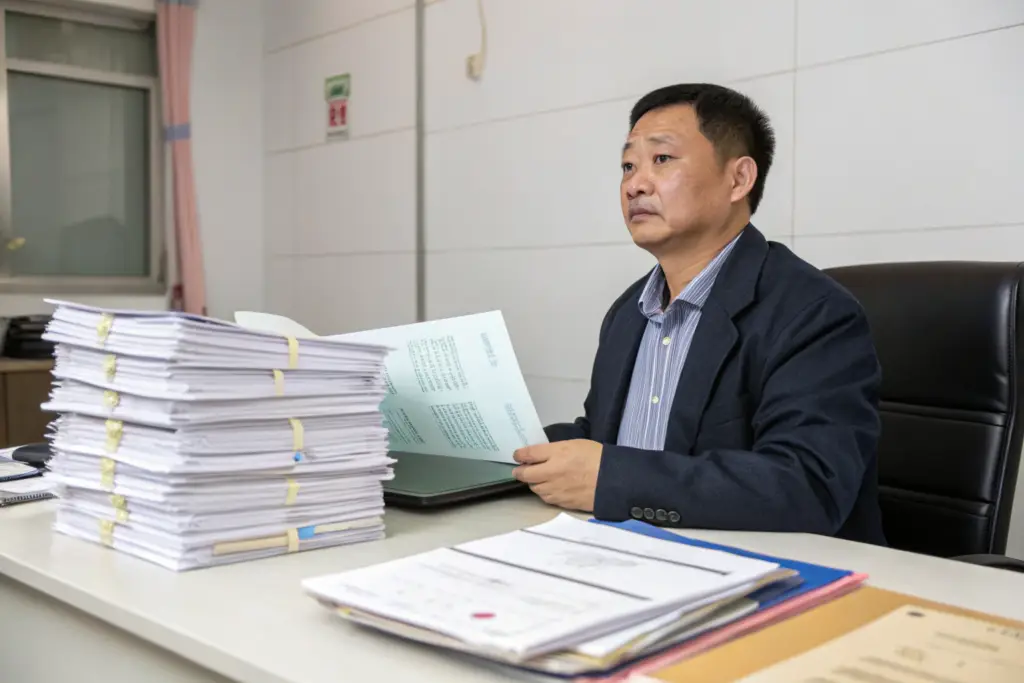
Documentation is the paper trail of trust. It is the evidence that proves everything we claim. In a remote relationship, documents become even more critical. They are your only permanent, verifiable record of what was ordered, what was tested, and what was shipped. A professional FPP partner should provide you with a comprehensive set of documents at every stage.
I always advise my clients to ask for documents proactively. Do not wait for problems. Build a filing system for every order. This documentation protects you if there are ever disputes with your own customers or with customs. It shows that you ran a professional, compliant operation.
What testing reports and certificates should I ask for?
The specific reports depend on your product and your market requirements, but here is a standard list. First, ask for Fabric Test Reports. These should come from an accredited lab, like SGS or Intertek, and should confirm fiber composition, fabric weight, colorfastness, shrinkage, and tensile strength. We provide these for every major fabric we source.
Second, ask for Product Safety Test Reports. For children's wear, this includes lead and phthalate testing. For all apparel, it can include flammability testing to meet U.S. standards (like 16 CFR 1610). We can arrange for these tests through our third-party lab partners.
Third, ask for Social Compliance Audits if this is important to your brand and your retail buyers. Reports from Sedex, SMETA, or BSCI demonstrate that our factory meets ethical standards for labor and safety. We are happy to share our current audit reports with serious partners.
Fourth, always request the Packing List and Commercial Invoice before shipment. Review them carefully to ensure the carton counts, weights, and product descriptions are accurate. Any mistake here can cause delays with your customs broker.
How do you ensure traceability of materials throughout production?
Traceability means we can track a finished garment back to the specific roll of fabric it came from. This is essential for quality control and for verifying claims like organic content. We achieve this through a simple but strict system. When fabric arrives, each roll is given a unique ID number and logged into our system.
When we cut the fabric, we record which roll numbers were used for which production batch. The cut pieces are bundled together with a ticket that includes the batch number and roll information. This bundle follows the garment through the sewing line. If a quality issue is found, we can trace it back to the specific fabric roll and isolate all garments made from that roll. For a client in San Francisco who uses expensive, certified organic cotton, we provide a traceability report with every shipment. This allows them to prove to their customers exactly where their fabric came from. That level of detail builds powerful brand credibility.
Conclusion
Managing quality control from 7,000 miles away is not about luck or blind trust. It is about building a system. It is about partnering with a factory that has clear, documented processes at every stage. It is about using technology to see your production in real-time. It is about establishing a physical "Golden Sample" as the ultimate standard. It is about inviting independent third-party verification. And it is about demanding comprehensive documentation that creates a permanent record of quality and compliance. When all these elements are in place, the distance disappears. You are left with confidence.
At Shanghai Fumao, we have spent decades perfecting this system. We do not fear your scrutiny; we welcome it. Our processes are designed to give you complete visibility and control, whether you are in New York, Los Angeles, or anywhere in between. We believe that a well-informed client is a confident client, and a confident client is a long-term partner. If you are ready to experience a quality control system that truly works from afar, please reach out. Contact our Business Director, Elaine, at elaine@fumaoclothing.com. Let us build a partnership based on transparency and trust.