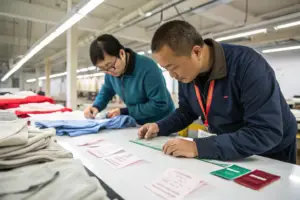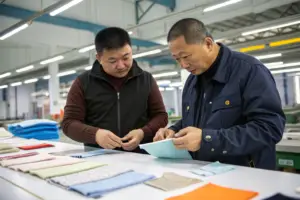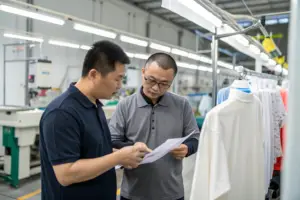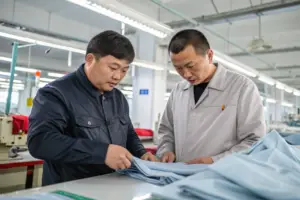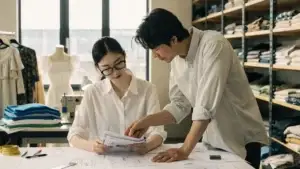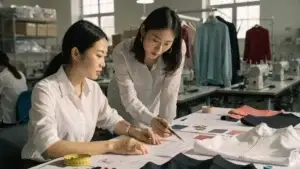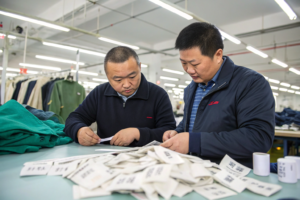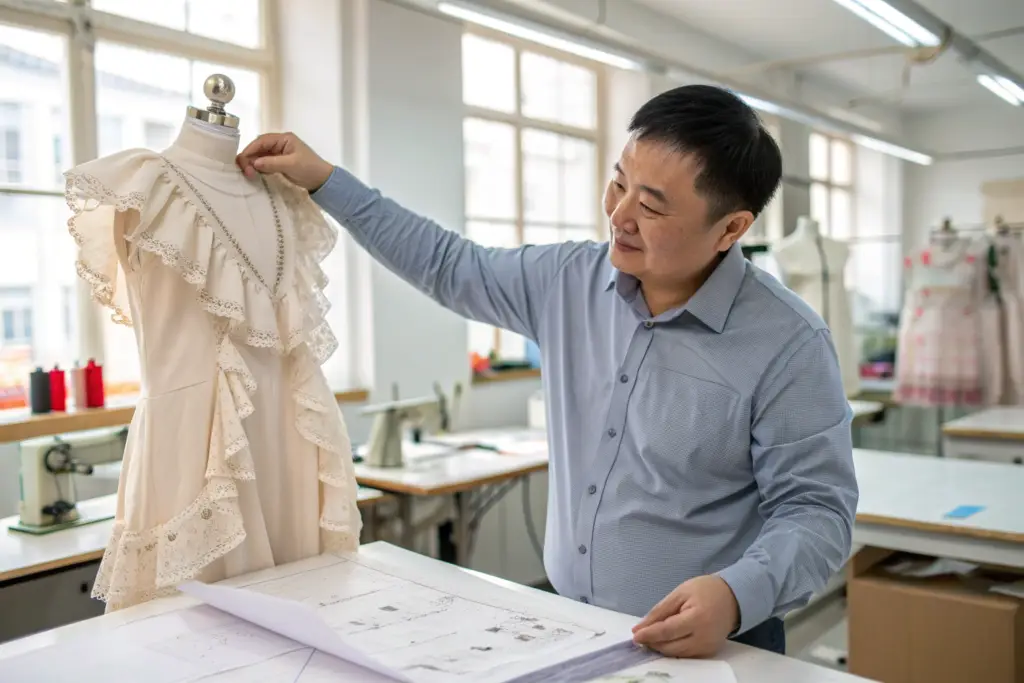
Women's wear is the most demanding category in the entire apparel industry. I say this from thirty years of experience. A basic men's t-shirt has a simple structure. It forgives small mistakes. But a women's blouse with darts, a complex collar, and delicate fabric? That garment reveals every flaw. The fit must be perfect across different body shapes. The fabric must drape exactly right. The stitching must be invisible where it should be hidden and precise where it is seen. One millimeter off in the pattern, and the whole garment is ruined. Your customers will feel it immediately. They will not wear it, and they will not buy from you again.
Standard wholesale suppliers avoid complex women's wear for a reason. It is hard. It requires skilled pattern makers, experienced sewers, and rigorous quality control at every step. Full-Package Production is not just helpful for complex women's wear; it is absolutely critical. It provides the collaborative expertise and flexible infrastructure needed to turn intricate designs into beautiful, sellable garments that make women feel confident.
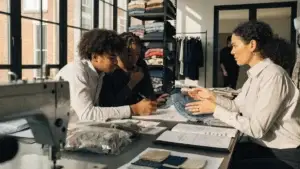
I built Shanghai Fumao to take on these challenges. A few years ago, a contemporary brand from Los Angeles came to us in desperation. They had designed a stunning silk dress with a built-in corset and a draped neckline. Three different factories had rejected it. A fourth produced samples that looked cheap and fit poorly. We sat down with their designer. Our pattern master suggested a different way to construct the corset using a lighter boning and a specialized lining. We sourced a rare, 19-momme silk charmeuse with the perfect weight. After three sample rounds, we had a dress that exceeded their expectations. They sold 4,000 units in the first season. That is the difference FPP makes.
What Makes Women's Wear Production More Complex Than Other Categories?
Women's wear is not just smaller versions of men's clothes. The entire approach to design and construction is different. The female form has more variation. Garments need to accommodate curves while maintaining a flattering silhouette. The range of fabrics used is also much wider, from stiff denim to fluid viscose to delicate lace. Each fabric behaves differently on the body and under the needle.
Furthermore, women's fashion changes rapidly. Trends come and go. This means production runs are often smaller and more varied. A factory needs to be flexible enough to switch between a run of 500 structured blazers one week and 1,000 fluid dresses the next. This level of complexity demands a partner who understands not just sewing, but the art and science of garment construction.
What specific construction challenges require FPP expertise?
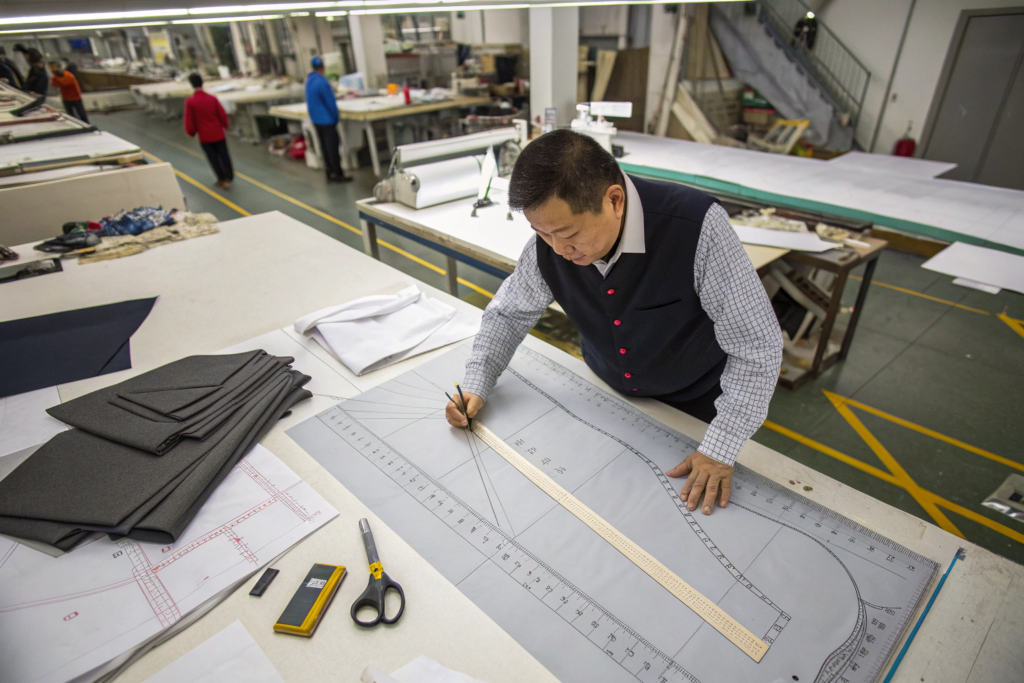
Let me give you some concrete examples from my factory floor. The first challenge is fit and draping. A dress might look beautiful on a hanger but pull awkwardly across the hips on a real person. Fixing this requires expert pattern grading and multiple fitting sessions on live models or dress forms. A wholesale supplier will not do this for you. They just copy an existing pattern.
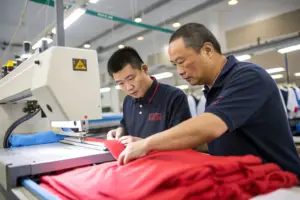
The second challenge is fabric handling. Lightweight fabrics like silk or rayon are notoriously difficult to cut and sew. They slip and shift. They pucker easily. This requires specialized cutting equipment and sewing machines with differential feeds. Our operators are trained specifically for these delicate fabrics. We also use "interlinings" and stabilizing techniques that a standard factory might skip, leading to a much more professional finish.
The third challenge is intricate detailing. Think about a blouse with pintucks, a dress with a draped cowl neck, or a jacket with princess seams that must curve perfectly. These details require skilled hands and precise machines. One of our clients in New York specializes in women's workwear with unusual seaming. Standard factories could not replicate the sharp, clean lines. Our experienced sewers, some with over 20 years of experience, execute these details perfectly because they understand how construction impacts the final look.
How does fabric selection for women's wear impact production complexity?
Fabric is the starting point for everything. Choose the wrong fabric for a design, and the garment will fail, no matter how well it is sewn. In FPP, we guide you through this selection. For a client in San Francisco who wanted a flowing summer maxi dress, she initially chose a standard viscose. It was cheap, but it was also heavy and did not drape well. We suggested a viscose challis, which is lighter and has a much softer drape. The cost was slightly higher, but the final dress moved beautifully.
Different fabrics also require different sewing techniques. A thick, structured brocade needs strong, straight stitches and possibly a lining to be comfortable. A delicate lace needs fine, almost invisible stitching to avoid damaging the pattern. We maintain a library of fabric suppliers and can source rare materials, like a specific weight of Italian wool crepe or a custom-dyed Japanese cotton. This expertise is part of our FPP service. We do not just sew what you give us. We help you choose materials that will work with your design and production goals.
How Can FPP Solve Fit and Sizing Issues in Women's Wear?
Fit is everything in women's wear. A garment that fits beautifully makes the wearer feel amazing. A garment that fits poorly makes them feel self-conscious and frustrated. They will return it, and they will likely never buy your brand again. This is the biggest risk in women's wear, and it is also the biggest opportunity. Brands that are known for a great fit have incredibly loyal customers.
The challenge is that sizing is not universal. A size 8 woman in New York is not the same as a size 8 woman in Los Angeles. Your target customer has specific expectations about fit. Some brands want a relaxed, oversized look. Others want a precise, tailored silhouette. Achieving this consistently requires a scientific approach to pattern making and grading, which is at the heart of FPP.
How do you develop patterns that fit my target customer consistently?
We start by understanding your customer. When you come to us with a design, we do not just copy it. We ask you for your size specifications and fit preferences. Do you want a true-to-size fit? Do you want extra room in the hips? Do you prefer a shorter or longer torso length?
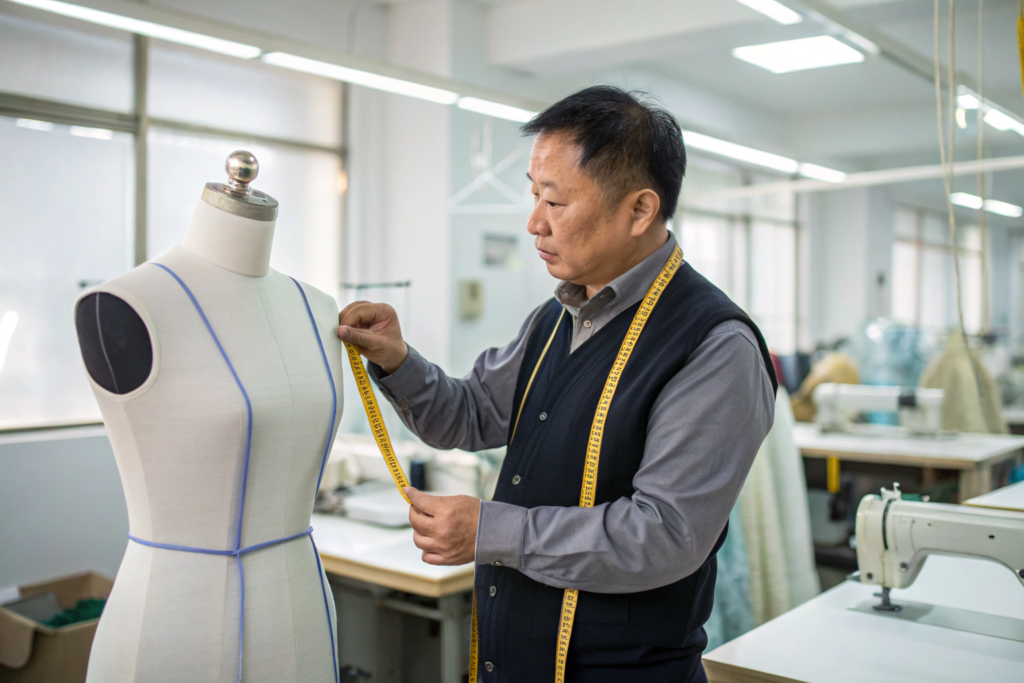
Our pattern makers then create a base pattern using computer-aided design (CAD) technology. This ensures mathematical precision. We then cut a sample in your chosen fabric and sew it on a prototype machine. This first sample is then checked on a standard dress form. We check every measurement: shoulder width, bust point, waistline, hip circumference, and sleeve length. We send you detailed photos and measurements. We then make adjustments based on your feedback. For a client in Chicago who sells petite women's wear, we went through four sample rounds to perfect the proportions for shorter torsos and narrower shoulders. The final product had a return rate of only 2%, compared to the industry average of 15-20% for women's wear sold online.
What is your process for grading samples across different sizes?
Grading is the process of taking your base size pattern and scaling it up or down to create a full size run. This is a highly technical skill. A common mistake is to simply increase all measurements by the same percentage. This creates patterns that are out of proportion. A larger size needs different adjustments in the bust, waist, and hips than a smaller size.
We use specialized grading software that applies industry-standard rules, but we also customize based on your brand's fit model. We can create grade rules that reflect the shape of your actual customer. After grading, we often produce a "fit sample" in a second size, like a large, to verify the proportions are correct. This catches issues before full production. I remember a client from Boston who makes high-end cocktail dresses. Her previous supplier graded poorly, and her size 14 dresses looked boxy and unflattering. We re-graded the entire line using our system, and her sales in larger sizes increased by 50% because the fit was finally right. Good grading is good business.
How Does FPP Handle Delicate Fabrics and Intricate Details?
Delicate fabrics are the hallmark of beautiful women's wear. Silk charmeuse, fine lace, lightweight chiffon. They feel luxurious and drape elegantly. But they are also the most difficult materials to work with. They snag easily. They shift during cutting. They pucker under the needle. A factory that only makes basic cotton t-shirts does not have the skills or the equipment to handle them properly.
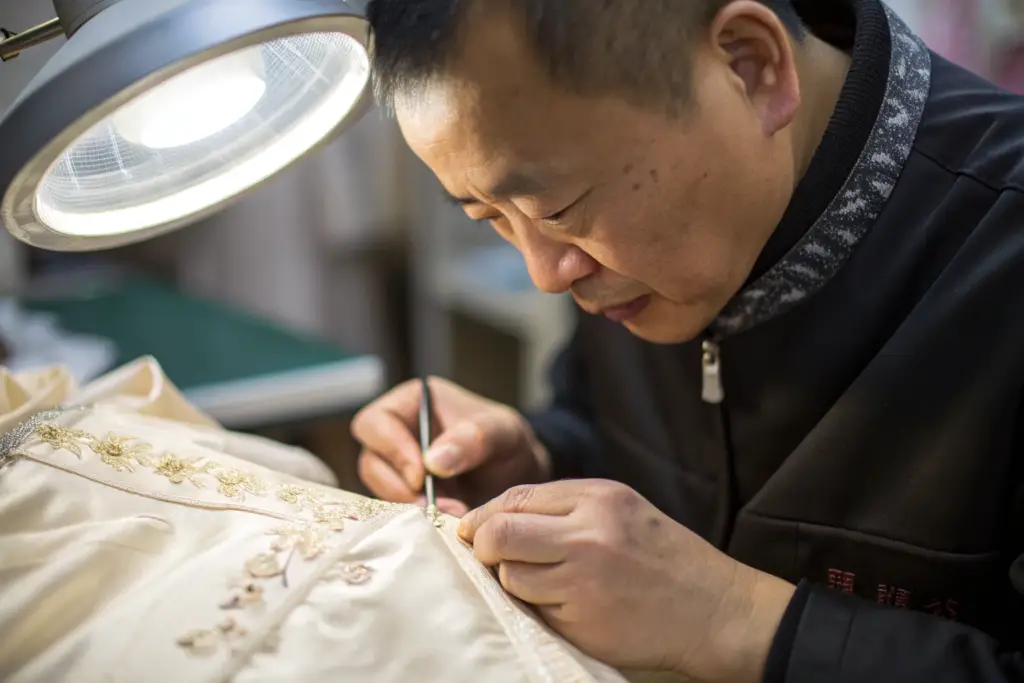
The same is true for intricate details. Things like ruffles, pleats, embroidery, and beading add beauty and value to a garment. But they also add complexity. Each detail requires a specific technique and often a specialized machine or attachment. Rushing through these details or using the wrong method will make the garment look cheap and handmade in a bad way.
What machinery is needed for sewing delicate fabrics correctly?
You cannot sew silk on the same machine you use for denim. It requires different needles, different presser feet, and different thread tension. For delicate fabrics, we use machines with ultra-fine needles, often size 9 or 11, to prevent damaging the fibers. We use specialized presser feet, like Teflon-coated or roller feet, that glide over the fabric without pulling or snagging.
We also have machines with "alternating top feed" which helps feed delicate layers evenly through the machine, preventing puckering and shifting. For a client in Seattle who makes luxury silk camisoles, we use a special machine with a "safety stitch" that creates a flat, strong seam without adding bulk. The investment in the right machinery is invisible to the end customer, but they feel the result in the garment's quality and durability. They do not know why the seams are smooth and comfortable, but they know it feels more expensive.
How do you ensure consistent quality for details like ruffles and pleating?
Consistency is the biggest challenge with intricate details. A hand-made ruffle might look beautiful on one garment, but if it varies slightly on the next ten, the overall quality looks inconsistent. For details like this, we use a combination of skilled craftsmanship and specialized attachments.
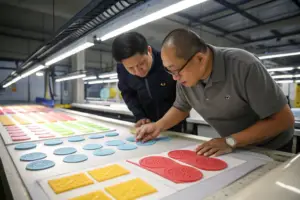
For pleating, we often use heat-set pleating machines that create permanent, uniform pleats in synthetic fabrics. For ruffles, we use specialized ruffler attachments on our sewing machines that create even gathers automatically. For a client in New York who does a lot of custom embroidery on her dresses, we partner with a specialized embroidery shop that uses multi-head computerized machines. This ensures every single flower or logo is stitched identically. Before we start production, we create a "sewing specification sheet" for each style. This sheet tells the operator exactly which machine, which needle, which thread, and which attachment to use for every seam. This system guarantees that the 500th dress looks exactly like the first one.
Why Is Sampling More Important for Women's Wear Than Other Categories?
Sampling is always important, but for complex women's wear, it is the difference between success and disaster. You cannot guess how a complicated design will look in real fabric. You cannot assume the pattern will work perfectly the first time. The sampling phase is where we find and fix all the hidden problems. It is our opportunity to collaborate, to refine, and to perfect before you commit to thousands of dollars in production.
I always tell my clients: the sampling budget is the cheapest insurance you will ever buy. Spending a few hundred dollars on a proper sample can save you tens of thousands in defective goods, returns, and lost reputation. Rushing to production without a perfect sample is simply gambling with your brand's future.
How many sample rounds are typically needed for a complex design?
For a simple t-shirt, one or two rounds might be enough. For a complex women's dress or jacket, you should plan for at least three rounds. The first sample is the "proof of concept." It shows us if the design is constructible and gives us a first look at the fit and drape. There will almost always be issues to fix.
The second sample incorporates all the corrections from the first. We adjust the pattern, refine the construction methods, and fine-tune the fit. This sample should be very close to the final product. Sometimes we need a third sample, especially if there are major changes or if the fabric is particularly challenging. For a bridal client in Denver who makes heavily beaded gowns, we often do four or five samples. Each round addresses a different detail: the fit of the bodice, the drape of the skirt, the placement of the beads, and the final finishing. It takes time, but the final gown is flawless, and that is what her brides expect.
What should I look for when reviewing women's wear samples?
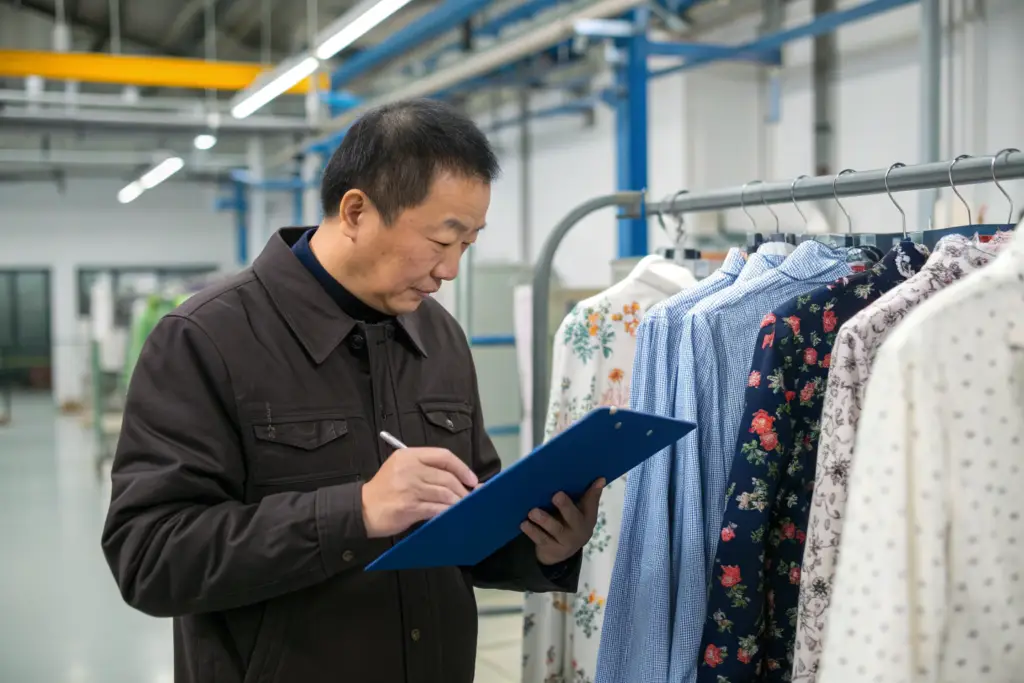
When you receive a sample, do not just look at it. Put it on a dress form. Examine it closely. Check the grain line. Is the fabric hanging straight, or is it twisting? Check the seams. Are they straight and flat, or are they puckered? Check the corners of pockets and collars. Are they sharp and clean, or rounded and messy?
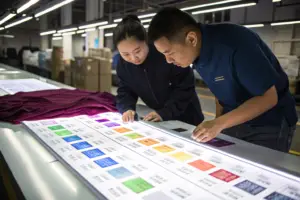
Check the buttons and buttonholes. Are they securely attached and aligned? Check the hem. Is it even and invisible from the right side? For a client in Los Angeles, we sent a sample of a linen blazer. She noticed the sleeve vent was slightly crooked. It was a small detail, but it would have been noticeable on the finished garment. We corrected the pattern and the next sample was perfect. That attention to detail is what separates a good garment from a great one. Take your time. Use a checklist. And if something does not look right, ask questions. That is what the sampling phase is for.
How Can FPP Help You Manage Smaller Minimums for Niche Women's Wear?
The women's wear market is increasingly driven by niche brands. You might not need 10,000 units of one style. You might need 500 units of a special-edition dress or 1,000 units of a new blouse to test the market. Traditional wholesale factories often have high minimums. They are set up for mass production, not flexibility. This forces you to either over-order and risk dead stock, or abandon your idea altogether.
FPP offers a different model. Because we are involved from the beginning and we control the entire process, we can be much more flexible with order quantities, especially for first-time or test orders. We understand that you need to validate a design before committing to a huge production run. We can work with you to find a balance.
What are your typical minimum order quantities for complex styles?
I am often asked this question. The answer depends on the complexity of the garment. For a simple woven blouse, our minimum might be around 300 pieces per color per style. For a more complex dress with multiple pattern pieces and specialized construction, the minimum might be 500 to 800 pieces. For a very complex jacket or coat, it might be 1,000 pieces.
However, these are not rigid rules. We evaluate each project individually. If you are a new client with a promising design, we want to help you succeed. We can discuss a smaller test run, perhaps 200 to 300 pieces, to help you launch. The key is communication. Tell us your goals and your constraints. We will work with you to find a viable path forward. A few years ago, a startup in Austin came to us with a design for a unique denim jumpsuit. They could only afford 250 units. We worked with them to simplify one internal seam, which saved time without affecting the external look, and we produced the 250 units. They sold out in a month and came back for 1,000 units the next season. We invested in their growth, and they became a loyal partner.
How can small test runs protect my brand from inventory risk?
Small test runs are one of the smartest business decisions you can make. They allow you to put a product in front of real customers with minimal financial exposure. You can gauge the reaction. You can see what sells and what does not. You can collect feedback on fit and fabric before you place a massive order.
This is especially important for rare or innovative styles. You do not know for sure how your market will react. A small batch of 300 units is a manageable risk. If they sell out in two weeks, you know you have a winner. You can then place a larger reorder with confidence. If they sell slowly, your loss is limited. You learn something valuable without endangering your entire business. This "test and learn" approach is only possible with a flexible FPP partner who is willing to work with smaller quantities. It protects your cash flow and your inventory health, allowing you to grow more sustainably.
Conclusion
Complex women's wear production is not for the faint of heart. It demands expertise, precision, flexibility, and a true partnership between the brand and the manufacturer. It requires a factory that understands fit, respects delicate fabrics, masters intricate details, values the sampling process, and offers the flexibility to test new ideas. Trying to produce sophisticated women's wear through a standard wholesale model is a recipe for disappointment, returns, and damage to your brand's reputation.
At Shanghai Fumao, we have built our entire operation around mastering this complexity. We have the skilled pattern makers, the specialized machinery, the rigorous quality systems, and the flexible production lines to turn your most challenging women's wear designs into beautiful, profitable realities. We do not shy away from hard projects; we embrace them. If you are ready to partner with a factory that treats your complex designs with the care and expertise they deserve, please reach out. Contact our Business Director, Elaine, at elaine@fumaoclothing.com. Let us create something beautiful together.