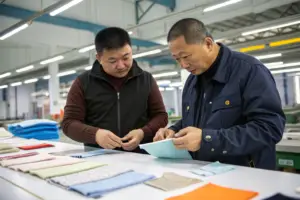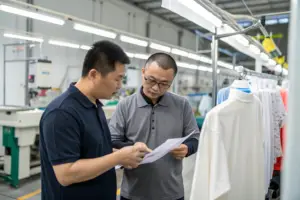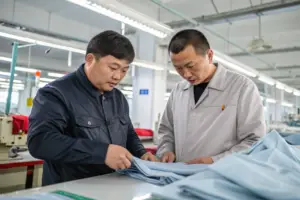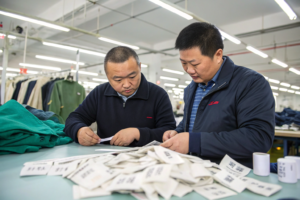
I meet brand owners every week who are confused about manufacturing terms. They hear words like CMT and Full Package, but they do not really understand what they mean for their business. This confusion costs them money. It causes delays. I remember a buyer from Seattle who came to me last year. He had been using a CMT factory in Vietnam for three years. He thought he was saving money. But when we sat down and calculated all his hidden costs, he was shocked. He was spending thousands of dollars more than he needed to, and his stress levels were through the roof.
The core difference is simple: CMT (Cut, Make, and Trim) means you provide all the materials, and the factory just assembles the garment. Full Package means the factory handles everything: sourcing the fabric, finding the trims, making the samples, manufacturing, and shipping the finished product to your door. One is a task; the other is a complete partnership.
I want to help you understand this difference clearly. Your choice between these two models will shape your entire business. It will affect your cash flow, your team size, your stress levels, and ultimately, your profit margins. I have worked with hundreds of American brands over the past fifteen years. I have seen both models succeed. I have also seen both models fail. The key is knowing which one fits your specific situation. Let me break it down for you based on what I have learned from working with buyers just like you.
What Exactly Does CMT Manufacturing Include?
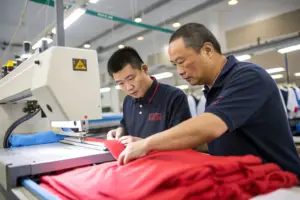
CMT stands for Cut, Make, and Trim. It is the most basic form of apparel manufacturing. Think of it like this: you bring all the ingredients to a restaurant, and you pay the chef only to cook the meal. You are responsible for buying the fabric, the thread, the zippers, the buttons, and the labels. You ship all these materials to the factory. The factory's job is simple: cut the fabric according to your patterns, sew the pieces together, and trim the loose threads. That is it. Once the garments are finished, you have to arrange for someone to pick them up, pack them, and ship them to the U.S.
What materials do I need to provide for CMT?
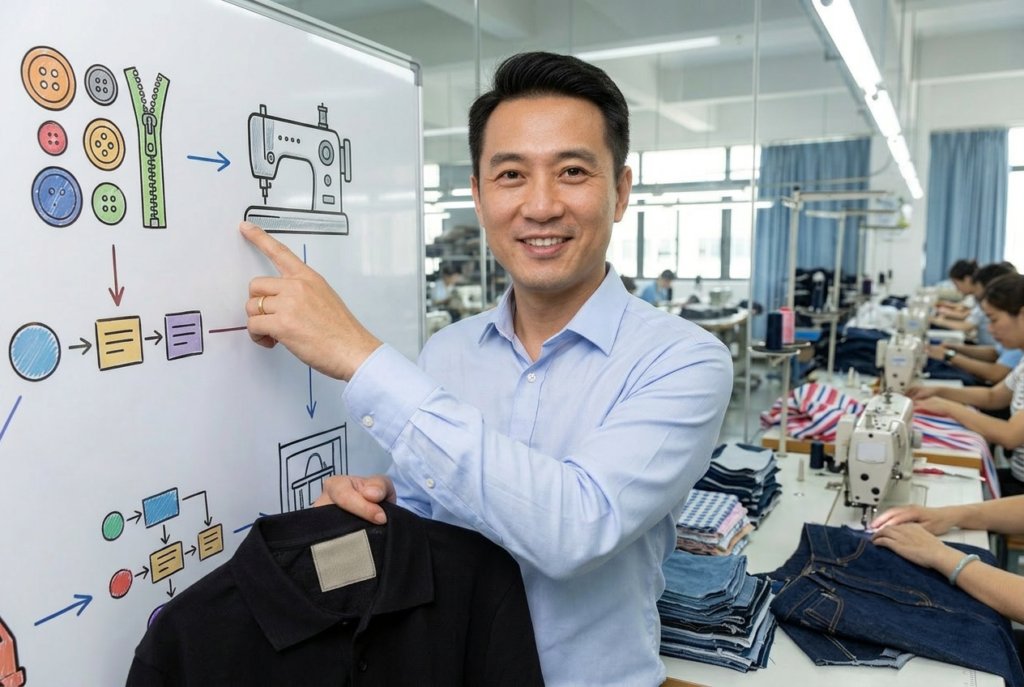
When you choose CMT, you become a sourcing expert. You must find and purchase everything. This starts with the main fabric, which is often the biggest expense. You need to find a reliable fabric mill, order sample yardage, test the quality, and then place a bulk order. But it does not stop there. You also need to source all the trims. This includes threads, zippers, buttons, snaps, labels, hang tags, and packaging materials. Each of these items might come from a different supplier. You then have to coordinate all these deliveries to arrive at the CMT factory at exactly the right time. If your zippers arrive one week late, the factory stops working. You still pay for the workers' time, even if they are just sitting idle. I had a client from Boston who tried this. He sourced beautiful Italian wool for his jackets. But his button supplier in India had a shipping delay. His factory in China sat idle for ten days waiting for buttons. He lost over $4,000 in factory idle time and missed his shipping window.
How do CMT factories handle quality control?
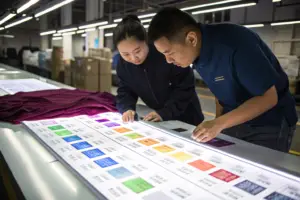
In a CMT model, quality control becomes a gray area. The factory is only responsible for the quality of their sewing. If the stitching is crooked or a seam is weak, that is their fault. But what if the problem is with the fabric you provided? Let's say you bought fabric that has a high shrinkage rate. After the factory washes the finished garment, it shrinks two sizes. Whose fault is that? The factory will say it is your fabric. You will say the factory should have warned you. This creates conflict and bad blood. I have seen partnerships end over exactly this type of problem. A good CMT factory will do basic inspections on the materials you send. But they will not test the fabric for things like colorfastness or shrinkage unless you pay them extra for that service. Most brand owners do not realize this until a problem happens. You end up paying for quality control twice: once when you buy the fabric, hoping it is good, and again when you have to fix problems later.
What Are The Hidden Costs Of CMT Production?
Many brand owners choose CMT because they think it is cheaper. They see a low price per garment on the factory invoice and think they are saving money. But they forget to calculate all the other costs. Your real cost is not just the factory price. It is the price of your time, your travel, your mistakes, and your stress. When you add all these up, CMT is often much more expensive than people realize.

Do I need a larger team to manage CMT?
Yes, absolutely. Managing CMT production is a full-time job for at least one person, sometimes more. You need someone to find and vet fabric suppliers. You need someone to negotiate prices with trim vendors. You need someone to track all these different shipments. You need someone to communicate with the factory about production schedules. You need someone to handle the paperwork for customs when you import the materials. And you need someone to manage the quality control at every step. For a small brand, this might be you. But is your time best spent chasing fabric samples and checking shipment statuses? Or should you be designing new collections and selling to retailers? A client from Denver tried to manage CMT production himself for two years. He told me he spent about 25 hours a week just on supply chain coordination. That is over 1,200 hours a year. He finally switched to full package with us. He said it felt like getting his life back. He could focus on growing his brand again. If you value your time, you must include its cost in your calculation. Using a service like Upwork to hire a sourcing agent can cost you $30 to $50 per hour. Do the math.
What happens if my materials are late or defective?
This is the biggest risk in CMT manufacturing. You bear all the risk. When you buy fabric from a mill, you pay for it before it ships. If that fabric arrives at the factory and it is the wrong color, or it has flaws, or it is a different weight than you ordered, it is your problem. You have already paid for it. Now you have to decide: use the bad fabric and ruin your product, or order new fabric and be weeks late. Either way, you lose money. The factory will not help you because it is not their fabric. They will just wait for you to fix the problem. I remember a situation with a client from Atlanta who made high-end men's shirts. He ordered a special dobby weave fabric from a mill in Turkey. When it arrived at his CMT factory in China, we discovered 15% of the rolls had a weaving defect. It was a thin line running through the fabric. The mill in Turkey refused to take responsibility. They said the damage must have happened during shipping. The shipping company said it was a manufacturing defect. The client was stuck in the middle with $8,000 of defective fabric. He had to reorder and lost two months of production. With full package, we would have caught this problem at the mill before it shipped. And if it still happened, we would work with our long-term mill partners to replace it quickly, often at no cost to you. That is the value of having a partner who shares the risk.
How Does Full Package Manufacturing Simplify Everything?
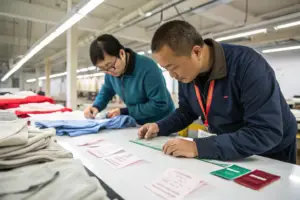
Full package manufacturing is the opposite of CMT. Instead of you managing ten different suppliers, you manage just one: us. We take your design and handle the rest. We source the fabric from our network of trusted mills. We source the trims from reliable vendors we have worked with for years. We make the samples for your approval. We manufacture the garments on our five production lines. We inspect the quality at every step. We pack the finished goods. And we ship them directly to your warehouse in the U.S. You get one invoice, one point of contact, and one person responsible for the final result.
How does fabric sourcing work in full package?
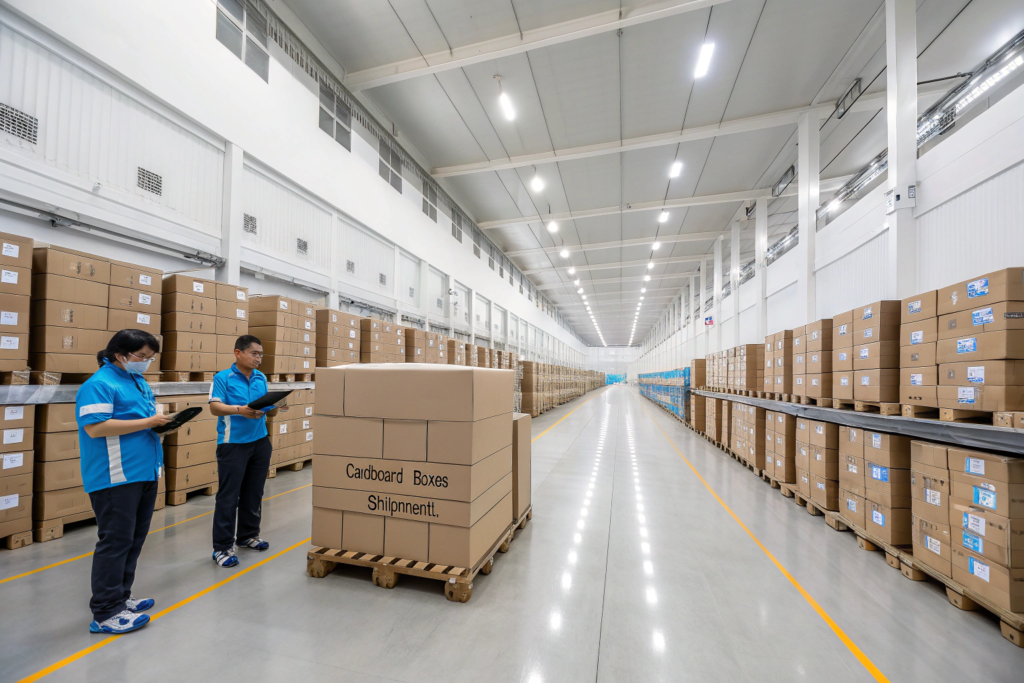
This is where full package really shines. We have relationships with dozens of fabric mills across China and Asia. We buy huge volumes from them every year. This gives us buying power that you cannot get on your own. When you need a specific fabric, we can get samples in days, not weeks. When you place an order, we get the best prices because of our volume. And if there is a problem with the fabric, we handle it. We do not pass the problem on to you. Last year, a client from Los Angeles needed a very specific recycled polyester for an activewear line. He had tried to source it himself but the minimum order quantity was 5,000 yards, which was too much for his startup. We worked with our mill partners and found a way to split a larger order with another brand. He got the exact fabric he wanted, at a lower price, with no minimum quantity issue. That is the power of a full package partner. We have a fabric sourcing guide that we use to find the best materials for each project.
What about sampling and fit approval?
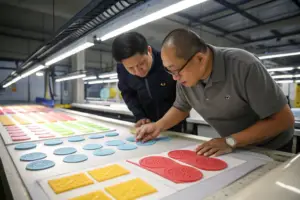
The sampling process is much smoother with full package. Because we control the fabric and trims from the start, the first sample is much closer to the final product. We have an in-house sampling room with dedicated pattern makers and sample sewers. When you send us your tech pack, we review it carefully. We look for potential problems. We might suggest small changes that will make the garment easier to produce or less expensive, without changing the look. We send you photos and videos during the sample process. You can request changes. We make them. Once you approve the final sample, we have a clear record of exactly how the garment should look and feel. This sample becomes the benchmark for the entire production run. There is no confusion. There is no "I thought it would be different." There is just a clear, agreed-upon standard. We use a digital system to track every sample request and revision, so nothing gets lost in translation.
Which Model Is Better For Your Business?
There is no single right answer for every brand. The best model depends on where you are in your business journey. I have worked with startups who tried CMT and failed. I have also worked with huge brands who use CMT successfully for certain products. The key is understanding your own capabilities and goals. Let me give you a framework based on what I have seen work over the years.

When does CMT make sense?
CMT can work well for very large, established brands. If you have a dedicated sourcing team in Asia, if you buy fabric in massive volumes directly from mills, and if you have your own quality control people on the ground, CMT might save you money. You are essentially doing the work the factory would do, but you are big enough that you can do it cheaper yourself. CMT also makes sense if you have very specific, proprietary materials that you do not want anyone else to handle. For example, if you have developed a special technical fabric with a patented finish, you might want to control that supply chain directly. But for most brands, especially small to medium-sized ones, CMT adds complexity and risk without adding value. You need to be honest about whether you have the team, the time, and the expertise to manage it well. Many brands that start with CMT eventually switch to full package as they grow, because they realize their time is better spent on design and sales.
Why do most growing brands choose full package?
Full package is the choice for brands that want to scale. It allows you to grow without constantly adding new people to your team. You leverage our expertise instead of building your own. When you work with us at Shanghai Fumao, you get access to our fifty years of combined experience. You get our relationships with mills. You get our quality control systems. You get our logistics network. All of this is included in the price. You do not have to build it yourself. I have seen dozens of brands make the switch from CMT to full package. Every single one of them told me the same thing: they wish they had done it sooner. The peace of mind alone was worth the change. When you know that one trusted partner is handling everything, you sleep better at night. You stop worrying about whether your zippers arrived or if your fabric color is correct. You can focus on what you love: creating beautiful clothing for your customers.
Conclusion
The difference between CMT and Full Package is the difference between buying ingredients and hiring a personal chef. With CMT, you control everything, but you also do all the work and take all the risk. With Full Package, you hand over the complexity to a trusted partner who has the systems, relationships, and experience to do it better than you could alone. For most American brands looking to source from China, Full Package is the smarter choice. It protects your margins, saves your time, and eliminates the hidden costs that eat away at your profits. It turns a stressful, fragmented process into a smooth, reliable partnership.
I have spent my career building a company that brand owners can trust. We do not just sew clothes. We solve problems. We protect quality. We deliver on time. If you are tired of managing too many vendors and worrying about too many details, let's talk. Contact our Business Director, Elaine, directly at elaine@fumaoclothing.com. Tell her about your brand and your goals. She will explain how Shanghai Fumao can take the complexity out of your supply chain and help you build a better business. Your time is valuable. Let us handle the rest.