You’ve done your due diligence. You requested the OEKO-TEX certificate from your supplier, filed it away, and proceeded with production. But a nagging doubt remains: what if the certificate is fake? For a brand, the risk isn’t just about non-compliance—it’s about legal liability, reputational ruin, and financial loss. The consequences for suppliers who forge these documents are severe, but understanding them is key to protecting your own business.
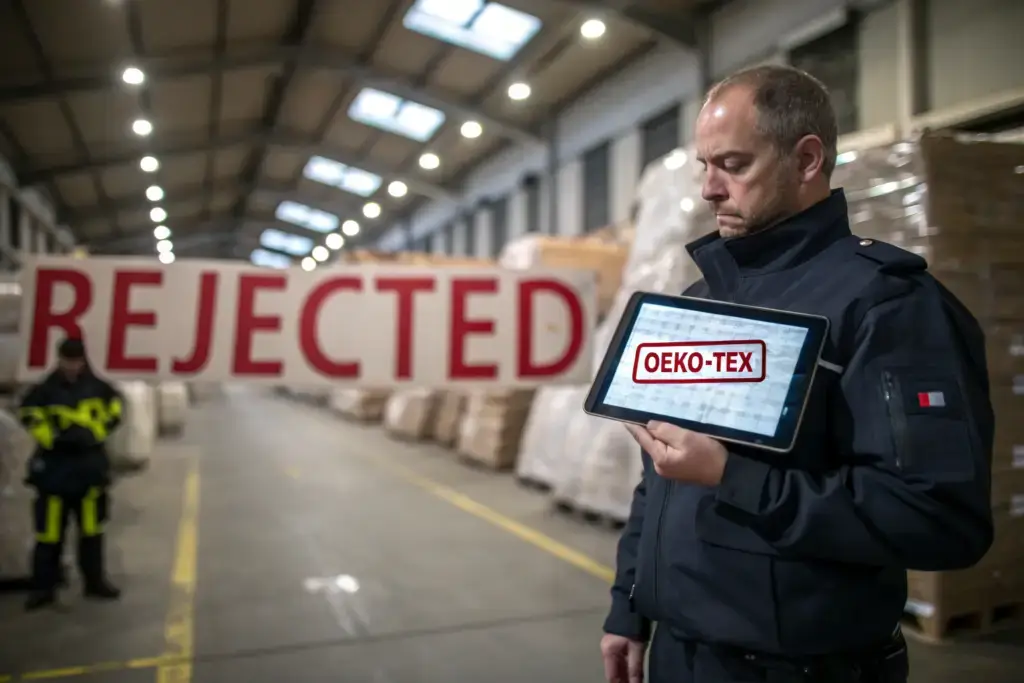
Suppliers caught using fake OEKO-TEX certificates face immediate legal action from the OEKO-TEX Association, including hefty fines and permanent blacklisting. For the buying brand, the penalties are even more devastating: costly product recalls, destroyed inventory, lawsuits, and irreversible damage to brand reputation and consumer trust. It’s a supply chain risk that no amount of cost savings can justify.
The market for counterfeit certifications is a silent threat in global apparel manufacturing. As a manufacturer who values long-term partnerships, we see the fallout from this malpractice damage the industry’s credibility. Let’s dissect the real-world penalties from both sides of the transaction.
What Legal Actions Does the OEKO-TEX Association Take?
The OEKO-TEX Association actively protects the integrity of its labels through a dedicated legal and monitoring framework. They treat counterfeit certificates as trademark infringement and fraud.
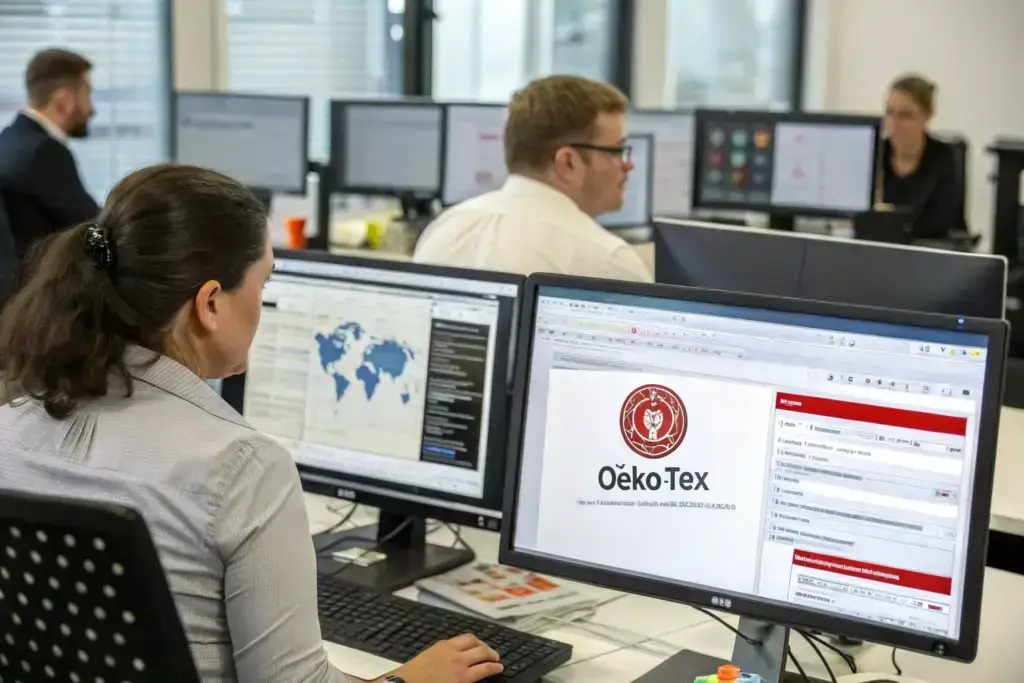
The Association employs a multi-pronged enforcement strategy: digital database verification, market surveillance, and legal prosecution in the supplier’s local jurisdiction. They maintain a global, searchable database of all valid certificates. If a presented certificate number doesn’t match or belongs to a different company/product, it’s an immediate red flag. Last year, we assisted a European brand in verifying a potential new sourcing partner from another region. A quick check on the OEKO-TEX official website showed their provided certificate number was expired and for a different fabric type. This simple, free verification step saved them from a disastrous partnership.
What Are the Specific Fines and Sanctions for the Supplier?
The penalties are contractual, financial, and reputational:
- Cease and Desist Orders & Fines: The Association will issue a legal order to stop using the fraudulent label immediately. They can impose significant fines, often calculated based on the scale of estimated illegal use (e.g., per garment produced). These fines can reach tens or even hundreds of thousands of euros.
- Permanent Blacklisting: The offending company’s name is added to an internal industry blacklist. They will be barred from obtaining any genuine OEKO-TEX certification for years, if not permanently. This effectively cuts them off from serving serious brands in regulated markets.
- Public Naming and Shaming: In severe cases, the Association may publish a notice of the violation, publicly identifying the company. In an industry built on trust, this is a death sentence for their B2B reputation.
How Does Market Surveillance Work?
OEKO-TEX collaborates with customs authorities and employs independent testers to buy products from the market, especially online platforms like Amazon or Alibaba, and verify their certification claims. If a garment bears a STANDARD 100 label but tests positive for banned substances or is linked to a fake certificate, the legal process is triggered against the named certificate holder (the supplier). This means even if the brand was unaware, the supplier is still held legally accountable at the source.
What Are the Catastrophic Costs for the Buying Brand?
While the supplier faces legal action, the brand holding the inventory and facing consumers bears the brunt of the operational and financial catastrophe. The penalty is not a fine from OEKO-TEX, but from the market itself.
The brand faces direct costs from recalls, destroyed goods, lost sales, and legal liability, alongside the incalculable cost of shattered consumer trust. Imagine having to pull thousands of units from shelves and e-commerce platforms because a consumer advocacy group or a competitor’s random test exposed the fraud. The 2021 case of a major European retailer recalling children’s textiles over undisclosed chemicals is a cautionary tale, even if not directly about fake certs—the consumer outrage and financial impact were identical.

Can You Quantify the Direct Financial Loss?
The costs cascade rapidly:
- Full Supply Chain Stoppage: Immediate halt of shipments at port. DDP (Delivered Duty Paid) shipments are particularly vulnerable, as the brand is the final importer of record, bearing full legal responsibility.
- Recall Logistics & Destruction: The cost to collect inventory from distributors, retailers, and warehouses, then safely dispose of or destroy it is enormous.
- Refunds & Compensation: Refunding retailers and consumers, often with additional goodwill compensation.
- Legal Fees & Settlements: Defending against potential class-action lawsuits or regulatory fines from bodies like the Consumer Product Safety Commission (CPSC) in the U.S.
- Lost Sales & Market Capitalization: The immediate loss of revenue from the product line, and for public companies, a potential hit to stock price.
For a medium-sized brand, a single incident like this can easily result in seven-figure losses and threaten solvency.
How Does Brand Trust Erode?
The intangible damage is worse. In the age of social media, a scandal over "toxic clothing" or "fake eco-labels" spreads instantly. A brand’s hard-earned reputation for sustainability and safety can be destroyed overnight. Rebuilding that trust takes years and a massive investment in transparent communication. It makes all future marketing claims suspect. This is why at Shanghai Fumao, our process involves transparent, auditable sampling for certification—we protect our clients by first protecting our own integrity.
How Can Brands Proactively Verify and Protect Themselves?
The best "penalty" is the one you avoid entirely. Diligent brands must move beyond simply collecting PDF certificates. Verification must be an active, multi-step process.
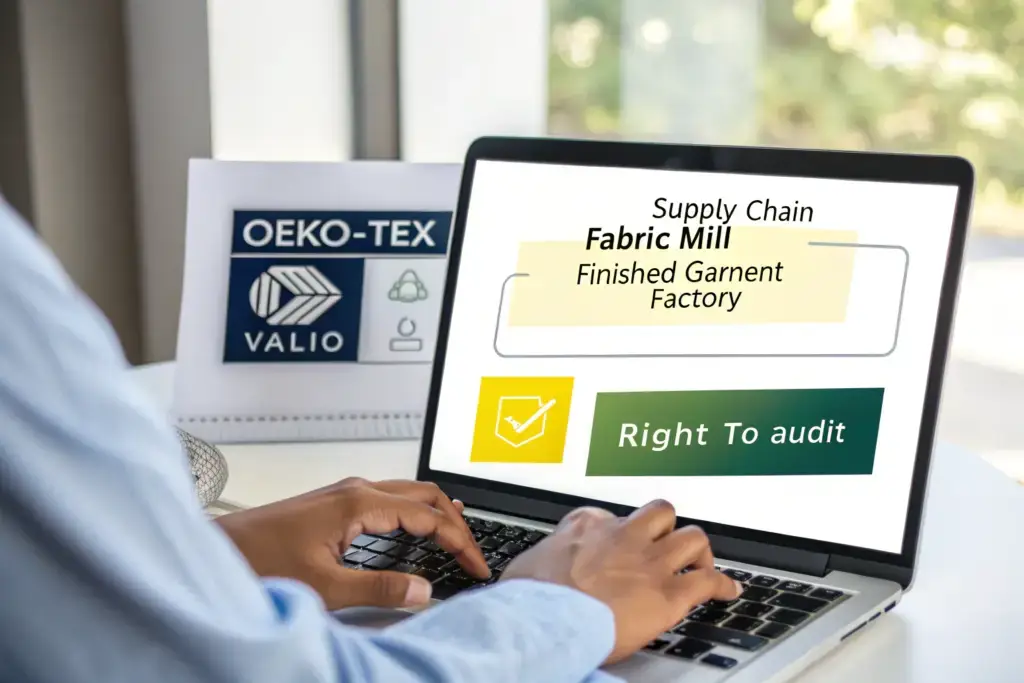
Protection requires a three-step shield: 1) Database Verification, 2) Supply Chain Transparency, and 3) Independent Audit Rights. Do not rely on your supplier’s sales rep. Go directly to the source. Last quarter, an American sportswear client of ours insisted on a joint video conference where we logged into the official OEKO-TEX certificate database together and pulled up the live, valid certificate for their specific product order. This took 10 minutes and cemented our partnership.
What is the Step-by-Step Verification Process?
- Instant Online Check: Every genuine OEKO-TEX certificate has a unique number. Use the free OEKO-TEX Certificate Check on their official website. Enter the number and the listed company name must match your supplier exactly. Verify the product description, validity date, and applicable product class.
- Request the Test Report: A certificate is a summary. Ask for the full test report from the issuing institute (e.g., Hohenstein, TESTEX). This detailed document lists all tested parameters and results. A supplier with a real certificate can provide this.
- Verify the Testing Institute: Ensure the certificate was issued by one of the authorized OEKO-TEX member institutes. A fake may mimic a real institute’s logo but have subtle errors.
Why is “Right to Audit” a Critical Contract Clause?
Your purchase order or manufacturing agreement must include the right to conduct a third-party audit of the supplier’s facility and their certification claims. This includes witnessing the sampling process for official tests. A supplier who hesitates or refuses this clause presents a major red flag. For high-value or high-risk orders, brands should budget for an independent inspection company to conduct a pre-production audit, which includes certificate verification. This upfront cost is insurance against million-dollar losses.
What Are the Ethical and Industry-Wide Consequences?
Beyond immediate penalties, the practice of fake certifications corrodes the entire ecosystem of sustainable and ethical apparel manufacturing. It punishes honest suppliers and deceives conscious consumers.
Widespread fraud devalues legitimate certification efforts, creates unfair competition, and undermines global initiatives for supply chain transparency. When a brand gets burned by a fake certificate, they often become distrustful of all suppliers from that region, harming ethical factories that invest properly in compliance. It also makes consumers cynical about all eco-labels, a phenomenon known as "greenwashing fatigue." We believe this is why partnering with a factory like Shanghai Fumao, which integrates compliance into its core operations, is a strategic choice for long-term stability.
How Does This Affect Honest Manufacturers?
Honest manufacturers who invest thousands of dollars in genuine certifications and lab equipment are undercut on price by competitors who use cheap forgeries. This creates a perverse incentive that can pressure even well-intentioned players. The industry’s collective response must be to reward transparency with business and to punish opacity by walking away. Supporting factories that can provide transparent, verifiable proof of their claims is the only way to uplift the entire sector.
What is the Role of Technology Like Blockchain?
The future of certification verification lies in immutable digital solutions. Some testing bodies are exploring blockchain technology to issue digital certificates that cannot be altered or faked. Each step—from fabric to finished garment—can be recorded on a secure, transparent ledger. While not yet universal, asking your supplier about their adoption of such traceability technologies is a sign of a forward-thinking, low-risk partner.
Conclusion
The penalties for suppliers with fake OEKO-TEX certificates are severe, but they are often a distant threat compared to the immediate, crushing consequences for the brand that placed the order. The risk encompasses legal liability, catastrophic financial loss, and irreversible brand damage. The only effective strategy is proactive, diligent verification. Don’t just accept a certificate as a piece of paper; verify it in the official database, understand its scope, and build audit rights into your contract.
Protecting your brand is your most important job. Choosing manufacturing partners who view certification with the same seriousness you do is the first and most critical line of defense. If you need a partner whose certifications are transparent, verifiable, and integrated into every step of production, let’s connect. To discuss how we ensure absolute compliance and traceability for your orders, contact our Business Director Elaine at elaine@fumaoclothing.com.