As a brand owner sourcing apparel, you know that achieving OEKO-TEX certification is no longer just a nice-to-have; it's a market imperative. But the journey from sample to certified product is often riddled with delays, unexpected costs, and frustrating communication gaps with suppliers. What if there was a way to de-risk this entire process?
Choosing an apparel factory with in-house or directly partnered OEKO-TEX testing capabilities is a strategic decision that dramatically accelerates time-to-market, reduces compliance risk, and provides unparalleled transparency and cost control throughout the production process. It transforms certification from a post-production audit into an integrated, proactive part of product development.
For brands that cannot afford missed selling seasons or last-minute certification failures, this internal capability within a manufacturing partner is not just an advantage—it's a critical supply chain safeguard. It bridges the gap between design intent and compliant execution with precision and speed.
How Does In-House Testing Accelerate Product Development?
The conventional certification path involves shipping samples to a third-party lab, waiting weeks for results, and then making adjustments if they fail. This cycle can repeat multiple times, eating up precious calendar months.
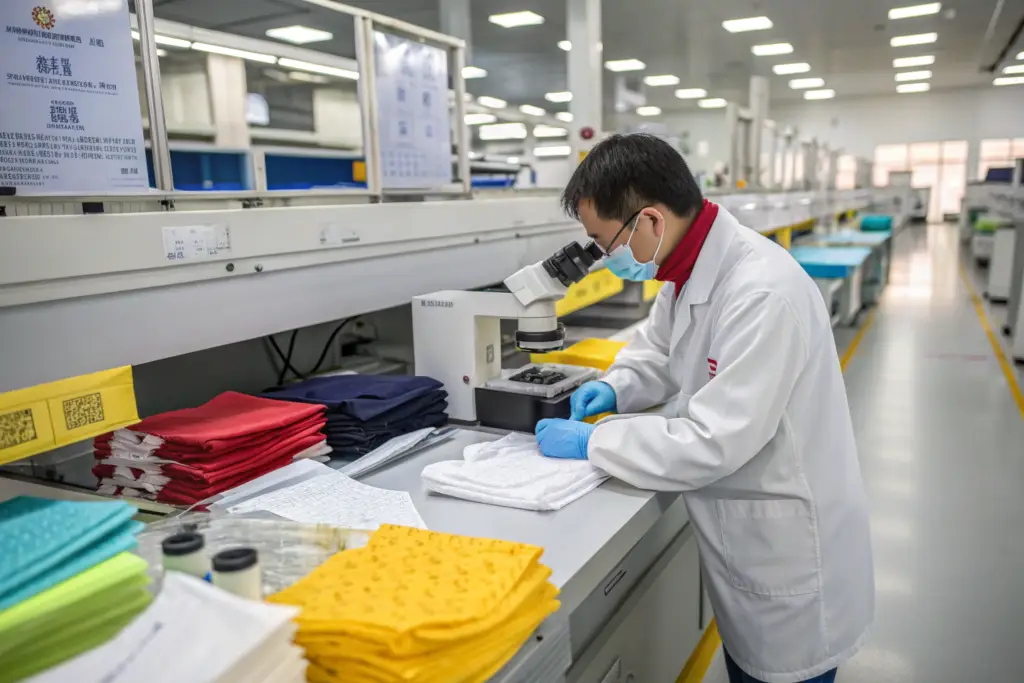
In-house pre-testing acts as a rapid filter, identifying potential compliance issues at the material and prototype stage, long before the official submission. This allows for immediate corrective action, turning a typically linear, sequential process into a parallel, agile one. For example, we worked with an emerging activewear brand last spring on a line of moisture-wiking leggings. Our in-house lab flagged elevated pH levels in a new batch of recycled polyester fabric within 24 hours of its arrival. We were able to work with the mill to adjust the washing process and retest in-house within three days, avoiding what would have been a guaranteed 4-week failure cycle with an external lab.
What Specific Tests Can Be Done In-House?
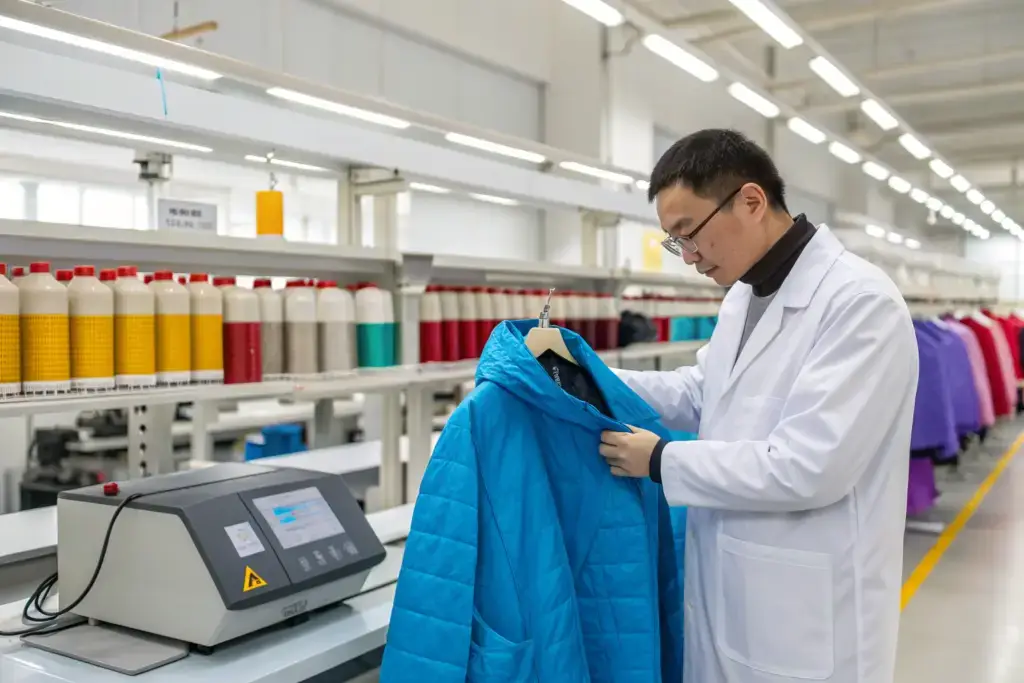
A capable in-house lab focuses on the high-risk, preliminary tests that are common points of failure. While a full OEKO-TEX Standard 100 certification requires an accredited lab, factories can perform screening for:
- pH Value: Critical for skin-contact garments. Simple, fast, and a very common failure point.
- Formaldehyde Content: A regulated substance often found in wrinkle-resistant finishes.
- Heavy Metals Screening: Using techniques like XRF (X-Ray Fluorescence) scanners to detect lead, cadmium, etc., in prints, dyes, or accessories.
- Colorfastness (to perspiration, rubbing, washing): This directly relates to product quality and safety, as poor colorfastness can release dyes.
Having these tools on-site means data-driven decisions can be made in real-time during product development meetings, not weeks later.
How Does This Parallel Processing Save Time?
The traditional model is a bottleneck. See the comparison below:
| Development Stage | With External Lab Only | With Factory In-House Pre-Testing |
|---|---|---|
| Fabric Sourcing | Send swatches to lab (1-2 weeks wait). Proceed with production at own risk. | Test swatches immediately. Only order bulk fabric that passes pre-screens. |
| Prototype Creation | Await lab results before finalizing prototype. | Build prototype with pre-approved materials. Test prototype trims/accessories in-house. |
| Production Readiness | Submit final production sample for official certification (3-4 weeks wait). | Submit pre-verified production sample. Confidence of first-pass success is over 90%. |
| Risk of Delay | High. Failure at final stage means rework and resubmission, delaying shipment by 6+ weeks. | Very Low. Issues are caught and fixed in the R&D phase, protecting the production schedule. |
Does It Lower Costs and Improve Budget Certainty?
The upfront cost of setting up a lab is significant, but for the brand client, this investment translates into direct savings and financial predictability. Surprises are expensive.
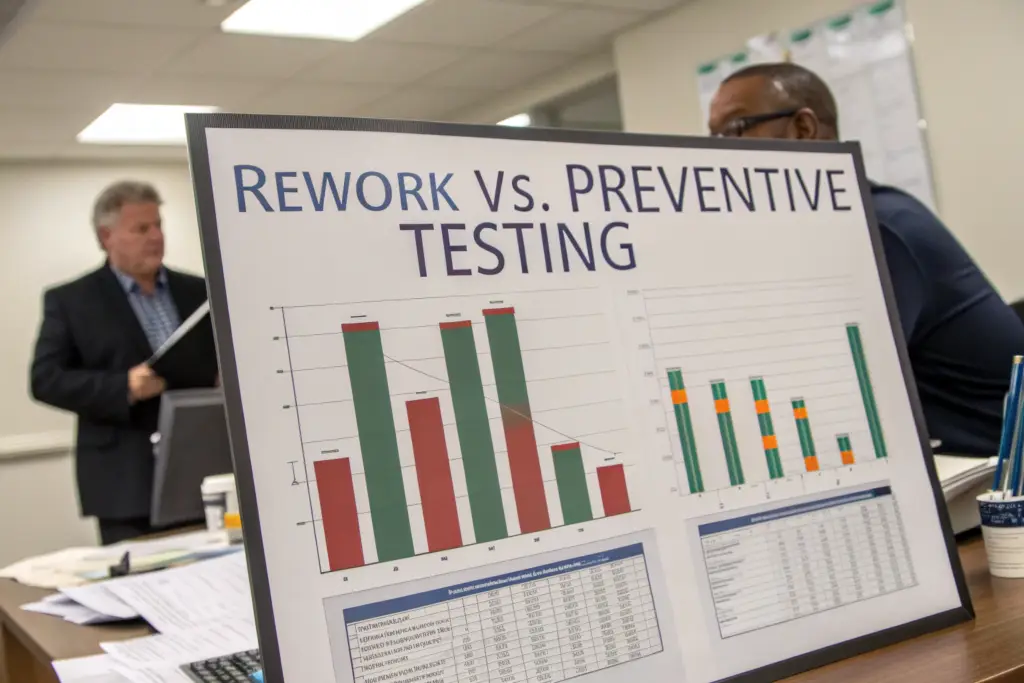
Yes, it significantly lowers overall project costs by preventing costly rework, failed shipments, and eliminating multiple rounds of third-party testing fees. While you may pay a small premium for the factory's advanced services, it pales in comparison to the cost of a delayed container missing the holiday season. A client from California once shared that a certification-related delay with a previous supplier cost them over $120,000 in lost sales and air freight fees—a scenario our integrated process is designed to prevent entirely.
Where Are the Hidden Cost Savings?
The savings are multi-faceted:
- Reduced Testing Fees: Official lab submissions are expensive and non-refundable upon failure. In-house pre-screening ensures you only pay for an official test when success is virtually guaranteed.
- Zero Rework Catastrophes: Imagine a whole production run failing for formaldehyde. The cost of remaking thousands of garments is devastating. Early detection prevents this.
- Efficient Logistics: Shipping small samples internationally to various labs repeatedly adds up in courier costs and administrative time. Internal testing streamlines this.
For our partners, like the brands we work with at Shanghai Fumao, this model provides a fixed, transparent cost structure for certification support, turning a variable risk into a manageable line item.
How Does It Impact Minimum Order Quantities (MOQs)?
Indirectly, it allows for more confidence in smaller, initial runs. Because the risk of a compliance-triggered rejection is drastically lower, brands can test the market with a smaller, certified batch without fear of a total loss. This is especially valuable for DDP (Delivered Duty Paid) shipments, where the financial risk and logistics complexity for the brand are already minimized, and certainty on compliance is paramount.
How Does It Enhance Communication and Build Trust?
"Lost in translation" is the biggest pain point in offshore manufacturing. When certification is handled by a distant third party, communication becomes a game of telephone between the brand, the factory agent, and the lab technician.
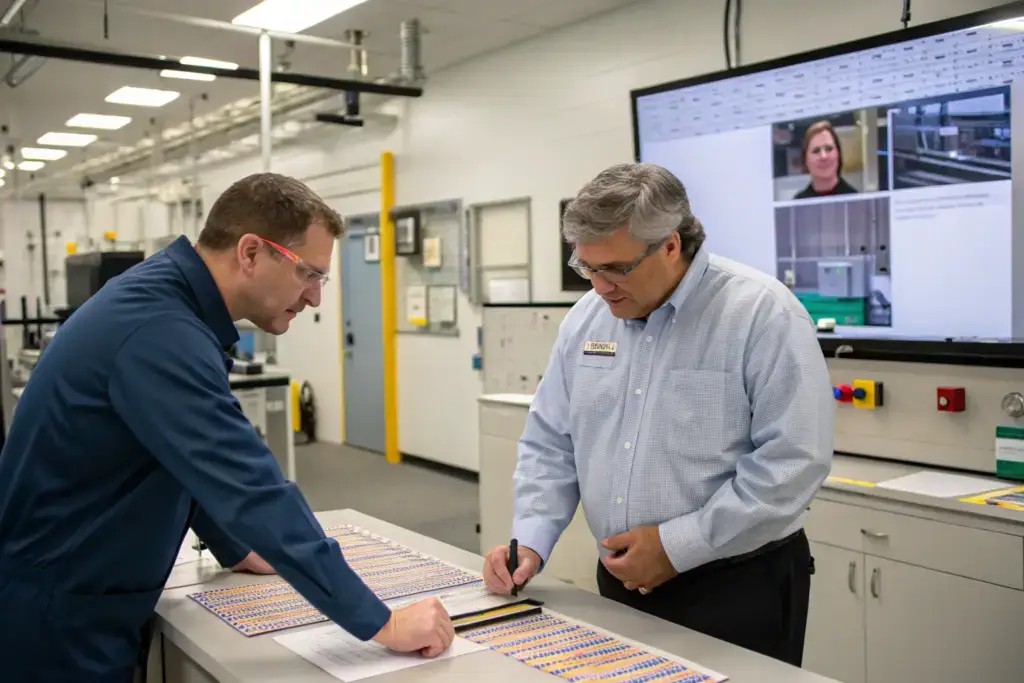
In-house capability collapses this communication chain. Your point of contact at the factory can walk directly into the lab, discuss the test results with the technician, and provide you with clear, immediate explanations and solutions. This builds immense trust. Last fall, a U.S. distributor was concerned about the safety of the flame-retardant finish on a batch of children's ski jackets. Instead of emails and promises, our sales director connected them on a video call with our lead chemist. The chemist physically showed them the test strips and explained the safety thresholds in plain English. The deal was secured on that call.
Can You Get Access to Raw Test Data?
Absolutely. One of the key benefits is transparency. A factory with its own lab can and should provide you with the raw data from pre-tests—charts, readouts, and values—not just a "pass/fail" statement. This allows your own quality team to review and build a deeper understanding of your product's composition. It demystifies the apparel manufacturing process and positions the factory as a true technical partner, not just a order-taker.
How Does This Prevent Certificate Falsification?
This addresses a major industry pain point directly. When a factory manages the entire testing process internally through a partnered, accredited lab, the chain of custody for samples is clear and short. The risk of a supplier submitting a "golden sample" that isn't from the actual production run is eliminated. At Shanghai Fumao, our process is documented: the lab takes samples directly from the production floor. The brand can even request photos or video of this sampling process. This end-to-end control is the strongest deterrent against malpractice and guarantees the certificate you receive matches the goods in the container.
What Should You Look for in a Factory's Lab Setup?
Not all "in-house labs" are created equal. A few beakers and pH strips are not enough. You need to assess their technical depth and integration.
Look for a factory whose laboratory is staffed by trained chemists or textile engineers, equipped with professional-grade analytical instruments, and operates under a documented quality management system, such as ISO 9001. Ask for a virtual tour. A serious investment in lab infrastructure reflects a long-term commitment to quality and compliance, not just a marketing checkbox.
What Are the Must-Have Pieces of Equipment?
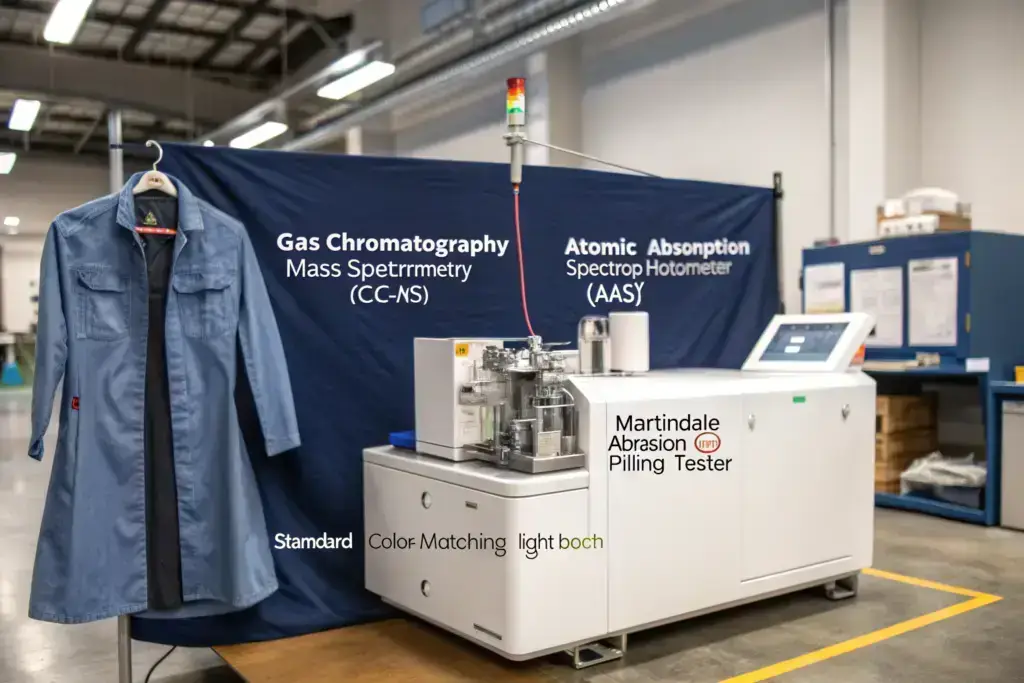
- pH Meter & Extraction Setup: For basic pH and formaldehyde testing.
- Colorfastness Tester: To assess rubbing and perspiration resistance.
- Spectrophotometer: For precise color measurement and management.
- XRF Analyzer: For rapid, non-destructive screening of heavy metals.
- (Advanced) Gas Chromatography-Mass Spectrometry (GC-MS): For identifying specific harmful organic compounds.
How Integrated is the Lab with Sourcing and Production?
The lab's influence should extend beyond testing. The best labs are consulted during the fabric and trim sourcing stage. They maintain a database of approved materials from vetted suppliers, which streamlines future projects. They also conduct spot checks during production to ensure consistency. Ask a potential supplier: "Can your lab team reject a fabric roll from your warehouse if it fails an incoming inspection?" If the answer is yes, it shows the lab has real authority.
Conclusion
In today's competitive and compliance-driven market, choosing a manufacturing partner is about much more than unit price and sewing capacity. It's about choosing a partner with the technical infrastructure to guarantee outcomes. A factory with robust in-house OEKO-TEX pre-testing capabilities offers a faster, safer, more transparent, and ultimately more cost-effective path to bringing certified, high-quality products to market. This proactive approach to compliance is what separates reliable, long-term partners from transactional suppliers.
This level of integration minimizes your business risks and maximizes your operational agility. If consistent quality, guaranteed compliance, and on-time delivery are non-negotiable for your brand, then partnering with a factory that has invested in this capability is the logical choice. To see how our integrated development and testing process can de-risk your next apparel project, reach out for a consultation. Contact our Business Director Elaine at elaine@fumaoclothing.com to discuss your specific needs.