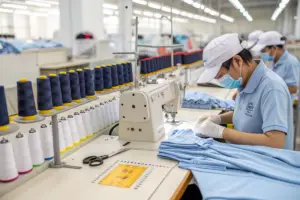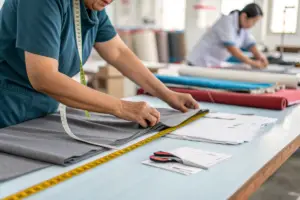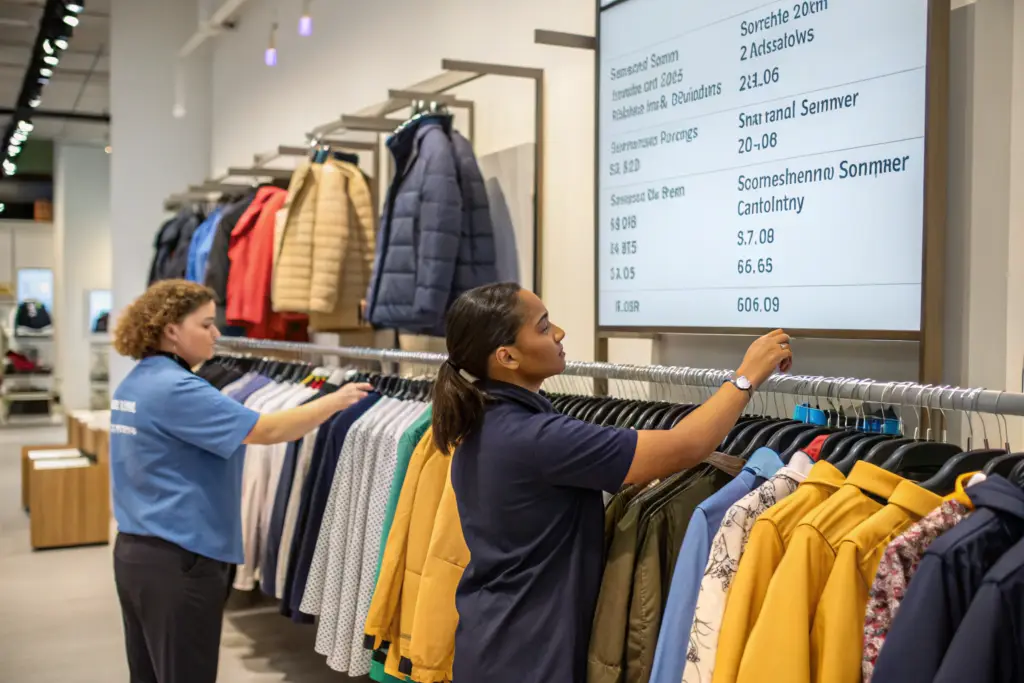
Three years ago, a brand owner from Austin, Texas, called me in late August with a problem that I have seen destroy more apparel businesses than any other single mistake. She had ordered 4,000 units of a beautiful cotton-linen summer duster. The coats had arrived on time in May. The sell-through in June was strong. By late July, she was down to 1,200 units. A normal brand would have been celebrating. But she had made a critical inventory error. She had ordered 2,000 units in the small and medium sizes and only 500 units in the large and extra-large sizes, based on last year's size curve. Her customer base had shifted. The large and extra-large sizes sold out in three weeks. The smalls and mediums were sitting in her warehouse, gathering dust. She was out of stock on her best-selling sizes and overstocked on the sizes nobody wanted. She lost an estimated $85,000 in missed sales on the sold-out sizes and eventually liquidated the excess smalls at a $32,000 loss. The total damage was $117,000 on a single style. Not because the coat was bad. Not because the factory was late. Because the inventory was allocated to the wrong sizes. Inventory management is not a warehouse function. It is the brain of a seasonal apparel business.
Inventory management is crucial for seasonal summer coat sales because summer outerwear operates on a brutally compressed selling window with zero tolerance for stockouts on best-sellers and zero forgiveness for overstock on slow-movers. A stockout on a hot summer blazer during the peak June demand means permanent lost revenue. The customer does not wait for a restock. They buy a competitor's coat. An overstock of a slow-selling style in August means the inventory must be liquidated at a 50% to 70% markdown because the selling season is over and the coats cannot be held until next summer without significant carrying costs and style obsolescence risk. Effective inventory management balances the initial buy quantities across styles, colors, and sizes to maximize full-price sell-through during the 10 to 12 week window and minimize the residual inventory that must be cleared at a loss. At Shanghai Fumao, we support our clients' inventory management with flexible production capabilities, including split shipments, greige reserves, and rapid restock production, so they can adjust their inventory position based on real-time sell-through data rather than relying entirely on a forecast made six months before the season.
The summer coat season is a sprint, not a marathon. The window opens in late May and closes by early August. Every unit that is not available when the customer wants it is a lost sale. Every unit that remains after the customer stops buying is a markdown. The difference between a brand that earns a 60% gross margin and a brand that breaks even is how well it manages the flow of inventory through this narrow window. Let me walk through the specific disciplines that separate the profitable summer coat brands from the ones that drown in leftover stock.
How Do You Forecast The Right Buy Quantities For A Summer Coat Collection?
Forecasting is the foundational discipline of inventory management. A bad forecast produces bad inventory outcomes regardless of how well the rest of the supply chain performs. The challenge for summer outerwear is that the category is highly sensitive to weather, trend shifts, and the unpredictable dynamics of social media virality. A forecast that relies solely on last year's sales data is a forecast that will be wrong. Last year's summer was cooler than average, so lightweight blazers sold poorly. This year is a scorcher, and the demand for UV-protective dusters is triple what it was. The brand that ordered based on last year's numbers is out of stock in week two.
You forecast the right buy quantities for a summer coat collection by combining three data sources. First, the historical sell-through data from the previous two to three summer seasons, analyzed by style, color, and size, not just in aggregate. Second, the current season's early signals, including pre-season wholesale orders, email list engagement with the summer lookbook, and social media sentiment on the specific silhouettes and fabrics in your collection. Third, the supply-side intelligence from your factory. At Shanghai Fumao, we share fabric trend data with our clients based on the sampling requests we receive across our entire client base. If four different brands are requesting the same crinkle nylon fabric in February, that fabric is going to be hot in June. Our clients use this intelligence to adjust their buy quantities before they place their final purchase orders.
The forecast is not a single number. It is a range with a base case, an upside case, and a downside case. The inventory strategy must be designed to perform adequately in the downside case and capture the upside in the upside case. This is where flexible production capabilities become essential.

How Can Historical Sales Data Mislead Your Summer Coat Forecasting?
Historical sales data is the most reliable input to a forecast, and it is also the most dangerous. The danger is that the data tells you what sold, but it does not tell you what would have sold if you had been in stock. A stockout in week three of a hot style truncates the sales data for that style. The historical record shows 800 units sold, but the true demand was 1,500 units. If you use the 800-unit number to forecast next year's buy, you will under-order again, and you will stock out again. This is the stockout death spiral.
The stockout distortion effect is particularly severe for summer coats because the selling window is so short. A stockout that occurs in late June is not replenished until late July, by which time the demand has evaporated. The sales data records the early spike and the stockout, but it does not record the demand that would have occurred in July if the inventory had been available. To correct for this, you must adjust the historical sales data for known stockout periods. For any week where the ending inventory was zero, estimate the lost demand based on the sales velocity in the weeks before the stockout. The adjusted sales data is the input to the forecast, not the raw sales data. The inventory forecasting with stockout adjustment is a statistical technique that professional inventory managers use. The brands that do not apply this adjustment systematically under-order on their best styles year after year.
What Role Does Real-Time Sell-Through Data Play In Mid-Season Adjustments?
The initial buy quantity is placed months before the season. No matter how good the forecasting process is, the forecast will be wrong. The question is how fast the brand detects the error and adjusts. Real-time sell-through data is the feedback loop that enables mid-season inventory adjustments.
Real-time sell-through data means the brand knows, on a daily basis, exactly how many units of each style, color, and size have sold through each channel. The data is not a weekly report that arrives on Monday for the previous week. It is a dashboard that updates as sales occur. When a specific style of summer blazer suddenly spikes in sales velocity, the brand sees the spike within hours, not days. The brand can then trigger a restock from the factory's greige reserve or from a pre-produced buffer stock. When a specific color is not selling, the brand sees the slow velocity and can initiate a promotional discount early in the season, when a 20% discount can clear the inventory, rather than at the end of the season, when a 60% markdown is required. The real-time data also informs the size allocation for the restock. If the large and extra-large sizes are selling out disproportionately, the restock order is weighted toward those sizes. The real-time inventory tracking for retail is not a luxury. It is the minimum requirement for managing a seasonal inventory position profitably. The brands that rely on monthly inventory reports are flying blind during the most critical weeks of the summer season.
What Is The Ideal Size Curve For A Women's Summer Coat Run?
The size curve is the allocation of the total order quantity across the size range, from XS to XXL or beyond. An incorrect size curve creates a mismatch between the inventory available and the customers who want to buy. The small customer finds her size available. The large customer does not. The brand loses the large customer's purchase and is left with excess small inventory at the end of the season. The financial impact of a misaligned size curve is comparable to the impact of a misjudged style forecast.
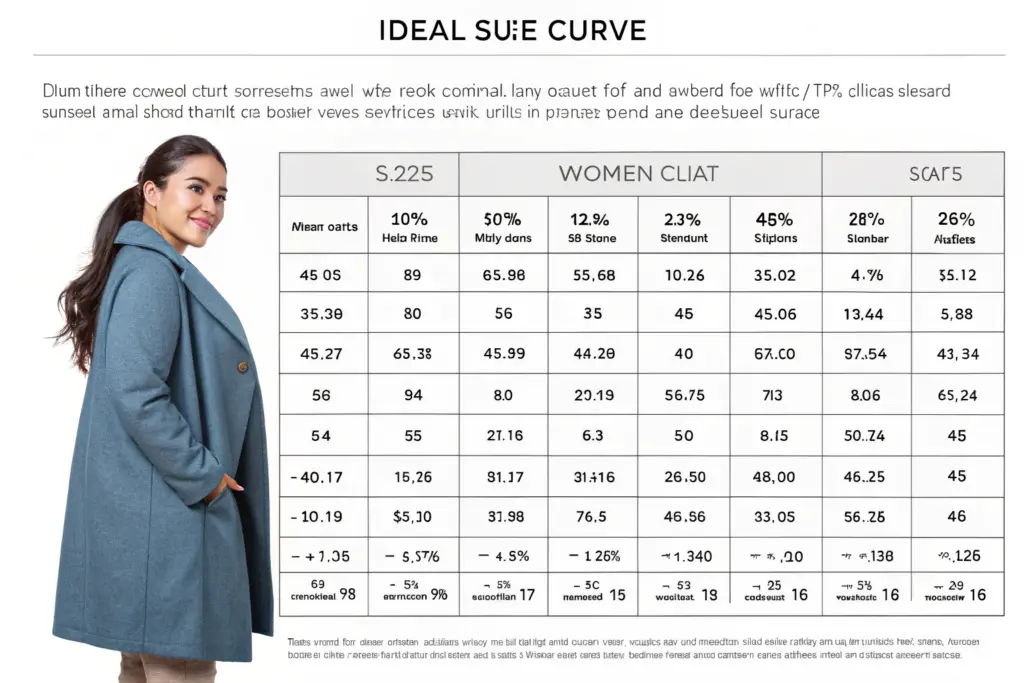
The ideal size curve for a women's summer coat run is not a standard industry curve. It is a curve that reflects your specific customer base, adjusted for the silhouette of the specific coat. A standard US women's size curve for outerwear typically peaks at medium or large, with a distribution of approximately 10% XS, 25% S, 30% M, 25% L, and 10% XL. However, an oversized, relaxed-fit summer duster may skew toward smaller sizes because the customer sizes down for the intended fit. A fitted, tailored summer blazer may skew toward larger sizes because the customer sizes up to ensure comfort in warm weather. The only reliable way to determine the correct size curve is to analyze your own historical sell-through data by size for comparable styles, and to adjust based on the fit intent of the specific coat. At Shanghai Fumao, we produce the full size run for our clients and we support split-size restocks. If a brand discovers mid-season that their size curve is wrong, we can produce an additional run of the depleted sizes within two to three weeks using the greige reserve fabric.
The size curve is not a set-it-and-forget-it decision. It is a hypothesis that is tested in the first weeks of the selling season and adjusted in the restock order. The brands that treat the size curve as a static formula leave money on the table every season.
How Do You Analyze Your Brand's Specific Size Sell-Through History?
Analyzing your size sell-through history is a straightforward data exercise that most brands do not perform. The data exists in the sales records. The analysis requires pulling the unit sales by size for each style in the summer coat category for the last two to three seasons, and calculating the sell-through percentage for each size.
The sell-through percentage is the number of units sold divided by the number of units received. If you ordered 500 units of medium and sold 450, the sell-through is 90%. If you ordered 300 units of extra-large and sold 300, the sell-through is 100%, and you likely stocked out and lost additional sales. The optimal size curve is the one where the sell-through percentage is equal across all sizes at the end of the season. If medium has a sell-through of 90% and extra-large has a sell-through of 100%, you under-bought extra-large and over-bought medium. The adjustment for next season is to shift units from medium to extra-large until the sell-through rates equalize. The analysis must be performed at the style level, because different silhouettes have different size curves. A boxy cropped jacket will have a different curve than a long-line fitted duster. The size curve analysis for apparel inventory is a standard retail analytics practice. The brands that perform this analysis systematically improve their sell-through by 5 to 10 percentage points over two seasons.
Why Should You Consider An Extended Size Range For Summer Outerwear?
The North American women's apparel market has shifted significantly toward inclusive sizing. Brands that stop at size large or extra-large are excluding a substantial portion of the addressable market. The shift is not just a social trend. It is a revenue opportunity. The average American woman wears a size 16 to 18, which corresponds to an XXL or 1X in most outerwear sizing scales. A brand that does not offer these sizes is simply not selling to the majority of the market.
Extending the size range for summer outerwear requires additional pattern grading and fit sampling. The cost is incremental, typically $200 to $400 per additional size for the pattern work and the fit sample. The revenue opportunity is significant. An extended size range that includes 1X, 2X, and 3X can increase the addressable market by 30% to 40%. The operational challenge is that the extended sizes must be included in the initial production order or the restock order. They cannot be added as an afterthought. The factory needs the graded patterns and the cutting markers for the extended sizes. At Shanghai Fumao, we grade patterns up to 3X as a standard service for our clients. We also produce extended sizes in smaller minimum order quantities during the restock phase, so brands can test the demand for the extended range without committing to large upfront quantities. The inclusive sizing in fashion retail is not a niche. It is the new standard. Brands that embrace it access a larger market and build a more loyal customer base.
How Should You Handle Excess Inventory When A Style Underperforms?
Every collection has at least one style that underperforms. The color was wrong, the silhouette did not resonate, or a competitor launched a similar coat at a lower price. The style is not selling. The inventory is sitting. The clock is ticking on the summer season. The brand must decide how to clear the inventory before the season ends and the coats become dead stock.
You handle excess inventory from an underperforming style by taking action early, not by waiting and hoping. A 20% discount applied in week three of the season can clear the inventory while the demand for summer coats is still strong. The same coat held until week ten requires a 60% discount to clear. The difference in recovered revenue is substantial. On a 1,000-unit order with a $68 planned retail price, clearing at a 20% discount in June recovers $54.40 per unit. Clearing at a 60% discount in August recovers $27.20 per unit. The early action recovers $54,400. The late action recovers $27,200. The cost of waiting is $27,200. The brand must also consider the warehousing cost of holding the inventory for another year. At Shanghai Fumao, we help our clients manage underperforming inventory by offering storage in our China warehouse, which is lower cost than US storage, and by facilitating direct-to-consumer fulfillment for clearance sales.
The worst thing a brand can do with an underperforming style is nothing. Hope is not an inventory management strategy. The inventory does not sell itself. The markdown is coming. The only question is whether the brand controls the timing and the discount level, or whether the timing and the discount are forced upon the brand by the calendar.

When Is The Right Time To Start Discounting A Slow-Selling Summer Coat?
The right time to start discounting is when the sell-through data shows a sustained velocity gap between the slow-selling style and the collection average. A single slow week is not a signal. Two consecutive slow weeks, while the rest of the collection is selling at the expected rate, is a signal that the style is not resonating.
The discount should be applied while the summer coat buying season is still active. For the US market, the peak summer coat buying period is late May through late July. A style that is not selling by mid-June should be discounted by late June. This timing captures the July demand, which is still substantial, and clears the inventory before the August cliff when consumer interest in summer coats collapses. The discount level should be calibrated to the sell-through gap. A style that is selling 30% below the collection average needs a 20% to 30% discount to close the gap. A style that is selling 50% below the average needs a deeper discount, but the brand should test the 30% level first before going deeper. The discounting decision is a trade-off between margin per unit and inventory velocity. The brand that discounts early preserves more total margin because the discount is smaller and the inventory clears. The brand that discounts late loses more total margin because the discount is larger and a portion of the inventory may not clear at all. The markdown optimization for seasonal retail is a well-established discipline. The data is clear that early, moderate discounts outperform late, deep discounts in total margin recovery.
Should You Hold Unsold Summer Stock For Next Year Or Liquidate It?
The hold-versus-liquidate decision is a cash flow and style longevity calculation. Holding the inventory for next summer preserves the possibility of selling the coats at a higher price, but it incurs storage costs and the risk that the style is no longer relevant. Liquidating the inventory recovers cash immediately but at a steep discount.
The decision should be based on the style's classification as a core style or a fashion style. A core style is a classic silhouette in a neutral color that has sold consistently for multiple seasons. A linen blazer in black or beige is a core style. It can be held for next summer with minimal obsolescence risk. A fashion style is a trend-driven piece with a specific design detail, color, or print that is tied to the current season's aesthetic. A neon green cropped utility jacket is a fashion style. It will not be on-trend next summer. It should be liquidated now. The financial calculation compares the expected net recovery from holding to the certain recovery from liquidating. Holding incurs storage costs, as discussed in the previous article on late shipments. The expected recovery from holding is the projected full-price sell-through next summer multiplied by the full-price revenue, minus the storage costs. If this number exceeds the liquidation recovery, holding is the financially rational choice. The dead stock inventory management decision is never easy, but it should be made based on the numbers, not on the emotional reluctance to accept a loss.
How Does A Flexible Supply Chain Reduce Inventory Risk?
The traditional supply chain model requires the brand to place a single order for the entire season's inventory, six months before the season begins. This model concentrates all the inventory risk on the initial forecast. If the forecast is wrong, the brand is stuck with too much inventory of the wrong styles and not enough of the right styles. A flexible supply chain breaks this single-order model into multiple, smaller orders that are placed closer to the selling season, using real-time demand data to inform the quantities.
A flexible supply chain reduces inventory risk by enabling the brand to place a smaller initial order, typically 60% to 70% of the planned season volume, and then restock the winning styles based on early sell-through data. The initial order covers the floor-set and the first few weeks of selling. The restock order, produced from greige reserve fabric or from a fast-turn production line, replenishes the best-sellers in the most popular colors and sizes. This model reduces the inventory risk in two ways. First, the total inventory commitment is lower at the start of the season, so if the entire collection underperforms, the overstock loss is smaller. Second, the restock inventory is allocated to the styles, colors, and sizes that are proven winners, so the sell-through on the restock units is higher than on the initial order. At Shanghai Fumao, we have built our production model around this flexible restock capability. Our greige reserve program, our express production line, and our air freight DDP logistics are all designed to deliver a restock within 2 to 4 weeks of the brand's request.
The flexible supply chain is not just a logistics capability. It is an inventory management strategy. It replaces forecast accuracy with supply chain responsiveness. The brand does not need to predict the winners perfectly. The brand just needs to be able to produce more of the winners quickly once they reveal themselves in the sales data.
What Is A "Chase" Production Model And How Does It Apply To Summer Coats?
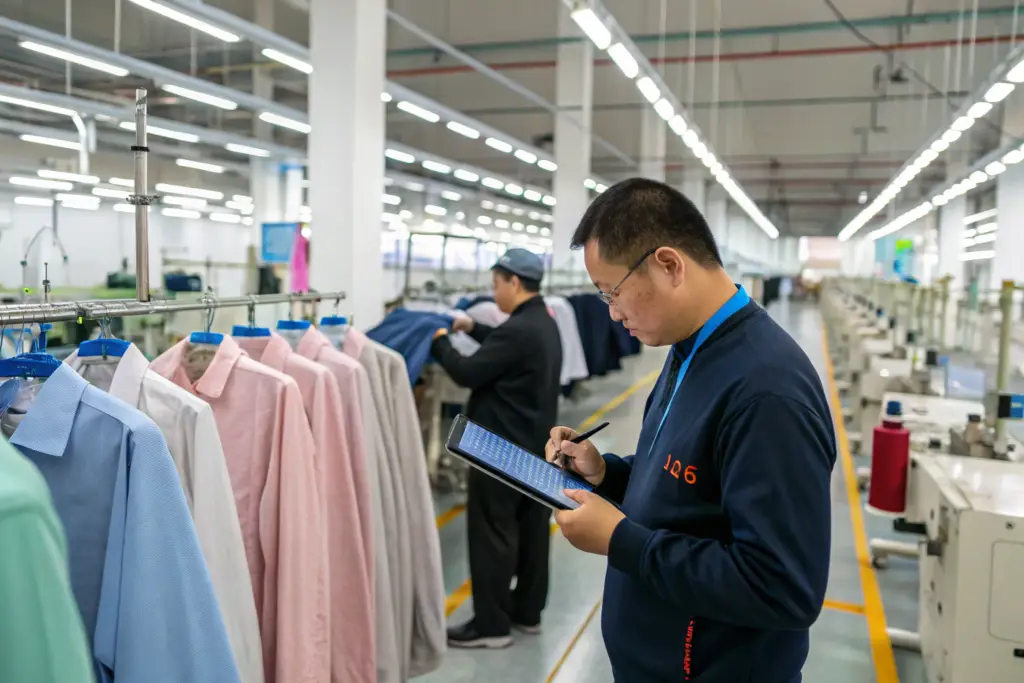
A chase production model is a manufacturing strategy where the factory holds a buffer of raw materials, the greige fabric, and produces finished goods in response to actual demand signals rather than to a forecast made months earlier. The model originated in the fast-fashion industry, where Zara famously produces in small initial batches and chases the winners with rapid replenishment. The chase model is now accessible to mid-sized brands through factories that have invested in flexible production capabilities.
For summer coats, the chase model works as follows. The brand and the factory agree on a season volume forecast. The factory purchases the greige fabric for the full forecast quantity. The brand places an initial production order for 60% of the forecast, with the specific style, color, and size allocation based on the pre-season forecast. The initial order ships and hits the selling floor. After two to three weeks of sales data, the brand identifies the winning styles, colors, and sizes. The brand places a chase order for the remaining 40% of the fabric, allocated entirely to the winners. The factory dyes the greige, cuts, sews, and ships the chase order within two to four weeks. The brand receives the chase inventory while the summer selling season is still active. The sell-through on the chase inventory is high because it is composed entirely of proven winners. The chase production strategy in fashion is a proven method for maximizing full-price sell-through and minimizing end-of-season markdowns. The model requires a factory that can dye small batches, run short production lots, and ship quickly. Not every factory can do this. Shanghai Fumao can.
How Can You Use Factory Warehousing To Defer The Final Allocation Decision?
Factory warehousing is an inventory strategy that takes the chase model one step further. Instead of shipping the initial production to the brand's home country warehouse and then shipping the restock later, the brand produces the full quantity in one run but leaves a portion of the finished goods at the factory's warehouse in China. The brand ships what it needs for the initial floor-set and holds the rest in China.
When the sell-through data comes in, the brand instructs the factory to ship the remaining inventory in specific allocations. The winning styles and sizes are air-freighted to capture the peak demand. The slower styles are either sea-freighted for a later markdown sale or held for the next season. The factory warehousing model has two advantages. First, the production run is a single efficient batch, not two separate batches, which reduces the production cost per unit. Second, the brand defers the final allocation decision until the sell-through data is available, but without the additional lead time of a second production run. The goods are already made. They just need to be shipped. The shipping cost is higher because the goods are shipped in two or more waves, but the increase in sell-through from the better allocation more than offsets the shipping cost. The offshore inventory warehousing for fashion brands is an advanced inventory management technique that requires a trusted factory partner. The brand must trust that the factory will store the goods securely, maintain accurate inventory records, and ship promptly when instructed. This trust is built over multiple seasons of a successful DDP partnership.
Conclusion
Inventory management is the discipline that separates the summer coat brands that thrive from the brands that merely survive. The selling window is too short and the markdown penalty is too severe to manage inventory casually. The brand that buys the right quantities, allocates the right size curve, reacts quickly to sell-through data, and clears underperformers early in the season will generate a full-price sell-through of 75% to 85% and a healthy gross margin. The brand that guesses the quantities, uses a generic size curve, ignores the sell-through data until the season is over, and holds onto underperformers hoping for a miracle will generate a full-price sell-through of 50% to 60% and a margin that barely covers the operating costs.
The inventory management discipline is enabled by a supply chain that is designed for flexibility. The brand cannot manage inventory responsively if the factory requires a single confirmed order six months in advance with no ability to adjust. The chase production model, the greige reserve, the factory warehousing, and the split shipment logistics are the operational capabilities that make responsive inventory management possible. These capabilities are not theoretical. They are available today from factories that have invested in them.
At Shanghai Fumao, we have structured our production and logistics services around the inventory management needs of seasonal summer coat brands. Our DDP model provides the cost certainty that allows brands to price confidently. Our greige reserve program provides the fabric flexibility that allows brands to adjust their color and size allocations mid-season. Our express production line and air freight logistics provide the speed that allows brands to chase the winners without missing the selling window. We are not just a factory. We are the inventory management partner that enables our clients to sell more coats at full price and fewer coats at a loss.
If you are planning your summer coat collection and want to discuss how a flexible supply chain can reduce your inventory risk and improve your sell-through, contact our Business Director, Elaine, at elaine@fumaoclothing.com. Tell her about your typical order volumes, your current sell-through rates, and your biggest inventory pain points. She will discuss how our production model can be tailored to your inventory management strategy. Because the best summer coat in the world is only profitable if it is in stock in the right size when the customer wants to buy it.