A retail buyer from a prominent West Coast department store once told me something that reshaped how I think about garment quality. She said, "I do not judge a coat by how it looks on the hanger. I judge it by how it looks after my customer has worn it for a month, washed it three times, and stuffed it in an overhead bin on a flight to Miami. If it still looks like it belongs on the sales floor, I reorder. If it looks tired, I never buy that brand again." She was not interested in the factory's quality manual. She was not impressed by the sample. She was evaluating a product that did not yet exist: the coat after a season of real-world use. Her standard was not a specification. Her standard was the customer's experience three months after the purchase. A top-quality summer coat is a coat that survives the customer's life and still looks good enough to wear to dinner.
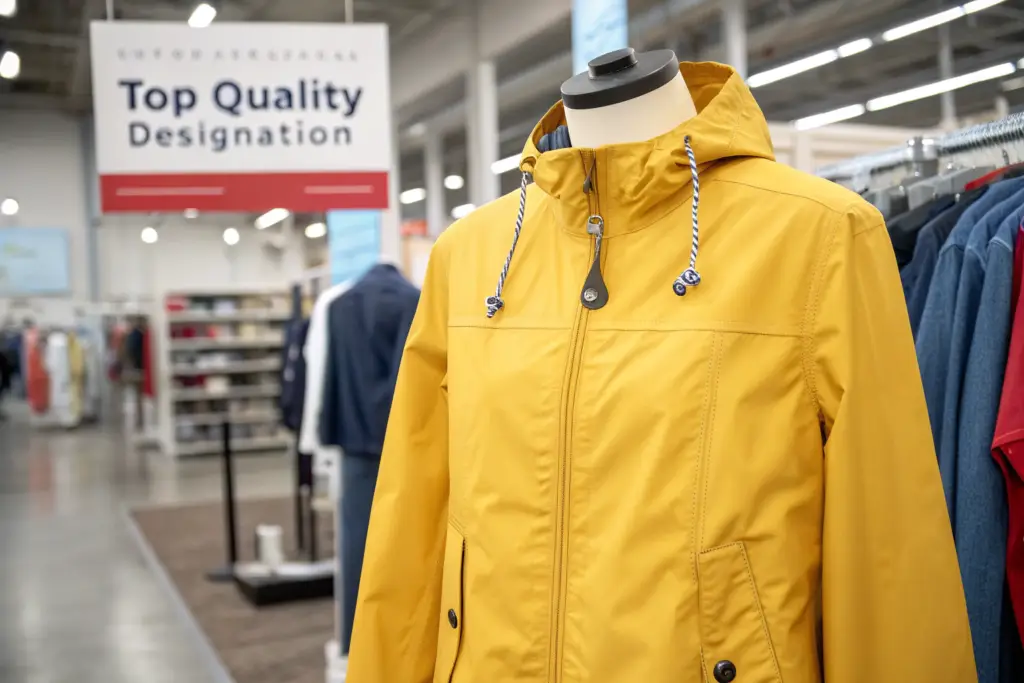
A summer coat earns the "top quality" designation from a retail buyer when it excels across five dimensions: fabric integrity, construction durability, fit consistency, color and finish retention, and compliance. Fabric integrity means the fabric does not pill, fade, shrink, or tear under normal summer wear conditions, which include sun exposure, sweat contact, and frequent washing. Construction durability means the seams do not pucker, the buttons do not fall off, the zipper does not jam, and the lining does not tear away from the shell. Fit consistency means the size medium coat the customer tries on in the store fits the same as the size medium coat in the carton, and the same as the size medium coat the customer ordered last season. Color and finish retention means the coat looks the same after multiple care cycles as it did on the rack. Compliance means every label is correct, every fiber content declaration is accurate, and every safety requirement is met. At Shanghai Fumao, we build all five dimensions into our production process because we know the retail buyer's standard is the customer's closet, not the factory's inspection table.
The retail buyer is the gatekeeper of the brand's access to the wholesale market. The buyer decides which coats earn floor space in the store and which coats are returned to the vendor. The buyer's quality standard is higher than the end customer's because the buyer bears the cost of a quality failure in lost sales, returns processing, and brand damage. Understanding the buyer's definition of quality is essential for any brand that wants to succeed in wholesale. Let me walk through each dimension in detail.
How Do Retail Buyers Evaluate The Fabric Quality Of A Summer Coat?
Fabric is the first thing the buyer touches and the last thing the customer forgets. A coat with beautiful design details but poor fabric quality will be rejected by the buyer before they even check the construction. The buyer evaluates fabric through a combination of sensory assessment and performance questioning. They touch the fabric to assess the hand feel. They crumple it to see how it wrinkles. They hold it up to the light to check the density. They ask about the fiber content, the fabric weight, and the care instructions. An experienced buyer can assess 80% of a fabric's quality in 30 seconds of handling, but the remaining 20%, the performance over time, requires data.
Retail buyers evaluate the fabric quality of a summer coat by assessing five attributes. First, the hand feel. The fabric should feel appropriate for the intended price point and use case. A $128 linen blazer should feel substantial and smooth, not scratchy or papery. Second, the drape. The fabric should hang naturally on the body without stiffness or limpness. Third, the wrinkle resistance. A summer coat that looks like a crumpled napkin after 20 minutes of sitting in a car is unacceptable to the buyer, regardless of how beautiful it looks steamed on the mannequin. Fourth, the breathability. A summer coat that does not breathe will be returned by the customer who overheats wearing it. Fifth, the durability. The buyer will ask about the Martindale abrasion score, the seam slippage test results, and the colorfastness to light and washing. At Shanghai Fumao, we provide our wholesale clients with the fabric performance test reports that buyers demand. We test every fabric lot before it enters production, and we share the data with our clients so they can answer the buyer's questions with confidence.
The buyer's fabric evaluation is both subjective and objective. The subjective part happens in the first touch. The objective part happens in the review of the test data. The brand that provides both a beautiful fabric and the data to back it up earns the buyer's trust.
Why Is The "Hand Feel" Test Still The Buyer's First Quality Check?
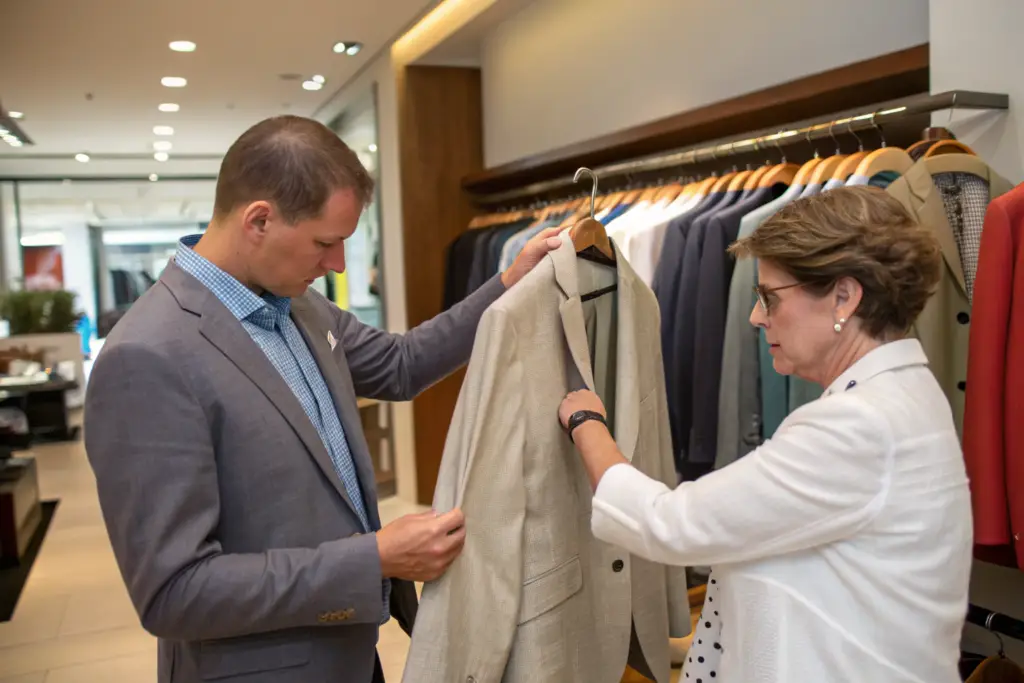
Hand feel is the tactile sensation of touching the fabric. It is the first quality check because it is immediate, it is impossible to fake, and it correlates strongly with the customer's in-store experience. The customer in the retail store does not see the test reports. She touches the coat. If the fabric feels cheap, scratchy, or flimsy, she puts it back on the rack. The buyer knows this. The buyer's hand feel test is a proxy for the customer's first impression.
An experienced buyer's hand feel assessment is remarkably sophisticated. The buyer is evaluating the fabric's softness, its smoothness, its temperature, warm or cool to the touch, its weight relative to its visual bulk, and its resilience, how quickly it recovers from being squeezed. A high-quality linen-viscose summer coating should feel cool, smooth, and substantial, with a slight texture that communicates natural fiber authenticity. It should spring back when crumpled, not retain a hard crease. A low-quality version of the same blend feels dry, papery, and thin, and it retains every wrinkle. The hand feel also reveals fabric finishing quality. A properly bio-polished viscose feels silky and clean. An unpolished viscose feels fuzzy and rough. A properly sueded polyester microfiber feels like a peach skin. An improperly sueded one feels like sandpaper. The buyer cannot always articulate why a fabric feels cheap, but they know it instantly. The fabric hand feel evaluation in textile quality control is a sensory skill that retail buyers develop over years of handling thousands of garments. The factory that consistently delivers fabrics with a premium hand feel earns a reputation that travels through the buyer community.
What Lab Test Results Do Buyers Expect For Lightweight Summer Fabrics?
The hand feel gets the buyer's attention. The lab test results close the sale. Buyers for department stores and major online retailers require documented test reports for the key performance attributes of the fabric. A brand that cannot produce these reports, or whose reports show failing grades, will not get the order, regardless of how beautiful the coat looks.
The lab test results that buyers expect for lightweight summer coat fabrics include the following. Tensile strength, measured in Newtons, which indicates the fabric's resistance to tearing. A value above 200 Newtons in the warp direction is generally expected for a woven summer coating. Seam slippage, measured in millimeters of gap opening under a specified load. For lightweight fabrics under 150 GSM, buyers expect a seam slippage of less than 2mm at the standard load. Martindale abrasion resistance, measured in rubs before visible wear. A score of 15,000 to 20,000 rubs is standard for a quality summer coat fabric. Colorfastness to light, measured on the blue wool scale. A grade of 4 or higher is expected for a coat that will be worn in sunlight. Colorfastness to washing, measured on the grey scale. A grade of 4 or higher is expected. Dimensional stability, or shrinkage, measured as a percentage of change after washing. A shrinkage of less than 2% in both directions is the standard. Pilling resistance, measured on the Martindale or random tumble method. A grade of 4 or higher is expected. The textile performance testing standards for apparel provide the specific test methods. The brand that provides a complete test report from an accredited lab like SGS, Intertek, or Bureau Veritas demonstrates professionalism and reduces the buyer's perceived risk.
What Construction Details Do Buyers Inspect On A Summer Coat?
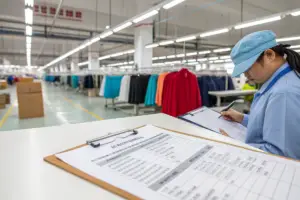
After the fabric, the buyer inspects the construction. The construction is the engineering of the coat. It is the seams, the stitching, the seam finishing, the lining attachment, the pocket construction, the button attachment, and the pressing quality. A buyer who inspects a coat's construction is looking for evidence of the factory's quality control system. They know that a single well-made sample proves nothing. What proves quality is the consistency of the construction across multiple samples and across multiple production runs.
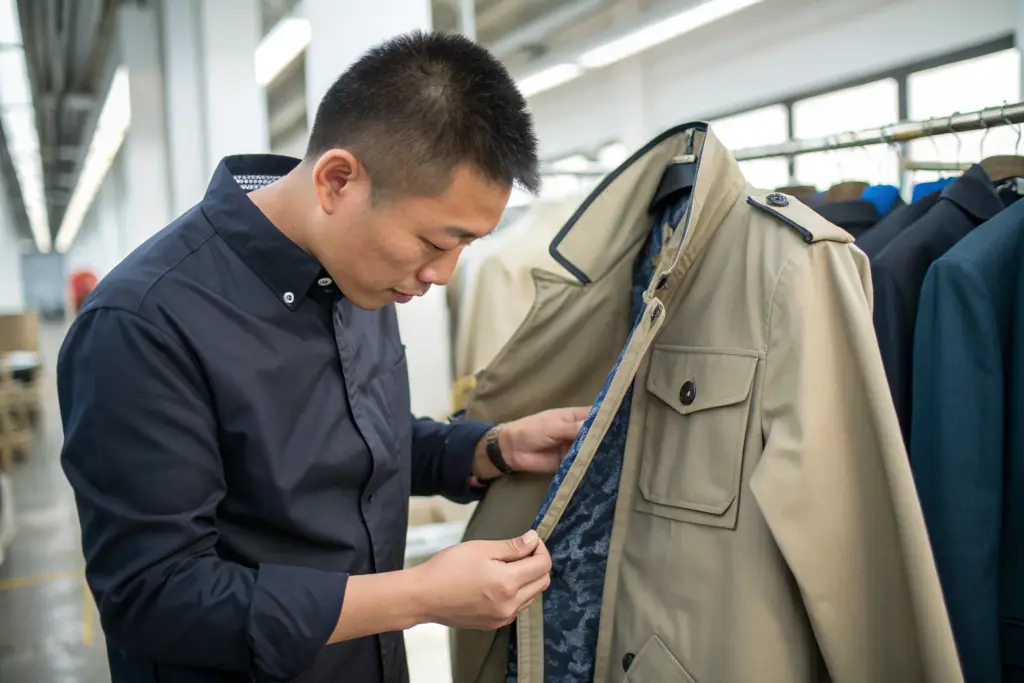
The construction details that buyers inspect on a summer coat include the seam straightness and consistency, the seam finishing method, the stitch density, the button and zipper attachment security, the pocket construction and reinforcement, the collar and lapel symmetry, the lining attachment and ease, and the overall pressing and presentation. The buyer will turn the coat inside out. They will look at the seams that the customer never sees. They will pull gently on the buttons to test the attachment. They will operate the zipper multiple times. They will check that the pockets lie flat and that the pocket bags are finished, not raw-edged. At Shanghai Fumao, we train our production team to build every coat to pass the inside-out test. The seams that the customer never sees are finished as carefully as the seams that are on display.
The construction inspection is the buyer's assessment of the factory's workmanship. A coat with a beautiful exterior but sloppy interior finishing signals a factory that is willing to cut corners where the customer cannot see. The buyer does not trust that factory.
Why Is Seam Finishing The Telltale Sign Of A Quality Factory?
Seam finishing is the treatment of the raw edge of the fabric inside the garment. On an unlined or partially lined summer coat, the seam finishing is visible to the customer every time she puts the coat on. On a fully lined coat, the seam finishing is hidden, but it still affects the coat's durability and its resistance to fraying during washing and wearing. The seam finishing is the detail that separates a coat that lasts for years from a coat that starts to unravel after one season.
A quality factory uses seam finishing methods appropriate to the fabric and the coat's construction. For an unlined linen summer blazer, a clean French seam or a bound seam with a bias tape finish is the standard for quality. The French seam encloses the raw edge within itself, creating a clean, durable finish that does not fray. The bound seam wraps the raw edge with a strip of fabric, adding a subtle design detail to the interior. A cheap factory uses a simple overlock stitch and leaves the overlock edge visible. The overlock is functional, but it looks industrial and unfinished. For the armhole seam on a lined coat, a quality factory leaves an ease allowance in the lining and attaches it with a clean fell stitch. A cheap factory stitches the lining directly to the armhole with a single needle, creating tension that eventually causes the lining to pull away. The buyer checks these details because they are diagnostic. A factory that finishes its seams beautifully is a factory that manages its production process carefully. A factory that finishes its seams sloppily is a factory that is cutting corners everywhere. The seam finishing techniques in high-quality garment construction are the fingerprints of the factory's quality culture.
How Does Stitch Density Affect Both Durability And Appearance?
Stitch density, measured in stitches per inch or SPI, is the number of stitches in a one-inch length of seam. It is a simple metric with profound implications for the coat's durability and appearance. Too few stitches, and the seam is weak and prone to opening under stress. Too many stitches, and the seam perforates the fabric like a tear-off ticket, weakening the material and creating a puckered, unattractive appearance. The correct stitch density is the density that balances strength and aesthetics for the specific fabric.
For a lightweight summer coat fabric in the 120 to 180 GSM range, the standard stitch density is 10 to 12 SPI. This density provides sufficient seam strength without perforating the delicate fabric. A quality factory maintains this density consistently across all seams on all units. A cheap factory allows the stitch density to drift. The operator increases the speed of the machine, the stitch length setting drifts, and the SPI drops to 8 or 9. The seam looks loose and gappy. The buyer who checks the stitch density with a simple stitch counter, a small magnifying tool that measures stitches per inch, can identify the drift immediately. The stitch density also affects the coat's appearance. A consistent 12 SPI creates a smooth, even seam line that looks intentional and professional. An inconsistent stitch density, with some sections at 10 SPI and others at 14 SPI, creates a wavy, irregular seam line that looks amateur. The stitch density standards in apparel manufacturing are specified in the tech pack. The quality factory adheres to the specification. The buyer checks.
Why Is Fit Consistency A Non-Negotiable For Multi-Store Retailers?
A multi-store retailer with 50 locations or an online retailer shipping to customers in 50 states has a fundamental operational requirement: the size medium coat in the Boston store must fit identically to the size medium coat in the San Diego store. If the fit is inconsistent, the customer who tries on a medium in one store, finds it fits perfectly, and then orders a medium in a different color online, receives a coat that does not fit. She returns it. The retailer absorbs the return shipping, the restocking labor, and the lost sale. Fit inconsistency drives returns. Returns destroy profitability.
Fit consistency is non-negotiable for multi-store retailers because returns generated by inconsistent fit are the most expensive type of return. The customer is not returning the coat because she changed her mind or because the color was different from the screen. She is returning it because the brand failed to deliver the same product she tried on. This type of return erodes trust in the brand and in the retailer that sold it. Retailers track return rates by vendor and by reason code. A brand with an elevated "fit inconsistency" return rate will be called in for a vendor meeting, placed on a performance improvement plan, or delisted. At Shanghai Fumao, we ensure fit consistency through our graded pattern system, our cutting tolerances, and our inline measurement checks. Every size medium coat that leaves our factory has the same chest, length, and sleeve measurements, within a tolerance of plus or minus half an inch.
Fit consistency is a production discipline, not a design discipline. It is achieved through pattern control, cutting accuracy, and sewing consistency, not through a beautiful initial sample. The buyer evaluates fit consistency by measuring multiple units of the same style and size and comparing the measurements. The factory that delivers consistent measurements across hundreds or thousands of units earns the retailer's confidence.
How Do Retail Buyers Test Size Grading Across A Full Size Run?
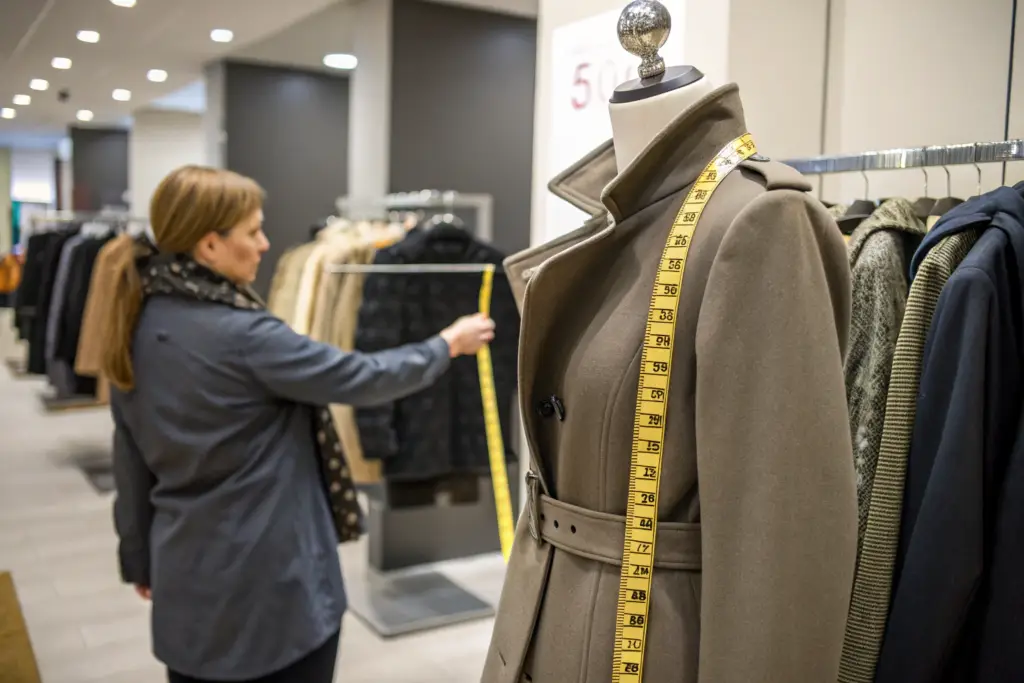
Size grading is the mathematical rule that determines how much each measurement increases or decreases from one size to the next. A properly graded pattern produces a size small, medium, large, and extra-large that all fit the intended body types consistently. A poorly graded pattern produces a medium that fits perfectly, a large that is too boxy, and an extra-large that is too short in the sleeves. The buyer tests the grading by evaluating the fit on models of different sizes or by comparing the measurements of the full size run against the brand's size chart.
The buyer's grading test proceeds as follows. The buyer requests a full size run of the coat, from XS to XXL or from size 0 to size 18. The buyer has fit models of different sizes try on the corresponding coats. The buyer evaluates whether the coat fits each model as intended. Does the shoulder seam hit the same point on the shoulder on every size? Does the sleeve length increase proportionally with the body length? Does the coat accommodate a larger bust without pulling at the buttons? The buyer also measures each coat in the size run and compares the measurements to the brand's published size chart. If the brand's size chart says the size large has a 44-inch chest, the buyer expects the actual coat to measure within half an inch of 44 inches, with the tape measure laid flat. If the measurements do not match the size chart, the brand has a grading problem. The size grading standards in apparel manufacturing are a technical discipline. The brand that invests in professional grading and validates the grading on fit models across the size range earns the buyer's confidence that the product will fit the retailer's diverse customer base.
Why Does A Half-Inch Tolerance Matter For Wholesale Acceptance?
A half-inch tolerance is the acceptable range of variation from the specified measurement. If the spec sheet says the chest circumference of a size medium is 40 inches, the actual coat can measure anywhere from 39.5 to 40.5 inches and still pass inspection. A half-inch does not sound like much. For a customer trying on a coat, a half-inch difference in the chest is barely perceptible. Why does it matter so much to the buyer?
It matters because tolerance stack-up across multiple measurement points can transform a half-inch variation into a fit disaster. The chest is off by half an inch. The shoulder width is off by a quarter inch. The sleeve length is off by three-eighths of an inch. The body length is off by half an inch. Each individual variation is within tolerance, but the cumulative effect on the body is a coat that feels completely different from the sample the buyer approved. The arms are slightly too long, the body is slightly too short, and the shoulders are slightly too narrow. The coat does not fit the way the customer expects. The tolerance is also important because it signals the factory's production discipline. A factory that delivers a coat with a chest measurement that is exactly 40 inches, coat after coat, is a factory with tight process control. A factory that delivers coats that range from 39.5 to 40.5 inches is within tolerance but is operating with loose process control. The buyer prefers the tight-control factory because tight control predicts fewer problems in the future. The garment measurement tolerance standards are the buyer's quantitative measure of the factory's quality capability. A factory that consistently delivers measurements at the center of the tolerance range is a factory the buyer trusts with larger orders.
How Does Packaging And Presentation Influence The Buyer's Quality Perception?
The buyer's quality assessment begins before they touch the coat. It begins when they see the package. A carton that arrives crushed, with the tape peeling and the markings illegible, signals a factory that does not care about the details. A coat that is pulled from the carton wrinkled, with the collar crushed and the sleeves creased, has already lost points before the buyer examines a single seam. Packaging is not separate from product quality. Packaging is the first act of the product's performance. A coat that cannot survive the journey from the factory to the buyer's desk in presentable condition is a coat that will not survive the journey from the retailer's warehouse to the customer's doorstep.
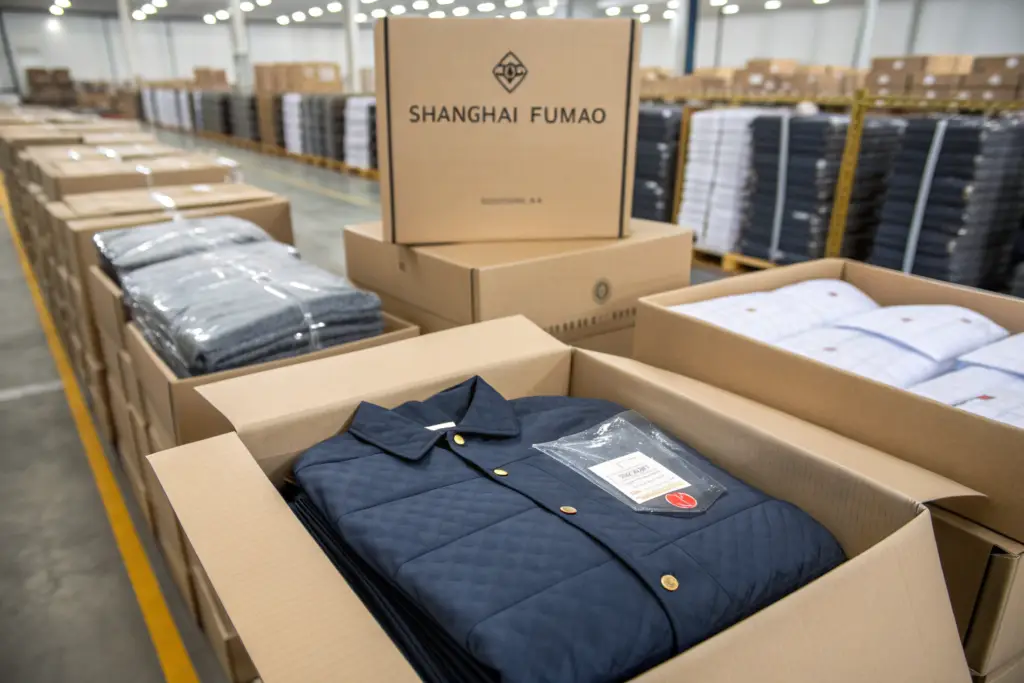
Packaging and presentation influence the buyer's quality perception because they signal the factory's overall operational discipline. A factory that invests in proper packaging, with the correct carton strength, the correct folding method, the correct tissue or polybag protection, and the correct carton markings, is a factory that pays attention to every detail of the order. A factory that stuffs coats into whatever carton is available and ships them without care for how they arrive is a factory that is cutting corners in production as well. At Shanghai Fumao, we pack every coat according to a specified fold-and-pack standard that ensures the coat arrives at the buyer's office or the retailer's warehouse in the same condition it left our finishing department. We use the appropriate carton strength for the weight and the transit distance. We mark every carton clearly with the purchase order number, the style number, the color, the size breakdown, and the carton count. We include a packing list inside the carton and a commercial invoice on the outside.
The buyer's time is valuable. A buyer who receives a neatly packed, clearly marked shipment can process the goods quickly and move on to the next task. A buyer who receives a chaotic, poorly packed shipment spends extra time sorting and identifying the goods. That extra time is a cost the buyer remembers the next time they are placing orders.
What Fold And Pack Method Preserves The Coat's Shape During Shipping?
The fold and pack method is the technique used to fold the coat and place it into the polybag and the carton. An incorrect fold method creates hard creases that are difficult or impossible for the retailer to remove. A coat that arrives with deep creases on the front panels requires steaming before it can be placed on the sales floor. The steaming costs the retailer labor and time. If the retailer does not steam it, the customer sees a wrinkled coat and perceives it as low quality.
The standard fold method for a summer coat is the shirt-fold adaptation. The coat is laid face down on a flat surface. The sleeves are folded across the back at a slight angle so the sleeve heads lie flat. Tissue paper is inserted into the sleeves and the body to cushion the folds and prevent hard creases. The collar is supported with a tissue roll or a cardboard collar form to prevent crushing. The coat is folded in half lengthwise, with additional tissue at the fold line, and then folded in thirds or halves crosswise to fit the carton dimensions. The folded coat is placed into a polybag of the appropriate size. The polybag is not vacuum-sealed unless the fabric and the buyer have specifically approved vacuum packing. The polybag is taped closed, not tied, to prevent the bag from snagging the fabric. The carton is lined with a water-resistant barrier if the shipment may encounter moisture. The carton is packed tightly enough that the coats do not shift during transit, but not so tightly that the coats are compressed. The garment packing standards for export shipping are documented in the brand's packing instruction manual. The factory that follows the packing instructions exactly delivers coats that are ready to sell on arrival.
What Carton Markings And Compliance Labels Do Warehouse Teams Require?
The warehouse team that receives the shipment is not the buyer. They are logistics professionals who need to process the cartons quickly and accurately. If the carton markings are missing, illegible, or incorrect, the cartons are set aside for investigation. The investigation delays the receiving process, and the delay pushes back the availability of the coats for sale. The warehouse team does not evaluate the quality of the coat, but their processing efficiency determines whether the coats reach the sales floor on time.
The carton markings that warehouse teams require include the purchase order number, which links the carton to the retailer's purchase order in the system. The style number, which identifies the specific coat style. The color code and color name. The size breakdown within the carton, expressed as a ratio or a list. The quantity of units in the carton. The carton number and the total number of cartons in the shipment, expressed as "Carton 3 of 12." The country of origin marking, "Made in China." The gross weight and the dimensions of the carton. Any handling instructions, such as "Do Not Stack" or "This Side Up." The compliance labels include the UCC-128 label, a barcode label that is the standard for retail logistics, which encodes the purchase order information in a scannable format. The carton marking requirements for retail shipments are specified in the retailer's routing guide. The factory that follows the routing guide exactly avoids chargebacks for non-compliant labeling.
Conclusion
A top-quality summer coat in the eyes of a retail buyer is a coat that performs at every stage of its lifecycle. It performs when the buyer first touches the fabric and feels a premium hand feel. It performs when the buyer turns the coat inside out and inspects the seam finishing and the construction details. It performs when the buyer measures the coat against the spec sheet and finds it within tolerance. It performs when the buyer fits the coat on models across the size range and finds the grading consistent. It performs when the buyer reviews the lab test reports and sees the evidence of fabric durability. It performs when the coat arrives at the warehouse in a properly marked carton, unfolds without deep creases, and is ready to place on the sales floor. And it performs, most importantly, when the customer wears it for a season, washes it, packs it, and still loves it enough to buy the brand again next year.
The factory that produces a top-quality coat is not the factory with the most advanced machines or the most impressive showroom. It is the factory with the discipline to execute every detail of the specification on every unit, every season. It is the factory that understands that quality is not inspected into the product at the end. Quality is built into the product at every step, from the fabric inspection to the seam finishing to the packing and marking.
At Shanghai Fumao, we produce coats to the standard that retail buyers demand. We test our fabrics before they enter production. We maintain the stitch densities, the seam finishes, and the measurement tolerances that the spec sheet requires. We pack and mark our cartons to the routing guide. We do this not because we want to impress the buyer, although we do. We do this because we know the buyer's standard is the customer's experience, and the customer's experience is the only quality standard that ultimately matters.
If you are developing a summer coat collection for wholesale distribution and you need a factory partner who understands the retail buyer's quality expectations, contact our Business Director, Elaine, at elaine@fumaoclothing.com. Tell her about your target retailers and their quality requirements. She will explain how our production process aligns with the standards that retail buyers enforce. Because the buyer's trust is earned one shipment at a time, and we have been earning that trust for years.