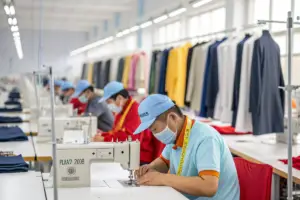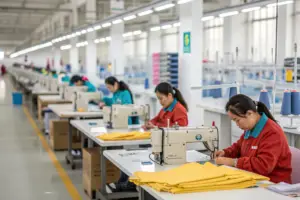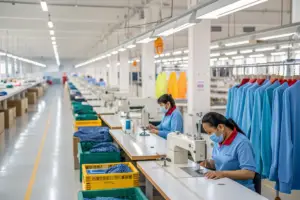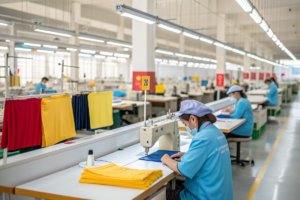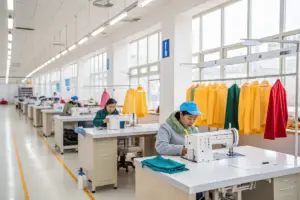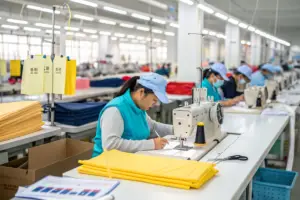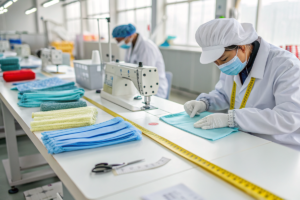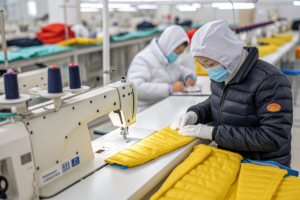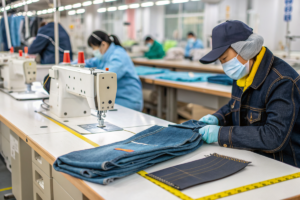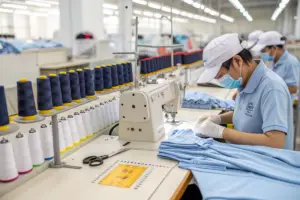
I once watched a brand owner lose his entire summer season because his factory pushed his order back by three weeks. The reason was not a fabric delay. It was not a quality issue. It was simply that a larger client placed a larger order, and the factory shifted the production schedule. The brand owner's 2,000 units of lightweight seersucker blazers were bumped from Line 3 to "next available slot." That slot opened five weeks later. The goods arrived in late July. The brand owner had no recourse. He had no leverage. He was a small fish in a big pond, and the factory treated him accordingly. This is the unspoken reality of garment manufacturing. Factories prioritize the clients who matter most to their business. The question is not whether prioritization happens. The question is whether you are the one being prioritized.
You convince your supplier to prioritize your summer coat production by becoming a client the factory cannot afford to lose. This requires a combination of five strategies. First, consolidate your order volume with a factory whose size matches your volume, so your orders represent a meaningful percentage of their capacity. Second, pay your deposits on time and never delay a balance payment. Factories prioritize the brands that pay reliably. Third, simplify your production requirements. A brand with a clean tech pack, approved fabric, and locked design gets priority over a brand that is still making changes after the cut ticket is issued. Fourth, build a direct relationship with the factory owner or general manager, not just the sales representative. Fifth, commit to a multi-season production forecast that gives the factory the confidence to reserve capacity for you. At Shanghai Fumao, we prioritize our long-term DDP partners because their consistent volume, reliable payments, and professional processes make them profitable and low-stress clients. We know their styles, we know their quality standards, and we know they will not create last-minute chaos on our production floor.
Priority is earned, not demanded. The brand that calls in April demanding an immediate production slot for a summer coat that should have been ordered in January will not get priority, no matter how loudly they complain. Priority goes to the brand that has built the relationship, demonstrated the reliability, and structured the partnership in a way that aligns the factory's interests with their own. Let me walk you through the specific actions that earn prioritization, the factory's internal decision-making logic, and the communication strategies that turn a transactional vendor relationship into a strategic partnership.
What Does A Factory Really Value In A Brand Partnership?
The first step to earning priority is understanding what the factory actually values. The factory is a business, not a charity. It prioritizes the work that is most profitable and least risky. Profitability is not just the unit price. It is the margin per production minute, the efficiency of the production run, and the certainty that the payment will arrive on time. A brand that pays a slightly lower unit price but provides a stable, predictable production schedule with zero last-minute changes is often more profitable for the factory than a brand that pays a higher price but creates chaos on the production floor.
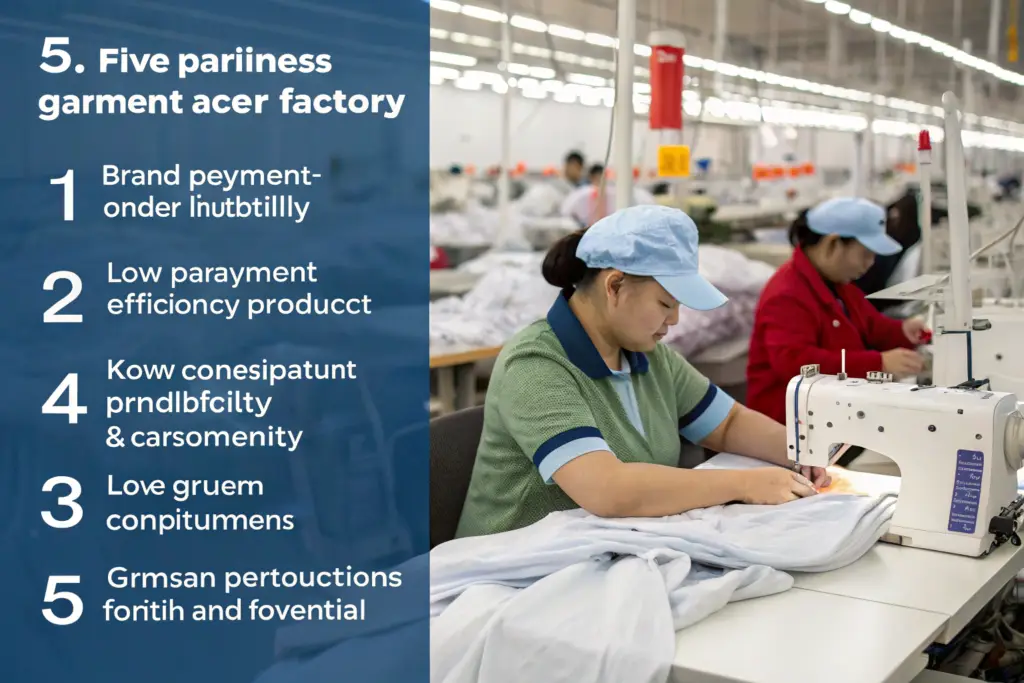
A factory values five things in a brand partnership, in order of importance. First, payment reliability. A brand that pays the deposit on time and the balance before shipment, every single order, without negotiation or delay, is gold. Second, production efficiency. A brand with a well-prepared tech pack, pre-approved fabric and trims, and a design that is locked before the cut ticket is issued allows the factory to run the line at full speed. Third, order consistency. A brand that places orders of similar volume on a predictable cadence, season after season, allows the factory to plan capacity and allocate resources efficiently. Fourth, low communication overhead. A brand that communicates clearly, responds quickly to queries, and does not generate hundreds of unnecessary WhatsApp messages reduces the factory's management cost. Fifth, growth potential. A brand that is growing and can demonstrate a credible plan for larger future orders is worth investing in. At Shanghai Fumao, we look for partners who score highly across all five of these dimensions. These are the brands we call first when a production slot opens up or when we have excess fabric inventory that could be used for an early restock.
The factory's internal production meeting, where the weekly schedule is decided, is not a democracy. The production manager looks at the list of pending orders and allocates the lines based on a simple calculation: which client will cause me the fewest problems and generate the most reliable revenue for the factory? The brand that understands this calculation and designs its behavior to win it gets the production slots.
Why Is Payment History The Single Strongest Factor In Factory Prioritization?
Cash flow is the lifeblood of a garment factory. The factory pays for the fabric, the trims, the worker wages, and the factory overhead weeks before the client pays the balance. This negative cash flow cycle is the factory's single largest financial risk. A client who pays late, or worse, defaults on a balance payment, is not just a minor inconvenience. They are a direct threat to the factory's ability to pay its own bills.
A factory's credit terms to a brand are essentially an unsecured loan. The factory is lending the brand the cost of the raw materials and the labor from the start of production until the balance payment clears. A brand with a perfect payment history is a low-risk borrower. The factory is happy to extend this credit because the repayment is certain. A brand with a late payment history is a high-risk borrower. The factory will still take the order, but it will demand a higher deposit, a shorter payment window, or payment before shipment. And the factory will never prioritize a high-risk client over a low-risk client when production slots are tight. The payment history is the single strongest signal of a brand's reliability. A brand that always pays on time, without being reminded, without disputing the invoice, and without asking for an extension, communicates that it is a professionally managed business that respects the factory's financial position. This respect is reciprocated in production prioritization. The supplier payment terms and relationship management literature is clear that timely payment is the most effective way to build supplier goodwill. It costs the brand nothing extra, and it generates a disproportionate return in service and prioritization.
How Does Forecast Sharing Build The Factory's Confidence To Reserve Capacity?
A factory allocates capacity based on confirmed orders, not on hopes. The brand that says, "I think I might have a big order next season," does not get a reserved production slot. The brand that says, "Here is my 12-month production forecast, broken down by style, quantity, and target delivery date, updated monthly," gives the factory the data it needs to make capacity commitments.
A credible forecast allows the factory to pre-book fabric, which reduces the lead time for the brand and increases the factory's margin by allowing bulk purchasing discounts. A credible forecast allows the factory to schedule the production lines months in advance, which means the brand's order is locked into the schedule before the peak season rush begins. A credible forecast also allows the factory to plan its workforce hiring and training, ensuring that skilled operators are available when the brand's order hits the production floor. The forecast does not need to be a legally binding commitment, although a partial commitment, like a deposit on the fabric or a reservation fee for the production slot, strengthens it. The forecast is a signal of intent. A brand that shares a forecast is signaling that it views the factory as a long-term partner, not a one-time vendor. The factory reciprocates by reserving the capacity. The demand forecasting in supply chain partnerships is a collaborative process that benefits both parties. The brand gets capacity security. The factory gets revenue visibility. Both parties reduce their risk.
How Can You Make Your Production Process Easier For The Factory?
The factory's production manager is not evaluating your brand's aesthetic. They are evaluating how efficiently your coat can be manufactured on their specific production lines. A complex design with 25 separate operations, each requiring a different machine setting and a different operator skill, is a production headache. A clean design with 15 streamlined operations that flow smoothly from one station to the next is a production dream. The production manager will always prioritize the dream over the headache, all else being equal.
You make your production process easier for the factory by locking the design before the purchase order is issued. This means the fabric is approved, the lab dip is signed, the trim components are in stock, the sewing sequence is documented, and the quality standards are defined. A factory that receives a clean, complete, locked tech pack can begin production immediately. There is no waiting for a late fabric approval. There is no stopping the line to re-cut because the design changed. There is no rework because the quality standard was ambiguous. At Shanghai Fumao, the brands that deliver a locked design package get priority scheduling because we can slot them into a production window with confidence that the run will complete on time and on budget.
The factory's ideal client is a brand that has already made all the difficult decisions. The brand knows exactly what they want, and they have communicated it clearly in a format the factory can execute. This level of professionalism is rare, and it is highly valued.
What Does A "Factory-Ready" Tech Pack Look Like For A Summer Coat?
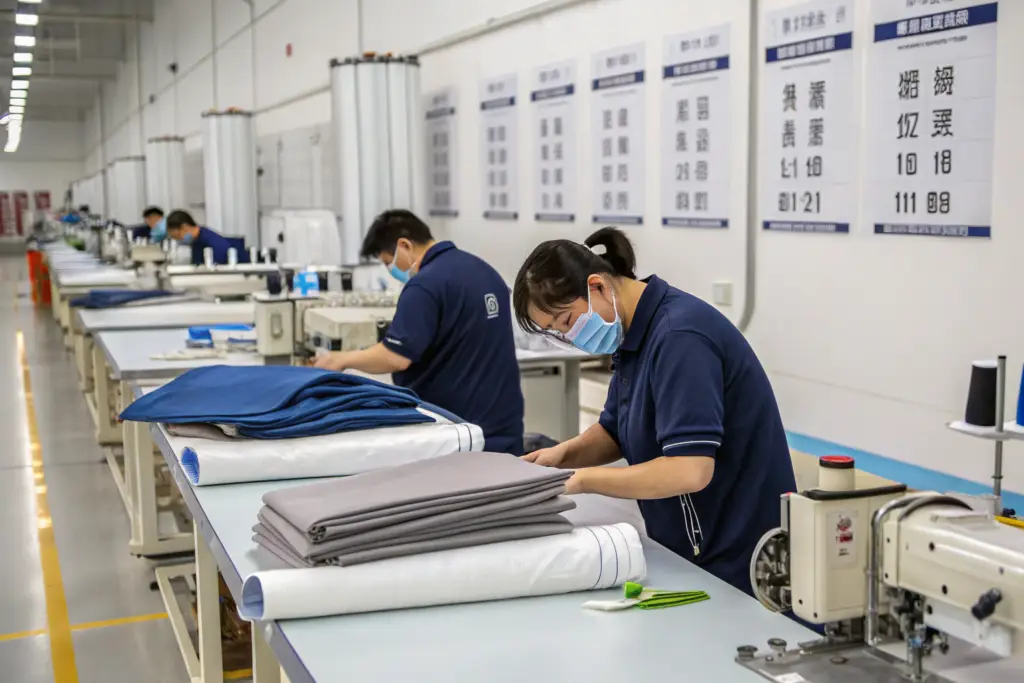
A factory-ready tech pack is not a mood board. It is not a sketch with a few measurements. It is a complete technical specification that answers every question the production team might ask before they ask it. The production team should be able to take the tech pack, walk to the cutting table, and begin work without sending a single email for clarification.
A factory-ready tech pack for a summer coat includes these elements. A fully dimensioned technical sketch showing the front, back, and side views, with all seam lines, pocket placements, and design details clearly marked. A bill of materials with the exact fabric reference code, composition, weight, and supplier, plus the exact trim codes for zippers, buttons, labels, and hang tags, including the supplier and the lead time. A measurement chart with the finished garment measurements for each size, with the tolerance for each measurement point, such as chest +/- half an inch, length +/- three-eighths of an inch. A seam construction guide specifying the stitch type, the SPI, the thread type and ticket number, and the needle size for every major seam. A placement guide for labels, hang tags, and packaging that shows exactly where each item is attached or inserted. A quality inspection criteria document that lists the acceptable defects, the unacceptable defects, and the AQL level for the final inspection. A packing instruction that specifies the fold method, the polybag type, the carton dimensions, the pieces per carton, and the carton marking requirements. A tech pack that contains all of this information is a professional document that commands respect. A tech pack that is missing half of this information is a starting point for a long, painful email chain. The tech pack creation for garment manufacturing is an investment of time that pays for itself in faster production, fewer errors, and higher factory prioritization.
Why Do Last-Minute Design Changes Destroy Your Production Priority?
The factory's production schedule is a finely balanced machine. Each order is allocated a specific line, a specific time window, and a specific set of resources. A last-minute design change, a modification to the collar, a new pocket detail, a different fabric, disrupts this machine. The fabric that was cut must be discarded. The machine that was set up must be reconfigured. The operator who was trained on the original design must be retrained or reassigned. The production window that was allocated is wasted, and a new window must be found. The cost of the change is not just the wasted materials and labor. It is the disruption to the entire production schedule.
A brand that requests last-minute design changes is a brand that the production manager remembers. Not fondly. The next time that brand places an order, the production manager will slot it later in the schedule, after the reliable brands, because the production manager knows the reliable brands will not disrupt the line. The brand that locks the design before the purchase order and does not request a single change during production is the brand the production manager wants to work with. This brand is prioritized not because they are a nicer person, but because they are a lower-risk production proposition. The impact of design changes on production scheduling is a well-documented source of waste in lean manufacturing. Factories that practice lean principles actively avoid clients who generate this waste. To earn priority, be the client who eliminates waste, not the one who creates it.
How Do Order Size And Frequency Affect Your Priority Status?
The factory's business model is built on capacity utilization. An empty production line costs money. The factory has fixed costs, the rent, the management salaries, the machine depreciation, that must be covered regardless of whether the lines are running. A brand that can fill a production line consistently, season after season, is covering the factory's fixed costs. This brand is not just a customer. They are the foundation of the factory's financial stability. The factory will prioritize this brand over a brand that places a one-time large order or sporadic small orders because the consistent brand provides revenue predictability.
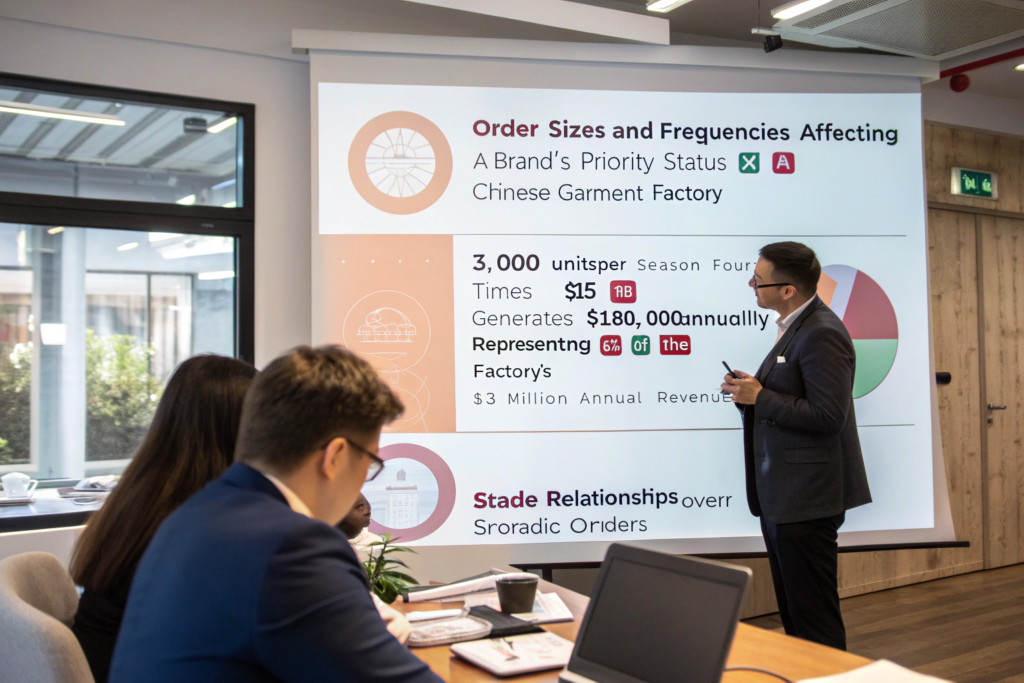
Order size and frequency affect your priority status by determining what percentage of the factory's annual revenue you represent. A brand that places 3,000 units per season, four seasons per year, at a $15 FOB, generates $180,000 in annual revenue for the factory. If the factory's total annual revenue is $3 million, this brand represents 6% of the business. That is significant enough to command attention and priority. A brand that places one order of 5,000 units and then disappears for two years represents a spike of revenue, not a stable relationship. The factory will take the order, but it will not prioritize it over the stable brands that pay the bills every month. At Shanghai Fumao, our five-line setup means that a brand placing 2,000 to 4,000 units per season represents a meaningful portion of our capacity. We prioritize these mid-volume, high-frequency partners because they keep our lines running and our workforce employed year-round.
The factory's ideal client is not the biggest brand. The biggest brand often has the most negotiating power, the most demanding requirements, and the lowest margins. The factory's ideal client is the medium-sized brand that provides consistent, profitable volume without dominating the factory to the point where the loss of the client would bankrupt the business. The medium-sized brand gets better service than the whale because the medium-sized brand is important enough to matter but small enough to not dictate terms.
What Is The Sweet Spot Order Volume For A 5-Line Factory?
A 5-line factory like Shanghai Fumao has a monthly production capacity of roughly 25,000 to 40,000 units, depending on the garment complexity. A single client that places an order for 20,000 units in one month consumes 50% to 80% of the factory's capacity. This is a high-risk concentration for the factory. If that client delays payment, changes the design, or cancels the order, the factory's entire month is destroyed. The factory will take the order, but it will not give that client preferential treatment because the factory needs to diversify its risk.
The sweet spot order volume for a 5-line factory is 2,000 to 5,000 units per season, representing 15% to 30% of the factory's capacity in a given month. At this volume, the brand is one of the factory's top five clients. The brand's order fills a significant portion of the schedule. The factory's management knows the brand's name, the brand's quality standards, and the brand's communication style. The brand gets priority access to production slots, rapid response to queries, and flexibility when the brand needs a restock or a change in delivery timing. The brand is not so large that it creates concentration risk, but it is large enough that its loss would be felt. This is the volume range where the brand-factory relationship is most balanced and most productive. The optimal order quantity and supplier relationship dynamics shift at different volume levels. Brands should understand where they sit in their factory's client portfolio and behave accordingly.
Why Is A Multi-Season Commitment More Valuable Than A Single Large Order?
A single large order is a transaction. A multi-season commitment is a partnership. The factory values the partnership more because it reduces the factory's customer acquisition cost. Acquiring a new client requires sales effort, sampling time, communication onboarding, and production learning curve. The first order from a new client is often the least profitable order because the factory is absorbing these setup costs. The second, third, and fourth orders from the same client are progressively more profitable because the setup costs have been amortized and the production team is familiar with the brand's standards.
A brand that communicates a multi-season commitment, even if the first season's order is modest, signals to the factory that the initial investment of time and attention will pay off over multiple seasons. The factory is willing to invest more in the relationship, to reserve better production slots, to assign the more experienced operators, and to absorb small cost overruns that would be charged back to a one-time client. The multi-season commitment does not need to be a legally binding contract for five seasons. It can be a rolling forecast that is updated quarterly, with a confirmed order for the upcoming season and a projected order for the following two seasons. The long-term supplier partnership benefits are well established. The brands that commit to multiple seasons receive better pricing, better service, and better prioritization than the brands that shop around every season for the lowest unit price.
What Communication Strategies Earn Respect And Priority From Factory Management?
The factory management deals with communication chaos every day. Clients who send 20 WhatsApp messages at midnight. Clients who email three different people with conflicting instructions. Clients who call the owner directly to bypass the merchandiser, and then complain when the merchandiser does not know about the change. The communication noise in a busy factory is a significant drain on management attention. A brand that communicates with discipline, clarity, and respect for the factory's workflow stands out immediately.
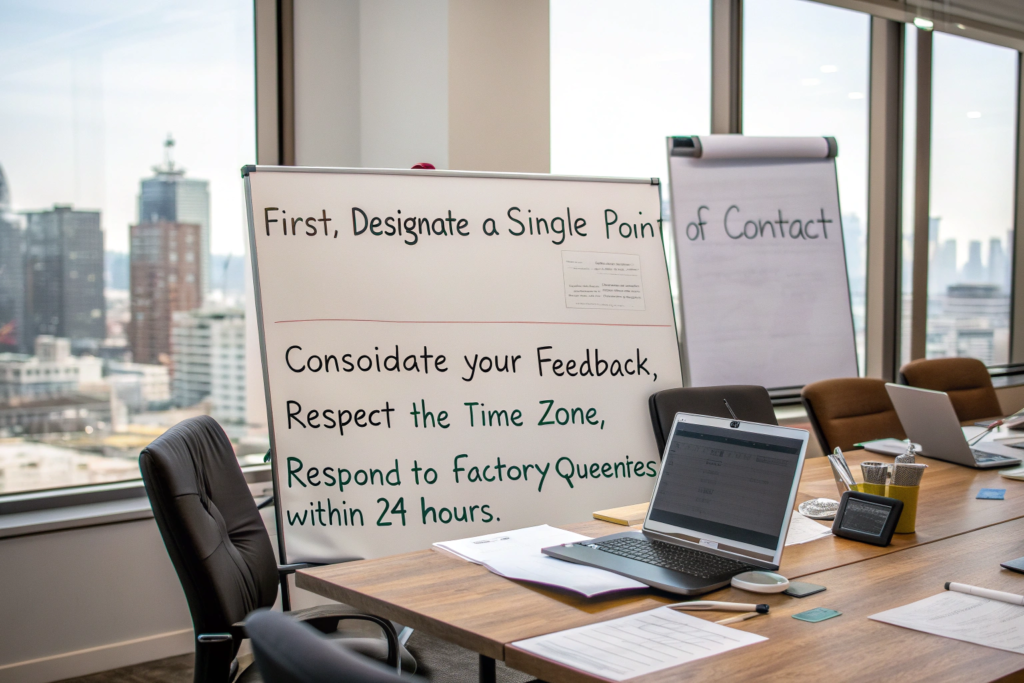
The communication strategies that earn respect and priority are simple. First, designate a single point of contact on your team who communicates with a single point of contact on the factory's team. Do not have your designer email the pattern maker while your production manager is WhatsApp-ing the line supervisor. Second, consolidate your feedback. When you review a sample or an inspection report, send one email with all your comments, not a stream of individual messages as each thought occurs to you. Third, respect the time zone. The factory in China is 12 to 15 hours ahead of US time zones. Urgent issues should be communicated during the factory's working hours, not at 2 AM China time, unless it is a true emergency. Fourth, respond to factory queries within 24 hours. A factory that is waiting for your approval on a fabric substitution or a delivery date change cannot proceed until you respond. Your response speed directly affects your production timeline. At Shanghai Fumao, our most valued partners respond to our queries within one business day. Their production moves forward without delay. The partners who take a week to respond are the partners whose production slips.
Professional communication is a skill. It is also a signal. A brand that communicates professionally is a brand that is run professionally. A professionally run brand is a lower-risk client. The factory prioritizes lower-risk clients.
How Does Direct Access To The Factory Owner Change The Relationship Dynamic?
In a large factory, the brand communicates with a sales representative who has limited authority. The sales rep can relay messages, but they cannot make decisions about production scheduling, resource allocation, or price adjustments. The brand's requests are filtered through a bureaucracy. In a mid-sized factory, the brand often has direct access to the factory owner or general manager. This direct access is a strategic asset.
The factory owner can make decisions instantly. When the brand calls with an urgent restock request, the owner can walk to the production floor, assess the situation, and reallocate a line immediately. The owner does not need to request approval from a superior. The owner is the superior. The owner also has the broadest view of the factory's operations. The owner knows which clients are profitable, which clients are reliable, and which clients are going to grow. The owner makes the prioritization decisions. A direct relationship with the owner means the brand's needs are understood at the decision-making level. This direct relationship is built over time, through multiple seasons of reliable orders, timely payments, and professional communication. It is not built by calling the owner every week to ask for favors. It is built by being the client the owner never has to worry about. The direct supplier relationship management at the owner level is a competitive advantage that large brands sourcing from mega-factories cannot replicate. The mid-sized factory offers this access. The smart brand leverages it respectfully.
What Is The Right Way To Escalate A Problem Without Damaging The Relationship?
Problems happen in every production run. A fabric shade is slightly off. A shipment is delayed by a week. A quality issue is found in the inline inspection. How the brand escalates these problems determines whether the relationship is strengthened or damaged by the resolution process.
The right way to escalate a problem is to be direct about the issue, factual about the impact, and collaborative about the solution. Do not start the conversation with blame. Start with the facts. "The lab test on the bulk fabric shows a Delta E of 1.8 against the approved swatch. Our tolerance is 1.0. This needs to be corrected before we can proceed with cutting." This is factual, specific, and clear. The factory knows exactly what the problem is and what standard must be met. Do not make threats unless you are prepared to follow through on them. "If this is not fixed by Friday, I will cancel the order," is a statement that should only be made if you have a backup factory, a backup fabric source, and the willingness to absorb the delay of starting over. Empty threats destroy credibility. The factory knows whether the threat is real or a bluff. Do not escalate to the owner for routine issues that the merchandiser can handle. Save the owner escalation for problems that genuinely require the owner's authority to resolve, like a capacity conflict, a major quality failure, or a contractual dispute. When you do escalate, be professional. Provide the context, the previous attempts to resolve the issue, and the specific action you are requesting. The conflict resolution in supplier relationships is a skill that improves with practice. The brands that handle problems professionally build stronger relationships than the brands that never have problems at all.
How Does The DDP Model Naturally Align The Factory's Priorities With Yours?
The FOB model creates a natural misalignment of priorities after the goods leave the factory. The factory has been paid. The factory's priority shifts to the next order, the next client, the next deposit. The brand's priority is the safe and timely arrival of the goods. These priorities diverge. The brand is stressed about the customs clearance while the factory is focused on cutting the next client's fabric. Under the DDP model, these priorities converge. The factory has not been fully paid until the goods arrive at the brand's warehouse. The factory's priority is the safe and timely arrival of the goods, exactly the same as the brand's priority.
The DDP model naturally aligns the factory's priorities with the brand's because the factory's financial outcome is tied to the successful completion of the entire logistics chain. The factory does not get paid when the goods leave the factory gate. The factory gets paid when the goods are delivered to the brand's named destination. Every day of delay is a day the factory's cash is tied up and a day the factory is accruing potential liquidated damages liability. This alignment means the factory is intrinsically motivated to prioritize the brand's production and shipping. The factory will ensure the goods are produced on time because a production delay cascades into a shipping delay, which cascades into a late payment and a penalty. At Shanghai Fumao, our DDP clients benefit from this alignment every day. They do not need to convince us to prioritize their order. The DDP contract does the convincing for them.
The brand on DDP does not need to employ the persuasion strategies discussed in this article for the logistics phase. The persuasion is built into the commercial structure. The brand still needs to earn prioritization for the production phase, through payment reliability, professional processes, and consistent volume. But once the goods are produced, the factory's interest and the brand's interest are perfectly aligned. This is the structural advantage of DDP.
Why Does A DDP Factory Care More About Your Delivery Date Than An FOB Factory?
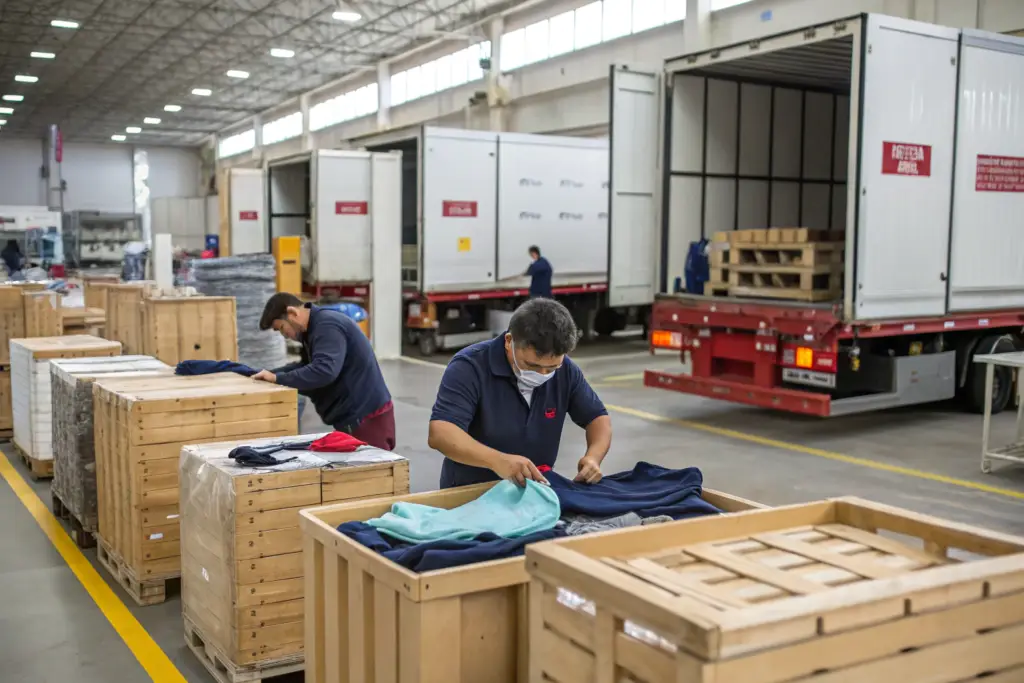
The FOB factory's contractual obligation ends at the port of export. The delivery date that matters to the FOB factory is the ex-factory date, the date the goods are ready for pickup by the brand's forwarder. Once the goods leave the factory, the FOB factory has fulfilled its contract. The brand's delivery date, the date the goods arrive at the brand's warehouse, is not the FOB factory's problem. The FOB factory cares about the ex-factory date because that is the date that triggers the balance payment. The factory's financial incentive is to achieve the ex-factory date, even if the goods then sit at the port for three weeks waiting for a vessel.
The DDP factory's contractual obligation extends to the brand's warehouse. The delivery date that matters to the DDP factory is the date the goods are unloaded at the brand's named destination. This is the date that triggers the balance payment, assuming the payment terms are structured as payment against delivery. The DDP factory cares deeply about the ocean transit, the customs clearance, and the final mile delivery because these are the factory's responsibilities. The factory selects the forwarder based on schedule reliability. The factory files the ISF and the customs entry promptly. The factory monitors the vessel and intervenes if a delay is detected. The factory arranges the trucking and confirms the delivery appointment. The DDP factory behaves like the brand's logistics department because, under the DDP contract, the factory is the brand's logistics department. The Incoterms and delivery responsibility allocation define the factory's obligations. DDP defines the broadest obligation. The broadest obligation creates the strongest alignment.
How Does The DDP Payment Structure Reinforce Production Priority?
Under many DDP contracts, the payment is structured as a deposit upon order confirmation, with the balance due upon delivery of the goods to the brand's warehouse. This payment structure means the factory has financed the entire production, the raw materials, the labor, and the logistics, until the goods are delivered. The factory has a significant amount of its own cash tied up in the brand's order. The factory's priority is to deliver the goods as fast as possible to trigger the balance payment and release the cash.
This cash flow dynamic reinforces production priority. The factory will not delay a DDP order because a delay extends the period during which the factory's cash is outstanding. The factory will prioritize the DDP order over an FOB order, all else being equal, because the FOB order pays the balance at the ex-factory date, while the DDP order pays at the delivery date. The factory wants to convert the DDP work-in-progress into cash as quickly as possible. This urgency translates into production prioritization, expedited finishing, and proactive shipping. The supplier payment structures and incentive alignment research confirms that payment terms that tie the supplier's cash flow to the buyer's delivery outcome create a powerful alignment of interests. The DDP payment structure is not just a convenience for the buyer. It is an incentive mechanism for the supplier.
Conclusion
Convincing your supplier to prioritize your summer coat production is not about being the loudest voice or the most demanding client. It is about being the most valuable client. Value, from the factory's perspective, is a combination of reliable payments, efficient production runs, consistent order volume, professional communication, and growth potential. The brands that deliver on these five dimensions do not need to demand priority. They receive it naturally because the factory's production manager looks at the schedule and slots them in first, knowing that their order will run smoothly, their invoice will be paid on time, and their communication will be clear and timely.
The strategies to earn this priority are within every brand's control. Pay every invoice on or before the due date. Submit a complete, locked tech pack before the purchase order. Share a realistic 12-month production forecast. Consolidate your order volume with a factory whose size matches your volume. Designate a single point of contact and respond to factory queries within 24 hours. Build a direct, respectful relationship with the factory owner. Transition to DDP terms so that the factory's financial incentive is aligned with your delivery timeline. These actions do not require a larger budget or a more established brand. They require discipline, professionalism, and a long-term perspective.
At Shanghai Fumao, we have built our client portfolio around partners who embody these principles. Our DDP partners receive priority production scheduling, access to our express restock line, and the full attention of our management team. We invest in their growth because their growth is our growth. We prioritize their orders because their success is our success.
If you are looking for a production partner who will prioritize your summer coat orders, not just take them, contact our Business Director, Elaine, at elaine@fumaoclothing.com. Tell her about your brand, your typical order volumes, and your production calendar. She will discuss how our DDP partnership model can align our factory's priorities with your brand's goals. Because a prioritized production slot is not a favor. It is the natural result of a well-structured, mutually beneficial partnership.