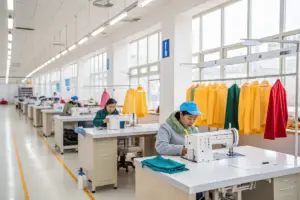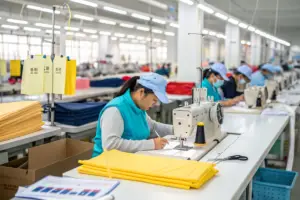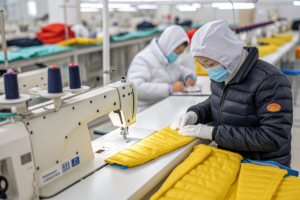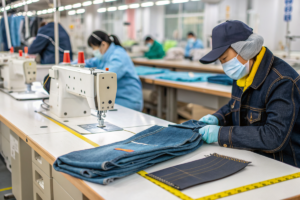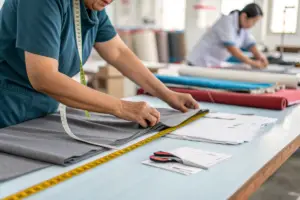
A few years ago, a data-driven buyer I work with, a former management consultant who had transitioned into apparel sourcing, said something that crystallized our entire approach to client service. He said, "I do not want a factory that waits for me to tell them what to make. I want a factory that shows me what is already working in the market and helps me adapt it for my brands. I am not a designer. I am an analyst. I need data, not inspiration." He was sourcing summer coats for three different private label brands, and his entire competitive advantage was his ability to identify market gaps using sales data, search trends, and competitor analysis. What he lacked was the design vocabulary to translate those market gaps into specific product specifications. He did not need a factory to execute his designs. He needed a factory to propose designs based on his data. That conversation led us to formalize what is now one of our most valued services: the design reference program for data-driven buyers.
Fumao Clothing provides design references for data-driven buyers because we recognize that the modern apparel sourcer's competitive advantage is market intelligence, not creative design training. A buyer who can analyze sell-through data, track search trends, and identify underserved market segments does not need to also be a skilled designer. They need a factory partner who can translate their market insights into concrete product proposals. Our design reference service provides curated, seasonally updated collections of coat styles, fabric swatches, trim options, and color palettes that are based on our analysis of what is selling successfully in the US market. The data-driven buyer uses these references as a starting point, selects the elements that align with their market data, and customizes the details for their specific brand positioning. At Shanghai Fumao, we invest in this service because it makes our clients more successful and it makes our production more efficient. A buyer who selects from our pre-developed references is buying a product that we have already engineered for manufacturing efficiency, fabric availability, and quality consistency.
The design reference service is not about pushing generic products onto clients. It is about providing a curated menu of market-validated options that the data-driven buyer can configure into a unique collection. The buyer retains full control over the final product. The factory provides the starting point that eliminates the blank-page problem. Let me walk through exactly how the service works, why it creates value for data-driven buyers, and how it fits into the broader trend of analytics-driven apparel sourcing.
What Are Fumao's Design Reference Services And How Do They Work?
The traditional model of apparel sourcing places the design burden entirely on the buyer. The buyer is expected to arrive with sketches, tech packs, and a fully formed creative vision. The factory's role is to execute. This model works for brands that employ professional designers. It fails for the growing number of data-driven buyers who have market expertise but lack design training. Our design reference service inverts this model. We provide the design starting point. The buyer provides the market validation and the customization direction.
Fumao's design reference service is a curated, seasonally updated library of coat styles, fabric options, trim selections, and color palettes that are available for our clients to use as the foundation for their custom collections. The service has four components. First, a digital and physical lookbook of coat silhouettes that we have developed based on current US market trends, our sampling request data, and the production patterns we have already engineered. Second, a fabric library of stocked and readily available materials with known lead times, tested quality parameters, and pre-negotiated pricing. Third, a trim library of buttons, zippers, drawcords, and labels that are pre-qualified for quality and available with custom branding. Fourth, a color palette of pre-tested dye formulations that are proven to match across different fabric compositions. The buyer uses these components to assemble a custom collection without starting from a blank page. At Shanghai Fumao, we update the design reference library every season based on the market intelligence we gather from our client base, our mill partners, and our analysis of the US retail landscape.
The design reference service is not a house collection that we sell as-is to multiple clients. It is a toolkit that each client uses to build a unique product. Two clients can start from the same base silhouette and produce completely different coats by selecting different fabrics, different trims, different colors, and different branding.
How Does The Seasonal Reference Lookbook Help Buyers Who Lack Design Skills?
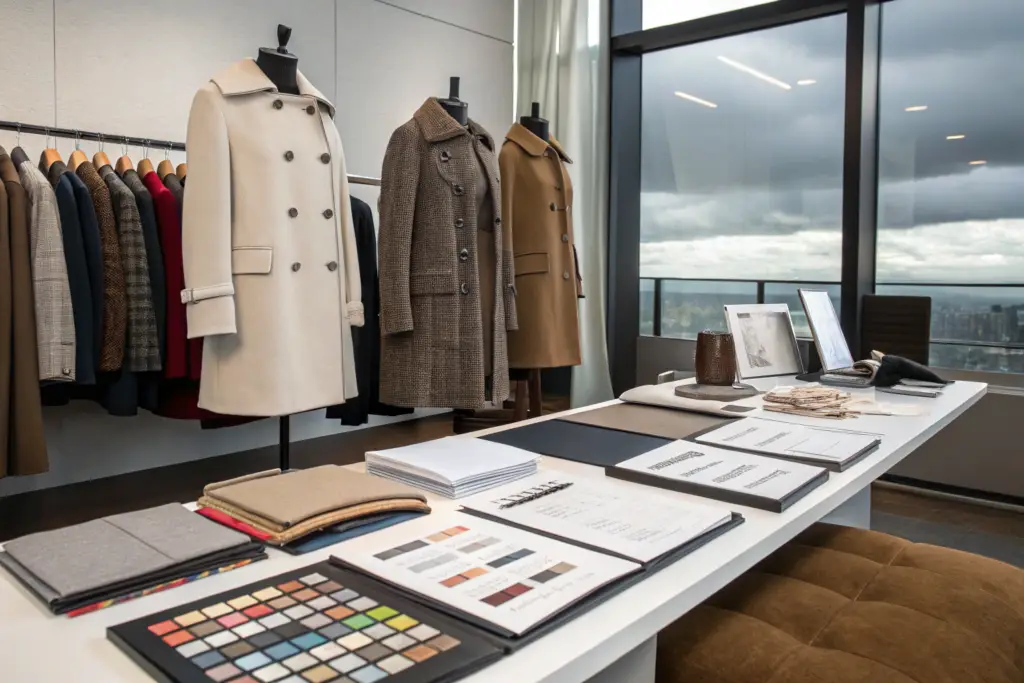
The seasonal reference lookbook is a physical and digital catalog of coat styles that we have pre-developed for the upcoming season. Each style is presented with professional photographs on a model, a flat lay image, a fabric swatch, a list of key features, and the available customization options. The lookbook is not a product catalog of finished coats for sale. It is a catalog of design starting points that the buyer can modify.
For a buyer who lacks design skills, the lookbook solves the blank-page problem. The buyer opens the lookbook and sees thirty coat styles, organized by category, blazers, trench coats, dusters, anoraks, utility jackets. Each style is a complete, coherent design that has already been engineered for production. The buyer does not need to imagine a coat from scratch. The buyer evaluates the styles against their market data. "My analysis shows that unstructured linen blazers in neutral colors are undersupplied in the $88 to $108 retail range. This style, the Milan unstructured blazer, fits that profile. I will start with this base and customize the fabric, the color, and the branding." The lookbook translates the buyer's market analysis into a specific product choice. The buyer then works with our merchandiser to customize the selected style. The customization can be as light as changing the fabric and the label, or as deep as modifying the collar, the pocket configuration, and the length. The seasonal lookbook for wholesale apparel is a standard tool in the industry, but most factories use it to sell their own house line. We use it as a design starting point for the client's custom line.
What Is Included In The Fabric And Trim Library For Data-Driven Selection?
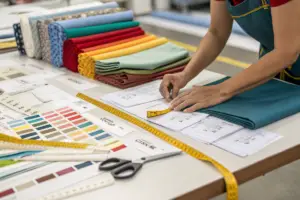
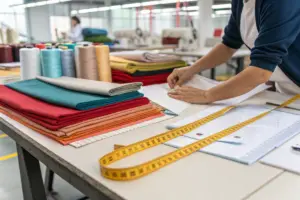
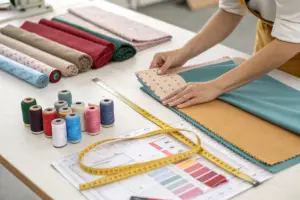
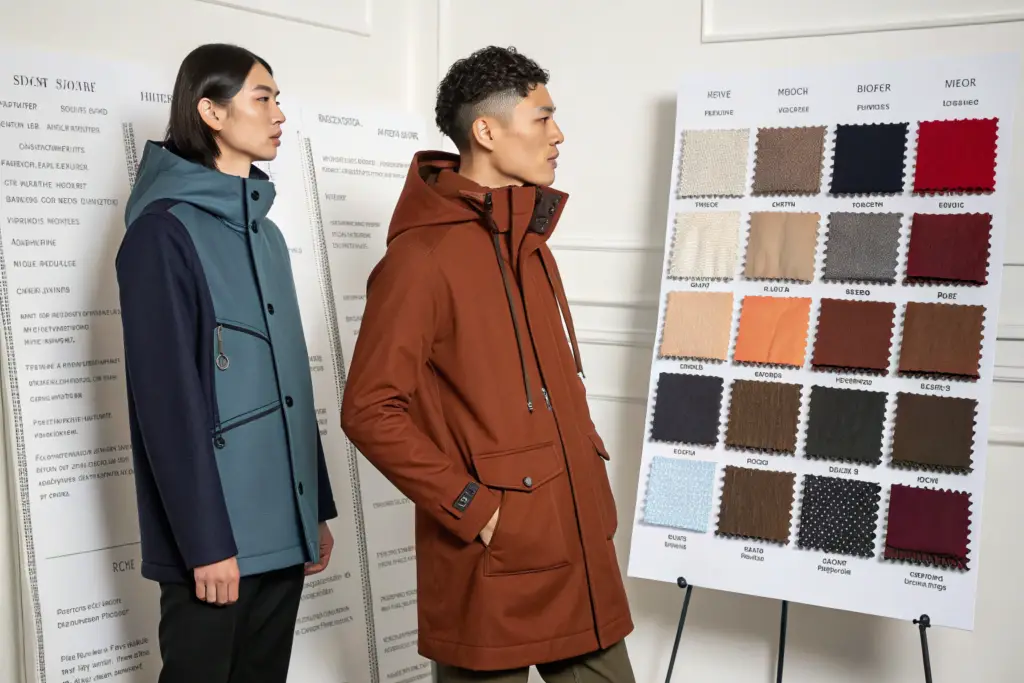
The fabric and trim library is the physical complement to the lookbook. It is a collection of swatches and samples that the buyer can touch, feel, and evaluate. The library is organized for data-driven decision-making. Each fabric swatch is accompanied by a specification sheet that includes the fiber composition, the weight in GSM, the width, the available colors, the lead time, the minimum order quantity, the price per meter, and the performance test results for shrinkage, colorfastness, seam slippage, and pilling. Each trim sample is accompanied by a similar specification sheet.
This data allows the buyer to select fabrics and trims based on objective criteria rather than subjective feel. A data-driven buyer evaluating two linen-viscose blends does not ask, "Which one feels nicer?" They compare the specifications. Fabric A is 160 GSM, has a shrinkage of 2%, a pilling rating of 4, and a lead time of 25 days. Fabric B is 180 GSM, has a shrinkage of 1.5%, a pilling rating of 4.5, and a lead time of 20 days. The buyer selects Fabric B because the data shows it is superior on every dimension that matters for their customer. The fabric and trim library also enables the buyer to build a collection with a coherent material strategy. The buyer can select a single fabric and use it across multiple styles to achieve volume discounts on the fabric purchase. They can select trims from a single supplier to simplify the supply chain. The fabric sourcing library for apparel brands transforms material selection from an aesthetic exercise into an analytical one.
Why Do Data-Driven Buyers Need Factory-Provided Design Direction?
The skill set of a data-driven buyer is fundamentally different from the skill set of a designer. The data-driven buyer is skilled at market analysis, competitor benchmarking, pricing strategy, and supply chain management. They are not skilled at, and often not interested in, the creative aspects of garment design. They do not want to sketch. They do not want to select Pantone colors from a fan deck. They do not want to design a collar from scratch. They want to make high-probability commercial decisions based on evidence, and they want a factory partner who can provide the design inputs that make those decisions possible.
Data-driven buyers need factory-provided design direction because design is the input they cannot generate themselves, while market validation is the input the factory cannot generate independently. The buyer brings the market knowledge: the target customer demographics, the price point analysis, the competitive landscape, the sell-through data from previous seasons. The factory brings the design knowledge: the silhouette options, the fabric technologies, the construction methods, the trim possibilities. The two knowledge sets are complementary. At Shanghai Fumao, we see our role as the design knowledge partner for clients whose expertise lies in market analysis. We do not expect our clients to be designers. We expect them to be market experts. We provide the design expertise that allows them to apply their market expertise.
The division of labor is efficient. The buyer does what they do best: identify market opportunities and manage the commercial relationship. The factory does what it does best: translate market opportunities into producible garments. Neither party is forced to operate outside their competence.

How Does The "Analyze First, Design Second" Approach Reduce Collection Risk?
The traditional design-first approach begins with a creative vision. The designer imagines a collection, sketches the styles, selects the fabrics, and then presents the collection to the market. The market's response is unknown until the collection is produced and sold. If the designer's vision does not resonate with the market, the collection fails, and the inventory is liquidated at a loss. The design-first approach concentrates risk on the designer's creative judgment.
The analyze-first, design-second approach inverts this sequence. The buyer begins with market analysis. They identify the specific styles, fabrics, colors, and price points that are currently selling successfully in the target market. This analysis produces a market requirement: a set of objective specifications that a coat must meet to have a high probability of commercial success. The buyer then takes this market requirement to the factory and asks the factory to propose design references that meet the requirement. The factory's design proposals are evaluated against the market data, not against the buyer's personal taste. The collection is assembled from the proposals that best match the market requirement. The analyze-first approach reduces collection risk because every design decision is grounded in market evidence. The buyer is not betting on their own creative intuition. They are betting on patterns they have observed in the market. The data-driven product development in fashion is a methodology that shifts the risk from the designer's judgment to the market's demonstrated preferences. The factory's design references are the raw material that the data-driven buyer shapes into a market-validated collection.
How Does Market Trend Data Translate Into Specific Coat Specifications?
The translation of market trend data into product specifications is the core skill of the data-driven buyer, and it is the process that the factory's design references support. The buyer starts with a market observation: "Lightweight, packable anoraks with UV protection are a growing search trend on Google and Pinterest, with a 40% year-over-year increase in search volume. The current market supply is concentrated at the $120 to $160 retail range. There is a gap at the $68 to $88 range for a product with comparable functionality but a simpler design."
This market observation is translated into a product specification. The coat type is an anorak with a half-zip front, a stand collar, an adjustable hood, and a kangaroo pocket. The fabric must be a lightweight nylon with a water-repellent finish and a UPF 50+ rating. The weight must be under 120 GSM to achieve the packable functionality. The color palette should follow the dominant trend colors for outdoor apparel: sage green, dusk blue, and sandy beige. The landed cost target is $14 to $16 to support the $68 to $88 retail price point with a healthy margin. The buyer brings this specification to the factory. The factory searches its design reference library for an anorak silhouette that matches the specification. The factory proposes a base style that is close to the requirement, with modifications for the specific pocket configuration and hood design. The factory sources the fabric from its library or develops a new fabric that meets the performance specification. The design references provide the starting point that allows the market data to be translated into a specific, producible garment. The trend-to-product translation process in apparel is the workflow that data-driven buyers use to convert market intelligence into purchase orders. The factory's design references make this workflow operational.
How Do Fumao's Design References Speed Up The Development Timeline?
Time is the scarcest resource in the seasonal apparel business. A brand that can move from concept to sample in two weeks captures market opportunities that a brand with an eight-week development timeline misses. The traditional development timeline is long because every element of the coat must be created from scratch. The silhouette must be designed, the pattern must be drafted, the fabric must be sourced, the trims must be selected, and the sample must be sewn. Each step is sequential and each step requires creative decisions that take time.
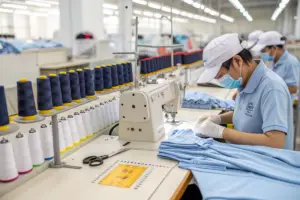
Fumao's design references speed up the development timeline by parallelizing and pre-completing many of the steps in the traditional development process. Our reference silhouettes are pre-designed and pre-patterned. When a buyer selects a base style, we are not drafting a pattern from scratch. We are pulling an existing pattern from our library and modifying it according to the buyer's customization instructions. Our reference fabrics are pre-sourced and pre-tested. When a buyer selects a fabric from our library, we are not sending inquiries to mills and waiting for swatches. We are pulling the fabric from our stocked inventory or ordering from an approved mill with a known lead time. Our reference trims are pre-qualified. When a buyer selects a button or a zipper, we are not vetting a new supplier. We are ordering from an approved supplier with whom we have an established account. At Shanghai Fumao, the development timeline for a collection built from our design references is two to three weeks from initial selection to first sample. A collection built entirely from scratch typically takes six to eight weeks to reach the same stage. The time savings is the difference between launching in-season and missing the window.
The speed advantage of the design reference model is not just about the sample timeline. It is about the entire production timeline. A coat that is built on a pre-engineered pattern with pre-sourced materials is a coat that can move into bulk production faster because the production engineering work has already been done.
How Do Pre-Engineered Patterns Reduce The Sampling Timeline?
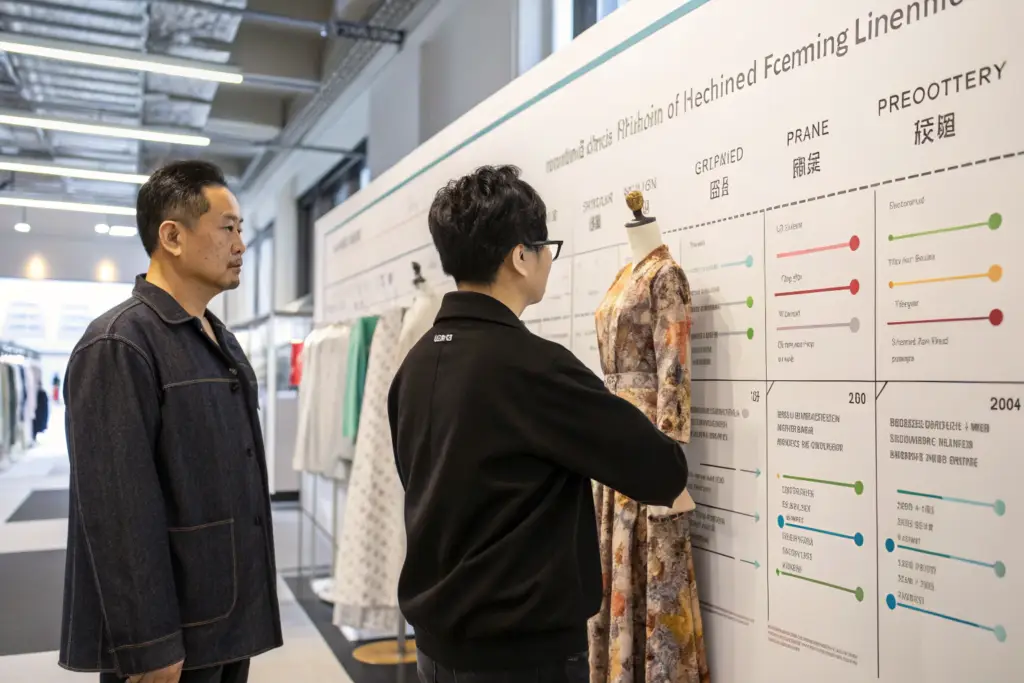
A pattern is the technical blueprint of a garment. Creating a pattern from scratch for a new coat design involves multiple steps. The pattern maker must interpret the design, draft the initial pattern, cut a prototype, fit the prototype on a model, identify the fit issues, adjust the pattern, cut a second prototype, and repeat until the fit is approved. Each iteration takes time. A complex coat with a tailored collar and a shaped sleeve can require three to four pattern iterations, each consuming three to five days.
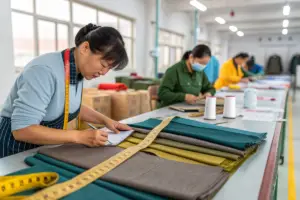
A pre-engineered pattern is a pattern that has already been through this iteration process. Our reference silhouette library contains patterns that have been developed, fitted, graded, and production-tested on previous orders. When a buyer selects a reference silhouette and requests modifications, the pattern maker starts from the pre-engineered base pattern, not from a blank screen. The base pattern already has the correct shoulder slope, the correct armhole shape, the correct collar fall, and the correct sleeve cap height. The modifications are adjustments to the base, not a complete reconstruction. The first prototype from a pre-engineered pattern is typically 80% to 90% correct on the first fitting. The buyer and the pattern maker can focus on refining the specific customization elements rather than solving fundamental fit problems. The sampling timeline is reduced from three to four rounds to one to two rounds. The pattern making efficiency in garment manufacturing is a significant driver of development speed. The design reference library is a repository of proven patterns that we have invested in developing so our clients do not have to.
How Does Pre-Sourced Fabric Eliminate The Longest Lead Time Item?
Fabric is the longest lead time component in garment production. A custom-developed fabric, with a specific fiber blend, weight, and finish, can take 30 to 60 days from order to delivery. The fabric lead time is often the critical path item that determines the overall production timeline. A brand that begins fabric sourcing after the design is finalized is adding 30 to 60 days to the development process that could have been avoided.
Our fabric library contains materials that are pre-sourced and, in many cases, physically stocked in our warehouse or in our partner mills' inventory. When a buyer selects a fabric from the library, they are selecting a fabric that has a known, short lead time. The fabric has already been developed, tested, and approved. The mill has produced it before and can produce it again quickly. For stocked fabrics, the lead time is zero. The fabric is on our shelf and can be cut immediately. For non-stocked library fabrics, the lead time is 10 to 15 days, the mill's standard reorder lead time for an established article. The pre-sourced fabric library eliminates the 30 to 60-day fabric development phase from the critical path. The fabric lead time reduction strategies in apparel are essential for seasonal businesses where speed to market determines sell-through. Our design reference service includes the fabric library specifically to address this bottleneck.
How Does The Design Reference Program Benefit Both The Buyer And The Factory?
The design reference program is not a favor we do for our clients. It is a mutually beneficial system that creates value for both parties. The buyer benefits from reduced development time, reduced design risk, and access to design expertise without hiring a designer. The factory benefits from production efficiency, reduced sampling waste, and stronger client relationships. The program aligns the interests of both parties around a shared goal: producing a commercially successful product with minimum friction and maximum speed.
The design reference program benefits the buyer by providing a low-risk, fast, and cost-effective path to a custom collection. The buyer does not need to invest in design talent, fabric development, or pattern engineering. They leverage the factory's existing investments in these areas. The program benefits the factory by steering clients toward products that we know how to manufacture efficiently, using materials that we know how to source reliably, with quality outcomes that we can predict and control. When a client selects from our design references, the probability of production problems, quality defects, and timeline delays is lower than when a client brings a completely novel design that we have never produced before. At Shanghai Fumao, we view the design reference program as a win-win infrastructure investment. It makes our clients more competitive in their markets, and it makes our production operations more predictable and profitable.
The alignment of interests is the foundation of a long-term factory-buyer partnership. The design reference program is one of the ways we create that alignment.

How Does The Program Create Production Efficiencies For The Factory?
Production efficiency in a garment factory is driven by repetition and familiarity. An operator who sews the same collar construction for three days becomes faster and more accurate. A cutting room that cuts the same fabric for multiple orders reduces setup time and fabric waste. A quality control team that inspects the same style repeatedly becomes more effective at identifying defects.
The design reference program creates production efficiencies by concentrating client orders around a common set of patterns, fabrics, and construction methods. When multiple clients select the same base silhouette with different customizations, our production team can run the styles sequentially or in parallel with minimal changeover time. The operators are working on a familiar construction. The machines are set up for a familiar operation. The cutting room is working with a familiar fabric. These efficiencies reduce the production cost per unit and improve the quality consistency. The cost savings are shared with the client through competitive pricing. The quality improvements benefit the client through lower defect rates and higher customer satisfaction. The production efficiency through product standardization is a lean manufacturing principle that applies directly to our design reference model. Standardization does not mean all coats are the same. It means the underlying production processes are standardized, while the surface-level customization, the fabric, the color, the trim, the branding, provides the differentiation that the market demands.
How Does The Program Strengthen The Long-Term Partnership Between Factory And Buyer?
A transactional factory-buyer relationship is fragile. The buyer evaluates the factory on price and delivery for each order. If another factory offers a lower price, the buyer switches. The factory has no incentive to invest in the buyer's success because the buyer is not loyal. A partnership relationship is durable. The buyer and the factory invest in each other's capabilities. The buyer shares market data and forward forecasts. The factory invests in dedicated capacity, specialized equipment, and design resources for the buyer. The relationship generates value that neither party could create alone.
The design reference program strengthens the partnership by creating a collaborative workflow that depends on both parties' contributions. The buyer contributes the market intelligence that validates the design direction. The factory contributes the design and production expertise that brings the direction to life. The product is co-created. The success is shared. The buyer is less likely to switch factories because switching would mean losing the accumulated design knowledge, the pre-approved patterns, and the stocked fabrics that are specific to their brand. The factory is more motivated to invest in the buyer's success because the buyer's growth generates more orders for the factory's pre-developed resources. The strategic supplier partnership in apparel manufacturing is built on this kind of mutual investment and shared benefit. The design reference program is one of the mechanisms we use to convert transactional clients into long-term partners.
Conclusion
Fumao Clothing provides design references for data-driven buyers because we believe the future of apparel sourcing belongs to buyers who combine market intelligence with manufacturing partnerships. The old model, where the buyer must be both a market expert and a creative designer, excludes a vast pool of talented entrepreneurs who understand their customers deeply but cannot sketch a collar. Our design reference service unlocks the apparel business for these entrepreneurs. We provide the design expertise they lack so they can focus on the market expertise they have.
The design reference program is not a compromise. A coat built from our reference silhouettes, customized with the buyer's market-informed selections, is not a generic product. It is a market-validated product executed to a high technical standard. The buyer's data determines the configuration. The factory's expertise determines the execution. The result is a coat that has a higher probability of commercial success than a coat designed from creative intuition alone.
At Shanghai Fumao, we have invested in our design reference library because we see it as a strategic asset for both our clients and our factory. For our clients, it is a shortcut to a professional collection without the overhead of a design department. For our factory, it is a way to align our production capabilities with our clients' market knowledge, creating a partnership that is more productive and more durable than a transactional vendor relationship.
If you are a data-driven buyer who understands your market but lacks design training, or if you simply want to accelerate your collection development timeline, contact our Business Director, Elaine, at elaine@fumaoclothing.com. Tell her about your target market and the types of summer coats you are interested in producing. She will share our current seasonal lookbook and fabric library with you. You may discover that the coat you want to produce already exists in our reference library, waiting for your customization to make it uniquely yours.