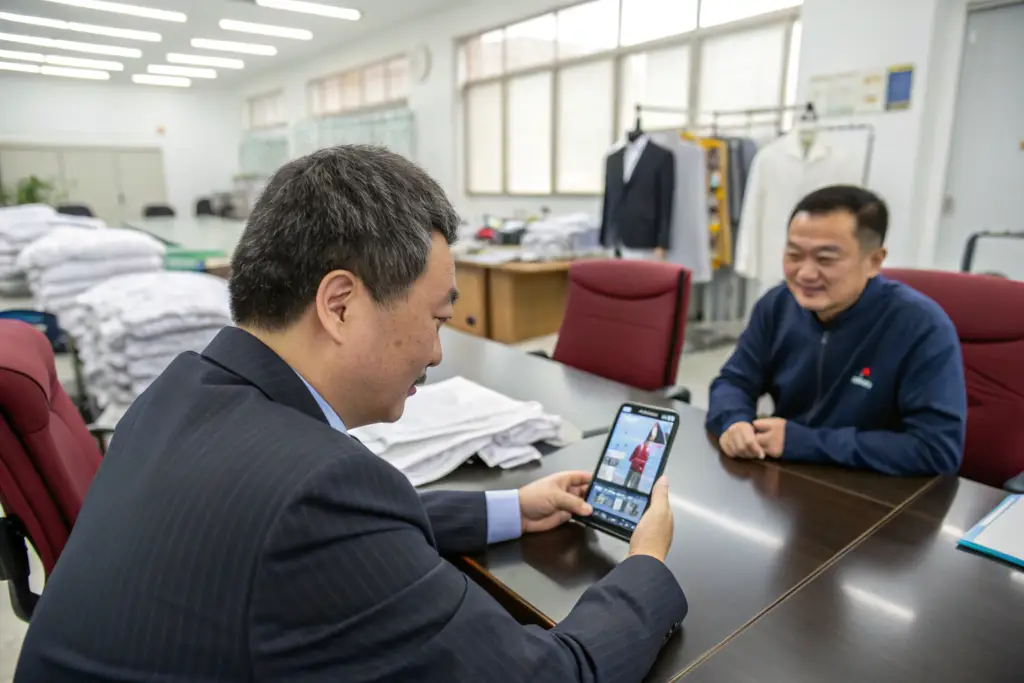
You have seen it happen. A brand launches with great product and great marketing. They grow fast. They get into major retailers. Then, seemingly out of nowhere, they implode. The narrative is usually "cash flow issues" or "supply chain disruption." But when you dig deeper, the root cause is almost always the same: a broken relationship with their factory. They treated manufacturing as a commodity to be squeezed. And when the inevitable crisis hit—a late shipment, a quality spike, a fabric shortage—the factory had no reason to go the extra mile. They just enforced the contract.
Successful CEOs heavily invest in their apparel factory relationships because they understand that the factory is not just a cost center; it is a strategic moat. In a crisis, a transactional vendor will protect their own margins. A true factory partner will absorb unexpected costs, shift their production schedule, and tap into their local network to solve your problem. This investment pays off in three critical areas: priority access to limited raw materials, flexibility during production delays, and collaborative innovation on cost-saving engineering.
I am the owner of Shanghai Fumao. I have been on the receiving end of thousands of purchase orders. I know instantly which brands view me as a partner and which view me as a wrench in a machine. And I can tell you without hesitation: the brands that invest in the relationship are the ones that survive the downturns and thrive in the upturns. Let me explain exactly why the smartest CEOs spend as much time on WeChat with their factory manager as they do on Instagram with their customers.
How Does Factory Relationship Quality Impact Your Priority in a Crisis?
Imagine it is August 20th. You have a 1,000-unit order of fleece hoodies due to ship on August 30th for a September 15th launch. The factory calls. A critical zipper shipment from the sub-vendor is delayed. They will not arrive until September 5th. Your launch is dead in the water. This is the moment of truth. This is where the quality of your relationship determines the outcome.
In a crisis, a factory will allocate scarce resources—management attention, overtime labor, and expedited freight budgets—to the customers they value most. If you are a transactional buyer who negotiated the last penny out of the deal and never visits, you go to the back of the line. If you are a partner who has shown loyalty and trust, the factory manager will personally call the zipper factory owner at 10 PM, beg for a partial shipment, and arrange for the sewing line to work through the weekend to catch up.

Why Do Factories "Ghost" Some Brands When Problems Arise?
You know the feeling. You send an email asking for a production update. No reply. You send a follow-up. A vague "checking." You send a third email. Silence. You are being "ghosted" by a vendor you have paid thousands of dollars to. It is infuriating. It is also entirely predictable based on how you have treated them.
Factories ghost brands for one primary reason: Fear of the Reaction.
If every time there is a 2-day delay, you threaten to cancel the order, demand a 20% discount, and yell at the sales rep, the factory learns to say nothing until the problem is maybe solved. They would rather deliver late with a surprise than deal with 10 days of angry emails.
I recall a specific situation. We had two clients with orders in the same dye lot for a specific shade of "Dusty Rose." The dye house had an issue with the color matching the lab dip. It was going to be a 10-day delay for both brands.
Client A (Transactional): We sent an email explaining the dye issue. Their response was a one-line email: "This is unacceptable. Fix it or we cancel." We spent the next 10 days managing their anger. We did not have time to find a creative solution. We just waited for the fabric.
Client B (Partner): We called the owner. He said, "That stinks. Is the color close? Can we get a photo?" He understood the technical issue. He asked, "Can we get 200 yards expedited for a small cut to fill backorders, and the rest follow later?" Because he was collaborative, we spent our energy calling the dye house manager, calling in a favor, and getting that 200-yard partial shipment prioritized. Client B had goods on the water while Client A was still waiting.
The investment in the relationship pays off in Transparency. A factory that trusts you will tell you about a problem before it becomes a disaster. That early warning is often the difference between a manageable delay and a missed season.
How Does a Strong Partnership Secure Fabric Allocations During Shortages?
When the cotton crop is bad, or there is a global surge in demand for a specific yarn, the textile mills ration their output. This happens more often than you think. The mill manager looks at their list of buyers. They have 5,000 yards of premium TENCEL™ Lyocell. They have orders for 8,000 yards. Who gets the fabric?
It is not always the biggest brand. It is the brand whose factory partner has the Longest Relationship with the Mill.
The textile industry in China is built on Guanxi (关系)—a network of trust and mutual obligation built over decades. When I call a mill owner I have known for 15 years, and I tell him, "This is for my key partner in New York. I need this fabric to keep their business alive," he will find a way. He might shift an order for a less-important client. He might run an extra shift on Saturday.
A CEO who only communicates via Alibaba Trade Assurance has zero access to this network. They are at the mercy of the spot market. When demand spikes, they are the first to be told "Fabric out of stock. 12 week lead time."
I saw this play out during the post-pandemic cotton surge. A client of ours, a premium basics brand, had a standing order for 10,000 yards of a specific Supima blend. The mill told us they could only supply 6,000 yards. Because of our 10-year history with that mill, we were able to negotiate the 6,000 yards instead of being cut to 3,000 yards. We kept the brand's core program alive. A new brand using a generic sourcing agent would have been completely shut out.
Can a Trusted Factory Actually Help You Reduce Your Cost Per Unit Over Time?
The rookie move is to beat the factory up on price during the first PO. You squeeze an extra $0.15 out of the CM. You feel like a genius. But you have just set the tone for an adversarial relationship. The factory will never offer you a cost-saving idea again because they know you will just demand the savings without sharing the benefit.
A trusted factory partner can reduce your cost per unit over time through "Value Engineering" suggestions that do not compromise quality. These include identifying alternative trims that are functionally identical but locally sourced, adjusting the pattern to reduce fabric consumption without changing the fit, and optimizing the production schedule to run your order during low-demand periods when labor costs are lower.

What Kind of "Value Engineering" Suggestions Do Long-Term Partners Offer?
Here are three real examples of cost savings we have passed on to long-term partners that we would never have offered to a one-time, high-pressure buyer.
1. The Zipper Tape Swap (Savings: $0.18 per unit)
A client used a specific YKK zipper with a custom puller. We noticed the zipper tape was a custom-dyed color match. This added $0.18 per zipper. We looked at the design. The zipper tape was fully covered by a flap. No one ever saw the tape color. We suggested switching to standard black tape with the same custom puller. The function was identical. The look was identical (since the tape was hidden). The client saved $0.18. A transactional buyer would never hear this suggestion because the factory makes more profit on the custom tape.
2. The Seam Allowance Reduction (Savings: 4% Fabric Cost)
A client's tech pack specified a 1/2" seam allowance on all internal seams for a woven shirt. We noticed this was a holdover from a previous factory. Industry standard for that seam type is 3/8". We asked if we could reduce it. The fit did not change. The strength did not change. But across 10,000 units, that 1/8" difference saved nearly 200 yards of fabric. We shared the savings 50/50 with the client. Their cost went down. Our margin on the fabric handling went up slightly. Win-win.
3. The Low-Season Slot (Savings: 5-8% CM)
Every factory has a slow month. For us, it is usually late February after Chinese New Year and before Spring orders kick in. We go to our key partners in December and say, "If you can give us the PO now and let us cut in late February, we can give you a 6% discount on the labor." The factory wins because we keep the workers busy during a slow time. The brand wins because they get a lower price. This requires trust and advance planning. It is impossible for a brand that places orders 3 weeks before they need them.
At Shanghai Fumao, we have a formal Value Analysis (VA) process for our top-tier partners. Before we cut a new season, we review the Bill of Materials (BOM) line by line looking for these opportunities. It takes us 2-3 hours of engineering time. We do it for partners who have shown they value our expertise, not just our low price.
Why Do Long-Term Partners Get First Access to Factory "Deadstock" Deals?
Deadstock fabric is the holy grail of cost savings for small brands. It is high-quality fabric left over from a major brand's order. The mill needs to clear it out. It sells for 30-50% of the original price.
Who gets the call when a mill has 500 yards of premium Italian-milled wool coating available?
The factory owner calls their Favorite Customer. The one who is easy to work with. The one who pays on time. The one who says "thank you" after a project.
I sent a WhatsApp message to a client in Austin last month. "Hey, we have 400 yards of a beautiful 7oz indigo twill here. Deadstock from a big order. Half price. You want first look?" He designed a limited-edition work shirt around it. He made a 70% margin on that shirt instead of his usual 50%. He sold out in a week.
He got that opportunity because he treats our team with respect. He does not nickel and dime us on sample fees. He sends a holiday card. That human connection translates directly into access to scarce, high-margin resources.
What Communication Habits Separate Valued Partners from Annoying Clients?
You might think you are being a "tough, professional buyer" by sending long, detailed emails with 15 points of criticism. From the factory floor perspective, you are being inefficient. Time is the factory's most precious resource. A client who wastes the production manager's time with unclear communication is a liability. A client who makes communication easy is an asset.
Valued partners communicate with visual specificity and contextual patience. They do not send an email saying "The fit is weird." They send a photo of the garment on a model with a circle drawn on the tight area and an arrow pointing to the measurement needed. They understand that a 12-hour time zone delay means a question asked at 4 PM Tuesday will not be answered until Wednesday morning. They batch their questions into one daily summary rather than sending 15 separate emails.
Why Do Photos with Measurements Work Better Than Written Descriptions?
Language is imprecise. "Make the sleeve a little longer" is meaningless. What is "a little"? 1 cm? 1 inch?
But a photo with a ruler laid flat against the garment is universal. It transcends language barriers. It eliminates guesswork.
We have a client in the UK who is a master of this. When he needs a fit adjustment, he does not send a tech pack revision request. He sends a Visual Correction Sheet. It is a PDF with three photos:
- Front view of the garment on a mannequin.
- Close-up of the area of concern with a tape measure showing the current measurement.
- A second close-up with a red line drawn showing the desired measurement (e.g., "+2cm here").
Our pattern maker looks at this. She understands instantly. She makes the change. The sample is correct the first time. This client gets his samples in half the time of other clients. Not because he pays more, but because he communicates better.
Conversely, we have clients who send a voice memo on WhatsApp saying, "It just feels tight across the back, you know? Can you just loosen it up a bit?" Our team has to stop what they are doing, try to interpret the vague feedback, guess at a solution, and then wait 10 days to see if they guessed right. This is a massive drain on resources. These are the clients factories avoid.
Here is a simple comparison of communication efficiency:
| Communication Method | Factory Perception | Efficiency Rating |
|---|---|---|
| Photo with Ruler & Markup | "Professional, clear, easy." | High |
| Bulleted List in WhatsApp | "Good. I can forward this directly to the line." | Medium-High |
| Long Paragraph Email | "I need 20 minutes to translate and interpret this." | Low |
| Voice Memo with Vague Terms | "I will listen to this later... maybe tomorrow." | Very Low |
Investing in the relationship means investing in the Clarity of your Input. It shows you respect the factory's time. That respect is always reciprocated with faster service and fewer mistakes.
How Does "Contextual Patience" During Chinese Holidays Pay Dividends?
We touched on this in the timeline article, but it is a cornerstone of relationship building.
You know it is Chinese New Year. The factory is closed. Everyone is with their family for the only time all year.
The Annoying Client: Sends an email on February 12th (Day 3 of CNY): "URGENT! Need update on PP sample status!" The sales rep is at home eating dumplings with their 80-year-old grandmother. They see this email. They feel stress. They resent you.
The Valued Partner: Sends a WhatsApp on February 5th: "Hey, happy new year! Enjoy the holiday. No rush on this, but when you're back, let's reconnect on the denim project." This takes 10 seconds to type. It shows you see them as a human being, not just a production unit.
I cannot overstate how important this is in Chinese business culture. Acknowledging the holiday and showing patience is a sign of Respect (尊重). When the factory reopens on February 20th, guess whose email gets answered first? The one who sent the nice holiday greeting. The one who sent the angry URGENT email? That one goes to the bottom of the pile. It is just human nature.
Does Visiting the Factory Floor Actually Change the Production Outcome?
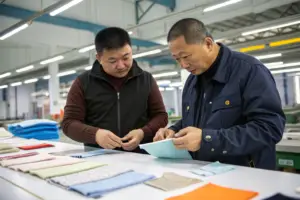
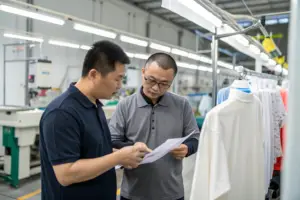
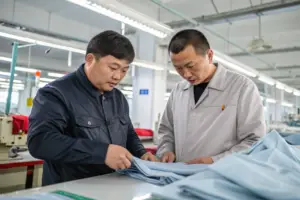
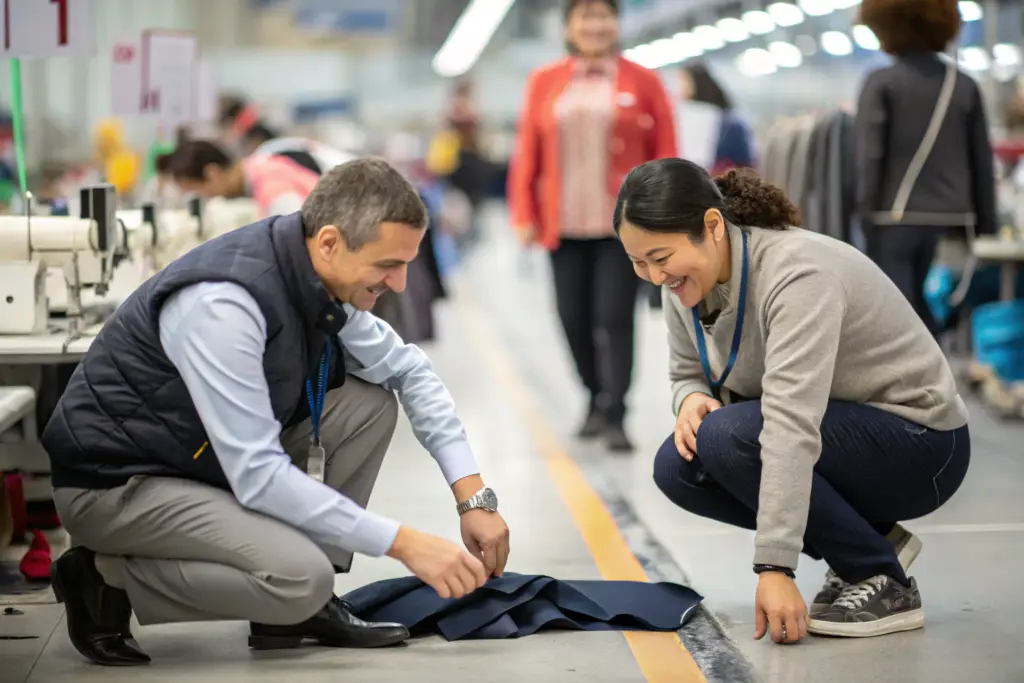
In the age of Zoom and 3D sampling, you might think the physical visit is obsolete. You are wrong. There is a level of communication and commitment that only happens when you sit in the same room, drink the same tea, and touch the same fabric. A CEO who has never visited their factory is a name on a purchase order. A CEO who has sat in the sample room and had lunch in the canteen is a Partner.
Visiting the factory floor changes the production outcome by shifting the relationship from abstract to personal. It allows you to see the "invisible" constraints—like the space limitations on the cutting table or the lighting conditions for color matching—that affect your product. It also demonstrates a level of commitment to the partnership that makes the factory team more likely to advocate for your brand internally when competing for limited resources.
What "Invisible" Factory Constraints Do You Only See in Person?
You wonder why your pattern pieces have a specific notch placement. You think it is a design choice. Then you visit the factory. You see the cutting table is 8 meters long. Your marker is 9 meters long. That means the cutter has to splice the spread in the middle. That splice is where you sometimes get a slight misalignment in the plaid.
You never understood the issue from the CAD file. You see it instantly when you watch the spreader machine hit the end of the table and have to stop.
I recall a visit from a client who designed beautiful, long maxi dresses. Their fabric consumption was high. We couldn't figure out why. They visited. They saw the cutting table length. They realized their dress panels were 55 inches long. The table was 72 inches wide. The panels had to be cut Cross-Grain instead of along the grain line to fit on the table width. This was the source of the extra consumption. We could never have explained that over email without sounding like we were making excuses. Seeing it, the client said, "Oh. Now I get it." They adjusted the design of the next season to have a seam at the waist, allowing the pieces to be cut on-grain and on the table. That visit saved them 15% on fabric for the next run.
Another invisible constraint is Lighting. You approved a lab dip in your New York office under cool fluorescent light. The factory checked it under warm inspection light. The color looked different. This is why we use a Light Box with D65 (Daylight) simulation. When you stand in the factory and see the fabric in the light box versus the ambient light, you understand the science. You stop asking for "just a touch more blue."
How Does a Handshake in Shanghai Translate to Overtime on a Friday Night?
At the end of the day, factories are run by people. And people work harder for people they like and respect.
When you fly 14 hours to visit the factory, you are making a statement: "This is important to me. You are important to me." This is especially powerful in a relationship-based culture like China.
I remember a situation where a client from Denver visited us in late October. We had a nice dinner. He met the production manager, Mr. Wang. They talked about Mr. Wang's daughter who was studying in the U.S. It was a human connection.
Two weeks later, that client had a rush order. They needed 200 units expedited for a pop-up shop. The calendar was full. Mr. Wang came to me and said, "I will stay late Friday. My team will stay. We will get these 200 units done for the Denver friend." He did not ask for overtime pay. He did it because the client had shown him respect by visiting and asking about his family.
That is not in any contract. That is not a line item on a cost sheet. That is the Relationship Dividend.
At Shanghai Fumao, our door is always open. We have a shelf in the sample room with photos of clients who have visited. The seamstresses know the brands. They say, "Oh, this is the soft blue color for the lady from California." They take more care with the stitching. They take pride in the work. That is a level of quality control that no AQL inspection can ever replicate.
Conclusion
Successful CEOs invest heavily in their apparel factory relationships because they understand a fundamental truth: the factory is the only part of the business you cannot control with a spreadsheet. You can control your marketing spend. You can control your website design. You cannot control a zipper shortage in Guangdong or a power curtailment in October. The only thing that navigates those uncontrollable events is the goodwill and trust you have built with the people on the ground.
We explored how that goodwill translates into priority access during crises. When the dye house is backed up, the partner gets the partial shipment. The transactional buyer gets the delay notice. We looked at the financial upside—how value engineering suggestions and deadstock access flow naturally to those who treat the factory as a collaborator, not a commodity. We examined the simple, human communication habits that make a client a pleasure to work with instead of a chore.
And we underscored the irreplaceable power of showing up. A handshake in Shanghai, a cup of tea in the sample room, a genuine question about the production manager's family—these are the moments that build a moat around your supply chain. They are the reason your order gets sewn with extra care and shipped with extra urgency.
In a world where fashion trends change overnight and consumer loyalty is fickle, a strong factory partnership is one of the few durable competitive advantages you can build. It is not as visible as a new ad campaign. But it is infinitely more valuable when the unexpected happens.
If you are ready to move beyond transactional sourcing and start building a partnership that protects your business and improves your product, we should talk. We value clarity, respect, and long-term collaboration.
Reach out to our Business Director, Elaine. She can start a conversation about how we work with brand partners, not just customers. Email her at elaine@fumaoclothing.com. Let's build something lasting with Shanghai Fumao.