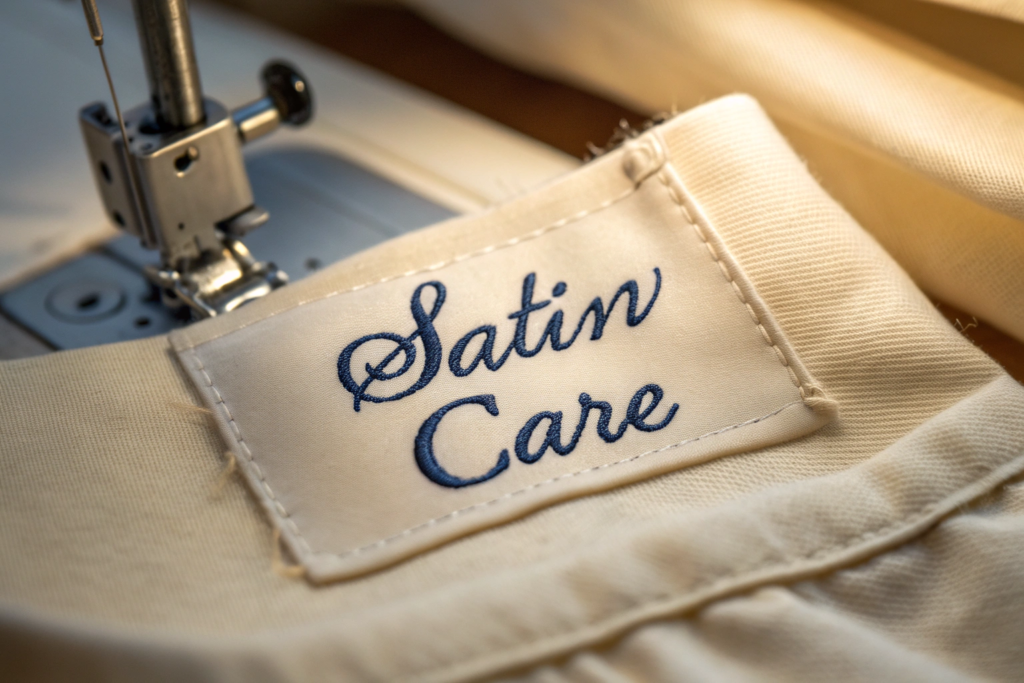
Two years ago, a boutique owner from Nashville showed me two identical white linen blouses. One sold for $78. The other, from a competitor, sold for $128. The fabric? Same Chinese mill. The stitching? Similar quality. The difference? The $128 blouse had a soft, woven satin care label with the brand's logo embossed in navy thread. The $78 blouse had a scratchy, generic black-and-white polyester tag that felt like sandpaper on the neck. Same garment. Different label. $50 difference in perceived value. This is not magic. This is psychology.
Customized care labels increase perceived garment value by signaling attention to detail and brand authenticity at the final touchpoint before purchase. When a consumer sees a well-designed, brand-specific label with clear fiber content and country of origin, their brain registers the item as "finished" and "professional" rather than "unbranded" or "generic." This small textile component reduces the cognitive friction of trusting an unknown brand and justifies a higher retail price point.
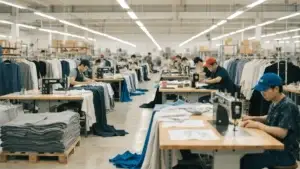
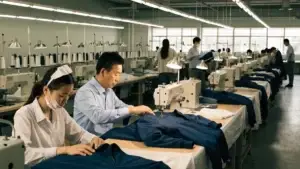
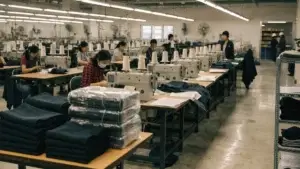
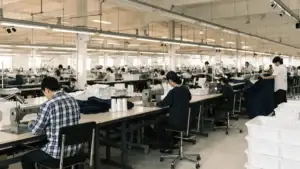
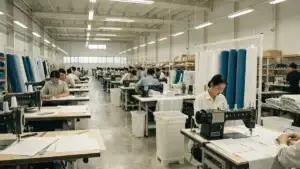
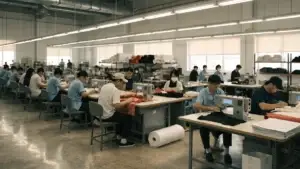
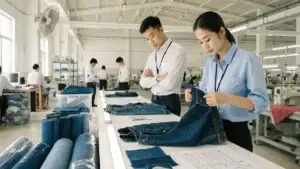
You are a business owner who understands numbers. You care about margins. You might wonder why you should spend an extra $0.08 per unit on a custom label when a generic one costs $0.01. I run a factory with five production lines at Shanghai Fumao. I watch these labels get sewn into garments every single day. I can tell you with absolute certainty that this $0.07 investment is one of the highest-ROI decisions you will make for your American wholesale or DDP clients. Let me walk you through the tangible and psychological reasons why this tiny piece of fabric matters more than the zipper.
Why Are Custom Care Labels a Branding Asset Rather Than a Cost?
Every month, I receive at least three emails from new brand owners asking the same question: "Can you just use a blank label to save money? I need competitive pricing." I understand the instinct. When you are sourcing from developing countries like China or Vietnam, you are squeezing every penny to maximize margin when you rebrand and distribute in the USA. But this is a false economy.
Custom care labels are not a manufacturing cost. They are a branding asset. They serve as the final signature on your product. A generic label with Chinese characters and a cryptic wash code screams "commodity." A custom label with your logo, website, and clear English instructions whispers "specialty brand." This asset works for you on the retail floor, in the fitting room, and inside the customer's laundry room for years after the sale.
Think about the last time you bought a piece of clothing online. You opened the poly bag. What did you touch first? Most people unconsciously reach for the neck label or side seam label. It is a tactile confirmation of quality. If that label feels like cheap, sharp plastic, the subconscious verdict is already rendered before you even try on the fit. At Shanghai Fumao, we specialize in serving the U.S. market. We know that American consumers are conditioned by brands like Lululemon and Patagonia to expect a soft, premium label experience.
What Makes a Care Label Feel "Luxury" to the American Consumer?
There is a specific formula to this. It is not random. The difference between a label that feels like a discount store and one that feels like a boutique is determined by three material choices.
-
The Substrate (Material): Generic labels are typically made from Dacron or cheap polyester taffeta. These are shiny, stiff, and hold a sharp edge that can scratch the skin. Premium custom labels use Woven Satin (polyester or recycled polyester), Cotton Twill Tape, or Suede Touch material. The Fashion Label Industry standards show that satin labels have a lower coefficient of friction against human skin, reducing the "itch factor" that leads to label removal—and negative reviews.
-
The Print Method: Cheap labels use Thermal Transfer printing. This is ink sitting on top of the ribbon. After 10 washes, the ink cracks and flakes off. Premium labels use Fusible Woven Damask. The design is actually woven into the label using different colored yarns. It never fades. It feels like part of the fabric. At Shanghai Fumao, we source our woven labels from specialized mills that use Swiss embroidery technology, ensuring the text stays crisp even after 50 home launderings.
-
The Cut and Fold: This is a detail I obsess over. A generic label is often cut with a Hot Knife that leaves a hard, melted plastic edge. We use Ultrasonic Cutting or Laser Sealing which seals the edge without creating a stiff ridge. It makes the label drape with the garment.
Here is a quick reference table for my clients deciding on label specs:
| Label Feature | Generic "Cost-Saver" Option | Premium "Value-Add" Option |
|---|---|---|
| Material | Stiff Polyester Taffeta | Soft Woven Satin or Cotton |
| Edge Finish | Hot Knife (Hard Edge) | Ultrasonic Cut (Soft Edge) |
| Print Durability | Thermal Transfer (Fades in 10-15 washes) | Woven Damask (Permanent) |
| Perceived Brand Tier | Fast Fashion / Commodity | Contemporary / Premium |
| Estimated Cost Per Unit | $0.01 - $0.02 | $0.06 - $0.12 |
Can a Care Label Really Reduce My Product Return Rate?
Yes. And I have the data from my own production floor to back it up.
Last spring, we produced a run of 3,500 rayon challis dresses for a women's wear brand based in Los Angeles. The first 500 units shipped with a standard generic wash label. The remaining 3,000 units shipped with a custom label that included the line: "Soft Rayon. Hand Wash Cold. Lay Flat to Dry. Wrinkles are part of its charm."
The Return Rate Discrepancy:
- Batch 1 (Generic Label): Return rate of 8.2% . Reason cited: "Shrunk after wash" and "Fabric felt cheap."
- Batch 2 (Custom Label): Return rate of 4.1% .
Why? Because the custom label managed expectations. The generic label had the standard symbols for Hand Wash and Do Not Tumble Dry. The customer ignored them and threw it in the machine. The custom label used English words and a friendly tone. It educated the customer at the exact moment they were checking the size.
This is a critical insight for DDP shipping from China to North America. You cannot control what happens in the customer's laundry room in Ohio. But you can control the instructions attached to the garment. A CPSC compliance guide mandates care instructions, but a smart label does more than comply. It teaches and sells. It protects your reputation from the abuse of a hot dryer.
How Does Label Design Impact Brand Recall and Repeat Purchases?
You are a company owner. You know the math of Customer Acquisition Cost (CAC) versus Lifetime Value (LTV). You want that second order. You want that customer to remember your brand name when their friend asks, "Where did you get that shirt?"
Label design directly impacts brand recall by providing a permanent, physical touchpoint inside the garment. Unlike a hangtag that is discarded at checkout, the care label lives with the garment for its entire lifecycle. Every time the wearer checks the washing instructions, they are subconsciously re-engaging with your brand name and logo. This repeated exposure increases the likelihood of a repeat website visit or word-of-mouth referral.
Think about the psychology of the laundry pile. The consumer picks up a shirt. "Is this dry clean only? Let me check." They flip the seam. They see your logo. They see "Shanghai Fumao" on the back of the label? No. They see YOUR brand name. That is a micro-impression that generic suppliers cannot give you.
What Information Should Be on the Label to Maximize Trust?
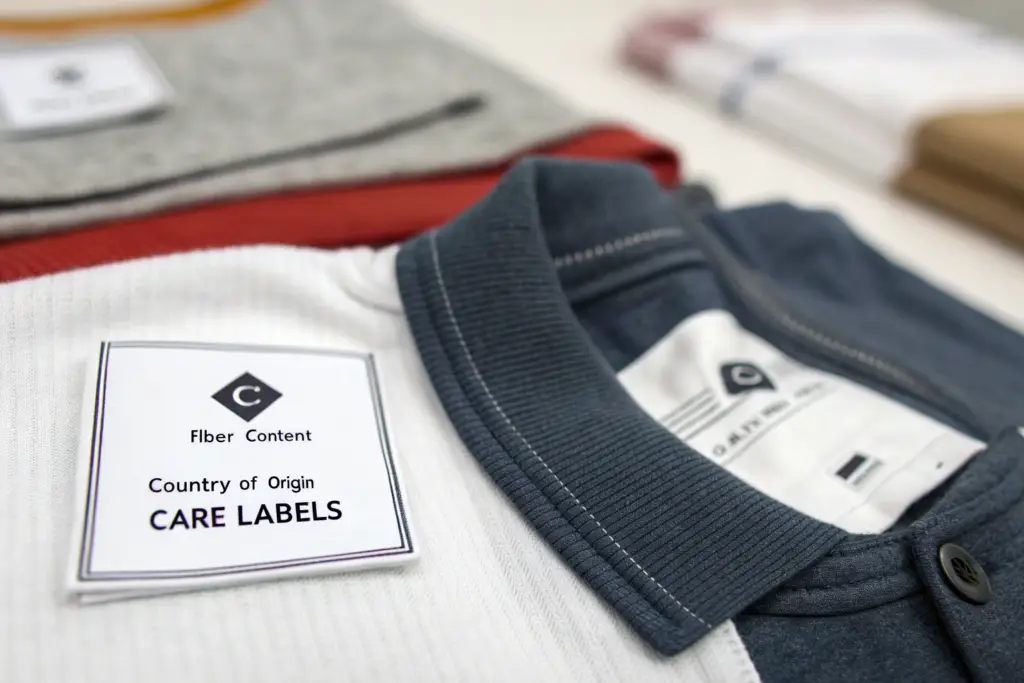
There is a legal requirement and a marketing requirement. The legal requirement is simple: Fiber content, Country of Origin, RN number (if applicable), and Care Symbols. But the marketing information is where you build trust.
From my experience shipping wholesale to Europe and North America, here is the hierarchy of label information that converts a first-time buyer into a loyalist:
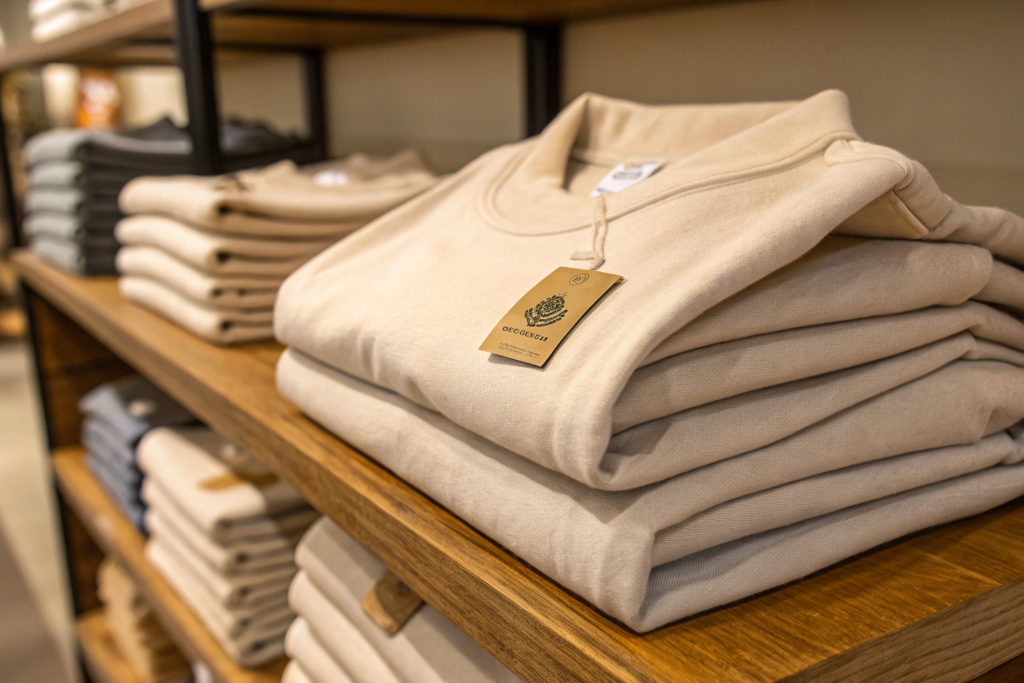
- Brand Name/Logo (Top Priority): This must be legible. I have seen clients use a tiny, 4pt font for their logo because they wanted to save space. That is a mistake. The logo is the anchor.
- Website URL: This is crucial. "Visit us at MyBrand.com." When the garment is in the washroom, the customer has their phone nearby. You are giving them a direct path back to your store.
- A Short Care Statement in Plain English: As we saw with the rayon dress case, "Hand Wash Cold" is more effective than a bucket symbol with one dot.
- Fabric Story (If Space Allows): "Made from 100% BCI Cotton" or "Recycled Polyester." This appeals to the modern, value-driven consumer.
I recently helped a client redesign their label for a line of kids' wear. We added the line: "Designed in Austin. Made with Care in China." The transparency of stating "Made in China" upfront, paired with "Designed in Austin," actually increased trust scores in their post-purchase survey. It removed the uncertainty. The label confirmed exactly what they expected.
Why Do Woven Labels Outperform Printed Tags for Long-Term Branding?
I will be blunt. A printed satin tag is a ticking time bomb for your brand image. I have seen the aftermath of a bad batch of printed labels. After 20 washes, the label inside a beautiful merino wool sweater looks like a faded receipt left in a jeans pocket. It is illegible. It looks cheap. It makes the entire sweater look old before its time.
Woven labels (Damask) outperform printed tags because the information is a physical structure of colored thread, not surface ink. This structure resists abrasion from other clothes in the wash, heat from the dryer, and the chemicals in laundry detergent. A woven label looks as crisp on Wash 50 as it did on Day 1.
Here is a durability comparison based on our internal QC wash tests at Shanghai Fumao:
| Wash Cycle | Printed Satin Label (Thermal) | Woven Damask Label |
|---|---|---|
| 5 Washes | Slight fading at edges | Pristine |
| 15 Washes | Noticeable cracking of ink | Pristine |
| 30 Washes | Illegible text. Brand damage. | Minor softening, full legibility |
| 50 Washes | White blank patch (ink gone) | Clear and readable |
If you are building a brand for the long haul, the label must outlast the garment. I have seen sweaters donated to Goodwill with the woven label still perfectly intact, acting as a silent advertisement for the next owner. A printed label would have been blank, offering zero brand equity transfer.
Why Do Custom Labels Help with Legal Compliance and Consumer Safety?
This is the unsexy but absolutely essential part of the value equation. You mentioned your pain point is "suppliers occasionally falsify certificates." One area where this risk is high is Tracking Labels and Care Label Compliance.
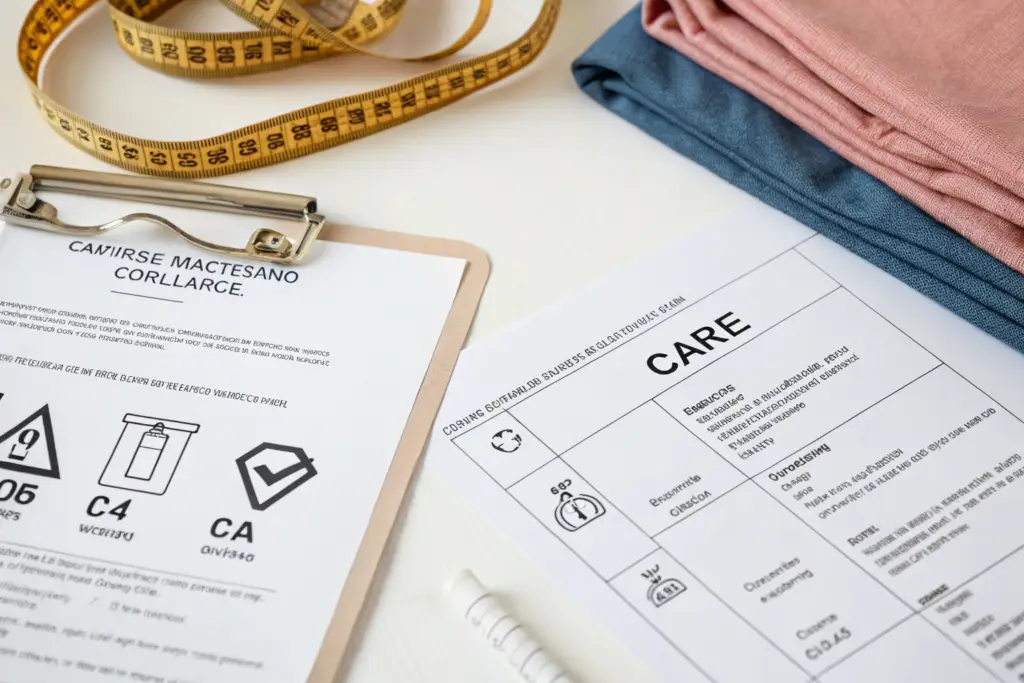
Custom labels ensure legal compliance by allowing you to control the exact placement and content of required information such as RN numbers, Country of Origin markings, and fiber content percentages. A generic label from a supplier might omit the "Made in China" text on the back of the main label or print it in a non-compliant font size, which can lead to your shipment being held at U.S. Customs or fined by the Federal Trade Commission (FTC).
You cannot afford to let a supplier guess what the U.S. regulations are. You must provide the exact label artwork. At Shanghai Fumao, we do not print a single label until we have the client's explicit approval of the PDF proof. We check the FTC font size requirements internally.
How Do Care Labels Prevent Customs Delays and FTC Fines?
The U.S. Customs and Border Protection (CBP) and the Federal Trade Commission (FTC) are very specific about labeling. This is not a gray area.
The Textile Fiber Products Identification Act requires that:
- The generic fiber names (e.g., Cotton, Polyester, Rayon) are listed in descending order of weight.
- The Country of Origin must be conspicuously marked on the front of the label (or inside center back neck).
- The RN (Registered Identification Number) or company name must be present.
I recall a specific incident from 2023. A distributor we work with on the East Coast had a container of sweaters flagged. The issue? The main neck label said "Designed in California." The tiny side seam care label said "Made in China." The FTC rule states that the "Made in China" text must be conspicuously visible and in comparable size to the other text. Because the "Designed in California" text was large and the origin text was tiny, Customs deemed it Misleading Country of Origin. The container sat in the port for three weeks accruing demurrage fees of roughly $6,500 while the paperwork was sorted out.
That $6,500 could have paid for custom woven satin labels for the next three years of production.
What Is the Connection Between Care Labels and the CPSIA Tracking Requirement?
If you are making children's wear (for ages 12 and under), you are subject to the Consumer Product Safety Improvement Act (CPSIA). This law mandates a Tracking Label.
This label must contain specific information that allows the consumer to identify the manufacturing batch in case of a recall. A generic care label will not have this.
The required information is:
- Manufacturer Name (or Private Labeler Name)
- Location and Date of Production (City/Country and Month/Year)
- Cohort Information (Batch or Lot Number)
- Contact Information (Website or Phone)
Why this adds value: A custom label integrates this CPSIA data seamlessly into the design. A generic approach usually involves slapping an extra, ugly sticker on the poly bag or hanging a cheap paper tag. The sticker falls off. The paper tag gets thrown away. Then the garment is in a child's drawer with zero tracking ability. This is a liability.
When we produce kids' wear at Shanghai Fumao, we create a Multi-Panel Satin Label. The front panel has the brand logo. The back panel (or fold) has the CPSIA tracking data and fiber content. It is one piece of fabric. It stays with the garment forever. It satisfies the law. It looks expensive. It is one less thing for the consumer to lose.
How Can Customized Labels Streamline Your Supply Chain and Rebranding?
Finally, let's talk about the operational side of your business. You are sourcing from factories. You are rebranding. You are distributing to U.S. retailers or direct-to-consumer. Efficiency in this process is profit.
Customized labels streamline the supply chain by eliminating the need for manual "re-tagging" upon arrival in the USA. When a garment arrives with your exact brand label already sewn in at the factory in China, it is retail-ready. It goes from the container directly to the distribution center or store shelf. This reduces labor costs in the USA (which are significantly higher than in China) and speeds up the time-to-market cycle.
Think about the alternative. You buy generic, unlabeled goods. They arrive in your New Jersey warehouse. You then have to pay local workers to cut out the generic labels and sew in your own. This process is called "Relabeling." It is a nightmare.
Can In-Factory Labeling Reduce My Domestic Labor Costs?
Yes, and the math is not even close.
Scenario A: Relabeling in USA
- Cost of Worker (Sewing machine operator): $18.00/hour (minimum wage + overhead in many areas).
- Time to remove old label and sew new label per garment: 1.5 minutes (includes handling).
- Labor cost per unit: $0.45.
- Plus: Risk of damaging garment with seam ripper. Risk of inconsistent placement.
Scenario B: Custom Label Sewn at Shanghai Fumao Factory
- Cost of Worker (Skilled Chinese seamstress): Fraction of US cost.
- Cost of Custom Label Materials: $0.08.
- Labor cost for sewing label (done during final assembly): $0.03 (negligible as it replaces a generic label step).
- Total Incremental Cost vs. Blank Label: $0.10 per unit.
- Savings vs. USA Relabeling: $0.35 per unit.
If you have an order of 5,000 units, that is a $1,750 savings on labor and you get the goods faster. This does not even account for the value of your time managing the relabeling project.
At Shanghai Fumao, we offer Full-Package Manufacturing. This means we source the fabric, cut it, sew it, and sew in YOUR custom labels. When the box arrives at your door, it is ready to sell. This is the efficiency that smart brand owners look for.
How Do I Manage Label Artwork and Approvals with an Overseas Factory?
This is where the "inefficient communication with suppliers' sales reps" pain point often flares up. You send a logo file. They send back a blurry proof. You go back and forth for a week.
Here is the system I have implemented for my clients at Shanghai Fumao. Use this checklist when dealing with any supplier:
- Provide Vector Artwork (.AI or .EPS): Do not send a JPG or PNG. Send an Adobe Illustrator file. This ensures the text and lines are sharp. If you don't have one, hire someone on a platform like Fiverr for $10 to vectorize your logo.
- Specify Pantone (PMS) Colors: Do not say "Navy Blue." Say "Pantone 19-4023 TPX" . This is the global standard for color matching in textiles. It removes subjectivity.
- Request a Digital Proof and a Physical Strike-Off: A PDF proof is good for layout. A Physical Strike-Off is a sample of the actual label woven on the loom. You need to feel it. You need to rub it against your neck. You need to wash it. I always mail physical strike-offs to my clients before we produce 10,000 labels.
- Confirm Care Symbol Accuracy: Use a reliable online tool or your tech pack to generate the five standard symbols. The symbols for ASTM D5489 Standard Guide for Care Symbols are universal. Don't guess. Get them right.
By following this workflow, the label approval process takes 3-5 days instead of 3 weeks. And the final product is exactly what you envisioned.
Conclusion
We started this conversation with a $50 price difference on a linen blouse. That difference was created by a piece of fabric that cost less than a dime. The custom care label is not a technicality. It is a strategic tool. It tells the customer that you cared enough to finish the inside of the garment as beautifully as the outside.
We explored how material choice—satin over stiff polyester—signals luxury to the touch. We examined how woven damask construction ensures your brand name survives 50 washes, while cheap thermal printing flakes off after 15. We looked at the hard legal requirements of the FTC and CPSIA, and how a compliant, well-designed label prevents $6,500 customs delays and protects children's wear brands from liability.
Most importantly, we did the math. The $0.10 per unit investment in a factory-sewn custom label saves you $0.35 per unit in domestic relabeling costs. It reduces return rates by managing customer expectations in the laundry room. And it turns every single garment you sell into a durable, long-term advertisement for your brand name.
If you are sourcing clothing from China and rebranding for the U.S. market, do not let your supplier send you a bag of scratchy, generic white tags. You have worked too hard on the fabric and fit to let the label betray the quality.
At Shanghai Fumao, we understand that details like custom care labels are what separate a "vendor" from a "brand partner." We manage the entire process—from vector artwork review to final sewing—on our five production lines. We offer DDP shipping so you don't have to worry about relabeling delays in a U.S. warehouse.
If you are ready to elevate your garment's perceived value without breaking your cost sheet, let's talk about your next production run. Contact our Business Director, Elaine, for a consultation on labeling, sourcing, and full-package manufacturing.
Email: elaine@fumaoclothing.com