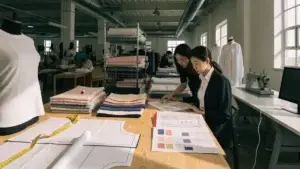
Last month, I received a frantic call from a brand owner in Texas. He had just rejected a 20,000-piece shipment because the fabric felt "off" compared to the pre-production sample. He trusted his gut. He didn't trust the 4-point inspection report from the factory because he simply didn't know how to read the numbers. He ended up paying a penalty to cancel the order, only to find out later the fabric was actually within industry tolerance. This scenario happens more often than you think. You are a confident business owner, like Ron. You've negotiated the price down to the penny. You've secured the logistics route. But when the PDF titled "Fabric Inspection Report" lands in your inbox, you might be scrolling straight to the bottom line—"Pass" or "Fail"—and missing the data that actually predicts your return rate and customer satisfaction.
You should never rely solely on a supplier's verbal "quality is good" assurance. A standard fabric inspection report provides objective, measurable data points—specifically yardage inspected, defect point totals per 100 square yards, and the nature of those defects. By understanding the ASTM D5430 (4-Point System) threshold and cross-referencing the listed defect codes with your brand's tolerance for visual imperfection, you can predict exactly how the garment will perform on the hanger and after the first wash before you spend a dollar on cutting and sewing.
If you are sourcing clothing from developing countries like China or Vietnam, you know the anxiety of a container halfway across the Pacific while you're holding a swatch that looks perfect. The gap between that little swatch and 10,000 yards of bulk fabric is where margin erosion hides. I want to walk you through this report the way I walk my own clients through it at Shanghai Fumao. I'm not a third-party lab technician. I'm a factory owner who has seen how misreading these documents costs brands money. Let's break down the sections so you can take control of the conversation, even if you lack the "aesthetics" gene.
What Is a Fabric Inspection Report and Why Does It Matter?
You cannot touch the fabric from 7,000 miles away. That is the fundamental problem. The inspection report is your eyes and hands on the ground. But I've noticed that many buyers treat this report like a receipt—something to file away—rather than a diagnostic tool. The pain point you mentioned about "inefficient communication" often starts right here. If you don't understand the report, you ask the sales rep for an explanation. The rep, who is often not a technician, gives you a vague answer. Time zones stretch the exchange over three days. Frustration builds.
A fabric inspection report is a standardized document, typically based on the ASTM D5430-07(2011) standard, which quantifies fabric quality by assigning penalty points to defects found during a visual examination of the fabric roll. It matters because it is the only objective, pre-production evidence you have that the bulk fabric matches the approved quality level. Without interpreting this correctly, you are essentially gambling that the supplier's definition of "First Quality" matches your brand's definition.
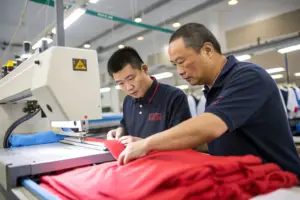
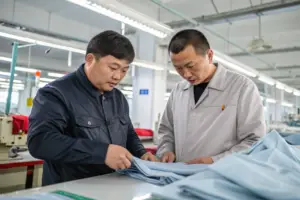
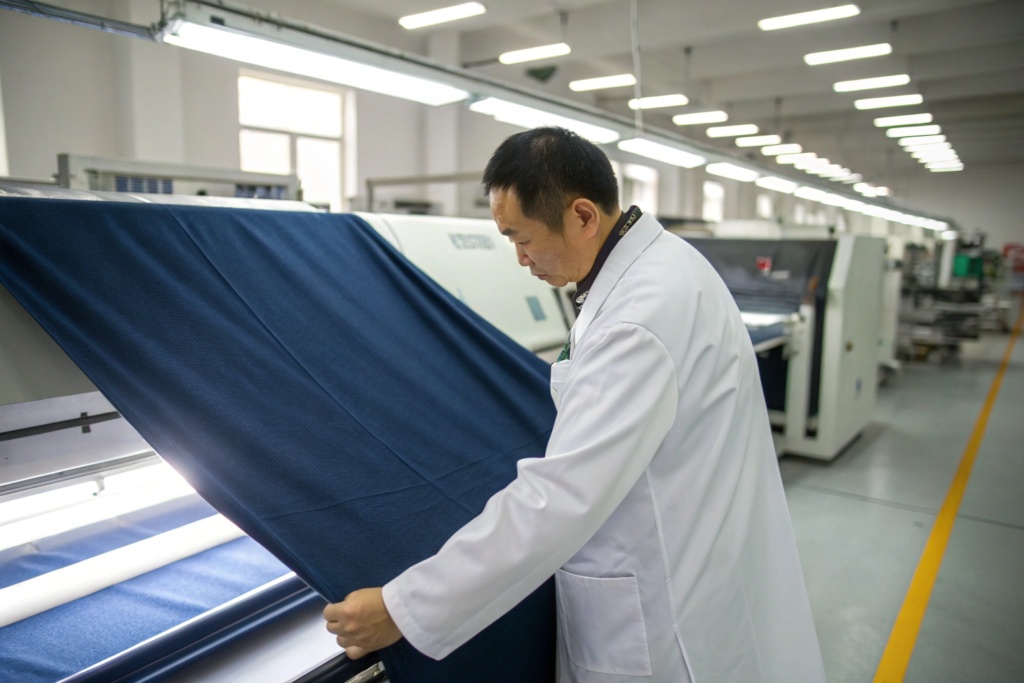
But here is the critical nuance. The report is not just a pass/fail grade. It is a map of the roll. In our factory at Shanghai Fumao, we run five production lines, and we inspect 100% of the fabric before it hits the cutting table, not just 10%. Why? Because I want to know where the defect is, not just if there is a defect. Let's dive into the specific metrics you should be scanning first.
What Does the 4-Point System Score Actually Mean for My Order?
The 4-Point System is the lingua franca of the global textile trade. It was established by the American Association of Textile Chemists and Colorists (AATCC) and is the most common method used when you import from China or Vietnam. The system assigns penalty points based on the length of the defect.
Here is the quick reference table I keep taped to my production manager's desk:
| Defect Length (Inches) | Points Assigned |
|---|---|
| 0 to 3 inches | 1 Point |
| Over 3 to 6 inches | 2 Points |
| Over 6 to 9 inches | 3 Points |
| Over 9 inches | 4 Points |
But here is where the confusion kills deals. The total points are meaningless without context. You must look at the "Points per 100 Square Yards" calculation.
For example, last fall, we ran a batch of organic cotton jersey for a children's wear brand in California. The report showed 42 total penalty points on a 500-yard roll. That number, 42, sounds terrifying if you don't know the math. But let's calculate it:
- Fabric Width: 60 inches (5 feet)
- Total Yardage: 500 yards
- Total Square Yards: (5 ft x 500 yards) / 3 ft = 833.33 Sq Yds
- Points per 100 Sq Yds: (42 / 833.33) * 100 = 5.04 Points
The buyer initially panicked, expecting to reject the lot. However, under the widely accepted ASTM D5430 standard, most US brands consider 40 points per 100 square yards as the absolute maximum failure threshold for knit fabrics. A score of 5.04 is actually excellent—it falls within the "First Quality" range. I explained the math. The panic subsided. The order shipped on time.
You need to understand this math because it prevents you from making a $50,000 mistake based on a feeling.
Why Are Defect Classifications More Important Than the Total Score?
A total score of 20 points per 100 sq yards is acceptable for most knits. But what if 15 of those points came from holes? That's a different story. The total score can hide a catastrophic distribution of defects. You need to look at the type of defects listed in the remarks section or the "Defect Map."
Typically, the report will list codes. Here is a common breakdown based on the Textile Industry Affairs guidelines:
| Defect Category | Common Examples | Impact on Garment |
|---|---|---|
| Critical (Major) | Holes, Oil Stains, Missing Yarn, Barre | Reject Cut Panel. Will cause immediate returns. |
| Major | Slubs, Knots, Needle Lines, Bowing > 3% | Visible on hanger. Affects appearance and sewability. |
| Minor | Slight color smear, Small fly waste, Lint | Not visible at arm's length. Acceptable if isolated. |
I remember a specific issue with a woven shirting order for a European client. The total score was 12 per 100 sq yds—well within tolerance. But I noticed the defect map showed Continuous Bowing across the entire width. Bowing is a distortion where filling yarns dip in an arc. If you cut pattern pieces on bowed fabric, the side seams will twist around the leg when washed. The total score didn't flag this as a failure because it wasn't a "point" defect; it was a fabric condition noted in the comments.
At Shanghai Fumao, we train our inspectors to flag bow and skew separately because our clients sell DDP (Delivered Duty Paid) and cannot afford twisted seams arriving in North America. When you review your report, do not just scan the pass box. Read the inspector's handwritten notes. Look for words like "Crease," "Bowing," "Shade Variation Selvedge-to-Selvedge," or "Reed Marks." These are the hidden profit-killers that the 4-point system sometimes glosses over but your sewing floor will definitely find.
How to Spot Red Flags in a Supplier's Fabric Report?
Trust, but verify. That's the mantra for sourcing from developing countries. You mentioned a fear: "Suppliers occasionally falsify certificates." While outright photoshopping a PDF is rare with reputable partners, selective reporting or "soft" grading is more common. The sales rep might pressure the QC department to downgrade a Major defect to a Minor one just to hit the shipment deadline. You need to know where to look for the fingerprints of this pressure.
The most common red flags in a supplier's fabric report include: An unrealistic 0-point score on a full container load, the absence of any shade variation notation despite a large batch size, and a discrepancy between the reported inspection yardage and the actual shipped yardage. If the report looks too clean, it likely hasn't been read properly by the supplier themselves.
Let me give you a real, tangible example from our factory floor. Three months ago, we rejected 2,000 yards of nylon spandex for an activewear brand. The mill's own report said 8 points per 100 sq yds. Our incoming QC did a re-inspection. We found 38 points per 100 sq yds and, crucially, Oil Stains on the inner layers. The mill had only inspected the outer 100 yards of the roll. The inside was a mess.
This is why you, as the buyer, need to look for specific triggers in the data.
Are "0 Points" Fabric Rolls a Sign of Perfect Quality or Negligence?
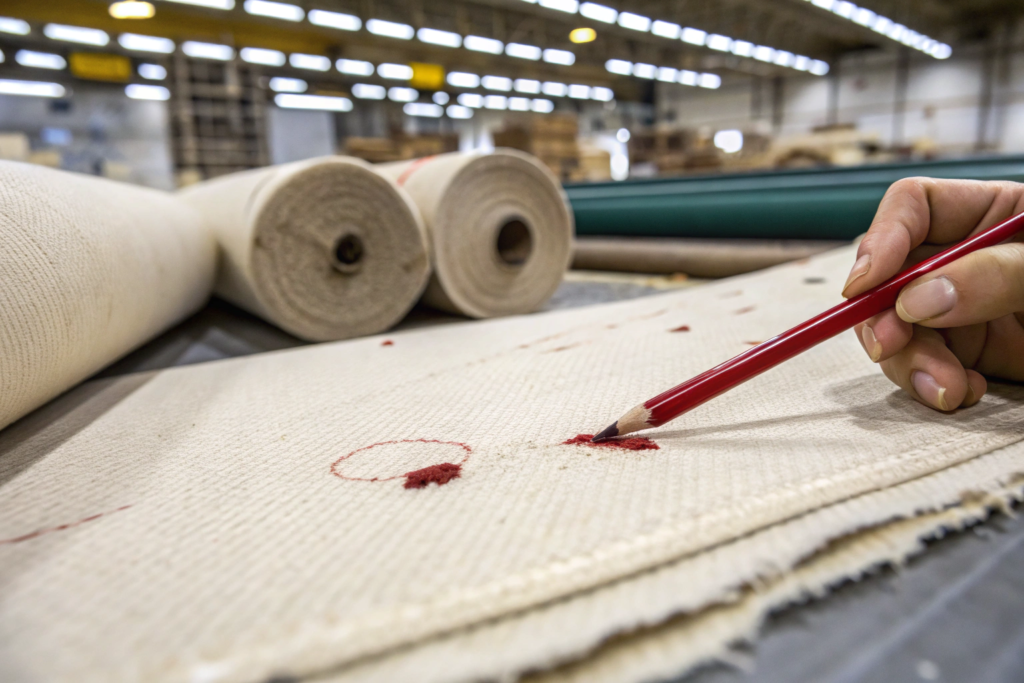
This is a trick question that trips up many new brand owners. If you see a report for a 1,000-yard roll of solid black fabric and the defect points total is zero (0) , your first reaction might be: "Great! That's the kind of quality I want!" My first reaction, after 15 years in this business, is: "Did they even turn the light on?"
Fabric is an imperfect organic (or synthetic) medium. It accumulates dust from the air. It has knots where yarns were pieced together. A "0" score on a long roll is statistically improbable in a real production environment. Here are two possible explanations for a "0" score:
- The Speed Trap: The inspector ran the fabric over the inspection machine at a speed faster than the recommended 15-20 yards per minute. At high speed, the human eye cannot distinguish a 3-inch slub from the weave pattern. It becomes a blur.
- Lighting Failure: The Standard Practice for Visual Inspection of Textiles specifies lighting conditions (ASTM D1729). If the inspection table is in a dim corner of the warehouse, defects disappear.
- Uncalibrated Tension: If the fabric is not pulled taut on the inspection frame, wrinkles form. Wrinkles hide holes.
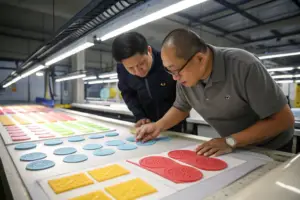
Concrete Advice: If you receive a report with extremely low scores (under 5 points per 100 sq yds) across a large shipment, I strongly recommend you request a "Mock Cut" inspection addendum. This is a service we provide at Shanghai Fumao where we unroll 10-20 yards, lay it flat on a cutting table with no tension, and walk around it for 5 minutes. That's how we found the nylon spandex oil stains the mill missed. The defect was visible only when the fabric "relaxed."
Why Does "Shade Variation" Matter Even If the Lab Dip Was Approved?
You approved the lab dip six weeks ago. The swatch is in a binder on your desk. It's perfect. But the bulk fabric report mentions "Shade Variation: Within Commercial Tolerance." Should you worry?
Yes. Because "Commercial Tolerance" is a gray area where suppliers hide. The AATCC Evaluation Procedure 1 is the standard for gray scale staining, but visual shade is often subjective.
Here is a critical thinking exercise: Roll to Roll Shading. If you are making a fitted dress, a slight shade difference between the front panel (cut from Roll A) and the back panel (cut from Roll B) will only be visible under department store lighting when the customer tries it on. That's a return waiting to happen.
In our production facility in China, we use a Light Booth with D65 (Artificial Daylight) and TL84 (Store Light) . We don't just look at the fabric under the yellow factory lights. I learned this lesson the hard way about six years ago with a burgundy viscose order. It matched perfectly under our high-bay lights. When it arrived in the US retailer's stockroom with fluorescent lighting, the selvedge looked a full shade darker than the center. The entire shipment was discounted.
When you look at the report, if there is a checkmark next to "Shade Continuity," ask for the *Lab Delta E Value. This is a digital reading. A Delta E of < 1.0 is imperceptible to the human eye. A Delta E of > 2.0** is where the problems begin. Don't accept "OK." Ask for the number.
What Is the Relationship Between Fabric Testing Reports and Inspection Reports?
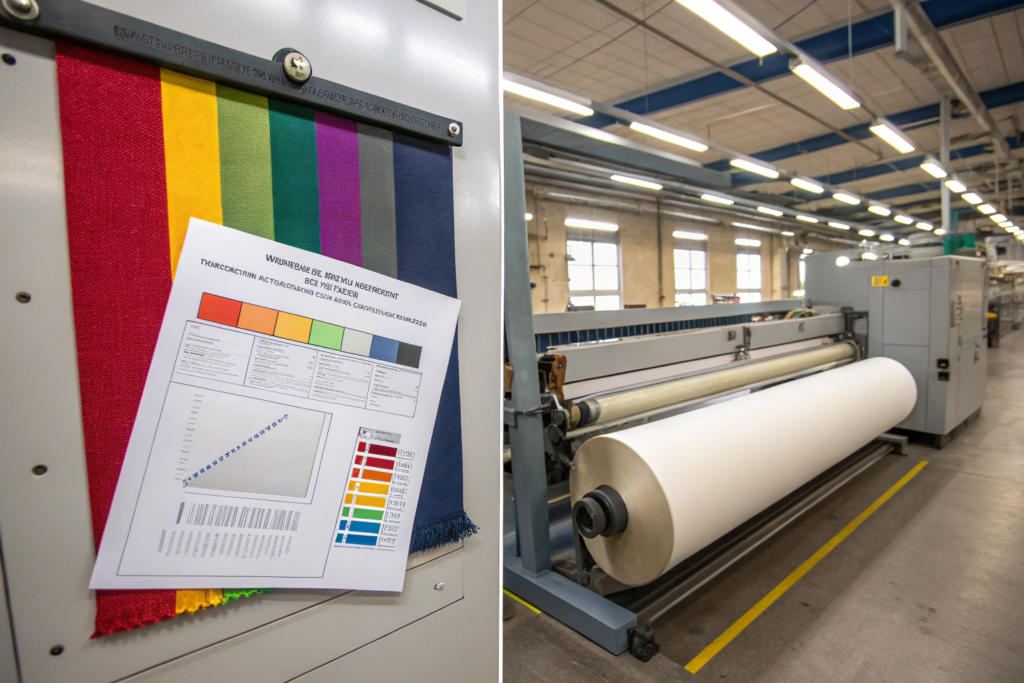
Many of my clients confuse the Fabric Inspection Report (the 4-point system visual check we just discussed) with the Fabric Testing Report (lab analysis). They serve two different purposes, but they are married in the supply chain. If you ignore one, the other becomes worthless.
The Fabric Testing Report confirms the fabric's physical and chemical properties meet legal and brand standards for safety and durability. The Fabric Inspection Report confirms the visual appearance of the bulk yardage. You cannot have one without the other. A fabric can pass the lab tests for fiber content but fail the visual inspection due to barre dyeing defects.
Think of it like buying a used car. The Inspection Report is you walking around the bodywork looking for dents and scratches. The Testing Report is the mechanic checking the compression in the engine cylinders and the brake pad thickness. You need both to avoid a lemon.
How Do I Verify the Authenticity of a Mill Test Certificate?
This is where the "falsify certificates" fear you mentioned becomes real. I have seen it happen—not with the big, publicly traded mills, but with smaller tier-2 and tier-3 subcontractors. They might have a genuine certificate for one batch and reuse the PDF for the next three batches.
Here is a specific, actionable checklist I use for my own supply chain at Shanghai Fumao. I share this with any client who asks about verification:
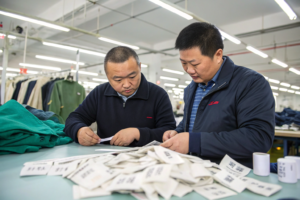
- Cross-Check the Lot Number: The mill test report (often from SGS or Intertek or Bureau Veritas) will have a Report Number and a Sample ID. You need to cross-reference that Sample ID with the Lot Number printed on the sticker on the fabric roll itself. If the sales rep can't provide a photo of the roll sticker matching the report number within 24 hours, that's a red flag.
- Check the Lab's Online Verification Portal: Major labs like SGS offer an online certificate validation tool. You can type in the report number and see if the details match what the supplier sent you. I always encourage my buyers to do this independently. It takes 30 seconds.
- Look for "Subcontractor" Notes: Some reports say "Sample Submitted by Client." That means the supplier could have sent a specially prepared, perfect piece of greige fabric to the lab, not a random cut from your bulk order.
A Real-World Cost Analysis:
Let's say you skip this verification on a polyester fleece jacket order of 5,000 units for the US market. You assume the fabric is compliant with CPSC flammability standards. The goods arrive. Customs does a spot check. It fails flammability because the mill substituted a cheaper, untreated polyester yarn.
- Cost of Third-Party Re-Test (before shipping): $300
- Cost of Rework/Disposal/Delayed Sales (after shipping): $45,000+
The math is brutal. The certificate is not a formality. It is an insurance policy. And verifying it is your job.
What Is the Difference Between Inline Inspection and Final Inspection Data?
You might receive two reports from a supplier: one marked "Inline" and one marked "Final." Understanding the gap between these two numbers is how you measure the supplier's management capability.
Inline Inspection happens during production. Maybe 20% of the way through cutting and sewing.
Final Inspection happens when 100% of goods are packed.
If the Final Inspection defect rate is higher than the Inline Inspection defect rate, that indicates a broken process. Why? Because inline inspection is supposed to catch issues so they can be corrected in the remaining 80% of production. If quality got worse at the end, it means the factory ignored the inline warnings to rush the shipment.
Here is a simple table that illustrates the interpretation:
| Scenario | Inline Result | Final Result | Interpretation |
|---|---|---|---|
| Good Control | 15 Minor Defects | 2 Minor Defects | Corrective action taken. Factory fixed the issue. |
| Stable Process | 8 Minor Defects | 10 Minor Defects | Consistent variance. Acceptable if within AQL. |
| Rush Job | 5 Minor Defects | 25 Major Defects | Chaos. Factory hid problems to meet deadline. High Risk. |
At Shanghai Fumao, we share inline data proactively. If I see a spike in Needle Cuts on Day 1 of sewing, we stop the line, change the needle, and the Final Report shows near zero. That transparency is what builds trust. When you ask for a report, specifically ask: "Can I see the inline checkpoints from Day 1 production?" If they can't provide it, they aren't managing quality. They are only counting defects at the end.
How to Use Fabric Reports to Negotiate Better Terms or Prevent Chargebacks?
Now we get to the part where this data puts money back in your pocket. You are a brand owner. You understand the sales cycle. You know that a shipment arriving October 15th for Holiday is worth full margin, but the same shipment arriving November 25th is worth 50% off clearance pricing.
Fabric inspection reports provide the objective leverage needed to negotiate discounts on sub-standard goods before they ship, or to defend against chargebacks when the goods arrive. Instead of a subjective argument about "the handfeel is wrong," you can say, "The inspection shows 65 points per 100 sq yds against the agreed 40. This requires a 10% discount or rework."
This is how professional sourcing works. It removes the emotion and relies on the standard.
Can an Inspection Report Justify a Price Reduction on a Defective Lot?
Yes. And I have been on both sides of this negotiation. If I ship fabric that scores 45 points per 100 sq yds when the contract said max 40, I am in breach of the Purchase Order Terms and Conditions. The buyer has every right to demand a discount.
But here is the nuance that saves the relationship: The Usability Percentage.
Don't just ask for a 10% discount because you're angry. Calculate the Yield Loss.
Case Study: Fall 2024 Menswear Shirt Order
A buyer we work with in the Midwest received a report showing Repeating Slubs every 15 yards on a 60-inch wide cotton shirting. Total score was 48 points.
- Without Report Analysis: Buyer says "This is ugly. Give me 15% off."
- With Report Analysis: We calculated that the slubs meant the cutting table had to shift the marker 4 inches per ply to avoid placing a slub on the collar. This resulted in 5.2% extra fabric consumption.
- Outcome: We agreed to a 5% credit on the fabric cost portion of the invoice. This covered the client's extra fabric usage. The supplier saved face by providing a logical, data-backed discount rather than an arbitrary penalty. The relationship continued.
This is the difference between a novice buyer and a pro. The pro uses the report to calculate the financial impact of the defect, not just the cosmetic appearance.
How Do I Use This Data to Ensure On-Time Delivery (Avoiding Missed Seasons)?
Your pain point about "delayed shipments leading to missed selling seasons" is directly tied to fabric inspection timing. If you wait until the garments are sewn and packed to inspect the fabric, you are six to eight weeks too late.
The most important line on the report for preventing delays is the Inspection Date.
Let's look at a Critical Path Timeline that I recommend to all my DDP clients shipping to North America:
| Milestone | Target Date | Action Based on Report |
|---|---|---|
| Fabric Arrival at Factory | Day 1 | Immediate 100% Inspection Begins. |
| Inspection Report Issued | Day 3 | Review Score & Defect Map. Go/No-Go Decision. |
| Fabric Cutting | Day 5 | If No-Go: Return to Mill. Result: 5 Days Delay. |
| Sewing Completion | Day 35 | If No-Go found here (because inspection was skipped): Result: 40 Days Delay. |
By inspecting fabric on Day 1, you limit the maximum delay to about a week (time to replace the roll). This is why we, at Shanghai Fumao, run 24-hour fabric inspection shifts. We want to find the bad roll before the cutting room even clocks in.
A Cautionary Tale:
A children's wear brand using a different factory skipped the incoming fabric check to "save time." They cut 10,000 units. They sewed 10,000 units. During final pressing, they found Yellowing on the fold lines of every single garment. The fabric had been stored incorrectly by the mill. The shipment was cancelled for that season. The cost of the lost sales was estimated at $220,000. The cost of the skipped inspection report? Zero. But the price paid was astronomical.
Use the report as an Early Warning System. Demand it 48 hours after the fabric arrives at the factory floor.
Conclusion
Interpreting a fabric inspection report is not about being a textile engineer. It is about being a smart, data-driven business owner. You don't need to know how to spin yarn, but you must know that 12 points per 100 square yards on a knit is usually fine, while 12 points on a woven with a note about "Bowing" is a disaster for your tailor.
We have walked through the math of the 4-Point System, the hidden meanings behind defect codes like "Barre" or "Shade Variation," and how to cross-check lab certificates against roll stickers. We looked at how "0 Points" might actually mean "No Inspection," and how the timeline of the report dictates whether you hit the spring break selling window or miss it entirely.
Every piece of data in that report translates to a specific dollar amount on your P&L. Whether it is the 5.2% extra fabric usage from slubs or the $45,000 risk of a flammation failure, the numbers are there if you know where to look. You are a confident buyer. You know how to negotiate price. Now you have the tools to negotiate value and timing.
If you are tired of inefficient back-and-forth with sales reps who can't explain why the fabric looks different from the swatch, maybe it is time for a more transparent production partner.
At Shanghai Fumao, we provide our clients with raw inspection data alongside our analysis. We invite you to watch the process via video call. We want you to see the defect map before we cut the first piece. It saves us both time and protects your brand's reputation in the competitive U.S. market.
Whether you are looking for rare styles in women's wear, customized logo activewear, or reliable DDP shipping from China, we can help you navigate the technical side of production so you can focus on selling.
For a detailed discussion on how we manage quality control for our five production lines, feel free to reach out to our Business Director, Elaine.
Email: elaine@fumaoclothing.com