I was sitting across from a buyer at a trade show in Las Vegas two years ago. He had spent three days walking the floor, collecting brochures from dozens of clothing manufacturers. He dropped a stack of them on the table between us and pointed at our catalog. "Every other factory showed me five or six summer coat styles. Your catalog has twenty-three. Why?" I did not give him a marketing answer about our commitment to variety. I gave him the real answer. Most factories are set up to do one thing well. They have one fabric supply chain. They have one type of cutting table setup. They have one workforce trained on one construction method. They can make a great trench coat. Or a great quilted jacket. Or a great linen blazer. They cannot make all three. We can. The reason is not a philosophy. It is an infrastructure investment that took ten years to build and continues to evolve every season.
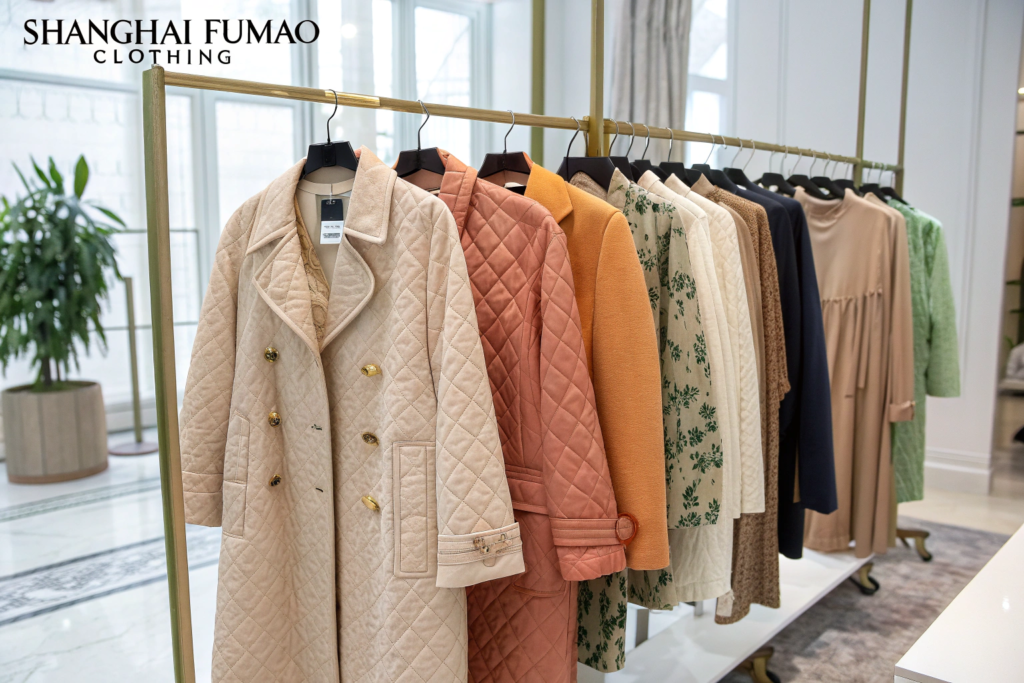
Shanghai Fumao Clothing offers more types of summer coats than other suppliers because we operate a multi-specialist production model rather than a single-specialist model. We have invested in five distinct production lines, each with dedicated machinery and trained teams for specific garment categories: lightweight woven tailoring, quilted and padded outerwear, delicate chiffon and kimono construction, knit and jersey blazers, and rainwear with taped seams. This structure allows us to manufacture trench coats, quilted shackets, chiffon kimonos, knit blazers, packable anoraks, and linen dusters simultaneously without compromising the quality of any single category.
Most suppliers make a strategic choice to specialize. They become excellent at one category and dominate it. This is a valid business model. But it creates a problem for brand owners who want to build a complete summer coat collection. You end up sourcing trench coats from one factory, kimonos from another, and quilted jackets from a third. You manage three relationships, three quality standards, three logistics pipelines, and three sets of payment terms. The complexity multiplies. The risk multiplies. We built Shanghai Fumao to solve that problem. Let me show you what our multi-specialist model looks like from the inside and why it benefits your brand directly.
The Multi-Specialist Production Model Explained
The conventional factory model is built around a single core competency. A factory that starts making denim jackets buys machines optimized for medium-to-heavyweight woven fabrics. It hires sewing operators skilled in flat-felled seams and heavyweight construction. It builds relationships with denim mills. Over time, it becomes a great denim jacket factory. But if a client asks that factory to produce a chiffon kimono, the entire system fails. The machines are too aggressive for the delicate fabric. The operators have never sewn a French seam. The fabric suppliers do not stock chiffon. The factory either declines the order or accepts it and produces a substandard product. I have seen this failure repeatedly when auditing competitor factories on behalf of brands who asked me to evaluate their existing suppliers. The factory that made their beautiful denim jackets delivered a batch of wrinkled, poorly sewn chiffon dusters because they ran the chiffon through the same feed mechanisms they used for 12-ounce denim. The fabric was shredded.
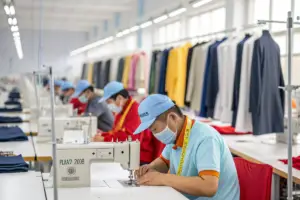
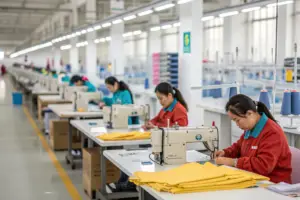
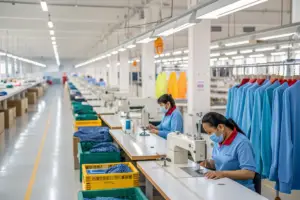
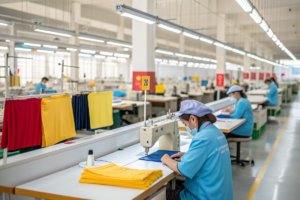
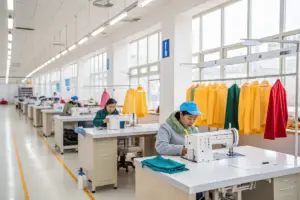
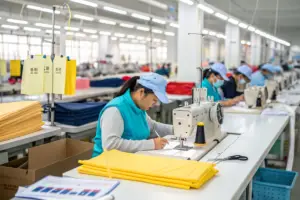
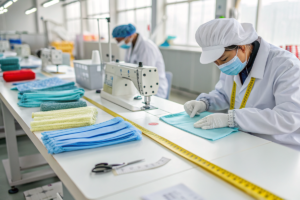
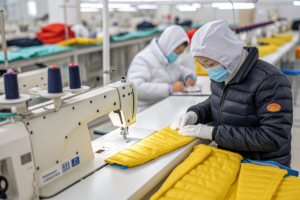
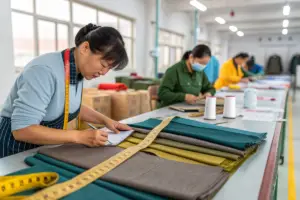
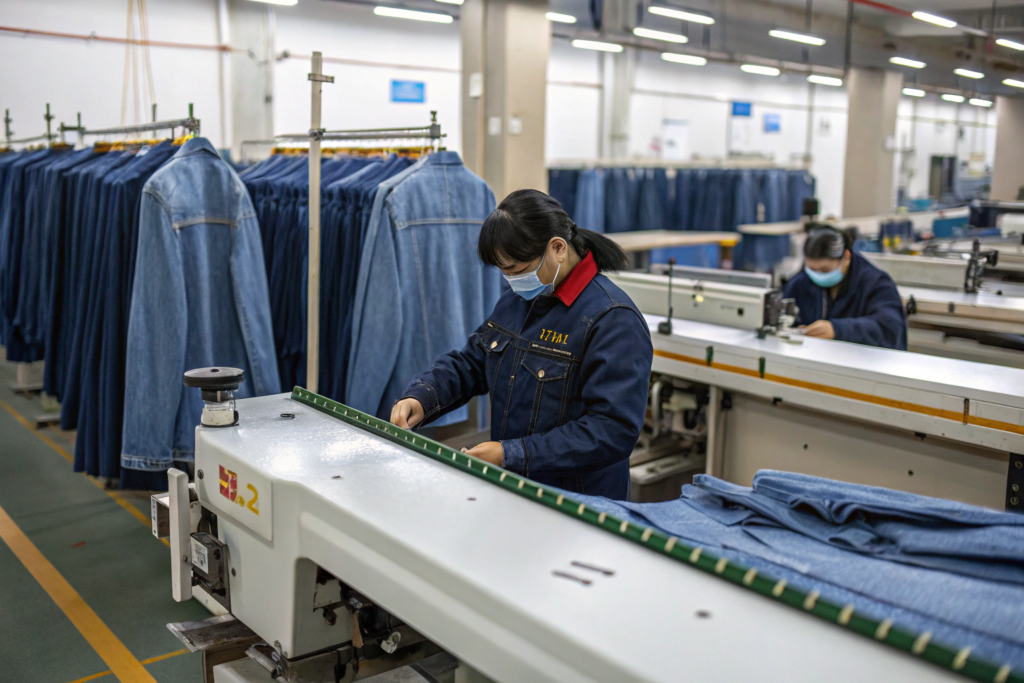
Our multi-specialist model is built on the principle of dedicated micro-factories within one facility. Each production line has its own machinery calibration, its own team with category-specific skills, its own quality control checklist, and its own fabric and trim supply chain. Line 1 handles structured wovens like trench coats and blazers. Line 2 handles quilted and padded garments. Line 3 handles lightweight and delicate fabrics like chiffon, viscose, and silk blends. Line 4 handles knit and jersey garments. Line 5 handles technical outerwear like rainwear with taped seams. Each line operates semi-independently, but all share our central logistics, quality management, and client communication infrastructure.
This structure is more expensive to build and maintain than a single-specialist factory. The machinery investment is multiplied by five. The training investment is multiplied by five. The fabric inventory carrying cost is multiplied by five. Most factory owners look at this math and decide the investment is not worth the return. They are correct for a factory that competes on price alone. We compete on being the single manufacturing partner for a brand's entire summer coat collection. The value proposition is not the lowest unit cost. It is the lowest total procurement cost when you factor in the time, travel, communication, and quality inconsistency costs of managing multiple supplier relationships. A brand that sources five coat styles from five different factories spends hundreds of hours on supplier management. A brand that sources five coat styles from Shanghai Fumao spends those hours on design, marketing, and sales. The return on that time investment dwarfs any per-unit cost savings from sourcing through the cheapest bidder for each individual style.
How Do the Five Production Lines Actually Differ from Each Other?
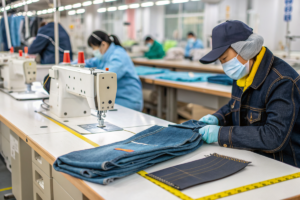
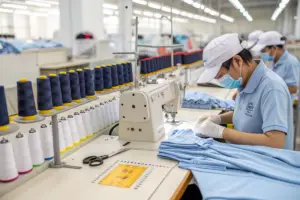
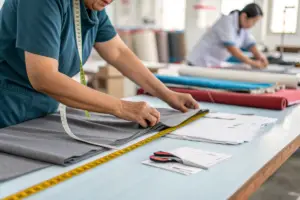
The differences are physical, not just organizational. Line 1, our structured woven line, uses heavy-duty lockstitch machines with compound feed mechanisms that move all layers of fabric evenly. This is critical for trench coats where you are sewing through three or four layers of fabric at the lapel and collar points. A standard drop-feed machine will shift the layers and create misaligned edges. Line 1 also uses specialized fusing presses for interlinings, collar-shaping machines, and buttonhole machines calibrated for thick thread and high stitch counts. Line 2, our quilted and padded line, uses long-arm quilting machines that can handle fabric sandwiches up to 2 meters wide. The machines are fitted with special presser feet that glide over bulky seams without catching. The operators are trained in fill distribution inspection, a skill that takes months to develop. Line 3, our delicate fabrics line, uses fine-feed rotary hook machines with straight-stitch needle plates and smaller needle sizes. The cutting tables in this section use vacuum suction to hold slippery chiffon in place. The operators use a gelatin stabilization technique I described in a previous article. The entire line operates at a slower stitch speed to prevent fabric damage. Line 4, our knit and jersey line, uses overlock machines with differential feed that can stretch or gather the fabric as needed to prevent wavy seams on stretchy materials. The machines are fitted with ballpoint needles that slide between yarn fibers instead of piercing them. Line 5, our technical outerwear line, uses hot-air seam-sealing machines, ultrasonic welding equipment, and specialized waterproof zipper attachment stations. These five production environments are as different from each other as a bakery is from a metal fabrication shop. They share a roof. They do not share techniques, tools, or talent.
Why Do Most Competitors Choose to Specialize Instead?
The answer is economics and risk management. A specialized factory is cheaper to build, easier to staff, and simpler to manage. The owner buys one set of machinery, hires one type of operator, and builds one supply chain. The business becomes predictable. The margins become stable. The risk of quality failure is contained within a narrow range. This model works well for large brands that place high-volume orders for a single product category. If you need 10,000 denim jackets, a specialized denim jacket factory is your best option. They will beat our price on that specific product because their entire operation is optimized for that single output. The problem arises for small-to-medium brands that need variety, not just volume. A brand ordering 300 trench coats, 200 quilted jackets, and 150 kimonos cannot meet the minimum order quantities of three separate specialized factories. They are forced to compromise. They source everything from a generalist factory that claims to do it all but excels at nothing. Or they pay a premium to a sourcing agent who manages the multi-factory complexity on their behalf and takes a margin on every transaction. Our multi-specialist model is designed for this exact brand profile. We are the factory for brands that need category variety at moderate volumes without the overhead of managing a multi-supplier supply chain. We are not the cheapest option for a single-style mega-order. We are the best option for a multi-style collection that needs to arrive in one shipment with one quality standard and one point of contact.
Material Sourcing Across Diverse Fabric Categories
A factory's product range is limited by its fabric supply chain. If your fabric supplier network covers only cotton twills and denims, you can only make cotton twill and denim garments. Expanding product variety requires expanding the fabric supply chain. This sounds obvious, but it is the single largest barrier that prevents specialized factories from diversifying. Building a relationship with a new fabric mill takes years. The mill needs to trust that you will order consistently. You need to trust that the mill will deliver consistent quality. The first order with a new mill is always a test. Sometimes the test fails. The fabric arrives with a different hand feel than the sample swatch, or the dye lot varies beyond the acceptable tolerance, or the delivery is six weeks late and the mill does not apologize because you are a small, new customer and they do not care about your business yet.
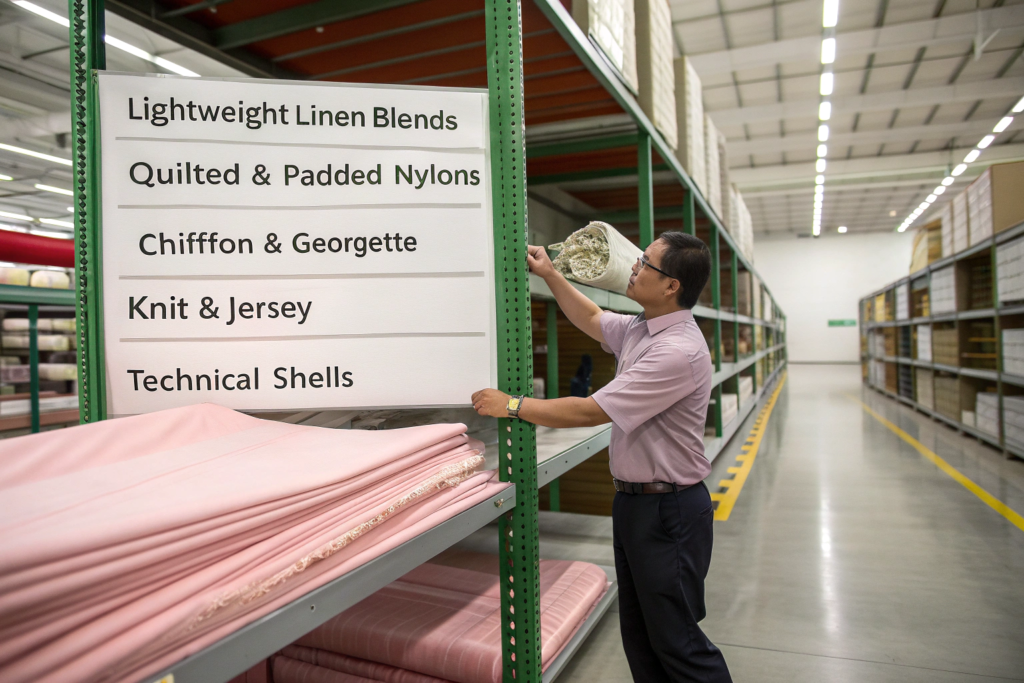
Our fabric supply chain spans five distinct mill categories: woven cotton and linen mills in Shaoxing and Jiangsu, synthetic and recycled nylon mills in Fujian, specialty chiffon and georgette mills in Suzhou, knit and jersey mills in Guangdong, and technical coating and lamination mills in Wujiang. Each relationship has been cultivated over a minimum of five years. Our aggregate ordering volume across all our brand partners gives us buying power with each mill that a single-category factory cannot match in a secondary fabric category.
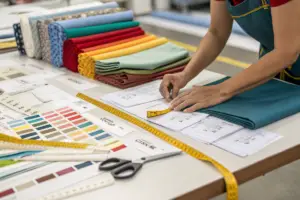
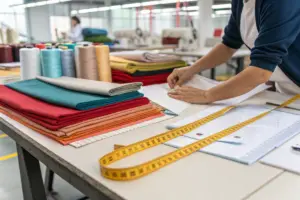
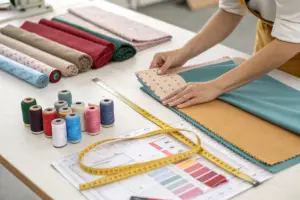
This buying power translates into tangible benefits for our brand partners. When a mill has limited greige fabric inventory and must choose which customer's order to fulfill first, they choose the customer who places regular, large orders. Our trench coat fabric orders give us priority access for our quilted jacket fabric orders, even though those are sourced from a different mill division. The mill relationship is consolidated. The trust is consolidated. The priority treatment extends across categories. We also maintain a physical fabric library of over 800 active fabric articles in our factory. This library is not just for our internal reference. Brand partners who visit our facility, or who connect with us via video tour, can browse the library and select fabrics for their summer coat designs from stock that is already tested, already priced, and already available for immediate sampling. This reduces the sampling timeline from six weeks to one week. A brand owner can design a collection using our library fabrics and hold physical samples of three different coat styles in three different fabrics within two weeks of the initial conversation. A specialized factory that needs to source a new fabric category from scratch requires two months for the same process. The library is a competitive advantage that compounds over time as we add new articles each season.
How Does Fabric Inventory Management Work Across Five Categories?
Managing inventory across five distinct fabric categories is a significant operational challenge. Each fabric type has a different shelf life, different storage requirements, and different demand patterns. Chiffon and georgette must be stored flat on wide rolls to prevent permanent creasing. Quilted fabric pre-made with fill must be stored in climate-controlled conditions because the fill can absorb moisture and develop mildew. Linen blends must be stored away from direct sunlight because linen is prone to UV degradation over time. We have invested in a warehouse management system that tracks fabric inventory by category, age, and minimum stock level. Our system automatically flags fabric articles that are approaching six months of storage without movement. We either offer these fabrics to our brand partners at a discount for quick-turnaround designs or we release them to the local market to free up warehouse space. This active inventory management prevents the accumulation of dead stock that plagues factories with poor planning. It also allows us to offer a "flash sampling" service. If a brand partner needs a sample of a summer coat in a fabric that we have in inventory, we can cut, sew, and ship the sample within five business days. This speed is possible only because the fabric is physically present in our warehouse, tested, and ready for cutting. A factory that sources fabric only after receiving an order cannot match this timeline.
Can a Brand Mix Fabrics from Different Categories in a Single Coat Design?
Yes, and this capability is a direct benefit of our multi-category supply chain. A summer coat design may use a linen shell from our woven mill, a recycled polyester lining from our synthetic mill, and a chiffon trim or overlay from our specialty mill. A specialized factory that only works with woven mills would need to outsource the chiffon trim to an unfamiliar supplier. The quality of the trim would be uncertain. The color matching between the linen shell and the chiffon trim would be uncoordinated because the two mills do not communicate with each other. In our integrated supply chain, we manage the color matching across all fabric categories internally. Our quality control team approves the lab dip for the linen shell, the polyester lining, and the chiffon trim simultaneously, checking them under the same lightbox and against the same Pantone reference. The result is a coat where all components harmonize, even when they come from different fabric categories. We have also developed expertise in "hybrid construction" techniques. A coat with a structured woven front and a knit back panel requires different seam handling for each section. The woven-to-knit seam must be stabilized with a stay tape to prevent the knit from stretching while the woven holds firm. Our multi-specialist teams collaborate on these hybrid designs because they sit next to each other on the factory floor. The Line 1 woven technician and the Line 4 knit technician can look at the same prototype and solve the construction challenge together in real-time.
The Brand Advantage: One Partner, One Standard, One Shipment
The strategic advantage of a single manufacturing partner for multiple summer coat types crystallizes at the shipping dock. When a brand sources trench coats from Factory A, quilted jackets from Factory B, and kimonos from Factory C, they receive three separate shipments. Three separate ocean freight invoices, each with a minimum charge. Three separate customs clearance processes, each with a brokerage fee. Three separate warehouse receiving appointments, each with a labor cost. The logistics overhead can add 12% to 15% to the total landed cost of the collection compared to a single, consolidated shipment. This does not include the soft costs of managing three supplier relationships, resolving three sets of quality issues, and reconciling three sets of payment terms and documentation. The consolidated advantage of Shanghai Fumao is not just about production variety. It is about end-to-end efficiency from fabric sourcing to final delivery.
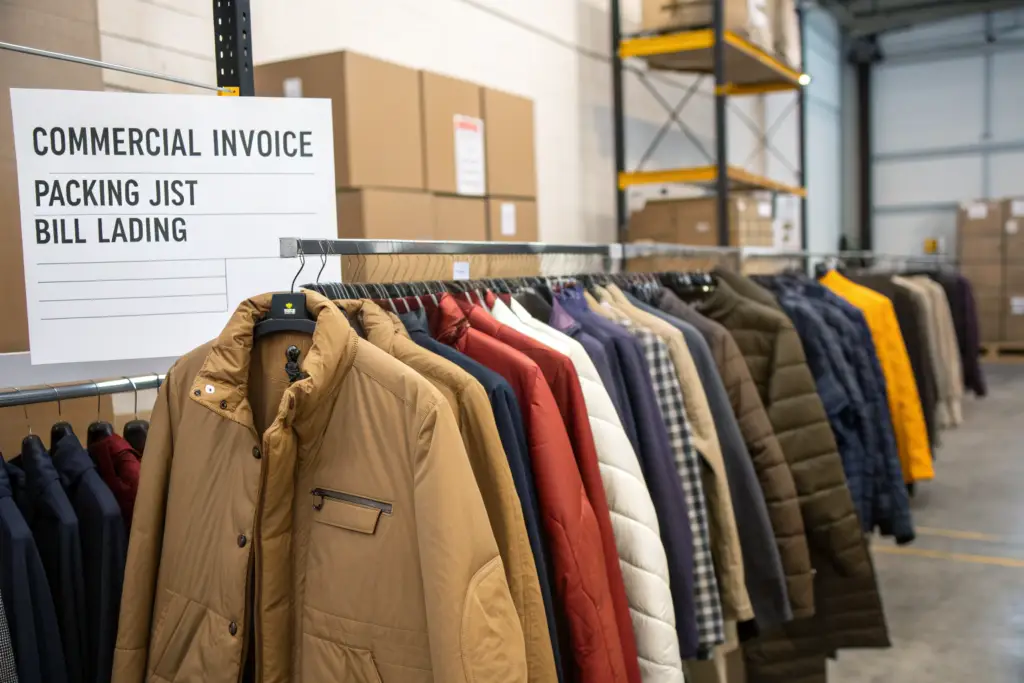
When you produce your entire summer coat collection with us, we consolidate all styles into a single shipment under one commercial invoice, one packing list, and one bill of lading. Your customs clearance is a single transaction. Your warehouse receiving is a single appointment. Your landed cost calculation is a single spreadsheet. The time you save on logistics coordination can be redirected into selling the coats, which is the activity that actually generates revenue for your brand.
This consolidation extends to quality control. Every coat in your order, regardless of category, passes through our central quality inspection station. The same senior inspector checks your trench coats, your quilted jackets, and your kimonos against the same AQL standard. The inspection reports use the same format, the same defect definitions, and the same acceptance criteria. When you review the inspection reports, you are comparing apples to apples. When you source from three different factories, each uses a different interpretation of AQL 2.5. One factory considers a loose thread a minor defect. Another considers it a major defect. The inconsistency creates confusion and disputes. Our unified QC standard eliminates this variability and provides a single source of truth for quality across your entire collection.
How Does Consolidated Shipping Reduce Your Landed Cost?
The landed cost savings from consolidation are real and measurable. Ocean freight has a minimum charge per cubic meter. If your trench coat order from Factory A is 3 cubic meters and their minimum charge applies to 5 cubic meters, you are paying for 2 cubic meters of air. If your quilted jacket order from Factory B is 4 cubic meters and their minimum is also 5, you are paying for another cubic meter of air. Consolidating 7 cubic meters of actual cargo into a single shipment eliminates both minimum charge penalties. The consolidated shipment pays for exactly 7 cubic meters at the full container rate, which is lower per cubic meter than the less-than-container-load rate. Customs brokerage is charged per entry. Three entries equal three brokerage fees. One consolidated entry equals one brokerage fee. Warehouse receiving is charged by the hour or by the pallet. Three separate receiving appointments with three separate truck deliveries cost more than a single appointment with a single truck. I have modeled these savings for brand partners who previously sourced from multiple factories. The logistics consolidation alone typically reduces their total landed cost by 8% to 12%, even if the individual unit prices from Shanghai Fumao are slightly higher than the cheapest specialist factory for each category. The total procurement cost is lower, and the process is dramatically simpler. That is the value proposition of the multi-specialist model.
What Does a Unified Quality Standard Mean Across Different Coat Types?
A unified quality standard means that a loose button on a trench coat and a loose button on a quilted jacket are treated with the same severity. The defect classification does not change because the garment category changed. This consistency allows you to set clear quality expectations with your team and your customers. You know that every coat in your collection, regardless of style, has passed the same inspection gates at the same threshold. Our quality standard is built around AQL 2.5 for major defects and AQL 4.0 for minor defects, consistent with industry norms for mid-to-premium apparel. However, we add category-specific checkpoints on top of this unified baseline. The trench coat inspection includes lapel symmetry measurement. The quilted jacket inspection includes fill distribution mapping. The kimono inspection includes seam slippage testing on French seams. The unified standard provides the consistent foundation. The category-specific checkpoints provide the specialized rigor. The combination ensures that a brand's linen blazer and a brand's chiffon duster both meet the same overall quality grade, even though the specific inspection activities differ. This harmonized quality approach is nearly impossible to achieve when sourcing from multiple specialized factories, each with its own quality culture and its own definition of acceptable.
Conclusion
Shanghai Fumao Clothing offers more types of summer coats than other suppliers because we made a deliberate strategic choice fifteen years ago. We could have become the best trench coat factory in our region. We could have dominated a single niche and built a comfortable business within it. We chose a harder path. We chose to build the infrastructure, the supply chains, and the workforce capabilities to manufacture the full spectrum of women's summer coats under one roof. We did this because we listened to our brand partners. They told us the same story repeatedly: "We love your trench coats, but we wish we did not have to find another factory for our quilted jackets." We invested to solve that problem.
The result is a factory where five specialized production lines operate side by side, each with its own machinery, its own trained teams, and its own quality checkpoints, but all sharing a unified logistics system, a unified client communication structure, and a unified quality standard. The benefit to you is a simplified supply chain. One point of contact. One set of payment terms. One shipment. One quality report. One partner who understands your entire collection, not just one piece of it.
If you are currently managing multiple supplier relationships to produce your summer coat collection, or if you are planning your first multi-style collection and dreading the complexity of sourcing from different factories for different categories, I invite you to test our model. Send us your design briefs for the different coat types in your collection. We will return a single consolidated quotation, a single production timeline, and a single sampling schedule. You can evaluate whether the efficiency of one partner outweighs the perceived price advantage of multiple specialists. In my experience, it does.
To start that conversation, contact our Business Director, Elaine. She can arrange a video tour of our five production lines so you can see the specialized infrastructure for yourself. She can also provide case studies of brand partners who transitioned from multi-supplier sourcing to our consolidated model, including their documented cost savings and time savings. Email her at: elaine@fumaoclothing.com.