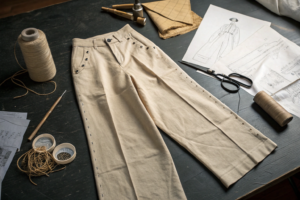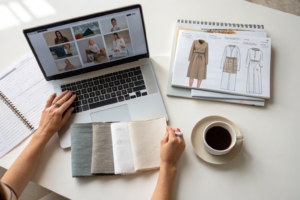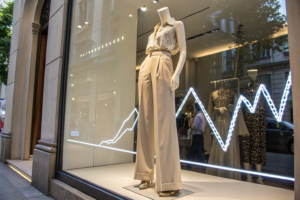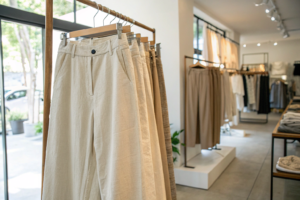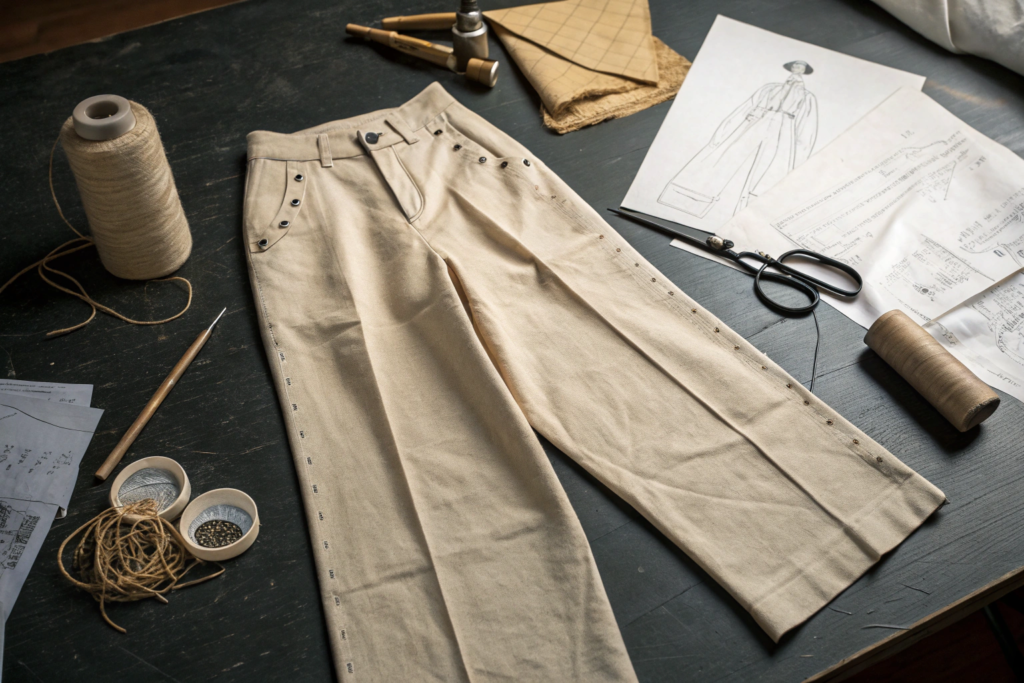
A boutique owner from Paris sent me a sketch two months ago. It was not a pant. It was a sculpture. A linen wide-leg with a built-in, detachable overskirt. Hand-frayed edges. Hand-stitched pleats. A hidden pocket that reversed into a bag. She said, "Five factories told me it's too complicated. Is it?" I looked at the sketch. I looked at my pattern maker. I said, "We can do this." The sample is now in her boutique window on Rue du Bac. She sold the first three pairs before she put the price tag on.
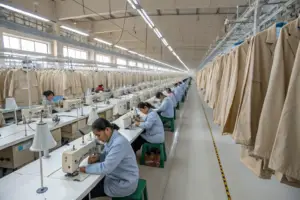
Yes, Shanghai Fumao specializes in producing rare, complex, and highly detailed linen wide-leg pants for boutique brands. Our 5 dedicated production lines include a small-batch "Atelier Line" designed specifically for intricate constructions, hand-finishing, and limited-edition runs. We don't just cut and sew. We problem-solve. A rare style is a creative challenge, not a production nuisance.
A boutique brand is not a department store brand. You don't need 10,000 basic pants. You need 200 pieces of something nobody else has. The construction is unusual. The details are the selling point. The price point is high. The factory must think like a tailor, not an assembly line. Let me show you how we handle rare styles from sketch to ship.
What Defines a "Rare Style" in Linen Wide-Leg Pants?
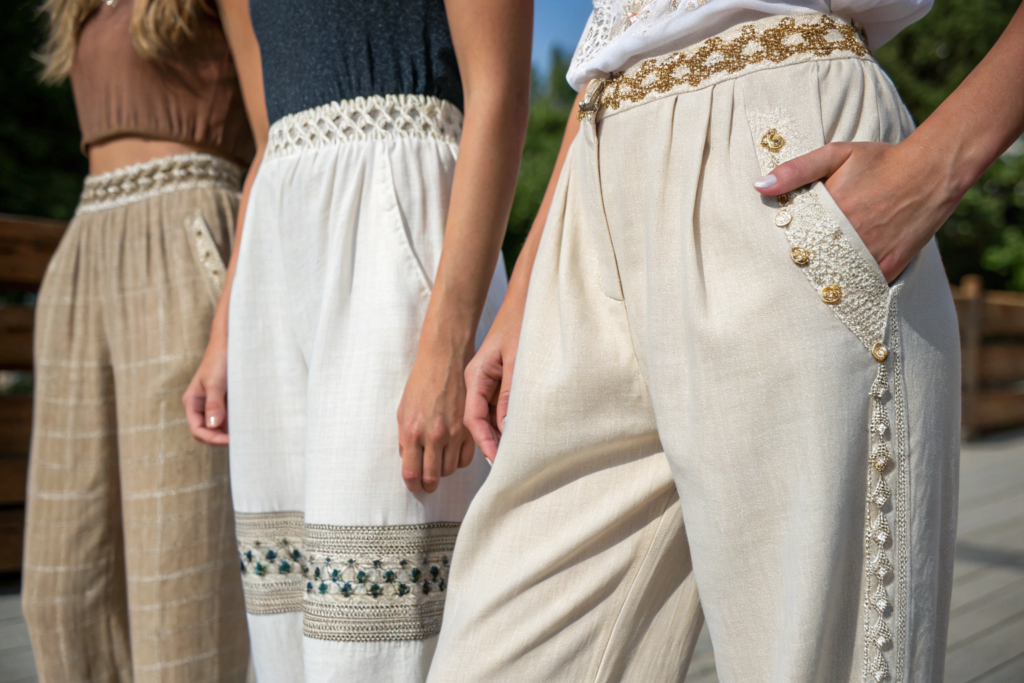
Before I can say yes to a rare style, I need to define it. A rare style is not just a different color or a slightly wider leg. It is a design that falls outside the standard manufacturing playbook. It requires a different mindset on the production floor. A standard pant flows down the line. A rare style stops the line. It asks the sewer to pause, to think, to hand-finish. Not every factory is comfortable with this pause.
A rare style is defined by one or more of these elements: a non-standard construction sequence, an artisan hand-finishing technique, an unusual fabric manipulation, or a complex modular design with detachable components. These are the pant designs that cannot be made efficiently on a high-speed assembly line. They require a dedicated sample room and a team that enjoys solving textile puzzles.
Let me break down the categories. This is the language I use with my pattern maker when a boutique sketch arrives.
How Do Non-Standard Construction Sequences Change Production?
A normal pant is built inside-out, then turned, then topstitched. The sequence is fixed. A rare pant might have an exterior French seam that wraps around the leg. It might have a waistband that is sewn after the hem. It might have a pocket that is attached to the side seam and then folded back on itself. These sequences break the standard workflow.
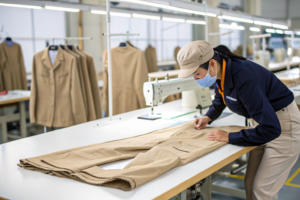
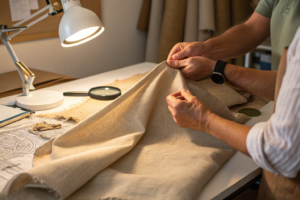
My Atelier Line at Shanghai Fumao is set up for this. The sewer does not push the pant to the next station. They stay with the garment for multiple operations. This is slower. It is more expensive. But it ensures the construction logic is followed. A boutique brand from Tokyo sent us a design with a twisted leg seam. The inseam rotated 90 degrees from hip to hem. The pant had no traditional side seam. My head sewer studied the sketch for an hour. She made a half-scale muslin mockup. She figured out that the fabric had to be cut on a true bias and the sewing sequence had to start at the hem and move up. A standard line sewer would have said, "Impossible." My Atelier sewer said, "Interesting." That is the difference.
What Are Artisan Hand-Finishing Techniques We Offer?
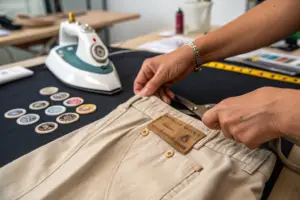
Machines can do almost everything. But a machine stitch looks like a machine stitch. A boutique customer paying $200 for a linen pant wants the evidence of a human hand. They want a hand-frayed hem with a 1cm raw edge. They want hand-stitched belt loops. They want a hand-embroidered monogram hidden inside the pocket bag. They want a visible mending stitch that tells a story.
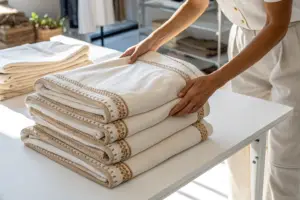
We offer a menu of hand-finishing techniques. Hand-rolled hems. Hand-picked zipper installations. Sashiko-inspired decorative stitching. Hand-knotted fringe. Hand-beaded waistband accents. These are not mass-production techniques. They require skilled artisans, not just sewing machine operators. Our Atelier team includes three artisans with over 20 years of hand-finishing experience. They trained in traditional Chinese silk embroidery before moving to contemporary garment work. A client in New York designed a linen pant with a hand-beaded constellation pattern on the back pocket. Each bead was sewn by hand. The pant retailed for $380. It sold out in a week. The beading took 45 minutes per pair. A factory without an artisan team would have rejected the design. We leaned into it.
How Does the Atelier Line Handle Complex Customizations?
A complex customization is not a single detail. It is a combination. A pant might have a hand-smocked waistband, a detachable lining, and custom-dyed shell buttons sourced from a specific island in the Philippines. Each element is a mini project. Coordinating them all on one garment is a production management challenge. The Atelier Line exists to solve this challenge.
Our Atelier Line operates outside the main production schedule. It has its own pattern maker, its own sewers, and its own trim sourcing team. It handles orders from 50 to 300 units. The line is designed for high-complexity, high-value garments where every unit is inspected as an individual piece, not as part of a statistical AQL sample.
This is haute couture thinking applied to ready-to-wear. Let me walk you through two specific capabilities.
Can You Do Modular and Transformable Garment Designs?
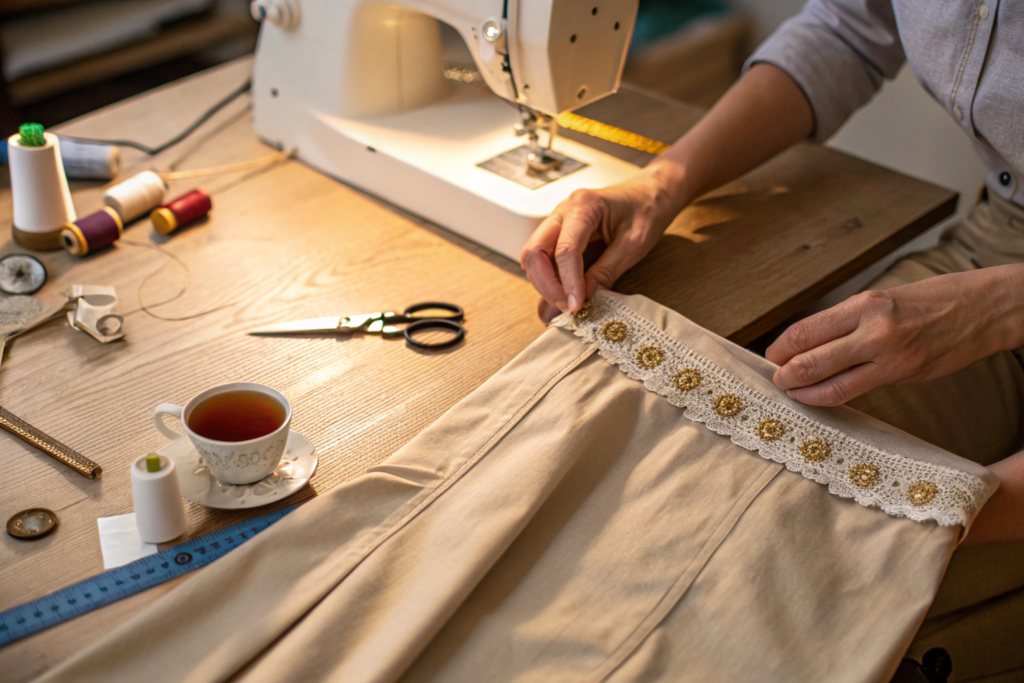
A modular design is a garment that changes. A wide-leg pant that zips off into shorts. A pant with a removable overskirt. A waistband that reverses to reveal a different color. These designs require pattern-making precision. The connection points must align perfectly. The hardware must be sourced and tested.
Last year, a boutique brand from Copenhagen designed a "3-in-1 Travel Pant." It was a linen wide-leg base. It had a removable cotton voile slip lining that could be worn separately as a beach cover-up. The pant also had a hidden drawcord at the knee that could cinch it into a jogger silhouette. Three garments in one. The hardware alone required sourcing magnetic snaps from a supplier in Italy and drawcords from a Japanese mill. My trim sourcing team spent two weeks finding the right components. The pattern maker spent a week engineering the connection points. The Atelier Line produced 200 units. The pant was featured in Vogue Scandinavia. The client reordered 500. Modular design is a growing niche. It commands a very high retail price. It requires a factory that treats sourcing and engineering as a creative service, not just a cost.
How Do We Source Rare Trims for Boutique Designs?
A standard pant uses standard trims. YKK zipper. Generic button. Basic thread. A rare pant uses rare trims. Hand-carved horn buttons from Tuscany. Vintage deadstock cotton lace for the pocket trim. Hand-dyed silk thread from Kyoto. 24k gold-plated rivets. These trims are not in a catalog. They must be found.
My trim sourcing team loves this work. We have a network of specialty suppliers across Asia and Europe. We have relationships with vintage trim dealers. We have an in-house button library with over 500 unique styles. A client in Los Angeles wanted buttons made from recycled skateboard decks for her "urban linen" collection. We found a small workshop in Portugal that makes buttons from compressed wood waste. We shipped the buttons to Shanghai. We tested them on the linen. The color matched the natural flax beautifully. The story was unique. The pant sold for $275. The button cost $1.20 instead of $0.10 for a plastic button. But the value it added to the brand story was immense. A boutique brand is a story. The trims are the punctuation.
What Is the MOQ and Pricing for a Rare Style Boutique Order?
Boutique brands fear the MOQ conversation. They assume a rare, hand-finished design will require 500 units to be viable. They think the factory will laugh at their 80-unit request. This fear stops many designers from even asking. They water down their design to fit a standard factory's minimum. They lose what made the idea special. My Atelier Line was built specifically to reverse this dynamic.
The MOQ for a rare style on our Atelier Line is 50 to 150 units, depending on the complexity of the trims and the hand-finishing hours required. The FOB cost is roughly 40% to 80% higher than a standard bulk pant, reflecting the skilled labor time and the small-batch trim sourcing. A rare pant that would cost $8.50 FOB in bulk might cost $14 to $18 FOB on the Atelier Line, supporting a retail price of $180 to $380.
Let me show you the value equation. This is the math that boutique brands live by.
How Is the Atelier Line Price Calculated?
A standard pant is priced on a cost-plus model with efficiency baked in. An Atelier pant is priced on a time-plus-materials model. The labor is the biggest difference. Here is a cost breakdown for a hypothetical rare style with hand-frayed hems, hand-stitched belt loops, and custom Italian horn buttons.
| Cost Component | Standard Bulk Pant (300 units) | Atelier Rare Pant (100 units) |
|---|---|---|
| Fabric (190gsm Euro Linen) | $3.80 | $4.20 (smaller cut yield) |
| Trims (custom horn buttons) | $0.15 (standard resin) | $1.50 |
| Sewing Labor | $2.20 | $5.50 (hand-finishing time) |
| Pattern & Sample Development | Amortized, $0.50 | Amortized, $2.00 |
| Total FOB Cost | $8.50 | $13.20 |
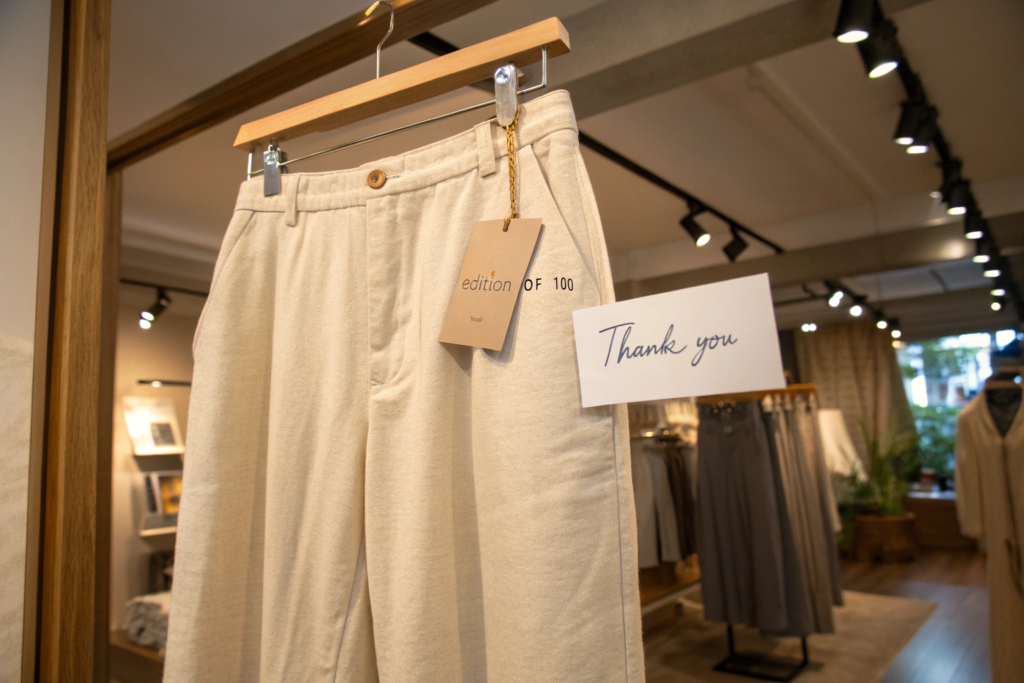
The FOB is 55% higher. But the retail price is not a linear markup on cost. A $8.50 pant might sell for $68. A $13.20 pant with rare details and a limited-edition story sells for $220. The gross margin on the $220 pant is 82%. The brand makes $106 in gross profit per unit on the standard pant and $187 on the rare pant. The rare pant makes more money even at a lower volume. This is the boutique model. High price. High margin. Low volume. Deep brand loyalty.
A brand in Sydney launched with a rare style from our Atelier Line. She ordered 80 units at a $16.00 FOB. She retailed them at $240. She sold out in three weeks. Her total investment was $1,280. Her revenue was $19,200. She used the profit to fund her next order of 200 units. She built her entire brand on the "rare style" positioning. The factory's ability to execute at low volume was the foundation of her business.
What If I Want to Scale a Rare Style After a Successful Test?
This is the path I love most. A boutique tests a rare style with 100 units. It sells out immediately. The customer reviews mention the hand-stitching. The press picks it up. The brand wants to scale to 500 units.
We can scale certain elements. The hand-frayed hem can stay. The hand-stitched belt loops can stay. But other elements might need to be adapted. The hand-carved horn buttons might need a longer lead time for 500 units. We talk about it. We find a solution that preserves the "rare" feeling while making the logistics work for a larger order. The FOB cost drops from $16 to $12 as the cutting yield improves and the trim quantity discounts kick in. But it never drops to the $8.50 bulk price. The hand work is still there. The premium trims are still there. The pant retains its soul. A Shanghai Fumao client in Berlin started with 60 units of a rare style. Two years later, she orders 400 units per season. Her brand is known for "artisan linen." The Atelier Line scaled with her. We never asked her to compromise the design. We just got more efficient at the handwork.
How Does the Design Collaboration Process Work for Rare Styles?
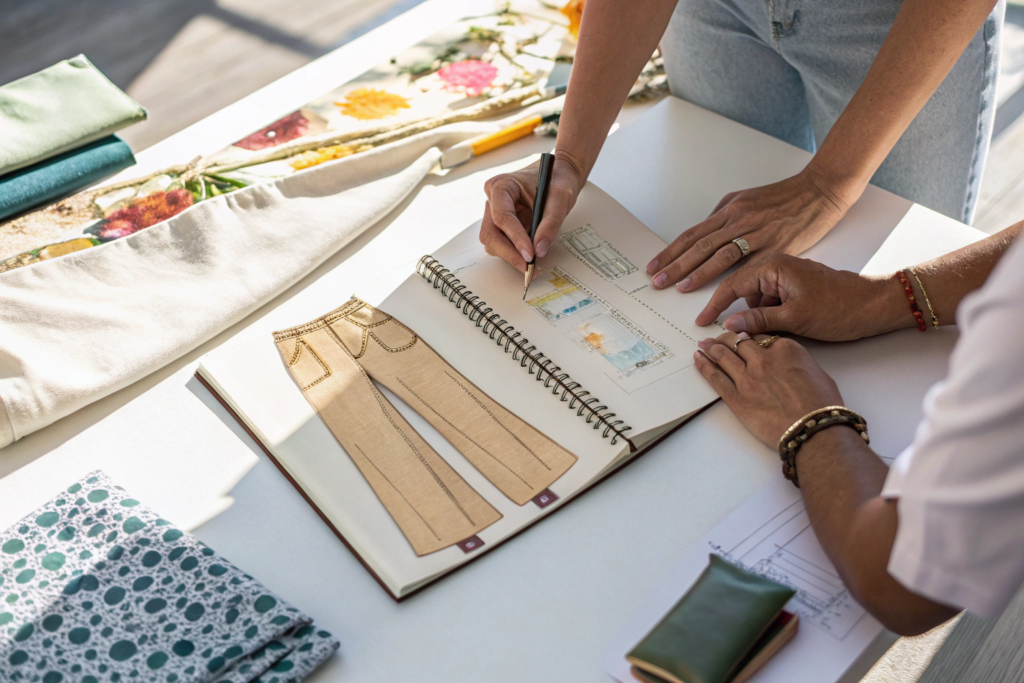
A rare style starts as a dream. A sketch. A mood board. A piece of vintage clothing found in a flea market. The gap between the dream and the wearable garment is the design collaboration process. A standard factory takes a finished tech pack and quotes a price. An Atelier factory enters the conversation much earlier. We help you translate the dream into a pattern. We suggest construction techniques. We say, "This detail might not work in linen because of the slub. Can we try it in a cotton-linen blend for that panel?" This is design engineering, not just manufacturing.
The collaboration starts with a discovery call and a shared digital mood board. You share your sketches and inspiration. I share fabric options and technical feasibility notes. We move to a half-scale muslin mockup for complex structures. Then a full pre-production sample. The process is iterative and transparent. You are not just a customer. You are a creative partner.
I want to show you how this partnership protects the design integrity.
How Do We Solve a Design Challenge That Seems "Impossible"?
A designer brought me a concept last year. She wanted a linen wide-leg pant with a "waterfall" hem. The hem was to be cut in a continuous spiral from the ankle to the knee. The fabric would cascade in soft folds when the wearer walked. It was beautiful on paper. It was a geometry nightmare in reality.
My pattern maker spent three days on it. She made five small-scale versions on a half-scale mannequin. The first version was too heavy. The cascade didn't flow. She switched from 210gsm linen to 160gsm. The second version flowed but lost structure at the waist. She added an internal facing. The third version worked. The full sample was approved. The production of 120 units was flawless. The designer won an emerging designer award. She told the jury that Shanghai Fumao was her "secret weapon."
This is the work I find most rewarding. The impossible becomes possible. It happens because my team has the technical vocabulary to translate a poetic idea into a physical pattern. A less experienced factory would have said, "This design is not feasible." We said, "Let's try it in muslin and see what happens." The difference is patience and curiosity. A rare style demands both.
What Support Do We Offer for Launch Marketing?
A rare style needs a rare story. I understand that your marketing is part of the product. The construction details, the hand-finishing, the trim origin—these are content. I provide you with that content. I send photos and short videos of the artisan hand-stitching your pants. I send the story of the Italian button workshop. I send the OEKO-TEX certificate of the linen.
A boutique brand in Portland built an entire Instagram campaign around our Atelier process. She posted photos of the hand-fraying. She posted a video of the pattern maker adjusting the muslin. Her followers felt like they were inside the creation. The collection sold out on pre-order. She never held inventory. The factory process became her brand content. I encourage all my boutique clients to do this. The "rare" value is in the human effort behind the garment. The Atelier Line is visually rich. The hand-stitching, the vintage trims, the pattern iterations—these are marketing assets. They prove that the $280 price is justified. I am happy to share behind-the-scenes content that you can use in your storytelling. It is part of the service.
Conclusion
A rare style linen wide-leg pant is not a production problem. It is a creative opportunity. A factory that says "no" to complexity is a factory that has optimized itself for speed over skill. Shanghai Fumao's Atelier Line is optimized for skill. We have the pattern makers who can solve a twisted seam. We have the artisans who can hand-fray a hem. We have the trim sourcers who can find a button made from recycled ocean plastic. And we have an MOQ of 50 units so you can launch your rare vision without betting your life savings.
Boutique brands do not compete on price. They compete on uniqueness. The product is the proof of the brand's taste. The factory is the silent partner that delivers that proof. A rare style, well executed, builds a brand faster than any marketing campaign.
If you have a sketch that other factories have rejected, or a design you think is "too complicated," send it to me. Our Business Director, Elaine, can set up a discovery call to review your concept. Her email is elaine@fumaoclothing.com. Attach your sketch or mood board. She will connect you with our Atelier pattern maker for a feasibility discussion at no cost. Your rare style deserves a factory that says, "We can do this." That factory is here. Let's build something the market has never seen.