Every season, I watch American brand owners scramble at the port. Their containers are held. Their goods are stuck in customs. The reason is almost always the same: a missing or wrong certificate. You found the perfect linen wide-leg pants. The fabric is great. The price is right. But if the paperwork is not correct, you don’t have a business. You have a liability. It is not just about a delayed shipment. It is about empty shelves during your peak selling window. It is about a relationship with a retailer that is now in trouble.
The specific certifications you need depend on your sales channel, but almost all linen wide-leg pants imported from Fumaoclothing into the U.S. will require a General Certificate of Conformity for consumer product safety, a flammability test report, and documentation confirming the fabric content. If you market the product as “organic” or “eco-friendly,” you will also need GOTS or OEKO-TEX certification documents.
But a certificate is just a piece of paper if you don’t know why you need it. I have been manufacturing apparel in China for over a decade. My team at Shanghai Fumao has shipped millions of units to North America. I know what triggers a Customs hold. I know what makes a retailer reject a shipment. I want to walk you through every document you truly need. I will explain them in plain English. Let’s fix this problem before it happens to you.
What Are the Mandatory Safety Certifications for Linen Pants in the U.S.?
A client in Texas once told me, “It’s just linen pants, not a spaceship.” Four weeks later, his 2,000 units were seized at the Port of Long Beach. He missed the entire summer season. The CPSC requires every apparel item to be safe. “Safe” has a legal definition. For you, it means documents.
Any linen wide-leg pant imported into the United States must comply with the Consumer Product Safety Act. Practically, this means you need a General Certificate of Conformity that proves the pants pass lead content limits, phthalate limits, and flammability standards. For adult linen pants, you must comply with 16 CFR Part 1610 for flammability.
I don’t want you to just have a certificate. I want you to know what is inside it.
How Do We Test to Get a General Certificate of Conformity?
The General Certificate of Conformity is not a test. It is a document. It says, “I am responsible. This product is legal.” A CPSC-accepted lab must do the underlying tests. For linen pants, the critical test is for lead. We must ensure the buttons, zippers, and any painted details are below 90 parts per million of lead.
Our quality control team at Shanghai Fumao does not wait for a final inspection to fail a product. We pre-test the trims before they ever touch the fabric. Last year, we caught a batch of defective metal buttons. They had 120 ppm of lead. We rejected them before production started. We found a new supplier in three days. The client never knew there was a problem. Their shipment went out on time. That is what a manufacturer should do.
What Is the 16 CFR Part 1610 Flammability Standard for These Pants?
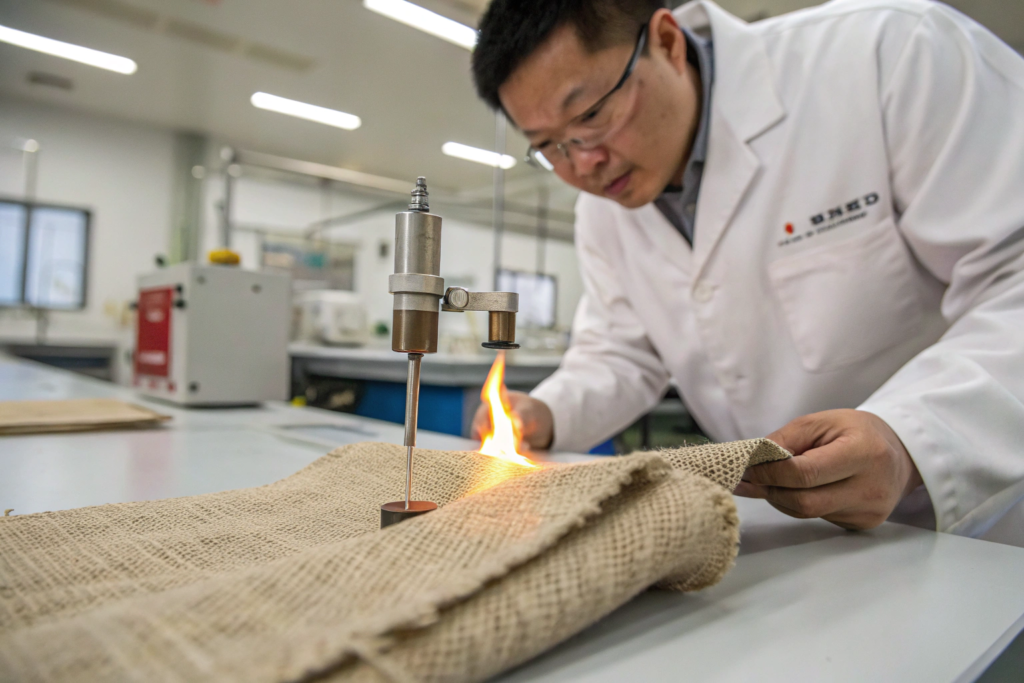
This is the “burn test.” Linen is a natural fiber. It usually passes easily. But you must be careful with blends. If your linen wide-leg pants have a cotton-polyester lining, the test becomes more important. 16 CFR Part 1610 classifies fabrics into three classes based on how fast they burn. Class 1 is “Normal Flammability.” This is what you want for all clothing.
We send every new linen blend to a third-party lab like SGS or Intertek. We don’t guess. We get a report. The report has a specific code, a lot number, and a date. That specific report covers your specific shipment. If a customs officer asks for it, you don’t send a generic document. You send that specific report. This is the difference between a 1-hour release and a 30-day detention. A 30-day detention on a seasonal fashion item like a linen pant can mean a 50% markdown later. I have seen it happen.
Can Organic or Eco-Friendly Claims Impact Certification Needs?
A brand owner from Los Angeles called me in 2022. He had built his whole website around the word “organic.” His whole marketing story was about sustainable flax fields in Normandy. But he was buying standard linen from us. The linen was great quality, but it was not certified organic. I stopped his order. I told him, “You are about to commit suicide by marketing.” The FTC Green Guides are clear. You cannot just say a product is green because it feels green.
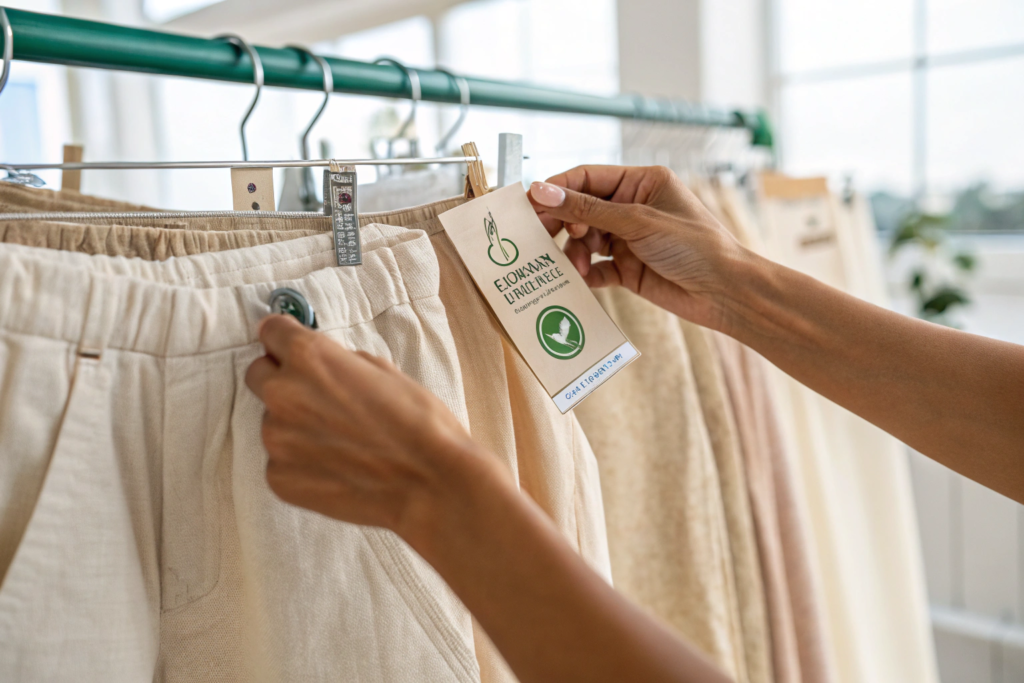
If you use words like “100% Organic Linen,” “Eco-Friendly,” or “Non-Toxic” on your hangtag or website, you must possess a valid certification from a USDA-accredited certifier or a globally recognized body like GOTS. A simple supplier statement is not enough. For “organic” claims on textiles, GOTS certification is the gold standard that covers both the organic fiber and the non-toxic processing of the garment.
There is a common trap. You find a wholesale fabric supplier who says their fabric is organic. You assume that is enough. It is not. The chain of custody must be certified.
What Exactly Does a GOTS Certificate Verify for Linen Pants?
A GOTS certificate verifies the entire chain. It starts at the farm. The flax must be grown without synthetic pesticides. Then we look at the processing. Regular linen processing uses strong chemicals to soften the stalks. GOTS restricts which chemical inputs can be used. Finally, we look at the factory. Social criteria must be met. Workers must have safe conditions and fair pay.
Shanghai Fumao has a dedicated production line for GOTS-certified orders. We don’t mix it with conventional orders. We use approved dyes and clean water. The transaction certificate you get from us proves your specific batch of pants is organic. Without this, a retailer can fine you. I have helped three clients transition from “marketing green” to “actually green.” It increased their cost by about 15%, but their retail price went up by 40%. Consumers pay for real trust.
Is an OEKO-TEX Standard 100 Certificate a Good Alternative?
Maybe. Not all brands want to pay for organic. But many retailers want a safety guarantee. An OEKO-TEX Standard 100 certificate says every component of the pants has been tested for harmful substances. This includes the yarn, the thread, the waistband interlining, and the care label.
This is more flexible than GOTS. It doesn’t require organic farming. It just guarantees the final product is clean. If you can’t afford GOTS, or if your customer doesn’t need the organic marketing angle, get OEKO-TEX. It is a powerful tool to build trust. It tells a consumer, “These pants won’t hurt my skin.” I always advise clients to at least get this if they are selling to sensitive groups like pregnant women or babies. It is a shield against liability claims for skin irritation.
What Documentation Does U.S. Customs Require for Smooth Clearance?
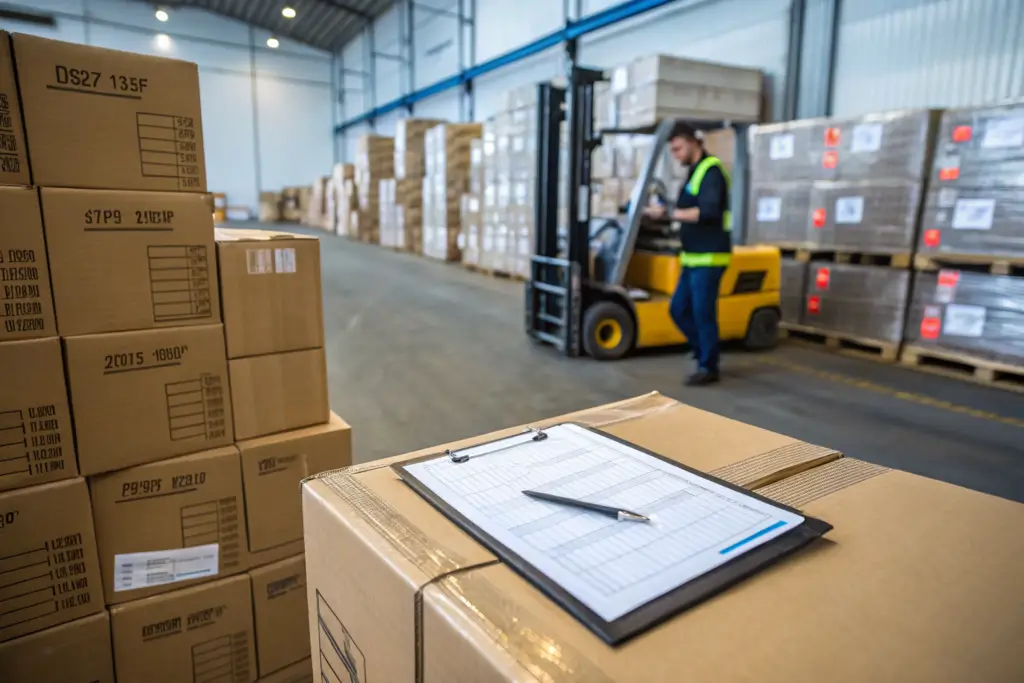
Paperwork is more important than the product during the shipping week. That is a hard lesson for new buyers. You can have perfect pants inside a container. But U.S. Customs and Border Protection cannot see them. They see your documents. If your documents don’t match what you say you have, they will flag you.
To clear customs smoothly, you need a detailed Commercial Invoice and a Packing List that is 100% accurate. Critically, you also need to know the correct Harmonized Tariff Schedule code for linen wide-leg pants. For women’s linen trousers, the HTS code is usually 6204.69. This code proves the pants are made of linen and determines your duty rate.
A wrong HTS code is a false claim. It is not an “accident” to the government. It can lead to a fine.
How Do We Handle the HTS Classification for Linen Wide-Leg Pants?
Classification is a science. You must know the fiber content. Is it 100% linen? If so, 6204.69 is for women’s trousers. But what about men’s? That moves to 6203.49. A “wide-leg” cut does not change the code. A blend would. If the pants are 55% linen and 45% cotton, you might use a different code.
My team at Shanghai Fumao provides you with a pre-classification sheet before we ship. We don’t ask you to figure it out. We work with a licensed customs broker. We send the fabric sample and the design spec to the broker ahead of time. For a client in Chicago last fall, we realized his “linen” pants were actually a ramie blend. Ramie looks like linen. We reclassified the shipment three weeks before sailing. He paid the correct 7% duty instead of risking a 20% penalty for a wrong claim later. That is how we protect your profit margin.
What Are the Hidden Details CBP Looks for on a Commercial Invoice?
CBP officers look for “undervaluation.” If your pants cost you $8.00 to make, your invoice better not say $1.00. They also look for the country of origin. It must say “Made in China.” Be specific. Don’t put the port of loading as the origin.
The invoice needs a clear description. “Women’s 100% Linen Woven Wide-Leg Pants” is good. “Clothing” is bad. It also needs the quantity and the currency. We must list all charges separately. The product cost, the tooling cost, and the freight cost. If we lump them together, Customs might tax you on the total, including shipping. Last year, a small brand we work with saved $900 on duties on one order just by separating the freight line on the invoice. These details matter as much as the fit of the pants.
What Quality Control Certifications Should Your Manufacturer Possess?
I get this question a lot: “Ron, show me your ISO.” A certificate on a wall is nice. But it doesn’t mean the pants are good. I have walked into factories with big shiny trophies in the lobby and rats in the cutting room. A quality certification is about a living process, not a framed paper.
The most relevant factory-level certifications are not just about the end product, but about the management system. An ISO 9001:2015 certification indicates the factory follows a systematic approach to quality management. However, for garment buyers, a specific In-line Inspection report protocol, like AQL 2.5, is a more practical daily tool to ensure the quality of each shipment.
A factory can have ISO and still ship you garbage if they don’t run the machines. You need to look beyond the basic paper.
How Does Our AQL 2.5 In-line Inspection Process Prevent Defects?
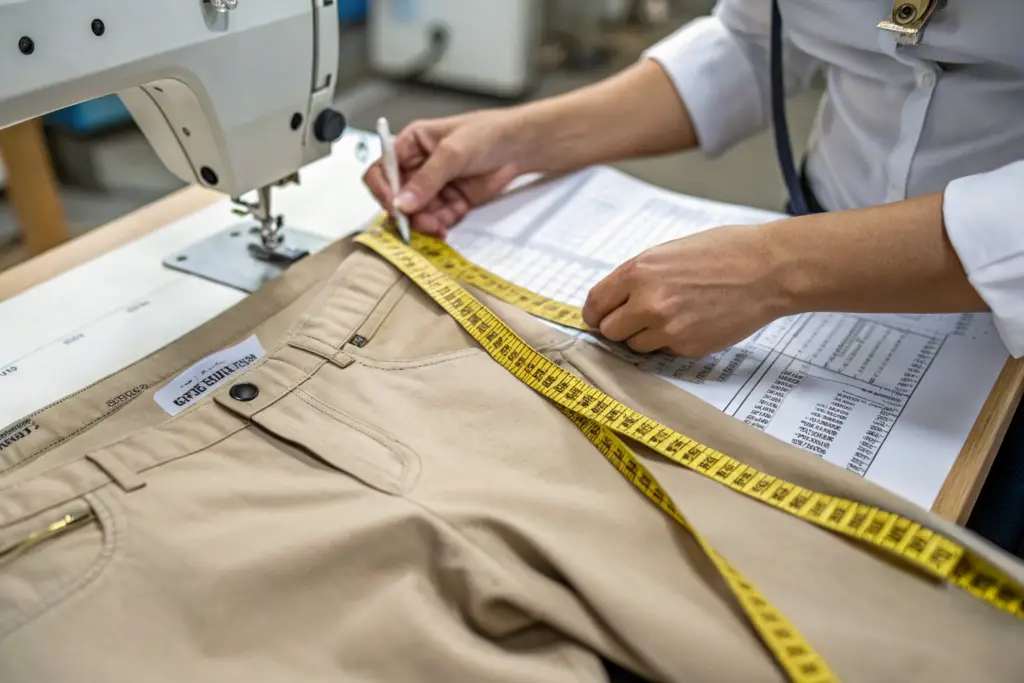
AQL stands for Acceptable Quality Level. 2.5 is the standard for apparel. It means if we make 1,000 pairs of your linen pants, we pull 80 pairs randomly. If more than 3 of them have a major defect—like a broken seam, a color bleed, or a hole in the fabric—we fail the entire batch. We don’t ship it.
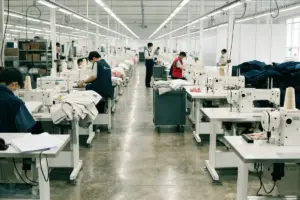
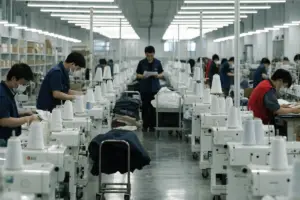
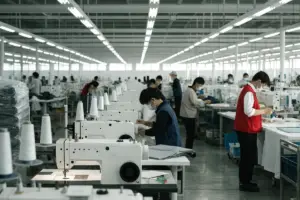
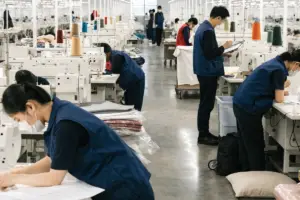
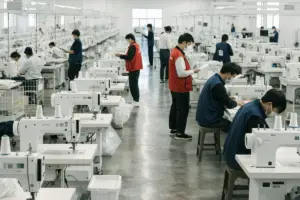
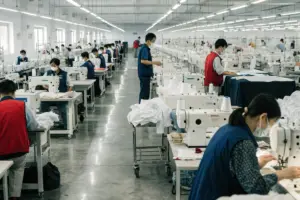
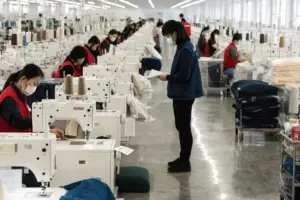
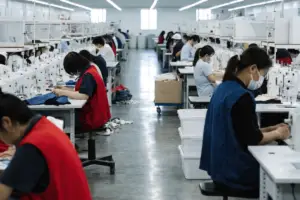
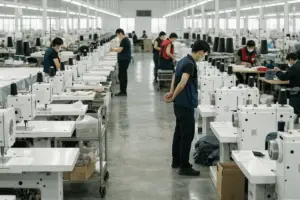
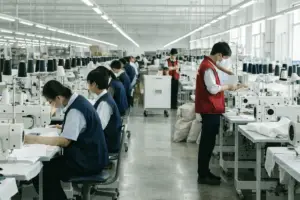
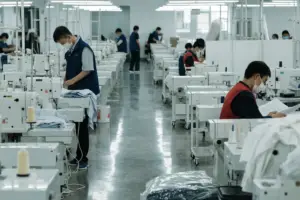
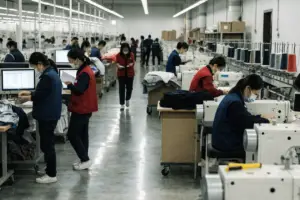
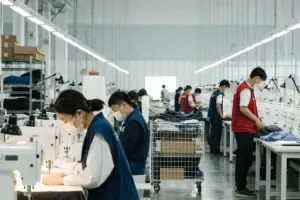
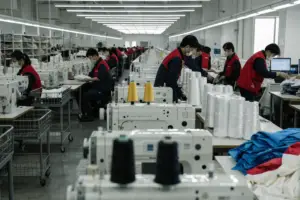
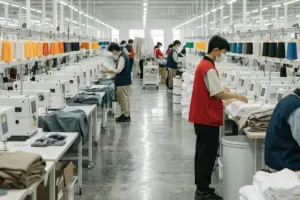
But I do better than that. We do in-line inspections, not just final random checks. When the first 20% of pants are sewn, my QC team is on the line. We check the stitch per inch. We check the drape. For linen, we check for “slubs.” Some slubs are natural and beautiful. Some are a sign of weak yarn that will tear. My team feels every piece. A client in Florida once sent me an angry email about “dirt” on his cream linen pants. It was a natural cotton seed husk. Because we did the in-line check, we caught it on 12 out of 500 pairs and replaced them before packing. The 12-piece defect rate was gone before he ever saw it. That is the real value of a QC certificate: it’s what you prevent.
Does Shanghai Fumao’s BSCI Audit Matter for Ethical Production?
Yes, and it matters more now than ever. A BSCI audit checks our social performance. It verifies we don’t use child labor. It verifies we pay minimum wage or above. It makes sure our fire exits are not blocked. American consumers now check these things. They scan a brand’s website for an ethics statement before buying.
Our BSCI report is available to our clients. It shows a score. It shows corrective actions we have taken. It is proof we are a modern factory, not a sweatshop. An amfori BSCI audit reduces your risk as a buyer. If a newspaper ever asks your brand, “Who made your linen pants?”, you can say, “Shanghai Fumao, a BSCI-audited facility.” That is the end of the story. It protects your reputation. A pair of linen pants carrying this silent backing is worth more on the shelf.
Conclusion
Importing linen wide-leg pants does not have to feel like a gamble. You need the safety certifications: a GCC backed by lead and flammability tests. You need the eco-claims to be real, backed by GOTS or OEKO-TEX. You need the customs paperwork to be flawless, with the right HTS code and a transparent invoice. And you need a factory that proves its quality with living processes like inline AQL inspections and social audits like BSCI.
I have shipped to North America for years. I know that a missing certificate can cost you a season. A delayed test report can turn a best-seller into a clearance rack item. But when the paperwork is right, it is invisible. The pants arrive. They are beautiful. They go to the store. The customer falls in love with the drape of the natural linen, and they never think about the complex supply chain behind it.
That is my job. To make the supply chain invisible for you.
If you are ready to develop your own line of linen wide-leg pants, or any premium woven garment, my team is ready. We will handle the fabric sourcing, the testing, and the compliance documents so you can focus on building your brand. I invite you to reach out to our Business Director, Elaine, at elaine@fumaoclothing.com. Tell her what you are trying to build. We will make sure your next shipment clears customs without a single worry. Let’s get started on your next collection.