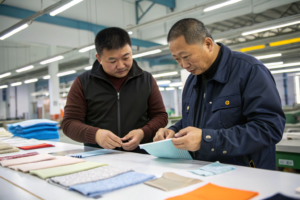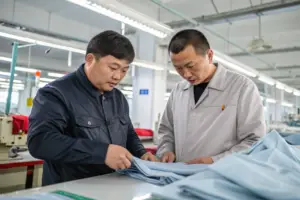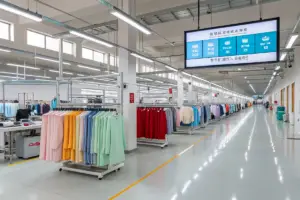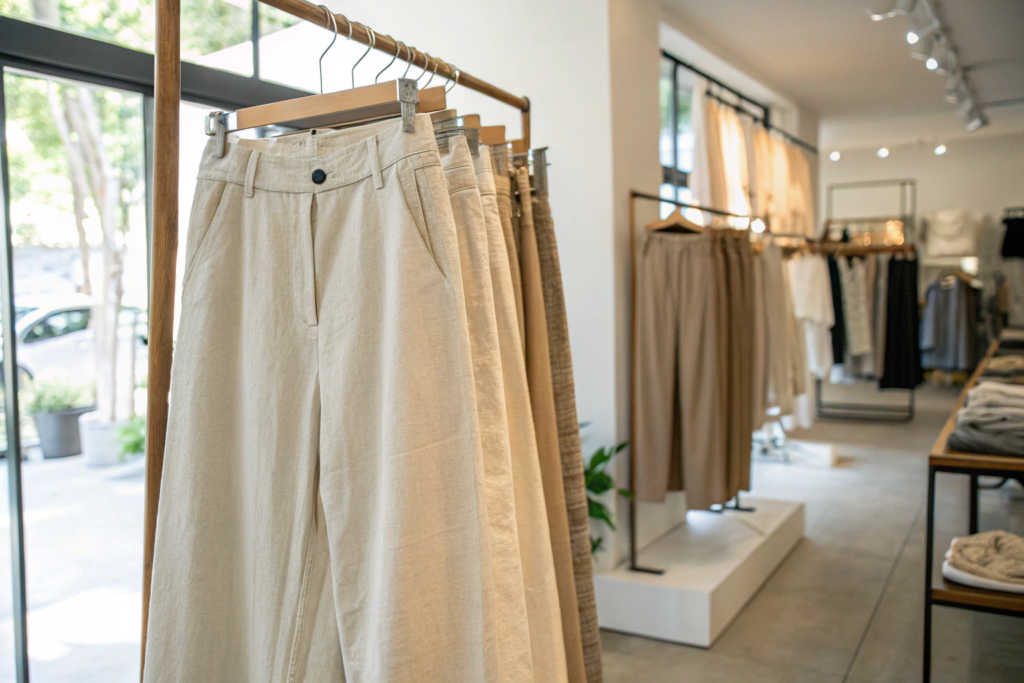
I walked through a trade show in New York last February. Every third buyer stopped at our booth, pointed at our linen wide-leg pant display, and said the same thing: "This is what my customers are asking for." Not skinny jeans. Not structured trousers. Loose, breathable, natural linen. The shift was unmistakable. A few years ago, this silhouette was a niche. Now, it is the main character of summer fashion. If you are an apparel brand owner and you are not planning your linen program for Summer 2026, you are already late.
Linen wide-leg pants are dominating the Summer 2026 forecast in North America because they sit at the perfect intersection of three powerful consumer forces: the ongoing dominance of comfort-driven dressing, a growing demand for sustainable natural fibers, and a cultural shift toward relaxed, gender-neutral silhouettes. Linen is no longer just a fabric. It is a lifestyle statement.
This is not a random trend. It has deep roots in how people work, live, and think now. I want to break down exactly why this is happening and why it is a commercial opportunity you should not ignore. As a manufacturer who talks to brand owners daily, I see the data, the demand, and the design shifts before they hit the retail floor.
What Is Driving the "Comfort Economy" and the Linen Silhouette Shift?
The pandemic ended years ago, but the comfort expectation it created never left. People learned that they can be productive without being uncomfortable. The "hard pants" versus "soft pants" conversation is over. Soft pants won. But consumers have matured. They don't want the sloppy sweatpants they lived in during 2020. They want comfort that looks intentional and polished.
The "Comfort Economy" has evolved into a demand for refined ease. Linen wide-leg pants deliver exactly that. They offer the physical freedom of pajamas with the aesthetic credibility of tailored clothing. The wide-leg cut allows air to circulate, keeping the body cool without clinging to the skin. This combination of physical sensation and visual confidence is the core driver of the trend.
This is not just a feeling. It is a response to a changed world of work.
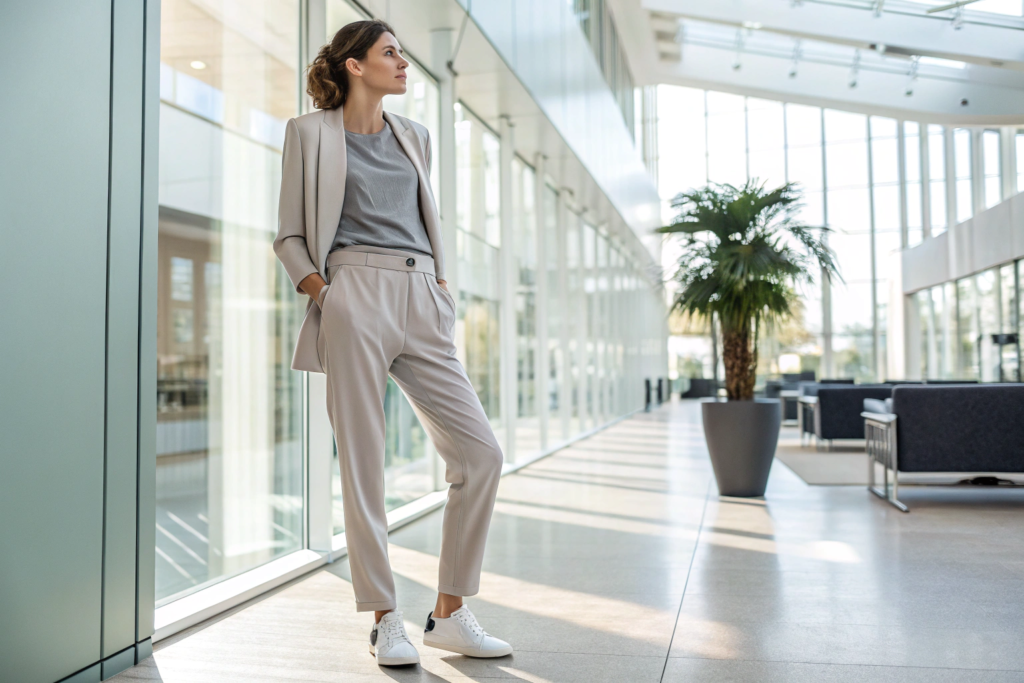
How Has the Hybrid Work Model Changed Summer Wardrobe Needs?
The office is now a hybrid space. A worker might have a Zoom call at 9 AM, a coffee meeting at 11 AM, and a work-from-home afternoon. They need one pant that works for all three. A tight, restrictive chino fails the home comfort test. A gym short fails the coffee meeting test. The linen wide-leg pant passes both.
It looks structured on camera. It feels like a vacation in real life. A brand owner I work with in Austin, Texas, built his entire Summer 2025 collection around this concept. He marketed his pants as "Boardroom to Backyard." He sold out in six weeks. He reordered twice. He told me his customer feedback was consistent: "I forgot I was wearing real pants." This is the new standard. The garment must disappear on the body. The hybrid work lifestyle has permanently erased the line between workwear and leisurewear. For Summer 2026, linen wide-leg pants are the uniform of this boundaryless life.
Why Is the Wide-Leg Silhouette Replacing Skinny Fits Now?
Fashion moves like a pendulum. We lived through a long era of skinny and slim fits. The consumer eye is tired of it. The body is tired of it. A wide-leg silhouette offers a dramatic, fresh proportion. It changes how a person walks and stands. It creates movement and presence.
Gen Z and younger Millennials view skinny jeans as a relic. They have grown up seeing oversized, relaxed silhouettes on social media platforms. The wide-leg trend is not just about aesthetics. It is about identity. It signals a rejection of the restrictive, conformist fashion of the early 2000s. Linen is the perfect fabric for this shape. A wide-leg cut in a stiff denim can feel heavy and architectural. A wide-leg cut in linen feels fluid and effortless. It drapes, not constructs. For Summer 2026, designers are pushing the width even further, playing with volume at the hem. The market is ready for a full-cut, flowing pant. And linen delivers it better than any other warm-weather fabric.
How Is the Sustainability Narrative Fueling Linen's Popularity?
The modern consumer is anxious about the planet. They read about microplastics in the ocean. They know polyester is made from petroleum. When they buy a garment, they are increasingly asking, "What is this made of, and how will it end?" This is not a fringe concern anymore. It is a mainstream purchase filter, especially for the 25-40 age group that spends the most on fashion.
Linen has a powerful, authentic sustainability story that synthetic fibers cannot match. It comes from the flax plant, which requires far less water than cotton and typically grows without heavy irrigation. The entire plant is used, producing zero waste. The resulting fabric is biodegradable. For a consumer looking to reduce their plastic footprint, choosing a linen wide-leg pant over a polyester trouser is a tangible, feel-good decision.
You don't have to stretch the truth to market linen as eco-friendly. The facts are already strong.
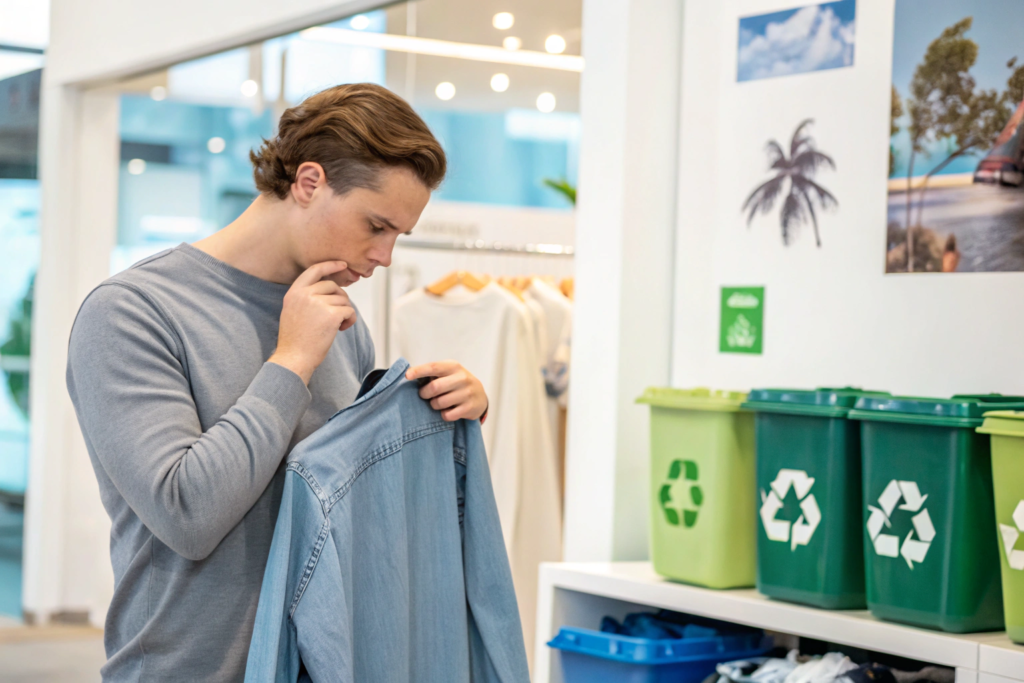
What Makes the Flax-to-Fabric Journey Naturally Eco-Friendly?
Flax is a resilient plant. It grows in poor soil. It often relies on natural rainfall. Unlike cotton, which has a historically heavy water footprint, flax is a low-impact crop. A life cycle assessment published by the European Confederation of Flax and Hemp shows that a linen shirt uses only about 6.5 liters of water in its entire production, compared to thousands of liters for a conventional cotton shirt.
This matters for marketing. You can tell a story about a field in Normandy. You can show the blue flowers. You can talk about the retting process, where dew and sunlight naturally separate the fiber from the stalk. This is a real, romantic, and true story. A polyester pant has no story. It has a chemical formula. Brands are using this contrast to build premium positioning. A client I work with in Vancouver launched a "Field to Fit" campaign for his linen wide-leg pants. He included a seed paper hangtag that customers could plant. His marketing was so effective because the product truth backed it up. The garment was not just labeled "sustainable." It was sustainable by its nature.
How Does the Biodegradability of Linen Influence Buying Decisions?
The end of a garment's life is now part of the purchase decision. A polyester pant will sit in a landfill for 200 years. It will shed microplastics every time it is washed. A 100% linen pant, when it is finally worn out after years of use, can be composted. It returns to the soil.
This is a powerful visual. "This garment will not outlive your grandchildren." That is a compelling marketing message for an eco-conscious brand. It addresses the guilt some consumers feel when buying new clothes. At Shanghai Fumao, we are seeing more clients request pure linen without polyester stitching or synthetic care labels. They want the whole garment to be compostable. They also request OEKO-TEX certified trims. This is the future of quality apparel. It is not just about looking good. It is about feeling good about the entire lifecycle of the product. Linen leads this conversation for Summer 2026.
What Role Does Climate and Practical Comfort Play in This Trend?
Summer is getting hotter. North American cities are experiencing more frequent and intense heat waves. Consumers are actively searching for clothing that will not make them sweat through their commute or their outdoor social events. Fashion becomes functional when the temperature climbs above 90 degrees Fahrenheit. And no fabric handles heat and humidity quite like linen.
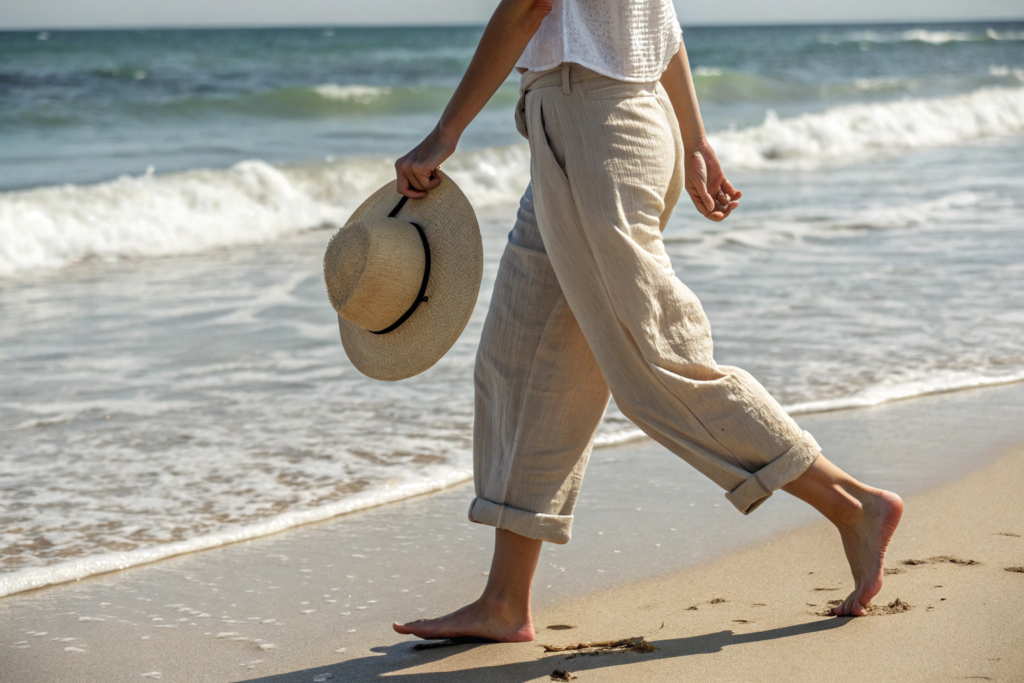
Linen is a thermoregulating powerhouse. Its natural fibers are hollow, allowing air to flow through the fabric and away from the body. It also absorbs moisture quickly and dries fast. For someone living in a hot, humid climate, a linen wide-leg pant is not just a style choice. It is a survival strategy against the oppressive summer heat.
This is the practical, physical truth behind the trend. It feels cooler because it is cooler.
Why Is Linen Called Nature's Air Conditioner?
The science is simple. Linen fibers are long and hollow. This structure creates tiny air pockets within the fabric. These pockets act as insulation, but in reverse. They stop external heat from reaching the skin. They also allow internal body heat to escape. This is thermal conductivity. Linen has a high rate of it. A study from the Journal of Textile Science & Engineering notes that linen fabric can lower skin temperature by 3°C to 4°C compared to cotton or silk in hot conditions.
A wide-leg cut amplifies this effect. The loose fit creates a bellows effect. As you walk, the fabric pumps cool air up and hot air out. A tight pant traps heat. A linen wide-leg pant ventilates. A customer in Phoenix once told me her linen pants were the only thing she could wear outside in July without feeling instantly damp. That is real-world validation of lab data. When you are sourcing for Summer 2026, this technical cooling benefit is a key sales argument for your marketing copy.
Does the Moisture-Wicking Property Prevent That "Sticky" Feeling?
Yes. Linen is hydrophilic. It loves water. It can absorb up to 20% of its own weight in moisture before it starts to feel wet. This is huge for comfort. Cotton absorbs moisture too, but it holds it. A cotton shirt gets heavy and stays wet. Linen wicks the sweat away from your skin and releases it into the air very quickly.
This rapid drying is what prevents the clammy, sticky feeling. No one wants to sit in a restaurant booth and stand up with a visible sweat mark. Linen dries before the mark has a chance to form. It also does not stick to the skin. It has a natural stiffness that creates a micro-gap between the fabric and the body. This is a physical separation that allows continuous airflow. I explain this to my clients who are worried about returns. A customer who stays dry is a customer who keeps the pants. I always recommend a minimum weight of 170gsm for wide-leg pants to ensure they drape well and don't become transparent when they do absorb moisture. This practical knowledge comes from years of manufacturing real garments for real people.
How to Stock and Style Linen Wide-Leg Pants for the 2026 Market?
Knowing the trend is one thing. Capitalizing on it is another. You cannot just throw one style of linen pants on your website and expect a sell-out. The 2026 consumer is sophisticated. They want options. They want to know how to wear the piece in multiple ways. You need to curate a small but smart collection that covers different aesthetics and use cases.
Stocking for Summer 2026 requires a strategy of core neutrals, a few fashion-forward earth tones, and thoughtful design details that elevate the pant. Styling it for your marketing means showing the versatility: dressed up with a tailored waistcoat, dressed down with a simple tank and flat sandals. The customer buys the pant, but they really buy the entire lifestyle image you build around it.
Let me give you the product roadmap that my most successful brand clients are using.
What Colors and Weights Are Retail Buyers Predicting for 2026?
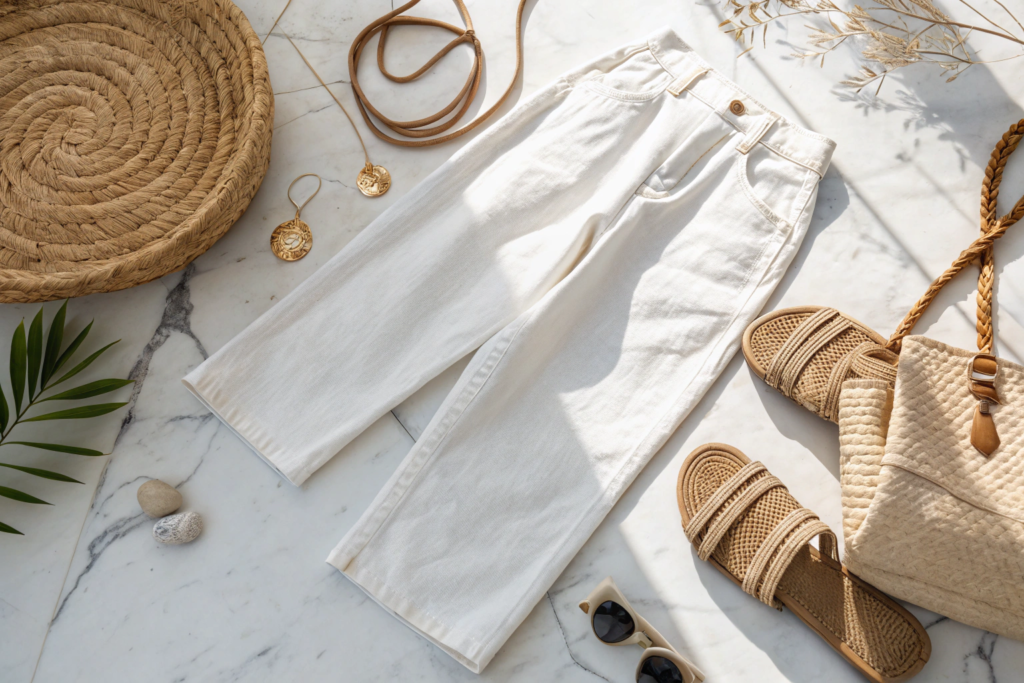
Neutral palettes still dominate, but they are warming up. Pure optic white is classic, but "natural" and "flax" tones are the real heroes. Think undyed, oatmeals, and warm sand. For fashion colors, I am producing a lot of sage green, terracotta, and a deep, moody indigo blue for my clients. These colors photograph well and feel connected to the earth and nature.
Regarding weight, the demand is splitting into two lanes. Lane 1 is lightweight, 150-170gsm, for a sheer, beachy, "resort" look. Lane 2 is midweight, 190-220gsm, for a structured, city-appropriate trouser. The midweight is the safer investment. It drapes better, hides pocket linings, and feels more expensive. Here is a quick color and weight matrix for planning your buy:
| Color Story | Fabric Weight | Target Consumer Vibe |
|---|---|---|
| Natural/Flax | 190gsm | Minimalist, Everyday Luxury |
| Terracotta/Clay | 200gsm | Boho-Chic, Festival, Artisan |
| Sage/Olive Green | 180gsm | Utility, Functional Fashion |
| Indigo/Navy Blue | 210gsm | Nautical, Smart Casual, Coastal |
| Optic White | 170gsm | Resort, Vacation, Fresh |
This is not a guess. This is based on order volumes I am processing right now for my North American clients. They are betting on these colors.
How Should Brands Style These Pants for E-commerce Success?
The styling sells the pant. A flat lay is not enough. You need lifestyle imagery. Show the pant on a real model. Show it in motion. The wide-leg shape comes alive when the wearer walks. A static photo hides the drape.
For the "coastal" look, pair the natural linen with a chunky knit cotton sweater draped over the shoulders. For the "urban" look, pair the indigo pant with a fitted white tank and a sharp blazer. Show the versatility. Show a high heel with it for an evening mood. Show a flat fisherman sandal for a daytime mood. This is how you increase the average order value. You make the customer think, "I need this pant because it works with everything I already own." I work with a brand in Los Angeles that does this exceptionally well. They create "style bundles" on their product pages. They don't just sell a pair of pants. They sell the shirt, the shoes, and the bag as a complete outfit. Their linen wide-leg pant was their number one SKU in 2025 because they sold the dream, not just the garment. Think about this for your own store. The product from Shanghai Fumao is the foundation. Your brand story is the building.
Conclusion
The linen wide-leg pant trend for Summer 2026 is not a fleeting moment. It is a convergence of long-term shifts in how people live, what they value, and how they want to feel. The comfort economy has redefined the purpose of clothing. The sustainability movement has given linen an authentic advantage. And the practical need for cooling in a warming climate makes linen the smartest choice for a summer wardrobe. These forces are not disappearing. They are accelerating.
A brand that invests in a well-made, well-styled linen program now is not just selling a seasonal item. You are building a reputation for understanding the modern consumer. You are offering a product that feels good on the skin and feels good in the conscience.
The trend is clear. The demand is rising. The only question is whether your collection will be the one they add to cart.
My team has the fabric, the designs, and the production capacity ready for your Summer 2026 range. We can develop custom weights, colors, and styling details that fit your brand identity. If you want to see our current lookbook of linen wide-leg pant samples and discuss minimums and pricing, reach out to our Business Director, Elaine, at elaine@fumaoclothing.com. She can send you a trend package and get your development started this week. Let's get your collection into the market before your competitors even finish their designs.