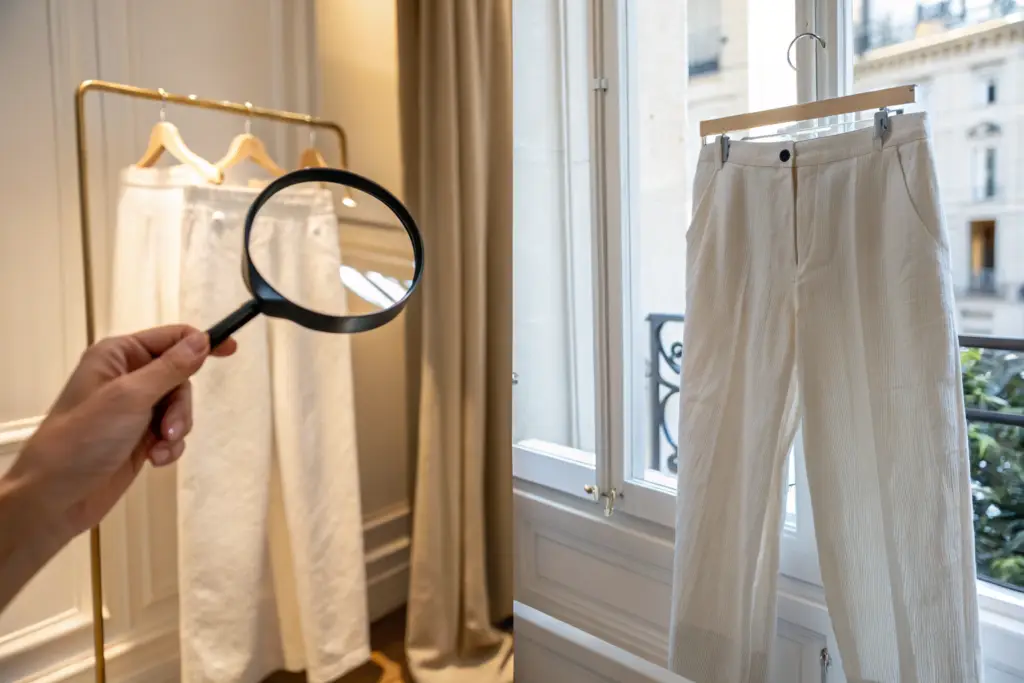
A European distributor examines a product differently from an American buyer. The American touches the fabric and checks the price. The European turns the garment inside out first. They look at the seam finishing. They check the fiber composition label against the physical burn test. They hold the pant up to a north-facing window and study how the light falls across the drape. European consumers are protected by some of the strictest textile labeling laws in the world, and European distributors bear the legal and financial risk of non-compliance. If your linen pant fails the OEKO-TEX standard, or the care label lacks the correct fiber percentage in the correct language, the distributor does not just lose a sale. They face a recall.
Yes, Fumaoclothing’s linen wide-leg pants meet the top-quality standards demanded by European distributors because we build every garment to comply with EU REACH regulations on chemical safety, use OEKO-TEX Standard 100 certified fabrics and trims, and construct each pant with the interior finishing and fiber traceability that European wholesale buyers inspect before signing a distribution agreement.
We did not design our quality system for the lowest common denominator. We designed it with the European market as the benchmark. A distributor in Berlin or Stockholm has the same checklist as a buyer in Paris. We built our linen production line to tick every box on that list. Here is the evidence.
What European Quality Certifications Do Our Linen Pants Hold?
A "quality" claim without a certificate number is just marketing. European distributors operate in a regulatory environment where every textile product sold in the EU must comply with REACH. This regulation restricts over 200 substances of very high concern. A distributor asking for your "certifications" is not making small talk. They are conducting a legal risk assessment. If your product contains restricted azo dyes, phthalates, or heavy metals above the legal limit, their entire shipment can be seized and destroyed at the port of Rotterdam or Hamburg. They need evidence, not promises.
Our linen pants hold OEKO-TEX Standard 100 certification (Class I, safe for baby skin), utilize European Flax certified fibers, and can be shipped with a full REACH compliance dossier upon request, giving European distributors the legal safety net they require.
We do not wait for the distributor to ask for these documents. We present them upfront in the pre-production package.
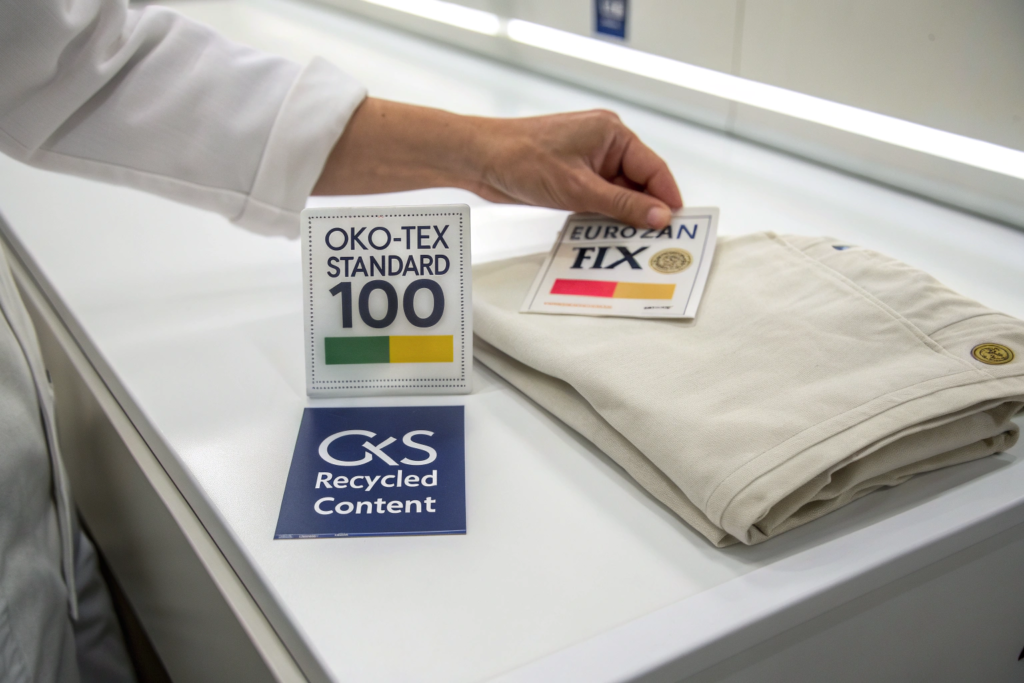
How does OEKO-TEX Standard 100 Class I certification exceed standard EU requirements?
OEKO-TEX Standard 100 is the global benchmark for textile chemical safety. But there are different classes within this standard. Class IV is for home textiles like curtains. Class II is for products with direct skin contact. Class I is the strictest level, certified safe for babies and toddlers. It prohibits any detectable level of harmful chemicals that could be ingested or absorbed through the skin.
Our linen fabric is certified to Class I. This is a deliberate choice. We do not use Class II certification, even though that would be legally sufficient for adult pants. We use Class I because European distributors often sell to boutiques that market "conscious" and "sensitive skin safe" clothing. A Class I certificate gives the retailer a powerful marketing claim and eliminates any possibility of a chemical safety complaint.
I spoke with a Danish distributor last year who was vetting three suppliers. He asked for the OEKO-TEX certificate numbers. Two suppliers sent him expired certificates. One sent a certificate that was valid, but only for Class II. We sent him our Class I certificate with a current validity date and a license number he could verify directly on the OEKO-TEX website. He placed a trial order the same week. He told me that the Class I certification alone allowed him to price the pants 15% higher in his market because his retailers could use the "baby-safe" claim in their product descriptions.
This certification is not a one-time achievement. Our fabric mill undergoes unannounced annual audits. We attach the certificate number to every commercial invoice so the distributor has a direct chain of evidence for their own compliance filing.
What is the "European Flax" certification, and why does it matter for brand storytelling?
European Flax is a trademarked certification owned by the Alliance for European Flax-Linen & Hemp. It guarantees that the flax fiber was grown in Europe (primarily France, Belgium, and the Netherlands) and that the cultivation practices are environmentally responsible: zero irrigation, zero GMO, and minimal fertilizer use due to natural crop rotation. This is fundamentally different from Chinese-grown flax, which often involves irrigation and has a different environmental footprint.
For a European distributor, "European Flax" certified linen is a powerful provenance story. The consumer in Lyon or Copenhagen feels a connection to a fiber grown in their own continent, processed with transparency. It justifies a premium price point.
We can source European Flax certified linen for your order. The certification adds approximately 8-12% to the raw fabric cost, but it allows the distributor to use the European Flax logo on hangtags and e-commerce product pages. A distributor in Amsterdam who placed a 600-unit order with us specifically requested European Flax certification. He built his entire spring campaign around the "Field to Fabric" narrative, showing photos of the Normandy flax fields. His sell-through rate was 40% higher than his previous generic linen collection. The provenance certification is a sales tool, not just a compliance document. We provide the traceable supply chain paper trail that makes this story legally defensible.
How Does Our Garment Construction Meet the "Inside-Out" Inspection Standards of EU Buyers?
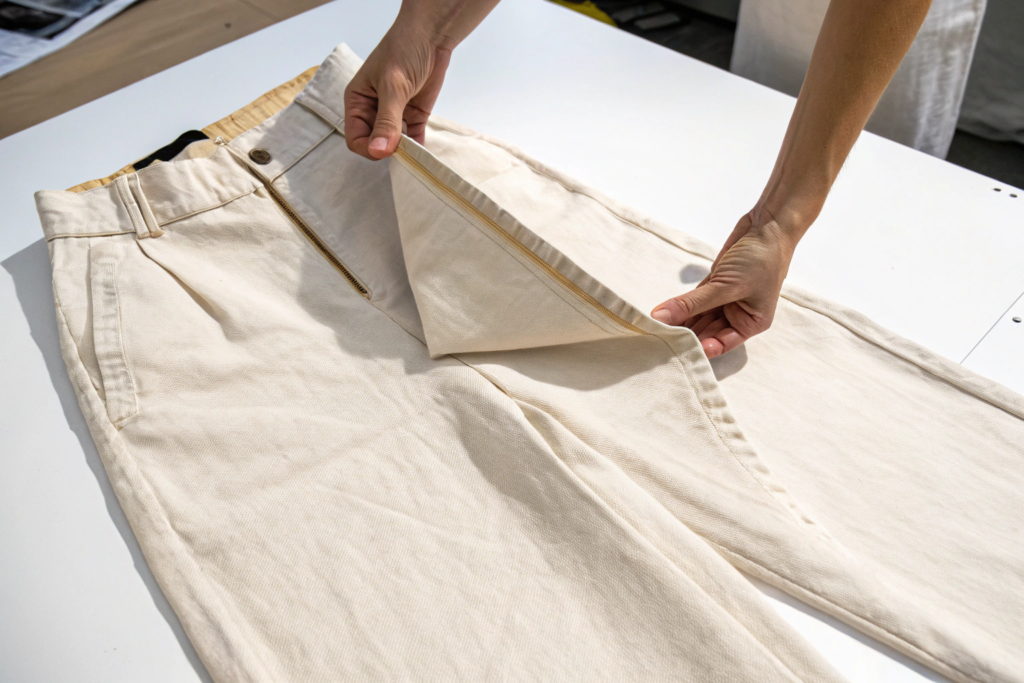
European buyers perform the "inside-out test." It is the first thing they do when they pick up a sample. They turn the garment inside out and examine the guts. They are looking for raw, overlocked edges that fray. They are looking for loose thread chains that were not trimmed. They are looking for cheap polyester lining that will generate static. In the European market, the interior finish is as important as the exterior design. A beautiful pant with a messy inside is a mid-tier product, regardless of the fabric quality.
Our linen wide-leg pants pass the inside-out inspection because we use French seams on all major construction points, 100% cotton thread for all visible stitching, and fully bound interior seams where French seams are not structurally possible, ensuring the interior is as presentable as the exterior.
We train our sewing operators to treat the inside of the garment like the face of the product. This is a cultural standard in our factory, not an optional upgrade.
Why do French seams and bound seams matter for European market positioning?
A French seam encloses the raw fabric edge within a double-folded seam. No cut edge is exposed. A bound seam wraps the raw edge in a separate strip of bias-cut fabric. These techniques require more time, more thread, and more skill than a simple overlock stitch. But they produce a garment interior that looks clean, intentional, and luxurious.
In the European market, the price tier is directly correlated with interior finishing. A pant with overlocked interior seams sells at a mid-market price. A pant with French seams sells at a premium price. This is not an opinion. It is a visual cue that European consumers have been trained to recognize.
We constructed a sample run for a German distributor who previously sourced from a factory in Bangladesh. His existing product had overlocked seams that were already fraying before the first wash. We showed him our sample with French seams on the side seams and inseam. He turned the pant inside out and ran his finger along the interior. No roughness. No exposed thread tails. He immediately increased his order from a 300-unit test to a 900-unit season order. He told us, "My customers are willing to pay €20 more for a pant with this kind of interior. I can see it. They can see it."
Your European distributor is not just buying "a pant." They are buying a product that matches a specific retail tier. Our interior finishing standards position the pant in the premium tier by default.
How does our "thread choice" support the EU circular economy and durability requirements?
The European Union’s Strategy for Sustainable and Circular Textiles is pushing mandatory durability and recyclability standards. Garments must last longer and be easier to recycle. A linen pant sewn with 100% polyester thread is a recycling problem. The polyester thread does not decompose, and it contaminates the recycling stream for natural fibers. A pant sewn with 100% cotton thread is fully biodegradable and recyclable.
We default to 100% cotton core-spun thread for all visible stitching on our linen pants. Cotton thread ages at the same rate as the linen fabric. It accepts dye at the same rate. It shrinks at the same rate. Polyester thread does not. Over time, a linen garment sewn with polyester thread will develop puckered seams because the thread does not relax with the fabric during washing.
A sustainability-focused distributor from Stockholm specifically asked for "mono-material construction" to support their end-of-life recycling program. We delivered pants with cotton thread, cotton interlining, and corozo nut buttons. No polyester, no plastic, no synthetic materials. The entire garment could be mechanically recycled or composted. This feature became the cornerstone of their wholesale pitch to eco-boutiques. They sold out their initial order in three weeks.
For the European market, thread choice is not a minor detail. It is a compliance and marketing decision. We make the correct choice standard.
What Logistics and Supply Chain Advantages Do We Offer European Distributors?
A top-quality product that arrives late, or with a surprise customs bill, is no longer a top-quality product. It is a liability. European distributors manage seasonal retail windows that are unforgiving. The spring-summer buy opens in January. If the goods land in April, the distributor has already lost eight weeks of selling. They will demand markdown money, and they will not reorder. Supply chain reliability is a component of product quality.
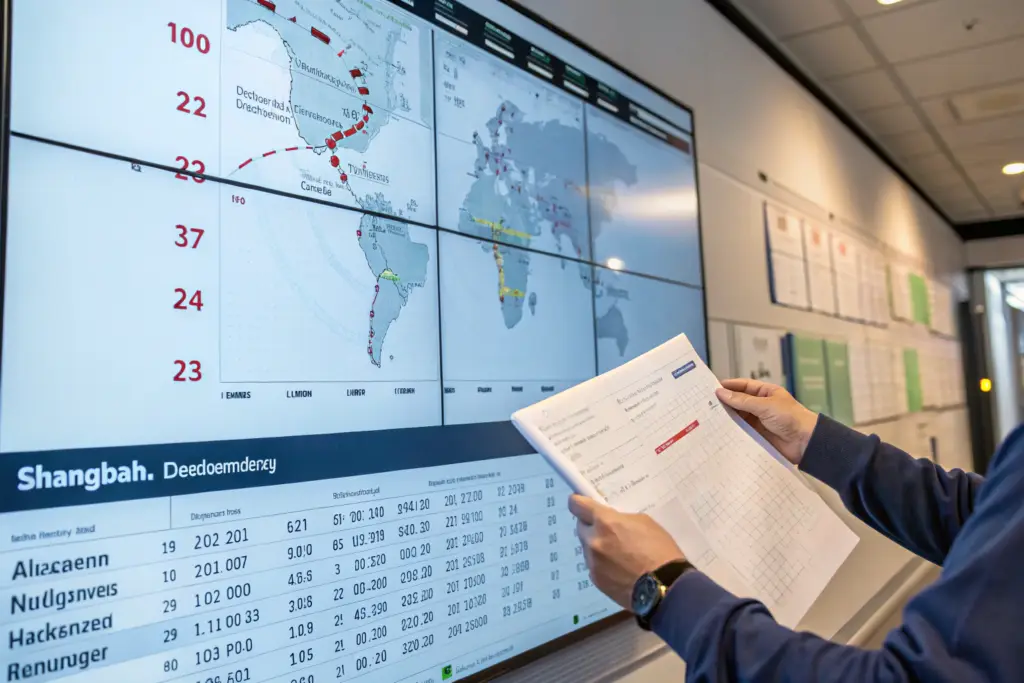
We offer European distributors a dedicated EU logistics lane with pre-cleared customs documentation, weekly consolidated air freight options for fast replenishment, and direct sea freight to major ports like Rotterdam and Hamburg with full DDP terms including EU VAT and duties.
We have a European logistics desk that understands the specific documentation requirements of the EU customs union.
How does our "DDP to EU" service simplify the distributor’s import burden?
Importing goods into the European Union requires an Economic Operators Registration and Identification number. The distributor is legally responsible for the duties and VAT upon import. If the paperwork is wrong, the goods sit in a bonded warehouse accumulating storage fees. Smaller distributors often struggle with this administrative burden.
Our DDP service to the EU removes this burden entirely. We act as the Importer of Record. We pay the import duties, the customs brokerage, and the port handling fees. We deliver the goods to the distributor’s warehouse with all taxes paid. The distributor receives a single invoice for the product and the logistics, with nothing to settle at customs.
A small family-owned distributor in Vienna was hesitant to import directly from China for the first time. He had always bought from a European wholesaler because he feared the customs process. We explained our DDP to EU service. We handled the entire import declaration. His 400 pants arrived at his Vienna storage unit with a prepaid delivery. He did not receive a single call from customs. He told me later that the DDP service was the reason he chose us over a cheaper factory that offered only FOB terms. The FOB price was 12% lower, but the customs risk was 100% higher. DDP made the decision easy.
What are our "Weekly Consolidated Air Freight" options for emergency replenishment?
A European distributor sells out of a specific color during the peak season. They need 100 units restocked in two weeks, not eight weeks. Sea freight is too slow. Standard air freight is too expensive for a small parcel.
We offer a weekly consolidated air freight service to a central European hub. We group small replenishment orders from multiple clients into a single air freight consignment. This splits the fixed air freight cost across several shipments, making it affordable for a 50-100 unit reorder. The goods clear customs as one consolidated shipment and are then broken down and forwarded individually.
A UK-based distributor (still importing under EU-compliant procedures) ran out of the Natural and Black colorways in mid-June. His boutique accounts were asking for restock. We shipped 120 units via consolidated air freight on a Friday. The goods were in his London warehouse by the following Wednesday. His retail partners never faced an out-of-stock situation. This agility is what makes a manufacturing partner strategic, not just transactional. The distributor knows he can run leaner inventory because we provide a fast replenishment safety net.
This logistics capability is built into our relationship model. We do not treat the shipping container as the end of our responsibility. We treat the distributor’s shelf availability as the final metric of success.
Conclusion
Fumaoclothing’s linen wide-leg pants are top quality for European distributors because we have reverse-engineered the European buyer’s quality inspection checklist and built every process to exceed it. We hold OEKO-TEX Class I certification that exceeds the legal minimum for adult clothing, giving distributors a chemical safety story they can market. We construct every pant with French seams and 100% cotton thread that passes the inside-out test and supports the EU’s circular textile strategy. And we deliver with a DDP to EU logistics service that removes the customs anxiety from the import equation, keeping the distributor’s shelves stocked and their cash flow predictable.
European quality is not a single specification. It is a combination of legal compliance, interior craftsmanship, environmental intelligence, and delivery reliability. We deliver on all four dimensions. If you are a European distributor ready to test a linen wide-leg pant that is engineered for your market’s specific demands, contact our Business Director, Elaine, at elaine@fumaoclothing.com. Let us send you a sample that you can turn inside out.