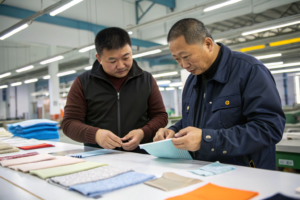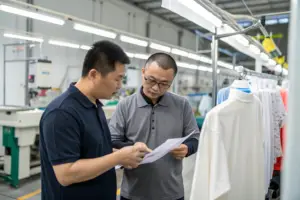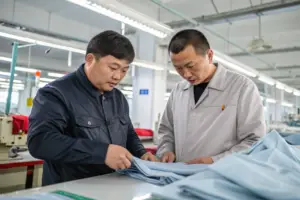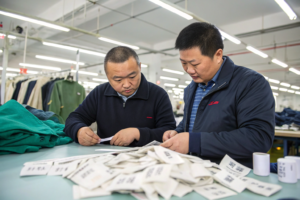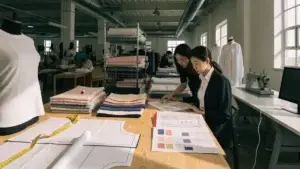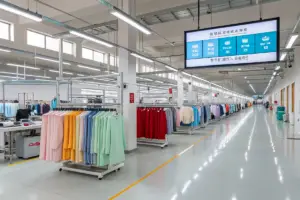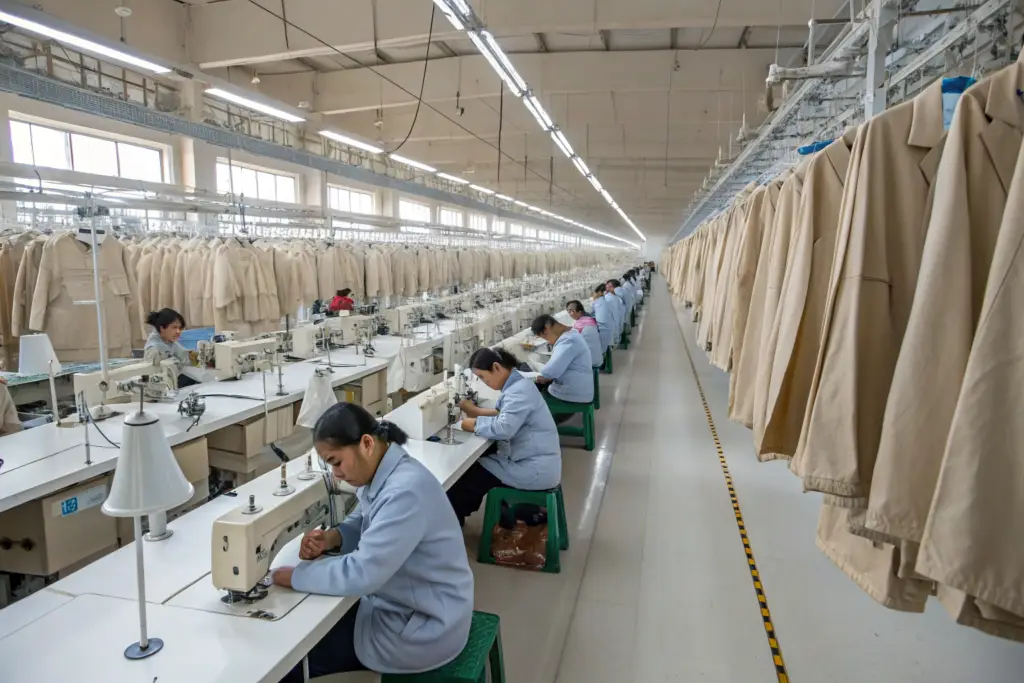
A brand owner from New York once told me he lost a $200,000 department store contract. The buyer loved his linen pant design. He won the bid. Then his small factory in another country failed to ship 5,000 units on time. They had only delivered 1,200 after three months. The big order turned into a canceled contract and a damaged reputation. High volume is not just about having many sewing machines. It is about raw material reserves, workforce stability, and a production system that does not collapse under pressure.
Yes, Shanghai Fumao is structured to produce and ship large volume orders of linen wide-leg pants for apparel companies. Our factory has 5 dedicated production lines and a vertically integrated supply chain that allows us to maintain consistent quality across orders ranging from 3,000 to over 50,000 units per month, without sacrificing the delicate handling that natural linen fabric requires.
A big order is a test of trust. You are not just buying pants. You are buying a delivery commitment. You need to know if the factory can scale up without cutting corners. I want to show you exactly how we make that happen.
What Is Your Actual Monthly Production Capacity for Linen Pants?
Every factory claims they can handle "big orders." I have seen factories that promise 30,000 units a month with only two cutting tables. It doesn't work. Math matters. Fabric usage matters. Linen is not polyester. You cannot rush it through an automatic feed without it slipping and distorting. You need space, time, and skilled hands.
Our current setup can deliver between 25,000 and 35,000 pairs of linen pants per month, depending on the style complexity. A basic elastic-waist wide-leg pant is faster. A style with a zipper fly, belt loops, and pocket linings takes more time. We plan our line loading based on the garment's Standard Minute Value, so our capacity numbers are realistic, not marketing hype.
A shipment of 30,000 units is not one giant box. It is a rolling process. Let me break down how we structure that flow.
How Do We Manage the Cutting Room for Bulk Linen Orders?
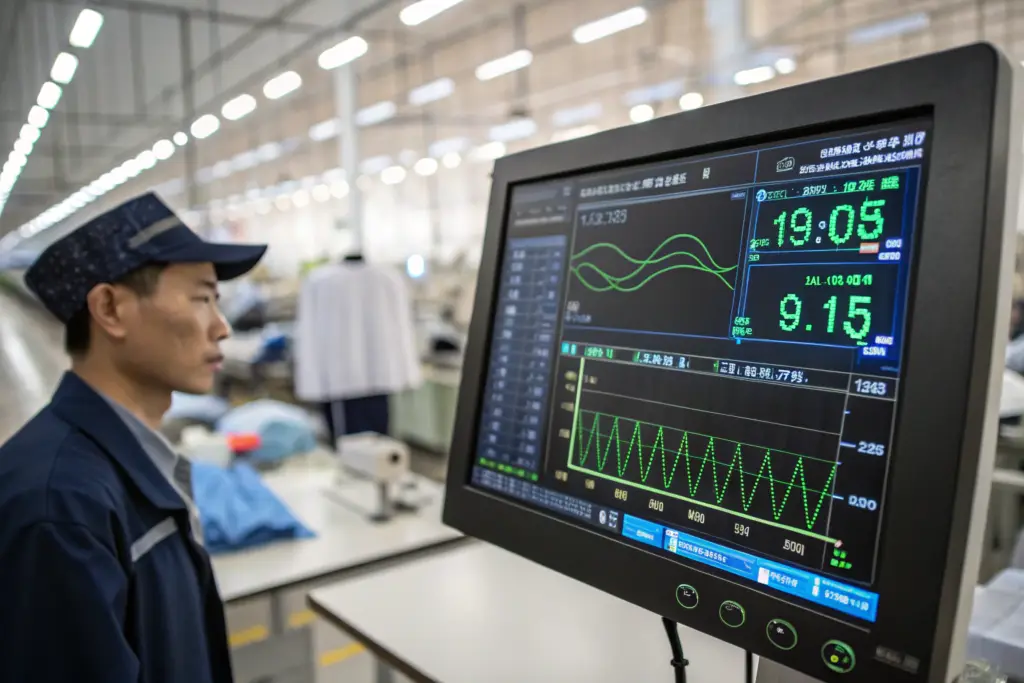
The cutting room is where volume dreams go to die if you are not careful. Linen is slippery. It has a loose weave. If you stack 100 layers on an automatic cutter and the blade is dull, you get "fused edges." You get panels that are not the same size as the paper pattern. This is why some bulk linen orders arrive looking like two different sizes in one style.
We use a combination of an automatic spreading machine and manual re-alignment. For big orders of 10,000 units, we don't cut all fabric in one day. We cut in "waves." Each wave corresponds to a production week. My master cutter has been working with linen for 15 years. He adjusts the plastic overlay film to reduce air pockets. This stops the fabric from shifting. We also use a vacuum compression table to lock the layers before the blade moves. This step costs us 15% more time per lay but reduces panel size deviation by 8%. For you, that means Size Medium across Batch 1 and Batch 4 will fit the exact same way.
What Raw Material Stock Can Support Bulk Production?
You can't make pants without fabric. If you place an order for 50,000 linen wide-leg pants, we need roughly 65,000 meters of fabric. If I buy that fabric only after you pay, there is a 20-day delay. Most small factories wait for your deposit. We don't.
Shanghai Fumao maintains a strategic raw material alliance with two large linen mills in the Yangtze River Delta. We have a rolling reserve of high-quality 100% linen greige fabric in standard weights, like 160gsm and 210gsm. This means we can start cutting 40% of your order within three days of final confirmation. For a large order, this head start is the difference between catching the summer window and missing it. Last spring, a brand in California needed 15,000 pieces fast-tracked. We finished dyeing and cutting while their final label approvals were still in the email. They hit the retail floor two weeks early. They sold out.
Can You Guarantee Consistent Quality in a 10,000-Piece Linen Order?
This is the real fear. I know it. You approved a sample. It was beautiful. The drape was perfect. The linen had a crisp, elegant texture. But can I repeat that 10,000 times? A prototype is easy. Scaling is hard. When you blow a $30,000 order on inconsistent quality, you can't sell "almost perfect" to your customers.
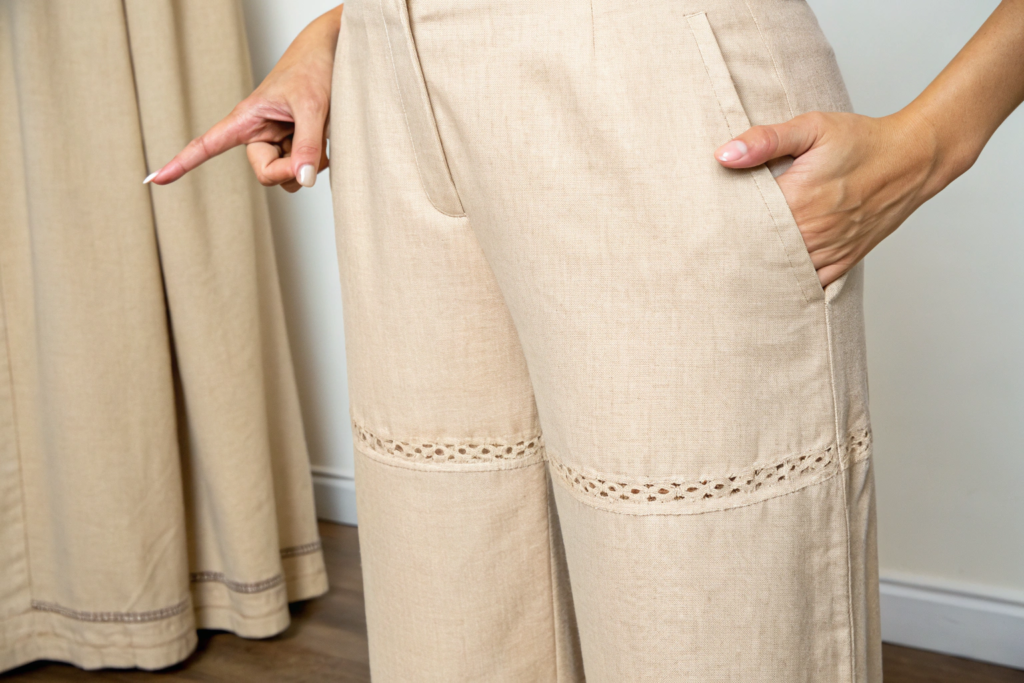
Consistency in bulk comes from a strict "Golden Sample" protocol. Before mass production begins, we produce a sealed approval sample. This is not just a design sample. This is a technical standard. We create a physical "Specification Bible" that includes the exact fabric swatch, the approved thread color, the seam construction type, and the measurement tolerance chart. Every worker on the line references this standard daily.
We don't let workers memorize a style. We make them measure against the sample.
How Does the Inline Inspection Process Stop Defects Early?
For a 10,000-piece run, a final inspection is too late. If you find a problem at 10,000 units, you have 10,000 pieces of garbage. We use a three-gate system. Gate 1 is at the cutting stage. We check 20% of the cut panels against the hard pattern. Gate 2 is on the sewing line. When 500 pieces are done, we pull 50 and do a full check on a mannequin. Gate 3 is the final AQL 2.5 audit before packing.
I remember a batch of dark indigo linen pants for a brand in Texas. The first 800 pieces were perfect. Then the inline inspector saw a tiny shading issue in the seat seam. The tension on the sewing machine had drifted overnight. A bolt was loose. We fixed it in 20 minutes. Because we caught it at 800 pieces, we only had 12 pieces to repair. Without the inline gate, we would have had 6,000 pieces with a subtle stripe on the backside. The brand owner never knew anything happened. He just knew the delivery was perfect.
What if a Major Defect Is Found During the Final Audit?
Sometimes a problem is systemic. We use a "Root Cause and Process Retraining" protocol. If a final AQL audit fails, we don't just "fix the broken ones." We hold the shipment. We find the operator who made the mistake. We watch the machine. We check if the lighting in the work station was poor. Often, inconsistent seams come from fatigue.
For large orders, we schedule production so no worker sews the exact same seam for more than 4 hours without rotation. This is a psychological fact. A bored operator makes mistakes. I learned this from a lost shipment in 2018. I pushed a crew to do 4,000 shirt collars in two days. The repetition caused a 5% defect rate. Now, we rotate tasks. It keeps the defect rate under 1.2% even for orders over 20,000 units. Large order production is not just about machines. It is about managing human attention.
How Does Your Logistics System Ship 20,000 Pants Without Chaos?
A logistics failure can destroy a linen season. Linen is a spring/summer fabric. Your selling window is short. If 20,000 pants arrive in late July instead of early May, you have missed the prime retail price. You are now selling at a 30% markdown. The product is perfect, but the timing is dead. Shipping bulk is about precision packaging, pallet optimization, and mode selection.
We handle bulk logistics through a "Container Load Optimization" plan. We don't just shove pants into a box. We engineer the packing. We use export-grade cartons with reinforced corners. We calculate the exact cubic meter usage to maximize container fill without crushing the natural fabric. We offer both FOB and DDP shipping terms, and for bulk orders, we coordinate the freight booking and shipping documents so you don't have to chase a dozen different agents.
Large orders often split. Some go to a 3PL warehouse. Some go direct to a retailer. We manage both.
How Do You Pack 20,000 Pairs to Avoid Wrinkling and Damage?
Linen creases. That is its charm. But you want the customer to do the creasing, not the shipping container. If a box is packed too tight, the pants get "set-in" wrinkles. Steam can't remove them. You have to re-press them, which costs money.
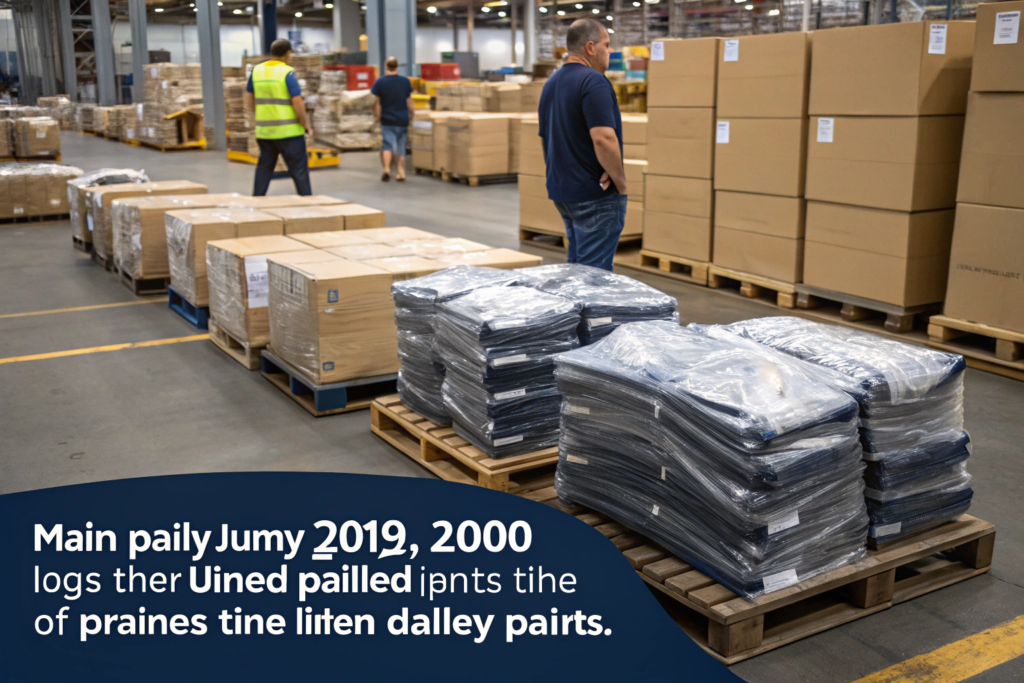
We use a flat-pack method for bulk linen. Each pant is folded with acid-free tissue paper inside. We don't use pins. We use soft clips. For a 40-foot High Cube container, we can fit roughly 18,000 to 22,000 linen wide-leg pants. We build a pallet wall inside the container to prevent shifting. We also use desiccant packs inside every box. Linen is a natural fiber. It can mildew if moisture gets into the container during a Pacific crossing. A shipment for a Florida client once arrived with wet boxes before we added desiccants. Now, it is a mandatory step for bulk linen. The extra cost is $0.02 per unit. The savings on damaged returns is thousands.
How Do You Handle DDP Shipments for High-Volume Orders?
DDP means Delivered Duty Paid. I am responsible for everything until the pants are at your warehouse door. This is what I recommend for large brands. You don't want to handle a customs bond at your office. You don't want to hire a separate customs broker for a $150,000 shipment.
Our forwarder pre-files the Importer Security Filing 48 hours before sailing. We pay the duty based on the HTS code we verified during sample development. The truck is booked while the ship is in transit. For a client in New Jersey, we recently cleared a 12,000-piece order through Long Beach. Customs flagged it for a random exam. Because our DDP agent had all the certified safety reports and a perfect packing list, the exam took 2 days instead of 7. The pants still arrived on time for their catalog launch. That is the value of a Shanghai Fumao DDP service. We own the problem until it is solved.
Do You Offer Tiered Pricing for Different Order Volumes?
Price is the language of business. But the cheapest unit price can be the most expensive mistake. I know you need to hit a margin. I know your wholesale price and your suggested retail price are already set. A bulk order must give you a volume advantage. But that advantage should not come from weaker construction or hidden surcharges.
Our pricing model is based on "Value-Graded Volume Tiers." The unit price decreases as the order volume increases, but we don't change the core construction. Instead, the savings come from operational efficiencies that scale naturally. We can optimize the marker for fabric utilization, buy thread in larger cones, and reduce machine changeover time. The cost breakdown is transparent.
I don't hide costs in shipping. I separate them.
What Are the Approximate Price Brackets for Linen Wide-Leg Pants?
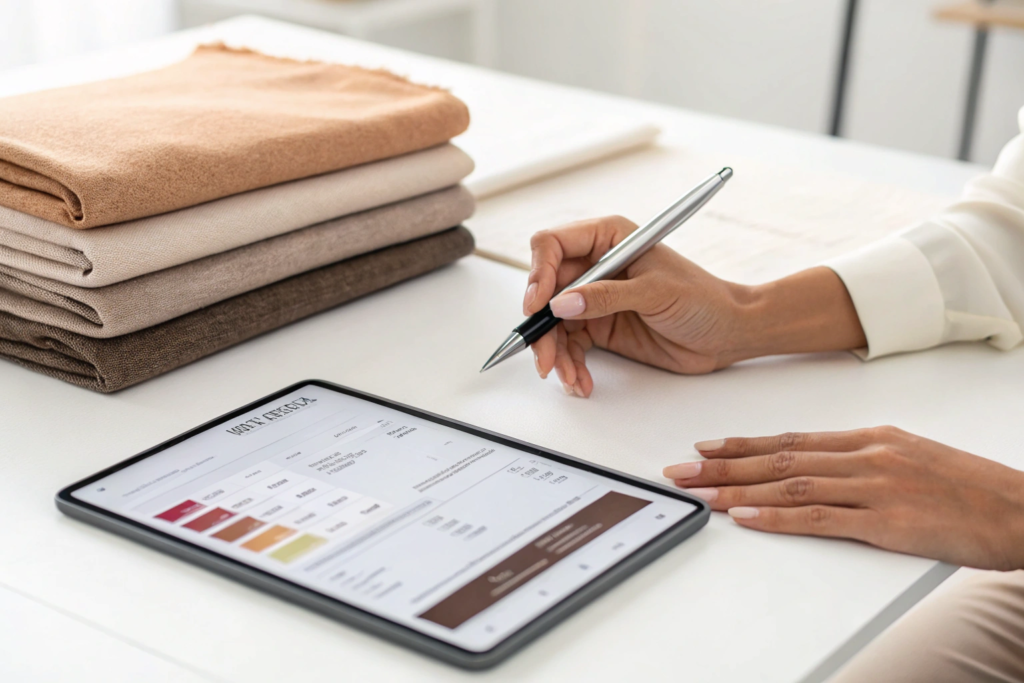
Let me give you a realistic framework. A basic 100% linen wide-leg pant with an elastic waist and side pockets is a different cost than a tailored version with a zip fly. But let's talk about the volume multiplier.
| Order Volume (Units) | Production Approach | Relative Unit Cost Impact |
|---|---|---|
| 1,000 - 2,999 | Small batch cutting; shared sewing lines | Base Price |
| 3,000 - 9,999 | Dedicated line; automated spreading | 10-15% reduction |
| 10,000 - 20,000 | Bulk fabric dyeing; full line setup | 15-20% reduction |
| 20,000+ | Continuous production; optimized logistics | 20-30% reduction |
These are not "fake discounts" where I raise the price to lower it. The fabric cost is the biggest part of a linen pant. For a 10,000-unit order, I can order the whole dye lot in one batch. This eliminates dye-lot variation and cuts the fabric cost by 8%. I pass that saving to you. A brand owner from Chicago was hesitant to increase his order from 5,000 to 10,000 last year. I showed him the math. His landed cost per unit dropped by $1.85. On 10,000 units, that was an $18,500 saving. He used that money for better packaging. His retail sell-through was excellent.
How Does Customization Affect the Price of a Large Order?
A common trap: "I ordered 20,000 units, so every change is free." It's not. Customization has fixed costs. A custom hangtag or a custom-printed main label requires a mold or printing plate setup. These costs are amortized over the volume.
For large orders, these fixed costs shrink to almost zero per unit. But complexity adds variable cost. A hidden button placket adds sewing time. A side seam tie adds labor. I always tell my clients: think of "value perception" vs. "production cost." A shell button looks expensive but costs only $0.05 more than a plastic one. A complicated, custom-embroidered pocket design can add $0.45. Is that detail worth the margin hit? We use tech pack analysis to show you the exact cost of each design choice before we cut the fabric. This keeps your bulk order profitable. Last month, we helped a brand swap a three-step hem finish for a clean double-turn hem. It saved them $0.12 per unit and looked more modern. Good design is profitable design.
Conclusion
Large volume production is a test of a factory's entire system. It is not about having a big factory floor. It is about having the raw material access to start fast. It is about having the inline inspection gates to catch a drifting seam before it ruins 5,000 pieces. It is about packing a container so the linen arrives fresh, not crushed. And it is about a pricing model that rewards your bulk order with honest efficiency savings, not a bait-and-switch.
I know you have to answer to your own buyers, your retailers, and your profit target. You cannot afford a shipment that is 80% good. You need 100% of the order delivered, on time, and on budget. This is what my team has been doing for brands across North America. The fabric is sourced. The lines are ready. The logistics are practiced.
If you have a volume order for linen wide-leg pants and you need a partner who understands the pressure of a big-season launch, I want to talk to you. We can run the numbers together. You can reach our Business Director, Elaine, directly at elaine@fumaoclothing.com. Tell her about the quantity you are considering and the style you have in mind. She will prepare a transparent feasibility plan and a timeline for you. Let's make your next big order your smoothest one yet.