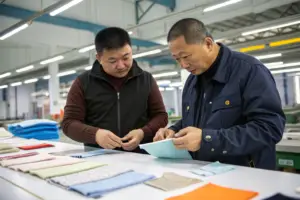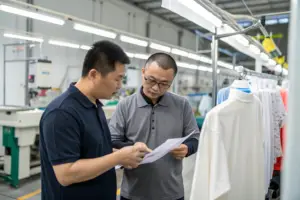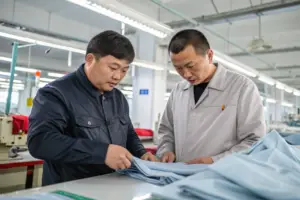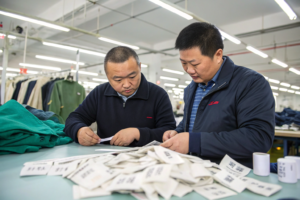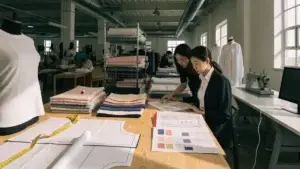
I remember a phone call from a California startup owner two years ago. His voice was full of frustration. He had a brilliant design for a sustainable hoodie but couldn't find a good factory to make it. Every supplier he contacted asked him to order 2,000 pieces per color. His total budget only allowed for 300 pieces across all colors. He was almost ready to give up on his dream. I understood his pain because I see it every day. As the owner of Shanghai Fumao, I have spent years figuring out how to help small brands bridge this gap.
We negotiate low MOQs by offering flexible production slot-sharing, material pooling, and a phased scaling plan, which turns a factory’s obstacle into a shared growth opportunity for your startup.
We know you are not a giant retailer. Not yet. You need a partner, not just a vendor. At Shanghai Fumao, we have restructured our production approach to serve ambitious startups. We do not just say we support low MOQs. We have built a system that makes it economically viable for us and for you. This means we can start with as low as 50 pieces per style for some products while maintaining our commitment to top-tier quality and competitive pricing.
Why Do Clothing Factories Usually Impose High MOQs?
When you first start a clothing brand, the most discouraging word you hear is "minimum." I know this because I have spent 15 years on the production side of the table. To get a factory like ours to say "yes" to a small order, you first need to understand why we usually say "no." It's not because we don't believe in your vision. It's about physics and economics. A production line is a hungry machine. If you underfeed it, it breaks down.
Factories set high MOQs primarily to secure the efficiency of a continuous production flow and pre-booked raw material volumes at the lowest possible cost. A production line works best when it runs one style for ten days straight. Changing a style means stopping the line, retraining the workers, changing needles and threads, and recalibrating machines. If we do this five times a day for five different small brands, we lose up to 40% of our productive time. This is why many factories push for large bulk orders that minimize these changeovers.

Why Do Setup Costs Force a Minimum Production Run?
Every garment you design starts with a hidden price tag that has nothing to do with fabric. In our garment manufacturing workflow, the pre-production phase eats up time and money long before a single stitch is made. We need to digitize your pattern, grade it into different sizes, and create a precise marker to lay out the pieces on fabric with minimal waste. This technical preparation often requires a full day of work from a skilled pattern maker, regardless of whether the final order is for 50 pieces or 5,000 pieces.
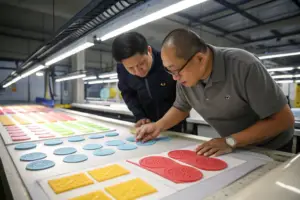
The labor cost of this setup is fixed. If we spread that $500 pattern-making fee over 50 t-shirts, it adds $10 to the cost of each shirt. If we spread it over 5,000 shirts, it adds only $0.10. The same logic applies to screen printing or embroidery digitizing. Setting up a screen costs money. We have to coat the screen with emulsion, expose your design, and wash it out. This takes time and materials. If we wash out the screen after printing just a handful of shirts, the setup cost per shirt becomes too high for anyone to afford. That’s why we often suggest digital printing for small batches.
Why Does Raw Material Sourcing Block Small Orders?
The supply chain is often the real villain behind high MOQs, not the factory itself. I once had a startup brand ask for a specific high-end Supima cotton with a high-gauge stitch. We called our trusted fabric mill, and they simply said, "One roll minimum." That one roll was 25 kilograms, enough for roughly 80 t-shirts. If the brand only wanted 30 shirts, we were stuck. We would have to buy the whole roll, make 30 shirts, and hope 50 shirts' worth of high-end, expensive fabric would be sold later to another client.
Fabric mills and accessory suppliers usually dictate the first real minimum. When a startup requests a specific custom material, the entire supply chain demands bulk commitment. A button factory needs to produce thousands of identical buttons to justify their mold setup. A zipper manufacturer prefers to dye one long chain of zipper tape in a single color. As a factory, we are caught in the middle. We have to aggregate the demand. When you work with Shanghai Fumao, we often solve this by offering you our pre-approved deadstock or stock fabric options, which have no minimum constraints and are available immediately.
How Can You Structure a Mutually Beneficial Low-MOQ Partnership?
I won't pretend that changing our factory mindset was easy. For years, we chased the big orders because they were predictable. But we realized we were missing the most exciting part of the market. The startups. The brand owners who care deeply about every single stitch. To make this work, we had to change the negotiation from a price war to a partnership discussion. You don't need to beg for a discount. You need to propose a structure that lowers our risk and increases our hope for your future.
You can secure a low MOQ by transforming a simple transactional purchase order into a strategic growth partnership with predefined scaling milestones. When a startup approaches me with a clear 12-month plan, I listen. If you tell me you need 100 units now but project 1,000 units in six months, that changes the math. I am no longer looking at a one-off, low-profit job. I am looking at a long-term client relationship. This allows me to offset the initial low-profit margins with the future potential of a standard margin production run.

Transparency is the only currency that works in a negotiation for low quantities. Last year, a menswear brand from Texas came to us with a request for 200 pairs of chino shorts. That was half our usual minimum. But the owner didn't just ask for a favor. He opened his Shopify analytics dashboard and walked me through his conversion rates. He showed me his customer lifetime value and his precise sell-through rate from his previous batch. This data convinced me he wasn't guessing. He knew his unit economics.
You need to share your sales history, audience demographics, and pricing strategy to prove you can realistically sell through the inventory. When I see a brand owner who understands their numbers, I know the risk of dead stock is lower. I need to know that you won't be stuck with 80 unsold hoodies, because if you are stuck, you won't order again. And ordering again is the whole point of our low-MOQ supply chain partnership. Share your average order value, your return rate, and even your customer feedback. This turns a subjective pitch about a "cool brand" into an objective business case for our production manager to approve the order.
| Data Point Shared | Factory's Perceived Risk Reduction | Impact on MOQ Negotiation |
|---|---|---|
| Shopify Sales History & Velocity | Proves demand exists; reduces fear of dead stock. | High: Allows for phased production plans. |
| Customer Return Data & Feedback | Shows product iteration is data-driven, not ego-driven. | Medium: Builds confidence in technical stability. |
| Projected Sell-Through Rate (12 Mo) | Validates the partnership's long-term value. | High: Justifies initial "loss leader" production. |
| Total Addressable Audience Size | Correlates directly to the probability of a reorder. | Medium: Critical for slot-sharing approval. |
How Does a Production Slot-Sharing Model Actually Work?
This is the secret engine behind our Shanghai Fumao low-MOQ program, and it's simpler than you might think. Think of it like a carpool lane for clothing. A standard production line might pump out 500 white t-shirts a day. But if you only need 100, the line would be idle for the rest of the day, wasting overhead. The slot-sharing model groups multiple small brands together who need similar fabric bases and construction methods within the same 24-hour production window.
We consolidate multiple compatible small orders onto a single production line for a day, which splits the setup cost across several different brands. This requires precise scheduling. We might put your 100 white t-shirts next to another brand's 150 white t-shirts that use the same thread weight. The line doesn't stop. The workers don't switch tasks. The only change is the printed label at the final station. For this to work, you need to be flexible on scheduling. If you are demanding a precise 5-day turnaround, slot-sharing fails. But if you can accept a 3-week lead time that fits our production planning calendar, you save thousands on setup fees.
What Concrete Concessions Can You Offer for a Lower MOQ?
I recall a tense moment with a Los Angeles activewear brand. They had a brilliant cut-and-sew legging design but could only afford 120 pieces. Our line manager refused the job because the custom elastic waistband required a massive minimum buy from our rubber supplier. The brand owner was stuck. So was I, because I really believed in her product. We sat in our sample room for two hours, deconstructing the costs, and she asked me a simple question: "What if I make the job easier for you?"
You can trade non-essential customizations for standard alternatives, absorb specific logistical burdens, or prepay for raw materials to unlock a lower MOQ. You shouldn't compromise on your main fabric or your critical design feature. But you can compromise on internal trims. You can bundle your tag orders. You can accept a simpler packaging solution. These concessions do not make your brand look cheap. They make you look smart and professional. They signal to our production manager that you respect the manufacturing process, which makes them much more willing to help you.

Can Accepting Standard Trims Unlock a Smaller Production Run?
This is the single most effective trick that most startups overlook. You might be obsessed with a custom zipper pull with your logo engraved on it. I understand. It looks beautiful. But that zipper pull requires a metal mold that costs $400 and takes two weeks to make, plus a minimum order of 1,000 units. If you switch to a premium YKK zipper with a standard matte black pull, you delete the mold cost and the minimum quantity constraint instantly. Your jacket quality actually increases because you're using the world's best zipper, but your upfront cost plummets.
Using standard, premium-grade trim options like YKK zippers and Prym snaps removes the supplier’s tooling minimums, allowing us to process your small order immediately. Every trims supplier has a minimum. The hardware industry doesn't make 50 custom snaps. They make 10,000. If you can select from our existing library of high-quality, unbranded buttons, zippers, and drawcords that we already have in stock, we bypass the bottleneck completely. The garment still looks custom because your design is unique, but the hidden parts are standardized. A customer sees your design, not the back of the button.
How Can You Use Payment Terms to Negotiate a Lower Quantity?
The financial model of a factory is simple: buy materials, pay workers, and ship goods. The riskiest part of a small order is the cash flow gap between buying your specific raw materials and getting paid for the finished goods. If you help us close that gap, we are more likely to accept your small order. I once had a startup brand owner offer to pay for the fabric directly to the mill upfront. He didn't pay us for the production yet, but he secured the raw materials. This eliminated our raw material risk.
You can offer accelerated payment schedules, such as a 50% deposit on order and 50% before shipment, to reduce the factory's working capital risk. A typical big brand might pay 30% down and the rest 60 days after delivery. That is a huge financial drain for a factory financing inventory for two months. For a small order, that's unacceptable for us. If you offer to pay the full balance before the container leaves our loading dock, we know we have zero risk of a default or a long payment terms receivable. This immediate liquidity makes a low-margin, low-quantity order feasible because the return on invested capital is actually faster than with a big brand.
| Financial Levers for MOQ Reduction | How It Works | Benefit to Startup |
|---|---|---|
| Accelerated Deposit (70% Upfront) | Covers all raw material costs before cutting begins. | Factory takes no inventory risk; MOQ drops 30-40%. |
| Direct Mill Fabric Payment | Startup pays the textile mill directly on the factory's account. | Removes fabric liability from factory’s balance sheet. |
| EXW (Ex-Works) Incoterms | Startup collects freight from the factory door in China. | Factory avoids complex export logistics on a small batch. |
| Consolidated Freight (LCL) | Startup manages the freight forwarder to group cargo. | Reduces factory's administrative overhead for export. |
How Does Fumao Clothing Guarantee Quality Despite Low Quantities?
A misconception I fight against daily is that small quantity means low quality. I hear it from buyers: "If you are just making a few pieces, you must be doing it on the side." This is false. The quality of a garment is not determined by the length of the cutting ticket. It is determined by the technical standards we enforce before the cutting even starts. At Shanghai Fumao, we don't have a "small batch" quality standard and a "big batch" quality standard. We have one standard. Our reputation depends on that seam strength and colorfastness, regardless of whether we are making 50 shirts for you or 50,000 for a retail giant.
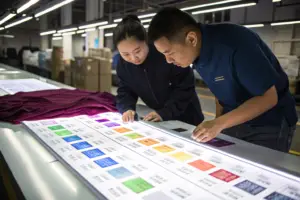
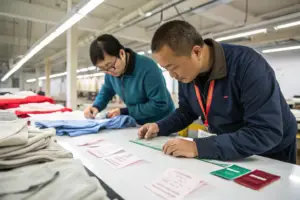
We maintain AQL 2.5 quality standards on low-MOQ orders by using the same master sample approval, in-line inspection, and final audit process we use for our largest clients. When we accept your small order, it enters the same workflow. Your patterns are locked and sealed. We cut a single pre-production sample to get your final approval on the fit. Once we move to production, our in-line inspectors check the sewing of the first 5 pieces. They check the lining attachment, the stitch density, and the seam puckering. If it passes, the run continues. If not, we stop and fix the problem immediately.

What Are the Critical Quality Checkpoints for Small-Batch Production?
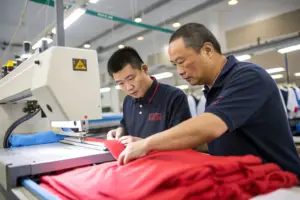
You should know exactly where we focus our eyes to ensure your small order doesn't look like a rushed student project. We focus on three main areas: the fabric integration, the attachment integrity, and the visual symmetry. First, we fuse interfacing under high heat, and for small batches, we can't afford the machine warm-up scrap. We test the bonding on a swatch to ensure the fabric shrinkage is consistent. If the shell and the interfacing shrink at different rates during pressing, the front placket bubbles. This is a defect you can't fix.
We monitor the stitch-per-inch (SPI) calibration, seam strength during production, and the symmetry of pocket placement to ensure luxury-level finish. For a standard dress shirt, we aim for 8 to 9 SPI. For a premium luxury shirt, we target 12 to 14 SPI. This isn't just aesthetic. A higher SPI holds a seam tighter and lasts longer. We use a tension meter to check the thread pull because a tight bobbin thread on a small batch can cause extremely obvious puckering on a delicate rayon fabric. These checks are vital for quality assurance because your customer will be inspecting these first shipments with a magnifying glass. They are your first impression.
Is a Physical Factory Audit Still Necessary If I Order Only 50 Units?
A low order quantity does not lower the risk of fraud. In fact, I would argue it increases it. A fraudster sees a new, inexperienced brand owner with a small budget as an easy target. They can send you a beautiful sample and then ship you rags. I never get offended when a startup asks to audit our factory. I invite it. Our factory doors in Shanghai are open for inspection, and I believe an audit is your insurance policy.
You should still conduct a live video audit or hire a third-party inspection agency before placing any order, regardless of the quantity. I once had a client from Chicago who was doing his first run of 100 hoodies. He couldn't afford a flight to Shanghai, so he hired a local verification service to walk the floor on a video call with him. They checked our BSCI certificate and cross-checked the machinery against the photos we sent. This due diligence ensures we are a real factory, not a trading company pretending to be one, which is a genuine risk on other platforms.
What Flexible Logistics Solutions Support Low-Volume Startups?
I used to think shipping was the boring part of the job. Then I saw a startup almost collapse under the weight of freight quotes. They had negotiated a beautiful low-MOQ production run. We made 150 lightweight dresses for them. The cost was great. Then the freight forwarder quoted them a minimum shipment volume of one cubic meter at a price that doubled their unit cost. The math fell apart. I realized then that a low-MOQ strategy fails completely if the logistics strategy is built for massive brands. We had to fix that.
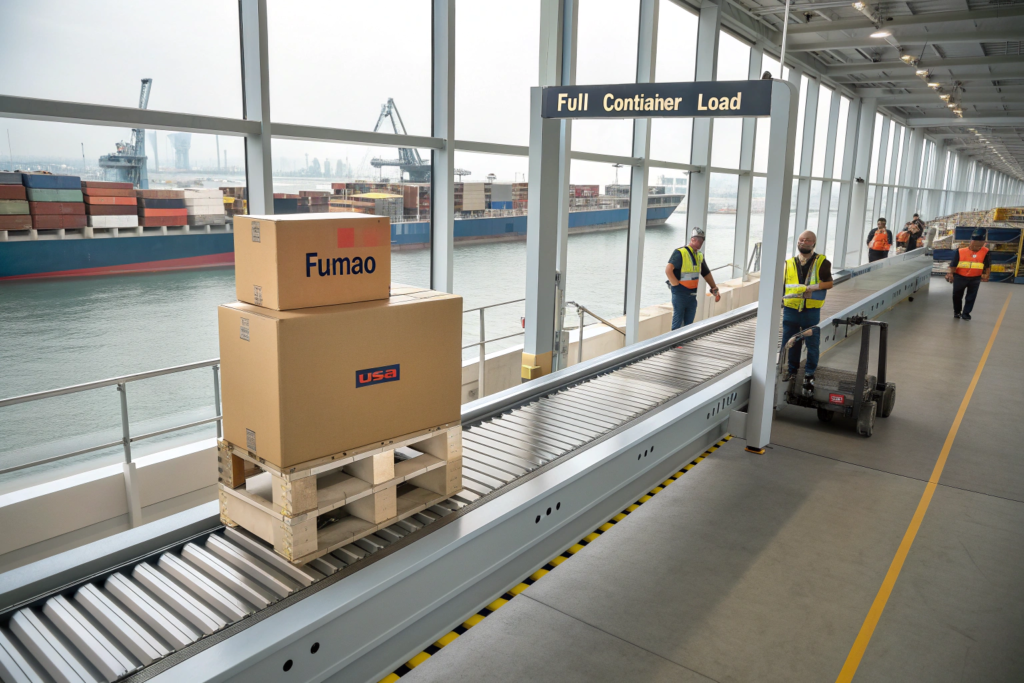
We solve the logistics problem for low-volume startups by using consolidated LCL shipping, DDP shipping for total cost visibility, and hybrid warehousing strategies. We don't leave you stranded at our loading dock in Shanghai saying, "Good luck with the freight." Our team integrates your shipping needs with other clients' goods to build a full container. This is called Less than Container Load (LCL shipping). Instead of paying for empty space in a 40-foot container, you only pay for the pallet space your goods actually occupy.
Why Is DDP Often the Safer Bet for Small Importers?
When you are a startup importing 150 units, you don't have a customs broker on retainer. You don't have a compliance department. I learned this six months ago when a client's goods got stuck in Los Angeles port because he didn't file a customs bond properly. He owed demurrage fees that ate up his entire profit margin. He called me in a panic, and while I couldn't fix his bond, I decided then to push harder for our DDP (Delivered Duty Paid) solution.
DDP shipping eliminates hidden import fees for startups, allowing you to know the exact total landed cost per unit from Shanghai to your doorstep. When we quote you a DDP price, we handle the ocean freight, the import duties, and the last-mile delivery to your door in America. You pay one transparent price. This is critical for cash flow planning. You don't get a surprise bill from U.S. Customs and Border Protection. We already calculated the duty rate based on the fabric composition. A cotton shirt has a different duty than a polyester jacket, and we factor this into your final price so you can focus solely on your sales launch.
How Can You Leverage Shanghai Fumao's Drop Shipping Capabilities?
The most modern headache for a startup is inventory space. A young brand owner from Miami once told me he was running his fashion empire from his dining room. He didn't want 200 coats in his apartment. He asked if we could just keep the stock in China and ship it directly to his customers when he sold them. At first, I said no. We are manufacturers, not a fulfillment center. But I realized the world is changing. The line between factory and market is blurring.
You can use our Shanghai warehouse as your fulfillment hub to store your small batch inventory and ship directly to your end-consumers on demand. This is a radical change for a traditional factory, but we have adopted it for select direct-to-consumer drop shipping clients. We manufacture the 200 units and store them in our bonded warehouse. When you get an order on your Shopify store, you send us a CSV file, and my team picks, packs, and ships that single item to your customer with your branding.
Conclusion
Negotiating a low MOQ isn't about twisting a factory's arm to accept a money-losing deal. It is about constructing a deal structure that makes a small order profitable and logistically sound. It starts with understanding why factories resist small orders—the setup costs, the raw material minimums, and the risk of idle production lines. Once you understand that, you can approach the conversation with solutions instead of demands. You can propose a phased scaling plan that shows your projected growth, leverage a slot-sharing model that splits overhead with other brands, and make concessions on trims and payment terms that drastically lower our financial risk. We apply the same rigorous quality control to your 50 pieces as we do to a giant order of 5,000, and we fix the broken freight model with LCL and DDP solutions tailored for tiny imports.
The fashion industry runs on relationships, and a strong relationship means shared risk. At Shanghai Fumao, we have stopped waiting for the perfect, giant order and started building the systems that make the tiny orders work. We created slot-sharing, flexible trim libraries, and drop-shipping capabilities specifically because we believe the next great American brand might start with just a sketch and a $5,000 budget. We don't want technical minimums to kill that dream. We want to be the factory that helps you grow from 100 units to 10,000 units.
If you are tired of explaining your vision to factories that cannot see past the volume, let's talk. We are ready to look at your tech pack, map out a production schedule that fits your budget, and help you navigate your first logistics plan without any hidden fees. Please reach out to our Business Director, Elaine, directly at elaine@fumaoclothing.com. She can walk you through our stock fabric options and give you a transparent quote on your first low-MOQ run today.