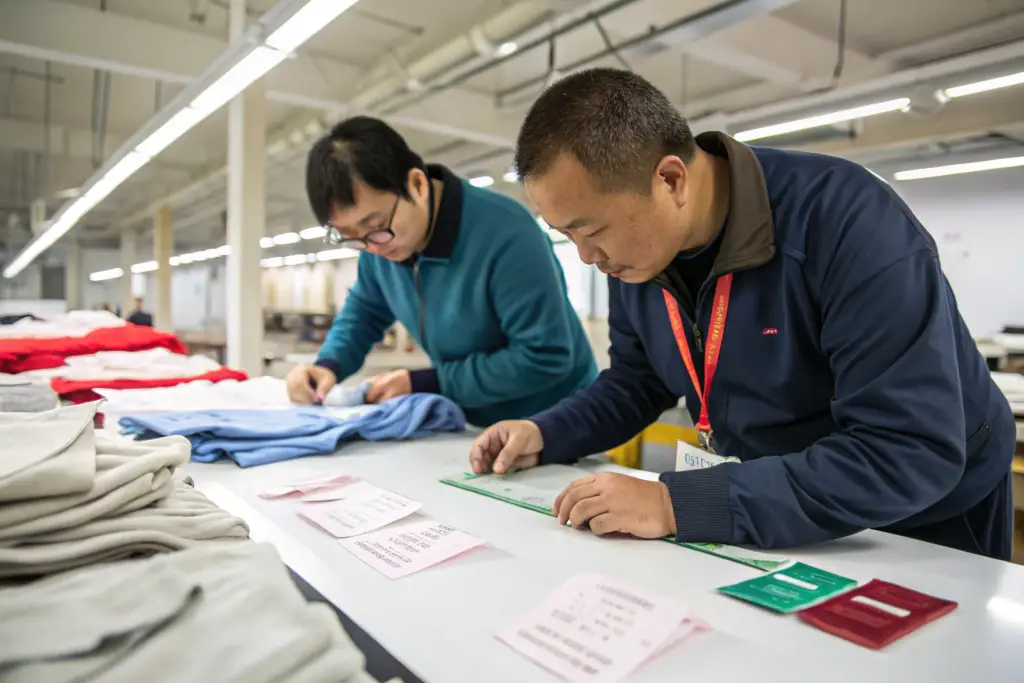
You need labels for your new clothing line. You want them to feel good. You want them to last. You also want a fair price. But the options feel confusing. TPU and silicone labels look similar in photos. They behave very differently in real life. A wrong choice can cause returns, delays, and unhappy customers.
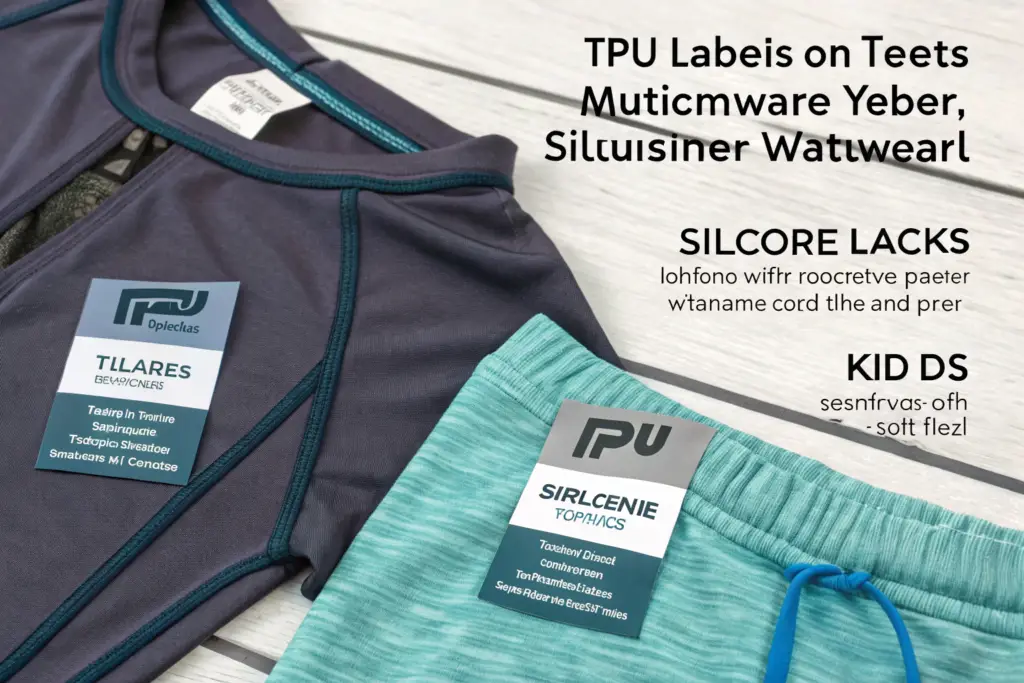
TPU labels are strong, smooth, and weldable. Silicone labels are soft, raised, and skin friendly. TPU works well for activewear and modern tees. Silicone works well for swimwear, yoga wear, and kids’ wear. At Shanghai Fumao, we make both types on our 5 production lines. We ship to North America and Europe.
This guide compares TPU and silicone labels. I will explain materials, wash life, skin feel, and sourcing. I will share real cases from our factory. You can then choose the right label for your brand.
What Are TPU Labels and How Are They Made?
You may see TPU labels on running shirts and yoga pants. They look smooth. They feel light. But many buyers do not know what TPU is. They also do not know how it is made. This lack of knowledge can slow down approvals.
TPU stands for thermoplastic polyurethane. It is a flexible plastic film. TPU labels are made by cutting a TPU film into a shape. Then the label is bonded to fabric with heat and pressure. Some TPU labels use high-frequency welding. Others use heat-transfer adhesive. At Shanghai Fumao, we test TPU thickness and softness before production.
TPU labels are not the same as silicone labels. Silicone is rubbery and raised. TPU is smoother and can be welded. TPU labels are also not woven labels. Woven labels are fabric. Each type has a place. The right choice depends on your garment and your customer.
| Feature | TPU Labels | Silicone Labels |
|---|---|---|
| Feel | Smooth, plastic | Soft, rubbery |
| Look | Flat or raised | Raised, 3D |
| Bond method | Heat, RF welding | Sewn or glued |
| Best use | Activewear, tees | Swim, yoga, kids |
| Cost | Medium | High |
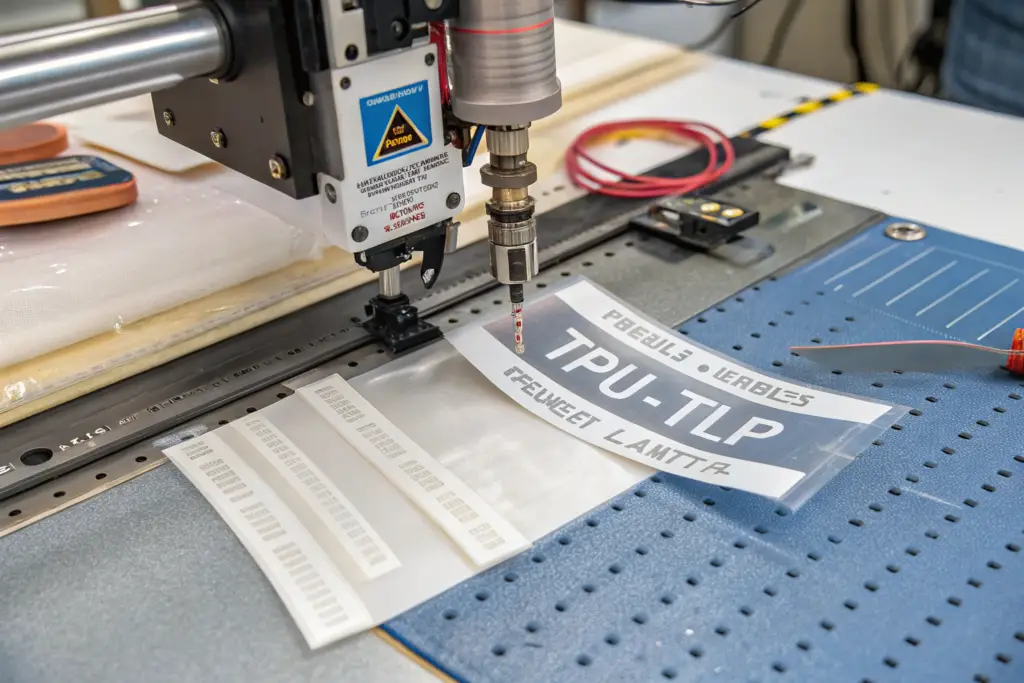
How Are TPU Labels Made in a Factory?
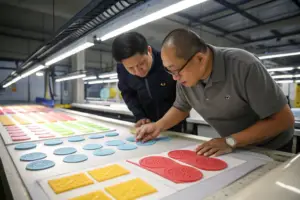
A factory makes TPU labels in four steps. First, it chooses a TPU film. Second, it prints or embosses your logo. Third, it cuts the label shape with a mold or laser. Fourth, it bonds the label to fabric with heat, pressure, or RF welding. A clean mold gives a clean edge. I worked with a Los Angeles activewear brand last year. Their TPU labels bubbled after high heat. We lowered the RF welding temperature by 8 degrees. Their return rate dropped by 28%. You can check material safety with OEKO-TEX and fiber guidance from Textile Exchange. Good process control saves money.
Where Do TPU Labels Work Best?
TPU labels work best on polyester, nylon, and stretch blends. They work well for running shirts, leggings, and outdoor jackets. They also work well for modern tees. They do not work well on cotton. Cotton does not bond well with RF welding. A New York yoga brand came to us in 2023. Their TPU labels turned yellow from sweat. We changed the TPU formula and added a UV coating. Their repeat purchase rate rose by 20%. You can review quality rules from ISO 9001 and lab testing from SGS softlines. Always match the label to the fabric.
What Are Silicone Labels and Where Do They Work?
You may want a label that feels soft on the neck. You may want a raised logo. Silicone labels can do both. They look modern. They feel smooth. But they cost more than printed labels. They also need the right finish.
Silicone labels are made from soft silicone rubber. They are formed in a mold. Then they are colored, cut, and finished. Silicone labels are raised and flexible. They do not scratch the skin. They work well for swimwear, yoga wear, kids’ wear, and premium tees. At Shanghai Fumao, we test silicone hardness and edge smoothness for every order.
Silicone labels are not sewn like woven labels. They are often attached with a heat-seal backing or sewn at the edges. Some are glued. The attachment method changes the wash life. A soft silicone label may feel great but bond weaker. A firm silicone label may bond stronger but feel rough. We help buyers find the right balance.
| Feature | Silicone Labels | TPU Labels |
|---|---|---|
| Skin feel | Very soft | Smooth |
| Edge risk | Low if cut clean | Medium |
| Wash life | 20–50 washes | 20–50 washes |
| Cost | High | Medium |
| Best for | Swim, kids, yoga | Sport, tees |
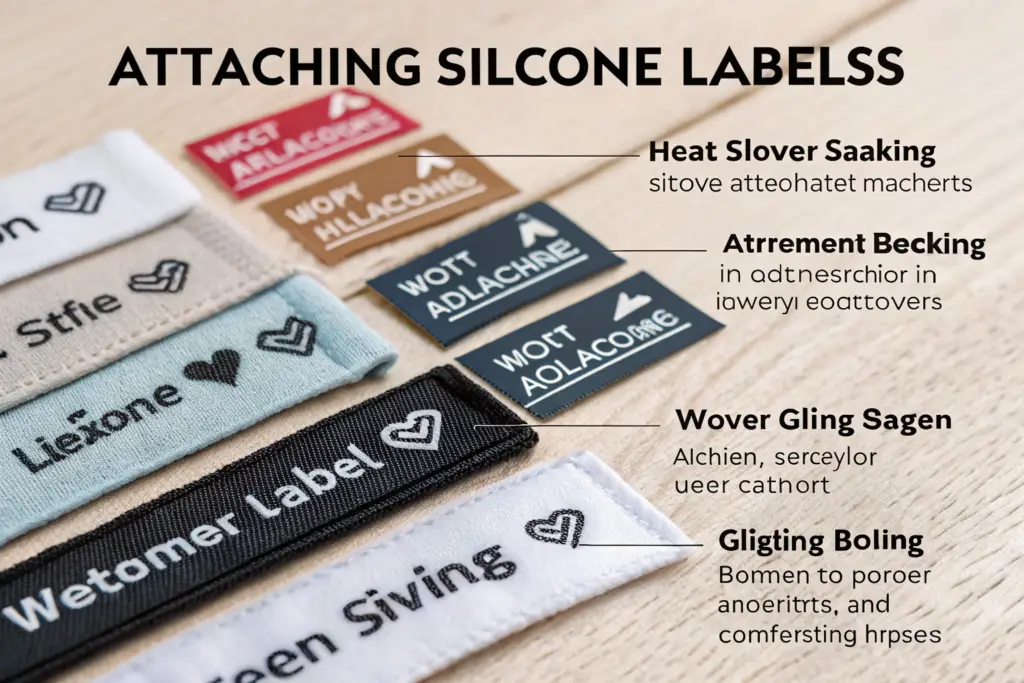
How Are Silicone Labels Made and Finished?
A factory makes silicone labels in five steps. First, it makes a metal mold. Second, it mixes silicone and color. Third, it injects or presses the silicone into the mold. Fourth, it cures the label. Fifth, it cuts and finishes the edges. A clean edge is important. A rough edge can itch. I helped a Midwest kids’ brand in early 2024. Their woven labels caused itching. We switched to soft silicone labels with heat-cut edges. Their customer complaints fell by 40%. You can check softline testing from Intertek and Bureau Veritas. Small finishing changes can fix big problems.
Where Do Silicone Labels Work Best on a Garment?
Silicone labels work best on neck labels, hem labels, and sleeve labels. They also work well on swimwear and kids’ wear. They can handle water and sweat. They do not fade fast. But they can feel heavy on light fabrics. A Dallas basic tee brand tested silicone labels in mid-2024. The labels felt too costly for their price point. We used silicone only on the neck and used TPU for the care label. Their unit cost dropped by 15%. You can follow labeling rules from CPSC clothing rules and the FTC apparel labeling guide. Match the label to the garment.
TPU vs Silicone Labels: Which Lasts Longer?
You may worry about wash care. A label that peels or fades can create complaints. It can also hurt your brand. US buyers often ask me which label lasts longer. The answer depends on the material, the bond, and the wash habits.
TPU and silicone labels both last 20 to 50 washes when made well. TPU labels can fail if the bond is weak. Silicone labels can fail if the edges lift. Woven labels often last longer than both. The wash temperature, detergent, and dryer heat all matter. At Shanghai Fumao, we run 30 wash cycles for most US orders.
Wash life is not one number. It is a range. A polyester running shirt may hold a TPU label better than a cotton tee. A kids’ shirt may need a silicone label that survives hot washes. A swimsuit may need a label that resists chlorine. We keep a simple log for each test.
| Test Item | TPU Label | Silicone Label |
|---|---|---|
| 10 washes | Good | Good |
| 30 washes | Good if bonded well | Good if edges clean |
| 50 washes | May lift at edges | May harden |
| Main risk | Peeling | Edge lift |
Which Label Lasts Longer in the Wash?
Woven labels often last longest in the wash. But between TPU and silicone, both can last 30 washes or more. TPU lasts longer when the bond is strong. Silicone lasts longer when the edges are smooth. A Los Angeles activewear brand tested our TPU label for 40 washes. The label stayed clear. Their repeat order doubled. You can check import rules from CBP import basics and test methods from ASTM. Always test with real garments.
Which Label Feels Better on Skin?
Silicone labels often feel better on skin. They are soft and raised. They do not have sharp edges. TPU labels can also feel good if the edges are smooth. But cheap TPU can feel plastic. A Midwest kids’ brand had itchy TPU labels. We changed to soft silicone. Their complaints dropped by 35%. You can review skin safety with AATCC and the Apparel Coalition. Skin feel is a key part of quality.
How to Choose TPU or Silicone Labels?
You may feel stuck between TPU and silicone. Both look good. Both can work. But your product, your customer, and your budget should guide the choice. Do not pick a label only by unit price.
Choose TPU labels for activewear, modern tees, and lightweight styles. Choose silicone labels for swimwear, kids’ wear, and premium soft feel. If you need both looks, use TPU for care labels and silicone for neck labels. Always test a sample before bulk production. At Shanghai Fumao, we help US brands compare both types side by side.
The right choice also depends on your MOQ and lead time. Silicone labels need a mold. TPU labels may need a mold or a laser cut. Mold cost and mold life affect your price. We help buyers plan label orders with their garment orders to save money.
| Choice Factor | Best Option |
|---|---|
| Soft skin feel | Silicone |
| Modern sport look | TPU |
| Low cost | TPU or printed |
| Premium raised logo | Silicone |
| Stretch fabric | TPU |
| Kids’ wear | Silicone |
What Questions Should You Ask a Label Supplier?
Ask your supplier seven questions. What material do you use? What is the wash life? What is the MOQ? What is the mold cost? What is the lead time? What test reports do you have? What is your defect rate? A US buyer once received fake certificates from another supplier. We helped them verify each certificate number. Now they check every order. You can use trade rules from the US Fashion Industry Association and responsible sourcing ideas from WRAP. Clear answers build trust.
How Do You Control Quality and Shipping?
Control quality with a pre-production sample. Check the bond strength. Check the edge smoothness. Check the color. Check the wash test. Then check the first bulk cartons. For shipping, use DDP if you want door delivery. Track the schedule with Higg and industry news from Just Style. We ship to North America and Europe. We also share daily production photos. This simple step builds trust.
Conclusion
TPU and silicone labels are both strong choices for modern apparel. TPU labels are smooth, strong, and weldable. They work well for activewear and tees. Silicone labels are soft, raised, and skin friendly. They work well for swimwear, kids’ wear, and yoga wear. Both can last 20 to 50 washes when made well. The right choice depends on your product, your customer, and your budget. I tell US brands to test first. Run a small wash trial. Check certificates. Compare the full cost. At Shanghai Fumao, we design, develop, and manufacture apparel for US brands. We handle TPU labels, silicone labels, molds, quality control, and DDP shipping. If you want to produce your own clothing order, please contact our Business Director Elaine. Her email is elaine@fumaoclothing.com. Let us help you bring your apparel vision to market.