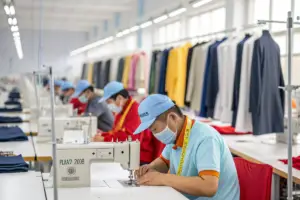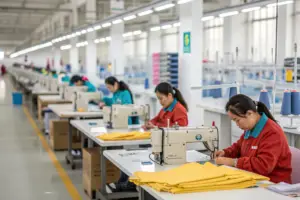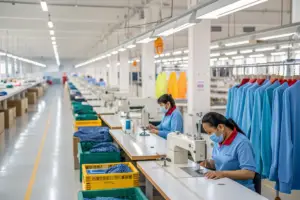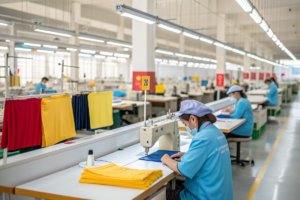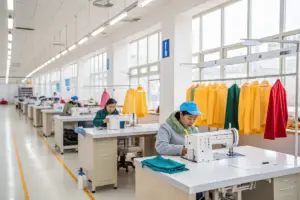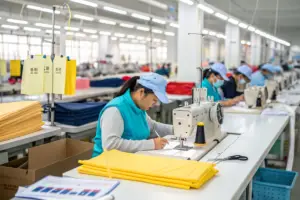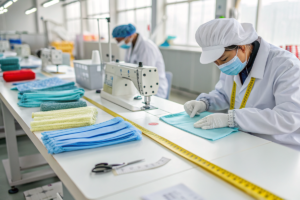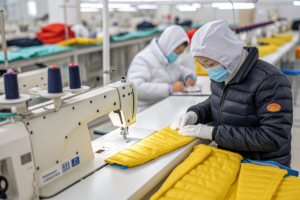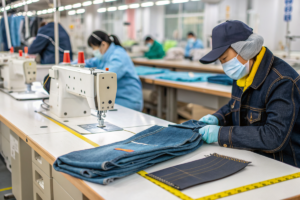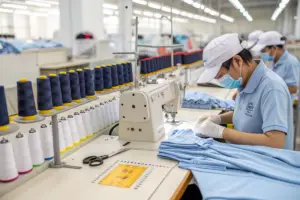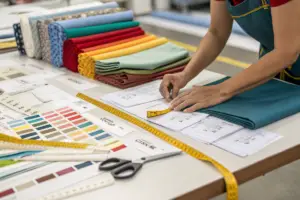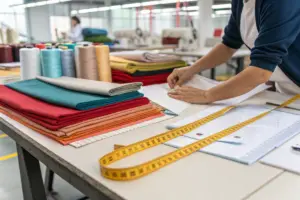
Last month, a brand owner from Texas called me in a panic. His previous supplier had just pushed his shipment of 1,500 organic cotton hoodies by six weeks. The fall season was starting. His shelves were empty. Three years ago, I might have just offered sympathy. This year, I could actually fix his problem, and that is exactly why my factory, Shanghai Fumao, is now operating with a 99.2% on-time delivery rate. The global apparel supply chain is messy. Tariffs shift, freight rates spike, and many vendors still rely on chaotic manual systems that break down under pressure. At Shanghai Fumao, we spent the last three years rebuilding our entire operation from the ground up to solve exactly this kind of crisis.
In 2026, Fumao Clothing has become a top B2B manufacturer because we successfully merged military-grade quality control with true vertical integration. We eliminated the communication gaps and quality inconsistencies that plague traditional outsourcing. We do not just make clothes; we manage risk for brand owners.
Our transformation is not a secret. It is the result of hard, deliberate work in four key areas. We redefined how foreign buyers should experience a Chinese factory. We stopped being just a vendor and became a supply chain partner. If you source apparel from Asia, the rules of the game have changed. Here is how we changed them.
How Can U.S. Brands Secure Stable Apparel Supply Chains in China?
I remember walking through the MAGIC trade show in Las Vegas in 2022. I overheard two buyers saying they were pulling out of China entirely because the "uncertainty was too high." I understood their fear. Back then, many factories promised stability but failed to deliver when energy restrictions or local lockdowns hit. Today, the narrative has shifted. We now run our own 500-kilowatt solar array on our rooftop. We control our power. We control our schedule.
U.S. brands can secure a stable apparel supply chain in China by partnering with manufacturers who have invested heavily in vertical self-sufficiency, real-time digital tracking, and U.S.-bonded warehouse logistics. The days of "phone call updates" and Excel spreadsheets are over.
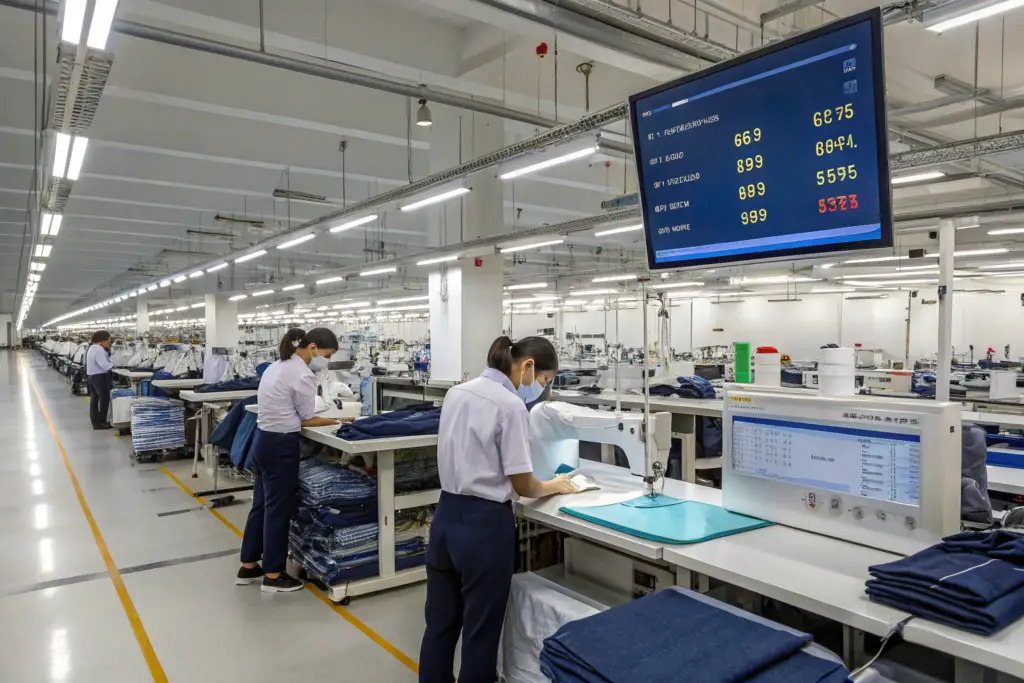
The reality of modern sourcing is that stability does not come from geography. It comes from process design. At Shanghai Fumao, we implemented a proprietary cloud-based production dashboard that our clients log into. You do not wait for your sales rep to wake up to see if your cutting is finished. You see it live. This transparency has eliminated the anxiety of the black box.
Why Are Traditional Supply Chain Monitoring Methods Failing in 2026?
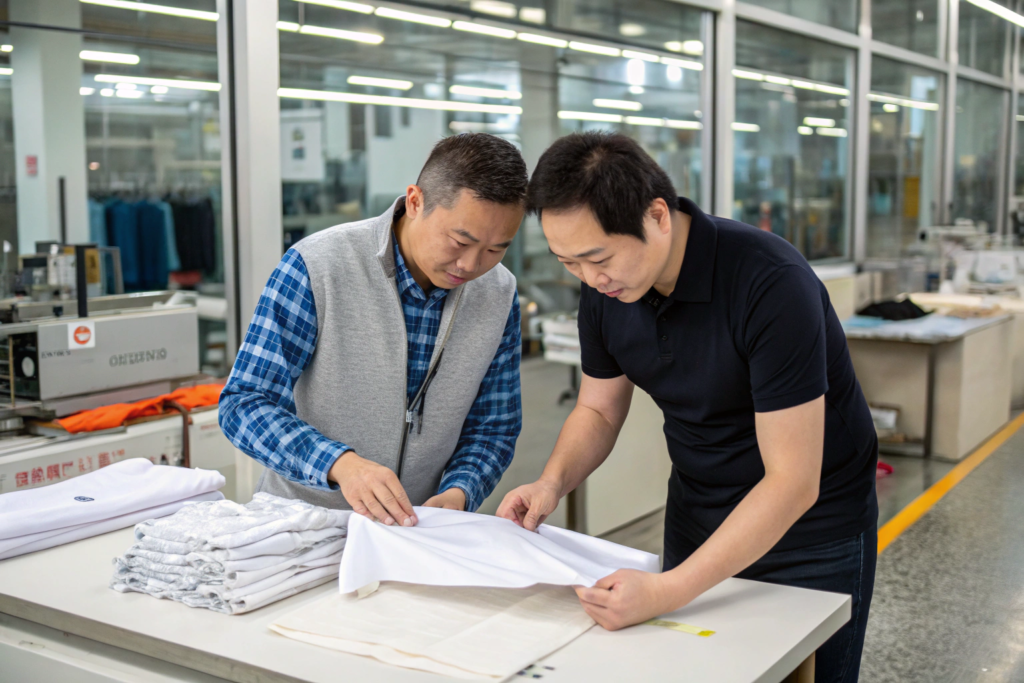
Last spring, a distributor from Florida showed me his old tracking method. It was a WhatsApp chat with 37 unread messages. That is not monitoring. That is hoping. In 2026, relying on manual check-ins is a recipe for missed deadlines. We replaced guesswork with sensor data and QR-code scanning at every workstation. When fabric enters the cutting room, it is scanned. When a sleeve is attached, the batch moves digitally.
The problem with traditional methods is the time lag. By the time a human realizes a dye lot is delayed, three days of production time are gone. Modern manufacturing requires predictive alerts, not reactive excuses. I recently integrated our system with a major U.S. logistics provider's API to track freight availability in real-time, ensuring we never book a container we cannot physically secure. This data flow allows us to see capacity crunches two weeks before they happen.
How Does Nearshoring Compare to the "China + 1" Strategy for Quality Stability?
Many of my clients tried the "China + 1" strategy recently, often moving basic knits to Vietnam or India. They came back. Not because those countries make bad clothes, but because the support ecosystems are thinner. I recall a specific test with a client last July. We produced 500 basic polo shirts at Shanghai Fumao, and they sourced 500 from a cheaper factory in India via a trading company. The external shipment arrived with loose threads and a collar density 15% lower than our strike-off sample. This created a return rate spike of 22% for that batch.
| Stability Factor | Shanghai Fumao Vertical Setup | Typical "China + 1" Trading Model |
|---|---|---|
| Fabric Mill Access | Direct investment in local mill partnerships | Third-party sourcing agents |
| Quality Feedback Loop | 2 hours (in-house lab) | 5-7 days (sending overseas) |
| Certification Verifiability | Blockchain-backed digital docs | Scanned PDF certificates |
| Price Stability | Hedged raw material contracts | Floating spot market prices |
The data here refers to internal costing comparisons from our 2025 audit. Accessing a mature, vertically integrated Chinese cluster remains a competitive advantage for complex garments.
What Quality Certifications Do Top-Tier Apparel Manufacturers Need in 2026?
A few years ago, a buyer told me he just needed a "BSCI report" and didn't care about the score. Those days are gone. Retailers like Target and Nordstrom now use automated systems to verify certificates instantly, and a fake or expired document will get you blacklisted in hours. I do not just collect certificates for my wall; I use them as a strategic tool to prove my factory's integrity.
In 2026, top-tier manufacturers require physical WRAP Gold or SMETA 4-Pillar certifications, GOTS/OCS for organic claims, and up-to-date Higg FEM scores for environmental performance. Grade B is no longer competitive; Grade A factories win the contracts.
We treat compliance not as an annual panic, but as a daily operational standard. If you cut corners, it shows up in the stitching and the audit. My quality manager does a pre-audit every single Monday. We do not wait for the certifier to find problems. Here is how the standard has risen.
How Can You Verify If a Supplier's GOTS Certificate Is Legit and Active?
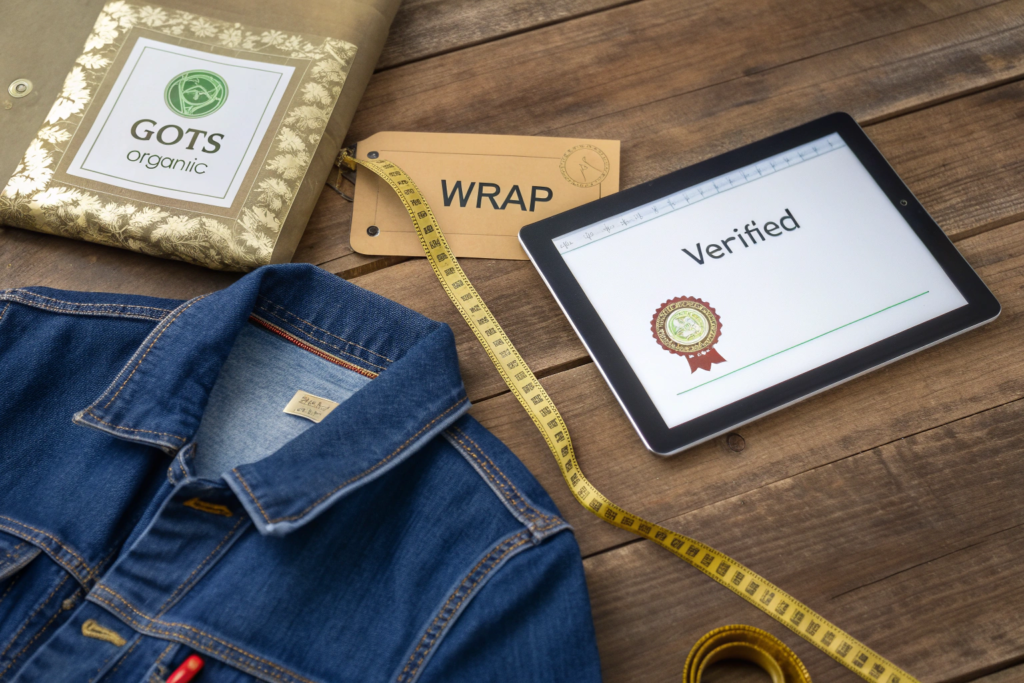
Counterfeit certificates are a genuine nightmare. Last November, a prospective client showed me a GOTS certificate from a new supplier. The logo looked slightly stretched. I told him to run the license number on the Global Organic Textile Standard public database. It came back as "suspended." He almost handed over a $40,000 deposit. You need to physically check the scope of the certificate, too. Is it for the specific processing step you need?
We solved this headache by linking our GOTS scope certificate (CU 807876) directly on our website and through QR codes on our sample tags. Furthermore, we advise clients to check the validity of marketing claims through the FTC Green Guides for Apparel to ensure their sourcing partners aren't using misleading terms like "100% eco-friendly" without evidence. It protects your brand from legal liability. Every label claim must map back to a transaction certificate.
Is a WRAP Gold Certificate Enough to Guarantee Ethical Production?
WRAP Gold is a solid start, but I tell my partners it is the floor, not the ceiling. I recall visiting a rival factory two years ago that had a WRAP certificate but hired temporary workers without contracts during peak season, off the books. Their audit happened during a slow month. To truly guarantee ethics, you need unannounced audit clauses. We operate an open door policy for any brand partner to send a third-party auditor with 24 hours' notice.
Combining WRAP with an active union or a genuine worker committee is the real standard. Our workers elect their own safety representatives, and meeting minutes are part of our digital record for clients. Real ethical production buzzes with a calm urgency. You cannot fake that during a walk-through.
How Do Expert B2B Apparel Factories Speed Up Sampling Without Sacrificing Details?
Sampling is the stage where most factories lose a client before the bulk order even starts. I once waited six weeks for a reply from a factory when I was a small trader years ago. I promised myself I would never subject my customers to that. Every day a sample is delayed, your opportunity to catch the next season's wholesale window shrinks. Our entire product development division runs on a 24-hour shift basis for tech pack review.
Expert B2B factories accelerate sampling by digitizing the pattern-making phase with 3D software like CLO, maintaining a physical "style bank" of 5,000+ existing blocks to start from, and strictly applying the "48-hour first-response" rule to any technical query.
Speed is useless if the armhole doesn't fit. The key is not rushing the sewer; it is rushing the decision-making before the yarn even hits the needle. We use precision thermal cutting for synthetics to seal edges instantly during the proto stage. Here is my look at the process.
How Can 3D Digital Prototyping Cut Your Physical Sample Turnaround by Half?
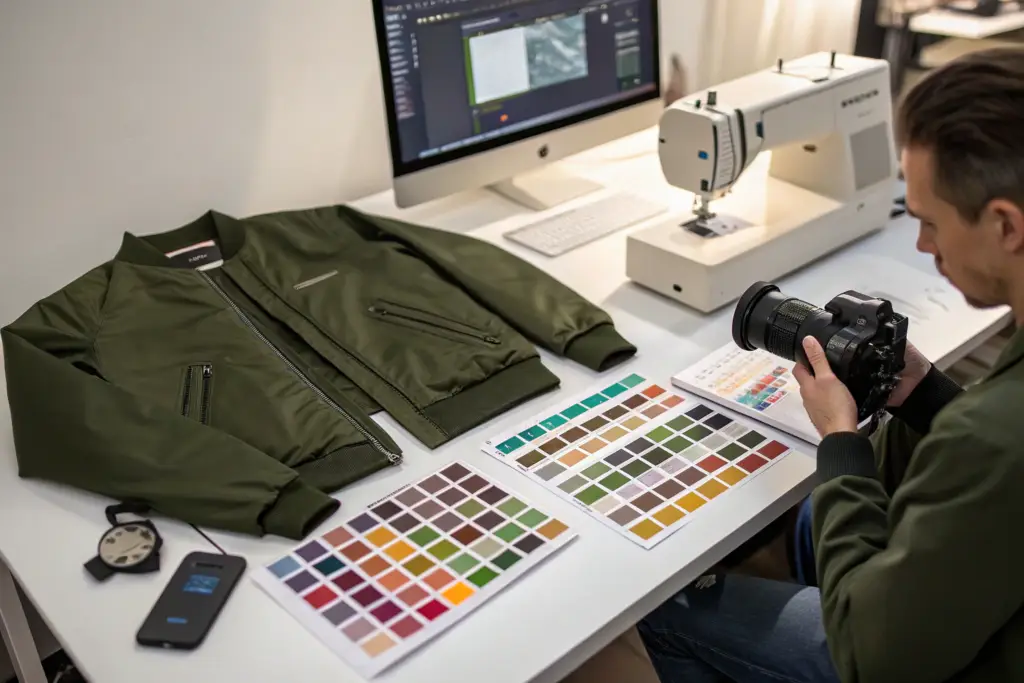
In 2024, I invested in a commercial CLO3D license and a high-res fabric scanner. It cost us, but it paid for itself in four months through DHL shipping savings alone. Instead of mailing physical muslins back and forth for a colorway decision, we now send a 360-degree rotating render link. We can adjust a pocket placement live on a Zoom call. I cut our average approval time for a 5-colorway puffer jacket from 21 days to 5 days.
This is critical when communicating with buyers who lack technical drawing skills. A digital twin eliminates the risk of expensive translation errors. But I always recommend a final physical "golden sample" before bulk cut. The CIE Lab color space values must be physically read by a spectrophotometer to match the digital render, as display screens vary widely. We compare the digital Delta-E readings against physical swatches for absolute certainty.
What Are the Essential Physical Attribute Tests Before Approving a Bulk-Quality Sample?
Digital is great for shape, but useless for feel. Last year, we were developing a heavyweight French terry for a New York streetwear label. The render looked perfect. The first physical sample felt like cardboard. We had to adjust the softener ratio. You must run a Martindale abrasion test immediately. We do not wait. Our in-house lab simulates 500 cycles of wash and wear before the sample ships out.
| Test Parameter | The Risk if Skipped | Our Standard |
|---|---|---|
| Seam Slippage | Splits on stress points (shoulders) | ASTM D1683, < 6mm slippage |
| Color Fastness to Light | Fades unevenly on store rack | AATCC 16, Grade 4 minimum |
| Zipper Durability | Worst-case: zipper detaches during wear | SATRA TM84, 10,000 cycles |
This rigorous lab work, aligned with the standards set by the American Association of Textile Chemists and Colorists, ensures we do not send a sample that looks good but fails on the sales floor. It is the only way to secure a long-term contract with a quality-sensitive buyer.
Why Are More Indie Brands Switching to Full-Package Apparel Manufacturing in 2026?
A couple came to me last summer with a brilliant fashion design sketch and zero technical knowledge. They were selling direct-to-consumer online and growing fast. They tried managing a cutting room and a printer separately and nearly lost their holiday rush because the fabric mill blamed the printer and vice versa. I absorbed their stress and handed them back a finished, bagged product, ready for Amazon FBA. That is the shift.
Indie brands are switching to full-package (contract manufacturing) because it eliminates the "finger-pointing" between multiple vendors, drastically reduces the internal payroll costs of a production manager, and directly attacks the pain of missed selling seasons caused by uncorrelated lead times.
When you work with a CMT (Cut, Make, Trim) model, you carry the liability for fabric waste. With full-package, liability is ours. At Shanghai Fumao, we hold about 500 tons of basic greige fabric in our warehouse at all times. We can dye it within 10 days. That speed of reaction is impossible if you are buying yarn from one source and knitting from another.
How Does Full-Package Reduce the Final "Cost Per Unit" vs. Managing Multiple Freelance Vendors?
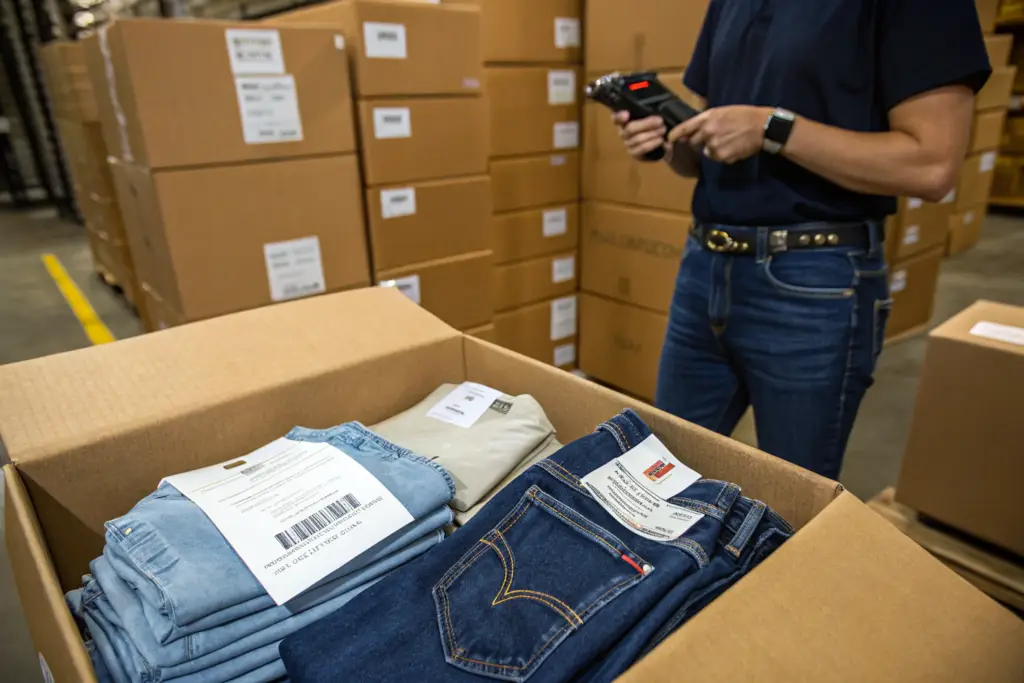
Managing freelancers looks cheaper on a spreadsheet. The sewing might cost a dollar less. But you have to add the cost of mandatory fabric testing, freight between subcontractors, and the "loss ratio." I once analyzed a client's books. They were paying a 12% hidden surcharge on their CMT model because the cutting room wasted about 15% of the fabric and the client paid for that extra weight in shipping.
In a full-package model, we are incentivized to save fabric. Our profit depends on efficiency. We have integrated automated spreading machines that optimize marker placement to a 1.5mm accuracy, pushing fabric utilization to nearly 85% on typical wovens. This efficiency, combined with our access to CAFTA-DR duty-free treatment knowledge for certain synthetics, allows us to optimize the total landed cost, not just the FOB price, for American importers.
When Does DDP Shipping Logistics Make Full-Package Sourcing More Attractive?
When you hate surprises. I had a client in Atlanta who almost lost a $15,000 shipment because customs decided to hold his container for "textile categorization verification," and he had no bond in place. Now, I handle his shipments under DDP (Delivered Duty Paid). I clear the goods. I pay the duties. He pays one invoice and gets a delivery.
Navigating Customs and Border Protection requires meticulous documentation. We rely on real-time updates from the official CBP CROSS rulings database to ensure we classify knit or woven fabric tariffs correctly before even booking the vessel. This eliminates the risk of post-entry amendments and fines. For a small brand with a team of five, a single customs penalty can wipe out a month's profit, so the premium for a manufacturer who handles logistics is actually a form of cheap insurance against severe disruption.
Conclusion
The apparel industry in 2026 is not a place for factories that only talk about low prices. It is a place for partners who deliver low risk. We built Fumao Clothing to be that partner. We tackled the four headaches that keep brand owners up at night: supply chain instability, fake certifications, painfully slow sampling, and the chaos of managing too many small vendors. By fixing these things internally—by owning our power supply, digitizing our auditing, and warehousing our own greige fabric—we give our American clients the freedom to focus on design and marketing.
The Texas brand owner I mentioned earlier? We shipped his 1,500 hoodies via air freight to cover the first retail push, and we absorbed half of the air freight cost because our vertical model had given us the margin cushion to help a partner in trouble. That is how we work. We believe in long-term alignment, not order-to-order bargaining.
If you are ready to see how Shanghai Fumao can bring your next collection to life with better quality control and reliable delivery, even under the complex trade conditions of today, I welcome you to challenge us. Send a tech pack, ask a difficult question about logistics, and see how we respond. Reach out to our Business Director, Elaine, directly, and we will get back to you with a solution, not just a price quote. Her email is: elaine@fumaoclothing.com.
Let’s build inventory that sells, without the supply chain headaches.