You have spent weeks perfecting your Tech Pack. Every stitch, every measurement, every trim detail is specified with precision. You send it to the factory, confident that they have a perfect blueprint. Then, the pre-production sample arrives, and it is wrong. The collar is the wrong shape. The logo is in the wrong place. The fabric weight feels off. You are frustrated. The factory is confused. They say, "We followed your spec." And they did—they followed a corrupted, poorly translated version of your masterpiece. A veteran pattern maker once told me, "A Tech Pack is a sacred document. A bad translation doesn't just change words; it changes measurements, it changes construction, and it changes the very DNA of the garment. It turns a precise recipe into a guessing game."
Poorly translated tech packs ruin bulk production runs because they introduce ambiguity, inaccuracy, and critical errors into the single most important manufacturing document. This corruption happens at three levels: 1) Terminology Errors: using a generic or incorrect technical term that leads to a completely different construction method, 2) Numerical and Unit Errors: a misinterpreted measurement or an unconverted unit that causes a fatal sizing mismatch, and 3) Visual / Annotation Ambiguity: a poorly translated callout on a sketch that leaves the pattern maker guessing about a critical design detail. The result is a batch of garments that perfectly execute the wrong instructions.
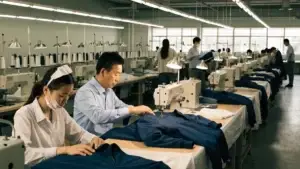
At Shanghai Fumao, our technical team is fluent in both English and Mandarin, and more importantly, in the precise language of pattern making. We act as the guardians of your Tech Pack's integrity. Let me explain the catastrophic consequences of translation errors and how a professional B2B partner prevents them from ever happening.
How Do Simple Terminology Errors Lead to Catastrophic Construction Failures?
The language of garment construction is precise and unforgiving. A single mistranslated word is not just a semantic error; it is a direct instruction to the sewer to perform a completely different physical operation. A translator who is fluent in general language but not in the specific terminology of apparel manufacturing is a dangerous liability. They can turn a clear instruction into a manufacturing error replicated across thousands of units.
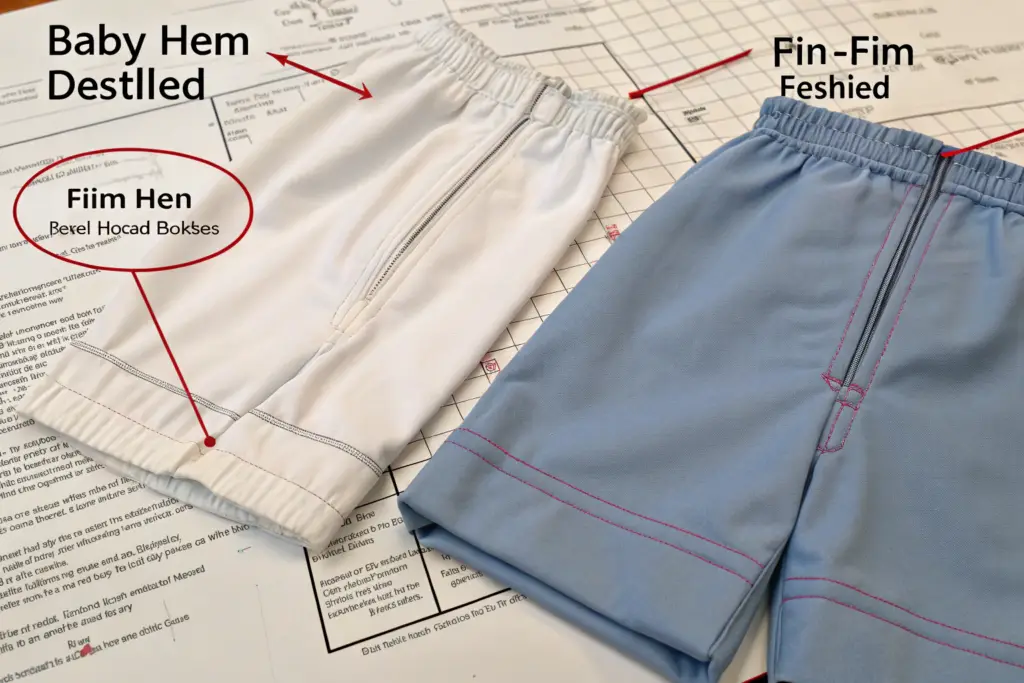
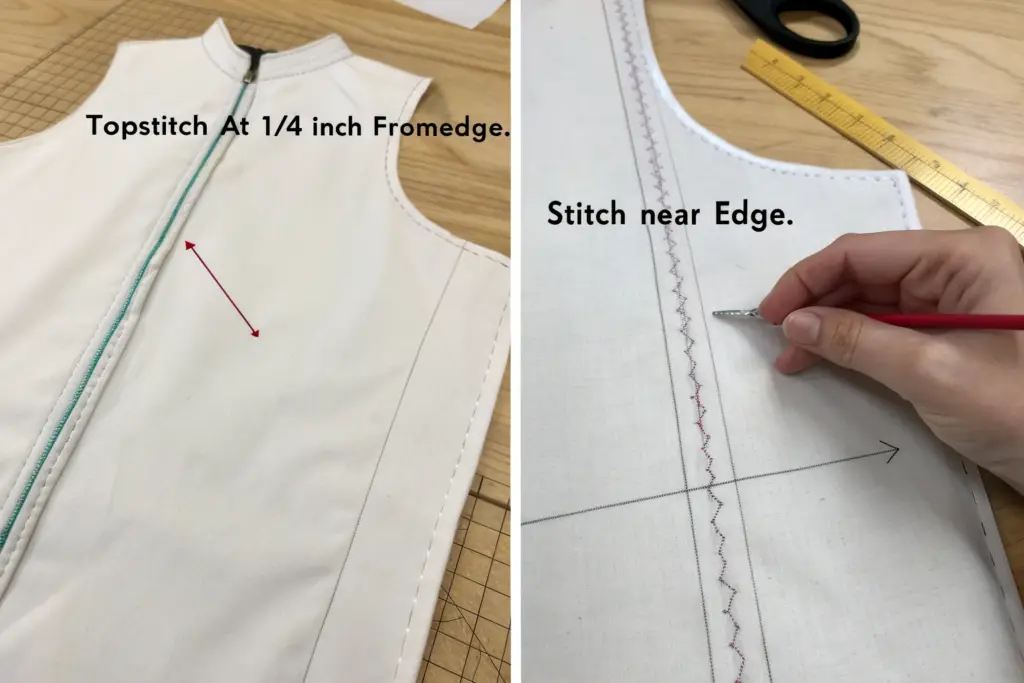
A single mistranslated technical term can cause a catastrophic construction failure. For example, "French seam" translated as a generic "clean finish" will result in a bulky, frayed seam instead of a fully enclosed, premium finish. "Edge stitch" vs. "topstitch" can change the entire look of a garment. "Fusible interlining" vs. "sew-in interlining" will completely alter the structure and handfeel of a collar. These are not subtle differences; they are fundamental construction errors that ruin the design and quality of the garment.**
A brand we work with had a disastrous first run with a previous factory. Their Tech Pack specified a "knit-in" waistband for a pair of joggers. A poorly translated version sent to the sewing line read "attach waistband." The sewers cut a separate piece of fabric and sewed it on, creating a thick, uncomfortable, and completely wrong elastic casing. The entire 2,000-unit order was a loss. The error was a two-word translation mistake. This is why our bilingual technical team personally reviews every single detail to ensure perfect technical translation and communication .
What Are the Five Most Commonly Mistranslated Technical Terms in a Tech Pack?
These are the "danger words" that we see misused most often:
- "Fusing" vs. "Interlining": One is glued; one is sewn. Completely different.
- "Binding" vs. "Facing": Two different ways to finish a raw edge.
- "Hem" vs. "Seam Allowance": The finish vs. the construction edge.
- "Placket" vs. "Fly": The front opening of a shirt vs. pants.
- "Topstitch" vs. "Edge stitch": The distance from the edge is critical.
A professional factory ensures all these terms are correctly understood by their team in the original language. This is a key part of our internal quality process .
How Does a Proactive Factory Verify Terminology Before Cutting?
A great factory does not just assume. If our pattern maker encounters an unfamiliar term or an ambiguous phrase in a client's Tech Pack, we immediately send a "Request for Clarification" (RFC) . We ask for a photo reference or a more detailed description. We never guess. This simple, proactive communication step prevents the majority of misinterpretation errors. This is the discipline of our pre-production protocol .
How Do Numerical and Unit Errors Turn a Spec into a Size Catastrophe?
Perhaps the most devastating translation error is not a word, but a number. The global garment industry uses a mix of imperial (inches) and metric (centimeters) systems. A simple failure to convert a measurement, or a moment of inattention where an inch value is read as a centimeter value, can result in a garment that is comically, irreparably the wrong size. This is a mathematical error, not a linguistic one, and its consequences are absolute.
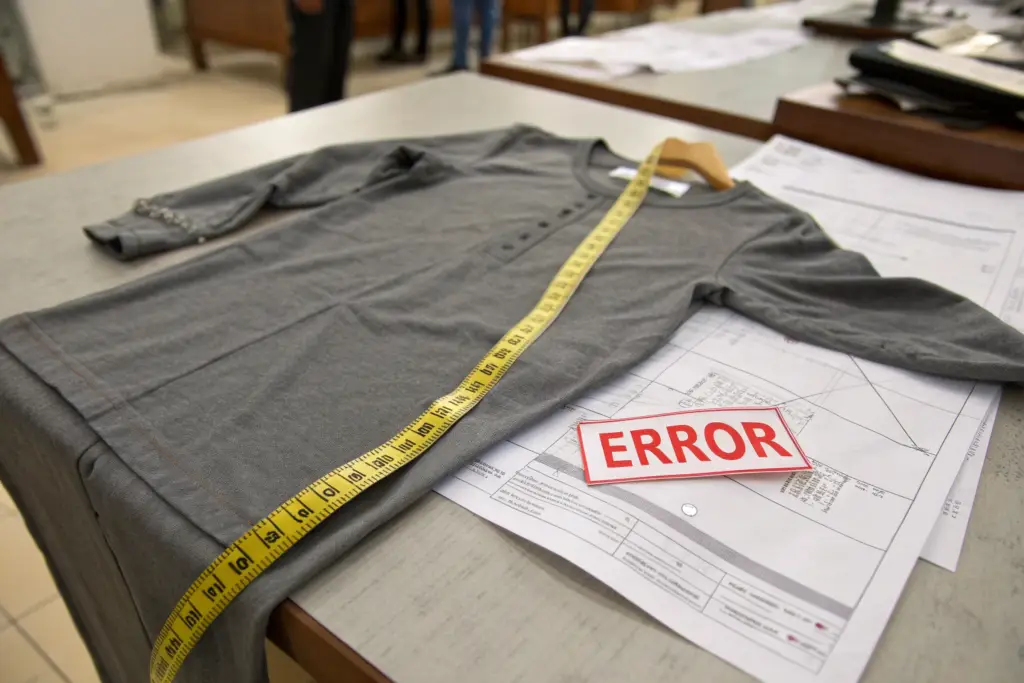
Numerical and unit errors are fatal to a production run. A single Point of Measure (POM), such as a 20-inch sleeve, if misinterpreted as 20 centimeters, will produce a sleeve that is over 12 inches too short. An entire size run can be ruined by a single, incorrectly typed or translated number on a grading sheet. A 1-inch grade between sizes, if entered as 1 centimeter, will produce a size curve that does not fit any human. These are not fixable flaws; the entire production run is waste.
A brand owner once sent us a frantic email. A previous factory had produced a run of jackets where the Size Medium body length was 55cm instead of the required 65cm. The spec sheet had a smudge, and the "6" was misread as a "5" in the translated version. The entire batch was unsellable. Our process prevents this by meticulously verifying every single number on a spec sheet against the original document and by having the client give a final sign-off on the interpreted measurements. We treat your spec sheet with the care of a financial ledger. This is our commitment to perfect measurement fidelity .
What Is the "Golden Rule" of POM Verification Before Cutting?
Every single Point of Measure (POM) on the spec sheet is a sacred number. Our protocol is to have a second, independent person in the pattern room verify every single number, paying specific attention to units and decimal points. We double-check the grading across all sizes. This "four-eyes" principle is a simple but powerful defense against numerical errors. This is a standard part of our quality control for CMT .
How Does a Factory Ensure Impeccable Accuracy When Translating Measurements?
This is handled by a trained technical interpreter, not a general translator, and never by unqualified software. We maintain a strict internal protocol: all measurements are cross-referenced in their original unit (e.g., inches) and the converted value (e.g., centimeters) is explicitly verified. The client then receives a final "Measurement Verification Sheet" for approval before any pattern work begins. This extra step catches any potential conversion errors. This is the discipline of our pre-production process .
How Can Ambiguous Visual Callouts on a Sketch Lead to Costly Guesses?
A Tech Pack is a visual document as much as a written one. The callouts—the arrows, circles, and notes that point to specific details on a flat sketch—are the most direct link between the designer's eye and the sewer's hand. If the text on these callouts is poorly translated into vague or confusing language, the entire purpose of the visual is lost. The sewer is forced to guess, and a guess in manufacturing is almost always wrong.
Ambiguous visual callouts are a direct cause of production errors. When a sketch annotation like "Sew pocket at 2.5cm from side seam" is poorly translated to a vague "put pocket near side," the operator is left to interpret what "near" means. This lack of precision leads to inconsistent placement, with pockets placed anywhere from 1cm to 5cm from the seam. The only way to eliminate this guesswork is to ensure that all visual callouts are translated with the same mathematical precision as the original language.
A brand we work with had a recurring issue with a previous factory where their back-neck labels were always crooked. The culprit was a visual callout on the sketch: the original note said, "Center label on back neck 1.5" below seam." The translated version just said, "Put label here." With no precise measurement, each sewer was placing it by eye. We solved the problem immediately by using a physical placement guide and ensuring the exact 1.5" measurement was clearly understood. This is the power of precise visual communication .
What Is the Best Way to "Immunize" Your Tech Pack Against Translation Errors?
Use the principle of "universal visual language." Wherever possible, rely on clear, standard symbols, color-coded annotations, and international measurement conventions (like always pairing the value with a clear unit abbreviation: "IN" or "CM"). The more you can communicate visually with universally understood symbols and precise numbers, the less vulnerable you are to linguistic mistranslation. This is a key part of our global communication standard .
How Does a Professional Factory Handle an Unclear Callout Instead of Guessing?
A professional factory never guesses. If our team encounters a callout that is ambiguous—even slightly—we immediately stop and issue a "Request for Clarification" (RFC) to the client. We ask for a clearer photo, a more detailed description, or a specific measurement. This proactive communication adds a small amount of time upfront but prevents catastrophic errors that could ruin an entire bulk production run. This is the hallmark of a responsible manufacturing partner .
How Does Fumao's Multilingual Technical Team Protect Your Tech Pack's Integrity?
The ultimate safeguard against a ruined Tech Pack is not a software program; it is a team of bilingual, technically trained human beings who understand both the language of design and the language of the factory floor. Our Project Managers and pattern makers are the guardians of your document's integrity. They are not just translators; they are interpreters who bridge the creative and technical worlds.
Fumao's multilingual, technically trained team is your greatest protection against translation errors. Our Project Managers and pattern makers speak fluent English and Mandarin, but more importantly, they speak the precise technical language of garment construction. They review every Tech Pack for clarity, consistency, and potential ambiguity before it ever reaches the factory floor. They act as the bridge between your creative vision and our production team, ensuring your instructions are understood perfectly and executed flawlessly.
A brand founder who had been burned by translation errors in the past was initially anxious about working with a Chinese factory. They sent us their complex new Tech Pack. Our pattern maker reviewed it and sent back a single, clarifying question about a pocket detail. That one question demonstrated to the client that we had not just skimmed the document; we had deeply understood it. They told us, "That question gave me more confidence than any sales pitch ever could. I knew my designs were safe." This is the trust our team builds every day. This is the value of a true technical partnership .

What Happens During a Fumao "Tech Pack Review"?
It is a thorough, line-by-line audit. Our pattern maker and your Project Manager review every single detail: every sketch, every BOM line item, every POM, and every construction callout. They are looking for ambiguities, missing information, or potential contradictions. They consolidate their findings into a single, clear Request for Clarification (RFC) document. This process ensures that when the cutting starts, the instructions are perfect.
How Does This Process Save You Money and Protect Your Timeline?
By catching errors and ambiguities in the digital document, we prevent them from ever becoming physical, costly mistakes. A 24-hour delay for an RFC is infinitely cheaper and faster than a ruined bulk production run, a wasted season, and a damaged brand reputation. Our rigorous pre-production review is a small investment of time that protects your entire capital outlay. This is the core of our brand protection .
Conclusion
A poorly translated Tech Pack is a ticking time bomb at the heart of your production run. It introduces ambiguity, inaccuracy, and fatal errors into the single most important document in manufacturing. The consequences are not minor; they are catastrophic, leading to wasted materials, lost sales, and irreparable damage to your brand's reputation.
At Shanghai Fumao, we have built a multilingual, technically expert team that serves as the unbreakable link between your creative vision and the factory floor. We treat your Tech Pack as the sacred, legal contract that it is. Our rigorous, human-powered review process ensures that your instructions are understood with absolute precision, transforming your blueprint into a flawless physical reality.
If you are tired of costly mistakes and want a partner whose technical team speaks your language perfectly, let's talk. Our Business Director, Elaine, can walk you through our Tech Pack review process. Please email Elaine at: elaine@fumaoclothing.com.