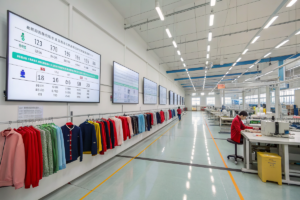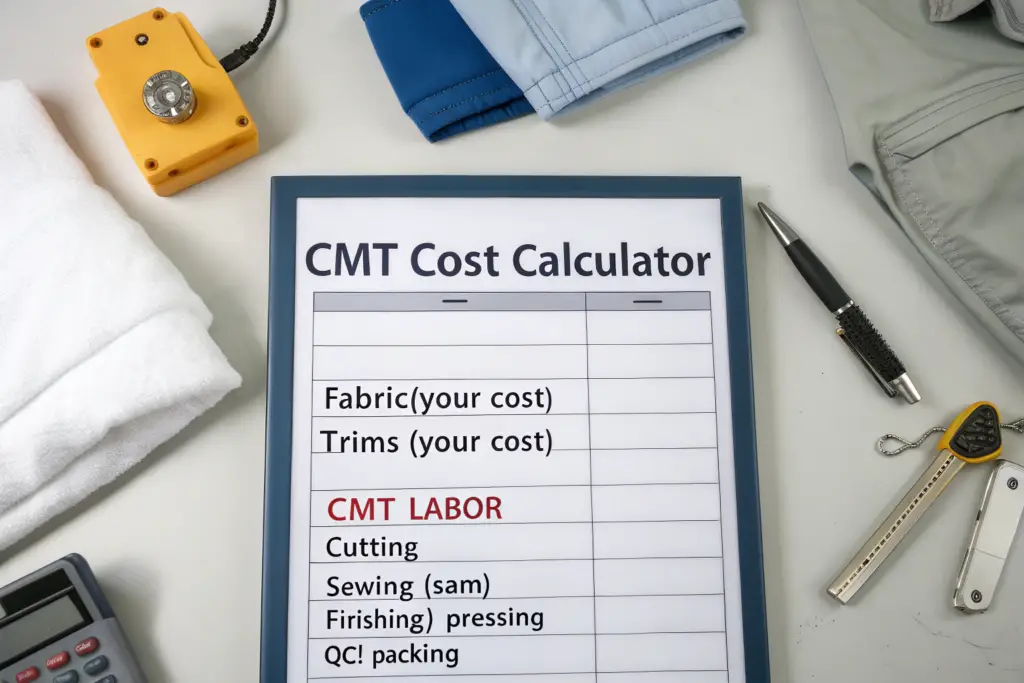
You have received the CMT (Cut, Make, Trim) labor quote from the factory. It is a single number per unit. You have your own costs for the beautiful fabric and custom trims. Now you need to combine these to understand your true, all-in product cost. But you are not entirely sure how to account for everything, especially the hidden extras like buffer stock and logistics. A brand owner told me, "I had the factory’s CMT quote and my material invoices. I thought I had my cost. Then the freight bills and the buffer stock reality hit. I realized my ‘simple’ calculation was missing some critical pieces."
Calculating the true cost of CMT per garment requires moving beyond the simple "CMT Labor + Fabric + Trims" formula. A professional, accurate calculation includes: 1) The Factory’s CMT Labor Quote (often based on SAM – Standard Allowed Minute), 2) Your Landed Cost of Raw Materials (including all freight and a buffer for waste), and 3) The critical, often overlooked "Hidden CMT Costs" (inbound material freight, sample shipping, and your own time).
At Shanghai Fumao, we believe in radical cost transparency. We help our B2B partners build accurate financial models so they can price their products profitably and avoid unpleasant surprises. Let me walk you through a realistic, line-by-line calculation of the true cost of a CMT garment, ensuring you see the full financial picture.
How Is the Factory’s CMT Labor Quote Actually Calculated?
The factory’s CMT quote is not a random guess. It is a calculated figure based primarily on time and efficiency. The core of this calculation is the Standard Allowed Minute (SAM) . This is a precise, industrial engineering estimate of how many minutes of labor are required to cut, sew, and finish one unit of your specific garment. Understanding this helps you see why a complex blazer costs more in CMT than a simple t-shirt.
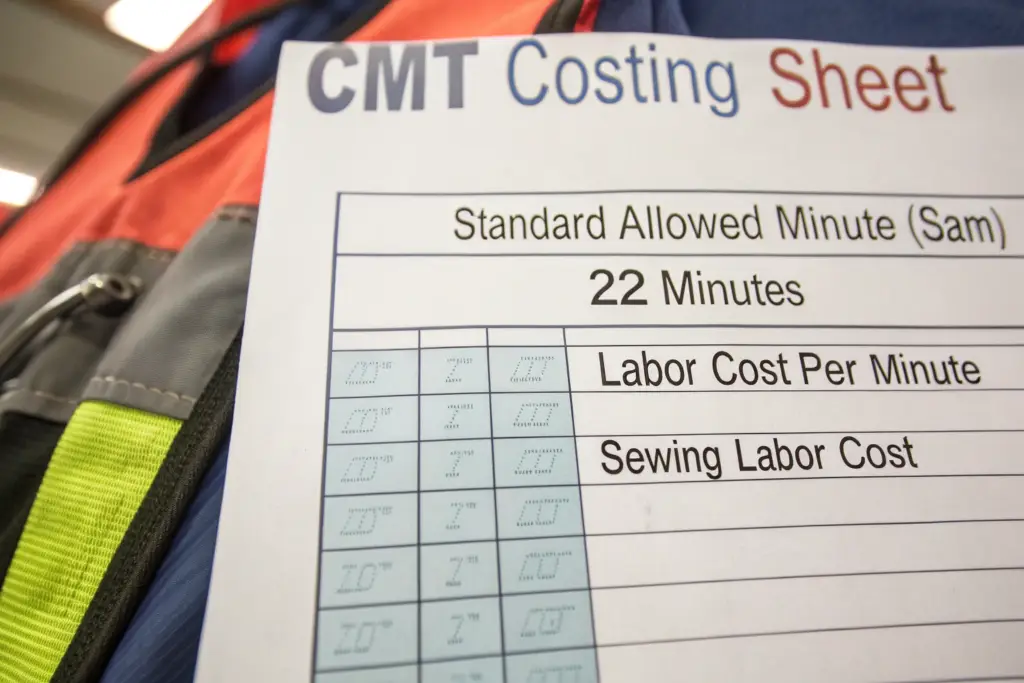
The factory’s CMT labor quote is fundamentally based on the Standard Allowed Minute (SAM). A SAM is calculated for your garment by analyzing every operation: cutting, each sewing step, pressing, and packing. The total SAM (e.g., 25 minutes) is then multiplied by the factory’s labor cost per minute (which includes wages, overhead, and profit). This gives the base labor cost. Complexity, fabric type, and order volume are all reflected in the SAM.
I recall a brand founder who was confused why the CMT quote for her simple-looking linen dress was higher than for a cotton t-shirt. We explained the SAM . The linen fabric is shifty and requires more careful handling and slower sewing. The dress had a few more seam operations than a basic tee. The total SAM for the dress was 28 minutes, while the tee was 12 minutes. The cost difference was a direct reflection of the labor time required. She understood and appreciated the transparency. This is why we are happy to share a cost breakdown with our partners.
What Is a “Standard Allowed Minute” (SAM) and How Is It Determined?
A SAM is the scientifically measured time it takes a skilled operator to perform a specific task under normal conditions. For a whole garment, industrial engineers break the construction down into dozens of discrete operations (e.g., "sew shoulder seam," "attach collar"). They assign a time value to each. The sum of all these times is the total SAM for the garment. This is a standard practice in professional apparel manufacturing .
What Factors Increase the SAM and Thus the CMT Cost?
Several factors directly increase the labor time:
- Garment Complexity: More pieces, more seams, more details (pockets, plackets) = Higher SAM.
- Fabric Type: Delicate, slippery, or heavy fabrics require slower, more careful sewing = Higher SAM.
- Construction Details: French seams, flat-felled seams, and complex topstitching take more time than basic overlock seams.
Understanding these drivers allows you to make strategic design decisions to manage costs. This is a key part of our design for manufacturability guidance.
What Is the Correct Way to Calculate Your True Landed Material Cost?
The single biggest mistake in CMT costing is using the base price of your fabric and trims. The true cost is the landed cost—what it actually costs to get those materials into the hands of the CMT factory, ready for production. This includes all freight, customs, and insurance. Forgetting to account for these can completely wreck your margin calculations.
Your true landed material cost is calculated by taking the base price of your fabric and trims and adding all associated costs to get them to the factory. This includes: + International or domestic freight, + Customs duties and brokerage fees (if applicable), + Insurance, + Any courier fees for small shipments. You must also add the cost of your "Buffer Stock" (typically +3-5%), which is the extra material you must purchase to account for cutting waste and defects.
A brand I advised learned this the hard way. She found a beautiful deadstock silk for $12/yard. She calculated her fabric cost based on that. But she forgot the $85 courier fee to get it to our factory, and she didn’t order a buffer. She ended up short on fabric and had to pay another courier fee for a small top-up order. Her actual fabric cost per unit ended up being nearly $15/yard. Her "great deal" was not so great after all. Now, she uses a simple spreadsheet to track the true landed cost of materials .

How Do You Accurately Calculate the “Buffer Stock” Cost?
This is a non-negotiable CMT cost. You must purchase extra fabric and trims to account for waste. The calculation is simple:
- Fabric Buffer: (Required Fabric Yardage) * 1.05 (for a 5% buffer).
- Trim Buffer: (Required Quantity of Labels/Buttons) * 1.03 (for a 3% buffer).
This extra material is a real cost that must be factored into your per-unit calculation. We always advise our CMT partners on the appropriate buffer for their specific materials.
How Do You Account for Freight and Logistics in Your Material Cost?
Take the total freight cost for a shipment of fabric and divide it by the total yardage in that shipment. This gives you a "freight cost per yard." Add this to the base price of the fabric. Do the same for your trims. For small, consolidated shipments you send yourself, calculate the total cost of that box (postage, insurance) and allocate it across the units. This is the discipline of accurate CMT cost accounting .
What Are the Most Common “Hidden” Costs That Destroy CMT Margins?
Even after calculating your landed material cost and adding the CMT labor, there is a final layer of "phantom" costs that can quietly erode your margins. These are the operational expenses and risks that are specific to the CMT model. They are easy to overlook but essential to account for in a professional financial model. Ignoring them is a recipe for disappointing profit margins.
The most common hidden CMT costs include: 1) Sample Shipping & Development Fees (the cost of shipping fit samples back and forth, and any lab dip fees), 2) Material Defect Risk (the financial loss if your supplied fabric has a flaw that was not caught by the mill), and 3) The "Time Tax" (the quantifiable value of the hours you spend managing material sourcing and logistics, which is time taken away from revenue-generating activities).
A brand founder meticulously tracked her time for one CMT project. She spent 12 hours over the course of the production cycle on sourcing, emails, tracking shipments, and managing logistics. She valued her time at $75/hour. That was a $900 "time tax" on a single, small-batch order. When she factored that in, her CMT savings over Full-Package were much smaller than she initially thought. She now builds a "management time" buffer into her cost calculations. This is the level of honest, sophisticated financial planning that defines a successful CMT brand .
How Can You Estimate the “Time Tax” of Managing a CMT Project?
Track your hours for one project. Use a simple time-tracking app or a notebook. Categorize your time: "Sourcing," "Supplier Emails," "Freight Coordination." Multiply the total hours by your desired effective hourly rate as a founder. This is the real cost of your operational labor. For many, this exercise is eye-opening and informs the decision of whether CMT or Full-Package is the better financial model. We have honest conversations about this with all potential CMT startups .
How Do You Account for the Financial Risk of Material Defects?
This is a risk cost, not a direct line item. You can account for it by building a small "contingency" percentage into your overall budget (e.g., 1-2%). A better way is to mitigate the risk by using a CMT factory with a rigorous Incoming Inspection process. This process catches flaws before cutting, allowing you to file a claim with your supplier. This reduces the financial impact of a defect. This is a key value of our risk-mitigating CMT services .
How Does Fumao’s Cost Transparency Help You Build a Profitable CMT Model?
We want our B2B partners to succeed with the CMT model. That success is built on a foundation of accurate, transparent cost knowledge. We do not just provide a labor quote; we provide the education and the financial framework to help you see the complete picture. Our goal is to eliminate the "surprise" costs and empower you to build a truly profitable private label business.
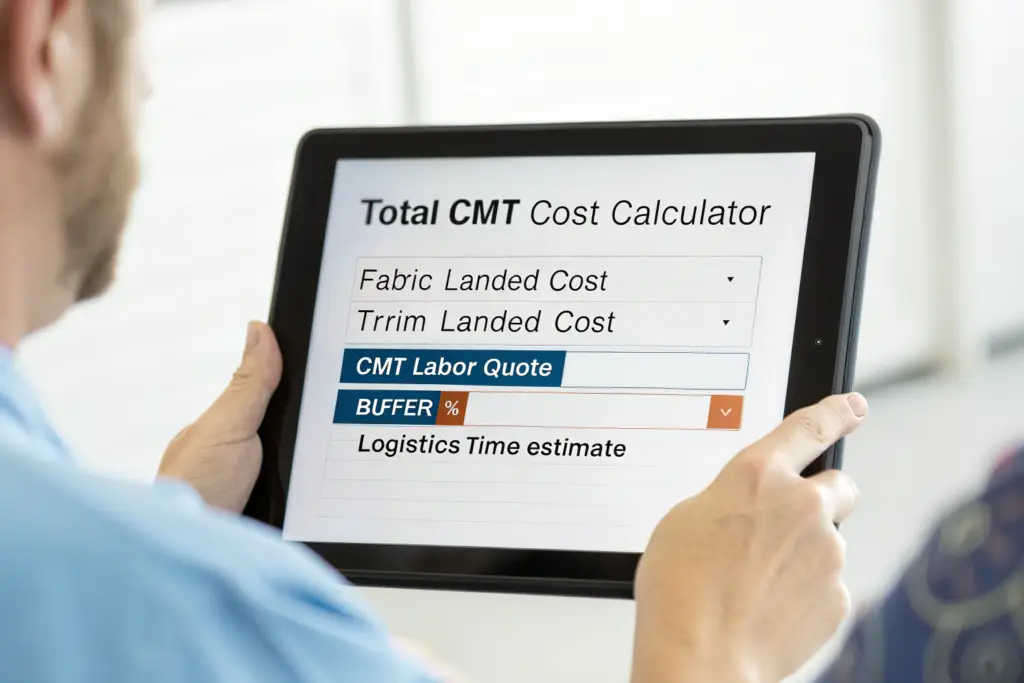
Fumao provides cost transparency by offering clear, itemized CMT labor quotes and by educating our partners on the full landed cost model. We provide tools like our "Total CMT Cost Calculator" template and openly discuss the hidden costs of buffer stock, logistics, and the "time tax." Our Project Managers are a resource for helping you estimate realistic freight and material buffer costs based on our extensive experience.
A new brand founder told us that our Total CMT Cost Calculator was the most valuable document she received during her entire launch process. She said, "It forced me to think about costs I would have completely missed. It made me build a real, honest budget. Because of that, I priced my products correctly from day one and actually made a profit on my first collection." That is our goal. To empower our partners with the financial clarity they need to thrive. This is the value of a true strategic manufacturing partner .

What Is the “Total CMT Cost Calculator” Template You Provide?
It is a simple, pre-formatted spreadsheet that prompts you to input all the cost categories we’ve discussed:
- Base Fabric & Trim Costs
- All Freight & Logistics Costs
- CMT Labor Quote
- Buffer Stock Percentages
It then automatically calculates a realistic, all-in landed cost per unit. It is a powerful tool for avoiding the "phantom cost" trap.
How Can Our Experience Help You Estimate Realistic Freight and Buffer Costs?
We see these costs every day. We can give you realistic estimates for shipping a roll of fabric from Italy or a box of buttons from Portugal. We can advise you that a delicate silk needs a 7% buffer, while a stable cotton only needs 3%. This practical, experience-based guidance is invaluable for a new CMT brand. This is part of our expert CMT support .
Conclusion
Calculating the true cost of CMT per garment is a discipline of radical transparency. It requires moving beyond the simple formula and diligently accounting for the landed cost of materials, the necessary buffer stock, and the often-overlooked hidden costs of logistics and time. It is the difference between guessing at your margin and knowing it with confidence.
At Shanghai Fumao, we are committed to providing the clear, itemized cost data and the experienced-based guidance you need to master this calculation. We help you build a financial model that is accurate, realistic, and sets your private label brand up for sustainable profit.
If you are ready to build a profitable CMT collection and want a partner who provides true cost transparency, let’s talk. Our Business Director, Elaine, can walk you through our costing process and share our cost calculator tool. Please email Elaine at: elaine@fumaoclothing.com.