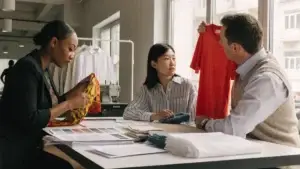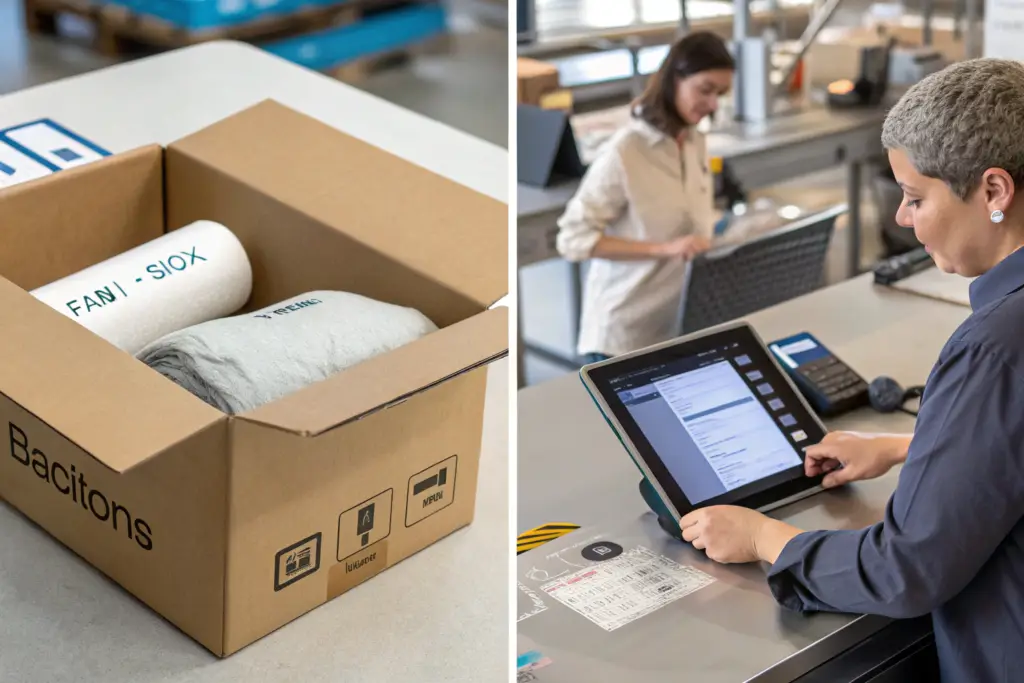
You have sourced your fabric. You have your trims. You have your Tech Pack. You ship everything to your CMT (Cut, Make, Trim) factory. Now, the real work of collaboration begins. But communicating effectively with a factory that is 7,000 miles away and working only with your specific materials presents unique challenges. A brand owner told me, "I thought the hard part was sourcing the fabric. I was wrong. The hard part was making sure the factory understood exactly what was in my head and in those boxes."
Communicating effectively with a CMT factory requires a shift from a "full-service" mindset to a "precise instruction" mindset. You are the supply chain manager and the designer. The keys are: 1) A flawlessly detailed and CMT-specific Tech Pack that leaves zero room for guesswork, 2) A perfectly labeled and documented physical shipment that mirrors your BOM, and 3) A proactive, structured, and visual feedback loop for addressing issues during sampling and production.
At Shanghai Fumao, our entire B2B communication model is built to support this precise, transparent collaboration. We know that in CMT, the factory's job is to execute your instructions perfectly. Our role is to make that process as clear and efficient as possible. Let me share the specific strategies and tools we use to ensure that communication with our CMT partners is a source of clarity, not confusion.
Why Is a CMT-Specific Tech Pack the Foundation of All Communication?
In a full-package model, the factory can sometimes fill in small gaps based on their experience or their standard practices. In CMT, this is impossible. The factory has no standard fabric. It has no stock trim. The only reality is what you have supplied and what you have documented. Your Tech Pack is not just a guide; it is the single source of truth, the legally binding contract for the project. Any missing information is a direct cause of delays and errors.
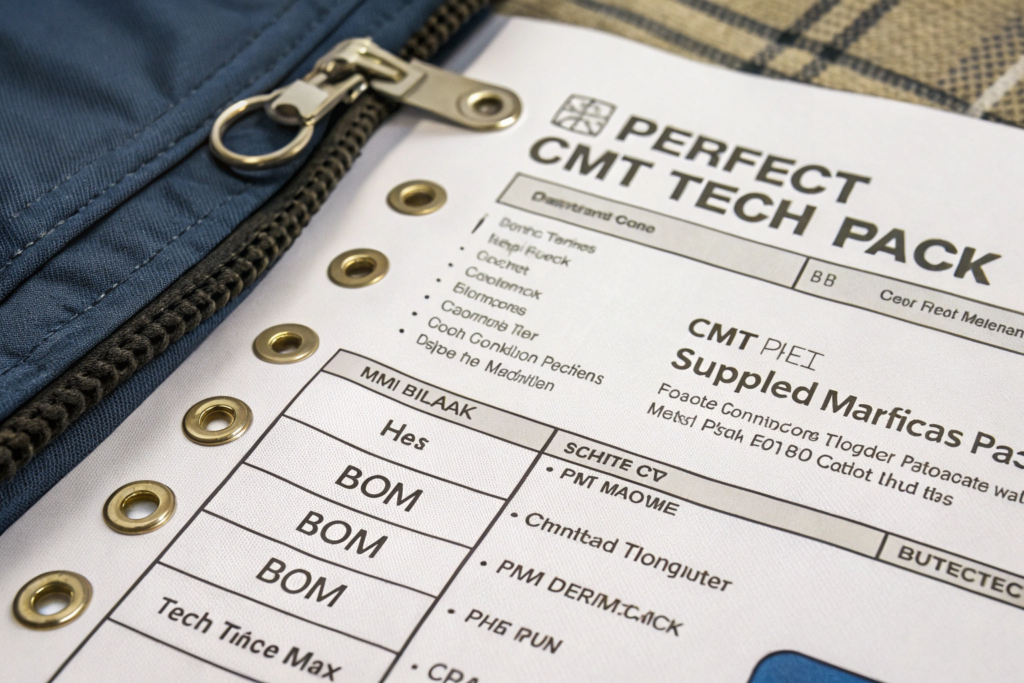
A CMT-specific Tech Pack is the non-negotiable foundation of all communication. It must be a complete, self-contained blueprint that assumes the factory has zero prior knowledge of the garment. The most critical component is a meticulously detailed Bill of Materials (BOM) that uses the exact same reference codes as the labels on your physical shipment. This document must answer every question about construction, measurements, and trim placement before it is even asked.
I recall a brand that sent a beautiful sketch and a box of amazing materials for a CMT jacket. The Tech Pack, however, did not specify the type of interfacing to use in the collar, nor did it include the exact distance for the topstitching. Our sample room had to stop and send a list of questions. This delayed the project by four days. The client was frustrated, but they realized the gap was in their communication. They revised their Tech Pack template to include a specific section for "Construction Callouts" and a more detailed BOM. Their next CMT project was seamless. This is the discipline required for successful CMT communication .
What Specific Sections Are Non-Negotiable in a CMT Tech Pack?
Beyond the standard flat sketch and measurement specs, a CMT Tech Pack must have:
- A "Client-Supplied Materials" BOM: With exact reference codes, quantities, and a clear indication of where each item is used.
- Detailed Seam and Stitch Callouts: Specify every seam type (French, overlock, flatlock) and topstitch distance (e.g., 1/4" from edge).
- Explicit Trim Placement Diagrams: Do not just say "label at center back neck." Provide a diagram with a precise measurement from the seam.
- Thread Color Specifications: Specify the exact color for every seam and topstitch.
This level of detail is not excessive; it is essential. This is the blueprint we rely on for our custom manufacturing .
How Can You Use the Tech Pack to Pre-Answer the Factory's Questions?
Think like a sewer. As you prepare your Tech Pack, ask yourself: "If I were sewing this for the first time, what would I need to know?" Anticipate questions about seam allowances, hem depths, pocket bag materials, and label placement. Answer them preemptively in the Tech Pack. This proactive approach is the single most effective way to streamline the entire CMT process. This is a key part of our pre-production guidance .
How Should You Prepare and Document Your Physical CMT Shipment?
A perfect digital Tech Pack is useless if the physical materials that arrive at our factory are a mystery. The coordination between the document and the physical shipment is a critical communication step that is often overlooked. A mismatch here—an unlabeled roll of fabric, a bag of mystery buttons—will bring the entire CMT process to a grinding halt while we wait for clarification. This is a logistical step that requires as much care as the design itself.
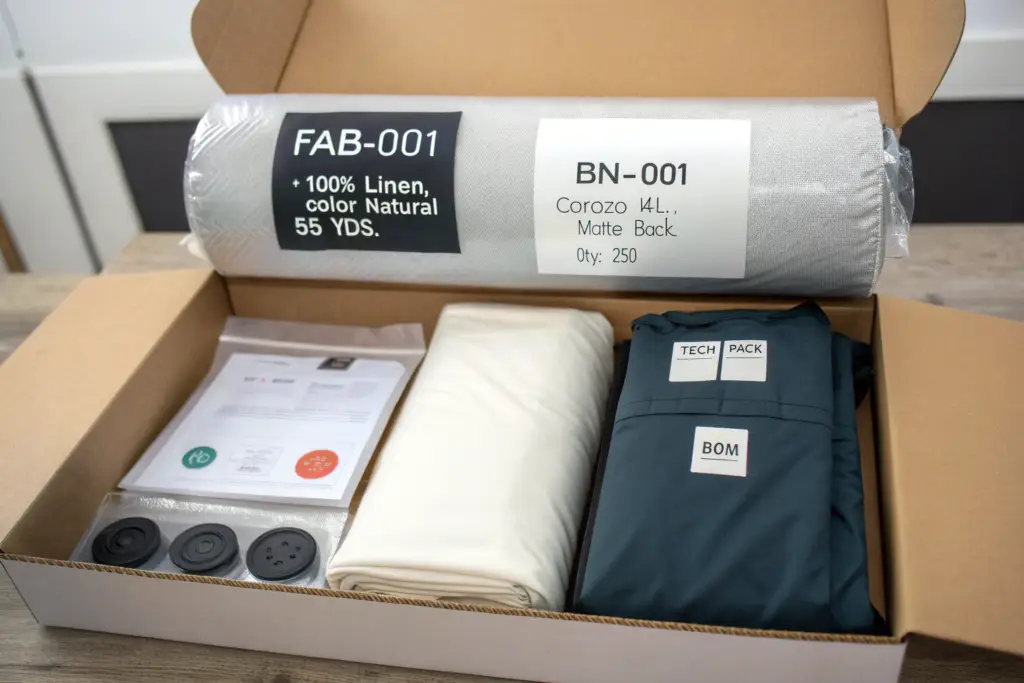
The physical material shipment must be a perfect, tangible mirror of the BOM in your Tech Pack. Every single roll of fabric and every bag of trims must be clearly and durably labeled with the exact reference code used in the BOM (e.g., "FAB-001," "BTN-001"). A printed copy of the final, approved Tech Pack and a detailed packing list should be included inside the box. This allows our receiving team to quickly and accurately verify that all required materials have arrived and are correctly identified.
A women's wear client of ours is a master of this process. Her CMT shipments are legendary in our receiving department. Every fabric roll has a large, waterproof tag with the style number and BOM reference. Her trims are in clear, labeled bags. Inside the box is a laminated copy of the relevant pages from her Tech Pack. Our team can process her shipment and have it ready for inspection in under an hour. Her projects always start on time because there is zero confusion. This level of organization is a direct investment in a smooth, fast CMT production run .
What Is the Best Way to Label Fabric Rolls and Trim Packages?
Use a clear, consistent, and durable system. For example:
- Fabric: "Style #001 - Shell Fabric - 100% Linen - Color: Natural - BOM Ref: FAB-001"
- Trims: "Style #001 - Buttons - Corozo 14L - Matte Black - Qty: 250 pcs - BOM Ref: BTN-001"
Use waterproof tags and clear poly bags. This small investment in organization saves hours of confusion and prevents costly errors. This is a key tip for smooth CMT logistics .
Why Should You Always Include a Physical Swatch or Trim Sample Stapled to the BOM?
This is a best practice that adds a powerful layer of verification. Even with perfect labeling, including a physical fabric swatch and a sample of each trim stapled directly to the BOM page in your Tech Pack provides our team with an immediate, tactile, and visual reference. It is a final, fail-safe confirmation that the labeled materials match your intention. It is a simple step that demonstrates a professional, detail-oriented approach. This is part of our recommended material verification protocol .
What Is the Most Effective Way to Provide Feedback on CMT Samples?
You have received the first sample from your CMT factory. It is close, but not perfect. Now comes the most critical communication moment: providing feedback on what needs to change. Vague, subjective feedback ("The sleeve feels weird") is the enemy of progress in CMT. It leads to confusion, wasted time, and a second sample that is still not right. Your feedback must be as precise as your initial Tech Pack.
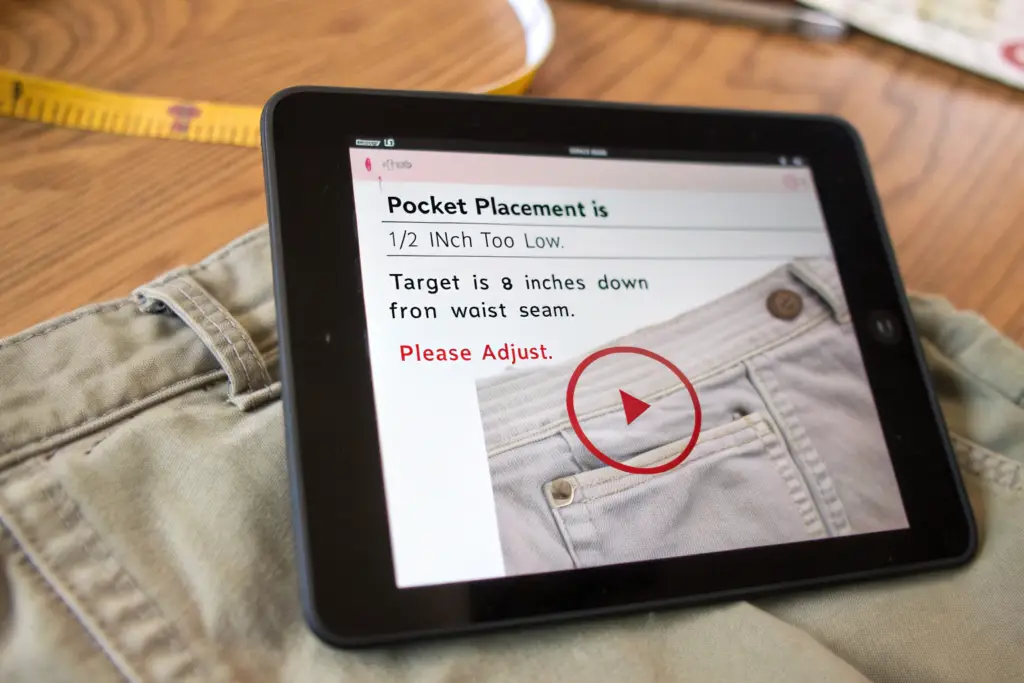
The most effective feedback on CMT samples is visual, specific, and measurable. Always combine a clear, annotated photo with a written comment that references the specific Point of Measure (POM) or construction detail. State the issue, the desired outcome, and the target measurement. For example: "Photo: POM 'D' (Bicep). Issue: Too tight. Target: 14' flat. Current sample measures 13.5'. Please increase by 0.5' total circumference."
A brand we work with has a brilliant system. She puts the sample on her fit model and takes photos. She then uses a simple photo editing app to draw directly on the images. She draws a red line where the seam should be. She adds text: "Move pocket here. Down 1cm." She sends us these annotated photos along with a simple bulleted list of the POM adjustments. Her feedback is instantly understandable. There is zero ambiguity. Her samples are approved in 1-2 rounds, almost without fail. This is the gold standard for CMT sample feedback .
Why Are Annotated Photos More Effective Than a Written Paragraph?
A picture is literally worth a thousand words, especially across a language barrier. A written description of a fit issue on a complex 3D shape is incredibly difficult to interpret. A photo with a red circle and an arrow pointing to the exact location of the issue is universally understood. It removes all guesswork. It shows our pattern maker exactly what you are looking at. This is a non-negotiable part of our communication process.
How to Use a "Sample Revision Sheet" to Track Changes?
For complex garments with multiple revisions, a simple email thread is not enough. A Sample Revision Sheet is a simple document (a spreadsheet or a shared document) that tracks every change, round by round. It includes columns for the date, the POM/detail, the issue, the requested change, and the status. This creates a clear, auditable history of the development process and prevents changes from being forgotten. This is a powerful tool for collaborative development .
How Does Fumao's Project Management Model Facilitate Clear CMT Communication?
Even with a perfect Tech Pack and a flawless shipment, questions will arise. Issues will need to be solved. This is where the human element of communication becomes paramount. In a CMT partnership, you need a single, reliable point of contact who understands your project and can translate between your vision and the factory floor. Our Project Manager model is designed to be that bridge.
Fumao's dedicated Project Manager model facilitates clear CMT communication by providing a single, accountable point of contact. Your Project Manager is not a salesperson; they are an operations specialist who manages the flow of all information between you and our production teams. They provide structured, proactive updates (like the weekly Milestone Update), ensuring you are never left in the dark. They translate "designer speak" into actionable instructions for the factory floor.
A brand owner told me, "My Fumao Project Manager is the most valuable person in my supply chain. I email her with a question, and I know she will either have the answer or will walk to the cutting room and get it for me. I don't have to manage five different people. It's all through her. It makes CMT feel easy." This is the power of a single, clear conduit for communication. It reduces complexity, eliminates confusion, and builds immense trust. This is the cornerstone of our B2B partnership model for CMT.

What Does a "Weekly Milestone Update" for a CMT Order Look Like?
Our weekly update is a concise, visual report. It includes:
- Overall Status: "On Track."
- Material Status: "All materials inspected and approved."
- Production Progress: "Cutting: 100% Complete. Sewing: 20% Complete."
- 3-4 Candid Photos: Showing your fabric being cut, bundles on the sewing line, etc.
- Next Milestone: "Expect sewing to be complete by Friday, Oct 20."
This proactive communication eliminates the need for "check-in" emails and provides immense peace of mind.
How Does a Project Manager Translate "Designer Speak" to "Factory Floor Speak"?
You might say, "I want this collar to have a soft, relaxed roll." That is designer speak. Your Project Manager translates that into factory floor speak for our pattern maker and sewer: "Use an unfused collar band. Use a lightweight interlining. Topstitch at 1/4" with 12 SPI." They bridge the gap between creative vision and technical execution. This translation function is one of the most valuable, yet invisible, services we provide in our CMT services .
Conclusion
Communicating effectively with a CMT factory is a discipline of precision and clarity. It is about understanding that you are the source of all information, and the factory's role is one of perfect execution. The pillars of this communication are a flawless, CMT-specific Tech Pack, a perfectly labeled and documented physical shipment, and a structured, visual feedback loop.
At Shanghai Fumao, we are masters of this collaborative process. Our systems, our Project Managers, and our entire operational culture are designed to receive your precise instructions and translate them into beautiful, expertly crafted garments. We make the complex dance of CMT feel like a seamless, transparent partnership.
If you are looking for a CMT partner who values clear, precise communication as much as you do, let's talk. Our Business Director, Elaine, can walk you through our communication protocols and show you how we make the process smooth and transparent. Please email Elaine at: elaine@fumaoclothing.com.