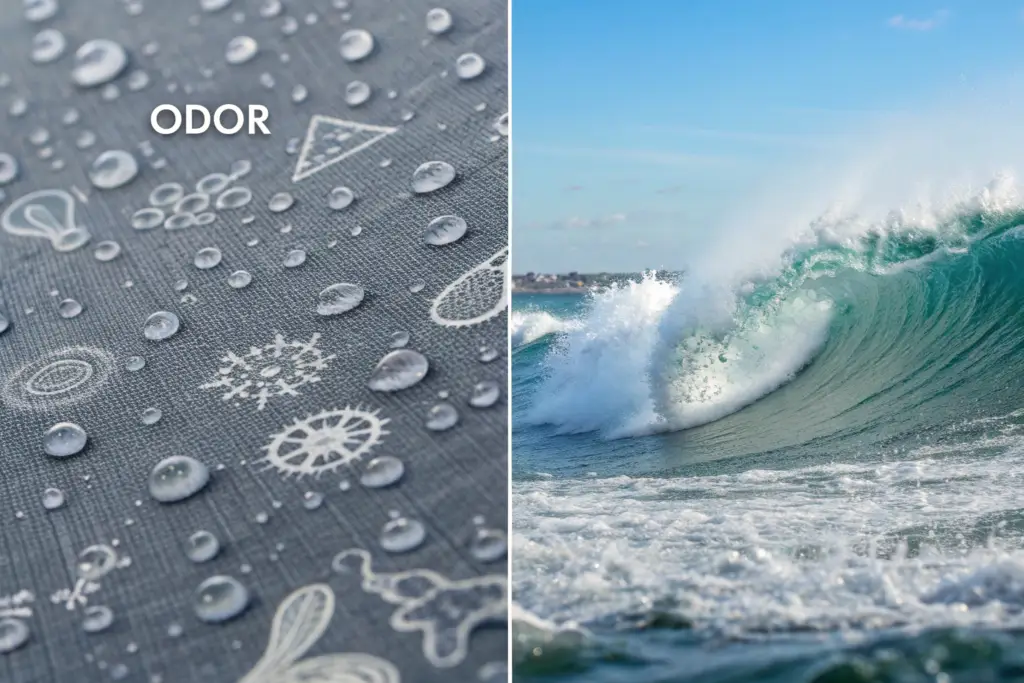
You have designed the perfect activewear line. The fabric is moisture-wicking. The fit is flawless. The colors are vibrant. But after a few workouts, a new, unwelcome design element emerges: a persistent, unpleasant odor. Your customers notice. They wash it. The smell lingers. They leave it in the gym bag, and it's overpowering. Suddenly, your high-performance gear is associated with being smelly. A brand owner told me, "I focused so much on making my leggings squat-proof that I completely forgot about the stink factor. The odor complaints were a wake-up call."
Preventing odor in sweat-resistant sportswear requires moving beyond simple moisture-wicking. It is a multi-faceted approach that involves: 1) Choosing inherently odor-resistant fibers (like Merino wool or Tencel) or synthetics with built-in antimicrobial technologies (like silver ions), 2) Optimizing fabric construction for rapid drying and reduced bacterial habitat, and 3) Educating the end-consumer on proper care, as odor is a battle fought on both the manufacturing and laundry fronts.
At Shanghai Fumao, we help our B2B partners engineer odor-resistant activewear that performs and stays fresh. We know that a smelly garment is a returned garment. Let me explain the science of why performance wear stinks and the specific, actionable strategies we use to build freshness into the very fibers of your private label collection.
Why Does Performance Sportswear Trap Odor More Than Natural Fibers?
It is a cruel irony of performance wear: the very fabrics that excel at wicking sweat away from your skin are also the best at hanging onto the resulting smell. A sweaty cotton t-shirt will stink, but a sweaty polyester shirt will stink more and the smell is much harder to wash out. Understanding this scientific paradox is the first step to solving it. The problem is not the sweat itself, but the bacteria that feed on it.
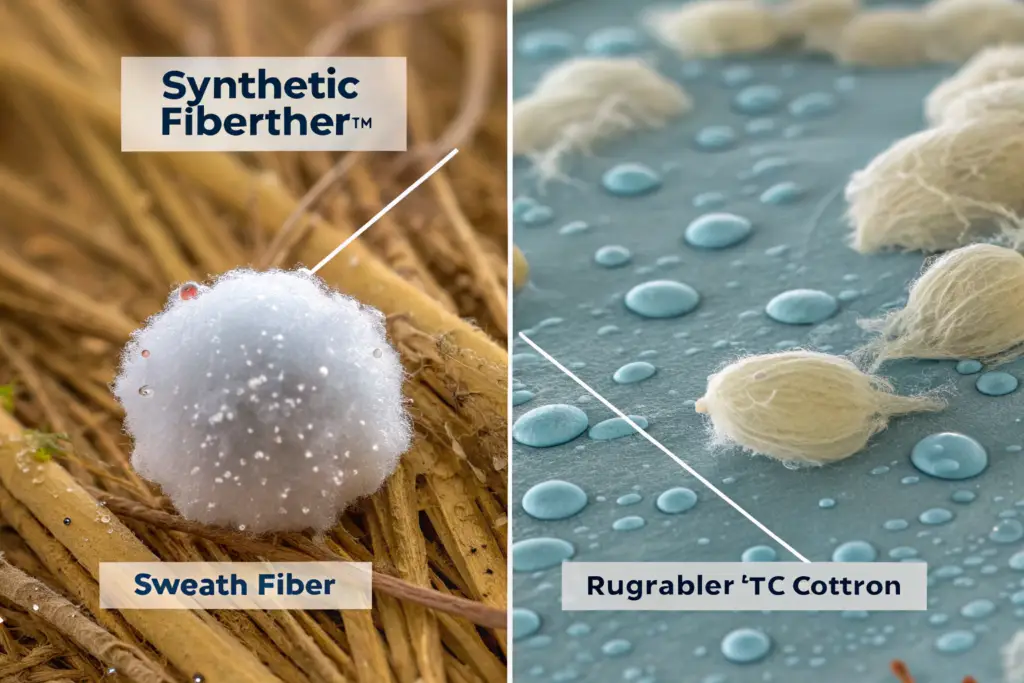
Synthetic performance fabrics like polyester and nylon are oleophilic, meaning they have an affinity for oil. The bacteria that cause body odor thrive in the oily, waxy components of human sweat (sebum). These oils adhere strongly to the smooth surface of synthetic fibers, providing a perfect, long-lasting food source for the bacteria. The bacteria metabolize the oils and produce the volatile, smelly compounds we associate with body odor. Natural fibers like cotton absorb the oily sweat into their core, which can be washed out more easily.
I recall an activewear brand that launched a line of beautifully designed polyester tops. The moisture-wicking performance was excellent. But the reviews were brutal: "Smells like a locker room after one wear," "The stink never comes out." They had used a standard, untreated polyester. The fabric was a perfect trap for body oils and bacteria. They reformulated their line with a polyester fabric that had a permanent antimicrobial finish (a silver-ion treatment). The difference was night and day. The new tops stayed fresh for multiple wears. The "stink" problem was solved. This is the power of engineering odor resistance at the fiber level. This is the kind of material science we apply in our performance fabric sourcing .
Why Doesn't Regular Washing Always Remove the Smell from Synthetics?
The oily, waxy residue from sweat (sebum) is hydrophobic and binds tightly to the smooth, oleophilic surface of synthetic fibers. A standard warm or cold wash with regular detergent often fails to break down and remove these stubborn oils. They remain trapped in the fabric, providing a continuing feast for any remaining bacteria. This is why the smell can seem to "reactivate" the moment you start sweating again. This is why proper care is so critical, which we'll discuss later.
What Role Does Bacteria Play in Creating That "Gym Bag" Smell?
The odor is not the sweat itself. Fresh sweat is virtually odorless. The smell is the byproduct of bacteria living on your skin. When you sweat, you create a warm, moist, nutrient-rich environment. The bacteria feast on the components of your sweat (especially the lipids and proteins) and excrete smelly compounds like ammonia and volatile fatty acids. The fabric acts as a giant petri dish, holding the sweat and bacteria close to your skin.
What Fabric Technologies and Fibers Naturally Resist Odor?
The most effective way to prevent odor is to build resistance into the very structure of the fabric. This can be achieved by choosing inherently odor-resistant natural or cellulosic fibers, or by selecting synthetics that have been treated with advanced antimicrobial technologies. The market is full of options, and knowing which ones actually work is key to building a premium activewear line.
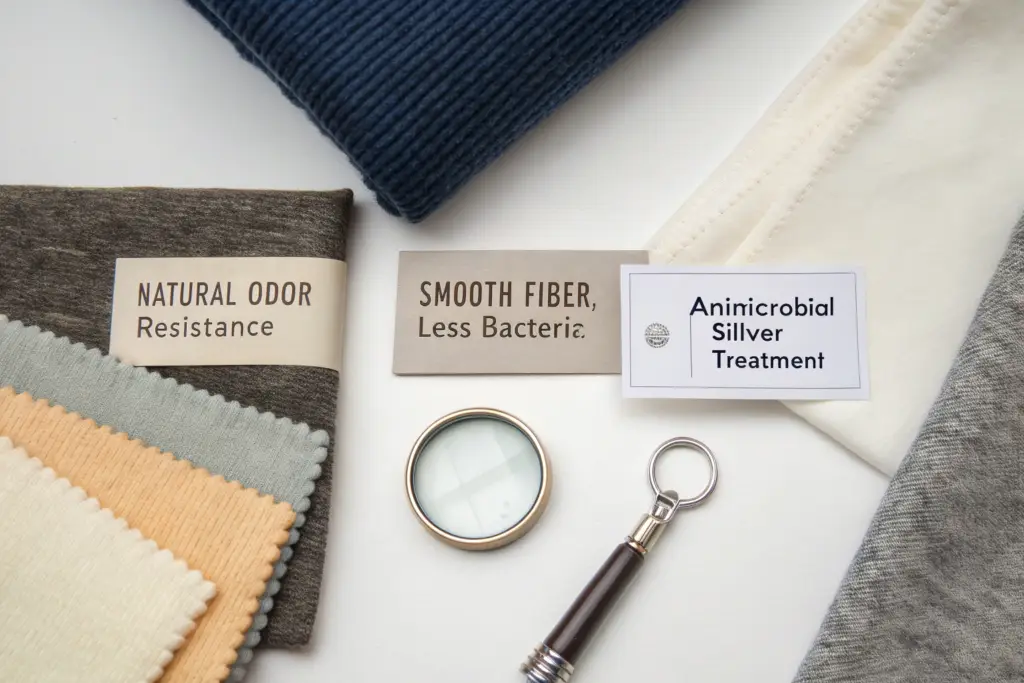
The most effective odor-resistant technologies are: 1) Merino Wool: Naturally resists odor due to its unique fiber structure that traps and locks away bacteria and its ability to absorb moisture vapor before it becomes liquid sweat. 2) Antimicrobial Treatments for Synthetics: The most common and effective is a silver-ion treatment, which is permanently embedded in the polyester or nylon fiber and inhibits the growth of odor-causing bacteria. 3) Tencel and other cellulosic fibers: Their incredibly smooth surface provides fewer places for bacteria to adhere to compared to the rougher surface of cotton.
A brand specializing in travel and commute wear swears by Merino wool blends. Their customer is someone who might wear the same shirt for a 12-hour flight and then straight to a meeting. Merino's natural odor resistance is their superpower. Another client, focused on high-intensity training, uses a silver-ion treated recycled polyester. Their customer needs the extreme durability and wicking of polyester, but demands the freshness that the silver treatment provides. Both are valid, premium solutions for different use-cases. We guide our clients to the right technology based on their specific customer and activity. This is a key part of our performance fabric expertise .
How Does Silver-Ion Technology Actually Work?
Silver ions (Ag+) have a natural antimicrobial property. When embedded into a synthetic fiber, the silver ions disrupt the cell membranes of bacteria, interfering with their metabolism and preventing them from reproducing. The bacteria cannot establish a colony on the fabric, which means they cannot produce the smelly byproducts. This treatment is permanent and will not wash out over the life of the garment.
Why Is Merino Wool Considered the "Miracle" Odor-Resistant Fiber?
Merino wool's odor resistance is a multi-factor phenomenon. First, its fiber has a complex, scaly surface that some research suggests can actually trap and immobilize bacteria. Second, and more importantly, it is incredibly effective at moisture vapor management. It absorbs water vapor before it condenses into liquid sweat on your skin. This keeps the skin drier and deprives bacteria of the moisture they need to thrive. It's a natural, high-performance system.
How Can Garment Construction and Fit Help Minimize Odor?
While fiber choice is the primary defense, the way a garment is constructed can also play a supporting role in the fight against odor. Smart design features that promote airflow and rapid drying create a less hospitable environment for bacteria to flourish. It is about building a garment that actively works to keep the wearer's microclimate cool and dry.
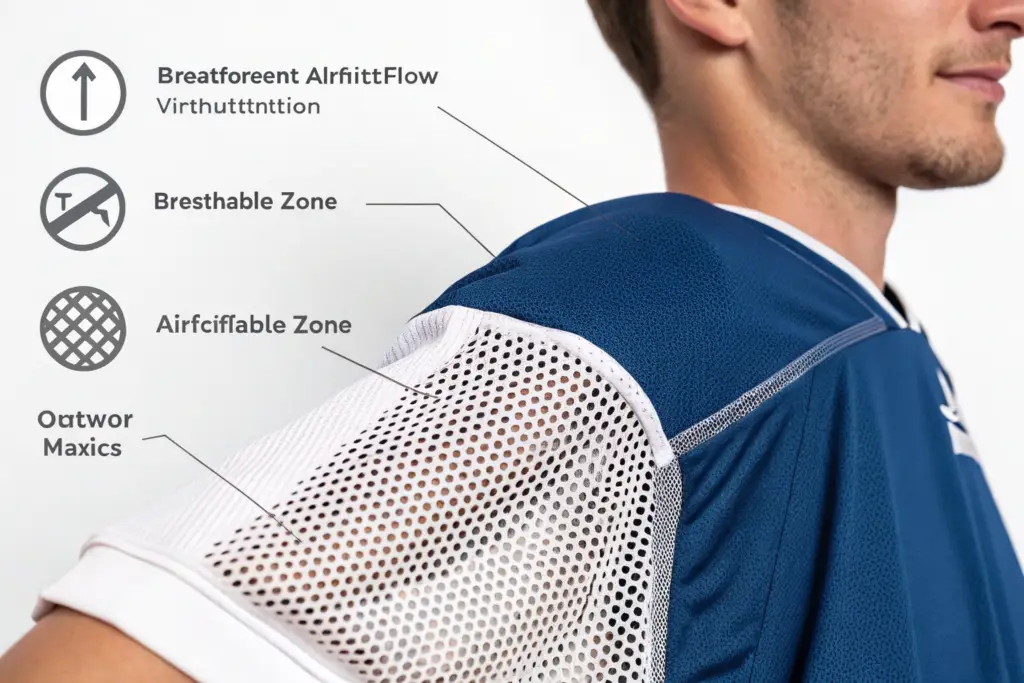
Garment construction and fit can minimize odor by promoting ventilation and reducing the "microclimate" where bacteria thrive. Strategic use of breathable mesh panels in high-sweat zones (underarms, back) allows heat and moisture vapor to escape. A fit that is not overly tight allows for better air circulation against the skin. These design elements help the sweat evaporate more quickly, reducing the amount of time bacteria have to feed and multiply.
A brand we work with that focuses on high-intensity training gear incorporates laser-cut ventilation into the back and underarm panels of all their tops. It is a functional design signature. The perforations allow for massive airflow, rapidly cooling the body and drying the fabric. While not a silver bullet against odor on its own, it works synergistically with their silver-treated fabrics to create a comprehensive system for freshness. This is the kind of thoughtful, performance-driven design we help our private label partners execute.
Where Are the Most Effective Places to Add Mesh Panels or Ventilation?
Focus on the body's "heat maps"—the areas that produce the most sweat and heat. The most effective zones for ventilation are:
- Underarms: The classic, most effective location.
- Center Back: A major area for heat and sweat buildup.
- Side Panels: For lateral airflow.
Integrating breathable mesh or laser-cut perforations in these zones can significantly improve the garment's overall breathability and drying speed.
Why Is a Looser Fit Sometimes Better for Odor Control Than Compression?
An ultra-tight, compression-fit top traps heat and moisture directly against the skin, creating a perfect, warm, humid breeding ground for bacteria. A slightly looser, more relaxed fit allows for a small air gap between the fabric and the skin, promoting airflow and allowing sweat to evaporate more freely. This is a trade-off between the performance benefits of compression and the comfort benefits of breathability. It is an important design consideration.
What Role Does Consumer Education Play in Long-Term Odor Prevention?
You can engineer the most advanced, odor-resistant fabric in the world, but if your customer washes it in hot water with fabric softener and leaves it in the dryer for an hour, its performance will be severely compromised. The final, critical component of long-term odor prevention is consumer education. Empowering your customer with the right knowledge is an essential part of the brand experience and a powerful way to reduce returns.
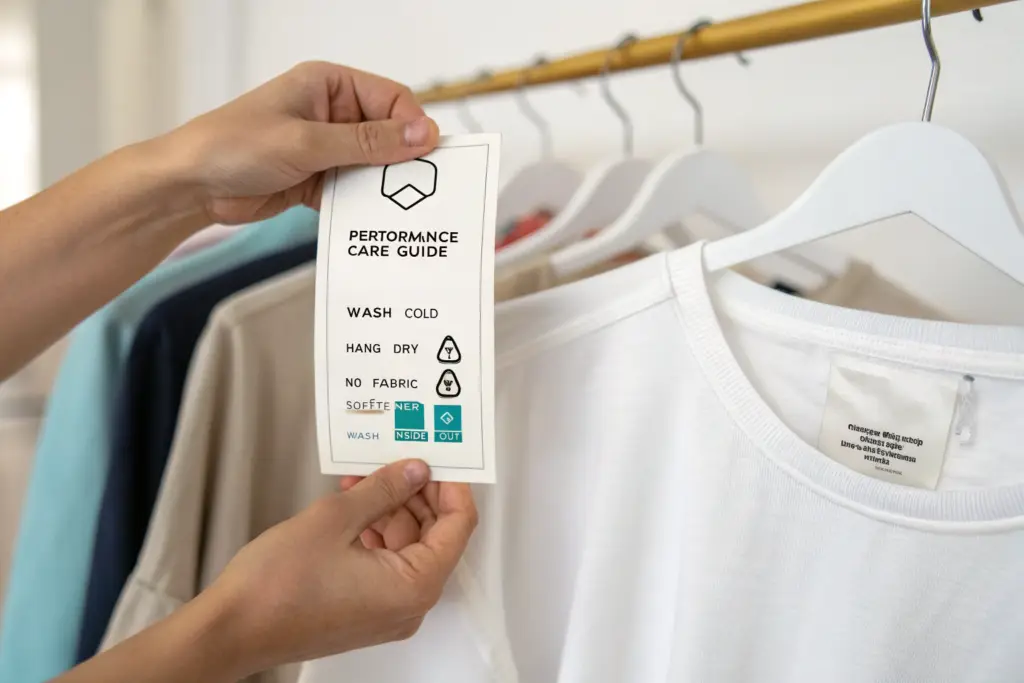
Consumer education is a vital tool for long-term odor prevention. Brands should provide clear, simple care instructions that go beyond the standard label. Key messages include: "Wash in cold water to prevent setting odors," "Avoid fabric softeners, which coat fibers and trap bacteria," "Turn garments inside out to allow detergent to reach the smelliest parts," and "Hang dry or tumble dry on low heat to preserve fiber integrity and antimicrobial treatments."
A forward-thinking activewear brand we work with includes a small, beautifully designed "Performance Care Guide" hangtag with every order. It explains, in simple, friendly language, why these care steps matter. Their customers appreciate the education. They feel like they are being let in on a secret. It builds trust and community. And, more importantly, it dramatically reduces the number of "this shirt smells" returns. They have turned a potential negative into a positive brand touchpoint. This is the power of holistic thinking. This is the level of partnership we encourage with our B2B clients .
Why Is Fabric Softener the Arch-Enemy of Performance Wear?
Fabric softeners and dryer sheets work by depositing a waxy, lubricating coating on fabric fibers. This coating makes clothes feel softer, but on performance synthetics, it is a disaster. It clogs the very pores and channels that are designed to wick moisture. It also traps dead skin cells, body oils, and bacteria, creating a perfect, smelly sludge that is very difficult to remove. It essentially ruins the performance of the garment. The message is simple: NO FABRIC SOFTENER, EVER.
What Are the Best Washing Practices to Recommend to Customers?
Keep it simple and memorable. Recommend:
- Wash Cold: Hot water can set protein-based stains and odors.
- Turn Inside Out: This allows the detergent and water to directly attack the body oils and bacteria on the inside of the garment.
- Use a Sport-Specific Detergent: These are formulated to break down body oils and sweat residue better than standard detergents.
- Hang Dry: High heat from the dryer can damage elastic fibers and degrade antimicrobial treatments.
This simple guidance, provided by the brand, can significantly extend the life and performance of the garment.
Conclusion
Preventing odor in sweat-resistant sportswear is a sophisticated challenge that requires a multi-pronged strategy. It begins with smart material choices—whether it is the natural power of Merino wool or the engineered intelligence of a silver-ion treated synthetic. It is supported by thoughtful construction that promotes ventilation. And it is completed by a partnership with the consumer, empowering them with the knowledge to care for their gear correctly.
At Shanghai Fumao, we are experts in the science of performance fabrics. We help our B2B partners navigate these complex choices, sourcing the right materials and engineering the right construction to create activewear that performs at the highest level and stays fresh. We help you build a brand that customers trust, wear after wear.
If you are ready to develop an activewear line that smells as good as it looks, let's talk. Our Business Director, Elaine, can walk you through our performance fabric options and odor-control technologies. Please email Elaine at: elaine@fumaoclothing.com.