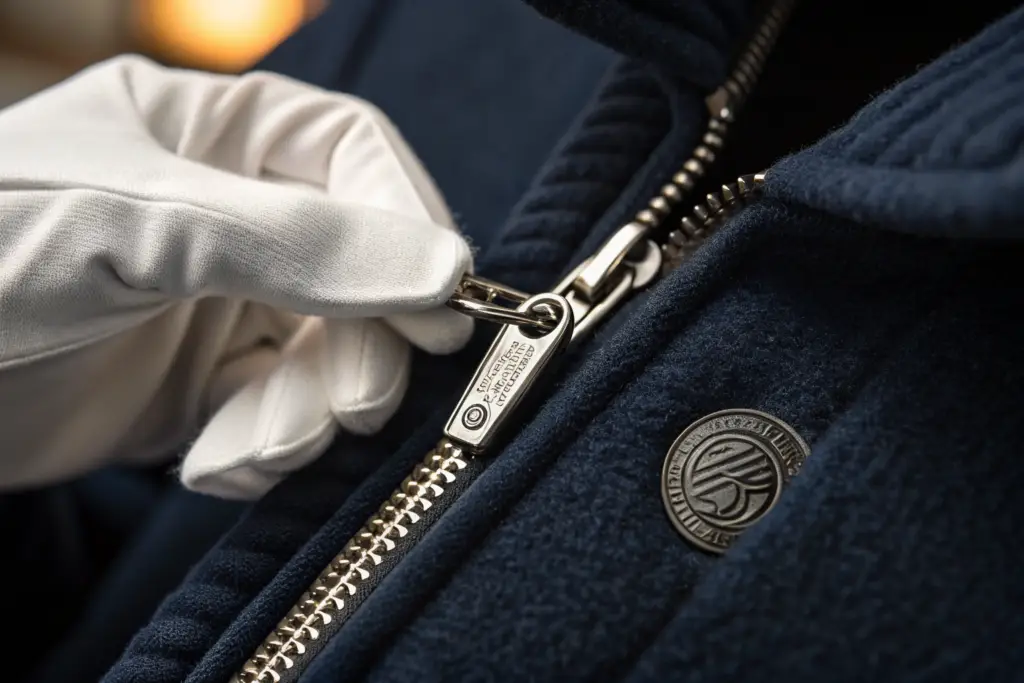
You have spent months perfecting the fit of your jacket. You sourced Italian wool. The lining is Bemberg. But when you unzip the prototype for the first time, the sound is a tinny rattle. The puller is light, hollow, and has a generic "YKK" look that appears on everything from a $20 fast-fashion piece to a $2,000 designer item. It feels like putting plastic hubcaps on a Ferrari. You are aiming for the top shelf, but the hardware is anchoring you to the clearance aisle. You need a point of difference that is impossible to fake and expensive to replicate.
Custom hardware acts as a game changer for high-end apparel because it serves as an immediate tactile signal of quality, a powerful anti-counterfeiting measure, and a unique branding asset that shifts consumer perception from “generic garment” to “investment piece.” The weight, finish, and proprietary shape of a custom zipper or button can justify a 20-30% higher retail price point by satisfying the luxury customer’s demand for holistic perfection.
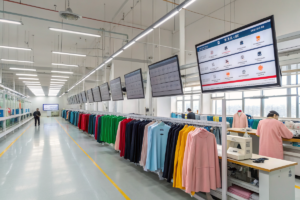
I see this every day in our development room at Shanghai Fumao. Designers will spend hours debating the GSM of the rib trim but will settle for a stock catalog zipper because custom hardware seems “too complicated” or “too expensive.” That is the exact moment they leave money on the table. Let’s break down why changing the trims is the single highest-leverage move you can make to elevate your brand.
How Do Custom Zippers and Buttons Justify a Higher Retail Price?
You know the internal struggle. You present the line sheet to a boutique buyer. They love the silhouette. Then they flip to the cost sheet. Their eyebrow goes up. “For this jacket? Why so high?” You point to the fabric. They nod. You point to the labor. They shrug. Then you show them the custom metal aglets and the engraved snap. That is when the conversation shifts. Suddenly, the price makes sense. The buyer can touch the value. Their end customer will feel it too.
Custom hardware justifies a higher retail price by addressing the “First Touch” luxury heuristic. When a customer picks up a garment, their fingers find the zipper before they find the care label. The heft of solid brass, the smooth glide of a polished track, and the visual of a unique logo instantly bypass the logical brain and hit the emotional “worth it” center. It creates an unspoken narrative of detail obsession that is mandatory in the premium segment.
Why Does the Weight of a Zipper Matter More Than the Design for Perception?
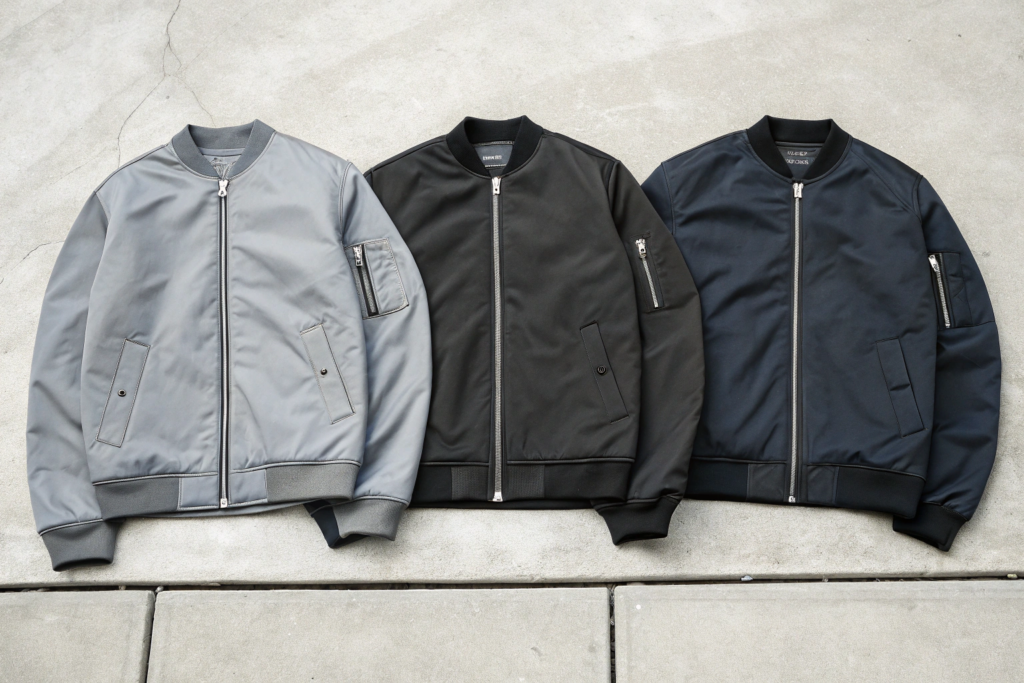
I want to share a story from 2024. We were working with a client from Seattle launching a new line of minimalist wool coats. Their design was clean. No external branding. They wanted the garment to speak for itself. We made the first sample using a standard #5 nylon coil zipper with a metal slider. It looked fine on the hanger. But when you picked it up, the coat felt… unbalanced. The body of the coat was heavy and substantial. The zipper was light and flimsy. It felt like two different garments.
We switched to a custom-made Die-Cast Zinc Zipper with an electroplated gunmetal finish. The cost difference was about $2.75 per unit. But the impact was immediate. The coat now had gravitational pull. When a customer zips it up, the mechanism feels solid and secure. There is no tinny jingle. There is a satisfying click.
The psychology here is called Heft Perception. In textiles, we often fight against weight. But in hardware, weight equals quality. A hollow, folded metal slider feels cheap because it is physically unstable. A solid die-cast slider with a defined logo feels like a piece of jewelry. It tells the customer: “We didn’t cut corners here.” And if you didn’t cut corners on the part they touch 20 times a day, you certainly didn’t cut them on the interlining they can’t see. That trust translates directly into a willingness to pay a premium.
Can Unique Engraving Stop Customers From Comparing Your Jacket to Zara?
This is the bane of every independent high-end brand. You launch a beautiful overcoat at $595. Two weeks later, a customer emails you, furious. She saw a “dupe” at a high street store for $89. “What is the difference?” she demands. You try to explain the wool grade and the armhole construction. She doesn’t care. She can’t see that.
Custom hardware is visual armor against price comparison. Zara and H&M are masters of generic hardware. They use stock YKK zippers and plain four-hole buttons. They do this because it is efficient. It is also their vulnerability.
When you install a Custom Engraved Button with your brand’s year of establishment or a unique symbol, you create a proprietary detail. That detail is protected. It costs thousands of dollars to create a mold for a custom shank button. Fast fashion retailers operate on volume and speed. They will not stop a production line to wait for a custom button mold. They will substitute a similar-looking generic option.
We saw this with a Los Angeles streetwear brand we support. They switched from a generic YKK zipper to a custom zipper with a teardrop puller embossed with their logo. Their Instagram comments changed overnight. Instead of “Where can I get this cheaper?” the comments became “Love that zipper detail 🔥” or “The hardware is crazy.” The unique hardware made the garment un-dupe-able. It protected their pricing power.
Can Custom Trim Packages Solve Supply Chain Issues for Small Brands?
Most small to mid-sized brands think custom hardware is a luxury only available to Gucci or Nike. They believe it requires a 50,000 unit order and a six-month lead time. They also fear being locked into a vendor. What if the factory has the mold, and you want to switch production to Vietnam next year? This fear of commitment keeps brands using generic trims and missing out on a key differentiator.
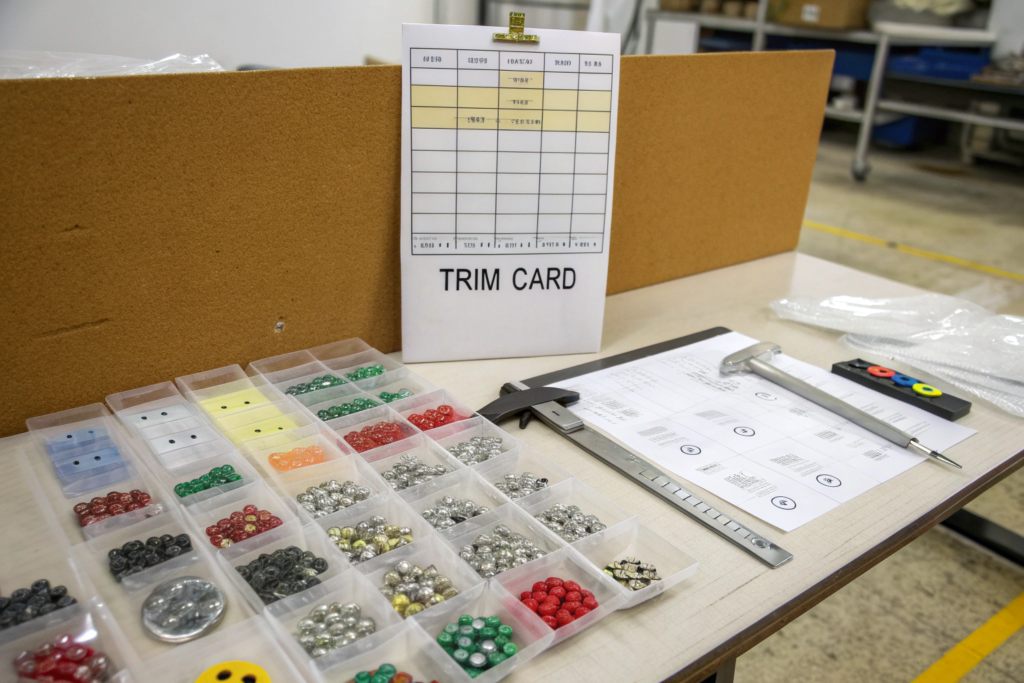
Custom trim packages can actually solve supply chain issues by reducing Minimum Order Quantities (MOQs) on specific colors and finishes. With stock hardware, you are forced to buy whatever colors the factory has in inventory (often just silver, gold, and black). With custom, you control the dye-to-match process for snaps and zipper tapes, ensuring perfect color harmony across all components and eliminating the risk of a “close enough” trim mismatch that screams low quality.
This is the number one question I get from brand owners like you. “I only need 500 jackets. The mold fee is $800. I can’t amortize that cost.”
Let’s do the math. You are right. If you look at it as a raw expense, $800 on a 500-unit order adds $1.60 per unit. That seems like a lot. But what is the alternative?
You use a stock zipper. It comes in a color that is “close” to your fabric. Close, but not perfect. The zipper tape is bright white, but your jacket shell is off-white natural cotton. That contrast screams “garment district sample sale.” You have just devalued your $295 jacket by a perceived $100 because of a 5mm strip of tape.
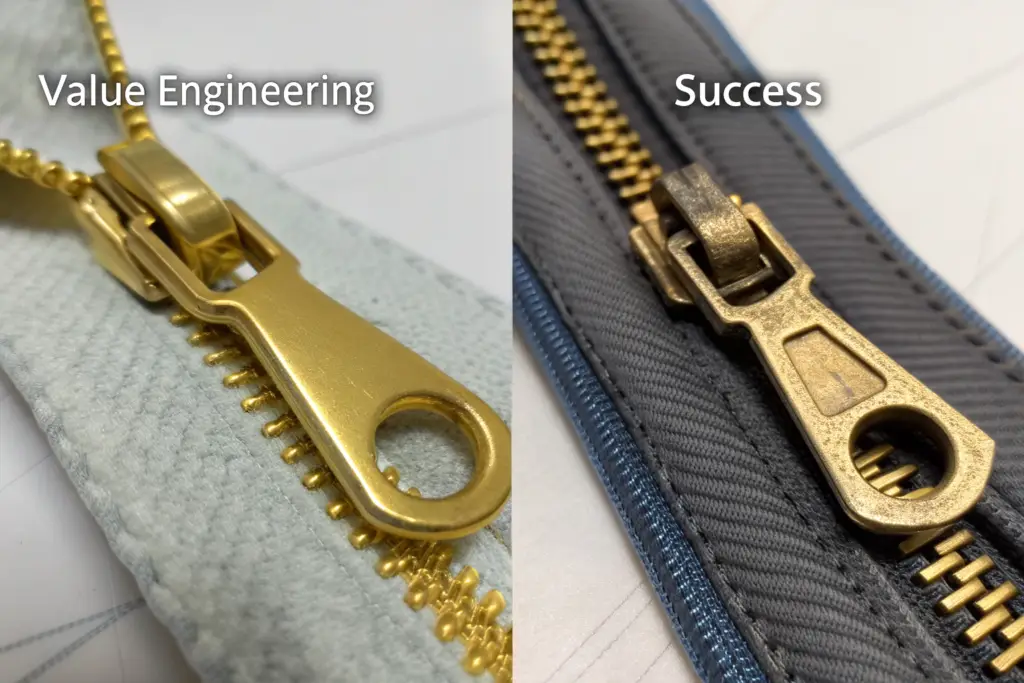
Now, let’s look at the Value Engineering approach we use at Shanghai Fumao. You do not need a fully custom zipper shape to change the game. You can use a Custom Puller on a standard #5 YKK tape.
| Component | Standard Option Cost | Custom Option Cost | Impact on Brand Value |
|---|---|---|---|
| Zipper Tape | Stock Colors | Dyed-to-Match (Exact Pantone) | High (Visual Cohesion) |
| Zipper Puller | Generic Bell Shape | Die-Cast Logo Shape | Very High (Tactile Branding) |
| Snap Buttons | Silver/Nickel Finish | Plated Copper w/ Engraving | Moderate (Premium Durability) |
| Eyelets | Aluminum Stock | Brass w/ Custom Lacquer | Low (But high end touch) |
By mixing and matching—maybe you do a custom puller but keep the stock slider body—you can reduce the mold fee to $300-$500. Spread over 500 units, that is $1.00 a jacket. Can you increase the retail price by $5 to cover that? Absolutely. Because a unique zipper pull makes the jacket look like it belongs in a boutique, not a clearance email blast.
What Are the Real Lead Times for Engraved Buttons Versus Stock Options?
Here is a harsh reality of the post-pandemic supply chain: Stock hardware is not always faster. I know that sounds counterintuitive. But hear me out.
When you order stock buttons from a supplier’s catalog, you are at the mercy of their warehouse. If the specific shade of corozo nut you need is out of stock in November, you wait. Maybe two weeks. Maybe six. You have no control. You are in a queue with thousands of other buyers.
With custom hardware, once you approve the Pantone color for the enamel fill or the plating finish, the production is scheduled specifically for you. It becomes a fixed, committed timeline.
Here is a realistic lead time breakdown based on our production schedules:
- Standard YKK #5 Metal Zipper (Stock): 2-3 Weeks (if in stock locally); 6-8 Weeks (if ordering from Japan inventory gap).
- Custom Logo Puller (Die-Cast): 4-5 Weeks (Including mold making and sample approval).
- Custom Engraved Corozo Buttons: 5-6 Weeks.
The difference is minimal. But the difference in the end product is massive. We worked with a New York designer last fall. She needed a specific shade of dusty rose snaps for a suede jacket. No stock supplier had it. She was about to settle for cream. We pushed her to do a custom enamel fill on a brass snap. It added exactly 12 days to the trim delivery timeline. The result? The snaps matched the suede exactly. The buyer for a major department store specifically commented on that color match during the line review. That 12-day wait secured a $50,000 order. That is the game changing part.
Why Are Custom Metal Labels and Rivets Essential for Brand Storytelling?
You are not just selling clothes. You are selling a story. You are selling a vibe. But how do you tell that story when the garment is folded on a shelf or stacked in a warehouse? The first thing a consumer sees might be the lapel or the cuff. But the second thing? The second thing they do is check the inside neck label. And if that label is a cheap, itchy satin tag that wrinkles in the wash, your story just became a cautionary tale about cutting corners.
Custom metal labels and rivets are essential for brand storytelling because they provide a permanent, durable, and premium canvas for your logo. Unlike a sewn label that frays or fades, a metal badge or rivet develops a patina over time that actually adds to the brand’s authenticity and heritage narrative. It transforms a disposable fashion item into a durable good.
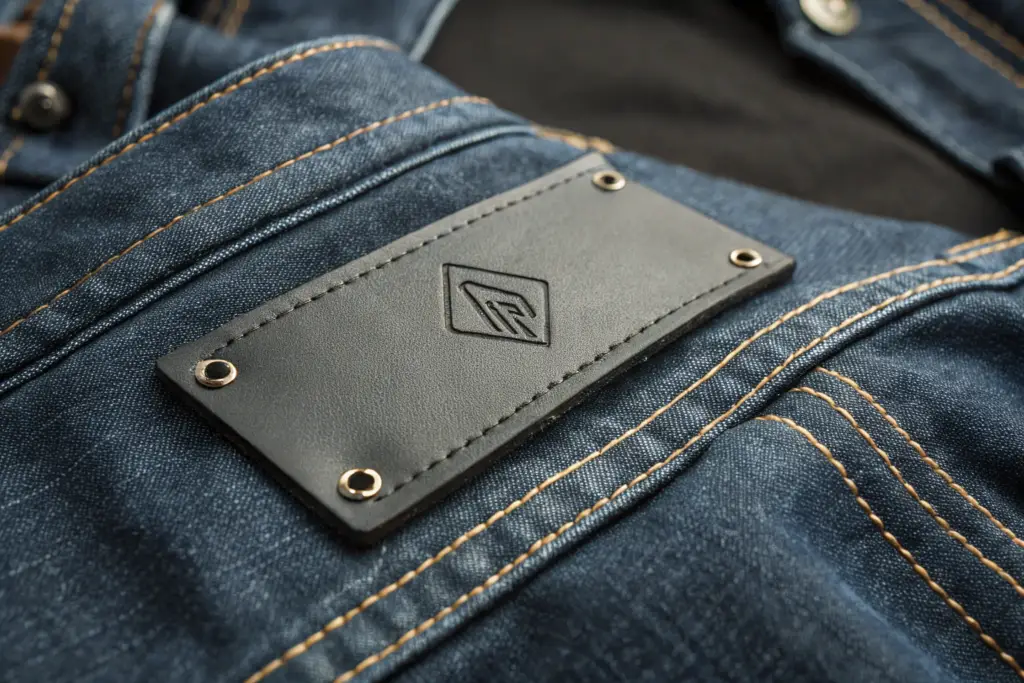
How Does the Finish of a Metal Logo (Matte vs. Shiny) Change the Garment’s Vibe?
This is where the lack of aesthetic knowledge you mentioned earlier can trip up a business owner. You might say, “I want a metal logo.” The factory sends you a shiny gold plate. You put it on your rugged, washed canvas work jacket. It looks like a costume piece from a pirate movie. The vibe is all wrong.
Let me break down the psychology of finishes for you. This is based on years of observing consumer behavior at trade shows.
- Shiny Gold / High Polish Nickel: Signals luxury, formality, new money, or classic prep. Think Ralph Lauren buttons on a blazer. Use this for evening wear, tailored shirts, or feminine blouses. If you put this on a distressed hoodie, it looks like you are trying too hard.
- Matte Black / Gunmetal / Antique Brass: Signals utility, heritage, understatement, and cool. Think Fear of God or vintage military surplus. The matte finish absorbs light. It looks like it has always been there. It feels functional.
- Raw Copper / Unlacquered Brass: Signals craftsmanship and aging. This is for the brand that wants to tell a story about the future. Over time, raw copper will darken and oxidize with the owner’s sweat and wear. It becomes a personal item. This is a bold choice for high-end denim or leather goods.
We had a client in Austin, Texas, who made workwear-inspired aprons and bags. They originally used a shiny silver rivet. It scratched easily and looked cheap after a few weeks. We switched them to a Solid Brass Rivet with a Matte Black Oxide Finish. The cost was slightly higher. But the feedback was immediate. Customers started posting photos of the rivets on Instagram. They called the hardware “beefy” and “industrial.” The rivet stopped being a fastener and became a signature of the brand.
Can Custom Rivets Actually Increase the Longevity of Stress Points?
Let’s step away from the marketing talk for a second and talk pure engineering. Because if you are selling to a customer who is sensitive to quality, you need the product to perform. Returns for broken zippers or popped buttons are a profit killer.
Custom hardware, when sourced correctly, is not just prettier. It is stronger.
Consider a standard 5-pocket jean. The stress points are the corners of the pockets. A generic pronged rivet from a stock supplier is often made of a cheap zinc alloy. Zinc is brittle. When it gets hammered onto the denim, the prongs can crack microscopically. After six months of wear and a few trips through the spin cycle, the washer head pops off. Now you have a hole in the denim and a sharp prong inside the pocket.
We specify Copper Rivets for our premium denim clients. Copper is malleable. When we set the burr and washer, the copper actually cold-welds slightly under pressure. It forms a permanent, solid bond with the fabric.
Here is a test we run in our QC department: The Pull Test. We use a force gauge to measure how many pounds of force it takes to rip a button or rivet off the fabric.
| Hardware Type | Standard Alloy Break Strength | Custom Copper/Brass Break Strength | Failure Mode |
|---|---|---|---|
| Jeans Rivet | 15-20 lbs | 35-45 lbs | Zinc: Washer cracks; Copper: Fabric tears first |
| Snap Button | 8-12 lbs (Spring Fatigue) | 18-25 lbs | Standard: Spring dies; Custom: Solid hold |
| Eyelet (Hoodie) | 5 lbs (Pulls out easily) | 12 lbs (Swaged tight) | Standard: Edge fray; Custom: Clean hole |
When you tell a customer, “This button won’t fall off,” and it actually doesn’t, you build a level of trust that is priceless in the DTC world. It reduces customer service tickets and increases repeat purchase rates. That is the long game.
What Are the Hidden Costs of Using Cheap Hardware on a Luxury Garment?
You have sourced the fabric. You have nailed the fit. You are ready to ship. And then the returns start trickling in. Not for sizing. Not for style. But because the zipper broke. Or the button turned green. Or the metal tip fell off the drawstring. These are the hidden costs of cheap hardware. They are hidden because they do not show up on the initial cost sheet. They show up three months later in your chargeback report and your brand reputation score.
The hidden costs of cheap hardware include increased return rates due to functional failure, damage to brand reputation from “green skin” oxidation stains on light-colored fabrics, and lost future sales from customers who equate a broken zipper with overall poor quality control. While you might save $0.50 per unit on the front end, you lose exponentially more on the back end in logistics, customer service time, and inventory write-offs.
Why Does Oxidation on Nickel Buttons Ruin a White Linen Shirt?
This is a specific, painful example that happens more often than you think. You make a beautiful white linen button-down for the summer collection. You use a standard nickel-plated zinc button because it is cheap and looks shiny. You ship to Florida.
Two weeks later, the customer emails a photo. The buttons have left a faint greenish-grey ring on the white linen. It looks like a stain. It is actually Galvanic Corrosion. The nickel plating on the cheap zinc core is microscopically porous. The humidity and the acidity of the linen fabric create a tiny electric current. The zinc core corrodes, and the corrosion byproduct (zinc oxide) wicks into the fabric. It is permanent.
You now have two options:
- Refund the customer and eat the shipping both ways. Cost: $15 + original margin.
- Argue with the customer that it’s “patina” and lose them forever.
Compare that to using a Genuine Mother of Pearl Button or a Corozo Nut Button. These are natural materials. They do not corrode. They get better with age. Or, if you need metal, a Solid Brass Button with a clear e-coat seal. Yes, the button cost might go from $0.15 to $0.85. That is a $0.70 increase. But you just saved a $15 return and a lost lifetime customer value of $500. The math is not even close.
How Does a Defective Custom Slider Delay Your Entire Shipping Window?
You did the right thing. You invested in custom hardware. But you didn’t vet the supplier properly. The sliders arrive. They look great. You start cutting and sewing. Then the QC report comes back. 30% of the zippers are separating after zipping. The slider body is too wide for the teeth. Or the locking mechanism is stuck.
Now you have a container of finished jackets with no working zippers. You cannot ship them. You are holding inventory. The brand owner is screaming because they have a launch event in four weeks. The sales rep at the hardware factory is “checking with production.”
This is the nightmare of inefficient communication and unreliable delivery.
At Shanghai Fumao, we have a strict protocol for custom hardware to prevent this exact scenario. We call it the Three-Point Check:
- Slider Compatibility Test: Before the mold is even finalized, we test the custom slider body on the specific tape and chain size we are using. We run it through a zipper machine 500 times. We check for smoothness and lock strength.
- Plating Adhesion Test: We take the custom puller and rub it with a specific abrasive cloth for 60 seconds under pressure. If the gold finish wears off to show the base metal, the batch is rejected. This is per ISO 3160-2 standards.
- Incoming Inspection of 100%: We do not sample check hardware. We have a team that visually inspects 100% of custom hardware pieces under bright light for burrs, sharp edges, or misaligned logos before they go to the sewing floor.
If you do not have a partner on the ground doing this, the “game changer” becomes a “project killer.”
Conclusion
Custom hardware transforms a piece of clothing from a simple covering into a statement of intent. It is the difference between a garment that gets tried on and put back, and one that gets bought because it feels like money. We started by looking at why that weight in the hand matters so much. You now understand that a die-cast zipper pull and an engraved button are not just decorations. They are psychological anchors that justify your premium price point and protect you from the race to the bottom against fast fashion dupes.
We navigated the tricky waters of supply chain and MOQs. You saw that with smart value engineering—perhaps starting with a custom puller instead of a full custom zipper chain—you can achieve that luxury look without breaking the bank on a 500-unit run. You learned that the lead time for a custom color match is often a worthwhile investment compared to settling for “close enough” and diluting your brand’s visual identity.
Finally, we confronted the hidden costs. The returns. The oxidation stains. The stuck sliders. These are the silent margin killers that make cheap hardware the most expensive choice you can make. A rivet that stays put and a zipper that glides smoothly are the bedrock of customer trust. Without that trust, the softest fabric in the world means nothing.
You have the vision for the silhouette and the fabric. Let us help you finish the story with the details that customers actually touch.
If you are ready to explore how custom metal labels, engraved zippers, or specialty rivets can elevate your next collection, I invite you to start a conversation with us. We know the vendors who can hit the right finish, the right weight, and the right lead time.
Reach out to our Business Director, Elaine, to discuss your hardware needs. She can walk you through our in-house trim library and help you find the perfect details to make your apparel unforgettable. You can email her directly at elaine@fumaoclothing.com. Let’s build something that feels as good as it looks with Shanghai Fumao.