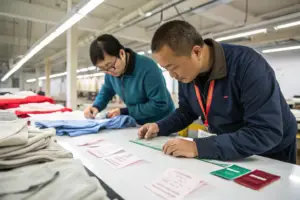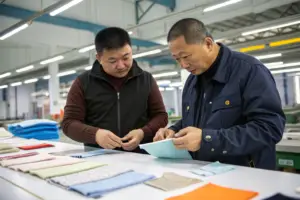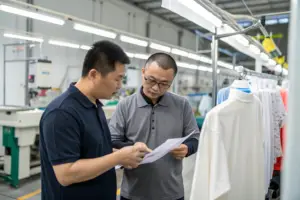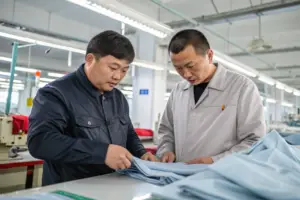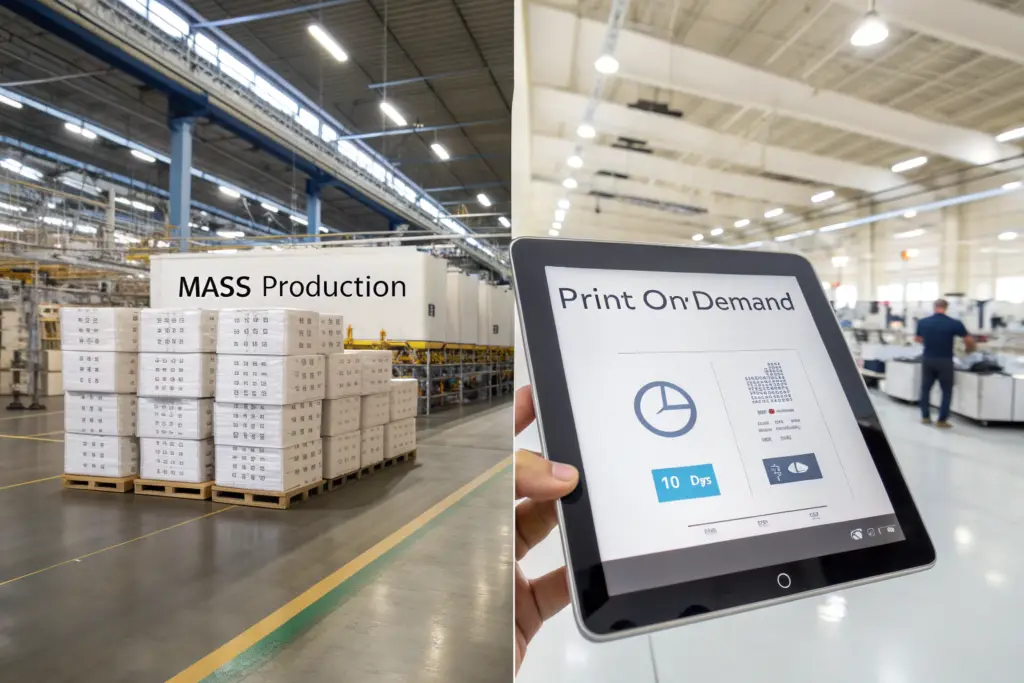
You have a brilliant idea for a private label line. You have a small, dedicated following. But you are terrified of inventory. The thought of ordering 1,000 units of a style, only to have it sit in a warehouse, is a nightmare. You need a way to produce smaller quantities, faster, without sacrificing the quality and customization that defines your brand. You ask, "Can I do this on-demand?" A brand owner told me, "I didn't want to be a warehouse manager. I wanted to be a designer. On-demand was the only way I could start."
Yes, on-demand private label garment production is not only possible, it is a rapidly growing and viable model, enabled by flexible manufacturers and digital technology. However, it is crucial to understand that "on-demand" in a B2B context differs from consumer-level print-on-demand. It involves a partnership with a factory that offers flexible production lines, lower Minimum Order Quantities (MOQs), and the ability to use stock fabrics and agile sampling processes to produce smaller batches faster and with less risk.
At Shanghai Fumao, we have embraced this shift. Our flexible production lines and B2B model are designed to support brands that want to move beyond the constraints of traditional mass production. Let me explain what true on-demand private label manufacturing looks like, its real-world possibilities, and its limitations, so you can decide if it is the right strategy for your brand.
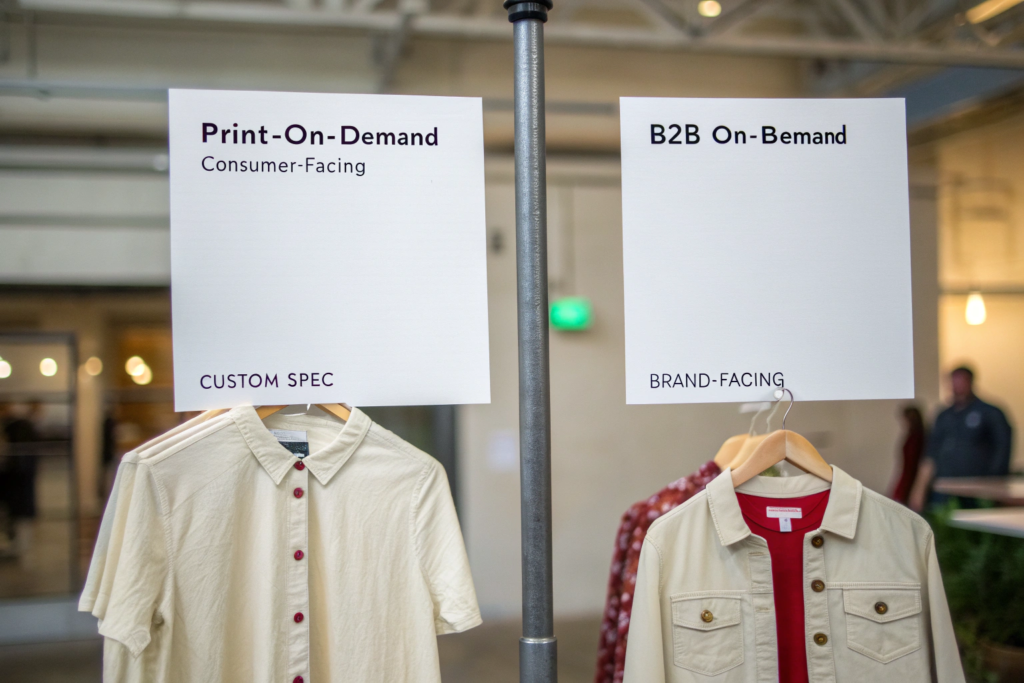
How Does True B2B On-Demand Production Differ from "Print-on-Demand"?
Many new brands are familiar with consumer-level "Print-on-Demand" (POD) services, where a customer orders a single t-shirt with a design, and it is printed and shipped directly to them. This is a great model for testing graphic ideas, but it is not private label. You have zero control over the garment's fit, fabric quality, or construction. True B2B on-demand is a different concept entirely.
B2B on-demand production is about manufacturing smaller batches of fully customized, private label garments. Unlike POD, which uses generic blank garments, true on-demand allows the brand to specify the fit, fabric, trims, and construction details. It is a partnership with a flexible factory that can produce your unique designs in quantities as low as 50-150 units per style, often using stock fabrics and agile production cells.
I recall a brand owner who started with a consumer POD service. She had great graphic designs, but the reviews were brutal. "Shirt fits like a box." "Fabric is scratchy." She could not build a real brand on a product she had no control over. She transitioned to working with us. We developed a custom fit for her tee, sourced a beautiful, soft GOTS organic cotton jersey, and added her custom woven label. She now orders 150 units of a new design at a time. The quality is night and day. She has a real, defensible brand now. This is the difference between POD and true on-demand private label .
What Are the Key Enablers of B2B On-Demand Manufacturing?
This model is possible because of specific investments and strategies on the part of the factory:
- Flexible Production Cells: Small, modular sewing teams that can switch between styles quickly without massive setup costs.
- Stock Fabric Libraries: Using high-quality, in-stock fabrics in core colors to bypass custom dye lot MOQs.
- Digital Sampling & Tech Packs: Streamlining the pre-production phase.
- Strong Mill Relationships: Allowing for smaller, more frequent raw material orders.
What Is a Realistic Minimum Order Quantity (MOQ) for This Model?
This is the most common question. For a fully custom private label garment using a stock fabric, our MOQ can be as low as 100-150 units per style. This is a game-changer compared to the 500-1,000 unit MOQs of traditional factories. If you require a custom-dyed fabric or a complex custom print, the MOQ will be higher, driven by the mill's minimums. However, the ability to start with stock fabrics for your first run is what makes the on-demand model financially viable for emerging brands .
What Are the Realistic Capabilities and Limitations of On-Demand Production?
The on-demand model is powerful, but it is not magic. It is essential to have realistic expectations to avoid frustration and to plan your business effectively. It offers incredible flexibility in some areas but has inherent constraints in others. Understanding this balance is key to leveraging the model successfully.
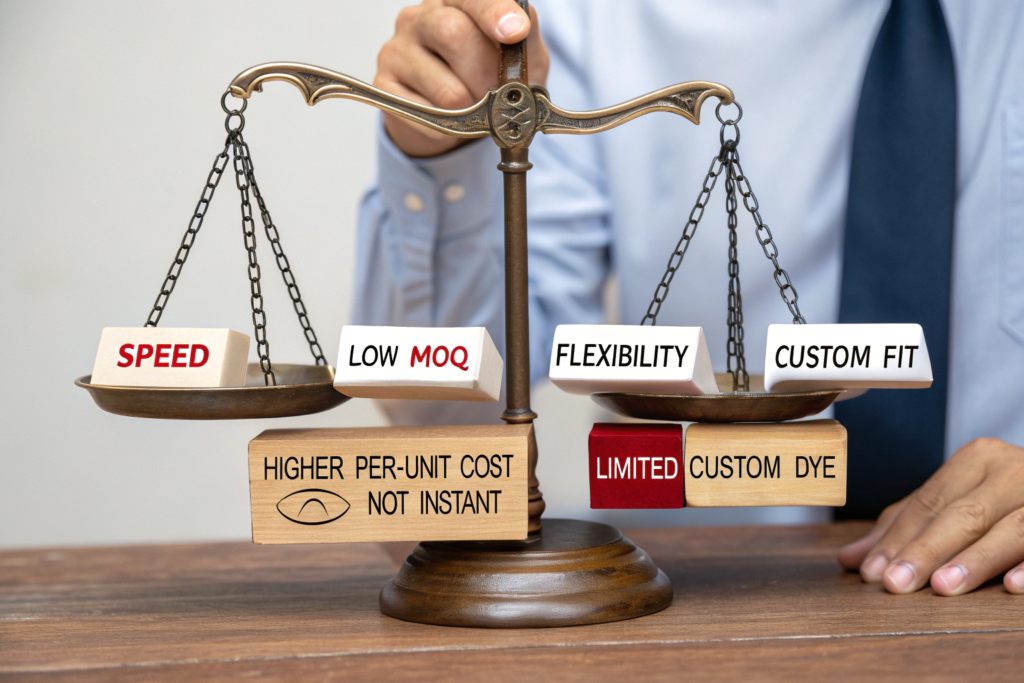
The key capabilities are: Lower Financial Risk (less capital tied up in inventory), Ability to Test New Styles quickly, and Greater Agility to respond to trends. The primary limitations are: Higher Per-Unit Cost (compared to a 5,000-unit bulk order), Fabric Limitations (often restricted to stock colors and qualities), and it is not "Instant" (lead times are still typically 4-8 weeks).
A women's wear client uses our on-demand model brilliantly. She launches a new capsule of 3-4 styles every 6 weeks, ordering 150 units of each style. She uses our curated library of stock Tencel and organic cotton fabrics. Her per-unit cost is higher than if she ordered 3,000 units, but she has zero dead stock. She sells out almost every capsule. Her cash flow is healthy, and she is constantly engaging her audience with newness. She has traded a higher unit cost for massively reduced inventory risk and increased brand agility. This is the smart trade-off at the heart of the on-demand model.
How Does the Per-Unit Cost Compare to Large Bulk Orders?
You will pay a premium for smaller quantities. The fixed costs of setting up a production line and ordering materials are spread over fewer units. Expect a per-unit cost that is 20-40% higher than a 5,000-unit bulk order. However, this is often a worthwhile trade-off for the benefits of lower inventory risk, better cash flow, and the ability to test the market. The true cost comparison should include the hidden costs of bulk: warehousing, markdowns on unsold inventory, and tied-up capital.
What Is a Realistic Lead Time for an On-Demand Order?
"On-demand" does not mean "overnight." It means "made-to-order in smaller batches." A realistic lead time from final sample approval to delivery for an on-demand order using stock fabrics is 4 to 8 weeks. This timeline includes cutting, sewing, finishing, and DDP shipping. This is significantly faster than a fully custom, large-bulk order (which can take 12-16 weeks), but it still requires planning. It is a sprint, not teleportation.
Which Fabric and Trim Choices Make On-Demand Production Viable?
The single biggest constraint in on-demand private label production is material availability. You cannot order 50 yards of a custom-dyed, specialty fabric. The mill simply will not do it. The viability of this model hinges on making smart, strategic choices about materials. It requires a shift in mindset from "anything is possible" to "what is beautifully possible within this curated system."
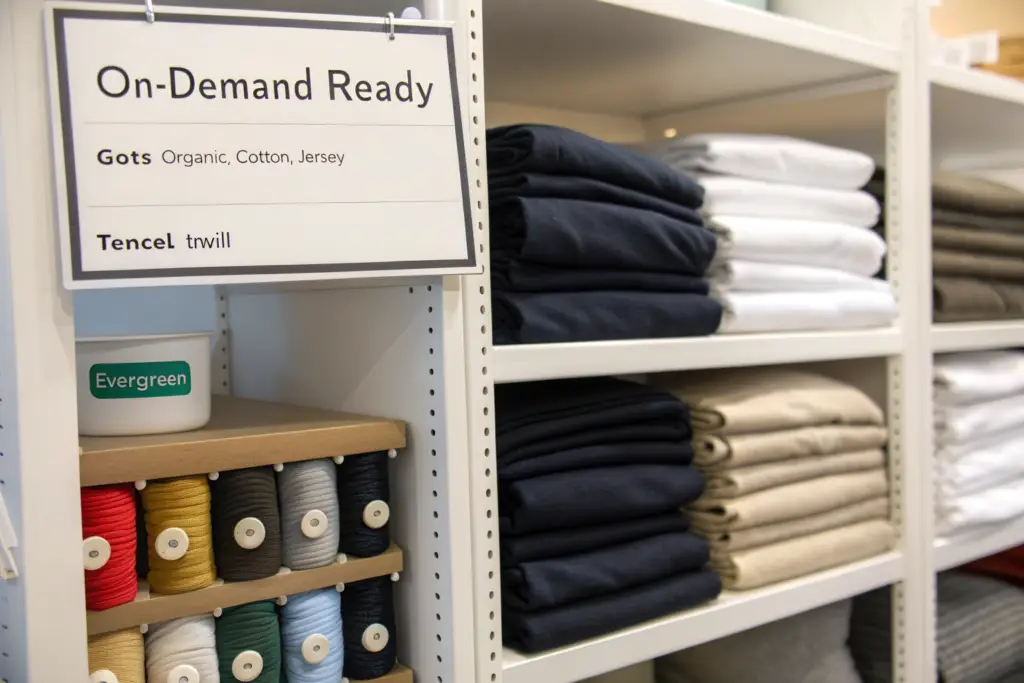
On-demand production is made viable by using "Stock" or "Evergreen" Fabrics. These are high-quality, core materials that mills keep in inventory. Examples include GOTS organic cotton jersey, Tencel twill, standard cotton oxford cloth, and basic French terry. Similarly, using stock trims (standard YKK zippers, generic corozo buttons) avoids the lead times and MOQs of custom components.
A men's wear brand we work with has built their entire business on this model. They offer a tightly edited collection of essential shirts and trousers, all made from a curated selection of premium stock fabrics—a beautiful Japanese oxford cloth, a sturdy cotton twill, a soft brushed flannel. They do not do custom colors. They do not do custom prints. They focus on perfect fit and impeccable quality. Their customers love the consistency and the reliability. This disciplined approach to materials is what makes their on-demand model so successful. This is a key aspect of our fabric sourcing strategy .
What Is an "Evergreen" Fabric Library?
This is a curated collection of high-quality, year-round fabrics that we maintain and recommend for on-demand projects. These are not trendy, seasonal materials. They are the reliable workhorses of a brand's core collection. By designing from this library, a brand can bypass the long lead times and high MOQs of custom fabric development. It is the foundation of a fast, agile, and low-risk supply chain. It allows you to focus on fit and brand building.
Can You Use Custom Trims in an On-Demand Model?
Yes, but with a caveat. Small, easily sourced custom trims like a woven label or a printed hangtag are very achievable in an on-demand model. They can be ordered in smaller quantities (e.g., 500 units) and have relatively short lead times. However, a custom-engraved metal button or a custom-colored zipper will have higher MOQs and longer lead times, which may conflict with the agility of the on-demand approach. The key is to be strategic about where you invest in true customization.
How Does Fumao's Flexible Production Model Enable This Agility?
The reason most factories say "no" to small-batch, on-demand orders is because their entire physical infrastructure—long, straight assembly lines—is designed for massive, uninterrupted runs. Asking them to do a 150-unit order is like asking a freight train to make a quick U-turn. It is not in their DNA. Our factory is built differently. Agility is engineered into our floor plan.
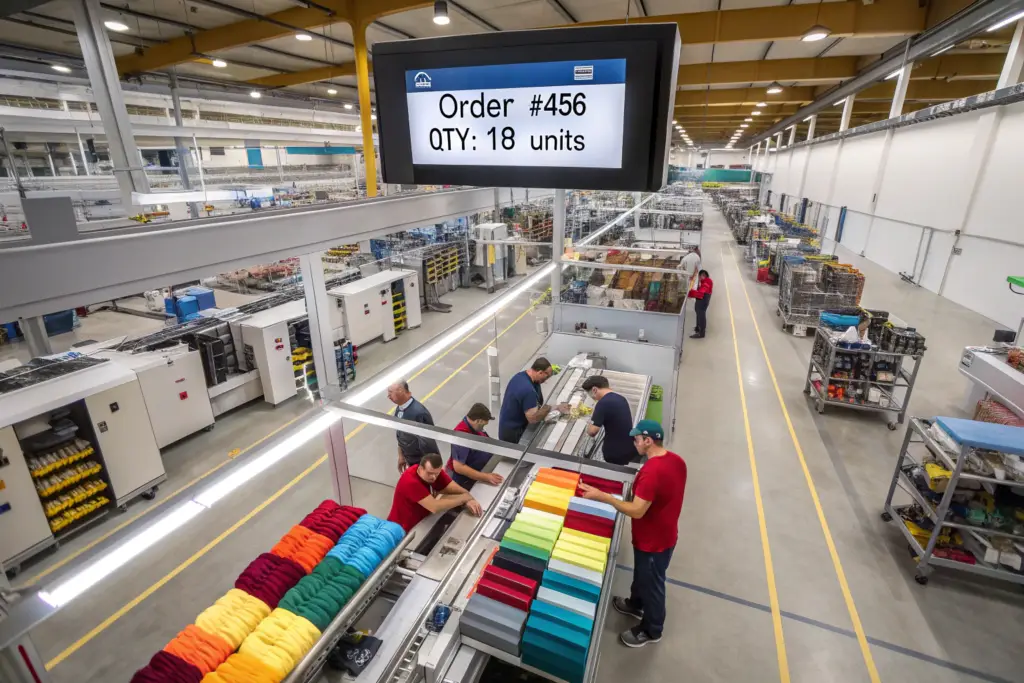
Fumao's on-demand agility is enabled by our Modular Production Cells. These are small, self-contained, U-shaped teams of multi-skilled operators. They can be set up for a specific style in under an hour and can profitably run batches as low as 50-100 units. This physical and operational flexibility is the engine that powers our on-demand B2B services.
We have a dedicated "Agile Production Cell" specifically for our on-demand and rare style partners. This cell is not on the main production schedule for large bulk orders. It operates with a faster, more flexible rhythm. It allows us to slot in a 100-unit reorder for a best-selling style or a 75-unit test run for a new design without disrupting our larger clients' production. This hybrid model—combining traditional high-volume lines with agile, low-volume cells—is the future of apparel manufacturing. It is how we serve both large company buyers and emerging on-demand brands with equal excellence.
What Is the Role of Multi-Skilled Operators in This Model?
This flexibility is only possible because of our people. A traditional factory operator knows one task. Our operators in the agile cells are cross-trained on multiple machine types (overlock, flatlock, coverstitch, single needle). They can sew a sleeve, attach a collar, and finish a hem. This versatility allows them to work as a cohesive team on a small batch, adapting quickly as the garment moves through the cell. This investment in human capital is a cornerstone of our flexible production lines .
How Does This Model Support a Brand's Growth Trajectory?
The on-demand model is not just for startups. It is a scalable strategy. A brand can start with 100-unit test runs to validate new styles. As a style proves to be a winner, they can increase their reorder quantities. Our model seamlessly scales with them. The same agile cell that produced the first 100 units can produce the next 500. And when a style reaches 2,000+ units, we can move it to one of our high-volume traditional lines for maximum cost efficiency. This ability to support a brand from 50 units to 5,000 units on the same platform is the definition of a true long-term manufacturing partner .
Conclusion
Is on-demand private label garment production possible? Absolutely. It is not only possible, it is a transformative model that is lowering the barriers to entry and changing the economics of building a clothing brand. It allows creative entrepreneurs to launch with less capital, test their ideas in the real world, and build their businesses with agility and minimal inventory risk.
However, it is not a free-for-all. It requires a disciplined approach to design and material selection, a realistic understanding of lead times and costs, and, most importantly, a partnership with a factory whose entire operation is built for flexibility. At Shanghai Fumao, we have made the investments in our people, our processes, and our production lines to be that partner. We are the engine that powers the next generation of agile, responsive private label brands.
If you are ready to explore how on-demand manufacturing can de-risk and accelerate your brand's growth, let's talk. Our Business Director, Elaine, can walk you through our agile production model and discuss a realistic plan for your first collection. Please email Elaine at: elaine@fumaoclothing.com.