A brand owner from Seattle called me six years ago, embarrassed. She had been selling clothing for two years, but when a customer asked her how to tell if a garment was well-made, she could not give a good answer. She realized she had been relying on her factory's reputation rather than her own knowledge. She asked me to teach her what to look for.
Knowing how to evaluate garment quality is essential for any brand owner. It protects you from accepting poor work from suppliers. It helps you communicate quality standards to your factory. And it builds credibility with your customers when you can explain why your clothes are worth the price. Quality is not mysterious—it is a set of observable characteristics that anyone can learn to recognize.
My name is David, and I run Shanghai Fumao, a garment factory that has produced millions of pieces for American brands over 15 years. I have trained countless brand owners to evaluate quality. Based on what I have taught them, I want to share everything you need to know about telling if a garment is well-made.
What Does the Fabric Tell You About Quality?
A client from Chicago once received a shipment of t-shirts that looked perfect in the box. But when she held one up to the light, she could see thin spots where the knitting was uneven. The fabric was poor quality, and the shirts would not last. She had not known to check.
The fabric is the foundation of any garment. If the fabric is poor, nothing else matters. Learning to evaluate fabric is the first step in assessing quality.
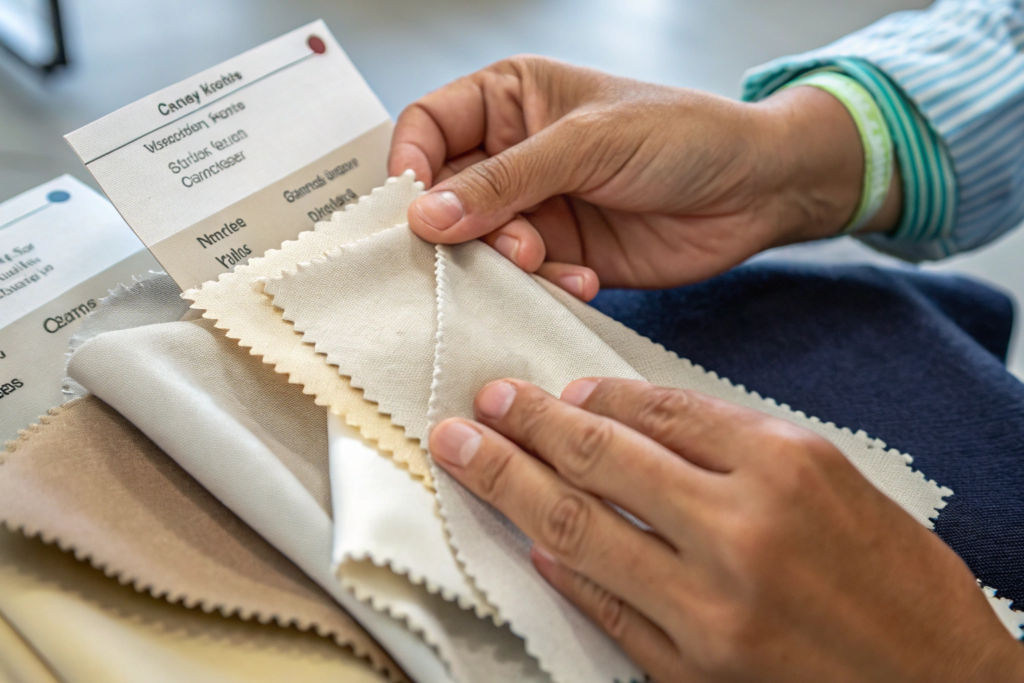
How do you assess fabric hand feel and weight?
Close your eyes and focus only on the sensation of the fabric. Does it feel pleasant against your skin? Is it consistently soft, or are there scratchy areas? Does it have a nice weight—not too flimsy, not overly heavy for its intended use? Compare it to garments you know are high quality. The hand feel should be appropriate for the garment type—a t-shirt should be soft and substantial, a blouse might be smooth and fluid, a jacket might have a crisp, structured feel. One client who produces women's wear always keeps a "quality benchmark" garment from a known luxury brand. She compares new fabrics to this benchmark to ensure they meet her standards. For fabric hand feel standards, the American Association of Textile Chemists and Colorists (AATCC) has developed evaluation procedures for fabric hand.
What can you learn by holding fabric up to light?
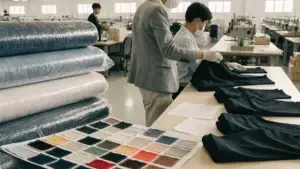
Hold the fabric up to a bright light or window. Look through it. Can you see light coming through evenly, or are there thin spots? The weave or knit should be consistent across the entire fabric. Inconsistent areas indicate poor quality control at the mill. Also look for slubs—thick spots in the yarn—or other irregularities. A few small slubs may be acceptable in certain natural fabrics, but many indicate poor quality. One client discovered that a shipment of men's wear shirting fabric had numerous thin spots when held to light. She rejected the fabric before any shirts were cut. For fabric inspection standards, ASTM International provides test methods for fabric appearance and uniformity.
What Do the Seams Reveal About Construction?
A client from Denver once approved a sample without looking closely at the seams. When the bulk order arrived, she noticed that the stitching was uneven—wavy in some places, too tight in others. The garment looked cheap. She had missed a critical quality indicator.
Seams are the skeleton of a garment. They hold everything together. Well-constructed seams indicate a factory that cares about quality. Poor seams guarantee problems later.
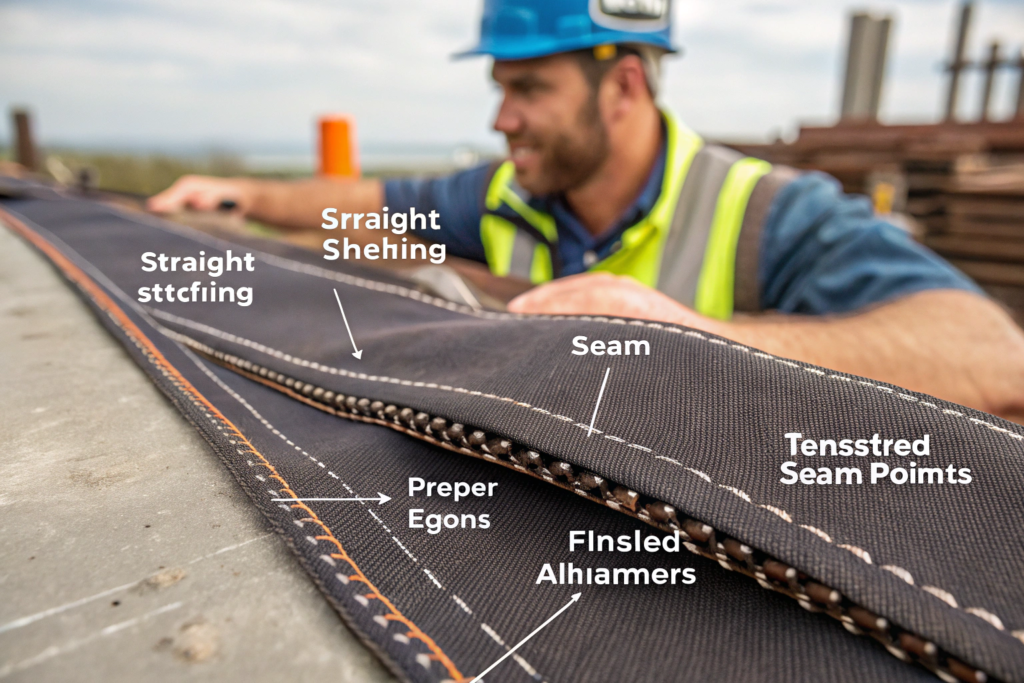
What does straight, even stitching indicate?
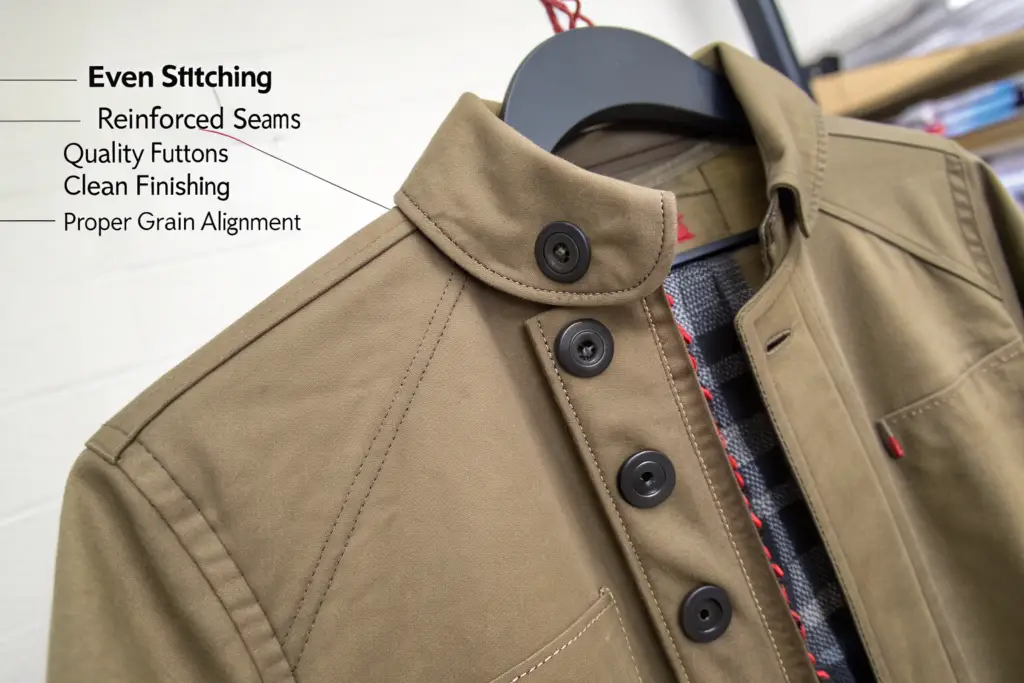
Look at the stitching lines. Are they perfectly straight, or do they waver? Is the distance from the edge consistent? Are the stitches themselves even in size and tension? Uneven stitching—wavy lines, varying stitch lengths, or tension that pulls the fabric—indicates poor machine setup or unskilled operators. High-quality garments have precise, consistent stitching throughout. One client's outerwear line requires that all topstitching be perfectly parallel to the edge within 1/16 of an inch. Her factory knows this standard and meets it consistently. For stitch type standards, ASTM D6193 provides standard practice for stitches and seams.
How many stitches per inch should you see?
Stitch density, measured in stitches per inch (SPI), affects both strength and appearance. For most garments, 8-12 SPI is standard. Higher SPI (more stitches per inch) creates a finer, more tailored look but takes longer to sew. Lower SPI can look rushed and may be less durable. Count stitches in a straight seam. They should be consistent across the garment. One client who produces men's wear specifies 10 SPI for all visible seams. His customers appreciate the clean, professional look. For SPI recommendations, the Textile School provides guidelines for different fabric types and garment styles.
How Do You Evaluate Fit and Grain?
A client from Boston once bought a beautiful linen shirt. It looked great on the hanger. But when she put it on, the side seams twisted to the front. The shirt never hung right. The fabric had been cut off-grain, and no amount of tailoring could fix it.
Grain refers to the direction of the fabric's threads. Garments cut on-grain hang properly and fit as intended. Garments cut off-grain twist, pull, and never look right.
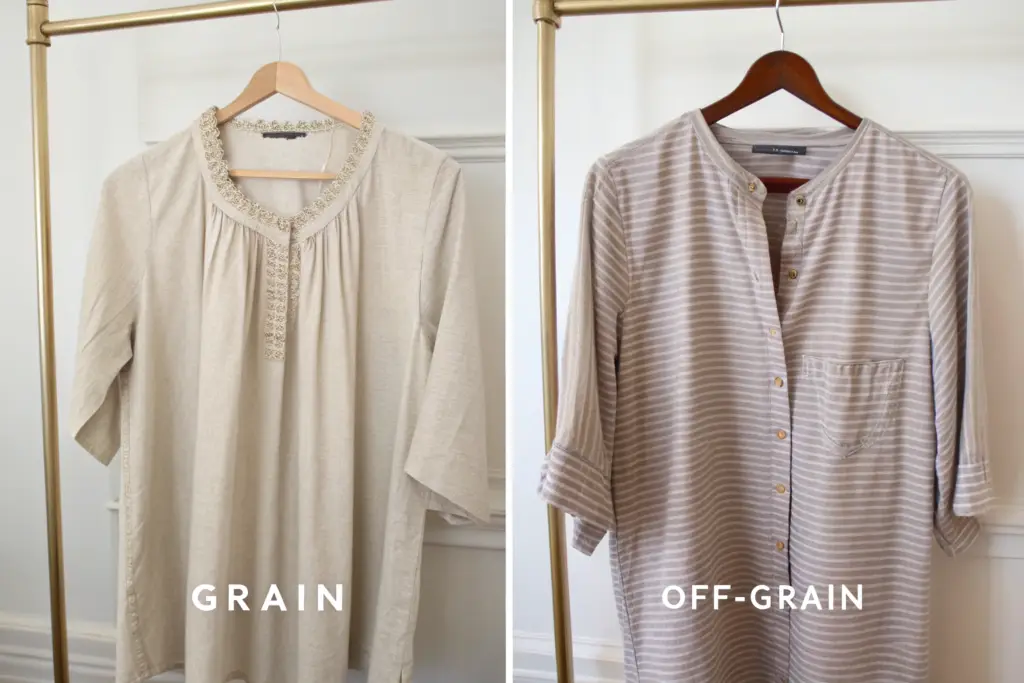
How can you tell if a garment is cut on-grain?
Look at a garment with distinct patterns like stripes or plaids. The pattern should match at the seams—stripes should line up where pieces join. If they do not, the pieces may have been cut off-grain. For solid-colored garments, look at the side seams. They should hang straight down, not twist to the front or back. You can also check by pulling gently on the fabric—it should resist equally in all directions. One client's activewear line requires that all stripes match perfectly at the side seams. Her quality control team rejects any garment where the pattern is off by more than 1/8 inch. For grain alignment standards, ASTM provides test methods for determining grain in woven and knitted fabrics.
What should you check when trying on a garment?
Put the garment on and stand in front of a mirror. Look at how it hangs. Do the side seams fall straight down the sides of your body? Does the center front and back align with your body's center? Are the shoulders sitting correctly? Are the sleeves hanging straight? Move around—raise your arms, sit down, bend over. Does the garment stay in place? Does it restrict movement? Does it gap or pull in places it should not? A well-made garment should fit comfortably and move with you. One client who produces women's wear has a fit model try on every sample and perform a series of movements. They note any pulling, gaping, or restriction and adjust the pattern before production. For fit evaluation guidelines, the ASTM publishes standard tables for body measurements and fit evaluation.
What Do the Details Say About Quality?
A client from Dallas once received a shipment of jackets that looked great at a glance. But within weeks, customers started complaining that buttons were falling off. The factory had attached them poorly. The small details ruined the reputation of the entire collection.
Details are where quality becomes visible. A garment can have good fabric and decent seams, but if the details are sloppy, it will feel cheap. Attention to detail separates good from great.
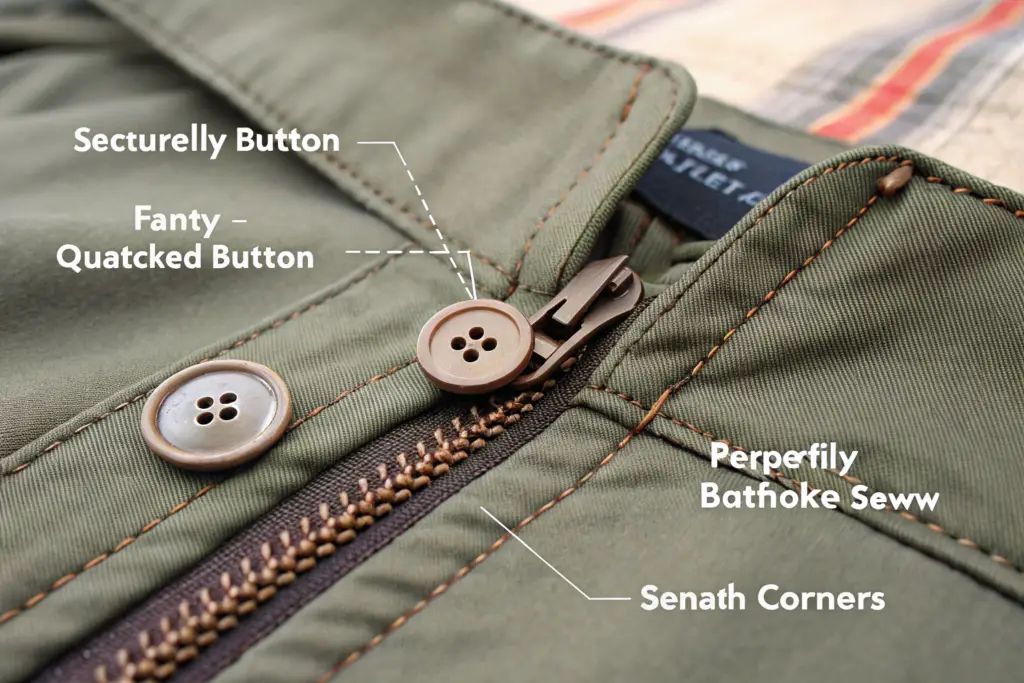
Buttons should be attached securely. Give them a firm tug. They should not wiggle or feel loose. For coats and jackets, buttons should have a thread shank—a stem of thread between the button and the fabric—to allow room for the buttonhole layer. Buttonholes should be cleanly cut and stitched with no loose threads. The stitching should be tight and even all the way around. The button should pass through the buttonhole smoothly without excessive force. One client's men's wear shirts require that every button is reinforced with an extra stitch and that buttonholes are tested on every sample. For button attachment standards, the ASTM provides test methods for button attachment strength.
What makes a zipper well-installed?
A good zipper installation lies flat and does not pucker the surrounding fabric. The zipper tape should be securely stitched, and the stitches should be even and straight. The zipper pull should slide smoothly without catching. At the bottom of the zipper, there should be a reinforced bar-tack to prevent the zipper from coming apart. For jackets and pants, the zipper should have a protective flap or guard to prevent skin contact. One client who produces outerwear uses only YKK zippers because of their reputation for quality. Her quality team checks every zipper for smooth operation. For zipper quality standards, the ASTM and ISO both publish standards for zipper performance.
What Do the Finishing Touches Reveal?
A client from Miami once received a shipment of beautiful dresses. The fabric was great, the construction was solid. But every dress had loose threads hanging from the seams. They looked unfinished and cheap. Customers noticed and commented.
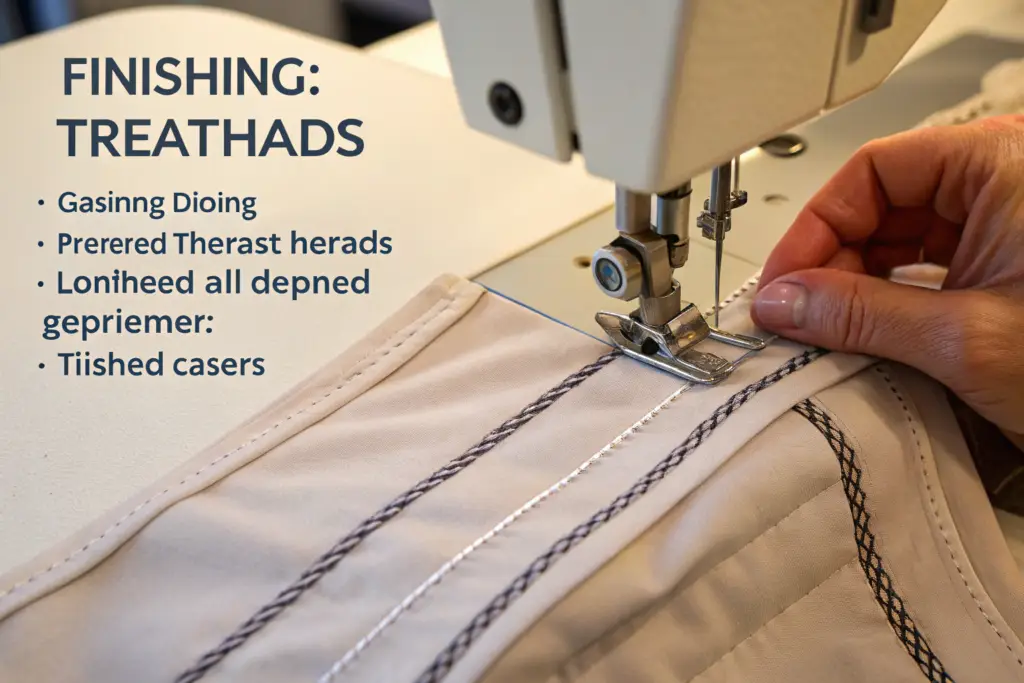
Finishing touches are the last step in production, and they reveal how much a factory cares. Garments with clean finishing look professional and feel complete. Garments with sloppy finishing feel rushed and low-quality.
Are there loose threads or untrimmed ends?
Examine the garment inside and out. Are there loose threads hanging from seams? Are thread ends trimmed close to the fabric? A few small threads are normal, but many loose threads indicate poor finishing. Each loose thread is a potential place for the seam to unravel. One client's activewear line has a zero-tolerance policy for visible loose threads. Her quality control team uses a detailed checklist and rejects any garment with more than two loose threads. For finishing standards, the ASTM provides guidelines for acceptable levels of loose threads and other finishing defects.
How should hems and edges be finished?
Look at the hem. Is it even all the way around? Is the stitching straight and consistent? For knits, hems are often done with a coverstitch machine, which creates two parallel lines of stitching on the outside and a smooth finish inside. This stitch should be even and should not cause the hem to flip or roll. For wovens, hems may be folded twice and stitched, creating a clean finish inside and out. The fold should be even—not varying in width. One client who produces men's wear measures every hem on every sample. If the hem width varies by more than 1/8 inch, the garment fails inspection. For hem construction standards, the Textile School offers tutorials on different hem types and their proper execution.
Conclusion
Telling if a garment is well-made is a skill that anyone can learn. It starts with the fabric—assessing hand feel, checking for consistency, and testing for durability. It continues with the seams—looking for straight, even stitching, proper seam allowances, and appropriate finishes. It requires checking the grain to ensure the garment will hang properly and fit as intended. It involves examining the details—buttons, buttonholes, zippers, pockets, linings, and labels—for secure attachment and proper construction. And it finishes with the finishing touches—trimmed threads, even hems, and proper pressing.
At Shanghai Fumao, we have built our reputation on quality. Our quality control process includes checks at every stage, from incoming fabric inspection to final finishing. We train our team to look for everything described here and more. When you partner with us, you can trust that your garments will be well-made because we check.
If you are ready to produce garments that meet the highest quality standards, I invite you to reach out. Please contact our Business Director, Elaine, directly at elaine@fumaoclothing.com. Let us discuss how we can help you create clothing that your customers will recognize as truly well-made.