A brand owner from Boston called me five years ago, devastated. He had just received his largest ever order—5,000 pieces for a major retail chain. When the shipment arrived, he opened the cartons with excitement. Then he saw the problems. The fabric color varied from piece to piece. Some garments had obvious flaws. Others felt completely different from the samples. The retailer rejected the entire shipment. He was left with $150,000 of unsellable inventory and a ruined relationship with his biggest customer.
Fabric quality control is not just a nice-to-have. It is the difference between a successful brand and a disaster. The fabric is the foundation of your garment. If the fabric is wrong, nothing else matters. Inconsistent color, hidden flaws, incorrect weight, poor hand feel—these problems cannot be fixed after cutting and sewing. They become permanent defects in every garment you produce. For buyers, fabric quality control is the most critical checkpoint in the entire production process.
My name is David, and I run Shanghai Fumao, a garment factory that has produced millions of pieces for American brands over 15 years. I have witnessed the devastation caused by poor fabric quality, and I have seen the peace of mind that comes from rigorous quality control. Based on what I have learned from both successes and failures, I want to explain why fabric quality control is non-negotiable for buyers and how to ensure you get what you pay for.
What Problems Can Defective Fabric Cause?
A client from Chicago once told me, "I trusted my supplier when they said the fabric was fine. I did not check." The fabric arrived, and it looked okay at first glance. But when his factory started cutting, they discovered that the fabric width varied by several inches. They could not cut efficiently. They ran out of fabric before cutting all the pieces. His production was delayed, and he had to order more fabric urgently at a higher price.
Defective fabric creates problems at every stage of production. Some problems are visible immediately. Others only appear after cutting, sewing, or even after customers wash the garments. Understanding what can go wrong helps you appreciate why inspection is essential.
How does color variation ruin a collection?
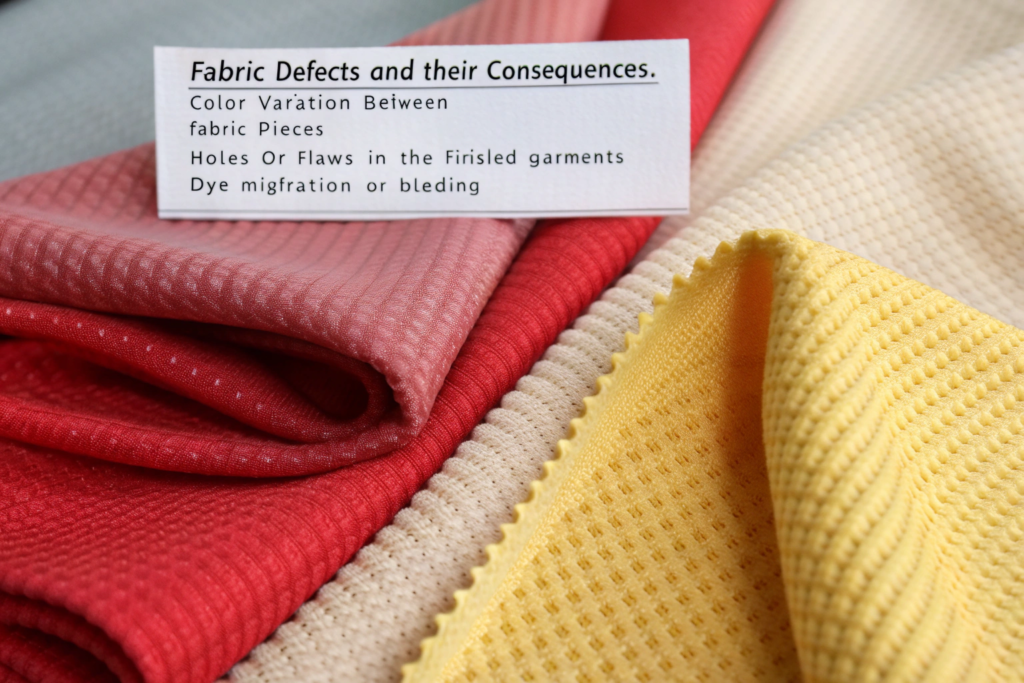
Color variation, or "shading," happens when different rolls of fabric—or even different parts of the same roll—have slightly different colors. When you cut and sew garments from multiple rolls, the pieces may not match. A sleeve might be a different shade than the body. Pockets might stand out. This looks unprofessional and leads to customer returns. One client's women's wear line was ruined by shading. Her beautiful dresses came out with mismatched panels. She had to discount them heavily to sell them at all. For color consistency standards, the American Association of Textile Chemists and Colorists (AATCC) provides evaluation procedures for color difference.
What happens when fabric weight is wrong?
Fabric weight affects everything—the drape, the feel, the durability, even the fit. If you specified 200 GSM cotton jersey and receive 180 GSM, your garments will be thinner, flimsier, and may fit differently. If you receive 220 GSM, they may be heavier and stiffer than intended. Either way, your customers will notice. One client who produces activewear specified a specific weight for his leggings to provide the right compression and opacity. When the fabric was lighter than specified, the leggings were too sheer and did not perform as expected. He had to re-cut the entire order at his own expense. For fabric weight testing methods, ASTM International provides standard test methods for determining fabric weight.
What Should Fabric Quality Control Include?
A client from Dallas once asked me, "What do you actually check during fabric inspection?" He had been paying for inspections but did not know what they involved. When I explained the comprehensive process, he understood why it was worth the cost.
Fabric quality control is not a single check. It is a series of tests and inspections that verify every aspect of the fabric against your specifications. Each test addresses a different potential problem.
What physical measurements must be verified?
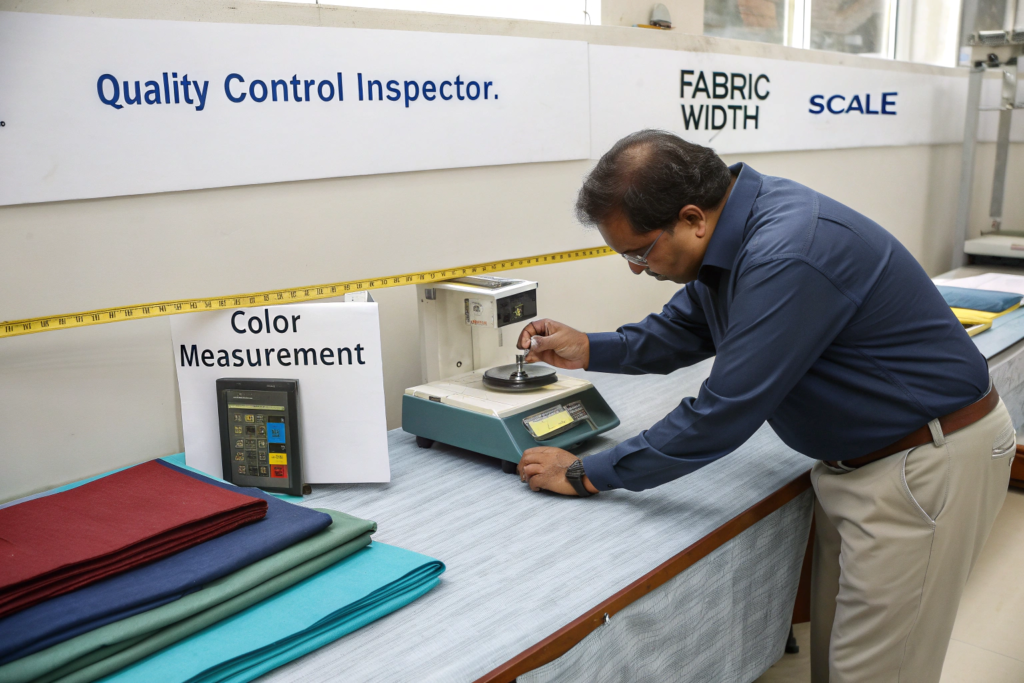
First, verify the fabric width. Measure in multiple places along the roll. Width that varies makes cutting inefficient and can lead to pieces that do not fit the marker. Second, verify the fabric weight (GSM or ounces per square yard). Take samples from different parts of the roll and weigh them. Third, verify the shrinkage by washing and drying a sample and measuring the change. Fourth, verify the color against your approved standard, using both visual assessment under standardized lighting and, ideally, a spectrophotometer for numerical measurement. One client's outerwear line requires all these measurements. When a shipment arrived with fabric that was 2 inches narrower than specified, we caught it before cutting and rejected the fabric. For measurement standards, ASTM International provides test methods for each of these properties.
How do you inspect for visual defects?
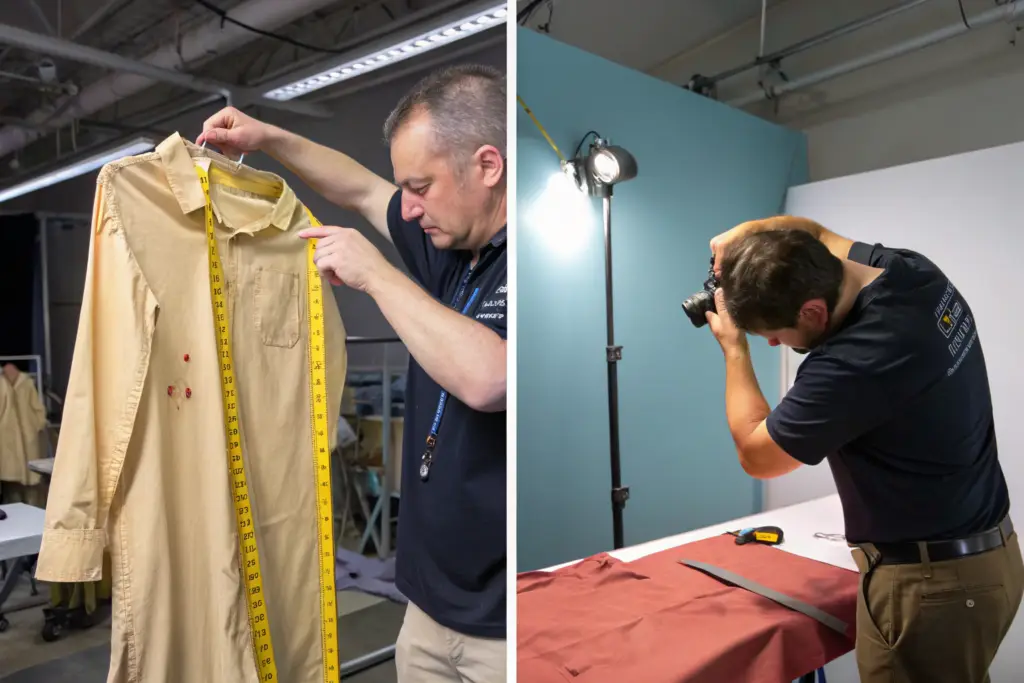
Visual inspection involves examining the entire fabric surface for flaws. This is typically done on an inspection machine where fabric passes over a lighted table, making defects visible. Inspectors look for holes, slubs, thick or thin places, uneven dyeing, printing errors, and contamination. They mark defects and record their location and type. Industry standards specify acceptable levels of defects—typically measured as "points per 100 square yards" using systems like the 4-point system. One client's women's wear line uses the 4-point system with a strict acceptance threshold. Any fabric that exceeds the limit is rejected. For defect classification standards, the ASTM publishes standard practice for inspection of woven and knitted fabrics.
Who Should Perform Fabric Quality Control?
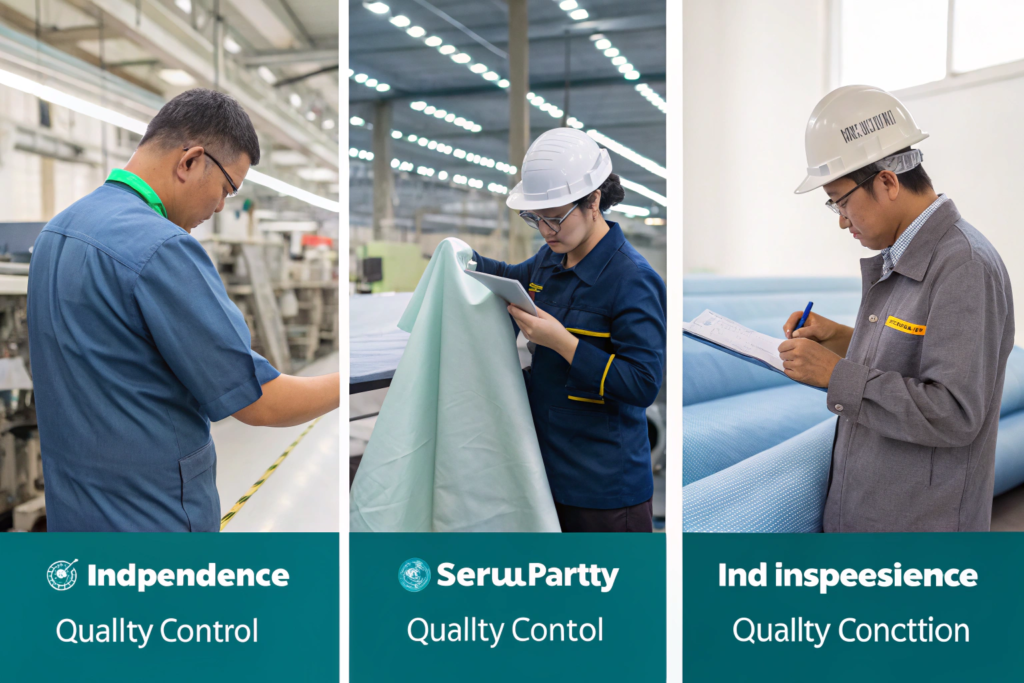
A client from Seattle once told me, "My factory says they do fabric inspection. Should I trust them?" The answer is: it depends. Many reputable factories have excellent internal QC. But there is always a conflict of interest—the factory wants to ship the fabric and get paid. Third-party inspection provides independence.
You have options for who performs fabric QC. Each has advantages and disadvantages.
When can you rely on factory QC?
If you have a long-term relationship with a factory that has proven its integrity, their internal QC may be sufficient. Ask about their process. Do they have dedicated QC staff? Do they use standard test methods? Do they provide reports? Can you audit their process? If the answers are satisfactory, factory QC can work. One client who has worked with us for 8 years trusts our internal fabric inspection. He knows our standards and knows we will reject fabric that does not meet spec. But even he occasionally requests third-party audits for critical orders. For guidance on evaluating supplier QC, the International Organization for Standardization (ISO) publishes standards for quality management systems.
Why use third-party inspection companies?
Third-party inspectors work for you, not the factory. They have no incentive to pass questionable fabric. Companies like SGS, Bureau Veritas, and QIMA have professional inspectors trained in standard test methods. They provide unbiased reports and can act as your eyes on the ground. For critical orders, for new suppliers, or when you cannot visit yourself, third-party inspection is worth the cost. One client always uses third-party inspection for his men's wear line. The cost is a small fraction of the order value, and the peace of mind is invaluable. For a directory of inspection companies, the International Federation of Inspection Agencies provides a list of accredited members.
When Should Fabric QC Happen In Production?
A client from Denver learned the hard way that timing matters. He waited until the fabric arrived at his factory to inspect it. By then, it was too late—the fabric was already cut and partly sewn before the problems were discovered. He had to scrap thousands of dollars worth of work-in-progress.
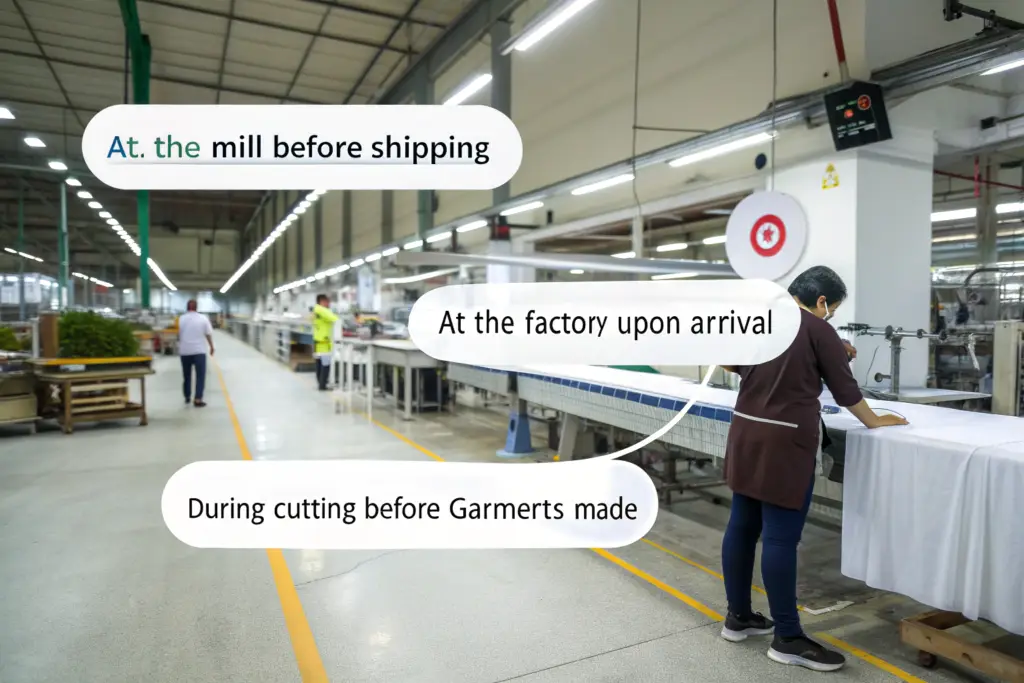
Fabric QC must happen at the right times. There are multiple opportunities to catch problems, and each has advantages.
Why inspect at the mill before shipping?
The best time to catch fabric problems is before the fabric ever leaves the mill. If you reject fabric at the mill, the mill can replace it without delaying your production. If you wait until the fabric arrives at your factory, you have already paid for shipping and lost time. For large orders or critical fabrics, consider having the fabric inspected at the mill before release. One client's women's wear line uses this approach. His inspector visits the mill, inspects the finished fabric, and only releases it for shipment if it passes. This eliminates the risk of shipping defective fabric halfway around the world. For guidance on pre-shipment inspection, the International Chamber of Commerce (ICC) provides resources on trade inspection practices.
What checks are needed upon arrival at the factory?
Even if fabric was inspected at the mill, inspect it again when it arrives at your factory. Shipping can damage fabric. Moisture, crushing, or rough handling can create new problems. Verify quantities, check for shipping damage, and do spot checks on quality. This is also the time to confirm that the fabric matches your order documentation. One client discovered that a shipment of outerwear fabric had been damaged by water during shipping. Because he inspected upon arrival, he caught it before any fabric went into production and filed a claim with the shipping company. For receiving inspection procedures, the American Society for Quality (ASQ) offers resources on incoming material inspection.
Conclusion
Fabric quality control is non-negotiable for buyers because the fabric is the foundation of everything that follows. Defective fabric creates problems at every stage—cutting problems, sewing problems, finished garment defects, customer returns, and damaged brand reputation. Comprehensive fabric QC includes verifying physical measurements, inspecting for visual defects, and conducting performance tests. It can be performed by factory QC or third-party inspectors, each with advantages. It must happen at the right times—at the mill, upon arrival, and during cutting. It requires proper documentation to protect you if problems arise. And it requires clear, objective quality standards agreed upon in advance.
At Shanghai Fumao, we have built our reputation on rigorous quality control at every stage, starting with fabric. We inspect every incoming fabric shipment. We test against specifications. We document everything. And we reject fabric that does not meet our clients' standards. Our quality control process is designed to catch problems before they become your problems.
If you are ready to work with a factory that takes fabric quality as seriously as you do, I invite you to reach out. Please contact our Business Director, Elaine, directly at elaine@fumaoclothing.com. Let us discuss how we can ensure your next collection is built on a foundation of perfect fabric.