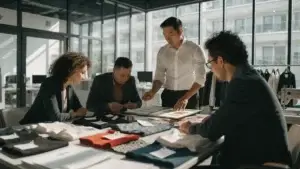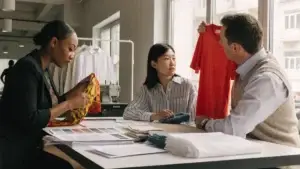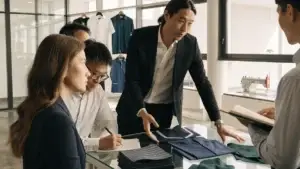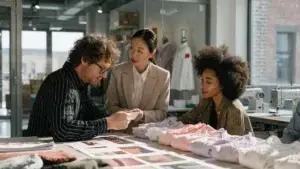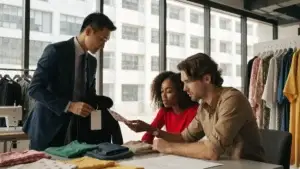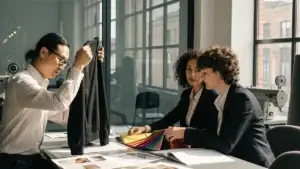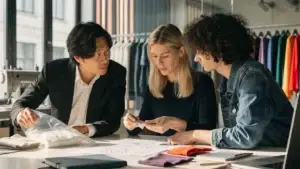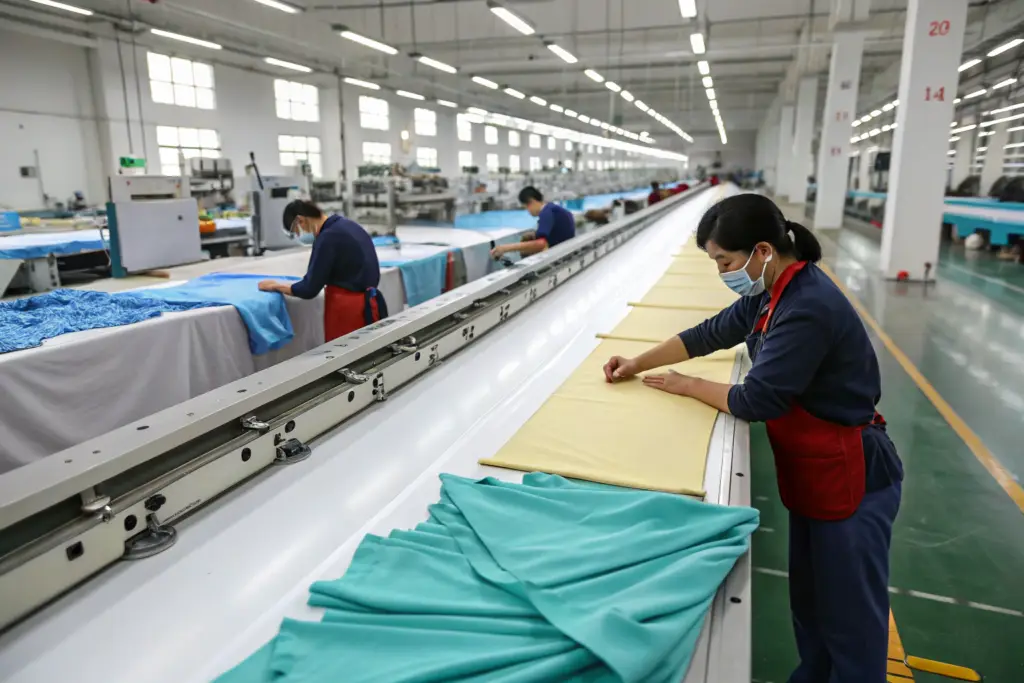
I remember walking through a small workshop in Vietnam about ten years ago. There were fifteen sewers, all working on different parts of different garments. One woman was making a collar. The woman next to her was sewing a sleeve. They were not connected. The finished goods piled up in messy stacks. It was chaos. The owner was proud of his "flexibility." I looked at the piles and saw delays, quality problems, and unhappy customers. That day, I understood why organized production lines are the heart of a real factory.
A production line is the organized system that turns cut fabric into a finished garment. It is a sequence of operations, each done by a specialized worker or machine. The role of a production line is to create a smooth, predictable flow. It ensures consistent quality, maximizes efficiency, and allows us to produce large volumes on a reliable schedule. Without a proper line, you have chaos. With one, you have a manufacturing business.
When I started Shanghai Fumao, I did not just buy sewing machines. I designed production lines. I thought about the flow of fabric from the cutting table to the final inspection table. I wanted every step to be logical and efficient. A good production line is like a river. It flows smoothly from start to finish. A bad one is like a swamp. Everything gets stuck.
How Is A Garment Production Line Structured?
A client from Texas once visited our factory. He was amazed at how organized it looked. "It's like a car factory," he said, "but for clothes." He was right. We apply the same principles of industrial engineering that you see in any modern factory.
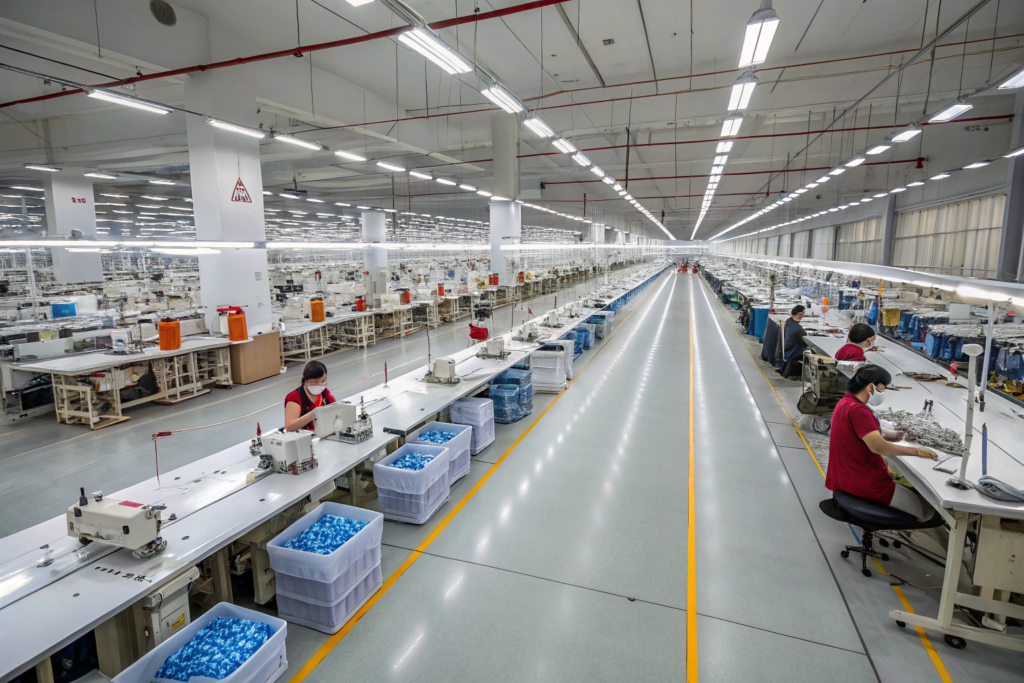
A production line is structured around the sequence of making a garment. It starts with the first stitch and ends with the last. The layout is designed to minimize movement. The fabric pieces travel from one operator to the next, with each person adding their specific part. This structure creates speed and consistency.
What Are The Key Stations On A Typical Line?
Every garment is different, but most lines have common stations. First is the cutting room. Here, fabric is laid in layers and cut into pattern pieces. These pieces are bundled and tied together. Then they go to the sewing line. The first sewing station might attach pockets. The next might sew shoulder seams. Then the sleeves are attached. Then the side seams are closed. After sewing, the garment goes to the finishing department. Here, loose threads are trimmed. Buttons are attached. Final pressing happens. Then it goes to quality control for inspection. Each station has a specific job. For a complex jacket, there might be 30 or 40 different stations. For a simple t-shirt, maybe 8 or 10. The key is that each operator becomes an expert at their one small task. This division of labor is what makes production lines fast and efficient.
How Do You Balance The Workload On A Line?
Balancing a line is a critical skill. You cannot have one station doing a three-minute task and the next station doing a thirty-second task. The slow station creates a bottleneck. Work piles up behind it. The fast stations sit idle. We use time studies to balance the line. We measure how long each operation takes. Then we arrange the stations so that each one has roughly the same cycle time. If one operation takes twice as long, we might put two operators on that task. We keep the work flowing smoothly. A few years ago, we had a new style of women's blouse that had a very complex pleated front. That pleating operation took much longer than anything else. We trained three operators to do the pleating and set them up in parallel. The line balanced perfectly. The order shipped on time. This production line balancing is a constant, daily challenge.
What Are The Different Types Of Production Lines?
Not all production lines are the same. The right type depends on the product and the volume. At Shanghai Fumao, we have different lines set up for different kinds of work. We match the line to the job.
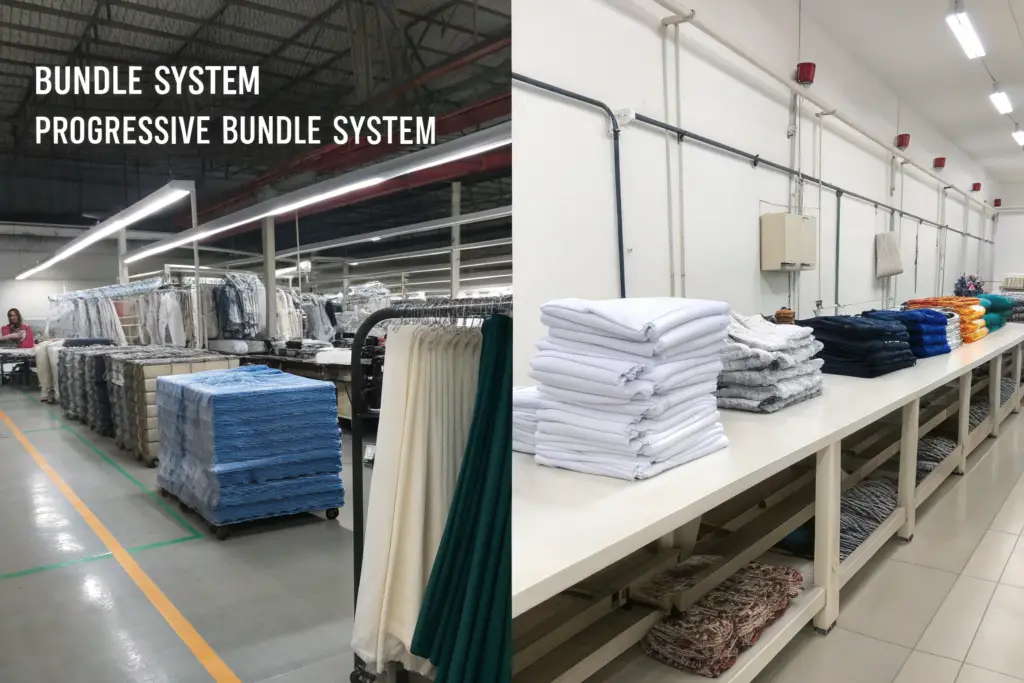
We use different line configurations based on the order. For high-volume basics, we use a progressive bundle system. For smaller, more complex orders, we might use a modular line. Understanding these differences helps us price your order correctly and deliver it on time.
What Is A Progressive Bundle System?
This is the traditional way to run a line. Cut fabric pieces are tied together in bundles. Each bundle moves from one operator to the next. The first operator takes a bundle, does their task on all the pieces, and passes the bundle to the next operator. This system is great for large quantities of the same style. It is very efficient. The work is standardized. We use this for big orders of t-shirts, polos, and basic pants. For a client in Los Angeles who orders 20,000 basic hoodies every year, we use a progressive bundle system dedicated to his styles. The operators know the garments well. They work fast. The quality is consistent. The bundle system is the workhorse of the garment industry.
What Is A Modular Or Team-Based Line?
Sometimes a garment is too complex for a long, straight line. Or the order quantity is too small. That is when we use modular lines. In a modular line, a small team of operators works together on a garment from start to finish. They are cross-trained to do multiple tasks. If one person falls behind, someone else can jump in and help. This system is more flexible. It is great for samples, for small orders, and for very complex garments. A client from New York once brought us a very intricate women's jacket with lots of details. It was a small order of only 300 pieces. We put it on a modular line with eight of our best operators. They worked as a team, figured out the best way to assemble it, and finished in two weeks. A progressive bundle system would have taken longer to set up and would not have been as efficient. This modular manufacturing approach gives us flexibility.
How Do Production Lines Affect Quality And Consistency?
The way you organize your line has a huge impact on the final product. A well-organized line builds quality in. A disorganized line creates defects. This is one of the most important things I have learned in my years in this business.
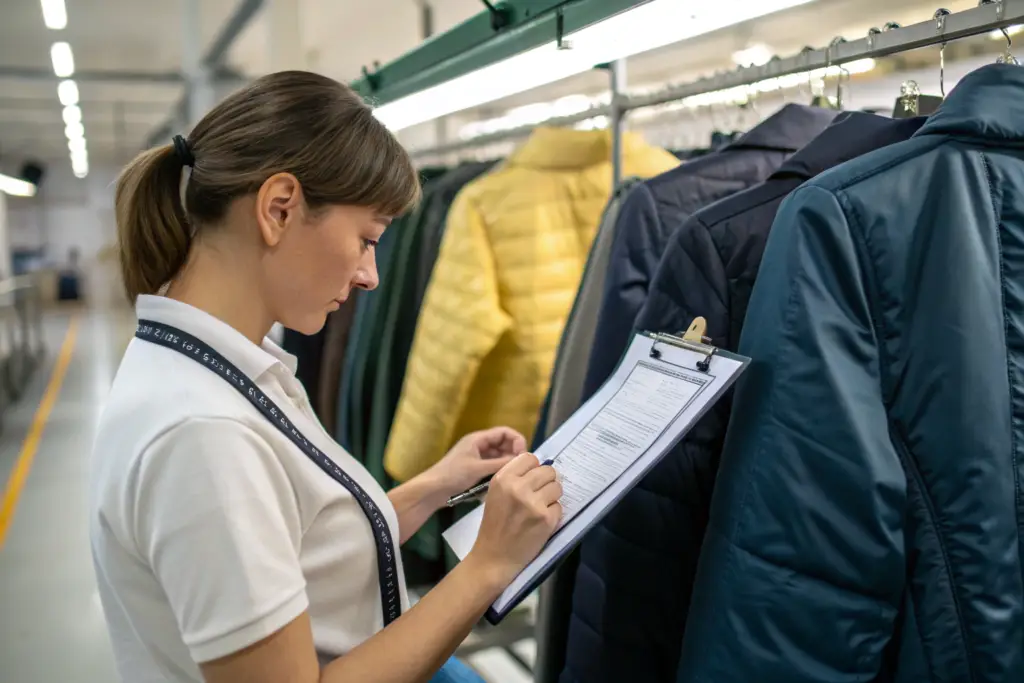
On a good production line, quality is checked at every step, not just at the end. Operators are trained to inspect their own work before passing it on. Supervisors roam the line, looking for problems. This creates a culture of quality. Defects are caught immediately, before they become a flood.
How Do In-Line Inspections Work?
In-line inspections happen while the garment is being made. We have inspectors stationed at key points on the line. They check the work of the previous few operators. For example, after the collar is attached, an inspector checks that it is centered and sewn correctly. If they find a problem, they stop the line. The supervisor comes over. They figure out why the mistake happened. Was the operator trained wrong? Is the machine working properly? They fix the cause, not just the symptom. Then production resumes. This prevents the same mistake from happening on the next 100 garments. On a recent order of men's dress shirts, our in-line inspector noticed that the buttonhole stitching was starting to get too dense. We stopped, adjusted the machine, and only had to redo the last ten shirts. Without that in-line check, we might have had to redo 500 shirts. This in-line quality control is our first line of defense.
Why Is Operator Training Crucial For Line Success?
A production line is only as good as its operators. A skilled operator works fast and makes few mistakes. An unskilled operator creates bottlenecks and defects. We invest heavily in training. When we hire a new sewer, they do not start on a live production line. They go to our training room. They learn on scrap fabric. They practice until they are fast and accurate. Only then do they join a line. For a new style, we also do training. Before the line starts, we run a "pre-production meeting." The pattern maker, the supervisor, and the operators all look at the sample together. They discuss the tricky parts. They agree on the best way to do each step. This training upfront saves huge problems later. A client from Boston was amazed that our operators could make his complex jacket so consistently. I told him it was because we trained them specifically for his style before we ever cut the first piece. That is the value of skilled labor.
Conclusion
Production lines are the engine of garment manufacturing. They take raw materials and transform them into finished products through a series of organized, efficient steps. A well-designed line delivers quality, speed, and consistency. A poorly designed line delivers delays and defects. Understanding how lines work helps you understand why some factories can deliver on time and others cannot.
At Shanghai Fumao, we have invested years in designing and refining our production lines. We have lines for big volume basics and modular teams for complex samples. We train our operators. We inspect at every step. We balance the workload. All of this is done with one goal: to deliver your garments on time, with the quality your brand demands.
If you are looking for a factory that understands the science of production, let's talk. Contact our Business Director, Elaine. She can show you how our lines work and how we can apply them to your next order.
Email Elaine today: elaine@fumaoclothing.com