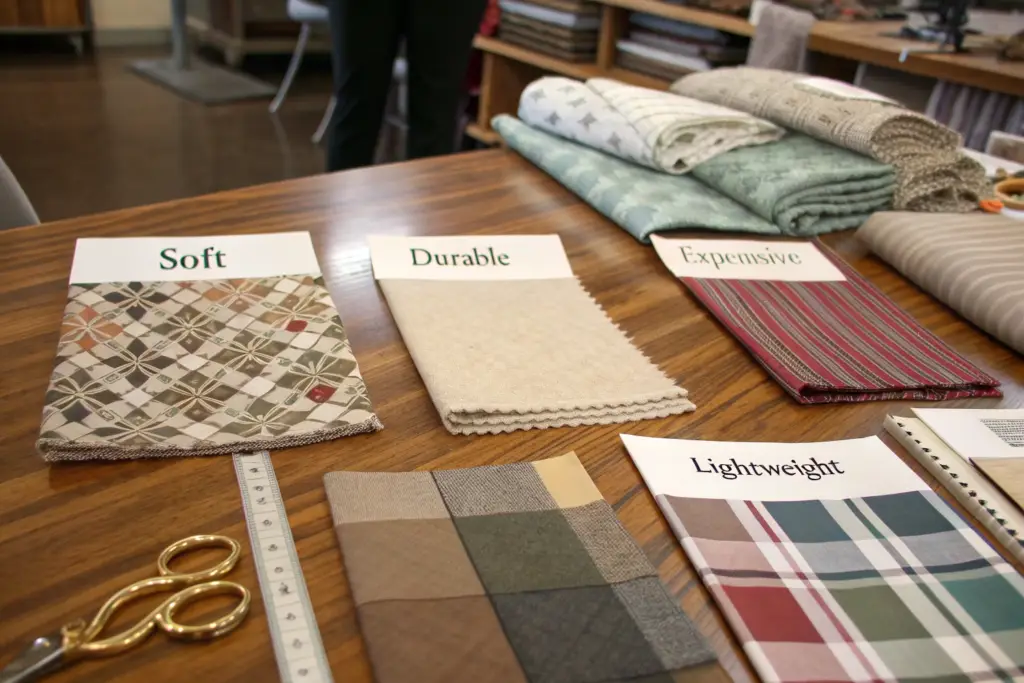
I learned this lesson the hard way about fifteen years ago. A client from New York trusted me to source the fabric for his new summer line. I found what I thought was a great deal on a beautiful linen blend. It looked perfect in the sample. But after the full production run, we washed the garments. They shrunk unevenly. The line was a disaster. I lost money fixing it, and the client lost trust in me for a while. That mistake taught me a lesson I have never forgotten: the fabric is the foundation. If the foundation is weak, the whole house collapses.
Fabric sourcing is critical because it determines everything about your garment: the look, the feel, the drape, the durability, and the cost. The wrong fabric can ruin a perfect design. The right fabric can make a simple design sing. Your choice of material directly impacts your customer’s experience, your return rates, and your brand’s reputation. You cannot build a successful collection on bad fabric.
I run a factory. I see designers bring in beautiful sketches every day. But a sketch is just lines on paper. The magic happens when we choose the material. The fabric gives the sketch life. It determines if the shirt will be stiff or soft, if the dress will flow or hold its shape, if the jacket will be warm or light. Getting this choice right is the most important decision you will make after the design itself.
How Does Fabric Choice Impact Garment Performance and Feel?
A brand owner from Miami called me last year. He was frustrated. His high-end yoga pants were getting bad reviews. Customers loved the fit, but they complained the pants slid down during downward dog. The fabric just didn’t have enough grip. We solved it by switching to a different blend with a higher percentage of elastane and a different texture. The problem disappeared.
Fabric is not just about color and print. It is about performance. Does it breathe? Does it stretch? Does it wrinkle? Does it pill? These are the questions your customers will answer with their wallets. A fabric that feels amazing in the store but performs poorly at home will kill your brand’s repeat business.
What Is Fabric Hand Feel and Why Does It Matter?
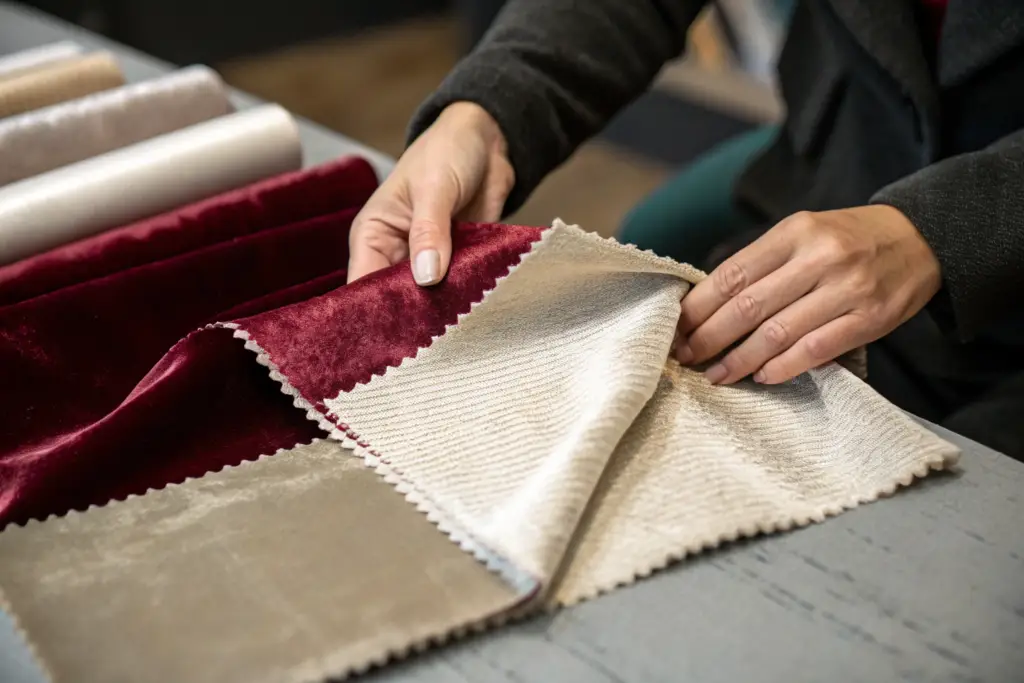
“Hand feel” is the industry term for how a fabric feels to the touch. Is it soft like cashmere? Is it crisp like a new poplin shirt? Is it smooth like silk? This is the first thing your customer notices when they pick up your garment. It creates an instant emotional reaction. If it feels cheap, they put it back. If it feels luxurious, they are more likely to buy. We spend a lot of time with our clients comparing hand feels. For a children’s wear line, we might focus on super-soft brushed cotton. For a structured blazer, we might look for a firmer, more stable wool blend. The hand feel must match the promise of your brand. You can learn more about different fabric characteristics and finishes to understand what is possible.
How Do Performance Features Like Moisture-Wicking Work?
Technical fabrics do specific jobs. Moisture-wicking fabrics pull sweat away from the skin and spread it out so it evaporates fast. This is essential for activewear. This performance comes from the fiber itself (like polyester) and the way the yarn is constructed. Other performance features include UV protection, anti-odor treatments, and water resistance. These are not just marketing words. They require specific fibers or chemical finishes. A few years ago, a client wanted to make a line of fishing shirts for men. They needed high UPF protection and quick-dry capability. We sourced a special polyester fabric that had a tight weave for sun protection and a hydrophobic finish for drying. The shirts worked exactly as promised. The client’s customers were happy because the fabric delivered on its performance claims. You have to source the right technical fabric to back up your marketing.
What Role Does Fabric Sourcing Play in Costing and Margins?
A buyer from Chicago once asked me, “Why can’t you just make this jacket cheaper?” I showed him the fabric. It was a heavy, high-count cotton canvas. I showed him a cheaper alternative. It was thinner and had a rougher feel. He chose the better fabric. He knew his customers would feel the difference. But the conversation highlighted a truth: fabric is usually the biggest cost in a garment.
The fabric you choose sets your cost floor. You cannot make a premium garment from discount fabric. You cannot hit a low price point using luxury materials. Your sourcing decision must align with your target customer’s budget. We help our clients find the sweet spot where quality and cost meet.
How Do Fabric Prices Vary by Fiber and Construction?
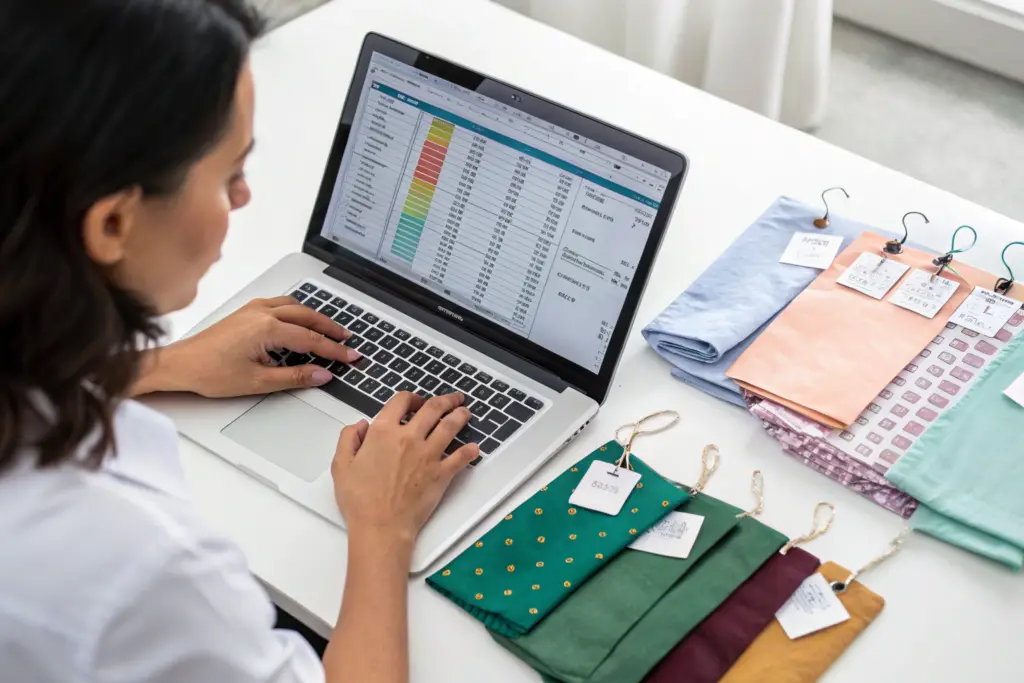
The price of fabric depends on many things. The raw material is the start. Organic cotton costs more than conventional cotton. Merino wool costs much more than standard wool. Silk is expensive. Polyester is cheap. Then you add the construction. A simple plain weave is fast to make and costs less. A complex jacquard weave is slow and costs much more. The dyeing and finishing also add cost. For a recent project, a client wanted a “vintage wash” effect on denim. That extra step added to the fabric price, but it also added to the perceived value of the final jeans. We had to balance the extra cost against the higher selling price. We showed him three different denim options at three price points. He chose the middle one because it gave him the look he wanted without blowing his budget. This is the fabric costing negotiation we do every day.
What Is The Impact of Fabric Waste on Your Total Cost?
When you buy fabric, you pay for the whole roll. But when you cut out the pattern pieces, some fabric is wasted. It is just the space between the pieces. The amount of waste depends on the marker efficiency (how tightly the pieces are nested) and the width of the fabric. A good marker maker can reduce waste. But the fabric itself also matters. Stripes and plaids often require more fabric because the pattern has to be matched at the seams. This increases waste. For a client making plaid shirts, we had to buy about 10% more fabric than for a solid shirt of the same size. This increased his cost. We talked about it upfront so he could price his shirts correctly. Understanding these fabric utilization rates is key to accurate costing.
How Can You Source Unique or Custom Fabrics?
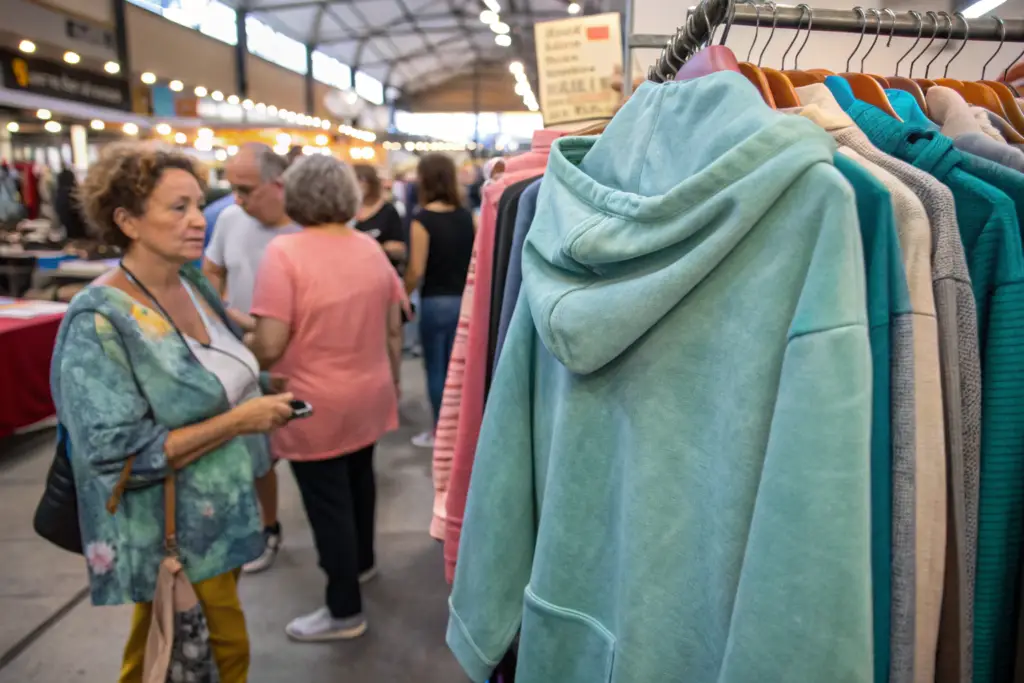
In a crowded market, your fabric can be your biggest differentiator. If you use the same basic jersey as everyone else, you are just another t-shirt brand. If you find a unique fabric, you have a story to tell. A brand owner from Portland built his entire company around a single fabric: a super-soft, garment-dyed French terry. Customers loved the feel. They came back for it.
Unique fabrics set you apart. They can be custom-developed for your brand, or they can be exclusive finishes on existing bases. This requires a deeper relationship with mills, but the payoff is a product that no one else has.
What Is The Process for Developing Custom Mill-Dyed Fabric?
If you want a specific color, you don’t have to settle for what is in stock. You can have fabric mill-dyed just for you. You send a color standard, like a Pantone number or a physical swatch. The mill creates a lab dip—a small sample of fabric dyed to match. You approve it, and then they dye your whole order to that standard. This ensures color consistency across your entire production run. We do this all the time. A client from Los Angeles wanted a very specific “Lagoon Blue” for his swimwear line. We worked with our mill partner. It took two rounds of lab dips to get it exactly right. But once we did, all his swim trunks were that perfect, unique color. His customers recognized that color as “his” color. That is the power of custom dyeing.
How Do Minimum Order Quantities Work for Custom Prints?
Custom prints are another way to stand out. But they usually have higher minimums than solid colors. For screen printing, you might need to order hundreds of yards of each colorway. For digital printing, the minimums can be much lower. We have digital printing partners who can print your design with zero yardage minimum. You pay a bit more per yard, but you can order exactly what you need. This is perfect for testing a new print or for limited edition runs. A boutique brand from Austin worked with us on a small run of floral print dresses using digital printing. They ordered exactly 200 yards of fabric. They made 50 dresses. They sold out in a week. If they had been forced to order 1,000 yards, they would have been stuck with inventory. This low-MOQ digital printing opens up creativity for smaller brands.
Conclusion
Fabric sourcing is not a detail you can delegate and forget. It is a strategic decision that impacts your entire business. It affects your product’s performance, your cost structure, your brand identity, and your customer’s satisfaction. Getting it right requires expertise, relationships, and a willingness to dig into the details.
At Shanghai Fumao, we have spent years building relationships with top fabric mills. We know where to find the best organic cotton, the most innovative recycled polyesters, and the most reliable dyers. We guide our clients through the maze of options, helping them make choices that are beautiful, functional, and profitable. We turn fabric sourcing from a headache into a competitive advantage.
If you are ready to build a collection on a foundation of quality fabric, let’s talk. Contact our Business Director, Elaine. She can connect you with our fabric sourcing team and help you find the perfect materials for your next line.
Email Elaine today: elaine@fumaoclothing.com