I remember a phone call I received about five years ago from a brand owner in Seattle. He was excited about his new winter jacket collection. He had spent months on the designs. He sent me sketches on napkins, photos from magazines, and long emails describing the details. He said, "You are the expert. Just make it like this." We tried our best. We made samples based on his descriptions. But when the samples arrived at his office, he was disappointed. The pockets were too low. The lining was not what he imagined. We had wasted six weeks and a lot of money. That experience taught me something important. Great ideas need clear communication to become great products.
Communicating design tech packs effectively in full package manufacturing means translating your creative vision into a language that factories can execute precisely. A tech pack is your blueprint. It includes detailed sketches with measurements, a bill of materials listing every fabric and trim, construction notes explaining how pieces go together, and labels with size specs. When this document is clear, we can sample faster, price accurately, and produce exactly what you want, the first time.
Since that difficult jacket project, I have worked with hundreds of American brands. The ones who succeed with full package manufacturing are not always the ones with the most beautiful designs. They are the ones who communicate their designs clearly. They understand that a factory in China needs the same level of detail as a pattern maker in New York. Today, I want to share what I have learned about making this communication work. I will show you what a good tech pack looks like, what information we really need, and how to avoid the common mistakes that cost time and money.
What Exactly Should A Tech Pack Include For Full Package Production?
A tech pack is the single most important document you will create for your clothing line. Think of it as the instruction manual for your garment. When we receive a tech pack at Shanghai Fumao, our pattern makers, sample room supervisors, and production planners all study it. We need it to answer every possible question before it is asked. If the tech pack is missing information, we have to stop and ask you. That takes time. A complete tech pack keeps everything moving.
What Technical Drawings And Measurements Do We Need?
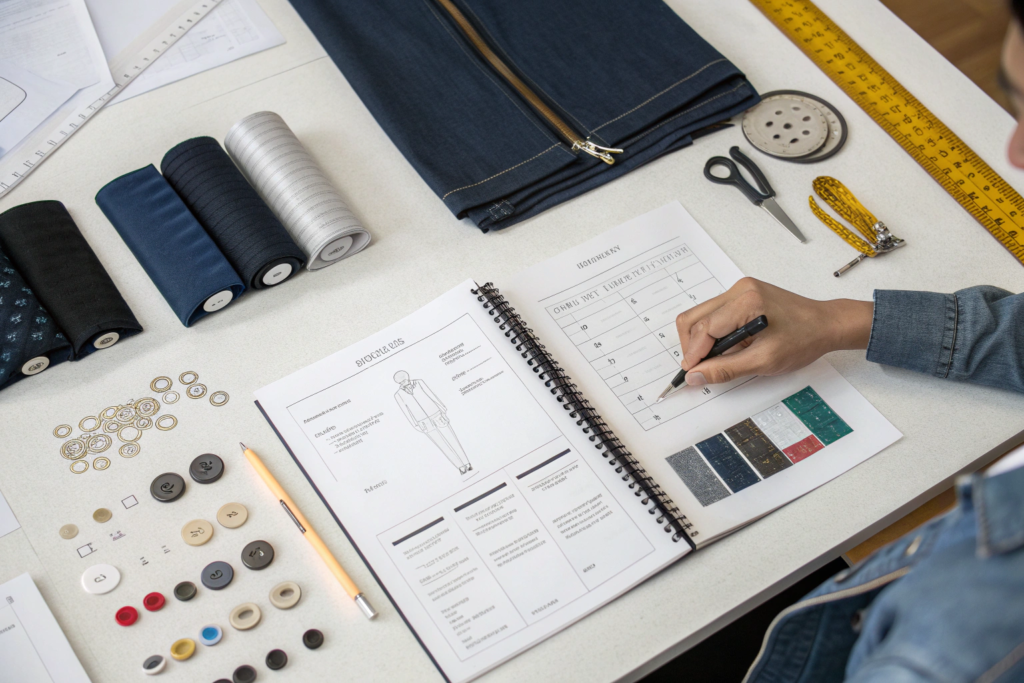
The foundation of any tech pack is the technical flat sketch. This is not a fashion illustration. It is a clean, simple drawing that shows the garment from the front and the back. It should look like a line drawing, with no shading or artistic effects. This drawing shows where seams go, where pockets are placed, and how the collar sits. On top of this drawing, we need measurements. Not just one measurement for the chest. We need the chest width, the waist width, the hip width, the shoulder width, the sleeve length, the armhole depth, and the neck width. For each measurement, tell us the tolerance you allow. Tolerance means how much variation is acceptable. For example, chest measurement might be 22 inches with a tolerance of plus or minus half an inch. Without tolerances, we might reject garments that are perfectly good because they are one-eighth of an inch off. A client in Chicago once sent us a tech pack with 35 different measurements for a simple men's dress shirt. He had thought about every detail. Our pattern maker later told me it was the easiest shirt he had ever worked on. That shirt came out perfect on the first sample. Good measurements save time.
What Materials And Trim Information Is Critical?
The second most important part of a tech pack is the bill of materials, or BOM. This is a list of everything that goes into the garment. Start with the main fabric. Tell us the fiber content, like 100% cotton or 65% polyester and 35% cotton. Tell us the weight, usually in grams per square meter. If you have a specific fabric supplier you trust, include their contact information or a fabric reference number. Then list every trim item. Buttons need a size, usually in lignes or millimeters. Zippers need a length and a type, like nylon coil or metal teeth. Thread needs a color reference, like a Pantone number. Labels need artwork. Hang tags need size and artwork. About three years ago, a brand owner from Florida sent us a tech pack for a kids' jacket. In the BOM, she specified "yellow zipper." When we asked which yellow, she sent a photo. We matched it as best we could. But when the sample arrived, she said the zipper was too orange. It cost us both time and money to fix it. Now, we ask every client to send a physical color swatch or a specific Pantone code for every colored item. This small step prevents huge problems.
| Tech Pack Section | What To Include | Why It Matters |
|---|---|---|
| Technical Flats | Front and back line drawings | Shows seam placement and style details |
| Measurement Spec | All key points with tolerances | Ensures correct fit across all sizes |
| Bill of Materials | Fabric, trims, thread, labels | Lists everything needed for sourcing |
| Color Details | Pantone codes or physical swatches | Prevents color mismatch between items |
| Construction Notes | Stitch type, seam finish, topstitching | Tells us how to assemble the garment |
Shanghai Fumao's tech pack guide offers more detail on each of these sections. We want you to feel confident that your document gives us everything we need.
How Can I Make My Tech Packs Easy For Factories To Understand?
Many American brand owners tell me they feel their tech packs get ignored. They send pages of detailed instructions, but the samples come back wrong. This is frustrating. I have seen it happen. Often, the problem is not that the factory does not want to follow instructions. It is that the instructions are presented in a way that is hard to follow. Factories work visually. We need information that is easy to scan and understand quickly.
Should I Use Words Or Pictures To Explain Construction?
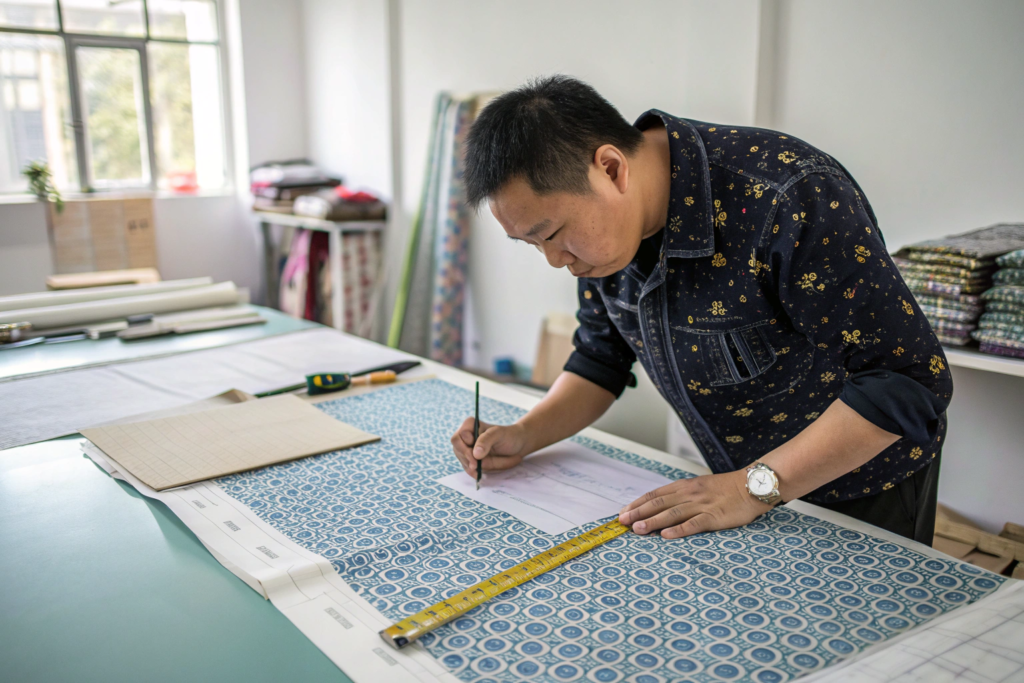
Always use both, but prioritize pictures. A picture of a seam tells us more than a paragraph describing it. For example, if you want a flat-felled seam like on denim jeans, include a close-up photo or a diagram showing how the fabric layers fold. If you want topstitching a quarter inch from the edge, show it on your flat sketch with a note. In our sample room, the sewers look at pictures first. They read notes second. Last year, a client in Texas sent us a tech pack for a utility vest with many pockets. He had written long descriptions of how each pocket should be attached. Some were box stitches. Some were bar tacks. Some were simple edge stitching. We had to keep stopping to read the text carefully. After the first sample, he visited our factory. We showed him how we work. On his next tech pack, he added small diagrams next to each pocket showing the stitch type. The samples came out much faster and with zero mistakes. He told me later, "I finally understand. You guys are visual, just like me." That is true. We are makers. We think in shapes and stitches, not just words.
How Do I Handle Sizing For The US Market?
Sizing is one area where clear communication is essential. American sizing is different from Asian sizing. An American size medium is not the same as a Chinese size medium. If you send us a tech pack that just says "medium," we will make a medium based on our standard block. That might be too small for your customers. You must send us a complete size spec. This means a measurement chart for every size you plan to sell: XS, S, M, L, XL, and maybe XXL. Include the chest, waist, hip, sleeve length, and shoulder width for each size. Also tell us which size is your base size. This is the size we use to make the first sample. We then grade, or scale, the pattern up and down for the other sizes. About two years ago, a client in New York sent us a tech pack for a women's blouse with size charts from her current best-selling brand. She had actual sales data showing what sizes her customers bought most. This was incredibly helpful. We used her charts to create the patterns. When the bulk order arrived, the fit was exactly what her customers expected. She sold out in six weeks. Good data leads to good fit.
What Happens If My Tech Pack Is Not Complete?
This happens more often than you might think. Many brand owners, especially when they are starting out, do not have complete tech packs. They have sketches and ideas and maybe some reference photos. They worry this is not enough to work with a professional factory. I want to reassure you. We work with brands at every stage. A missing tech pack does not mean we cannot work together. It just means we need to adjust our process.
Can Your Factory Help Me Build My Tech Pack?
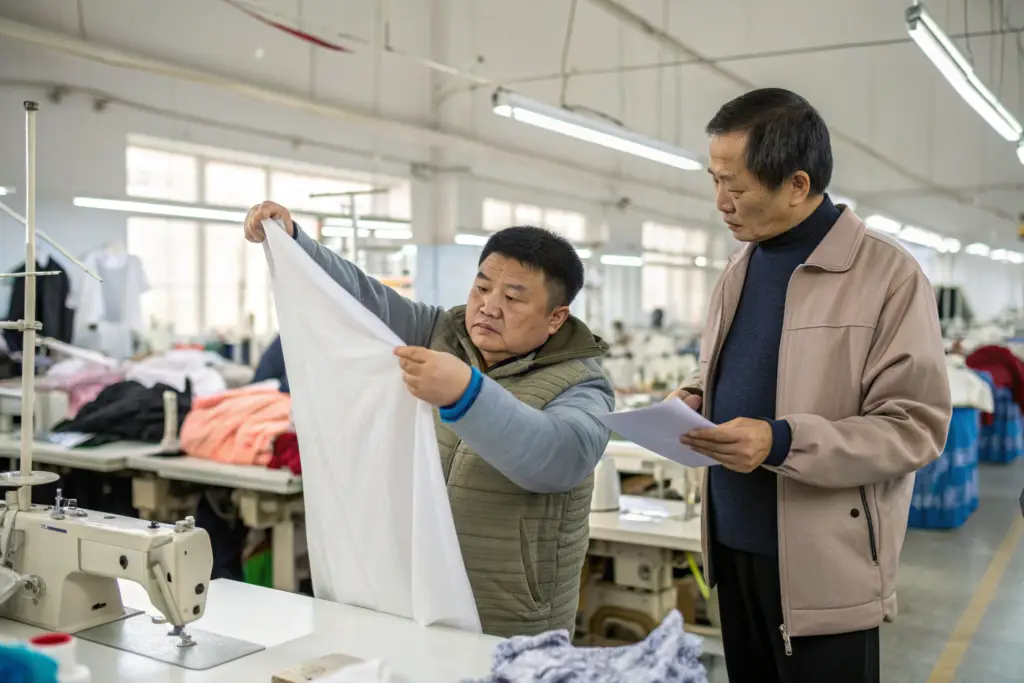
Yes, absolutely. This is one of the most valuable parts of our full package service. We have a team of experienced pattern makers and sample developers who have seen thousands of garments. If you send us sketches and photos, we can create the technical drawings for you. We can suggest measurements based on standard industry sizes. We can recommend fabrics that will work well for your design. Think of us as an extension of your design team. A few years ago, a young designer from Los Angeles contacted us. She had amazing ideas for a sustainable activewear line. She could draw beautifully, but she had no idea how to create a tech pack. She sent us her sketches and some fabric swatches she liked. Our team worked with her for three weeks. We asked questions. We made suggestions. We created a full tech pack together. Her first production run of 1,500 pieces sold out in three months. She now sends us complete tech packs for every new design, but she knows we are always there to help if she gets stuck. That is the partnership we build.
What Questions Will My Factory Ask About My Design?
When we receive a new design, we have a list of questions we always ask. We ask about the fabric weight. Is it a light summer weight or a heavy winter weight? We ask about the fit. Is it relaxed, regular, or slim fit? We ask about the wash. Will it be garment washed or just cut and sewn? We ask about the packaging. Do you want each piece folded in a poly bag, or hung on a hanger? Answering these questions early saves time later. I remember a client in Colorado who sent us a design for a denim jacket. He had specified everything except the wash. When we asked, he said he wanted a light stone wash. But he did not tell us that until after we had already cut the fabric. We had to stop production, send the cut pieces to the washing vendor, and then bring them back. This added a week to the schedule. Now, we ask every client a standard list of questions before we start any project. We do this to protect your timeline and your budget. If we ask you a question, it is because we need that answer to do the job right.
How Do We Go From Tech Pack To First Sample?
The journey from your tech pack to a finished garment happens in our sample room. This is where your design comes to life for the first time. It is an exciting moment. But it is also a critical step where small misunderstandings can become big problems. I want to walk you through exactly how we work so you know what to expect.
How Does Your Team Interpret My Tech Pack?
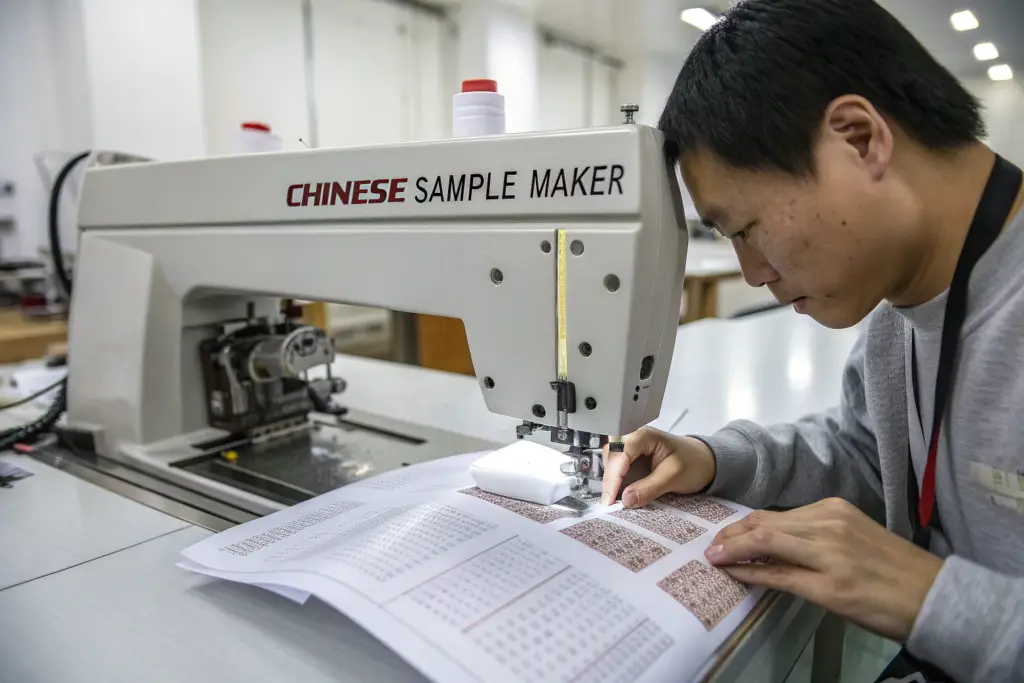
When your tech pack arrives in our sample room, the first person to see it is our pattern maker. They read through everything. They look at the flats. They check the measurements. They read the construction notes. Then they start asking questions. This is normal. A good pattern maker thinks about how the garment will be sewn. They might see that your design has a detail that is difficult to sew. They might suggest a small change that makes production easier while keeping the look the same. They always check with you before making any change. Last year, a client in Chicago sent us a tech pack for a men's bomber jacket. His design called for a very narrow hem on the bottom. Our pattern maker knew that a narrow hem on a heavy jacket fabric would flip up and look messy. He suggested a slightly wider hem that would lay flat. He called the client, showed him a sketch of the difference, and explained why. The client agreed. The final jackets looked clean and professional. That is the value of experience. We are not just following orders. We are using our knowledge to make your design better.
What Is The Sample Approval Process?
After we make the first sample, we send it to you. This is your chance to see the design in real life. Try it on. Look at it from all angles. Check the pockets. Zip the zipper. Button the buttons. Does it feel right? Then you send us your feedback. We want to know everything. The sleeves are too long. The neckline is too low. The fabric is stiffer than you expected. Write it all down. Take photos. Circle the areas on a printout. Send it back to us. We make those changes and send a second sample. We keep going until you are 100% happy. I have had clients who needed five samples before they said yes. That is fine. We want you to be confident. One client from Texas once told me, "Other factories rush me to approve. You guys actually listen." That is because we know that a happy sample means a smooth bulk production. When you finally approve the sample, we keep it in our sample room. It becomes the master. Every morning during production, we compare the first pieces from the line to that master. If they match, we keep going. If they do not, we stop and fix the problem. This system protects your quality from the first piece to the last.
Conclusion
Communicating your designs through tech packs does not have to be difficult. The key is to think like a maker. Provide clear flat sketches with detailed measurements. List every material with specific references. Use pictures to explain construction. Include a complete size chart for the US market. And remember, you do not have to do it alone. A good full package partner will help you build your tech pack, ask the right questions, and use their experience to improve your design.
At Shanghai Fumao, we have helped hundreds of American brands turn their ideas into successful products. We have seen every type of tech pack, from the most detailed professional documents to simple sketches on paper. We meet you where you are and help you get to where you want to be. If you have a design in mind and you are not sure how to communicate it, start by talking to us.
Contact our Business Director, Elaine, directly at elaine@fumaoclothing.com. Send her your sketches, your photos, or your questions. Let us begin the conversation. Together, we can turn your vision into a garment that your customers will love.