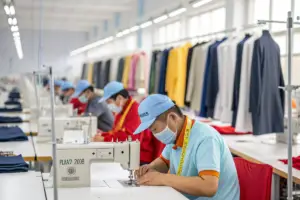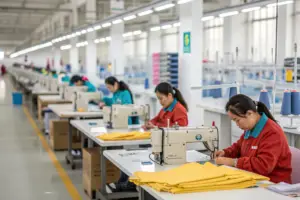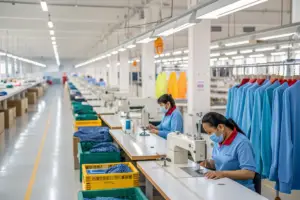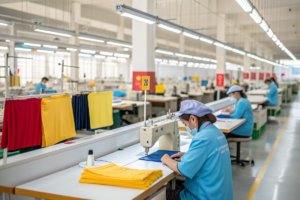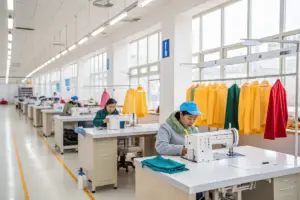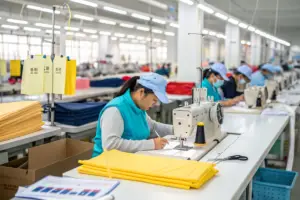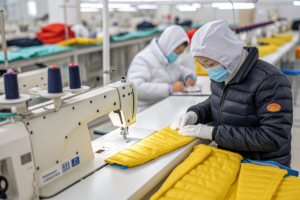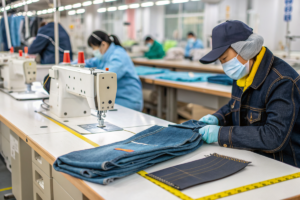
A brand owner from Los Angeles once showed me a coat on her phone. It was her design, her exact silhouette, her exact fabric, her exact color palette. The only difference was the label. The coat was being sold on a fast-fashion website for $39, a third of her retail price. Her own coats were still in production at a factory in China. She had not yet shipped a single unit. Somewhere in the supply chain, her design had leaked. A sample had been photographed, a pattern had been copied, a fabric had been matched, and a competitor had beaten her to market with her own product. She lost an estimated $120,000 in sales from that single style. The leak was never fully traced, but the damage was permanent. Her brand's debut collection was undermined before it launched.
You prevent copycat designs when manufacturing your summer coat line by implementing a multi-layered protection strategy that spans legal, contractual, operational, and strategic measures. Legal protection includes design patents where applicable, trademark protection for your brand elements, and non-disclosure agreements with every party in the supply chain. Contractual protection includes clear intellectual property ownership clauses in your manufacturing agreements and exclusivity provisions that prohibit the factory from reproducing your designs. Operational protection includes controlling the distribution of your samples, limiting access to your tech packs and patterns, and using component-level manufacturing where different components are produced by different suppliers and assembled only at the final stage. Strategic protection includes speed to market, building brand equity that copycats cannot replicate, and developing proprietary fabrics or trims that are not available on the open market. At Shanghai Fumao, we implement all of these protections for our OEM clients. We sign NDAs and IP agreements. We control access to client samples and patterns. We never share a client's proprietary design with another client. Our business model depends on our clients' trust, and a single IP violation would destroy that trust permanently.
Copycat designs are not a theoretical risk. They are a daily reality in the global garment industry. The brands that protect themselves effectively are the brands that treat IP protection as a core business process, not as an afterthought. The brands that assume their factory will protect their designs without explicit agreements and operational controls are the brands that see their coats on fast-fashion websites before they have sold their first unit. Let me walk through every layer of protection.
What Legal Protections Should You Secure Before Sharing Your Designs?
The legal protection framework is the first line of defense. It establishes your ownership of the design and creates enforceable consequences for violations. The legal protections do not prevent a determined bad actor from copying your design, but they provide the basis for legal action if a copy occurs and they signal to every party in the supply chain that you take your IP seriously. A brand that shares designs without any legal framework is broadcasting that its IP is not protected and is free for the taking.
The legal protections you should secure before sharing your designs include a registered trademark for your brand name and logo, which protects your brand identity. A design patent or a copyright registration for unique, non-functional design elements, if your coat has a distinctive ornamental feature that qualifies for protection. A comprehensive non-disclosure agreement, an NDA, that is signed by the factory and any other party that receives your design information before you share any proprietary details. A manufacturing agreement that includes explicit intellectual property ownership clauses, stating that all designs, patterns, samples, and specifications you provide are your exclusive property and that the factory may not use, reproduce, or share them for any purpose other than producing your order. At Shanghai Fumao, we sign NDAs and IP agreements with our OEM clients as a standard part of our onboarding process. We treat our clients' designs as confidential assets, and we expect them to protect their IP through the appropriate legal channels.
The legal framework is the foundation. It should be in place before the first sketch is shared, the first sample is shipped, or the first deposit is paid. Retrofitting legal protections after a leak has occurred is expensive, slow, and often ineffective.
What Is The Difference Between A Design Patent And A Copyright For Apparel?
Design patents and copyrights are two different forms of intellectual property protection that apply to different aspects of a garment. Understanding the difference is essential for a brand owner who wants to protect their designs effectively. The wrong form of protection provides no protection at all.
A design patent protects the ornamental, non-functional design of a functional article. In apparel, a design patent can protect a unique visual feature of a coat, such as a distinctive pocket shape, a unique collar configuration, or an ornamental pattern of stitching, provided that the feature is new, original, and not dictated by the coat's function. A design patent gives the owner the exclusive right to use the design for 15 years from the date of grant. The patent application process takes 12 to 18 months and costs $1,500 to $3,000 in legal fees. A copyright protects original works of authorship fixed in a tangible medium. In apparel, copyright can protect a fabric print, a textile pattern, or a graphic design applied to the garment. Copyright does not protect the functional aspects of a garment, and in the United States, copyright generally does not protect the cut, shape, or silhouette of a garment because these are considered functional or useful articles. Copyright registration is relatively fast, a few months, and inexpensive, $55 to $85 for an online application. For a summer coat, a design patent is appropriate for a truly novel ornamental feature that is central to the coat's brand identity. A copyright is appropriate for a unique fabric print or surface design. The design patent vs copyright for fashion designs is a complex area of law. A brand should consult with an intellectual property attorney who specializes in fashion before investing in protection.
How Should You Structure An NDA With A Chinese Garment Factory?
An NDA, a non-disclosure agreement, is a contract in which the receiving party agrees not to disclose or use the disclosing party's confidential information for any purpose other than the agreed purpose. An NDA with a Chinese factory must be drafted with specific considerations to be enforceable and effective in the Chinese legal context. A generic NDA downloaded from the internet is unlikely to provide meaningful protection.
An effective NDA with a Chinese garment factory should include these elements. A clear definition of "confidential information" that specifically enumerates the types of information covered, including designs, sketches, tech packs, patterns, samples, fabric specifications, trim specifications, client lists, and pricing information. A clear statement of the permitted use, which is limited to the production of the specified purchase order. A prohibition on reproduction, reverse engineering, or sharing with any third party, including the factory's own ODM division or other clients. A term of confidentiality that extends beyond the termination of the manufacturing relationship, typically three to five years. A governing law and dispute resolution clause. Many foreign brands prefer arbitration in Hong Kong or Singapore as a neutral forum. Others accept Chinese law and Chinese courts. The choice involves a trade-off between enforceability in China and neutrality of the forum. The NDA should be provided in both English and Chinese, with the Chinese version prevailing in the event of a dispute, because a Chinese court will interpret the contract in Chinese. The factory's legal representative should sign the NDA, not just a sales representative. The enforceability of NDAs in China for international trade is a subject that has improved significantly in recent years as Chinese courts have become more sophisticated in handling IP disputes. A well-drafted, bilingual NDA is a meaningful deterrent, even if litigation remains a last resort.
How Can You Control The Distribution Of Physical And Digital Design Assets?
The legal framework establishes your rights. Operational controls prevent your design assets from leaking into the wrong hands. A design asset is any physical or digital item that contains or embodies your design. Physical assets include samples, patterns, fabric swatches, and trim samples. Digital assets include tech packs, CAD files, pattern files, and specification sheets. Every asset that leaves your control is a potential leak point. Controlling the distribution of these assets is the most effective and most underutilized IP protection strategy.
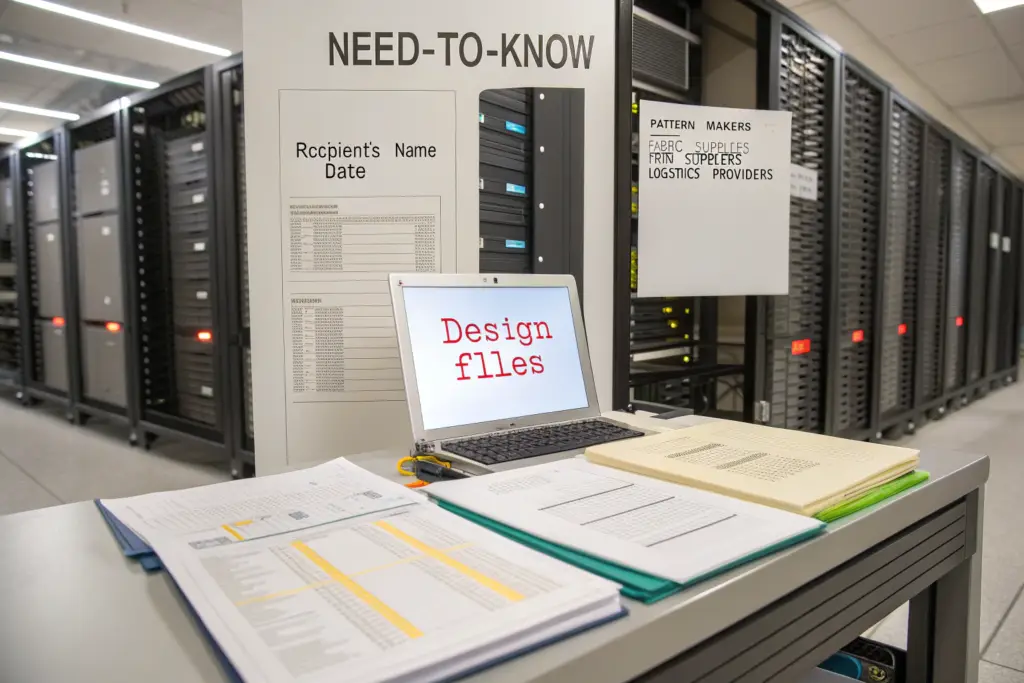
You control the distribution of physical and digital design assets by implementing a "need-to-know" distribution policy. Share only the information that each party in the supply chain needs to perform its function, and no more. The pattern maker needs the full tech pack. The fabric supplier needs only the fabric specification, not the full design. The trim supplier needs only the trim specification. The logistics provider needs only the carton dimensions and weight. Digitally watermark every design file with the recipient's name and the date of sharing, so that if a file leaks, the source of the leak is identifiable. Physically mark every sample with a unique identifier and track its location. Limit the number of samples produced and account for every sample at every stage of the development process. At Shanghai Fumao, we maintain a secure digital server for our OEM clients' design files, with access restricted to the specific merchandiser and production manager assigned to the client's account. We do not store client files on shared drives accessible to other clients' teams. We physically secure client samples in a designated area separate from our ODM reference library.
The goal of operational control is not to prevent all information sharing. A factory must share information internally to produce the order. The goal is to limit the sharing to the minimum necessary and to create accountability for every asset.
What Is A "Need-To-Know" Information Policy For Garment Production?
A need-to-know information policy is a principle of information security that limits access to information to those individuals who require it to perform their specific job function. In a garment production context, the policy means that a fabric supplier receives the fabric specification but not the complete coat design. A trim supplier receives the button drawing but not the silhouette sketch. The cutting room receives the pattern but not the brand's marketing strategy. The shipping department receives the carton configuration but not the wholesale pricing.
Implementing a need-to-know policy in a factory environment requires discipline and system design. The brand and the factory must map the production process and identify exactly what information each step requires. The information for each step is packaged into a specific document or data set that contains only the required information. The documents are distributed only to the individuals responsible for that step. The policy also requires the factory to segregate client information internally. The merchandiser handling Brand A cannot access the files of Brand B without authorization. The pattern maker working on Brand A's coat cannot show the pattern to a colleague working on a different client's project. This level of information segregation is more difficult to implement in a factory than in a law firm or a tech company, but it is achievable with clear policies, management commitment, and periodic audits. The information security practices in manufacturing supply chains are becoming increasingly important as design files become fully digital. The brand that insists on a need-to-know policy with its factory partner reduces the risk of an inadvertent leak through casual information sharing.
How Should You Track And Account For Every Sample During Development?
Samples are the most sensitive physical assets in the development process. A sample is a complete, wearable embodiment of the design. A sample that falls into the wrong hands can be deconstructed, measured, and copied in days. Every sample produced during the development process, from the first prototype to the final golden sample, must be tracked, accounted for, and either returned to the brand or destroyed after its purpose is served.
A sample tracking system works as follows. Every sample is assigned a unique identification number when it is produced. The number is recorded in a sample register along with the date of production, the purpose of the sample, the style number, and the intended recipient. When the sample is shipped to the brand, the shipment is recorded with the tracking number, the recipient, and the date. The brand acknowledges receipt. When the sample has served its purpose, the brand either returns it to the factory for secure storage or destruction, or the brand retains it in its own secure archive. The sample register is updated with the final disposition of each sample. At the end of the development season, the brand and the factory reconcile the sample register. Every sample produced must be accounted for. A missing sample is a security incident that is investigated. The sample management and tracking in apparel development is a discipline that professional brands and factories practice. The brand that does not track its samples does not know where its designs are or who has access to them.
What Contractual Clauses Prevent A Factory From Reusing Your Designs?
The manufacturing agreement is the legal instrument that defines the factory's obligations regarding your designs. A purchase order that specifies only the style, quantity, price, and delivery date does nothing to protect your IP. The manufacturing agreement must include specific clauses that prohibit the factory from reusing, reproducing, or sharing your designs. These clauses transform a handshake understanding into a contractual obligation with defined consequences for breach.
The contractual clauses that prevent a factory from reusing your designs include an intellectual property ownership clause, which states that all designs, patterns, samples, specifications, and other materials provided by the brand or developed for the brand's order are the exclusive property of the brand. An exclusivity clause, which prohibits the factory from producing the same or substantially similar designs for any other client for a specified period, typically two to three years, or in perpetuity if the design is sufficiently unique. A non-circumvention clause, which prohibits the factory from using the brand's design information to develop ODM products or to solicit the brand's customers. A return or destruction clause, which requires the factory to return or destroy all samples, patterns, digital files, and other materials containing the brand's designs upon completion of the order or termination of the agreement. A liquidated damages clause, which specifies the financial penalty for a breach of the IP provisions. At Shanghai Fumao, our OEM manufacturing agreement includes all of these clauses. We are comfortable with them because we have no intention of reusing our clients' proprietary designs. A factory that resists these clauses is a factory that wants to retain the option to reuse your designs.
The contractual clauses are only as strong as the brand's willingness to enforce them. A brand that discovers a breach and does nothing signals to the factory and to the market that its IP is not worth enforcing. A brand that enforces its rights, even if the enforcement is a formal demand letter rather than a lawsuit, signals that it will protect its assets.

What Is An Exclusivity Clause And How Long Should It Last?
An exclusivity clause is a provision in the manufacturing agreement that prohibits the factory from producing the same or substantially similar products for any other client. The clause protects the brand from the scenario where the factory uses the patterns, the fabric sources, and the production knowledge developed for the brand's order to produce a nearly identical coat for a competitor, often at a lower price because the competitor did not bear the development cost.
The duration of an exclusivity clause is a negotiation between the brand's need for protection and the factory's legitimate interest in not being permanently restricted from producing a common garment type. A clause that is too broad, prohibiting the factory from producing any linen blazer for any client, is unreasonable and unenforceable. A clause that is too narrow, prohibiting only exact copies, is easy to circumvent with minor modifications. A well-drafted exclusivity clause defines the protected design with specificity, referencing the style number, the tech pack, and the golden sample. It prohibits the factory from producing a coat that is substantially similar in overall visual impression to the protected design for a period of two to three years from the date of the last delivery. Two to three years is long enough to cover the product's commercial lifecycle, including any carryover into the next season, but short enough to be reasonable. For a truly iconic, brand-defining design, a longer term or a perpetual exclusivity clause may be negotiable. The exclusivity clauses in fashion manufacturing agreements should be reviewed by legal counsel. The clause is a commercial term, and like all commercial terms, it is subject to negotiation.
How Can Component-Level Manufacturing Reduce The Risk Of Design Theft?
Component-level manufacturing is a production strategy where the different components of the coat are produced by different specialized suppliers and the final assembly is performed by a single factory, often under tighter control. The fabric is woven and dyed by one mill. The buttons are produced by a trim supplier. The labels are produced by a label specialist. The cutting and sewing are done by the garment factory. No single supplier has the complete design.
Component-level manufacturing reduces the risk of design theft by fragmenting the design information. The fabric mill knows the fabric specification but does not know the silhouette. The trim supplier knows the button design but does not know the coat it will be attached to. The garment factory has the pattern and the sewing instructions but does not have the ability to replicate the proprietary fabric or the custom trim. A factory that wanted to copy the coat would need to reverse-engineer the fabric, source identical trim, and recreate the pattern, a significantly more difficult and expensive undertaking than simply running an extra batch of units on the same production line. The component-level strategy also creates supply chain barriers to copying. If the fabric is a custom development that is exclusive to the brand, a copycat must develop a similar fabric from scratch, which takes time and requires a minimum order quantity that may be prohibitive for a small copycat operation. The component-level manufacturing for IP protection in apparel is a strategy used by luxury and premium brands to protect their designs. It adds some logistical complexity but provides meaningful IP protection.
What Strategic Advantages Make Copycat Designs Less Threatening?
Legal protections and operational controls are defensive measures. Strategic advantages are offensive measures that make copycat designs less threatening to your brand's success, even if a copy occurs. The brand that relies entirely on legal protection to defend against copycats is fighting a war of attrition. The brand that builds strategic moats around its business makes copycats irrelevant. The customer does not want the copycat's coat because the copycat cannot replicate the brand's value proposition.
The strategic advantages that make copycat designs less threatening include speed to market, brand equity, proprietary materials, and customer experience. Speed to market means your coat is on the retail floor and selling before the copycat can produce its version. The copycat is chasing a trend that your brand defined. Brand equity means your customer buys your coat for the brand's identity, story, and community, not just for the physical garment. The copycat can copy the coat but cannot copy the brand. Proprietary materials mean your coat uses a fabric, a trim, or a construction technique that is not available on the open market. The copycat can approximate the look but cannot replicate the feel, the durability, or the performance. Customer experience means your brand provides a level of service, fit consistency, and post-purchase support that the copycat does not. At Shanghai Fumao, we support our clients' strategic advantages through fast production timelines, custom fabric development, and consistent quality that builds customer trust.
The brands that are most vulnerable to copycats are the brands that compete on product alone, with no brand story, no proprietary materials, and no customer relationship. The brand is a coat with a logo. The copycat produces the same coat without the logo and sells it for less. The brand that competes on a combination of product, brand, material, and experience is much harder to copy. The copycat can replicate one element but cannot replicate the combination.
How Does Speed To Market Reduce The Window For Copycat Exploitation?
Speed to market is the most effective strategic defense against copycats. The copycat's business model depends on a time lag. The original brand designs the product, sources the materials, produces the order, and ships the goods. The copycat obtains the product, either by purchasing a sample at retail or by obtaining a leaked sample from the supply chain, reverse-engineers it, sources cheaper materials, produces a copy, and ships it. If the original brand's timeline is shorter than the copycat's timeline, the original brand captures the peak demand before the copycat arrives.
The mathematics of the speed advantage are compelling. A typical fast-fashion copycat requires 6 to 8 weeks from obtaining a sample to delivering the copy to stores. A brand using a traditional sourcing timeline of 16 to 20 weeks gives the copycat a 10 to 14 week window to sell the copy before the original arrives. A brand using an accelerated timeline of 8 to 10 weeks, supported by AI-driven trend response and a responsive factory partner, reduces the copycat's window to 2 to 4 weeks, or in some cases, the original arrives before the copycat. The copycat loses the first-mover advantage that its business model depends on. The speed-to-market as a competitive advantage in fashion is the same strategy that fast-fashion brands themselves use against luxury brands. The brand that turns the strategy around and uses speed against the fast-fashion copycats reclaims the advantage.
Why Does Brand Equity Protect Your Margins Even If A Copy Exists?
Brand equity is the accumulated value of the brand's reputation, customer relationships, and market positioning. It is the reason a customer will pay $148 for a coat from a brand she trusts when a visually similar coat is available from an unknown seller for $49. The price difference is the monetary value of the brand equity. The copycat cannot replicate the brand equity. It can only compete on the physical product and the price.
A brand with strong equity has several advantages over a copycat. Customer trust: the customer believes the brand's coat will fit consistently, wear durably, and meet her expectations because her previous purchases from the brand have met those standards. The copycat is an unknown quantity. Emotional connection: the customer identifies with the brand's values, its story, and its community. Wearing the brand's coat is an expression of identity, not just a clothing choice. The copycat offers no identity expression. Distribution advantage: the brand's coat is available in the stores and on the websites where the customer shops. The copycat is available on a fast-fashion aggregator or a marketplace seller. Perceived risk asymmetry: the customer perceives a higher risk of poor quality, poor fit, or poor service from the copycat than from the brand. The price difference must be large enough to compensate for this perceived risk. For many customers, it is not. The brand equity as a defense against copycats in fashion is the reason that luxury brands survive and thrive despite being the most copied products in the world. The copycat does not destroy the brand. The copycat validates the brand's desirability. The brand that builds strong equity captures the customers who value the authentic product. The copycat captures the customers who only value the price.
Conclusion
Preventing copycat designs in summer coat manufacturing is a multi-layered challenge that requires a multi-layered response. There is no single magic solution. The brand that relies entirely on legal protection will be copied by a factory in a jurisdiction where enforcement is difficult. The brand that relies entirely on operational security will be copied when a sample leaks through an unavoidable information-sharing point. The brand that relies entirely on strategic advantages will be copied by a competitor that can replicate the product, if not the brand.
The effective strategy combines all four layers. The legal layer establishes your rights and creates enforceable consequences. The contractual layer binds your factory and your suppliers to specific obligations. The operational layer controls the distribution of your design assets and limits the opportunities for leaks. The strategic layer makes your brand resilient to copies that do occur, by building customer loyalty that a copycat cannot steal. The layers reinforce each other. A factory that has signed a strong IP agreement and operates under a need-to-know policy is far less likely to leak a design than a factory with no agreement and no controls. A brand that reaches the market in eight weeks with a proprietary fabric and a loyal customer base is far less damaged by a copy that appears in twelve weeks than a brand that takes twenty weeks to launch a generic product.
At Shanghai Fumao, we are the factory partner that supports every layer of our clients' IP protection strategy. We sign the NDAs and the IP agreements. We implement the need-to-know policies and the sample tracking systems. We support the speed-to-market timelines and the custom fabric development that give our clients strategic advantages. We do this because our business depends on our clients' trust, and because a factory that protects its clients' IP is a factory that attracts the best clients.
If you are developing a summer coat line and you are concerned about protecting your designs from copycats, contact our Business Director, Elaine, at elaine@fumaoclothing.com. Ask her about our IP protection protocols, our sample security procedures, and our OEM manufacturing agreement. She will explain exactly how we protect our clients' designs at every stage of the production process. Because your design is your most valuable asset, and protecting it is our responsibility as much as yours.