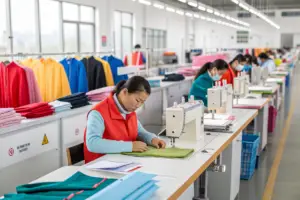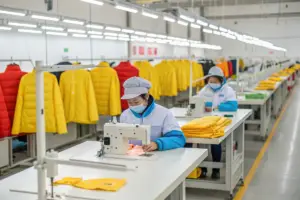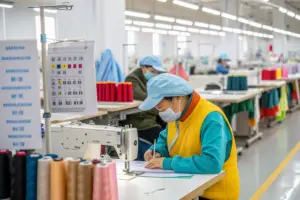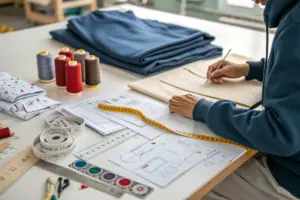
Three seasons ago, a Paris-based brand owner sat in our Shaoxing showroom and said something that has stayed with me. "The problem," she said, "is not that I cannot find a factory in China to make my coats. The problem is that by the time I see a trend on the streets of Milan, design a collection, fly to China, source the fabric, and get a sample made, the trend has already peaked and the fast-fashion brands have already flooded the market. I am always six months behind." She was not asking for a lower price. She was not asking for faster shipping. She was asking for something more fundamental: a way to collapse the distance between a trend emerging in Europe and a garment being produced in China. That conversation led us to invest in what is now one of the most powerful tools in our factory's arsenal: an AI-driven trend detection and production matching system.
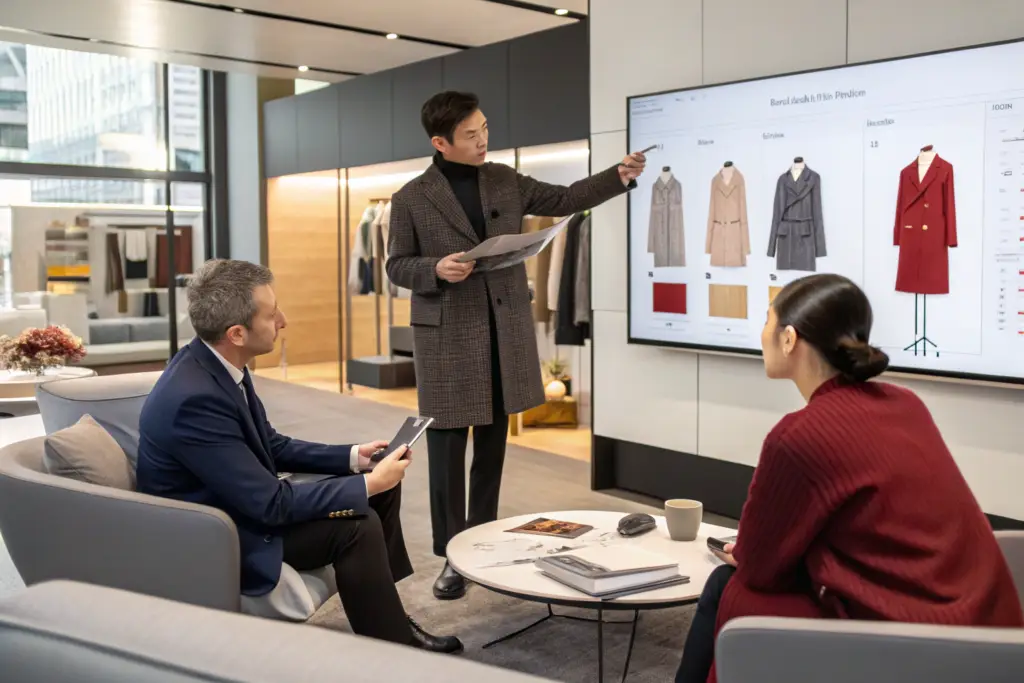
Fumao Clothing uses AI to match European trends with Chinese production by deploying a multi-layered system that analyzes visual and textual data from European fashion weeks, social media platforms, e-commerce best-seller lists, and street-style photography to identify emerging trends in real time. The AI generates structured trend reports that are translated into actionable product specifications: silhouettes, fabric types, color palettes, and detail treatments. These specifications are matched against our factory's production capabilities, our fabric library, and our supply chain lead times. The result is a design reference collection that is presented to our European clients at the beginning of each season, containing coat styles that are already trend-validated and production-ready. Our clients can customize these styles and move from trend identification to sample in under three weeks, compared to the three to four months the traditional process requires.
The AI system does not replace the human expertise of our designers, pattern makers, and merchandisers. It amplifies their capabilities. The human team provides the judgment, the taste, and the client relationship. The AI provides the speed, the scale, and the data-driven objectivity. Together, they form a trend-to-production pipeline that gives our European clients a structural advantage in a market where speed to market is the difference between a full-price sellout and a markdown liquidation. Let me walk through exactly how the system works.
How Does Fumao's AI Identify Emerging Summer Coat Trends In Europe?
Trend identification has traditionally been a slow, subjective process. A designer or a trend forecaster travels to fashion weeks, observes street style, reads industry publications, and synthesizes these impressions into a trend report. The report is published months after the observations were made. By the time a brand receives the report and acts on it, the trend has already moved. The traditional process is also limited by human bandwidth. A forecaster can observe a few hundred images. AI can analyze millions.
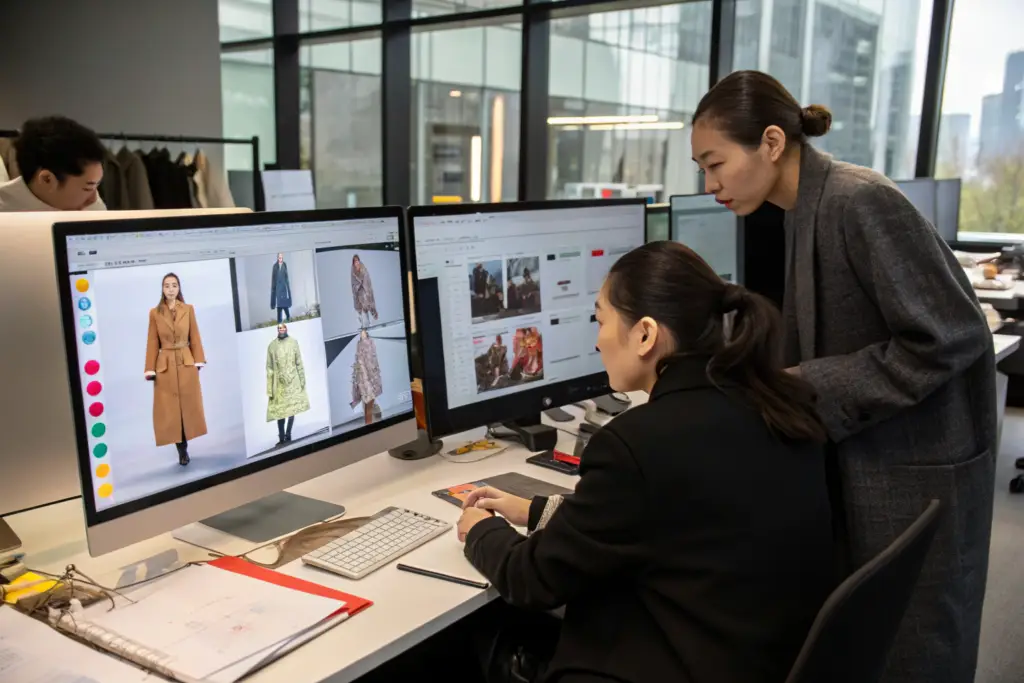
Our AI system identifies emerging summer coat trends in Europe by continuously ingesting and analyzing four data streams. First, runway images from the major European fashion weeks, Paris, Milan, London, and Copenhagen, which are scraped within hours of each show and analyzed for silhouette, color, fabric texture, and detail patterns. Second, social media content from Instagram, TikTok, and Pinterest, filtered for fashion-related hashtags and geotagged to European fashion cities. The AI tracks the velocity of specific coat styles, colors, and fabrics as they appear in posts and as they generate engagement. Third, e-commerce data from European online retailers, tracking which coat styles are appearing in "New Arrivals" sections, which are selling out quickly, and which are being discounted. Fourth, street-style photography from fashion events and urban shopping districts, analyzed for the adoption of runway trends by early-adopter consumers. At Shanghai Fumao, our merchandising team receives a weekly AI-generated trend digest that highlights the fastest-moving styles, colors, and fabrics across the European market.
The AI's advantage is speed and scale. A trend that appears on the Copenhagen runway on a Wednesday can be identified, analyzed, and included in our trend report by Friday. A human trend forecaster would need weeks to achieve the same coverage.
What Specific Data Sources Does The AI Analyze For Color And Silhouette Forecasting?
Color and silhouette are the two most important trend dimensions for a summer coat. The color determines the coat's visual impact and its coordination with the rest of the wardrobe. The silhouette determines the coat's proportion and its fashion relevance. The AI analyzes both dimensions by processing visual data from multiple sources, each with a different role in the trend lifecycle.
For color forecasting, the AI analyzes the Pantone and NCS color codes extracted from runway images. It tracks the frequency of each color across designers and across fashion weeks. A specific shade of sage green that appears in four different collections across three fashion weeks is flagged as an emerging color trend. The AI then tracks the adoption of that color in social media posts, e-commerce new arrivals, and street-style photography. The velocity of the color's spread from runway to street is the key metric. A color that moves from runway to street in under four weeks is a strong signal. For silhouette forecasting, the AI analyzes garment images to classify coats by silhouette category: oversized, fitted, cropped, long-line, A-line, boxy. It tracks the frequency of each silhouette category and the emergence of hybrid silhouettes. The AI also analyzes the relationship between silhouette and fabric. An oversized silhouette in a stiff cotton-linen signals a different trend than an oversized silhouette in a fluid Tencel twill. The AI-powered trend forecasting in fashion is a rapidly evolving field. The technology is not a crystal ball. It is a pattern recognition engine that surfaces signals a human analyst might miss.
How Does The System Distinguish Between A Lasting Trend And A Short-Lived Fad?
The distinction between a trend and a fad is the most valuable judgment in fashion. A trend has staying power. It influences multiple seasons and justifies investment in fabric development, pattern engineering, and production capacity. A fad burns brightly for a few weeks and then disappears. Investing in production for a fad is a direct path to a warehouse full of unsellable inventory. The AI system distinguishes between the two by analyzing the depth and breadth of the signal.
A lasting trend is characterized by three attributes that the AI can measure. First, multi-source corroboration. The trend appears simultaneously or sequentially across multiple independent data sources: runway, social media, e-commerce, and street style. A fad typically appears in only one or two sources, often driven by a single influencer or a single viral moment. Second, adoption by multiple designer tiers. The trend appears in luxury collections, contemporary collections, and mass-market collections, indicating broad-based design conviction. A fad typically stays within a narrow segment. Third, sustained velocity over time. The trend's engagement metrics, likes, shares, and search volume, continue to grow over a period of weeks and months, rather than spiking and crashing within days. The AI tracks these three attributes and assigns each detected signal a "trend durability score." Signals with a high durability score are prioritized for inclusion in our design reference collection. Signals with a low durability score are noted but not acted upon until they demonstrate staying power. The distinguishing fads from trends in fashion forecasting is an analytical discipline that AI supports with quantitative rigor but does not replace human judgment. Our merchandising team reviews the AI's trend durability scores and applies their own experience before committing to a design direction.
How Does The AI System Translate Trends Into Production-Ready Specifications?
Identifying a trend is the first step. Translating that trend into a coat that can be manufactured efficiently, at the required quality level, within the available lead times, is the second and more difficult step. A beautiful coat on a Milan runway may use a fabric that is not available in our supply chain, a construction technique that is not feasible at our production scale, or a trim that has a lead time longer than the selling season. The AI system bridges this gap by matching the trend specifications against our factory's production capabilities.
Our AI system translates trends into production-ready specifications by maintaining a digital twin of our factory's capabilities. The digital twin is a database that contains every fabric in our library, every trim we can source, every pattern in our archive, every machine on our production floor, and the lead time, cost, and minimum order quantity for each element. When the trend analysis identifies a desirable attribute, a specific sage green color or a voluminous sleeve silhouette, the AI queries the digital twin to find the closest match within our production capability. If an exact match exists, the AI proposes the existing specification. If a close match exists but requires modification, the AI proposes a modified specification with an estimated development time and cost. If no match exists, the AI flags the gap and our sourcing team investigates whether a new fabric or trim can be developed within the available timeline. At Shanghai Fumao, the digital twin enables us to respond to a client's trend inquiry within hours rather than days. A client sends us an image of a coat from a European runway show. We run the image through our AI, which identifies the closest matches in our production library, and we respond with a proposed specification and a sample timeline.
The trend-to-specification translation is where most factories lose time. They receive the trend reference, they research the fabric, they source the trim, they draft the pattern. Each step is sequential and each step takes days. The AI parallelizes the research and sourcing by querying the entire capability database simultaneously.

What Is A Factory "Digital Twin" And How Does It Speed Up Product Development?
A factory digital twin is a virtual representation of the factory's physical resources and capabilities. It contains the specifications, the lead times, the costs, and the availability of every element that goes into producing a garment. The digital twin is not a static catalog. It is a dynamic database that is updated in real time as inventory levels change, as new fabrics are sourced, as machines are added or retired, and as production capacity is allocated to client orders.
The digital twin speeds up product development by enabling instantaneous matching between a design requirement and the available production resources. A traditional product development process requires the merchandiser to manually check the fabric library for a suitable material, contact the trim supplier for availability, consult the pattern maker for feasibility, and compile a costing from multiple sources. Each step is a human query that takes time. The digital twin automates these queries. The designer or the client inputs the desired specification. The AI queries the digital twin and returns a list of the best matches, ranked by closeness to the specification, cost, and lead time. The merchandiser then reviews the AI's recommendations and makes the final selection. The process that traditionally took three to five days is completed in under an hour. The digital twin technology in manufacturing is a cornerstone of Industry 4.0. Our application of the concept to garment product development is one of the ways we differentiate our service for trend-driven European clients.
How Does The AI Match A Runway Color To An Available Mill-Dyed Fabric?
Color matching is one of the most time-consuming and subjective processes in traditional garment development. The client provides a color reference, a Pantone code, a fabric swatch, or a photograph. The factory sends the reference to the mill. The mill produces a lab dip, a small sample of the dyed fabric. The lab dip is shipped to the client for approval. The client compares the lab dip to the original reference under a light booth and approves or rejects. Rejections require a new lab dip, and the cycle repeats. The process can take two to four weeks for a single color.
Our AI accelerates this process by maintaining a digital color library of every fabric that our partner mills have dyed and that we have in our stocked inventory. Each fabric in the library has been spectro-photometrically measured, meaning its color has been quantified as a digital value that can be compared mathematically to any target color. When a client provides a color reference, the AI searches the digital color library for the closest match among available fabrics. The search returns a ranked list of matches, each with a Delta E value, which is the mathematical distance between the target color and the available color. A Delta E of less than 1.0 is imperceptible to the human eye. A Delta E between 1.0 and 2.0 is a very close match. If an available fabric matches within a Delta E of 1.5, the AI proposes that fabric as a substitute, eliminating the need for a custom lab dip entirely. If no match is available within the tolerance, the AI provides the mill with the exact digital color specification, reducing the lab dip iteration from a subjective visual process to an objective digital one. The digital color matching in textile manufacturing reduces the color approval timeline from weeks to days.
What Are The Benefits Of AI-Driven Trend Response For European Buyers?
The European fashion market is the most trend-sensitive apparel market in the world. European consumers adopt trends earlier, demand faster refresh cycles, and have a lower tolerance for product that feels "last season" than consumers in any other region. A European brand that can bring a trend-validated summer coat to market in eight weeks instead of sixteen weeks captures the peak of the trend curve, when the consumer's interest is highest and the willingness to pay full price is greatest.
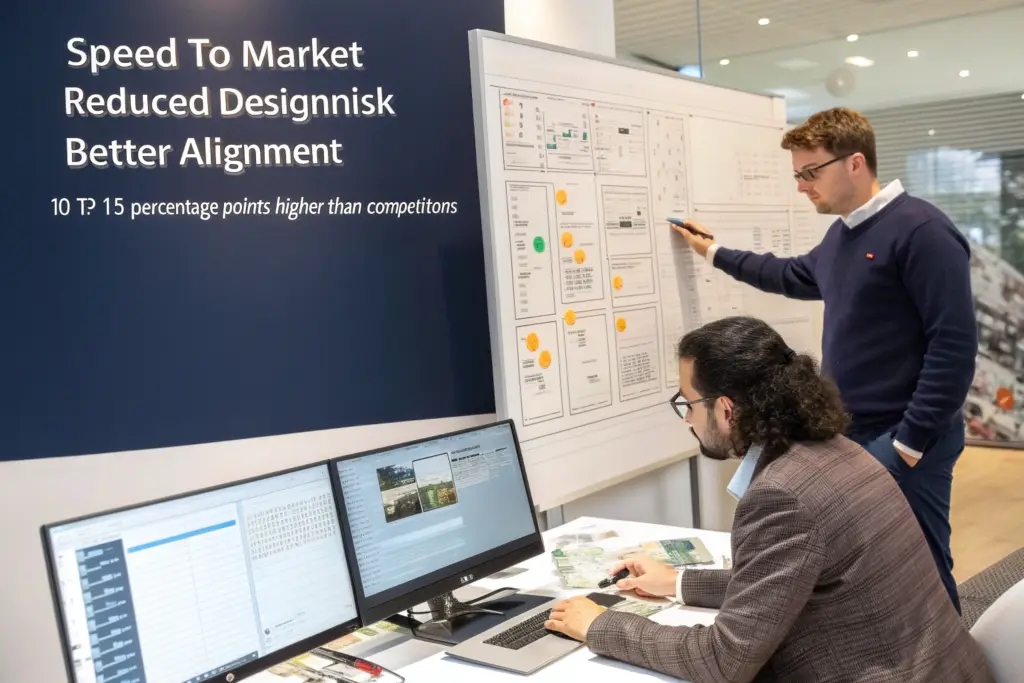
The benefits of AI-driven trend response for European buyers are speed to market, reduced design risk, and better alignment between product and demand. Speed to market is the most obvious benefit. A trend identified by AI in February can be a finished sample in our client's hands by March, and a bulk delivery on the retail floor by May. A traditional process would deliver the same coat in August, when the summer selling season is nearly over. Reduced design risk is the less obvious but equally important benefit. The AI's trend analysis is based on quantitative data from multiple sources, not on a single designer's intuition. The data-driven design is more likely to align with actual consumer demand than a purely creative design. Better alignment means higher sell-through, lower markdowns, and higher gross margins. At Shanghai Fumao, our European clients who use our AI-driven design reference service consistently achieve sell-through rates 10 to 15 percentage points higher than their industry peers who rely on traditional design processes.
The AI does not eliminate the need for creative talent. It provides the creative talent with better information, faster, so they can make better decisions. The European brand that combines its own design sensibility with our AI-driven trend intelligence has a competitive advantage that is difficult to replicate.
How Does Faster Trend Response Improve Sell-Through Rates For Seasonal Collections?
Sell-through is the percentage of units sold at full price during the planned selling period. It is the single most important metric for a seasonal apparel brand's profitability. Sell-through is determined by three factors: the product's alignment with consumer demand, the product's availability during the peak demand window, and the product's pricing relative to the competition. AI-driven trend response improves all three factors.
Product-demand alignment is improved because the AI identifies the trend based on actual consumer behavior data, not on a designer's forecast made six months before the season. The coat that is designed based on February's real-time trend data is more likely to match what the consumer wants to buy in May than a coat designed based on last September's runway impressions. Availability during the peak demand window is improved because the compressed development timeline means the coat is on the retail floor when the consumer's interest is highest. A coat that arrives in May captures the full summer selling season. A coat that arrives in August captures only the markdown window. Pricing power is improved because the coat that is on-trend and available early faces less competition. The brand can sell at full price rather than discounting to compete with late-arriving competitors. The cumulative effect of these three improvements on sell-through is significant. Brands using AI-driven trend response report sell-through improvements of 10 to 20 percentage points on trend-driven styles. The speed-to-market impact on fashion retail sell-through is a well-documented competitive dynamic. The faster brand captures the demand. The slower brand captures the leftovers.
How Does Data-Driven Design Reduce The Creative Risk For Smaller Brands?
A small brand with a limited budget and a single designer faces a high-stakes creative gamble every season. The designer develops a collection based on personal intuition, limited market exposure, and the constraint of whatever fabric swatches the factory happened to send. If the designer's intuition aligns with the market, the season is a success. If it does not, the brand absorbs the loss and may not survive to the next season. The creative risk is concentrated on a single person's judgment.
Data-driven design reduces this creative risk by providing the designer with an evidence-based foundation for creative decisions. The designer is not asked to guess what the market wants. The designer is shown what the market is already responding to, in quantitative terms, and is asked to interpret and adapt those signals for the brand's specific customer. The designer's role shifts from pure creation to intelligent curation and adaptation. The shift reduces the probability of a complete collection failure. The data provides a safety net. The designer who knows that sage green is the fastest-growing color trend in European summer outerwear can confidently design a sage green coat, even if the designer's personal preference is for coral. The designer who knows that the oversized silhouette is declining in engagement while the tailored silhouette is rising can adjust the collection's silhouette mix accordingly. The data-driven design in fashion is not a replacement for creativity. It is a risk management tool that allows creativity to flourish within a commercially validated framework. The small brand that uses data to inform its design decisions has a survival advantage over the small brand that relies entirely on intuition.
How Do European Clients Customize AI-Suggested Designs For Their Specific Market?
The AI-driven design reference is a starting point, not a finished product. The European fashion market is not a monolith. A coat that sells well in a boutique in Copenhagen may not sell in a boutique in Milan. The Scandinavian customer prefers minimalist silhouettes, muted colors, and functional details. The Italian customer prefers more expressive silhouettes, warmer colors, and decorative details. The French customer prefers a balance of both, with an emphasis on fabric quality and fit. The AI provides the trend foundation. The client provides the market-specific customization.
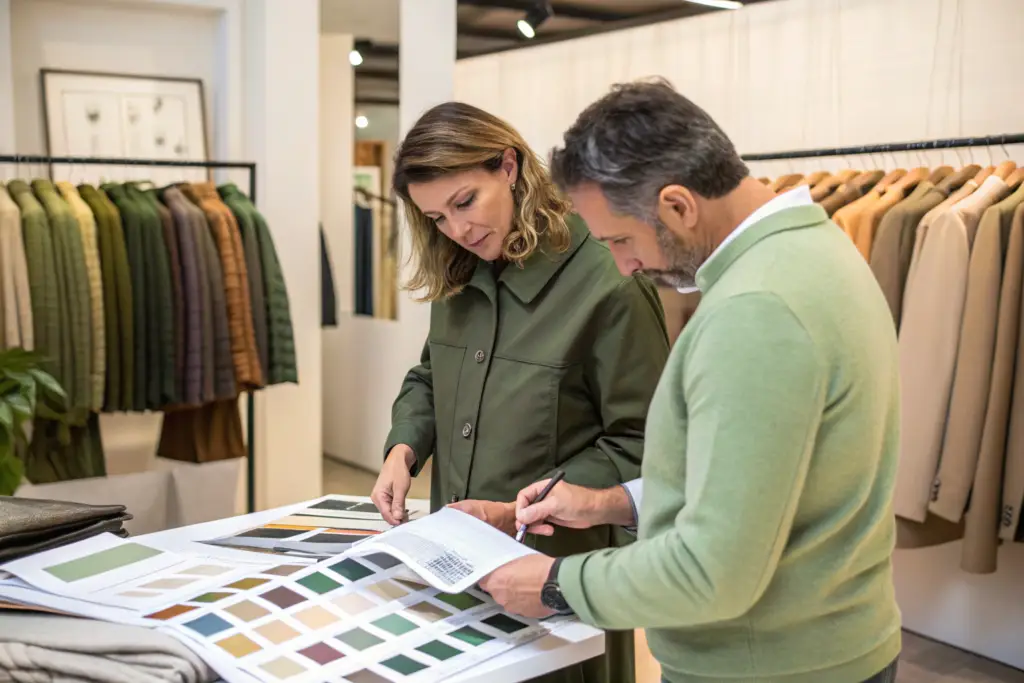
European clients customize AI-suggested designs for their specific market by modifying five dimensions of the design reference. The silhouette can be adjusted for the local preference: more oversized for the Scandinavian market, more fitted for the French market. The color palette can be adjusted: the AI might identify sage green as a general European trend, but the client knows that a specific shade of olive green outperforms sage in the German market. The fabric weight and finish can be adjusted: a heavier weight for the Northern European market where summer evenings are cool, a lighter weight for the Mediterranean market. The detail treatment can be adjusted: functional pockets for the practical Northern European customer, decorative pocket flaps for the style-conscious Southern European customer. The branding and labeling can be adjusted to reflect the local market's brand expectations. At Shanghai Fumao, our merchandising team works with each European client to translate the AI's general trend recommendations into market-specific product specifications. The client provides the local market expertise. We provide the trend data and the production execution.
The collaboration between the AI's data-driven trend identification and the client's local market knowledge produces a coat that is both trend-validated and market-appropriate. The coat is not a generic global product. It is a targeted product for a specific customer in a specific market.
What Customization Options Are Available For Regional European Style Preferences?
The European fashion market divides broadly into four style regions, each with distinct preferences that influence summer coat design. The Scandinavian region prefers clean lines, minimalist detailing, functional features, and a color palette of neutrals, muted pastels, and monochrome. The DACH region, Germany, Austria, Switzerland, prefers practical, durable designs with an emphasis on fabric quality, technical features, and a conservative color palette. The Mediterranean region, Italy, Spain, Southern France, prefers expressive silhouettes, decorative details, rich colors, and a more fashion-forward aesthetic. The UK and Ireland region prefers a mix of classic British tailoring influences and contemporary street-style influences, with an emphasis on versatility and wearability.
Our customization options for each regional preference include silhouette adjustments. We can modify the base pattern to achieve a more oversized or more fitted silhouette depending on the market. Color palette curation from the AI's trend color set. The AI might identify ten trending colors for the season. The client selects the four to six that resonate with their regional market. Fabric weight and composition adjustments. We can produce the same base style in a 180 GSM fabric for Northern Europe and a 140 GSM fabric for Southern Europe. Detail modifications: adding or removing pockets, changing the collar type, adjusting the sleeve treatment. Trim selection: matte hardware for the Scandinavian market, polished hardware for the Mediterranean market. The regional fashion preferences in European markets are well documented. The brand that understands its regional customer and customizes the product accordingly outsells the brand that ships a one-size-fits-all European product.
How Does The Feedback Loop From European Sales Data Refine Future AI Predictions?
The AI system is not static. It learns from the outcomes of its predictions. When a coat style that the AI identified as trending is produced by our clients and sold in the European market, the sales data from that coat feeds back into the AI. The AI compares its prediction, that the style would sell well, to the actual outcome. If the prediction was accurate, the AI's algorithms are reinforced. If the prediction was inaccurate, the AI adjusts its weighting of the signals that led to the incorrect prediction.
The feedback loop works as follows. Our European clients share their sell-through data with us, either at the aggregate level or at the style, color, and size level, depending on the confidentiality agreement. The sales data is ingested by the AI and mapped back to the original trend signals that generated the design recommendation. The AI learns that certain data sources are more predictive of actual sales than others. For example, the AI might learn that street-style photography from Copenhagen Fashion Week is a stronger predictor of commercial success for Scandinavian-market coats than Instagram engagement data. The AI adjusts its source weighting accordingly. The AI also learns that certain combinations of attributes, such as an oversized silhouette in a neutral color, perform better in certain markets than others. These learnings refine the AI's future predictions, making each season's trend analysis more accurate than the previous season's. The machine learning feedback loops in fashion retail are the mechanism by which the AI system improves over time. The brand that shares its sales data with its factory partner contributes to a virtuous cycle of improving prediction accuracy and improving product-market fit.
Conclusion
The distance between a European trend and a Chinese factory has traditionally been measured in months. A trend would emerge on a runway, filter through the fashion media, reach the buying offices, translate into design briefs, and eventually arrive at the factory door as a purchase order. By the time production began, the trend was already waning. The brands that captured the peak of the trend were the brands that could afford to air-freight small batches and absorb the logistics premium. Everyone else was left with inventory that arrived too late to sell at full price.
Fumao Clothing's AI-driven trend matching system changes this equation. The AI compresses the distance between trend emergence and production response from months to days. A trend signal detected in Europe on Monday can be a production-ready specification in our Shaoxing factory by Wednesday. A client can have a physical sample in hand within three weeks. The bulk production can be on the retail floor while the trend is still accelerating, not after it has peaked. This speed advantage is not a minor operational improvement. It is a structural competitive advantage for our European clients.
The AI system is not a replacement for the human expertise, the design talent, the market knowledge, and the production craftsmanship, that have always defined quality garment manufacturing. It is an amplifier of that expertise. It gives our designers and merchandisers better information, faster, so they can make better decisions. It gives our clients a foundation of data-driven trend validation on which to build their creative vision. It gives the entire supply chain, from the fiber mill to the retail floor, a shared understanding of what the market wants, right now.
If you are a European brand looking for a factory partner who understands the speed and the specificity of the European fashion market, contact our Business Director, Elaine, at elaine@fumaoclothing.com. Ask her about our AI trend reports for the upcoming summer season. Ask her about our design reference collection and how it can be customized for your specific regional market. The distance between a European trend and a Chinese factory is no longer measured in months. It is measured in the time it takes to send an email.