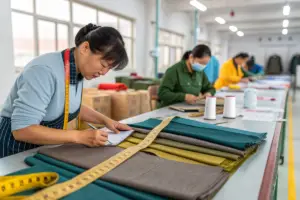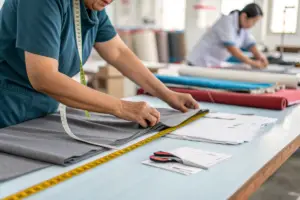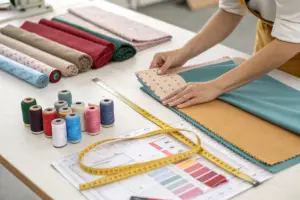
I once watched two brand owners make opposite decisions about their summer coat sourcing strategy. The first brand owner had a clear vision. She had been designing coats for a major retailer for ten years before striking out on her own. She knew exactly what she wanted: a specific silhouette, a specific fabric hand feel, a specific collar proportion. She came to us with a detailed tech pack and a reference sample. She needed a factory to execute her design exactly as specified. She chose the OEM model, and it worked perfectly. The second brand owner was a former e-commerce executive who had identified a market gap for affordable, packable travel blazers. He had no design background. He had no tech pack. He had no reference sample. What he had was a clear understanding of his target customer, his price point, and his distribution channel. He chose the ODM model, selecting a coat from our design reference library and customizing the fabric, the color, and the branding. Both brand owners built successful businesses. Neither model is superior. The right choice depends entirely on what you bring to the table and what you need from your factory partner.
You choose between ODM and OEM for your summer coat line by evaluating three factors: your design capability, your budget for development time and cost, and your need for product exclusivity. ODM, Original Design Manufacturing, is the right choice if you lack design expertise, want to minimize development time and upfront cost, and are comfortable with a product that is customized from a pre-existing base design rather than created from scratch. OEM, Original Equipment Manufacturing, is the right choice if you have a fully developed design with a tech pack and a reference sample, require exact execution of your specifications, and want a product that is unique to your brand in every detail. At Shanghai Fumao, we offer both ODM and OEM services. We guide our clients through the choice based on their specific situation, and we often see brands start with ODM to test the market and transition to OEM as their design capability and volume grow.
The ODM versus OEM decision is one of the most consequential strategic choices a brand owner makes. It determines the development timeline, the upfront investment, the level of customization possible, and the ultimate uniqueness of the product. A brand that chooses the wrong model for its stage of development wastes time and money. A brand that chooses the right model accelerates its path to market and conserves its resources for marketing and sales. Let me walk through the exact differences, the decision criteria, and the transition path between the two models.
What Is The Fundamental Difference Between ODM And OEM For Apparel Sourcing?
The difference between ODM and OEM is a difference in who owns the design. Under the OEM model, the buyer owns the design. The buyer provides the factory with a complete product specification, a tech pack, a reference sample, or a detailed design brief. The factory's role is to manufacture the product to the buyer's specification. The intellectual property in the design belongs to the buyer. The factory cannot sell the same design to another client. Under the ODM model, the factory owns the design. The factory presents a catalog of pre-developed styles to the buyer. The buyer selects a style and customizes elements like the fabric, the color, the trim, and the branding. The underlying design remains the factory's intellectual property. The factory can sell the same base design to other clients, although typically with different customizations.
The fundamental difference between ODM and OEM is who performs the design work and who bears the development cost and risk. In OEM, the buyer designs. The buyer invests time and money in the creative process, the pattern development, the fit sampling, and the material sourcing. The buyer owns the resulting design and can prevent the factory from producing it for competitors. In ODM, the factory designs. The factory invests in the design development and spreads the cost across multiple clients who select and customize the design. The buyer pays nothing for the design work but receives no exclusivity on the base design. At Shanghai Fumao, we are transparent about which model applies to each client engagement. We never present an ODM design as an exclusive OEM design, and we never reuse an OEM client's proprietary design for our ODM library.
The choice between ODM and OEM is not a choice between good and bad. It is a choice between two different value propositions. ODM offers speed, low upfront cost, and reduced risk. OEM offers complete control, full customization, and design exclusivity.
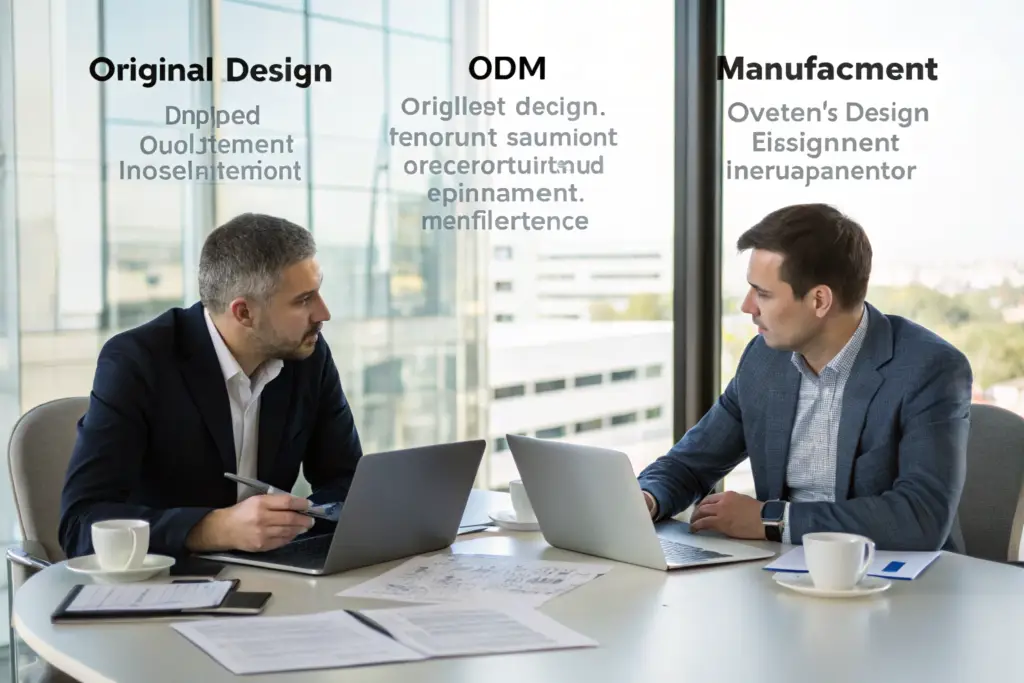
Who Owns The Intellectual Property In Each Manufacturing Model?
Intellectual property ownership is the most important legal distinction between ODM and OEM, and it is the issue that creates the most conflict when it is not clearly defined in the manufacturing agreement. A brand that believes it owns the design but later discovers the factory is selling a similar coat to a competitor has experienced an ODM-OEM confusion. The confusion is preventable with clear contractual language.
Under the OEM model, the buyer owns the design. The buyer provides the design input, the sketches, the tech pack, the reference sample. The buyer pays for the pattern development, the sampling, and the fit iterations. The design is the buyer's intellectual property. The manufacturing agreement should explicitly state that the factory may not reproduce the design, or any substantially similar design, for any other client, and that all patterns, samples, and specifications developed for the buyer's order remain the buyer's property. Under the ODM model, the factory owns the underlying design. The factory developed the style using its own design resources and presents it to multiple buyers. The buyer's customization, the fabric selection, the color choice, the trim changes, the branding, does not transfer ownership of the base design to the buyer. The buyer may request exclusivity on a specific combination of design and fabric for a specific season or a specific geographic market, but this exclusivity is a contractual negotiation, not an automatic right. The intellectual property rights in garment manufacturing are a complex area. The simplest protection is a clear written agreement that specifies which model applies and who owns what.
How Does The Development Timeline Differ Between ODM And OEM?
The development timeline is the most significant operational difference between the two models, and for many brands operating on tight seasonal deadlines, it is the deciding factor. The ODM timeline is dramatically shorter because the design work is already complete. The OEM timeline is longer because the design work must be done from scratch specifically for the buyer.
An ODM development timeline for a summer coat typically proceeds as follows. Week 1: the buyer reviews the factory's design reference lookbook and fabric library, selects the base style, the fabric, the color, and the customization options. Week 2: the factory produces a strike-off sample of the customized coat, incorporating the buyer's fabric, color, and branding selections. Week 3: the buyer receives the sample, evaluates it, and requests any adjustments. Week 4: the factory produces a revised sample with the adjustments. Week 5: the buyer approves the final sample. Total development time: four to five weeks. An OEM development timeline for the same coat typically proceeds as follows. Weeks 1-2: the buyer provides the design brief, the factory's pattern maker interprets the design and drafts the first pattern. Weeks 3-4: the factory produces the first prototype. Week 5: the buyer receives the prototype and provides fit and design feedback. Weeks 6-7: the factory revises the pattern and produces the second prototype. Week 8: the buyer reviews the second prototype. Weeks 9-10: additional revision rounds as needed. Weeks 11-12: final sample approval. Total development time: ten to twelve weeks. The ODM vs OEM development timeline comparison shows a consistent two to three times speed advantage for ODM. For a brand that needs to get a summer coat to market quickly, the ODM timeline advantage is compelling.
When Should A New Brand Choose The ODM Model For Summer Coats?
The ODM model is not a compromise for brands that cannot afford OEM. It is the rational choice for brands at a specific stage of development. A new brand faces three constraints that ODM is designed to address. The brand has limited capital and cannot afford the upfront cost of pattern development, sampling, and material sourcing for a fully custom design. The brand has limited time and needs to get product to market before the selling season window closes. The brand has limited design capability and cannot translate their market vision into a detailed tech pack. ODM solves all three constraints simultaneously.
A new brand should choose the ODM model for summer coats when one or more of the following conditions apply. First, the brand does not have a professional designer on the team and cannot produce a detailed tech pack. Second, the brand's primary competitive advantage is in marketing, distribution, or brand building, not in product design. Third, the brand needs to test the market with a small initial investment before committing to custom product development. Fourth, the brand's timeline to market is shorter than the eight to twelve weeks required for OEM development. At Shanghai Fumao, we recommend ODM as the starting point for most first-time brand owners. It allows them to launch a professional product, test their market assumptions, and generate revenue, without the upfront investment and risk of a fully custom OEM development. Many of our most successful long-term clients started with ODM and transitioned to OEM as their business matured.
ODM is not a lesser model. It is the appropriate model for the exploration and validation phase of a brand's lifecycle. The brand that starts with ODM is making a prudent financial decision, not taking a shortcut.
What Are The Cost Advantages Of Starting With An ODM Summer Coat Line?
The cost advantage of ODM is not just a lower unit price. In fact, the unit price for an ODM coat may be similar to or slightly higher than an OEM coat of comparable quality, because the factory's margin includes a return on the design investment. The real cost advantage of ODM is in the upfront development costs that are avoided.
An OEM development for a summer coat collection of four styles typically incurs the following upfront costs. Pattern making and grading: $800 to $1,500 per style, totaling $3,200 to $6,000 for four styles. Fit sampling: three to four sample rounds per style at $150 to $250 per sample, totaling $1,800 to $4,000 for four styles. Fabric sourcing and lab dip development: $500 to $1,000 per style for custom colors, totaling $2,000 to $4,000. Trim sourcing and strike-off development: $300 to $600 per style for custom buttons, zippers, and labels, totaling $1,200 to $2,400. Total OEM upfront development cost: $8,200 to $16,400. These costs are incurred before a single unit is produced for sale. If the collection does not sell, the investment is lost. An ODM development for the same four-style collection incurs zero upfront development cost. The factory has already invested in the patterns, the samples, the fabric sourcing, and the trim sourcing. The buyer pays only for the production units. The buyer can launch a four-style ODM collection with no upfront investment beyond the production deposit. For a new brand operating with limited capital, avoiding $8,000 to $16,000 in upfront development cost is the difference between launching this season and waiting until next year. The ODM cost structure for new apparel brands is one of the most accessible entry points into the apparel business.
How Can ODM Help You Test Product-Market Fit Before Investing In Custom Designs?
Product-market fit is the degree to which a product satisfies the market demand in a specific segment. A brand that has not yet sold a coat does not know, with certainty, what its customers will buy. The brand has a hypothesis: "Women aged 30 to 45 who work in creative professions will buy an unstructured linen blazer at $118." The hypothesis is based on market research, but it is untested. Investing $15,000 in OEM development to test a hypothesis is a high-stakes gamble. Investing in an ODM pilot run of 200 to 300 units is a low-stakes experiment.
The ODM product-market fit testing process works as follows. The brand selects two or three ODM styles that match the market hypothesis. The brand produces a small batch of each style, 100 to 200 units per style, with the brand's custom labeling and packaging. The brand launches the collection and collects sell-through data. Within four to six weeks, the data answers the critical questions. Which styles sold at full price and which required discounting? Which colors sold out first? Which sizes had the highest sell-through? What was the return rate and what were the return reasons? This data is the foundation for the next season's OEM development. The brand now knows exactly what its customers want. The brand can invest in OEM development with confidence, designing a fully custom collection that is precisely targeted to the proven demand. The ODM pilot has de-risked the OEM investment. The product-market fit testing for fashion brands is a lean startup methodology applied to apparel. ODM is the manufacturing model that enables this methodology.
When Should An Established Brand Invest In The OEM Model?
The OEM model is the logical next step for a brand that has validated its market, built a customer base, and developed the internal capability to manage the design and development process. The transition from ODM to OEM is a transition from a product that is "good enough for the market" to a product that is "exactly what the brand envisions." The transition is triggered by specific business milestones that make the investment in custom design economically rational.
An established brand should invest in the OEM model when three conditions are met. First, the brand has sufficient sales volume, typically 1,000 units or more per style, to amortize the upfront development cost across a meaningful number of units. A $3,000 pattern and sampling investment on a style that sells 300 units adds $10 per unit to the cost. The same investment on a style that sells 3,000 units adds $1 per unit. The volume threshold makes the OEM unit economics work. Second, the brand has identified product differentiation opportunities that cannot be achieved through ODM customization. The brand wants a specific fit, a specific silhouette, or a specific functional feature that is not available in the factory's ODM library. Third, the brand has the internal capability, either an in-house designer or a trusted freelance designer, to produce the detailed tech pack that OEM requires. At Shanghai Fumao, we support our clients through the ODM-to-OEM transition. We maintain the relationship, the quality standards, and the logistics infrastructure while the brand upgrades its design inputs.
OEM is not the goal for every brand. Some brands build successful, long-term businesses entirely on the ODM model, using their market knowledge and branding expertise to differentiate products that are built on shared base designs. OEM is the right choice for brands whose competitive advantage depends on product uniqueness.
How Does OEM Allow For Greater Product Differentiation In A Competitive Market?
Product differentiation is the degree to which a brand's coat is perceived as unique and non-substitutable by the target customer. In a competitive market where multiple brands are sourcing from similar factories, differentiation is the defense against price competition. A customer who perceives two coats as identical will buy the cheaper one. A customer who perceives a coat as uniquely suited to her needs will pay a premium.
OEM enables greater product differentiation because the brand controls every design element, not just the surface-level customizations available in ODM. In ODM, the brand can customize the fabric, the color, the trim, and the branding, but the underlying silhouette, fit, and construction are shared with other brands that selected the same base design. In OEM, the brand specifies everything. The shoulder slope can be adjusted to fit the brand's specific customer demographic. The sleeve length can be calibrated to the brand's exact proportion preferences. The pocket placement, the collar width, the vent configuration, and the internal construction can all be designed from scratch to express the brand's unique design philosophy. An OEM coat is not just a customized version of a shared design. It is a unique design that cannot be found anywhere else in the market. This level of differentiation supports higher pricing, stronger brand loyalty, and lower price sensitivity. The product differentiation through OEM manufacturing is a competitive strategy that pays off in higher margins and more defensible market position. The brand that invests in OEM is investing in a moat that competitors cannot easily cross.
What Are The Long-Term Cost Benefits Of Owning Your Own Patterns And Specs?
Owning your patterns and specifications is an asset that appreciates over time. The first season's OEM development is expensive. The patterns are created, the samples are iterated, and the fit is perfected. The second season, using the same base patterns with incremental modifications, is significantly cheaper. The pattern development cost is amortized across multiple seasons. The fit sampling rounds are reduced because the base fit is already proven. The fabric and trim sourcing is faster because the specifications are already documented.
A brand that has invested in OEM patterns for its core styles, the signature blazer, the classic trench, the essential duster, has built a proprietary design library. This library is a competitive asset. The brand can bring a new seasonal collection to market faster than a brand that starts from scratch each season. The brand can switch factories if necessary, because the brand owns the patterns and can take them to a new manufacturing partner. A brand that has built its business on ODM does not own its patterns. If the relationship with the factory ends, the brand loses access to the base designs that its business was built on. The brand must start over with a new factory's ODM library or invest in OEM development under time pressure. Owning the patterns is owning the means of production at the design level. The pattern ownership and intellectual property in fashion is an asset that has real financial value, particularly if the brand is ever positioned for acquisition. An acquiring company values a brand that owns its product specifications more highly than a brand that is dependent on a factory's design library.
How Can A Brand Transition From ODM To OEM With The Same Factory?
The transition from ODM to OEM is a natural evolution for many brands, and the ideal scenario is to transition without changing factories. The factory already knows the brand's quality standards, communication preferences, packaging requirements, and logistics setup. The brand already trusts the factory's production quality, delivery reliability, and pricing transparency. Switching factories to go from ODM to OEM discards this accumulated relationship capital and forces both parties to start from zero.
A brand can transition from ODM to OEM with the same factory by following a phased approach that introduces custom design elements incrementally while maintaining the operational relationship. Phase one is pure ODM. The brand selects from the factory's reference library and customizes only the fabric, color, and branding. Phase two is modified ODM. The brand selects a base style but requests more significant modifications, a different collar, a different pocket configuration, a different sleeve treatment. The modifications are substantial enough that the resulting coat is significantly different from the base design. Phase three is collaborative OEM. The brand provides a design brief and reference samples, and the factory's pattern-making team develops a custom pattern. The brand may still reference elements from the ODM library, but the final design is original. Phase four is full OEM. The brand provides a complete tech pack with original designs. The factory executes to specification. At Shanghai Fumao, we have guided many clients through this phased transition. We treat it as a natural progression of the partnership, not as a switch to a different service.
The phased transition reduces risk. The brand builds its design capability and its confidence in the factory's design translation skills gradually, without betting the season on a first-time OEM development. The factory builds its understanding of the brand's aesthetic and fit preferences, making the eventual OEM collaboration smoother.
What Is A Hybrid ODM-OEM Approach And When Is It The Right Choice?
A hybrid ODM-OEM approach combines elements of both models. The brand uses ODM base styles for some parts of the collection and OEM custom development for other parts. Or the brand uses an ODM base but invests in one custom element, a proprietary fabric, a unique trim, a signature fit adjustment, that differentiates the product beyond the standard ODM customization options. The hybrid approach is the most common sourcing model among mid-stage brands, and it is often the most practical.
A typical hybrid approach for a summer coat collection might work as follows. The brand selects three styles from the factory's ODM library for the core collection. These are the volume drivers, the proven silhouettes that the brand knows will sell. The brand customizes them with exclusive fabrics and custom trim to create differentiation. Alongside the ODM styles, the brand develops one OEM hero piece. This is the statement coat, the design that embodies the brand's unique point of view and that no competitor can replicate. The hero piece generates the brand's marketing buzz and editorial coverage. The ODM core pieces generate the volume and the margin. The hybrid approach balances the investment. The brand spends OEM development dollars on one high-impact style and saves development dollars on the three volume styles. The hybrid ODM-OEM sourcing strategy for fashion brands is a pragmatic solution for brands that want to differentiate but are not yet ready to invest in a full OEM collection. It is the model we recommend most frequently to brands in the $500,000 to $2 million revenue range.
How Do You Protect Your Custom Designs When Transitioning To OEM With A Factory?
The transition to OEM involves sharing proprietary design information with the factory. The brand provides detailed tech packs, reference samples, and specific design instructions. This information is the brand's intellectual property. Protecting it requires both contractual protections and practical safeguards.
The contractual protections begin with a clear OEM agreement that defines the brand as the owner of all designs, patterns, samples, and specifications developed for the brand's orders. The agreement should prohibit the factory from using any of these materials for any other client and from creating substantially similar designs for any other client. The agreement should specify that the factory must return or destroy all samples, patterns, and digital files upon the brand's request. The practical safeguards include providing design information on a need-to-know basis. The factory's pattern maker needs the full tech pack. The fabric supplier does not. Share only what each party needs to perform their function. Brand all communications and files with confidentiality notices. Conduct periodic audits of the factory's ODM library to ensure the brand's proprietary designs are not appearing as ODM offerings. The strongest practical safeguard is the strength of the relationship itself. A factory that values the brand's ongoing business, that has a long-term partnership, and that understands the brand's growth trajectory has a strong commercial incentive to respect the brand's intellectual property. A factory that steals a client's OEM design for its ODM library gains a short-term benefit but loses a long-term revenue stream. The design protection strategies for OEM apparel manufacturing are a combination of legal and relationship-based measures. The most effective protection is a factory partner with a reputation for integrity and a track record of respecting client IP.
Conclusion
The choice between ODM and OEM for a summer coat line is not a one-time decision. It is a strategic choice that evolves as the brand grows. The new brand with limited capital, limited time, and limited design capability should start with ODM. The ODM model provides a fast, low-cost, low-risk path to a professional product that can test the market and generate revenue. The brand that validates its market and builds its volume should transition toward OEM. The OEM model provides the design control, the product differentiation, and the intellectual property ownership that support a premium brand positioning and a defensible competitive advantage.
The transition between the two models is not a cliff. It is a spectrum. The brand can move incrementally from pure ODM to modified ODM to hybrid ODM-OEM to full OEM. Each step increases the brand's design control and its upfront investment. The brand should move along the spectrum at the pace that its sales volume, its cash flow, and its design capability support.
At Shanghai Fumao, we support our clients at every point on this spectrum. We offer a comprehensive ODM library of summer coat styles, fabrics, and trims for brands that are starting out or that prefer the ODM model for its speed and efficiency. We offer full OEM services with pattern making, sample development, and custom material sourcing for brands that are ready to invest in their own designs. We offer the hybrid model for brands that want the best of both worlds. And we support the transition from one model to the next with the same production quality, the same logistics reliability, and the same commitment to partnership that defines our relationship with every client.
If you are evaluating how to source your summer coat line and you are unsure whether ODM or OEM is the right choice for your current stage, contact our Business Director, Elaine, at elaine@fumaoclothing.com. Tell her about your brand, your volume expectations, and your design requirements. She will discuss the ODM and OEM options that fit your situation and help you choose the model that maximizes your probability of success. Because the right manufacturing model is the one that matches your resources to your ambitions, and that match is different for every brand at every stage.