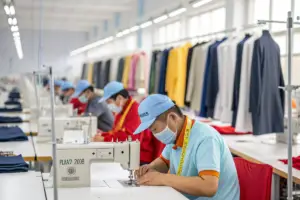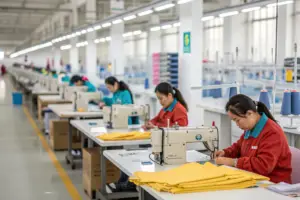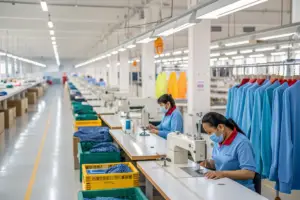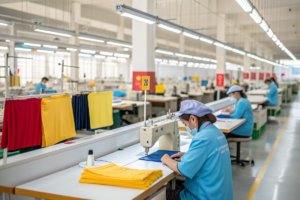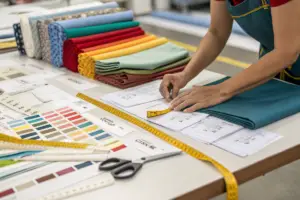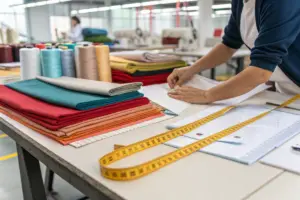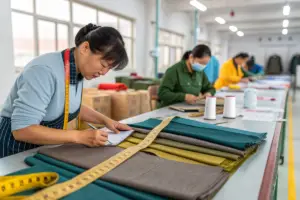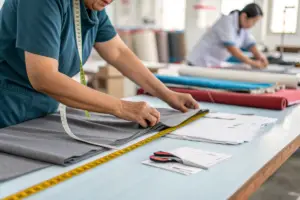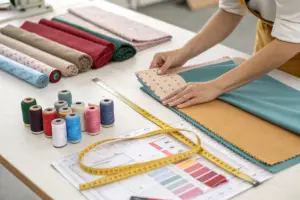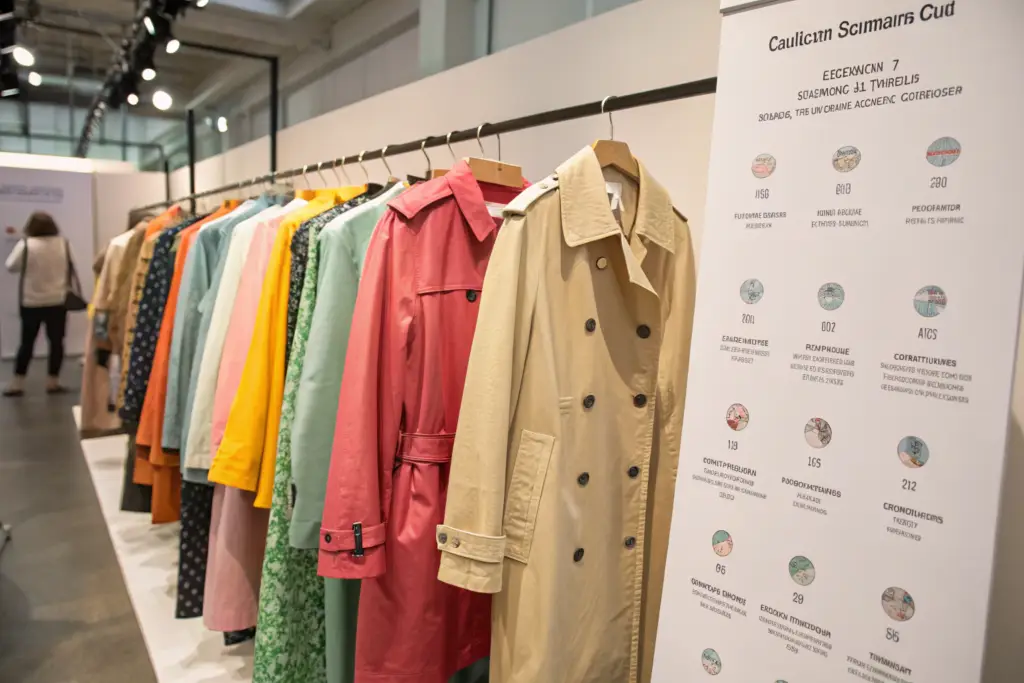
I have worked with a distributor from Texas for six years. He is one of the most successful apparel entrepreneurs I know. His company sells over 40,000 units of outerwear annually across eight different brands. He has built a multi-million dollar business from a standing start. And he will be the first to tell you that he has absolutely no sense of visual design. He cannot sketch. He cannot match colors intuitively. He cannot look at a fabric swatch and visualize the finished coat. When he started, he thought this disqualification meant he could never build an apparel brand. He was wrong. His secret was not developing an aesthetic eye. His secret was building a systematic process for translating market data into product specifications, and partnering with a factory that could execute the design translation.
You design a custom summer coat collection without an aesthetic eye by substituting data for intuition and collaboration for individual creative vision. The process has four steps. First, you conduct systematic market research to identify the specific coat styles, fabrics, colors, and price points that are selling successfully in your target market segment. Second, you assemble a reference library of physical samples, images, and specifications that define exactly what you want to produce. Third, you partner with a factory that offers design translation services, meaning the factory's pattern maker and sample room can take your references and convert them into a finished sample without requiring you to provide sketches or technical drawings. Fourth, you iterate on physical samples, making decisions based on fit, feel, and market feedback rather than on abstract aesthetic judgment. At Shanghai Fumao, we work extensively with distributors and brand owners who lack formal design training. We provide the design translation service that bridges the gap between a client's market knowledge and a production-ready sample.
The absence of an aesthetic eye is not a career-ending limitation in the apparel business. Many of the most successful brand owners and distributors are not designers. They are business operators who understand market demand, unit economics, and supply chain management. The design process can be systematized, outsourced, and validated with data. Let me walk through exactly how.
How Can You Source Design Inspiration Without Being A Designer?
Design inspiration is not a mystical force that descends upon the creatively gifted. It is a process of observing what is working in the market, identifying patterns, and remixing elements into a new combination that serves your specific customer. A person without an aesthetic eye can perform this process effectively by substituting systematic observation for intuitive taste. The key is to stop asking "Do I like this coat?" and start asking "Is this coat selling, to whom, and at what price?"
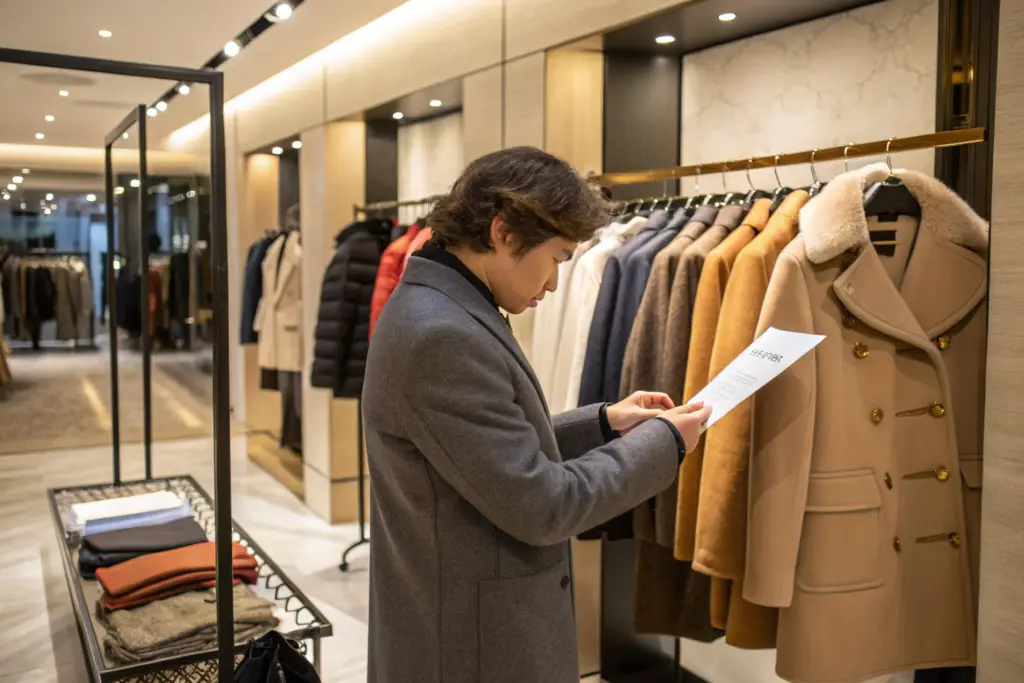
You source design inspiration without being a designer by studying the best-selling products of successful brands in your target market tier. You do not need to judge whether a coat is beautiful. You need to observe whether it is commercially successful. The methods for this research include analyzing the "Best Sellers" and "New Arrivals" pages of competitor e-commerce sites, noting which styles sell out quickly and which end up on sale. Visiting high-end department stores and boutiques to physically handle the coats, feel the fabrics, and read the hang tags for fabric composition and country of origin. Following fashion influencers in your target demographic on Instagram and TikTok, not for their aesthetic opinions but for the engagement levels on specific coat styles. And subscribing to retail analytics platforms that provide sell-through data by category and price point. At Shanghai Fumao, we support our clients' design research by providing fabric trend reports based on our sampling requests and by sharing anonymized data on the styles that are being reordered by our brand clients.
The goal of the inspiration process is to build a data-backed understanding of what the market is buying, not to develop a personal design philosophy. The market's taste is the only taste that matters for commercial success. Your job is to listen to the market, not to impose your own preferences on it.
What Are The Best Sources For Trending Summer Coat Styles For The US Market?
The US summer coat market has specific trend cycles that are influenced by runway shows, street style, social media, and the practical demands of the season. A non-designer can track these trends through accessible, data-rich sources that do not require aesthetic interpretation.
The best sources for trending summer coat styles are, first, the e-commerce best-seller pages of contemporary brands in your target price tier. Brands like Everlane, Reformation, and Aritzia publicly display their best-selling products, and the styles that appear consistently on these lists represent proven commercial demand. Second, the Pinterest Trends tool and the TikTok Creative Center show search volume trends for specific terms like "linen blazer," "summer trench coat," and "lightweight duster." A rising search trend in February and March predicts a strong selling season in May and June. Third, the runway reviews on Vogue Runway and Business of Fashion show the directional trends from the major fashion weeks. A non-designer does not need to interpret the artistic merit of the collections. They need to note the recurring elements: the dominant silhouettes, oversized or fitted, the dominant lengths, cropped or long, and the dominant fabric textures, crinkle, satin, or matte. If four major designers show a similar silhouette, that silhouette will influence the mass market within one to two seasons. Fourth, the wholesale platforms like Faire and NuORDER show which styles independent boutiques are actually buying for their stores. The wholesale buy is a leading indicator of retail demand. The fashion trend forecasting for retailers is a discipline that can be learned without design training. The data is publicly available. The skill is in aggregating the data and identifying the patterns.
How Can You Use Competitor Analysis To Define Your Collection's Aesthetic?
Competitor analysis for a non-designer is the process of deconstructing a successful competitor's product into its component parts and using those parts as the building blocks for your own collection. You are not copying the competitor. You are analyzing their product architecture to understand what makes it commercially successful, and then you are applying that architecture to your own brand's positioning and your own factory's capabilities.
The competitor analysis process begins with identifying three to five direct competitors, brands that sell to the same target customer at a similar price point through similar channels. For each competitor, purchase or examine their best-selling summer coat. Deconstruct the coat into its component attributes: the silhouette, the fabric composition, the fabric weight, the color, the length, the collar type, the pocket configuration, the closure type, the lining construction, and the price point. Record these attributes in a spreadsheet. After analyzing the competitors, look for the commonalities. If all five competitors are selling an unstructured, unlined, single-button blazer in a linen blend at $128 to $148, the market is telling you that this specific configuration has proven demand. Your collection should include a version of this configuration, differentiated by your brand's unique element, a better fabric, a more inclusive size range, a distinctive brand story, or a lower price point enabled by your direct factory relationship. The competitor analysis gives you an evidence-based template for your collection. You are not guessing what the market wants. You are observing what the market is already buying and building from that foundation. The competitor product analysis for fashion brands is a standard business practice that requires analytical skills, not aesthetic judgment.
How Do You Communicate Your Design Vision To A Factory Without Sketches?
The single biggest fear that non-designer brand owners express to me is the fear of communicating their product vision to the factory. They have a clear idea of the coat they want to produce, but they cannot draw it. They worry the factory will not understand them, or will take advantage of their lack of design expertise to deliver a substandard product. This fear is based on a misunderstanding of how professional factories operate. A professional factory does not need a client's sketch to produce a coat. A professional factory needs a clear specification, and a specification can be communicated through reference samples, photographs, and written descriptions far more accurately than through a sketch.
You communicate your design vision to a factory without sketches by using reference samples and technical descriptions as your primary communication tools. A reference sample is a physical coat, either purchased from a retailer or borrowed from a showroom, that embodies the silhouette, fit, or detail you want to achieve. You send the reference sample to the factory along with a written list of the modifications you want. The pattern maker measures the reference sample, creates a base pattern, and then adjusts the pattern according to your modification instructions. The first sample is a concrete product that you can evaluate, wear, and provide feedback on. You do not need to visualize the outcome abstractly. You evaluate the physical sample in your hands. At Shanghai Fumao, our pattern-making team is experienced in working from reference samples. We can replicate a silhouette, adjust a fit, and incorporate design details from photographs and written descriptions. We do not require our clients to provide sketches or CADs, although we welcome them if the client has them.
The communication process from non-designer to factory is an iterative loop. You provide the reference and the instructions. The factory produces a sample. You evaluate the sample and provide feedback. The factory produces a revised sample. The loop continues until the sample matches your vision. The process does not require artistic ability. It requires clear, specific communication and a willingness to iterate.
What Is A Reference Sample And How Do You Use It Effectively?
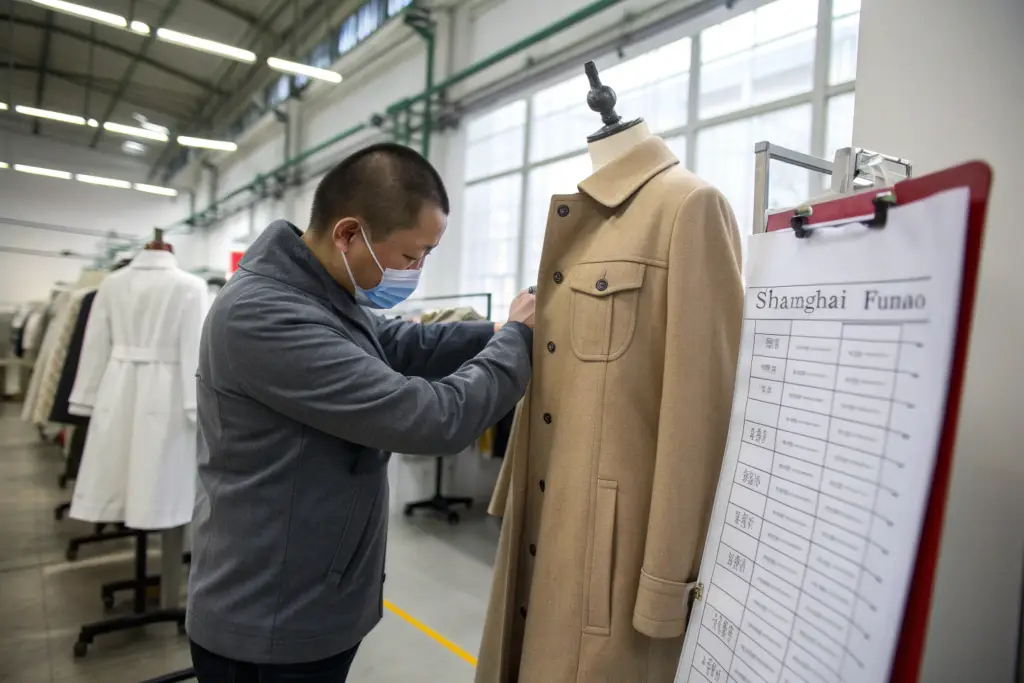
A reference sample is a physical garment that you provide to the factory as a tangible example of what you want to produce. The reference sample can serve one of three purposes. It can be a silhouette reference, meaning the overall shape and proportions of the coat. It can be a detail reference, meaning a specific feature like a collar, a pocket, or a sleeve treatment. Or it can be a fit reference, meaning how the coat fits on the body through the shoulders, chest, and hips. A single reference sample can serve all three purposes, or you can provide multiple reference samples, each serving a different purpose.
To use a reference sample effectively, you must provide it to the factory in its original, unaltered condition. Do not cut it, pin it, or modify it. The pattern maker needs to measure the garment in its original form to create an accurate base pattern. Along with the reference sample, provide a written specification sheet that lists exactly what you want to keep from the reference and what you want to change. For example: "Keep the overall silhouette and the shoulder slope from the reference sample. Modify the length, add 3 inches to the body length. Modify the closure, replace the button front with a concealed snap placket. Modify the collar, replace the notched lapel with a stand collar, height 2 inches. Use our approved linen-viscose fabric instead of the reference sample's polyester." This level of specificity gives the pattern maker clear instructions. The pattern maker does not need to guess what you want. The reference sample method for garment development is the most reliable method for non-designers to communicate with a factory. The physical garment eliminates the ambiguity of language. The factory can see, touch, and measure exactly what you want.
How Can A Factory's Design Translation Service Bridge The Gap?
Design translation is the service that converts a client's market knowledge and reference materials into a production-ready sample. The client provides the inputs: the market research, the competitor analysis, the reference samples, and the modification instructions. The factory provides the outputs: the pattern, the sample, the tech pack, and ultimately the bulk production. The design translation service is the bridge between the non-designer's business vision and the factory's technical execution.
A factory's design translation service typically includes pattern making from reference samples or sketches, fabric sourcing based on the client's hand feel and performance requirements, trim sourcing based on the client's quality and price specifications, sample making with iterative revision rounds, fit evaluation and pattern adjustment, and tech pack creation for bulk production. The client's role is to provide clear inputs and to evaluate the physical samples against the market requirements. The factory's role is to handle the technical execution. At Shanghai Fumao, our design translation service is a core part of our offering for private label and distributor clients. We do not expect our clients to be designers. We expect them to be market experts. They bring the market knowledge. We bring the design and production expertise. The collaboration produces a coat that is both commercially viable and technically well-executed. The design translation services for apparel manufacturing are the service that levels the playing field for non-designer entrepreneurs. Access to design talent is no longer a barrier to entry in the apparel business.
What Are The Key Elements Of A Summer Coat That You Can Specify Without Taste?
A summer coat, like any garment, can be decomposed into a set of discrete, objective attributes that can be specified without any aesthetic judgment. You do not need to decide whether a collar is "beautiful." You need to decide what type of collar it is: notched lapel, shawl collar, stand collar, or hooded. You do not need to decide whether a fabric is "nice." You need to decide what the fabric composition is, what the weight is, and what the finish is. By breaking the coat into its component attributes and specifying each attribute based on market data rather than personal preference, you can design a commercially viable coat without ever asking "Do I like it?"
The key elements of a summer coat that you can specify without taste are the silhouette, the length, the collar type, the closure type, the pocket configuration, the sleeve treatment, the lining construction, the fabric composition, the fabric weight, the fabric finish, and the color. For each element, the market provides clear answers about what is currently selling. A non-designer specifies these elements by referencing the dominant configurations in the market, not by expressing a personal creative vision. At Shanghai Fumao, we provide our clients with a design specification template that lists every element of a summer coat with the standard options for each. The client selects the options based on their market research, and we build the sample from the selections.
The specification process transforms design from an artistic exercise into a product configuration exercise. The coat is a product with defined features, not a canvas for personal expression. The market determines which features are desirable. The factory executes the selected features. Your role is to be the market expert, not the artist.
How Do You Choose Between Different Collar And Closure Types For Market Success?
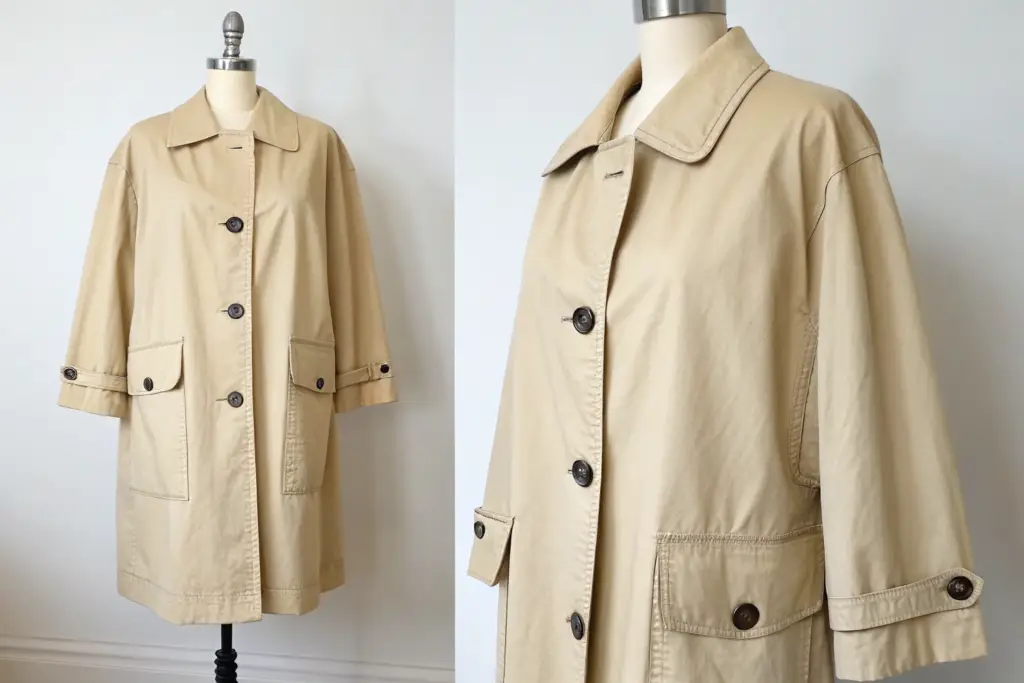
The collar and the closure are the two most visible design elements on a summer coat. They define the coat's formality, its functionality, and its overall character. The choice between collar types and closure types is a market-driven decision, not an aesthetic one. Different collar and closure combinations serve different customer needs and different market segments.
A notched lapel collar with a single-button closure is the classic blazer configuration. It signals structure, polish, and versatility. It is appropriate for office wear, business casual, and dressed-up casual occasions. It is the safest choice for a coat intended for a broad market. A shawl collar with an open front or a single hook-and-eye closure is a softer, more relaxed configuration. It signals comfort, ease, and a touch of femininity. It works well for lightweight knit coats, dusters, and beach cover-ups. A stand collar with a concealed snap or zipper closure is a modern, utilitarian configuration. It signals functionality, protection, and a contemporary, slightly edgy aesthetic. It works well for windbreakers, anoraks, and UV-protective shells. A hood with a zip-front closure is the most casual and functional configuration. It signals outdoor readiness and active lifestyle. It works well for packable travel coats and sporty summer shells. The collar and closure types in outerwear design have established market positions. A non-designer chooses the combination that matches the brand's target customer and use case. The choice is based on market positioning, not on which collar looks prettiest.
What Fabric Choices Are Proven Winners For Summer Weight Outerwear?
The fabric is the most important technical decision in a summer coat, and it is a decision that can be made entirely on objective performance criteria without any aesthetic judgment. The market has already identified the fiber compositions and fabric weights that work for summer outerwear. A non-designer selects from the proven options based on the coat's intended use case and the brand's price point.
The proven fabric choices for summer weight outerwear are, for natural fiber blends, linen-viscose blends at 150 to 200 GSM. These fabrics offer the breathability and texture of linen with the drape and wrinkle resistance of viscose. They are the standard for unstructured summer blazers and dusters. Cotton-linen blends at 130 to 180 GSM offer a crisper hand feel and a more casual appearance. They work well for utility jackets and safari-style coats. Tencel twill at 160 to 220 GSM offers a silky, fluid drape with a subtle sheen. It is the premium option for drape-front coats and kimono-style jackets. For synthetic and performance fabrics, crinkle nylon at 60 to 100 GSM is packable, water-resistant, and highly functional. It is the standard for travel coats and packable anoraks. Polyester microfiber with a peach-skin finish at 100 to 140 GSM offers a soft, sueded hand feel with wrinkle resistance and color vibrancy. It works well for trench coats and windbreakers. The fabric selection guide for summer outerwear is a technical resource. The fabric choice determines the coat's functionality, its care requirements, and its cost. A non-designer evaluates fabrics by touching the hand feel, testing the drape, and reviewing the performance specifications, not by judging the aesthetic beauty of the fabric.
How Can You Validate Your Collection Design Before Committing To Bulk Production?
The non-designer's advantage is that they are not emotionally attached to their design. The designer who has poured creative energy into a collection may resist feedback that the market does not want their vision. The non-designer treats the design as a hypothesis to be tested, not a work of art to be defended. This detachment is a competitive advantage. The non-designer is more willing to listen to the market and to adjust the product accordingly.
You validate your collection design before committing to bulk production by conducting a multi-stage testing process that begins with a small internal review, proceeds to a wholesale buyer preview, and culminates in a limited pre-order or a small-batch production run that generates real sell-through data. At each stage, you collect feedback, measure the response, and adjust the collection before scaling up. At Shanghai Fumao, we support our clients' validation process by producing small-batch samples and pilot runs that allow the brand to test the market without committing to a full bulk order. Our minimum order quantities for new styles are flexible, and we can produce a small initial run followed by a rapid restock of the styles that perform well.
The validation process is the non-designer's substitute for creative intuition. The market tells you what to produce. You do not need to guess. You need to listen to the data.
How Can You Use Small-Batch Production To Test The Market Before Scaling?
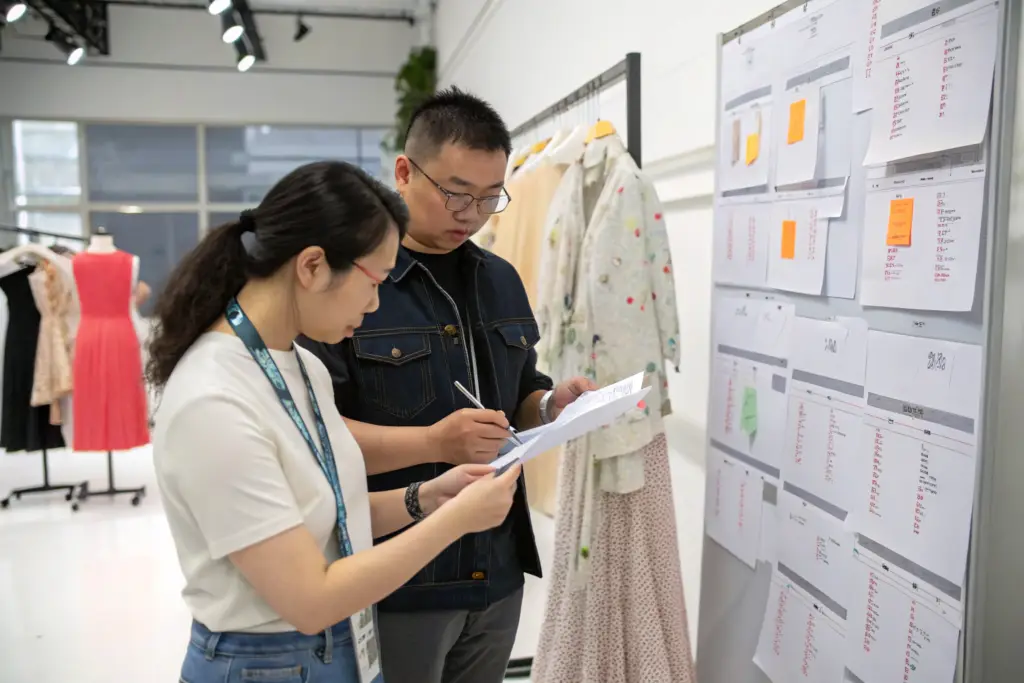
Small-batch production is the practice of producing a limited quantity of each style, typically 100 to 300 units per style, and using the sell-through data from this initial batch to determine which styles to reorder in larger quantities. The small batch is a market test. It is a relatively low-cost experiment that generates the most valuable data in the apparel business: actual customer purchase behavior.
The small-batch testing process works as follows. You produce your collection in small quantities, enough to stock your wholesale showroom, your e-commerce site, and a handful of test accounts. You launch the collection and monitor the sell-through data in real time. Within two to four weeks, the data reveals the winners and the losers. The styles that are selling above the forecast rate are the winners. You place a restock order for these styles immediately. The styles that are selling below the forecast rate are the losers. You discount them to clear the inventory and you do not reorder them. The small-batch model limits your downside on the losers because you only produced a small quantity. It captures the upside on the winners because you can restock quickly using the greige reserve or the express production line. The small-batch production strategy for fashion brands is the financial foundation of the non-designer's business model. You do not need to predict the winners. You just need to be able to identify them quickly and produce more of them fast.
What Feedback Should You Collect From Wholesale Buyers Before Finalizing Your Line?
Wholesale buyers are professional product evaluators. They see hundreds of coats every season. They know what sold in their stores last season and what sat on the rack. Their feedback is the closest thing to a market prediction that a non-designer can access before committing to bulk production.
The feedback you should collect from wholesale buyers during the line preview stage is specific and structured. Do not ask, "Do you like the collection?" The answer is polite but useless. Ask specific questions about specific products. "Would you buy this coat for your store? If yes, how many units would you initially order? If no, what is the specific reason? Is it the silhouette, the fabric, the color, the price, or something else?" The buyer's willingness to place a pre-order, even a small one, is the strongest validation signal. A buyer who commits their own open-to-buy budget to your coat believes the coat will sell. A buyer who compliments the collection but does not place an order is providing politeness, not validation. Also ask about the competitive comparison. "What other brands in your store does this coat compete with? Would it replace an existing brand, or would it be an addition?" The answer tells you where you are positioned in the market. The wholesale buyer feedback for product development is a critical input to the collection finalization process. The buyer is your customer. Listen to your customer. Adjust the collection based on their feedback. The non-designer who listens to the market will outperform the designer who ignores it.
Conclusion
Designing a custom summer coat collection without an aesthetic eye is not a limitation. It is a different approach to the same goal. The designer relies on creative intuition, visual judgment, and personal taste. The non-designer relies on market data, systematic analysis, and collaborative execution. Both approaches can produce commercially successful collections. The non-designer's approach has the advantage of being data-driven from the start, with less risk of the founder's personal taste diverging from the market's preference.
The non-designer's design process follows a clear, repeatable workflow. Research the market to understand what is selling and to whom. Deconstruct competitor products into their component attributes. Assemble a reference library of physical samples and technical specifications. Partner with a factory that offers design translation services and can convert references into samples. Evaluate physical samples based on fit, feel, and market feedback, not on abstract aesthetic judgment. Validate the collection through wholesale buyer previews and small-batch production tests. Let the market data determine which styles are produced in bulk and which are discontinued.
At Shanghai Fumao, we are the factory partner for the non-designer entrepreneur. We have built our design translation service, our flexible production model, and our small-batch capability specifically to serve clients who have market knowledge but lack formal design training. We do not judge our clients' design skills. We support their business goals. We provide the technical expertise that turns their market research into a saleable product.
If you have market knowledge and a desire to build a summer coat brand, but you have been held back by the fear that you lack an aesthetic eye, contact our Business Director, Elaine, at elaine@fumaoclothing.com. Tell her about your target market, your price point, and the types of coats you want to produce. She will explain how our design translation process works and how we can help you turn your market insights into a physical collection. Because the apparel business rewards market understanding, not artistic talent. The market does not care if you can draw. It cares if you can deliver a coat that customers want to buy.