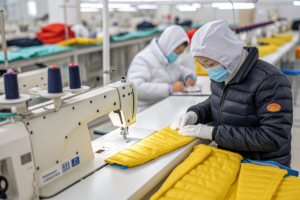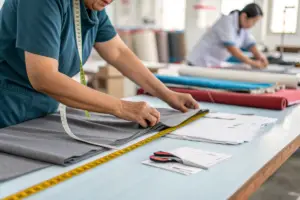
A mother in Chicago bought a beautiful, organic cotton baby romper from a premium children's brand three summers ago. She washed it, dressed her six-month-old daughter in it, and laid her down for a nap. The baby began to cry inconsolably. The mother checked the diaper, checked the room temperature, tried to feed her. The crying continued for two hours. Finally, she undressed the baby and ran her hand along the inside of the romper's leg seam. A sharp, broken sewing machine needle tip, 8 millimeters long, was embedded in the seam, point facing inward. It had been scratching the baby's inner thigh with every small movement. The mother was distraught. The brand owner was devastated. The romper had passed a standard visual inspection. The broken needle was invisible, hidden inside the seam allowance. The brand issued a full recall, was investigated by the CPSC, and spent $80,000 in legal fees, recall logistics, and lost revenue. The needle was not found because nobody was looking for it with a machine that could see inside the fabric.
Shanghai Fumao passes every single baby romper through a calibrated, ultra-high-sensitivity industrial metal detector that can identify a ferrous metal fragment as small as 0.5 millimeters before the garment is packed, because a standard visual inspection cannot see inside a seam allowance, and a single missed needle tip can mean a lacerated infant, a CPSC recall, and the end of a children's wear brand. Metal detection is not a quality upgrade for baby clothing; it is a non-negotiable, mandatory safety control. It is the final, automated, unblinking gate that catches the one defect that a human eye and a human hand will inevitably miss. Let me take you inside our metal detection laboratory, show you the exact machine calibration, explain the physics of how it detects a hidden needle fragment, and describe the documented rejection protocol that guarantees no untested romper ever leaves our factory.
What Is the CPSC Requirement for Sharp Objects in Children's Clothing?
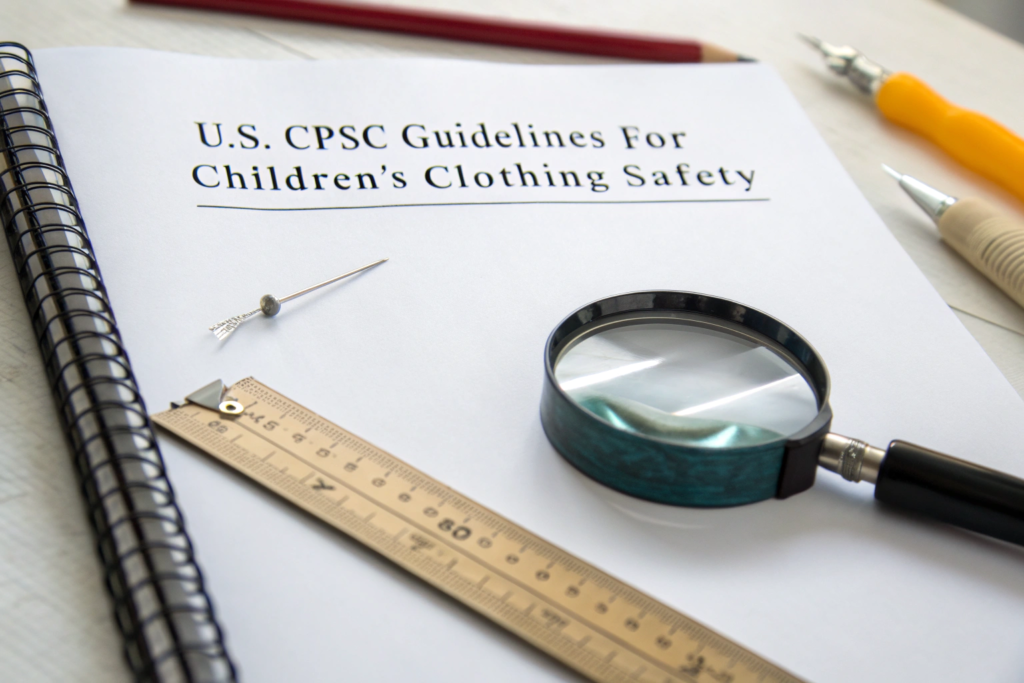
The U.S. Consumer Product Safety Commission has a zero-tolerance policy for sharp objects in children's clothing. This is not a guideline; it is federal law, codified in 16 CFR Part 1500, specifically sections 48 and 49, which define the technical standards for sharp points and sharp edges on toys and children's articles. A sharp point is defined as any point that can penetrate the skin of a child under reasonably foreseeable use and abuse. A broken sewing machine needle tip is a textbook, unequivocal sharp point. It is a rigid, sharpened metal spike. It has no place in a garment intended for a child under three years of age, period. There is no acceptable level of broken needles in a shipment. A single sharp object in a single garment is a banned hazardous substance, and the entire shipment is legally subject to seizure and destruction by U.S. Customs and Border Protection.
The legal liability for a brand owner is absolute and criminal. Under the Consumer Product Safety Act, a brand owner who knowingly sells a children's product that contains a sharp object can face civil penalties of up to $120,000 per violation, and criminal penalties including fines and imprisonment for knowing and willful violations. A single baby romper with a broken needle tip can generate multiple violation counts, each carrying a six-figure penalty. The financial cost of a recall is devastating, but the criminal liability risk is existential. A brand owner can go to jail for selling a baby product with a hidden needle. This is the legal reality, and it is the reason why a factory that does not metal-detect every single baby garment is a factory that is placing its brand partners in legal jeopardy.
Why Does a Visual Inspection Fail to Catch a Broken Needle in a Seam?
A visual inspection, no matter how conscientious the human inspector, is a surface-level check. The human eye sees the external face of the fabric. It cannot see inside a folded, stitched, and topstitched seam allowance. A broken needle tip, when it shatters during high-speed industrial sewing, does not usually lie on the surface of the fabric. The force of the needle break drives the sharp fragment deep into the fabric layers, where it is encased and hidden by the seam. The fragment is often the same color as the fabric, and it is only a few millimeters long.
Our QC inspectors are trained professionals. They inspect every garment visually. But I would never, under any circumstances, rely on a visual inspection alone to find a hidden needle fragment. It is a physical impossibility. The seam allowance is an opaque textile structure. Light does not pass through it. The human eye cannot see inside it. A visual inspection is a necessary quality check for stitching, color, and stains. It is a completely inadequate safety check for hidden metal contamination. To find a metal fragment inside a seam, you need a sensor that is not limited by visible light. You need a sensor that sees using a magnetic field, which can penetrate fabric, thread, and fiber as if they were not there. You need a metal detector.
How Did a 2022 CPSC Recall Cost a Brand $2.5 Million in Total?
The $2.5 million cost of a CPSC recall is not a theoretical number. It is a documented, real-world cost breakdown from a 2022 recall of a children's sleepwear brand that discovered a broken needle in a single garment. The brand was a mid-sized, direct-to-consumer company. The recall involved 12,000 units. The costs cascaded through the business in a devastating sequence.
The direct, hard costs were $380,000 for the reverse logistics of retrieving the 12,000 units from customers, $120,000 for the legal fees of the recall management law firm, $90,000 for the CPSC-mandated independent product safety consultant, and $45,000 for the public recall notice in major newspapers. The indirect, soft costs were far larger. The brand's website conversion rate dropped by 40% in the six months following the recall. Two major wholesale accounts cancelled their orders for the following season, representing $600,000 in lost revenue. The brand's founder spent 60% of her time for a full year managing the recall and its aftermath, instead of growing the business, representing an immeasurable opportunity cost. The total, fully loaded cost of the recall was estimated by the brand's insurance adjuster at $2.5 million. The recall was triggered by a single, 9-millimeter broken needle tip in a single sleep sack. The brand's previous supplier did not use metal detection. The $30,000 metal detection machine that could have prevented the entire catastrophe was not present in that factory.
How Does Our Conveyor Metal Detector Catch a 0.5mm Fragment?
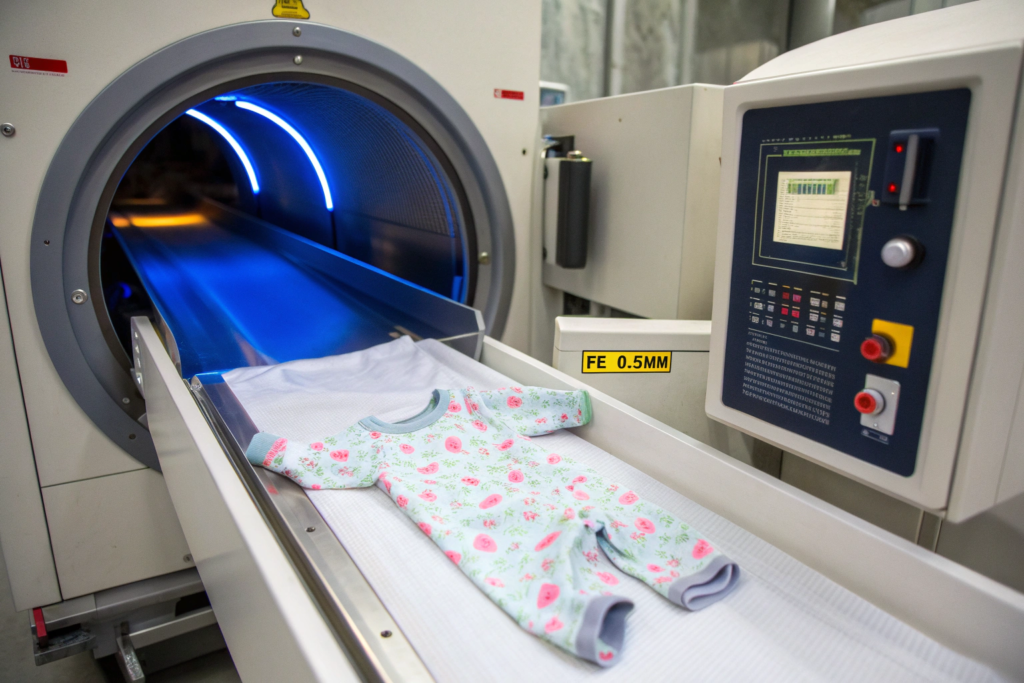
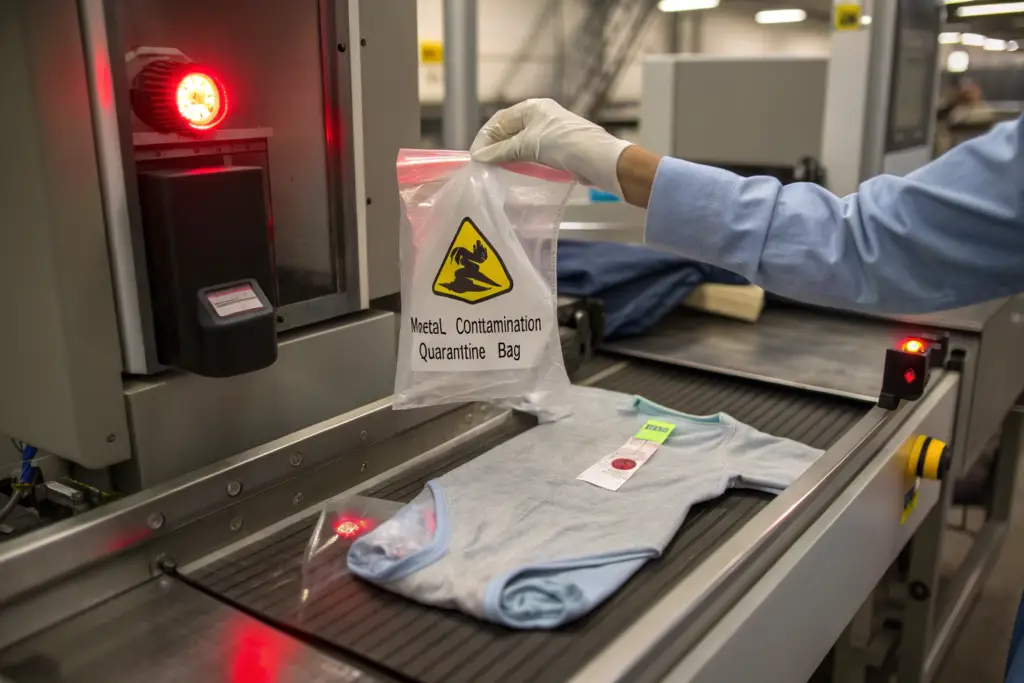
Our metal detection system is not a handheld wand waved over a carton. It is a fully automated, conveyorized, industrial tunnel metal detector, manufactured by a leading Japanese precision instrumentation company. It is integrated directly into our baby garment finishing and packing line. Every single baby romper, after it is pressed, folded, and tagged, is placed on the conveyor belt by the packing operator and passes through the detector tunnel before it reaches the polybag sealing station. The machine is the final physical gate between the factory floor and the shipping carton.
The machine operates on the balanced coil, electromagnetic induction principle. Inside the detector tunnel, three precisely wound electrical coils create a stable, high-frequency alternating magnetic field. The center coil is the transmitter, generating the field. The two outer coils are the receivers, balanced to read zero when the field is undisturbed by any metal. When a garment containing a metal fragment—even a microscopic one—passes through this magnetic field, the metal fragment distorts the field. The balanced receiver coils register this distortion as a minute voltage change. The machine's digital signal processor analyzes the signal, classifies it as either ferrous metal, such as a steel needle, or non-ferrous metal, such as a brass shank or a copper staple, and triggers an alarm if the signal exceeds the calibrated threshold. The entire process takes less than a second per garment.
What Is the Ferrous vs. Non-Ferrous Detection Threshold in Millimeters?
The metal detector must be sensitive enough to catch the smallest hazardous fragment, but not so sensitive that it triggers false alarms on harmless, microscopic metal dust that is naturally present in the environment. The calibration is set to specific, measured detection thresholds for different metal types, and these thresholds are verified at the start, middle, and end of every production shift using certified metal test spheres.
For ferrous metals, which include the chrome-plated steel of a sewing machine needle, the machine is calibrated to detect a sphere as small as 0.5 millimeters in diameter. This is significantly smaller than the smallest fragment a broken needle can produce. For non-ferrous metals, which include the brass of a button shank, the copper of a rivet, and the stainless steel of some zipper components, the machine is calibrated to detect a sphere as small as 0.8 millimeters. The machine's digital display shows the exact signal amplitude for each detection event, and the QC supervisor reviews the log at the end of each shift. A ferrous fragment registers a distinct, high-amplitude, sharply peaked signal. A non-ferrous fragment registers a lower, broader signal. The machine's software automatically classifies the metal type and stamps the log entry. This dual-threshold calibration ensures that a deadly, sharp steel needle tip is caught with absolute certainty, while the machine simultaneously detects any unexpected non-ferrous metal contamination from broken trim components.
How Is the Machine Calibrated Every Two Hours With a Test Card?
A metal detector is only as reliable as its calibration. An uncalibrated, drifting machine is a dangerous liar. It can silently lose sensitivity, passing contaminated garments with a reassuring green light while its detection threshold has crept upward. To prevent this, we operate a strict, documented, every-two-hour calibration verification protocol.
Every two hours, the packing line is halted for a 90-second calibration check. The QC supervisor places a standardized, certified "Metal Detection Test Card" on the conveyor belt and passes it through the machine. This test card is a sealed, credit-card-sized plastic card that contains precisely sized, certified spheres of ferrous, non-ferrous, and stainless steel, embedded at specific positions. The card is passed through the machine three times, once with the card oriented in each axis. The machine must detect all three metal spheres on all three passes and trigger a visible red alarm light and an audible alarm buzzer. The supervisor records the time, the test result, and their signature in the "Metal Detector Calibration Log." If the machine fails to detect any one of the test spheres on any one pass, the packing line is immediately shut down. All garments processed since the last successful calibration check are quarantined and 100% re-inspected. The machine is recalibrated by our maintenance technician, and the calibration log is signed off before the line can restart. This rigorous, documented calibration protocol is the operational discipline that guarantees the machine's sensitivity is maintained at the 0.5-millimeter threshold for every single garment, every single shift, every single day.
What Happens to a Rejected Romper After the Alarm Sounds?
An alarm on the metal detector is not an inconvenience; it is a safety event. The garment that triggered the alarm is a potential weapon, and it must be treated with the same forensic, documented, and controlled protocol as a medical device contamination. The line stops. The garment is isolated. The root cause is identified. The contaminated garment is destroyed. And a formal report is written. No exceptions.
When the alarm sounds, the packing operator immediately stops the conveyor belt. The rejected romper is removed from the reject bin and placed in a sealed, tamper-evident, red "Metal Contamination Quarantine Bag." The bag is labeled with a unique, pre-printed incident serial number, the date, the time, the production order number, and the operator's name. The bag is handed directly to the QC supervisor. The romper is not shaken, probed, or tampered with. It is treated as a hazardous object in a controlled forensic protocol. The QC supervisor takes the sealed bag to the metal contamination investigation station.
How Does the QC Team Dissect the Rejected Seam to Find the Fragment?
The investigation station is a dedicated, well-lit bench equipped with a high-intensity inspection light, a magnifying lamp, a pair of fine-tipped tweezers, a strong neodymium magnet, and a digital microscope. The QC supervisor opens the quarantine bag, removes the romper, and begins a systematic, non-destructive external scan with a high-sensitivity handheld metal detector wand. The wand precisely locates the metal fragment within the garment, typically identifying the exact seam, hem, or trim location.
Once the fragment is located, the supervisor carefully opens the seam allowance using a seam ripper. The stitching is cut, not the fabric. The seam is opened slowly, layer by layer, under the magnifying lamp. The supervisor visually searches for the metal fragment. When the fragment is found, it is removed with tweezers, not fingers, and placed on a small white inspection tray. The fragment is measured with a digital caliper to determine its maximum dimension. It is photographed through the digital microscope at 50x magnification. The fragment's shape, size, and metal type are documented. The supervisor then determines the root cause. Is it a broken needle tip from the sewing machine? Is it a stray staple from a shipping document? Is it a fragment of a damaged snap fastener setting die? The root cause is classified and recorded. This forensic dissection identifies not just the contamination, but its source, allowing us to correct the upstream process that generated the fragment.
What Is the "Zero Defect" Metal Contamination Incident Report?
Every metal detection alarm is formally documented in a "Zero Defect Metal Contamination Incident Report." This is a single-page, pre-printed form that is completed by the QC supervisor, reviewed by the production manager, and filed in the batch's permanent quality dossier. The report is a legal-quality record of the safety event.
The report contains the incident serial number, the production order number, the date and time of the alarm, the garment style and size, the exact location of the fragment within the garment, the measured dimensions of the fragment, the classified root cause, and the corrective action taken. Attached to the report are the digital microscope photograph of the fragment and a photograph of the contaminated garment. The report is signed by the QC supervisor and the production manager. The contaminated garment, after the fragment has been extracted and the root cause determined, is not repaired. It is physically destroyed and disposed of in a secure, documented waste stream. The incident report is your proof, as a brand owner, that the safety system worked. It proves that a specific, hazardous fragment was detected, isolated, investigated, and destroyed, and that the root cause was corrected. This report is the auditable, legal-grade evidence that our metal detection system is not a passive machine on a shelf, but an active, documented, and continuously functioning safety control.
Conclusion
A visual inspection cannot see inside a seam allowance. A broken sewing machine needle tip, hidden in the folded fabric, is invisible to the human eye and lethal to a baby's skin. It is also lethal to your brand, carrying a potential $2.5 million recall cost and criminal liability under U.S. federal law. We prevent this single, catastrophic, and otherwise invisible defect by passing every single baby romper through a calibrated, industrial metal detector that senses a 0.5-millimeter ferrous metal fragment using a magnetic field that sees through fabric as if it were air. The machine is calibrated every two hours with a certified test card to guarantee its sensitivity never drifts. When an alarm sounds, the contaminated garment is sealed, forensically dissected, the fragment identified and measured under a microscope, the root cause determined and corrected, and the garment destroyed. A formal incident report is filed as your proof that the system is functioning and your product is safe.
At Shanghai Fumao, metal detection for baby garments is not a customer option; it is a non-negotiable, factory-owned, and factory-operated safety control. We do not charge extra for it because we do not consider a child's safety to be an optional upgrade. It is the final, automated, and documented gate on our baby garment finishing line, and it operates on every single unit, every single day.
If you are a U.S. children's wear brand owner who wants to see our metal detection system in operation, we can schedule a live video tour of our baby garment finishing line, where you can watch the machine calibrate and see a test card pass through. Contact our Business Director, Elaine, at elaine@fumaoclothing.com. Tell her you want the baby garment metal detection tour. Let us show you the machine that never blinks, never gets tired, and never lets a hidden needle tip reach your customer's child.