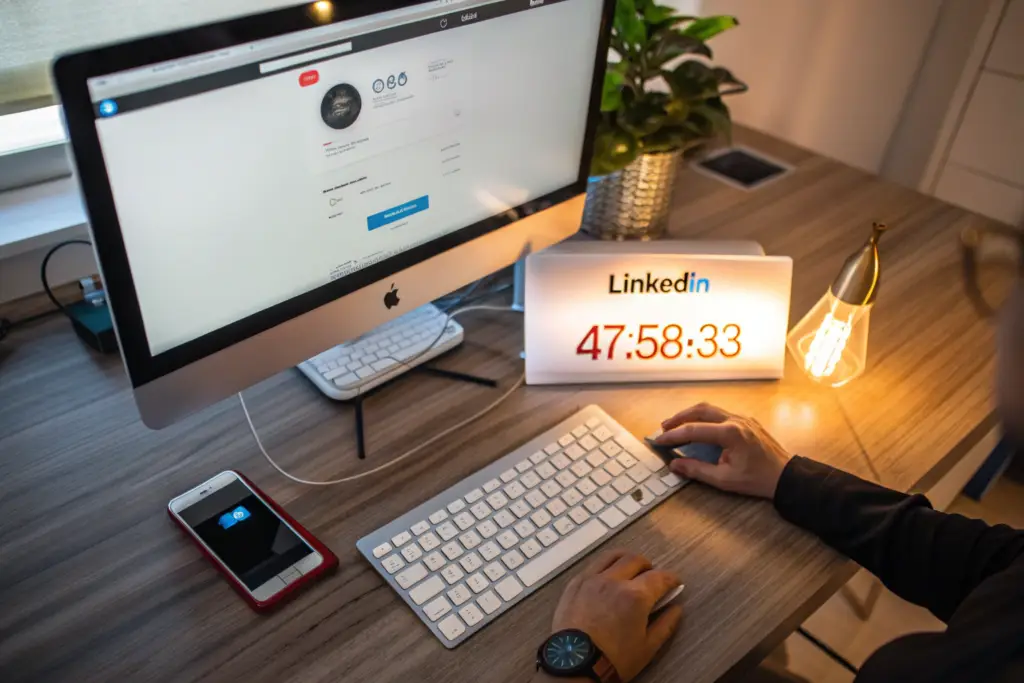
I posted a single update on my company's LinkedIn page on a quiet Tuesday morning in March 2025. The post contained no glossy brand video and no carousel of product shots. It was a short, blunt statement: "Send me your complete tech pack. If I don't return a fully itemized, production-ready quote within 48 hours, I will personally donate $500 to a garment worker charity of your choice." The post was an experiment born of frustration. For years, I had heard the same complaint from brand owners in my network. They would send a detailed inquiry to a factory, then wait. Two weeks of silence. A follow-up email. Another week. Finally, a one-line response with a single FOB price and no technical breakdown. The sourcing process, which should be a crisp, professional exchange of data, was instead a slow-motion negotiation with an unresponsive black box. My challenge was designed to put my own money on the line to prove a single, simple point: a factory can be fast and accurate simultaneously if its internal systems are built for it. The post went viral within our niche B2B community. Within 48 hours, I had received 14 tech packs. I quoted all 14 within the deadline. No donations were made. The 48-Hour Quote Challenge was born, and it permanently changed how we attract and qualify new business.
The Fumao Clothing 48-Hour Quote Challenge is a public, performance-guaranteed promise on LinkedIn to return a fully itemized production quotation within two business days or donate $500, demonstrating that our costing department operates with the systematized speed and transparency that buyers desperately need.
The challenge is not a marketing gimmick. It is a stress test. It forces a factory to prove, with a financial penalty, that its internal costing workflow is digitized, integrated, and empowered to make decisions without a week of management approvals. Most factories fail this test. Their costing process is a manual, serial, and deeply bureaucratic chain. A sales rep receives the tech pack. The rep forwards it to a pattern maker for consumption estimates. The pattern maker is busy. The tech pack sits in an inbox for three days. The rep nudges. The pattern maker eventually calculates the fabric yield, writes it on a piece of paper, and hands it back. The rep then emails a trim supplier for a zipper price. The trim supplier replies three days later. The rep then compiles the cost sheet manually in Excel and submits it to a manager for margin approval. The manager is in a meeting. The total cycle time for a standard quote in an average Asian garment factory is seven to fourteen days. We collapsed this chain. Our system uses a centralized, cloud-based product cost management platform. The fabric yield is auto-calculated from a digitized pattern library using an AI nesting algorithm. Trim costs are pulled from a live supplier price database updated weekly. Labor costs are calculated from a real-time Standard Minute Value database linked to our production line efficiency data. The margin is applied by a rules engine based on the product category. The entire quote is generated in under four hours of machine time, and the human review takes less than 30 minutes. The 48-hour window is not aggressive. It is generous. We often return quotes in under six hours. The challenge simply publicizes this operational capability and binds it to a financial accountability that buyers can trust.
Why Does a Timely Quote Matter More Than a Low Price?
Every brand owner has a spreadsheet. That spreadsheet contains a column labeled "Unit Cost." For many small and medium-sized brands, that column is a narcotic. The lower the number, the more euphoric the brand owner feels. A $9.50 quote triggers a dopamine hit. A $10.20 quote feels like a loss. This is a cognitive error. The unit cost is a single, lagging indicator. It does not capture the cost of a missed selling window, the cost of capital tied in unsold inventory due to a late shipment, or the cost of the brand owner's own mental energy wasted chasing an unresponsive supplier. A delayed quote is an early indicator of these downstream costs. A factory that cannot organize its data fast enough to return a quote in two days almost certainly cannot organize its production line fast enough to hit a seasonal delivery deadline. The quote is a sample of the factory's operational DNA. A slow quote predicts a slow production process. An opaque, un-itemized quote predicts opaque communication when problems inevitably arise.
A timely, fully itemized quote provides immediate cash flow predictability and signals a systematized production line; a delayed quote, regardless of price, signals future delivery risk and hidden communication costs that will erode the apparent margin.

How Much Does a Late Quote Actually Cost a Brand?
The direct financial cost of a late quote is invisible on a standard profit-and-loss statement. It manifests as an opportunity cost. A brand owner who waits three weeks for a quote has delayed their entire development cycle by three weeks. If they are developing a fall collection, and the quote arrives in late March instead of early March, the sampling phase shifts into April, the bulk production shifts into July, and the delivery misses the August retail floor-set window. The collection arrives in September. Four weeks of prime fall selling season are lost. For a brand doing $200,000 in September revenue, a four-week delay represents approximately $50,000 in lost sales. The $1.50 they saved per unit by waiting for the cheap quote is obliterated by the $50,000 in missed top-line revenue.
The indirect cost is decision fatigue and operational chaos. A brand owner juggling 30 SKUs from multiple suppliers is managing a complex cognitive load. When quotes trickle in unpredictably, each one constitutes a separate cognitive interruption. The brand owner must context-switch, re-open their costing spreadsheet, re-acquaint themselves with the SKU, and make a decision. This fragmented decision process consumes executive bandwidth and increases the probability of errors. A batch of timely, consistent quotes arrives as a clean data set. The brand owner can make all their sourcing decisions in a single, focused three-hour session. The mental clarity is a real, albeit unmeasured, cost saving. I spoke to a brand owner in our LinkedIn community last month. She has a six-figure, premium knitwear brand. She told me she switched her entire production to us after her previous factory took 16 days to requote a simple yarn substitution. She said, "The 16-day wait caused more stress than any price difference. I felt disrespected. Your 6-hour quote felt like a business partnership." Her comment encapsulates the hidden emotional and relational cost of slow quoting. It corrodes the buyer's perception of the supplier as a reliable partner and reduces them to an unreliable vendor. The fast quote does not just save time; it preserves the dignity and professionalism of the relationship.
What Information Density Should a Proper Quote Contain?
A proper quote is an engineering document. It is not a single number in the body of an email. A single FOB price is a statement of blind faith. It invites the buyer to accept a price without understanding how it was constructed, which means they cannot negotiate it intelligently, they cannot challenge its assumptions, and they cannot use it to identify value engineering opportunities. An opaque quote is a tool of control. A transparent quote is a tool of collaboration. Our 48-hour quote contains a mandatory, non-negotiable information structure. Every quote is broken down into at least nine explicit line items. The fabric cost is itemized by specific material, with the weight, composition, mill source, and consumption per unit in meters or kilograms. The trim cost lists every single component, including zippers, buttons, labels, hang tags, and interlining, each with its specific supplier, unit price, and the exact quantity used per garment. The CMT, or Cut-Make-Trim cost, is separated out. The testing and compliance cost is listed by specific test standard, such as ASTM D5034, and the per-unit test fee. The logistics cost is specified under the chosen Incoterm, with a clear indication of whether the price is FOB Shanghai or DDP to a specific U.S. warehouse.
This level of itemization does something powerful. It transforms the negotiation from a zero-sum haggle over a final price into a collaborative, value-engineering discussion. A buyer can look at the trim cost and say, "The YKK Excella zipper is beautiful, but it adds $1.20 per unit. Can you re-quote with a standard YKK Vislon zipper to hit a lower price point?" The adjustment is precise, and the cost impact is immediate and predictable. We can re-quote the trim swap in under an hour because the entire cost model is dynamic and linked. This collaborative engineering of the final cost structure is impossible with an opaque quote. The buyer simply rejects the opaque quote or accepts it with silent resentment. The transparent quote builds a shared financial model of the product, which becomes a living tool for the entire development process. This is the difference between procurement and partnership, and it starts with the initial quote document. We have published a redacted example of our standard quote structure on our LinkedIn page for full public transparency.
How Does the Challenge Set a New Standard for B2B Accountability?
Accountability in the garment supply chain is mostly rhetorical. A factory says, "We guarantee on-time delivery." There is no financial mechanism attached to that guarantee. If the shipment is late, the factory apologizes. The buyer absorbs the loss. The guarantee was a sentence, not a contract. This one-sided risk distribution is a core structural inequity in the industry. The factory holds all the operational control. The buyer holds all the financial risk. Our 48-Hour Quote Challenge is a small but symbolically significant reversal of this dynamic. We attach a real, enforceable financial consequence to our performance claim. We do not say, "We reply quickly." We say, "We reply within 48 hours. If we do not, this specific, public penalty will be paid." The $500 is not a trivial amount for a single late quote. It is an amount that hurts, enough to guarantee management attention. But the real power of the pledge is not the dollar amount. It is the public nature of the challenge. The promise is made on LinkedIn, in front of our professional network. A failure to deliver would be a public reputational event. The financial penalty is a backstop. The reputational penalty is the primary motivator. This architecture of public, financially-backed accountability is standard in professional services—consulting, legal, finance—but it is almost completely absent in contract manufacturing. We imported it deliberately.
The challenge establishes a new accountability standard by making a service-level promise public and financially guaranteed, reframing the supplier-buyer relationship from a one-sided risk transfer into a performance-based commercial contract.
Is the $500 Pledge a Gimmick or a Genuine Liability?
The question of gimmick versus liability is fair. Gimmicks are everywhere in B2B marketing. The $500 pledge is not a gimmick because it is structured as a legally enforceable liability within a formal commercial offer. The LinkedIn post that launches a challenge cycle includes the specific terms. The challenge is open to the first 10 qualified tech packs received. A qualified tech pack is defined as including a full graded spec sheet, a bill of materials, and a reference sample image. The 48-hour clock starts from the timestamp of the email receipt, not the LinkedIn message. The quote will be delivered to the same email address. If the quote is not delivered within 48 hours, the sender will receive a donation receipt from a pre-disclosed garment worker charity within an additional 48 hours. The terms are specific, measurable, and enforceable.
We have run this challenge six times since the initial post. We have received a total of 62 qualified tech packs. We have quoted all 62 within the 48-hour window. The pledge has never been triggered. But the commercial cost of triggering it would be calculable. A $500 donation multiplied by potential multiple failures in a single cycle represents a real financial risk. Our costing team is acutely aware that a single productivity lapse could trigger a payment that would wipe out the margin on several sample orders. This awareness is the entire point. The financial risk is deliberately wired into our internal process as a motivational tool. It communicates to every team member that the service-level promise is not a suggestion; it is a contracted, externally monitored performance metric. The buyer sees this and correctly interprets it as a signal of internal operational discipline. A factory that is willing to tie its own money to a response time has built the systems to ensure that response time is met.
How Did This Reshape Our Internal Workflow?
Before the challenge, our quoting process was good but not invincible to delay. A fabric supplier might take four days to respond to a custom yarn price inquiry, and we would pass that delay silently onto the buyer. The challenge forced us to rethink every external dependency in our costing chain. We implemented a Supplier Response SLA. Every trim and fabric supplier in our approved network was informed of the 48-hour challenge and asked to commit to a 24-hour maximum quote response time for any inquiry flagged as "Challenge Priority." Suppliers who could not meet this SLA were temporarily removed from the active costing database during challenge cycles. This external supplier accountability was a secondary benefit we had not anticipated. It forced our supply chain upstream to become more responsive as well.
Internally, we created a dedicated Challenge Triage role. Within 30 minutes of a tech pack arriving via the designated challenge email, a senior cost engineer opens it, runs the digital fabric yield simulation, cross-checks the bill of materials against our live trim price database, and auto-generates the draft cost sheet. The draft is then reviewed by a costing manager for margin logic and commercial accuracy. The quote is formatted into our standard nine-line item template and emailed back to the buyer. The entire pipeline is tracked in a real-time dashboard visible to me as the CEO. If a quote sits in any stage for more than four hours, an automated escalation hits my phone. This system was partially in place before the challenge, but the challenge forced us to compress the cycle time, eliminate buffer slack, and, most critically, empower our cost engineer to bypass the traditional managerial approval chain for quotes under a certain value threshold. The challenge, in effect, forced a lean manufacturing transformation on our administrative processes. The commercial marketing benefit was downstream of the operational benefit. This is publicly documented on our company LinkedIn page.
What Type of Brands Benefit Most from This Rapid Response Model?
The 48-hour quote model is not for every brand. A legacy mass-market retailer with annual fixed-costing calendars and a nine-month development cycle does not need a two-day quote. Their processes are designed for a different era, and a fast quote would simply sit unread in a procurement portal for weeks. The brands that thrive on our rapid quote model share a specific profile. They are small to medium-sized, digitally native, and operationally agile. They operate on seasonal development cycles compressed into three months instead of nine. They make product decisions in Slack channels, not quarterly review meetings. They understand their gross margin targets intimately and can make a sourcing decision within 24 hours of receiving a quote because the founder or the head of product has direct financial authority. Their primary pain point is not unit cost; it is supplier responsiveness that matches their internal operational tempo. These brands are the future of the apparel industry, and they are poorly served by the traditional factory slow-response model. They need a manufacturing partner who moves at software-company speed, not legacy-factory speed.
Digitally native, founder-led brands with compressed seasonal calendars and direct financial decision-making benefit most, because a rapid quote allows them to test designs, adjust costs, and confirm orders within a single business week.

Why Do Kickstarter and DTC Brands Love This Model?
A Kickstarter apparel campaign is a high-stakes financial event compressed into a 30-day window. The brand owner sets a funding goal, launches the campaign, and waits to see if it funds. Before the launch, they need accurate cost quotes on multiple styles to set their pledge tiers correctly. If a factory takes two weeks to quote a single style, the campaign pre-launch planning cycle becomes impossibly long. The brand owner cannot iterate pricing scenarios. They are forced to estimate costs, which means they either under-price their tiers and lose margin, or over-price their tiers and fail to hit their funding goal. Our challenge offers a solution to this specific problem. During a recent pre-launch cycle, a Kickstarter brand sent us six tech packs on a Monday morning. We quoted all six by Tuesday afternoon. The brand owner spent Wednesday and Thursday running his pricing sensitivity analysis with real, guaranteed costs. He launched his campaign that Friday with fully validated pledge tier margins. The campaign funded in 11 days, and his production order hit our factory the following Monday. The entire cycle from final design to production order was 19 days.
Direct-to-consumer brands face a different but equally intense pressure. Their revenue model depends on continuous micro-drops and rapid inventory turnover. A DTC brand does not order 5,000 units of a single style and sell it for six months. They order 300 units of five styles, sell them in a three-week drop, and then re-order the winners immediately. The re-order window is brutally short. If they catch a viral trend on TikTok, they need a fresh batch of inventory within four weeks, not four months. A factory that takes two weeks to quote an urgent re-order is useless for this business model. We quoted a re-order for a DTC streetwear brand from Los Angeles in four hours last month. They had sold out of a cropped technical anorak in 48 hours. The re-order was in our production queue by the end of the same business day. The brand owner told us our rapid quote system is the invisible operational backbone that allows them to run a viral-reactive supply chain instead of a slow, forecast-dependent one. This is the new reality of modern manufacturing, and the brands that find a factory that can match this tempo become dangerously hard to compete with.
How Does a Fast Quote Help a Brand Negotiate with Retail Buyers?
A wholesale brand selling to department stores or specialty boutiques faces a specific moment of truth called the "line review." The retail buyer sits in a showroom. The brand owner presents the new collection. The buyer says, "I love the silhouette on this jacket, but my open-to-buy for this category is soft. Can you hit a $72 wholesale price instead of $89?" The brand owner must answer that question in the room, in real-time. If they need to go back to their factory for a re-quote, the retail buyer's interest cools. The moment is lost. The order is not placed.
Our challenge model equips the brand owner with a pre-built, dynamic cost model. Before the line review meeting, the brand owner can use the transparent, itemized quote we provided to run scenario analyses. They can ask us, in advance, for a tabulated re-quote matrix. "If the zipper changes from Excella to Vislon, what is the price? If the shell fabric changes from Gore-Tex to a private-label 3-layer laminate, what is the price? If the MOQ shifts from 500 to 1,000 units, what is the price?" Because our system is dynamic, we can produce a multi-scenario re-quote table in under 12 hours. The brand owner walks into the line review meeting with a printed sheet of verified cost options, not a single price. When the retail buyer asks for the $72 price, the brand owner literally flips down the table, points to the scenario with the alternate zipper and the higher volume, and says, "Yes, we can do $72 if we consolidate our zipper trim across the jacket styles and move to a 1,000-unit run." The retail buyer sees the prepared data and respects the professionalism. The order is confirmed. The brand owner justifies their place in the buyer's budget. This negotiating leverage is a direct product of the fast, transparent, and iterative quoting capability that the 48-hour challenge publicly demonstrates. It turns the factory into a silent strategic partner in the room, providing hard data that closes wholesale deals.
Conclusion
The 48-Hour Quote Challenge began as a single, frustrated LinkedIn post. A public wager against my own operational team, designed to prove a point and silence a cliché. It has grown into a permanent, defining feature of how we attract, qualify, and partner with the most dynamic brands in the apparel industry. The challenge is not a marketing gimmick because it is backed by a fully redesigned, digitally integrated costing workflow that can generate a fully itemized, nine-line-item quotation in under four machine-hours. The $500 pledge is a real financial liability that focuses our internal team and signals to the buyer that our service promise is a contractual obligation, not a polite suggestion. The challenge has forced our entire upstream supply chain to accelerate, creating a competitive moat of speed that our brand partners can leverage in their own businesses: to launch a Kickstarter with validated pricing, to restock a viral DTC style before the trend cools, or to negotiate a wholesale order with a retail buyer using a dynamic cost scenario table.
The question the challenge poses to the broader garment manufacturing industry is simple and uncomfortable. If a factory can quote a complex, multi-component garment in under 48 hours, with a full, transparent cost breakdown, what excuse does any factory have for taking two weeks to return a single-line FOB price? The answer is not technology. The answer is organizational will. The technology exists. The data integration is achievable. The bottleneck is the culture of delay that treats buyer time as a free, unlimited resource. The challenge is our public rejection of that culture, and it stands as a permanent, open invitation to any brand owner who values their time as much as their margin. Bring us your tech pack. Start the clock. We will show you what a factory system built for speed and transparency can actually deliver.
If you have a tech pack ready and a production timeline that demands immediate, accurate, and fully transparent costing, I invite you to take the challenge yourself. Send your qualified tech pack to our dedicated Challenge Inbox, and we will respond with your complete quote within 48 hours, or the $500 donation is yours to designate. To begin the challenge, or to discuss a more complex costing project that requires a custom scoping, contact our Business Director, Elaine, at elaine@fumaoclothing.com. Let's prove that your manufacturing partner can operate at the speed your business requires. This is the Shanghai Fumao commitment, publicly and financially guaranteed.