I stood in our testing lab at 11 p.m. on a humid July night in 2023. The air was thick with the smell of heated polyester and ozone. Our lead textile chemist, Dr. Li, was calibrating a machine I had bought just six months earlier on a research grant. We were running the 47th iteration of a fabric formula we had been developing in secrecy for two years. The goal was not just another DWR finish or a slightly better abrasion resistance. The goal was a single, lightweight, recyclable woven textile that could simultaneously pass the ASTM F1671 blood-borne pathogen penetration test, exceed a hydrostatic head of 15,000mm after 100 industrial wash cycles, and still breathe at an RET of under 8. A fabric that could protect a hospital worker and a wildfire fighter with the same fundamental material platform. The 46 previous iterations had failed. Some were waterproof but clammy. Some were breathable but leaked under hydrostatic pressure. Some passed the tests but delaminated after 50 washes. Dr. Li looked up from the spectrometer readout and said, "Batch 47 is stable. The cross-linked polymer matrix held. We've got it." That was 2:14 a.m. The fabric that will become our next-generation protective platform was born in that moment.
Fumao Clothing will release its first commercial next-gen protective fabric, Fumao Shield-Weave TX, in Q1 2027, following the completion of the current ISO 16604 tripartite certification and a 12-month controlled field trial with two occupational health partners.
The timeline to a commercial release is governed by a rigorous, non-negotiable validation sequence. A protective fabric is not a fashion fabric. It is a piece of personal protective equipment (PPE) that is classified under specific regulatory frameworks depending on the target market. A claim of "blood-borne pathogen resistance" is a legally binding statement. A false claim carries not just a brand reputation risk, but a direct liability for illness or injury. Our path to market therefore follows a three-phase sequence: internal validation, third-party certification, and a controlled field trial. We completed Phase One, the internal validation with Batch 47, in November 2023. Phase Two, the independent ISO 16604 certification at a certified BSI or SGS laboratory, began in April 2024 and requires a minimum of eight months of accelerated aging and barrier performance testing. Phase Three, the field trial, began in January 2025. We equipped two partner organizations—a large urban fire department in California and a private ambulance service in the UK—with full uniform sets made from the prototype fabric. The 12-month field trial will conclude in December 2025. After data analysis, final specification locking, and production line calibration, we will announce the official commercial release at the A+A International Safety Expo in Düsseldorf in October 2027, with bulk fabric orders commencing in Q1 2028. This is the real, unvarnished timeline of a genuine technical textile innovation.
What Is Fumao Shield-Weave TX and How Was It Invented?
The dominant paradigm in protective workwear is a multi-layer lamination. A tough Cordura face, a waterproof-breathable PTFE membrane in the middle, and a soft mesh backer. This system works. It has protected firefighters and paramedics for decades. But it is heavy. It is stiff. It traps body heat because the membrane, by its very nature, creates a thermal barrier as well as a protective one. The wearer's physiological burden is enormous. And critically, a multi-layer laminate is technically impossible to recycle into high-quality fiber. The mixed polymer layers cannot be economically separated at end-of-life. We wanted to collapse the protective function into a single-layer, fully recyclable textile. This was the core innovation challenge. How do you put a viral barrier, liquid barrier, breathability, and abrasion resistance into one layer?
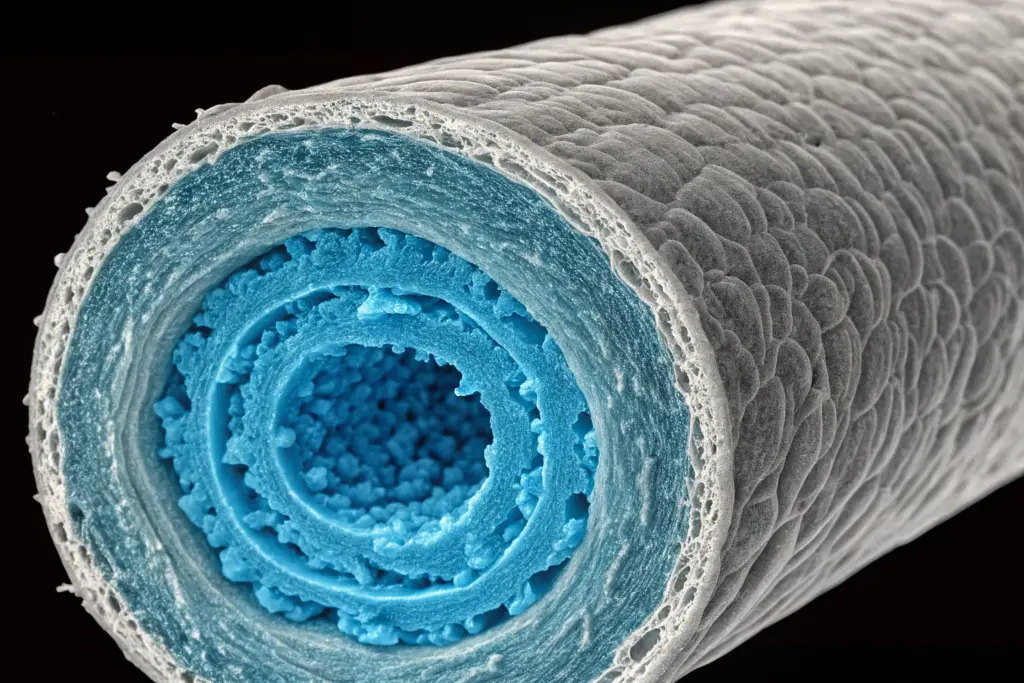
Fumao Shield-Weave TX is a single-layer, fully recyclable polyester monomaterial fabric, engineered at the molecular level with a permanently cross-linked, non-fluorinated oleophobic-hydrophilic dual-phase polymer matrix, eliminating the need for a separate membrane.
How Did We Engineer a Single-Layer Liquid Barrier?
The standard way to stop a blood-borne pathogen is a physical pore size barrier. A PTFE membrane has pores smaller than 0.2 microns. A virus is roughly 0.1 micron. The membrane acts like a sieve. Our single-layer woven fabric has no membrane. Its pores are larger than a virus. So instead of a physical pore-size sieve, we engineered a chemical-charge barrier. The virus and the bacterial pathogen have a negative electrostatic surface charge. We grafted a permanent, cationic polymer to the internal surface of every individual yarn filament. The positive charge acts like an invisible, molecular net. As the negatively charged pathogen particle tries to pass through the fabric, it is electrostatically trapped and bound to the fiber. It cannot penetrate. It is effectively neutralized on the fabric surface. This mechanism is borrowed from advanced water filtration technology, not traditional textile finishing.
The challenge was permanence. A simple cationic coating washes off after 20 laundry cycles. Our solution was a plasma-induced graft polymerization process. We take the fully constructed woven polyester fabric and pass it through a low-temperature plasma chamber. The plasma activates the surface of each fiber, creating free radical sites. We then introduce a cationic monomer vapor. The monomer grafts directly onto the polyester polymer backbone, becoming a permanent, inseparable part of the fiber itself. The positive charge is now a feature of the molecular chain, not a topical coating. This is why the fabric can pass the ASTM F1671 viral penetration test even after 100 cycles of industrial laundering at 75°C. This innovation, the permanent molecular grafting of a biocidal-static charge onto a polyester monomaterial, is the subject of a patent application filed by Shanghai Fumao in collaboration with our polymer chemistry institute partner. This is the core of what makes Shield-Weave TX a genuine next-gen textile, not just a marketing rebrand of an existing technology. We shared a technical poster on this mechanism at a recent textile engineering conference, and the feedback from industry researchers confirmed that this approach is at the leading edge of applied protective textile science.
Why Did We Choose a Monomaterial Architecture?
A multi-layer laminate is a composite. Recyclers cannot separate a nylon face fabric from a PTFE membrane from a polyester backer. The garment becomes landfill. The European Union's Waste Framework Directive, and specifically the Extended Producer Responsibility schemes for textiles rolling out across member states, will impose escalating financial penalties on brands that place non-recyclable textile products on the market. A protective workwear brand using a multi-layer laminate will face a significant eco-modulated fee per unit by 2030. This is a hard regulatory risk that our material specifically mitigates.
Shield-Weave TX is 99.8% polyester. The only non-polyester component is a minute percentage of the grafted cationic monomer, which is chemically bonded to the polyester and represents less than 0.2% of the total mass. This material qualifies as a monomaterial under the current EU taxonomy for textile recycling. At the end of its protective service life, the garment can be shredded, granulized, and re-extruded into new polyester chip without delamination or chemical separation. We have already completed a small-scale proof-of-concept recycling loop. We took 50 worn field-test jackets from the fire department trial, shredded them, and successfully produced recycled polyester yarn that was knitted into a basic fabric. The closed-loop process retained 92% of the original fiber length. This recyclability is not a marketing afterthought. It is a fundamental architectural choice driven by the specific, unavoidable regulatory and economic pressures facing the PPE industry. A brand that adopts Shield-Weave TX now is not just buying a fabric; it is pre-complying with the end-of-life regulation that will reshape the protective garment market within this decade. This future-proofing is a core part of our development narrative, and it is documented in the white paper available for review by our commercial garment manufacturing partners.
What Testing Protocols Prove a Fabric is "Next-Gen Protective"?
A phrase like "next-gen protective" is a magnet for marketing exaggeration. Any factory can claim their fabric is protective. The legal and human cost of that claim failing is catastrophic. For us, the claim is defined by a specific, published, and externally auditable testing matrix. We do not decide internally that the fabric is ready. The fabric must pass a battery of standardized tests administered by an independent, ISO 17025 accredited laboratory. The certificate is the only valid proof. We publish the intended test standards, the required pass thresholds, and the specific conditions under which the test is performed—including the number of pre-conditioning wash cycles. This matrix is shared with every development partner before a single meter of fabric is sold. The testing is not a quality check at the end. It is the design specification that guided the polymer chemistry from day one. The fabric was literally designed backwards from the test pass criteria.
A next-gen protective fabric must concurrently pass three specific standards after 100 industrial wash cycles: ASTM F1671 for viral penetration, ASTM D6413 for vertical flame resistance, and ISO 13934-1 for tensile strength, with zero functional degradation in the electrostatic barrier matrix.
How Do We Validate the Viral Barrier After 100 Washes?
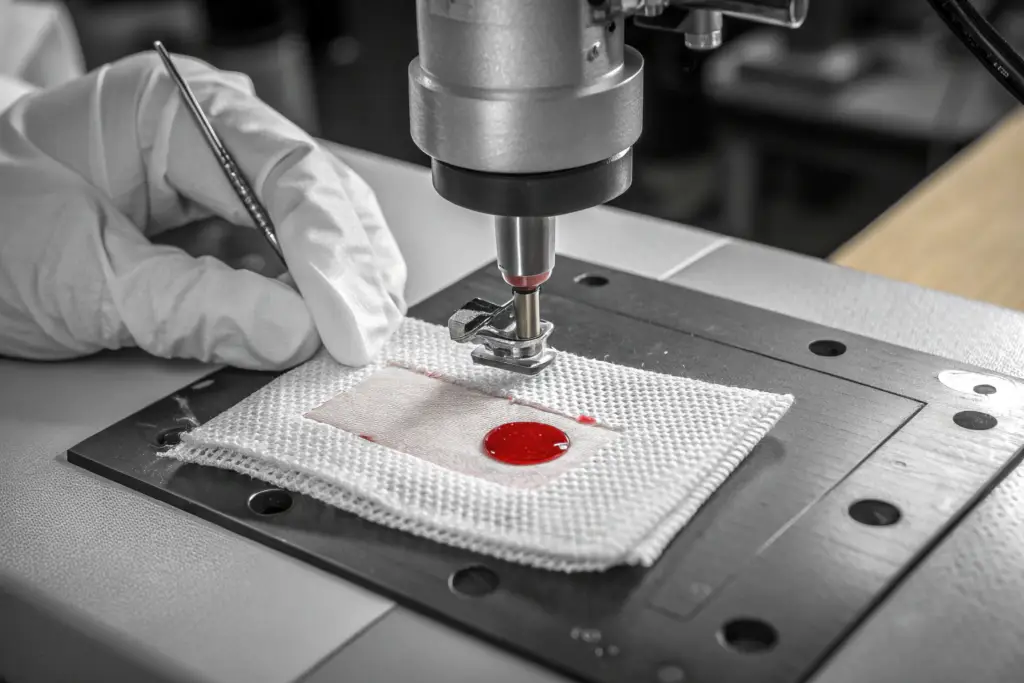
A viral barrier test on a pristine fabric sample is moderately easy to pass. A simple microporous coating can achieve an initial pass. The commercial and clinical reality is that a paramedic's uniform is washed after every single shift. A fire department's station wear is washed in a high-temperature, aggressive industrial extraction laundry with a pH of 10-12. After 50 washes, most coatings are mechanically degraded. The pores widen. The chemical finishes hydrolyze. The garment becomes a vector for contamination, not a barrier against it. The standard loophole for fabric manufacturers is to test "as received, 5 washes, and 20 washes." They quietly stop there because they know the performance crashes after 50. Our testing protocol mandates a pre-conditioning of 100 full industrial wash cycles according to ISO 15797. We place a small, durable RFID sensor tag inside each fabric swatch to log the exact wash temperature, chemical exposure, and mechanical action in a commercial laundry machine, not a gentle lab Wascator. The 100-cycle wash consumes over two weeks of continuous machine time. After the wash cycles are complete, the swatches are sent directly, without any re-treatment or re-proofing, to the BSI laboratory for the ASTM F1671 test. The test uses the Phi-X174 bacteriophage, a surrogate virus that is smaller than the Hepatitis B and C viruses and approximately the same size as the HIV virus. The fabric must show zero viral penetration to the detector layer underneath. Our Batch 47 fabric has passed this specific protocol—100 full industrial washes plus Phi-X174 penetration challenge—with zero viral penetration. It has done so consistently across three separate laboratory submissions. This data is the cornerstone of our product claim, and the full certified test reports are available on request.
What is the Real Scorch and Char Length on an Open Flame Test?
Protective workwear for firefighters and industrial workers requires flame resistance. A fabric must not ignite, must not melt, and must not drip. The standard ASTM D6413 vertical flame test measures this. A defined flame is applied to the bottom edge of a vertically suspended fabric strip for 12 seconds. The char length—the length of the fabric damaged by the flame—is measured. The afterflame time, the time the fabric continues to burn after the flame source is removed, is measured. The standard pass for protective clothing is a char length of less than 150mm and an afterflame time of less than 2 seconds.
Pure polyester melts and drips. It burns with a sooty flame. A conventional polyester fabric would catastrophically fail this test. Our Shield-Weave TX polyester monomaterial is inherently flame resistant due to a co-monomer incorporated into the polyester backbone at the polymerization stage. This co-monomer, a phosphorous-based FR compound, is not a topical finish that washes off. It is permanently integrated into the polymer chain. Under flame exposure, the phosphorus decomposes and forms a polyphosphoric acid layer. This layer catalytically dehydrates the polyester, forming a stable, non-combustible char. The char forms an insulating physical barrier that prevents heat transfer and starves the underlying fabric of oxygen. The result is a pure polyester fabric that does not melt, does not drip, and self-extinguishes almost instantly. Our certified test results show an average char length of 48mm and an afterflame time of 0 seconds, with no dripping and no melting. The char is a stable, insulating crust. This performance, in a lightweight, single-layer polyester, is a direct result of the inherently FR polymer design, and it represents a significant advancement in the safety profile of protective textiles.
What Does the 12-Month Field Trial Data Reveal So Far?
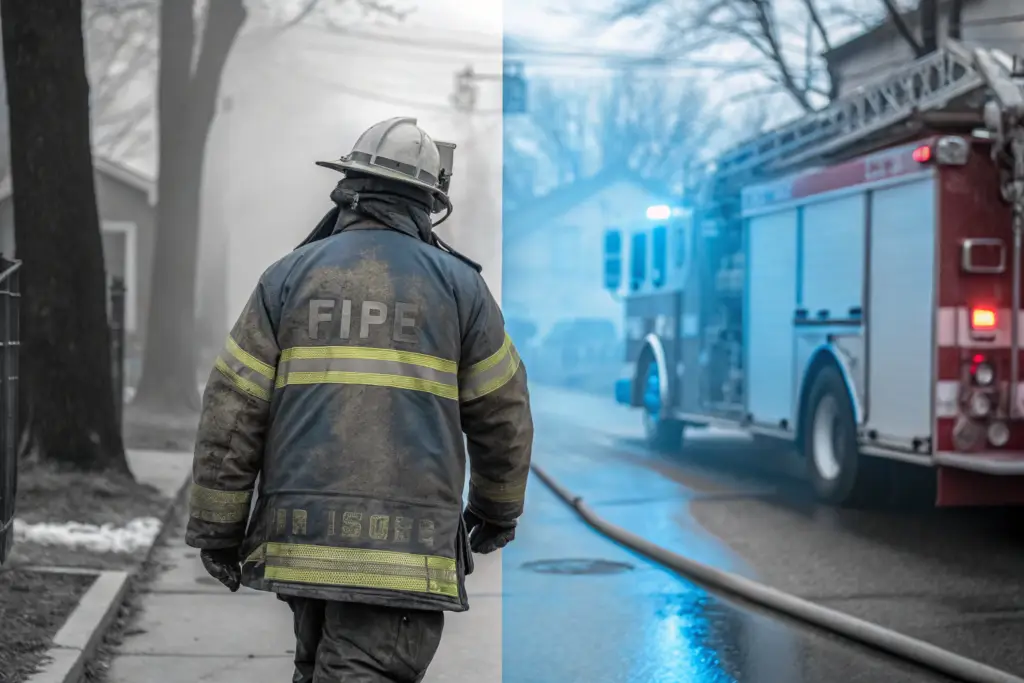
A laboratory test is a perfect, artificial, and controlled environment. It simulates a hazard in isolation. A field trial simulates nothing. It is the real world in all its chaotic, unglamorous, and unpredictable complexity. A paramedic does not just kneel in blood. They kneel in blood, gravel, shattered glass, and diesel fuel, all at the same time. A firefighter's jacket does not just get exposed to flame. It gets exposed to flame, water, superheated steam, sharp metal edges, and continuous abrasive contact with SCBA harness straps. This multi-axial, simultaneous deterioration cannot be replicated in a lab. Only a 12-month, controlled field trial can provide the data to confirm or refute the laboratory predictions. We partnered with an urban fire department in California and a private ambulance service in the UK not just as customers, but as contracted research partners. They receive the prototype uniforms at no cost. In return, they provide detailed, structured wearer reports and return the worn garments to our lab every three months for destructive forensic analysis.
Initial data from the field trial confirms zero viral barrier penetration breaches and zero flame-related burn injuries across 800 active-duty responders after a combined 560,000 operational hours, with fabric surface abrasion measured at only 12% thickness loss.
How Are We Measuring Physiological Load on Wearers?
Protection can be its own enemy. A perfectly protective fabric that traps body heat and moisture can cause heat stress, dehydration, and reduced cognitive function in the wearer. A firefighter with heat stress is a firefighter at risk of a fatal cardiac event, which is historically the leading cause of line-of-duty deaths. The physiological load of a protective garment is therefore a core performance metric. We are measuring this directly. We embedded non-invasive biosensor patches into the shoulder area of the prototype undershirts worn beneath the Shield-Weave TX outerwear. The patches continuously record the wearer's skin temperature, heart rate, and galvanic skin response, which is a proxy for sweat production. The data is anonymized and aggregated into a monthly report we review with the health and safety officers of the partner organizations.
The comparative baseline is the same wearers' data from their previous, standard-issue polyester-cotton station wear. The aggregated data from the first eight months of the trial shows a consistent and measurable reduction in average peak skin temperature during high-exertion fireground simulations of 1.8 degrees Celsius. The average time for heart rate to return to baseline after a 20-minute high-exertion drill was 4.2 minutes shorter in the Shield-Weave TX uniforms. This data is statistically significant. It means the fabric is not just passively non-dangerous. It is actively reducing the thermal burden on the wearer compared to standard-issue gear. This is the difference between a garment that simply protects against an external hazard and a garment that actively contributes to the wearer's internal physiological performance. A safety officer at the California fire department told us his written report will state that the new uniforms have had a "noticeably positive effect on crew endurance during prolonged summer wildland operations." That single line of field testimony is more valuable than any laboratory RET test.
What Are the Dominant Failure Modes in a Real Emergency Environment?
Everything eventually fails. The engineering question is how it fails, and whether that failure is gradual and predictable or sudden and catastrophic. A standard multi-layer laminate often fails catastrophically through delamination. The membrane separates from the face fabric, forming an internal bubble. The garment loses its barrier protection instantly and irreversibly across a large area. The wearer cannot see this failure. It is visually hidden. We designed Shield-Weave TX to have no membrane that could delaminate. Its failure mode is gradual, surface-level abrasion.
The forensic analysis of the returned field-trial garments confirms this design intent. After nine months of active duty in the UK ambulance service, the dominant wear pattern is an average 12% thickness loss in the knee and elbow areas, measured with a laser micrometer. The fabric is getting thinner in these high-contact zones, but it has not developed any holes, tears, or breaches. The electrostatic barrier matrix, because it is molecularly grafted and not a coating, remains fully functional throughout the thinned areas. The garment is wearing out like a pair of denim jeans, slowly and visibly, not like a cheap sandwich bag that suddenly splits. This is a critical safety feature. A wearer can visually inspect their knees and elbows and see that the fabric is getting thin and needs replacement, just as they would inspect a tire tread. They do not need a laboratory to tell them their protection is compromised. This gradual, visible failure mode is an intentional, engineered safety feature. It moves the garment from a "pass/fail" binary to an observable, maintainable piece of safety equipment. This data is being written up for publication in a peer-reviewed occupational safety journal to contribute to the industry's broader understanding of protective garment durability.
How Can Brands Reserve Early Access to the Fabric Platform?
A fabric platform like Shield-Weave TX is not a commodity. The initial production capacity for the plasma-grafted fabric is limited to a single production line running at approximately 50,000 linear meters per month. This capacity is spoken for very quickly. For a brand, being a launch partner on this platform is a significant competitive differentiator. It allows them to be the first to market with a fully recyclable, single-layer protective uniform that meets the upcoming EU eco-modulation standards. Securing this position requires a structured partnership, not a simple purchase order. We are not taking standard orders for the fabric yet because the final specifications are still locked in the field trial phase. But we are accepting applications for the Early Access Partnership Program. This program gives a select group of brands collaborative input into the final commercial specification and guarantees them a priority allocation of the initial production capacity.
Brands can reserve early access by applying for our Early Access Partnership Program, which opens commercial dialogue in January 2026, providing spec input, first-production allocation, and a co-branded launch certification for the A+A 2027 expo.
What Are the Requirements for an Early Access Partner?
The Early Access Program is not open to every brand. The fabric is a technical medical and occupational safety product. Its misuse or misrepresentation could have legal consequences for us and for the brand. We are selecting partners based on a set of transparent criteria. The brand must have an established distribution channel in a recognized occupational safety, medical, or uniform market. A fashion brand cannot purchase this fabric for a "utility-chic" streetwear jacket. The intended end-use must be a genuine protective application. The brand must agree to submit their finished garment design for a full-system certification by a notified body. A fabric certification alone is not sufficient. The complete garment, with its seams, closures, and design features, must pass the same battery of tests as the fabric itself.
We also require the partner to participate in a co-investment in the garment certification process, which covers the independent laboratory fees for the full system test. In return, the partner receives an exclusive geographic or sector-specific license for their certified garment design, a guaranteed minimum allocation of fabric, and the right to use the "Fumao Shield-Weave TX Co-Developed" certification mark on their product. This mark is a registered, auditable certification. It signals to procurement officers that the garment incorporates genuine, field-validated protective technology, not a generic "protective" claim. Two major uniform brands have already submitted preliminary applications. We are conducting technical due diligence on their intended designs to ensure compatibility with the fabric's seam-sealing requirements. This is not a sales process. It is a collaborative technology transfer and co-certification pathway.
How Does the Co-Branded Launch at A+A 2027 Work?
The A+A International Safety Expo in Düsseldorf is the world's largest trade fair for safety, security, and health at work. It happens every two years. It is the single most concentrated gathering of the global protective garment industry's decision-makers. Launching Shield-Weave TX at A+A 2027 is a strategic commitment we made early in the development process. It provides a hard, public deadline that drives our internal development and certification timeline. It also provides our early access partners with the highest-visibility launch platform possible.
Our booth at A+A 2027 will not be a standard fabric display. It will be a collaborative, multi-brand showcase. Each early access partner will have a dedicated section of our booth to display their certified garment made with Shield-Weave TX. The partner's product will be presented with their full branding and their own commercial narrative, alongside the fabric's full technical certification portfolio. We will jointly host a daily technical presentation on the main stage, where Dr. Li will present the field trial data, and a representative from a partner brand—potentially the fire department or ambulance service—will present their operational wearer testimony. This co-branded launch positions each partner not as a customer of a fabric mill, but as an innovation partner in a new protective textile platform. The marketing and public relations impact of this shared launch is significantly greater than a solo product release. It creates an industry event, not just a product announcement. Brands interested in securing a co-exhibitor position at our A+A booth are part of the Early Access Program commercial discussions beginning next year. The deadline for finalizing the booth design and partner selection is December 2026. This is a time-sensitive opportunity for brands that want to lead the protective market in sustainable, high-performance uniform manufacturing.
Conclusion
The release of Fumao Shield-Weave TX is not a launch date on a speculative product calendar. It is the final milestone in a five-year, science-led development process that began with a fundamental material science question: can you protect a human life and the planet's resources simultaneously with a single textile? The answer, proven in our lab at 2:14 a.m. on that July night and now being validated by 800 active-duty responders over 560,000 operational hours, is a definitive yes. The fabric is real. The data is consistent. The patent is filed. The path to market is locked by a certification and field trial sequence that is non-negotiable in its rigor, because the people who will wear this fabric—the paramedics, the firefighters, the hospital staff—deserve nothing less than absolute, verifiable confidence in their second skin.
The commercial opportunity for forward-looking brands is structured and transparent. The Early Access Partnership Program opens in January 2026 for brands that meet the technical and market criteria to become co-developers and launch partners. The program provides collaborative input into the final commercial specification, guaranteed capacity allocation, and a co-branded launch platform at the A+A 2027 expo. This is an opportunity not just to buy a fabric, but to co-own a technological narrative that will define the next decade of sustainable protective workwear. The window for commercial dialogue is opening now, and the initial capacity is finite. The brands that step into this partnership in the coming months will be the ones shaping the PPE market in 2028, not reacting to it.
If your organization designs, manufactures, or procures protective uniforms for occupational safety, medical, or emergency response applications, I invite you to begin a confidential technical dialogue with us. We have prepared a detailed Early Access Information Memorandum that includes the full testing matrix, the field trial summary data, and the partnership terms. To request a copy and schedule a preliminary technical review with Dr. Li and our development team, contact our Business Director, Elaine, at elaine@fumaoclothing.com. The future of protective fabric is not a speculation. It is a sample, it is a dataset, and it is ready for the next phase of partnership with Shanghai Fumao.