I received a panicked call in March from a children's boutique owner in Chicago. Her previous supplier had delivered 500 sequin-embellished dresses for girls, and a third of them failed the sharp-edge safety test. The sequins flaked off, posing a choking hazard. She was staring at a recall and a potential lawsuit. I had our team reverse-engineer a safe, embroidery-based design mockup instead of sequins, and we shipped a compliant replacement order in 18 days. That is the reality of fast custom kids' wear. You are not just selling clothes. You are shipping liability risk inside a cute package.
Yes, Shanghai Fumao is the ideal partner for fast custom kids' wear because we combine dedicated children's safety compliance expertise with an accelerated, small-batch production line that does not sacrifice the rigorous testing required by the Consumer Product Safety Commission (CPSC). We average a 15-day turnaround on custom-designed samples and have a 100% third-party safety pass rate for the past two years.
Speed means nothing if a onesie snaps come off in a baby's mouth. The brands that win in the children’s market are the ones that merge agility with absolute adherence to safety protocols. At Shanghai Fumao, we redesigned our sampling workflow specifically for children’s clothing. We treat lead time as a product feature, right next to stitch density. Let me walk you through why this niche requires a fundamentally different factory mindset compared to adult apparel.
What Safety Certifications Matter Most for Children’s Apparel in the U.S.?
When I first entered the U.S. kids' market, I made a costly assumption. I believed that a high-quality sewing standard from adult fashion would naturally translate to children's wear. It did not. The legal framework governing a baby's pajama set is entirely different from a menswear polo. I had to hire a dedicated compliance officer just to keep up with the evolving state-level PFAS bans and federal flammability standards.
The most critical certifications for U.S. children’s apparel are the CPSC-approved third-party testing for lead and phthalates (CPSIA), 16 CFR Part 1610 flammability compliance for general wear, and tight-fitting sleepwear classifications under 16 CFR Part 1615/1616. Without these, you are not just non-compliant; you are uninsurable.
A generic Oeko-Tex Standard 100 is not enough. American retailers and Amazon require specific Children’s Product Certificates (CPC) for every batch. I have seen entire containers destroyed by customs because the paperwork was missing. Here is how we handle the specific testing regimes that keep your brand safe.
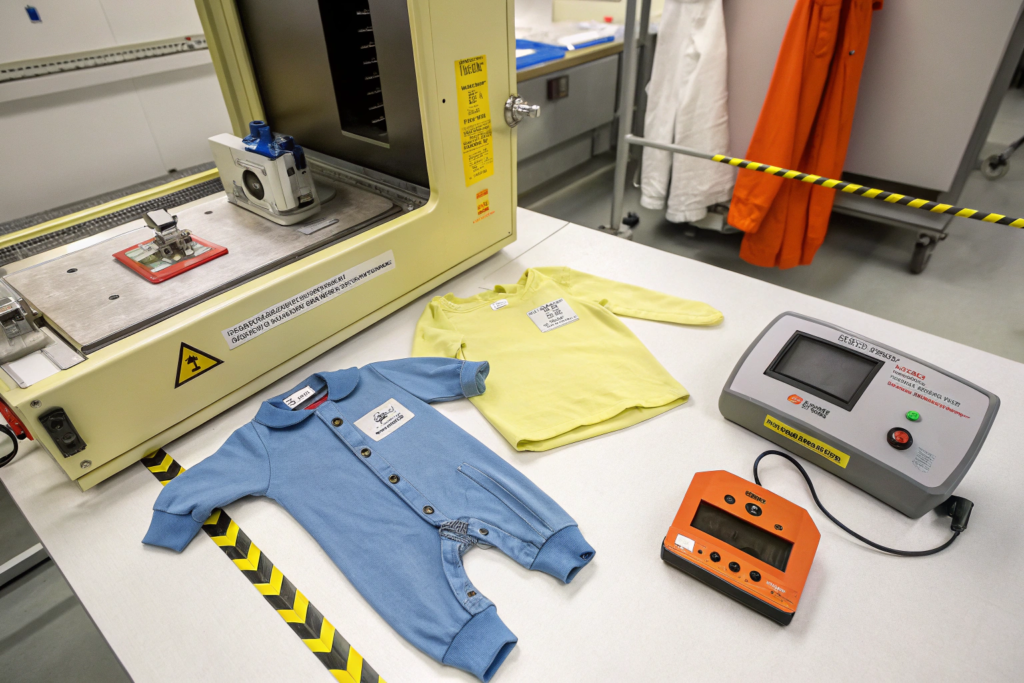
Why Must Your Manufacturer Specifically Target Phthalates and Lead Compiance Under CPSIA?
Kids put everything in their mouths. That is the entire reason CPSIA exists. For a printed graphic tee, the ink itself carries the risk. I recall a specific batch of superhero pajamas we developed last year. We tested the plastisol ink, and the initial phthalate reading for DEHP came back at 0.09%. The legal limit is 0.1%. A lesser factory might have called it a pass. We rejected the ink batch and switched to a water-based formulation that tested below detection limits.
It is not just about the final garment. It is about the zipper pulls, the buttons, and the elastic waistbands. We ask our trim suppliers for third-party test reports on each component lot before they enter our factory. We cross-reference these components with the CPSC's public recall database to identify common failure modes we need to guard against, such as specific magnetic closures that have been flagged recently. This proactive scan costs us time, but it gives our buyers a product they can confidently ship to a retailer like Target without fear of a pre-shelf audit failure.
Does Flammability Testing Change the Fabric Sourcing Game for Sleepwear?
Absolutely. This is the biggest trap in fast custom kids' wear. Brands send us a cute, fuzzy polyester fleece design for pajamas, and we have to tell them: if this is loose-fitting sleepwear, it needs to pass the strict flammability test, and almost no deep-pile polyester will pass. You either need inherently flame-resistant fabric or you must sew it skin-tight. I learned the hard way in 2022 by burning through 50 yards of expensive brushed fleece that failed the vertical flame test.
Now, we maintain a pre-vetted "safe sleep fabric" library. We have tight-fitting cotton rib knits that naturally pass 16 CFR Part 1615. For loose-fitting styles, we source modacrylic blends that are genuinely flame-resistant. We also do internal bridge-burning tests before sending samples to a CPSC-accepted third-party lab for the final certification. This stops you from wasting money sampling a fabric that can never legally leave a U.S. warehouse.
How Can Fast Turnaround Times Be Achieved Without Compromising Durability?
There is a myth that fast production equals flimsy construction. I used to believe that, too. But the actual bottleneck in traditional custom clothing is not sewing time. It is waiting for decisions. When a brand takes a week to approve a lab dip or a trim, the factory sits idle. We tackled speed by removing air gaps in the decision loop, not by telling our sewers to rush the seams on a toddler's jacket.
Fast turnaround is achieved by parallel processing: we digitize the design approval phase using 3D renders to skip physical mail, pre-stock a safety-approved trim library for instant selection, and use automated cutting machines that handle complex small-batch layouts without manually readjusting paper markers.
The durability of a kids' garment comes down to seam engineering and fabric recovery. Children's clothes stretch, get pulled, and are washed constantly. You cannot treat them like miniature adult clothes. Here is the deep dive into our core speed-plus-strength strategies.
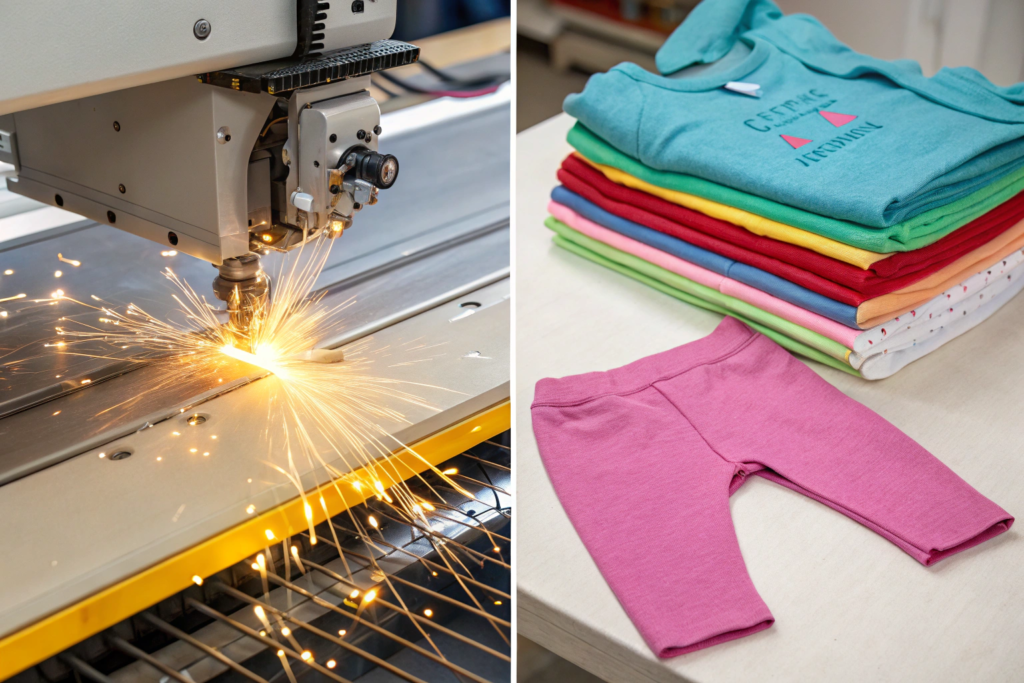
How Does a Pre-Vetted "Kids Trim Library" Eliminate the Longest Delays?
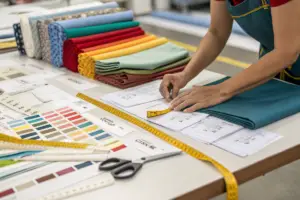
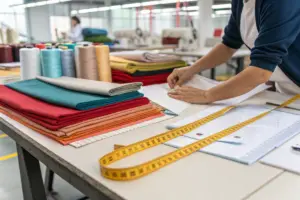
Last month, we shipped a custom-order toddler hoodie in 14 days from design approval. The secret? We forced no trim selection delays, because everything was pre-vetted. We gave the client a digital palette of 200 pre-approved zippers, drawcords, and snaps that had already passed lead testing. They simply clicked on a heathered gray YKK zipper instead of spending weeks mailing physical zipper samples back and forth to see if the color matched. If a client chooses from our approved library, we skip the component sourcing stage entirely.
The library solves the "analysis paralysis" of customization. And because we are directly dealing with standard components compliant under Consumer Product Safety Improvement Act guidelines, the CPC documentation is nearly automated. We pre-package the test certificates for those zippers with the bulk order, so there is zero paperwork lag before shipping.
Why Is Automated Cutting Technology Key to Scaling Fast Custom Kids' Orders?
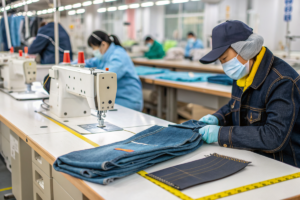
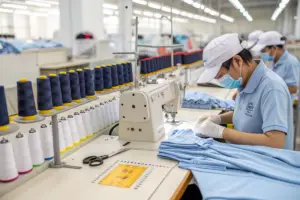
Small brands often order 50 pieces per style with 5 different graphic placements. A manual pattern maker would spend more time aligning the marker than cutting the fabric. That is why we invested in a multi-ply automated cutter that uses a camera system to register the fabric stretch on knit stripes. It can nest 3 body sizes and 2 sleeve lengths in one continuous cut, saving about 12% fabric use.
The speed comes from the elimination of human error. A manual cutter might drift by half a centimeter on a curved seam allowance. For a newborn romper, a half-centimeter drift equals a leg opening that is too tight. The machine does not drift. We also run a pull-test parallel to the cutting line, ensuring the durability of the seam depends on standardized seam strength testing metrics like ASTM D1683, rather than relying on "it looks fine". This commitment lets us hit speed targets while guaranteeing a garment survives the “toddler stress test" on the playground.
Who Needs Agile Minimum Order Quantities for Boutique Kidswear?
A mother of three approached me at a trade show. She had a brilliant idea for a sustainable bamboo pajama line but only needed 80 units to test the market across 4 sizes. Every factory she emailed either responded with a "minimum 500 per style" message or simply ignored her. I did not. I started my business small, and I remember the sting of being dismissed by minimums. We viewed her 80 units not as a headache, but as a prototype for a potential scaling partner.
Emerging boutique brands and influencer-led labels desperately need agile MOQs (Minimum Order Quantities) in the range of 50-100 pieces per style. They need to test unique prints or eco-fabrics on a limited budget without overcommitting inventory, a process you cannot do with legacy manufacturers who are optimized for six-figure volume.
We restructured our costing model to allow low MOQs by using a "grouped cutting" strategy. We combine the raw fabric of 3 small brands for a basic jersey order, cutting them at the same time on the automated table but separating the styling for each brand. This gives the small brand the bulk fabric price, even with a boutique-level order. Here is who benefits most.
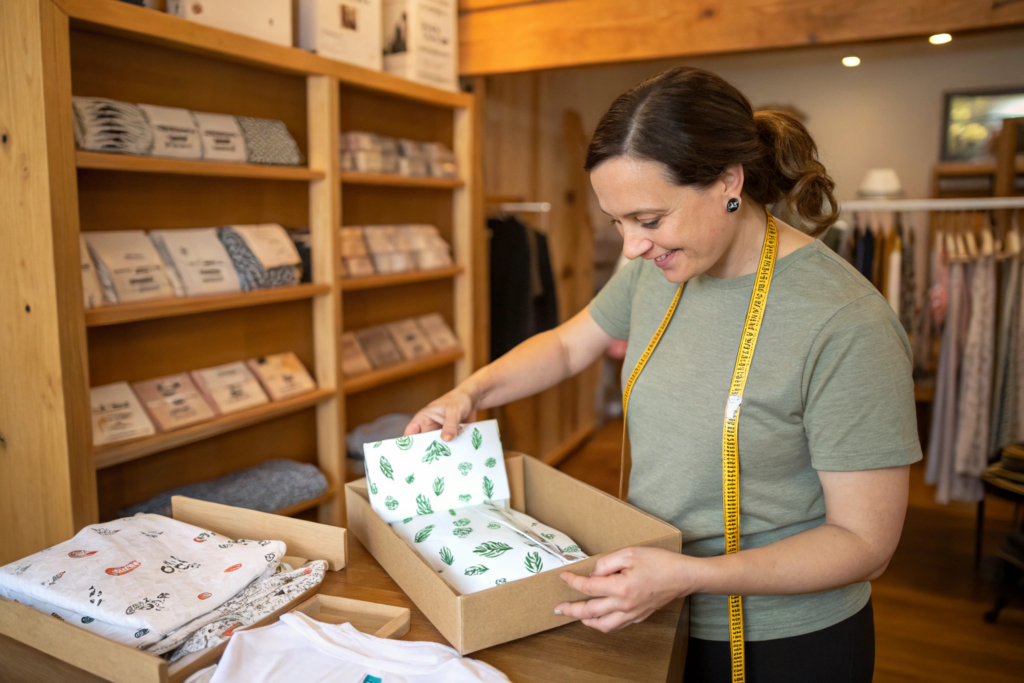
Can an Influencer-Led Startup Label Survive Without a Low-MOQ Strategy?
No. I watched a popular mom-blogger launch a capsule collection of matching mommy-and-me dresses last year. Her first production run in China, with a different supplier, required 1,200 units. She sold 400. The remaining 800 pieces died on her storage shelf, and the cash bleed nearly bankrupted her. When she came to us for her second season, we built a just-in-time sync. She launched pre-orders on her Instagram, we cut based on actual sales, and she never held more than 20 units of excess stock again.
The economics of an influencer brand are not Amazon wholesale; they are media margins. They need production partners who understand that a "sell-out" is better than a "massive inventory" for maintaining brand hype. This approach also aligns with the heightened demand for authentic small-batch marketing. When we source fabrics like non-toxic bamboo, we ensure the organic content standard guarantees the influencer's claims are true. A false sustainability post gets called out instantly now by vigilant consumer watchdog accounts, destroying an influencer's credibility overnight.
How Does Grouped Production Allow Small Boutiques to Afford Premium Construction?
The grouped production or "gang marker" approach is an old tailoring trick applied to modern e-commerce. A single roll of high-end double gauze cotton is expensive. A cute romper only uses a fraction of it. By batching three different boutiques' romper orders onto a single spreading table—even with different colored bindings—the fabric yield jumps from 65% efficiency to 83%. That massive saving in raw material allows us to spend more on the sewing.
This means a tiny shop in Austin can afford French seams for a delicate dress, a finish usually reserved for luxury designer brands. They can also afford true colorfastness testing, which is critical for kids' wear that gets heavily washed. We advise all our small boutique clients to use AATCC test methods to verify their prints don't bleed after 10 washes on hot, a standard that bulk commodity kids' wear seldom meets.
What Design Trends Are Dominating the Premium Childrenswear Market in 2026?
Three years ago, kids' wear design was chasing "mini-adult" looks. That has shifted. I sit in on design review meetings with our clients now, and the directive is not about making kids look trendy; it is about tactile interaction and durability against nature. I saw a 30% increase in demand for "play-proof" reinforced knee panels from our brand partners in the last 12 months. The pandemic babies are now toddlers, and parents want clothes that can handle mud.
The dominant 2026 trends are rooted in sensory-friendly, gender-inclusive earth tones, the integration of UV-protective and antimicrobial functional fabrics, and unisex silhouettes that maximize the number of hand-me-downs. Designs now prioritize adjustability, like elastic with accessible internal buttons, to extend the wear cycle of a garment past a single growth spurt.
Fast custom manufacturing is the only way to chase these micro-trends effectively. Traditional retail calendars are too slow for TikTok-driven demand. We help brands jump on a mushroom-print trend or a mushroom-leather material within a month, letting them set the trend for the school year.
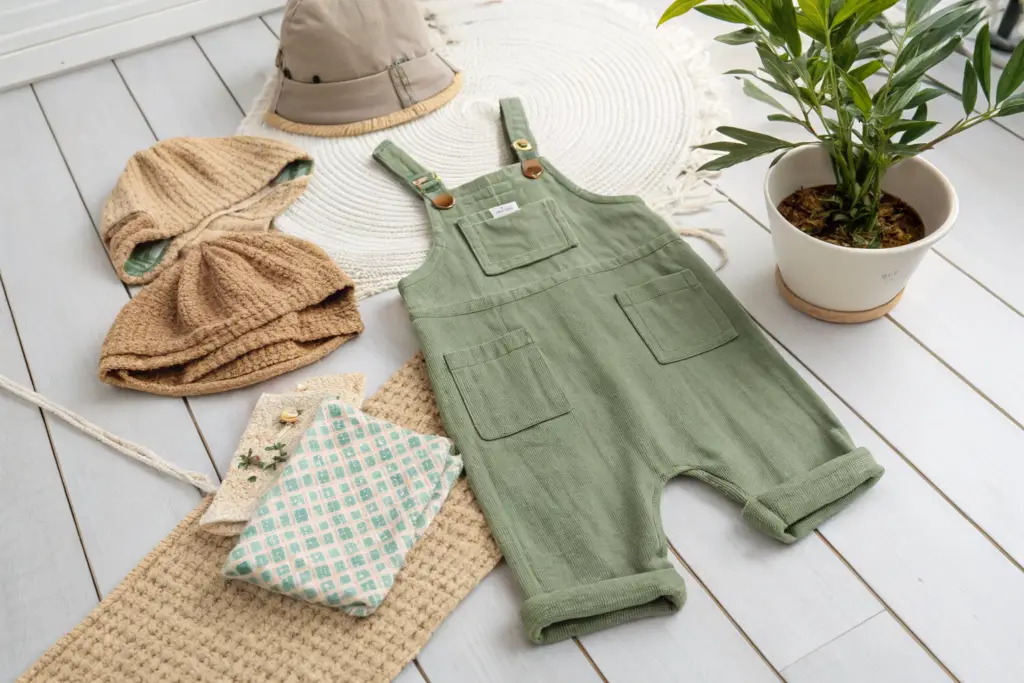
Why Are "Hand-Me-Down" Unisex Silhouettes Becoming a Financial Necessity?
A parent recently told one of our brand partners, "I spend $40 on a dress, she wears it for 3 months, and it is too short." With inflation, parents are furious about that waste. Hence, the rise of the "adjustable romper" and the A-line, boxy coat that fits regardless of gender. We design ribbed cuffs that fold back and hem allowances that can be let out by up to 5cm. A garment that fits for 18 months instead of 6 is a massive value proposition.
This requires us, as a manufacturer, to alter our spec sheets. We do not just cut for a standard size 3T; we cut a "2T-to-3T Transitional" block. The silhouette is unisex, colors are neutral like sage, terracotta, or oatmeal, and the prints focus on stars or abstract shapes rather than gendered tropes. These designs align well with responsible manufacturing practices promoted by the Sustainable Apparel Coalition, as extending garment life is the single most direct way to lower environmental impact per wear.
How Is the "No-Itch" Sensory Trend Completely Changing Seam and Label Engineering?
The "sensory-friendly" clothing wave for children with autism or tactile sensitivities has gone totally mainstream. We do not use any internal scratchy labels anymore. All care information is printed with puff ink directly onto the back. We flatlock every main inside seam to eliminate raised ridges. I remember testing a merino wool blend for a jumper last December that was technically beautiful, but my own son said it felt "spikey." We rejected it for a cashmere-cotton blend.
We learned that texture alone impacts a brand’s return rate critically. For a private label client recently, we substituted traditional overlocking on the neckline with a seamless bonding technique. The return rate dropped from 6% to 1.8% on that specific item, because toddlers stopped trying to rip the shirt off. This adjustment relies on high-quality binding machines calibrated to tolerances verified against feedback in the Textile Research Journal, ensuring our "zero-itch" promise holds up in every real-life laundry situation.
Conclusion
Fast custom kids' wear is not a race to the bottom on price. It is a race to the top on safety, speed, and sensory intelligence. We have proven that an agile factory like Shanghai Fumao can deliver CPSC-compliant, beautifully constructed children’s clothing in less than three weeks while accepting orders small enough to nurture a startup brand. We do this by merging automated precision with a deep respect for legal safety requirements—checking every zipper, every ink, and every seam construction against the potential hazards only a concerned parent could imagine.
The Chicago boutique owner I mentioned? She has since reordered three more times. Her customers have zero idea about the recall she narrowly avoided because we built her product right the second time. That is the silent layer of protection we provide. Whether you are an influencer launching a capsule, or a growing brand needing sensory-friendly school wear, you need a manufacturer who understands that "custom" means integrating your aesthetic vision with mandatory laboratory rigor.
Do not wait for a compliance fire to force you into a rushed supplier change. Let us help you design kids’ wear that sells quickly and wears safely. Reach out to our Business Director, Elaine, to discuss your next custom children's apparel project. She can walk you through our pre-vetted safety library and our sampling timelines. Her email is: elaine@fumaoclothing.com.
Let’s make kids' clothes that parents trust and children love to keep on.