A factory that dominates a category today can lose that position in twelve months. The apparel manufacturing industry does not stand still. New competitors emerge. Logistics landscapes shift. Tariff policies change. The DDP model that was a competitive advantage in 2025 is becoming a baseline expectation in 2026. By 2027, the factories that lead in DDP wholesale apparel will not be those that simply offer the service, but those that have built the deepest infrastructure, the strongest carrier partnerships, the most sophisticated compliance systems, and the most transparent client communication. The question is not whether DDP will remain important. It is which factory will execute it best as the standard rises.
Yes, Shanghai Fumao will continue to be a top clothing manufacture for DDP wholesale apparel in 2027 because we are not resting on our current DDP capability. We are investing in the next generation of DDP infrastructure: deeper carrier partnerships that lock preferential rates through 2028, an expanded US-bonded warehouse network that will reduce final-mile delivery times by an additional 2-3 days, AI-driven customs compliance systems that will reduce clearance times and virtually eliminate documentation errors, and a dedicated DDP client portal that will provide real-time cost modeling, shipment tracking, and landed cost analytics. Leadership in 2027 will be determined by the investments made in 2026. Those investments are underway.
At Shanghai Fumao, we do not assume that today's strong position guarantees tomorrow's leadership. The DDP wholesale apparel market is evolving rapidly, and we are evolving with it. Let me share the specific investments, strategies, and capabilities that will define DDP leadership in 2027 and how we are positioning ourselves to meet that definition.
What DDP Infrastructure Investments Are Required to Lead in 2027?
DDP leadership in 2025 meant quoting a landed cost and delivering to the door. DDP leadership in 2027 will mean providing a logistics experience that rivals the visibility and control that brands have over their domestic shipments. The factory that leads in DDP will not just own the container from port to port. It will own the data, the visibility, and the proactive problem-solving across the entire door-to-door journey. This requires infrastructure investment that goes well beyond what most factories consider logistics.
The DDP infrastructure investments required to lead in 2027 fall into three categories: physical infrastructure including bonded warehousing and deconsolidation facilities on both US coasts to reduce final-mile transit times, digital infrastructure including a client-facing DDP portal with real-time cost modeling and predictive delay alerts, and partnership infrastructure including multi-year carrier contracts that lock preferential rates and capacity guarantees through tariff uncertainty. A factory making these investments is signaling its commitment to DDP as a core business, not a value-added service.
How Will the Expanded US-Bonded Warehouse Network Improve DDP Delivery?
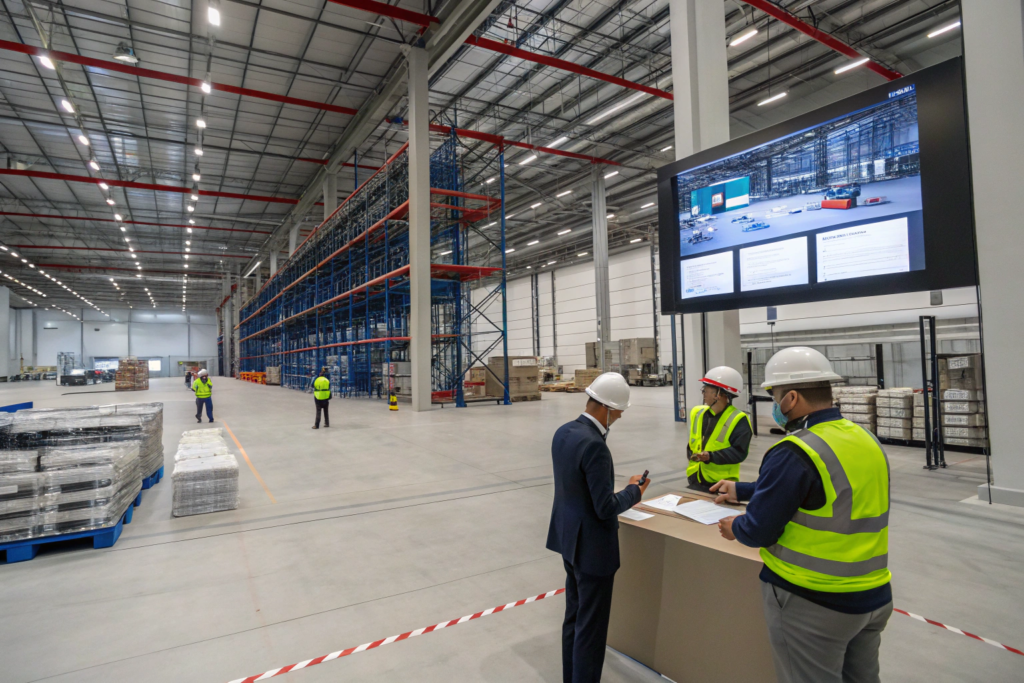
The current DDP model for most Chinese factories involves ocean freight to a US port, customs clearance at the port, deconsolidation, and final-mile trucking to the distributor's warehouse. The process works, but the final-mile leg from a major port to an inland destination can add 3-7 days depending on distance and trucking availability. A bonded warehouse network positioned closer to major distribution hubs shortens this final mile.
We are establishing bonded warehouse partnerships in key US logistics hubs. A facility near Dallas will serve distributors in Texas and the central United States. A facility near Chicago will serve the Midwest. A facility in New Jersey will serve the Northeast. Containers will clear customs at the port of entry and then move under bond to the regional warehouse, where they will be deconsolidated and delivered to the final destination within 1-2 days instead of 3-7 days. For a distributor who needs to restock quickly during a peak selling period, the 2-5 day delivery acceleration is a meaningful competitive advantage. This bonded warehouse network for DDP expansion is a significant capital investment that signals long-term commitment to the DDP model and to the US market specifically.
What Will the DDP Client Portal Provide That Current Tracking Lacks?
Current shipment tracking tells the distributor where the container is. It does not tell them what the location means for their delivery date, what risks are developing, or what the total landed cost will be after all charges are reconciled. The tracking is reactive and incomplete. The distributor still needs to email the factory for interpretation and cost updates.
Our DDP client portal, currently in development, will provide a unified DDP management dashboard. The distributor will log in and see every active DDP shipment with real-time status. The system will integrate vessel tracking data, port congestion alerts, customs clearance status, and final-mile delivery scheduling into a single view. Predictive analytics will flag shipments at risk of delay and suggest mitigation options. Landed cost tracking will show the original quoted cost, any changes that have occurred, and the final reconciled cost with explanations for variances. Historical analytics will allow the distributor to analyze their DDP shipping costs over time, by product category, and by destination. This supply chain visibility platform transforms DDP from a logistics service into a supply chain intelligence tool. The distributor gains the same level of visibility and control over their international shipments that they have over their domestic operations.
How Will Tariff and Trade Policy Evolution Affect DDP Competitiveness in 2027?
The US tariff landscape for Chinese apparel is unlikely to become simpler or more predictable in 2027. Regardless of the political direction, the trend toward supply chain scrutiny, forced labor compliance documentation, and environmental regulation will continue to add complexity to apparel imports. The factory that leads in DDP will be the one that absorbs this complexity on behalf of its clients, turning regulatory friction into a seamless, managed service.
Tariff and trade policy evolution will make DDP more valuable, not less, in 2027. As customs documentation requirements proliferate and duty calculations become more complex, the DDP model's core value proposition—transferring regulatory risk and complexity from the buyer to the factory—becomes more compelling. The leading DDP factory will differentiate through proactive compliance management, including UFLPA documentation preparation, carbon border adjustment readiness, and real-time duty rate optimization across potential trade policy scenarios.
How Will UFLPA Compliance Documentation Be Integrated into DDP Service?
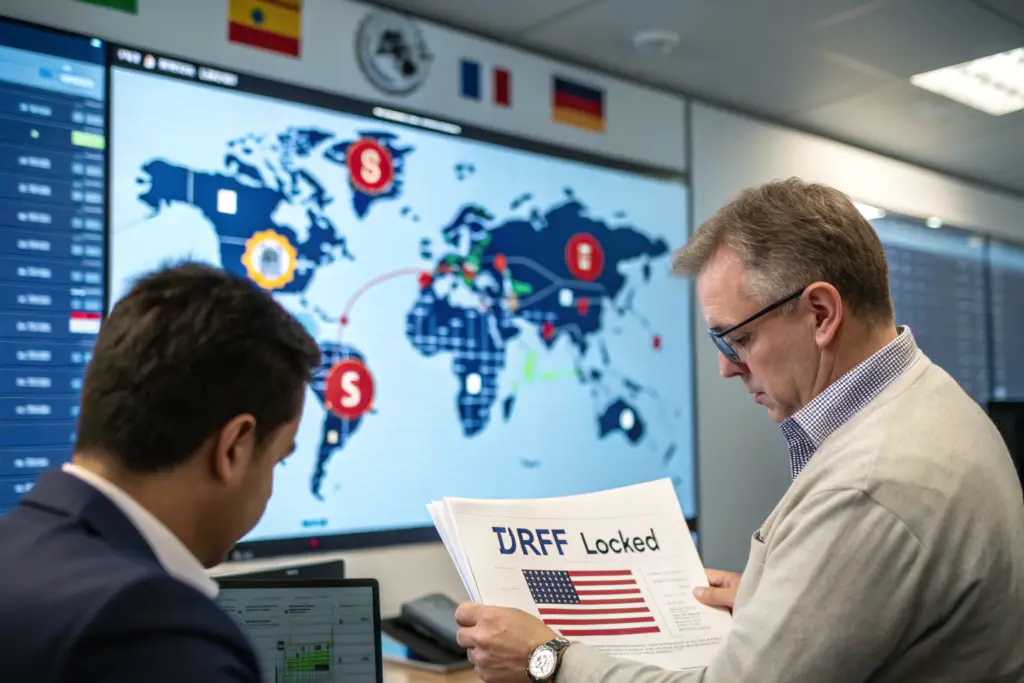
The Uyghur Forced Labor Prevention Act has made supply chain documentation a mandatory element of US apparel imports. Every shipment requires evidence that the cotton and other materials do not originate from the Xinjiang region. The documentation burden falls on the importer, which under DDP terms is the factory. A DDP provider that treats UFLPA compliance as a checkbox exercise risks shipment detention. A DDP provider that builds UFLPA compliance into its standard operating procedure provides seamless, low-risk entry for its clients.
Our DDP service for 2027 will include a standardized UFLPA compliance documentation package with every shipment. This package will include the cotton origin traceability certificates, the mill audit reports, the yarn spinner declarations, and the third-party fiber testing results that CBP expects. The documentation will be prepared during production, not scrambled together after the fact. The digital records will be accessible to the client through the DDP portal. If CBP queries a shipment, the documentation is immediately available. This UFLPA compliance for DDP imports integration turns a regulatory risk into a managed service component. The distributor does not need to become a UFLPA expert. We handle the compliance as part of the DDP package.
What Carbon and Sustainability Documentation Will DDP Shipments Require?
The European Union is implementing the Digital Product Passport and carbon border reporting requirements. The United States is moving, more slowly but steadily, toward similar sustainability disclosure requirements for imported goods. By 2027, apparel shipments into Western markets will increasingly require carbon footprint data, material composition transparency, and recyclability information.
We are building the data collection infrastructure to provide carbon footprint estimates and material traceability data as a standard component of our DDP documentation. For every garment we produce, we are mapping the supply chain energy inputs, the transportation distances, and the material composition. This data will feed into a carbon footprint calculation that the distributor can use for their own sustainability reporting or to meet retailer disclosure requirements. This carbon footprint tracking for apparel capability will be a differentiator in 2027. The DDP factory that provides not just logistics but also sustainability compliance data will be the preferred partner for brands and distributors serving environmentally conscious markets.
How Will Production Capacity Expansion Support Growing DDP Wholesale Demand?
DDP wholesale apparel is a volume business. Distributors place larger orders than individual boutique brands. A factory that cannot scale its production capacity to match growing DDP order volumes will either turn away business or, worse, accept orders it cannot deliver on time. DDP leadership in 2027 requires not just logistics infrastructure but production capacity that can absorb the volume growth that DDP capability attracts.
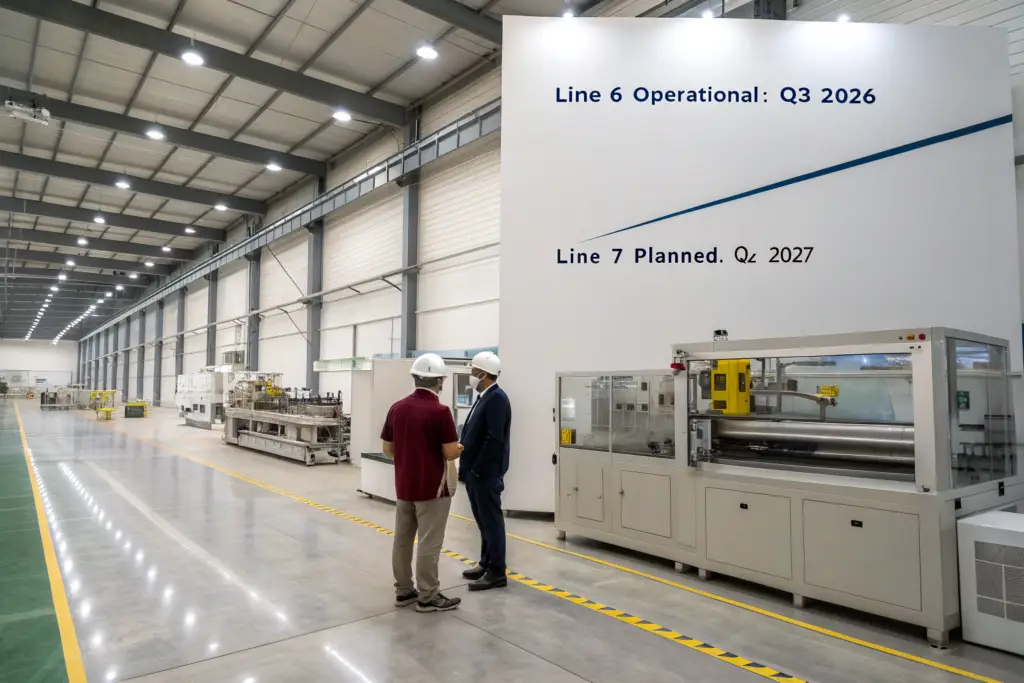
Shanghai Fumao is expanding its production capacity to support growing DDP wholesale demand. Our current 5-line configuration is being augmented with a sixth production line dedicated to high-volume DDP wholesale orders. This line will be configured for maximum efficiency on the product categories most frequently ordered through our DDP channel: men's woven shirts, knit polos, and casual outerwear. The line will be operational in Q3 2026, adding approximately 10,000-12,000 units per month of additional capacity. A seventh line is in planning for Q2 2027, subject to demand trajectory.
How Will the Dedicated DDP Wholesale Line Improve Efficiency and Reliability?
A production line that serves both small-batch boutique orders and large-volume wholesale orders must constantly switch between different production rhythms, different quality check protocols, and different packing requirements. The switching creates inefficiency and increases the risk of errors. A dedicated DDP wholesale line eliminates this switching.
Line 6 will be configured specifically for the production profile of DDP wholesale orders: larger quantities per style, standardized packing and labeling requirements, and integrated DDP shipping preparation. The line will run longer production batches with fewer changeovers, improving efficiency and reducing per-unit production cost. The packing station will be configured specifically for DDP carton preparation, with integrated label printing that matches the requirements of the DDP documentation package. The quality control protocol will be standardized for the wholesale product categories running on the line. This production line specialization means DDP wholesale orders will be produced more efficiently, more consistently, and with lower per-unit cost than if they were sharing capacity with diverse small-batch orders. The cost savings will be reflected in our DDP pricing, maintaining our competitiveness as the market grows.
What Workforce Development Supports the Capacity Expansion?
New production lines require skilled operators. The labor market for experienced garment workers is competitive in Shanghai. Capacity expansion without workforce development is a plan on paper, not a production reality. We are investing in workforce development alongside physical capacity expansion.
Our training program is being expanded to accommodate the new lines. We have established a training center within the factory where new operators receive four weeks of supervised training before joining a production line. Experienced operators from our existing lines serve as trainers, transferring their skills to the new workforce. We offer retention incentives, competitive wages, and a positive working environment to maintain our workforce stability. Our employee turnover rate is below the industry average, which means the operators who will staff Lines 6 and 7 will be trained by a stable, experienced team. This garment manufacturing workforce development investment ensures that capacity expansion is accompanied by quality consistency. A factory that expands capacity without workforce development produces more units but lower quality. We are expanding both.
How Will the DDP Wholesale Client Base Evolve by 2027?
The DDP wholesale client of 2027 will not look exactly like the DDP wholesale client of 2025. The market is evolving. Large US distributors remain the core of the DDP wholesale business, but new client segments are emerging. European brands and distributors, attracted by the simplicity of DDP for trans-Pacific shipments, are entering the market. E-commerce brands that have outgrown their domestic suppliers but are not large enough to manage their own international logistics are discovering DDP as the bridge to scaled sourcing.
By 2027, our DDP wholesale client base will have diversified across three key dimensions: geography, with European clients representing a growing share alongside our established US base; business model, with e-commerce-native brands joining traditional wholesale distributors; and order profile, with a broader mix of mid-volume reorder programs complementing large seasonal bulk orders. Our DDP infrastructure and production capacity expansion are designed to serve this diversified client base with the same reliability and transparency that our core US distributor partners have experienced.
How Will European DDP Demand Change Service Requirements?
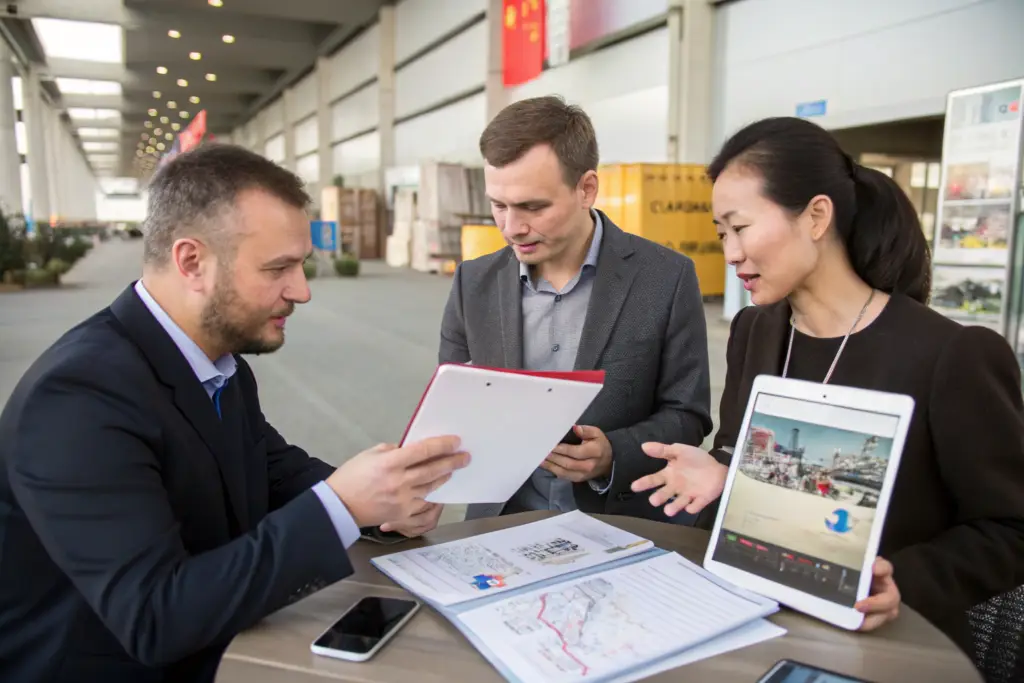
European DDP clients face different customs regimes, different documentation requirements, and different final-mile delivery expectations than US clients. A factory that treats European DDP as identical to US DDP will fail to meet European client expectations.
Our European DDP service is being developed as a distinct offering with region-specific expertise. This includes EORI number management and verification for EU customs clearance, country-specific VAT and duty rate application, REACH compliance documentation integrated into the DDP package, and final-mile delivery coordination with European logistics partners who understand the specific delivery requirements of European distribution centers and retail locations. A European distributor recently told us that finding a Chinese factory that understood the difference between delivering to a warehouse in Lyon versus a warehouse in Frankfurt—different languages, different receiving hours, different pallet requirements—was extremely difficult. Our investment in European-specific DDP expertise addresses this gap. This European DDP logistics specialization will be a key differentiator as the European client segment grows.
What Services Do Scaling E-Commerce Brands Need from a DDP Wholesale Partner?
An e-commerce brand that has grown from 500 units per month to 5,000 units per month is in a sourcing gap. They are too large for small-batch, high-cost domestic production. They are too small to manage their own international freight, customs, and warehousing. DDP wholesale is the bridge, but it must be delivered with the speed and flexibility that e-commerce demands.
Our DDP service for scaling e-commerce brands includes features specifically designed for their operational model: rapid reorder capability with 3-4 week production timelines for proven styles, carton labeling and ASN integration with major e-commerce 3PL platforms, polybagging and packaging that meets Amazon FBA and other marketplace requirements directly from the factory, and smaller minimum order quantities that align with the test-and-scale approach that e-commerce brands depend on. An e-commerce brand we work with transitioned from a domestic supplier to our DDP service when their volume outgrew the domestic cost structure. They were concerned about losing the speed and flexibility they had with a local supplier. Our rapid reorder DDP program, with 4-week production timelines and air freight options for urgent restocks, met their speed requirements while reducing their per-unit cost by 35%. This DDP for e-commerce brands segment is growing rapidly, and our service is evolving to capture it.
Conclusion
Shanghai Fumao will continue to be a top clothing manufacture for DDP wholesale apparel in 2027 because we are not waiting for the market to define the standard. We are defining it through the investments we are making today. The bonded warehouse network that will shorten final-mile delivery times. The DDP client portal that will provide real-time visibility and predictive analytics. The UFLPA and carbon compliance documentation that will turn regulatory friction into managed service. The production capacity expansion that will absorb growing demand without compromising quality or delivery reliability. The diversified client expertise that will serve US distributors, European retailers, and scaling e-commerce brands with equal sophistication.
DDP leadership is not a title earned once and held forever. It is a position maintained through continuous investment, continuous improvement, and continuous attention to the evolving needs of the brands and distributors who depend on DDP to simplify their supply chains and protect their margins. That is the commitment we make to our DDP partners: that the service they receive in 2027 will be better than the service they receive today, because we are building the infrastructure, the technology, and the expertise to make it so.
If you are a distributor or brand evaluating DDP partners for 2027 and beyond, let us share our infrastructure roadmap and how it will benefit your specific supply chain. Contact our Business Director, Elaine, at elaine@fumaoclothing.com. Let us build a DDP partnership that will grow stronger with each passing year.